
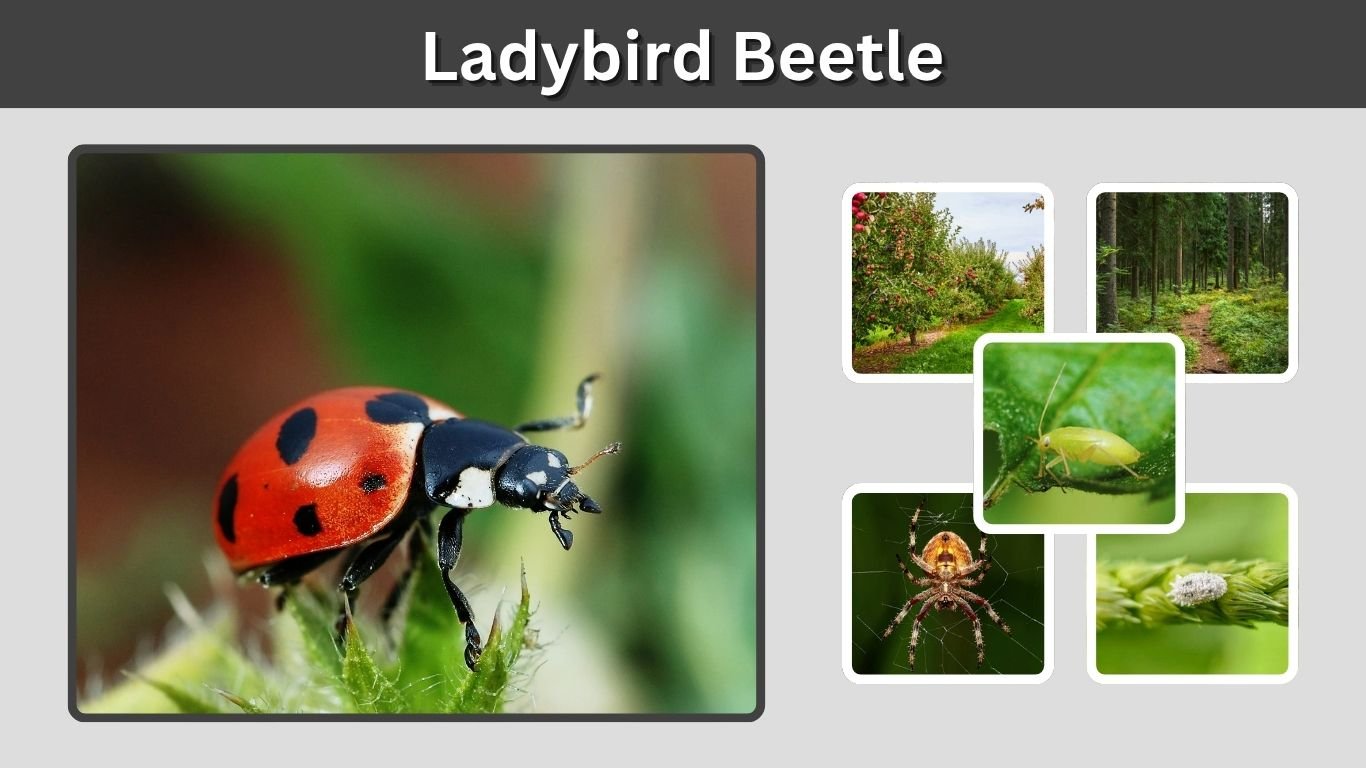
The Ladybird Beetle is a small, colorful insect recognized for its rounded body, bright wing covers, and distinctive spots. Commonly called a ladybug in North America, this beneficial beetle plays an important role in gardens and agricultural ecosystems by feeding on aphids and other small pests. Ladybird beetles occur worldwide and include thousands of species with different colors, patterns, and feeding habits. Understanding their identification, habitat, food, larvae, and life cycle can help gardeners appreciate these fascinating insects and their natural pest-control abilities.
What Is a Ladybird Beetle?
Ladybird beetles belong to the family Coccinellidae within the order Coleoptera. Despite their common name, ladybugs are true beetles rather than true bugs. More than 6,000 ladybird species have been described worldwide, ranging from familiar red-and-black varieties to yellow, orange, and almost entirely black species.
Ladybird Beetle Facts
- Scientific family: Coccinellidae
- Order: Coleoptera
- Common names: Ladybird, ladybug, lady beetle
- Size: Usually 1–10 mm, depending on species
- Color: Red, orange, yellow, pink, or black
- Habitat: Gardens, forests, fields, and grasslands
- Diet: Primarily small insects and mites in many species
- Life cycle: Egg, larva, pupa, and adult
- Wings: Hardened outer wing covers with membranous flight wings underneath
- Ecological role: Natural pest control and part of the food web
Ladybird Beetle Identification
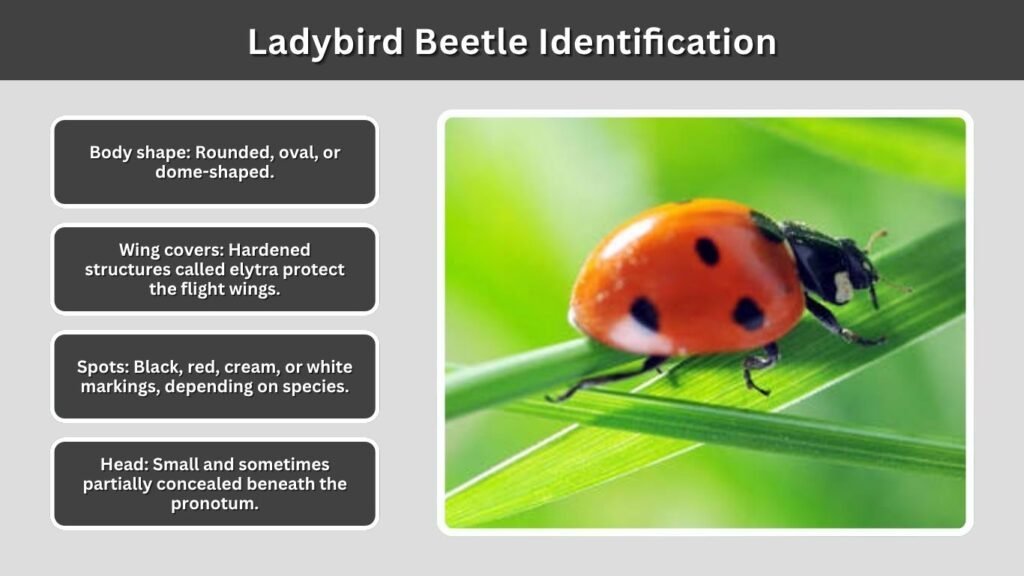
Ladybird beetles are generally recognizable by their rounded bodies and colorful wing covers. However, not every ladybird is red with black spots. Some species have striped patterns, pale markings, or completely black bodies. Identifying individual species requires examining their size, coloration, body shape, and spot arrangement.
Physical Appearance and Characteristics
- Body shape: Rounded, oval, or dome-shaped.
- Wing covers: Hardened structures called elytra protect the flight wings.
- Spots: Black, red, cream, or white markings, depending on species.
- Head: Small and sometimes partially concealed beneath the pronotum.
- Antennae: Short and segmented, with slightly enlarged tips.
- Legs: Six relatively short legs used for climbing and walking.
- Body size: Most familiar garden species are only a few millimeters long.
Ladybird Beetle vs. Ladybug
Ladybird beetle, ladybird, lady beetle, and ladybug are different common names for insects belonging to the Coccinellidae family.
The term “ladybird” is widely used in Britain and other English-speaking regions, while “ladybug” is particularly common in North America.
Scientifically, lady beetle is a more precise term because these insects belong to the beetle order Coleoptera.
Common Ladybird Beetle Species
Ladybird beetles include thousands of species distributed across different continents. Although many have similar rounded bodies, their colors, spot patterns, and feeding preferences vary considerably. Some are beneficial predators, while others feed on plants or fungi.
Popular Types of Ladybird Beetles
- Seven-Spotted Ladybird (Coccinella septempunctata): A red beetle with seven black spots, commonly found in European gardens.
- Two-Spotted Ladybird (Adalia bipunctata): Usually red with two black spots, although darker variations also occur.
- Nine-Spotted Ladybird (Coccinella novemnotata): A North American species with nine dark spots that has declined in many areas.
- Asian Lady Beetle (Harmonia axyridis): A highly variable species displaying orange, red, yellow, or black coloration.
- Twice-Stabbed Ladybird (Chilocorus stigma): A black ladybird with two prominent red spots, commonly associated with scale insects.
- Twenty-Eight-Spotted Ladybird (Henosepilachna vigintioctopunctata): A plant-feeding species that can damage crops such as potatoes and eggplants.
What Do Ladybird Beetles Eat?
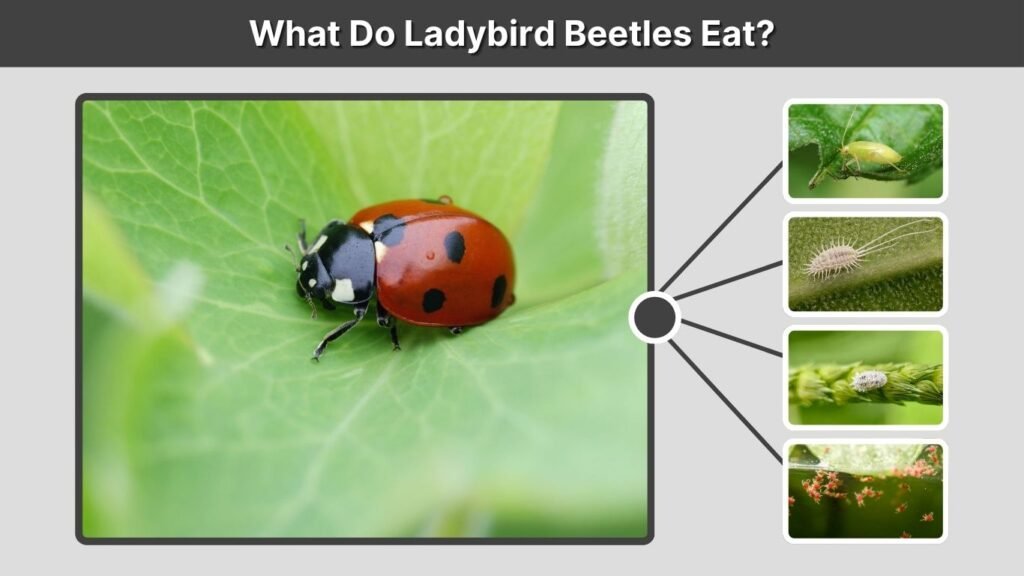
Many ladybird beetles are active predators that feed on soft-bodied insects. Their powerful chewing mouthparts allow them to capture and consume small pests living on plants. However, diets vary across species, and not every ladybird is beneficial to gardeners.
Ladybird Beetle Food
Common food sources include:
- Aphids: A major food source for many familiar ladybird species.
- Scale insects: Important prey for some specialized ladybirds.
- Mealybugs: Consumed by several predatory species.
- Spider mites: Eaten by certain small ladybird beetles.
- Insect eggs: Provide additional nutrients.
- Pollen and nectar: Supplement the diets of some adult ladybirds.
- Fungi: Serve as food for specialized fungus-feeding species.
Ladybird Beetles and Aphid Control
Ladybird beetles are particularly valuable because many species consume large numbers of aphids.
Both adult beetles and developing larvae hunt these plant-feeding insects.
By reducing aphid populations, ladybirds can help protect vegetables, flowers, and ornamental plants from damage.
However, ladybirds do not always eliminate infestations completely, especially when pest populations are widespread.
Ladybird Beetle Life Cycle
Ladybird beetles undergo complete metamorphosis, developing through four distinct stages: egg, larva, pupa, and adult. Each stage has different physical characteristics and developmental requirements. Depending on species, temperature, and food availability, their development from egg to adult may take several weeks.
Egg Stage
Female ladybirds typically deposit clusters of small yellow or orange eggs on leaves and stems.
Eggs are often placed near aphid colonies, giving newly hatched larvae access to food.
The eggs generally hatch within several days, depending on environmental conditions.
Ladybird Beetle Larvae
Ladybird larvae look surprisingly different from adult beetles. They have elongated, segmented bodies, often with dark coloration, orange markings, and small spines.
Their appearance is sometimes compared to tiny alligators.
Most predatory species begin hunting aphids or other small insects shortly after hatching.
Larvae typically pass through four growth stages, shedding their outer skeleton between stages.
Ladybird Beetle Pupa
After completing larval development, the insect attaches itself to a leaf, stem, or another suitable surface.
It then transforms into a pupa, which is usually compact and relatively immobile.
Inside, the developing beetle undergoes major changes that produce its adult body structure.
Adult Ladybird Beetle
Newly emerged adults often have soft, pale wing covers that gradually harden and develop their characteristic colors.
Once mature, they feed, reproduce, and disperse to suitable habitats.
Adult lifespan varies considerably, with some species surviving several months or longer under favorable conditions.
Where Do Ladybird Beetles Live?
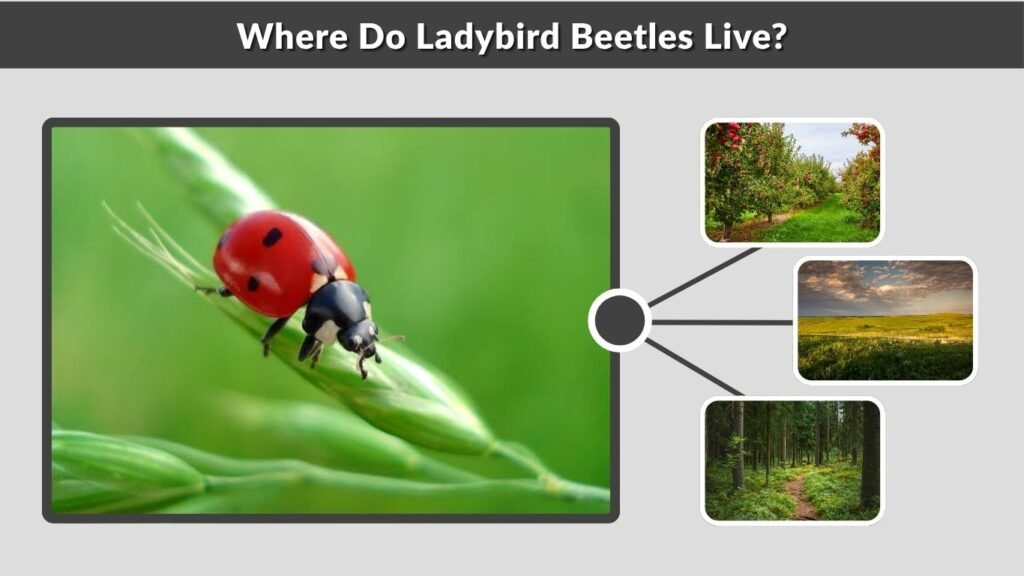
Ladybird beetles inhabit many environments around the world, from agricultural fields to forests and urban gardens. Their distribution is strongly influenced by climate, suitable vegetation, and available food. Predatory species are particularly common wherever aphids and other small plant-feeding insects occur.
Ladybird Beetle Habitat
Ladybirds commonly occur in gardens, grasslands, woodlands, orchards, agricultural fields, and parks.
They frequently rest on leaves, stems, flowers, and tree bark while searching for food.
During colder months, many species seek shelter beneath fallen leaves, inside tree crevices, or among vegetation.
Some species, especially Asian lady beetles, also gather around buildings when searching for overwintering locations.
Are Ladybird Beetles Beneficial?
Ladybird beetles are among the most familiar beneficial insects found in gardens. Many predatory species help control pest populations naturally, potentially reducing the need for chemical treatments. Their presence often indicates that suitable prey and shelter are available.
Benefits of Ladybird Beetles in Gardens
- Natural pest control: Reduce populations of aphids and certain other pests.
- Plant protection: Help limit damage caused by sap-feeding insects.
- Biological control: Some species are used in agricultural pest-management programs.
- Biodiversity: Contribute to healthy and varied insect communities.
- Food webs: Provide food for other animals and support ecosystem interactions.
How to Attract Ladybird Beetles
Growing a variety of flowering plants can provide nectar, pollen, and habitats for prey insects.
Avoid unnecessary broad-spectrum pesticide applications because these chemicals can kill beneficial beetles alongside pests.
Leaving sheltered areas with leaf litter and natural vegetation may also support overwintering ladybirds.
Are Ladybird Beetles Dangerous to Humans?
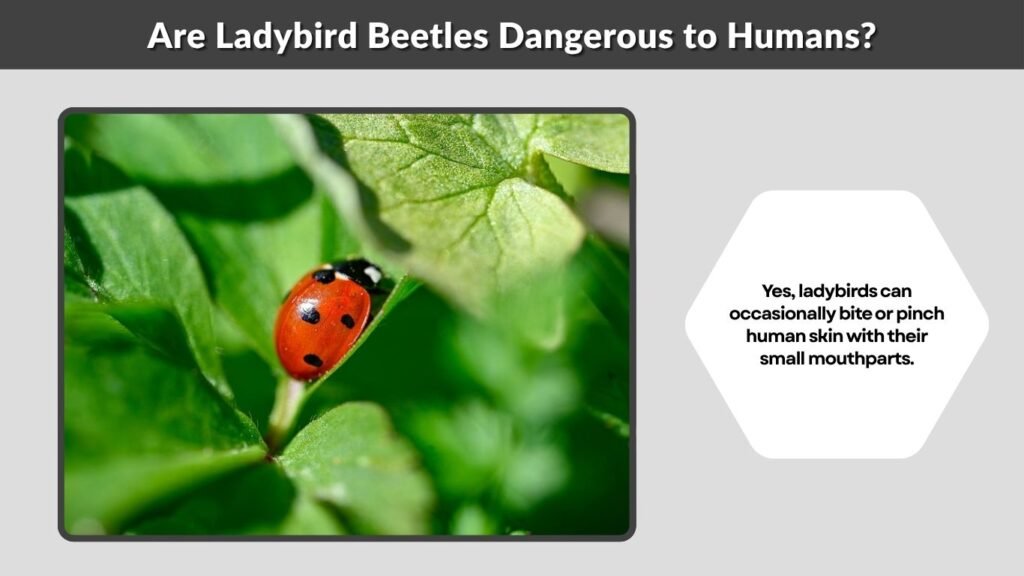
Ladybird beetles are generally harmless to people and do not normally cause serious health problems. Their colorful appearance is associated with chemical defenses that discourage predators. Occasionally, some species may bite when disturbed or handled, but such incidents are usually minor.
Do Ladybird Beetles Bite?
Yes, ladybirds can occasionally bite or pinch human skin with their small mouthparts.
Asian lady beetles are particularly known for sometimes biting when handled.
Most bites cause only mild, temporary irritation.
Ladybirds do not have stingers and are not venomous.
Are Ladybird Beetles Poisonous?
Many ladybird beetles produce defensive chemicals that make them unpleasant or potentially harmful for predators to eat.
When threatened, some release yellowish defensive fluid from their leg joints, a behavior known as reflex bleeding.
This secretion can have an unpleasant smell and may stain surfaces.
Ladybirds should not be eaten or deliberately crushed, but normal observation does not pose a significant danger.
Ladybird Beetles in the House
Ladybird beetles sometimes enter houses during autumn while looking for protected places to survive winter. Large indoor gatherings are especially associated with the multicolored Asian lady beetle. Although these beetles can become a nuisance, they do not normally damage building structures.
How to Get Rid of Ladybird Beetles Indoors
- Seal openings: Close gaps around windows, doors, and siding.
- Repair screens: Prevent beetles from entering through damaged window screens.
- Remove carefully: Collect individual beetles using a container.
- Use gentle vacuuming: Remove large groups without crushing them.
- Avoid unnecessary pesticides: Focus on preventing entry rather than routine indoor spraying.
What Eats Ladybird Beetles?
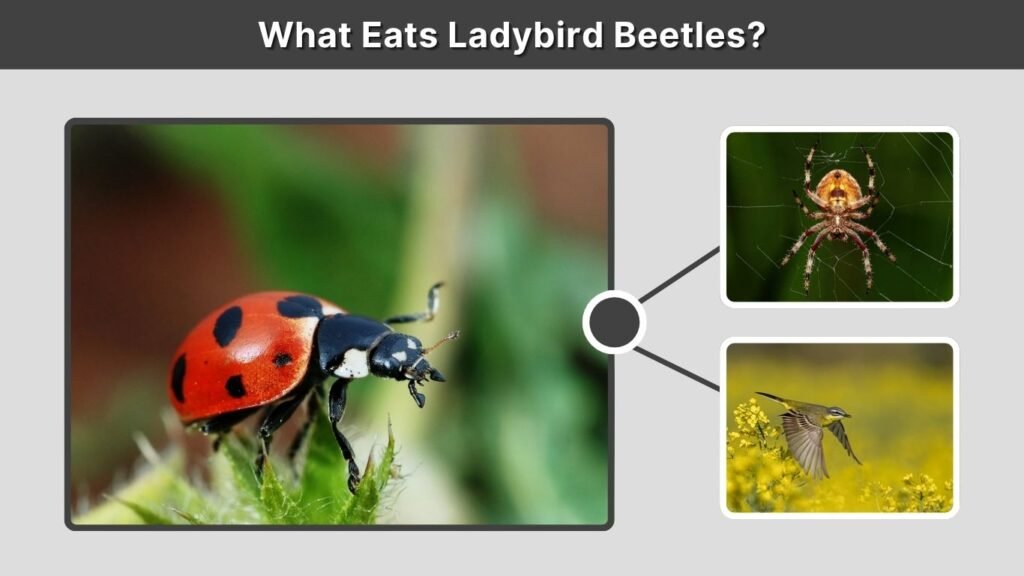
Ladybirds have several natural enemies despite their warning colors and chemical defenses. Predation is influenced by species, habitat, and the availability of alternative food sources.
Common Ladybird Beetle Predators
Birds, spiders, predatory insects, and some other small animals may feed on ladybirds.
Certain parasitic wasps and flies also attack ladybird beetles or their immature stages.
Their brightly colored bodies and unpleasant defensive chemicals help discourage many predators, but these defenses do not provide complete protection.
FAQs
1. Is a Ladybird Beetle the Same as a Ladybug?
Yes. Ladybird beetle, ladybird, lady beetle, and ladybug are common names for members of the Coccinellidae family. The terminology varies by region.
2. How Many Species of Ladybird Beetles Are There?
More than 6,000 ladybird beetle species have been described worldwide. They differ in size, coloration, geographic distribution, and feeding behavior.
3. Are Asian Lady Beetles Different From Ladybugs?
Asian lady beetles are a particular species of ladybug, scientifically known as Harmonia axyridis. They are members of the same family but can be distinguished from other species by certain physical and behavioral characteristics.
4. Do Ladybird Beetles Eat Plants?
Most familiar garden ladybirds feed on insects, but some species consume leaves or fungi. Plant-feeding ladybirds can become agricultural pests.
5. Are Ladybird Beetle Larvae Harmful?
Most predatory ladybird larvae are beneficial because they consume aphids and other small pests. However, larvae of plant-feeding species may damage vegetation.
