
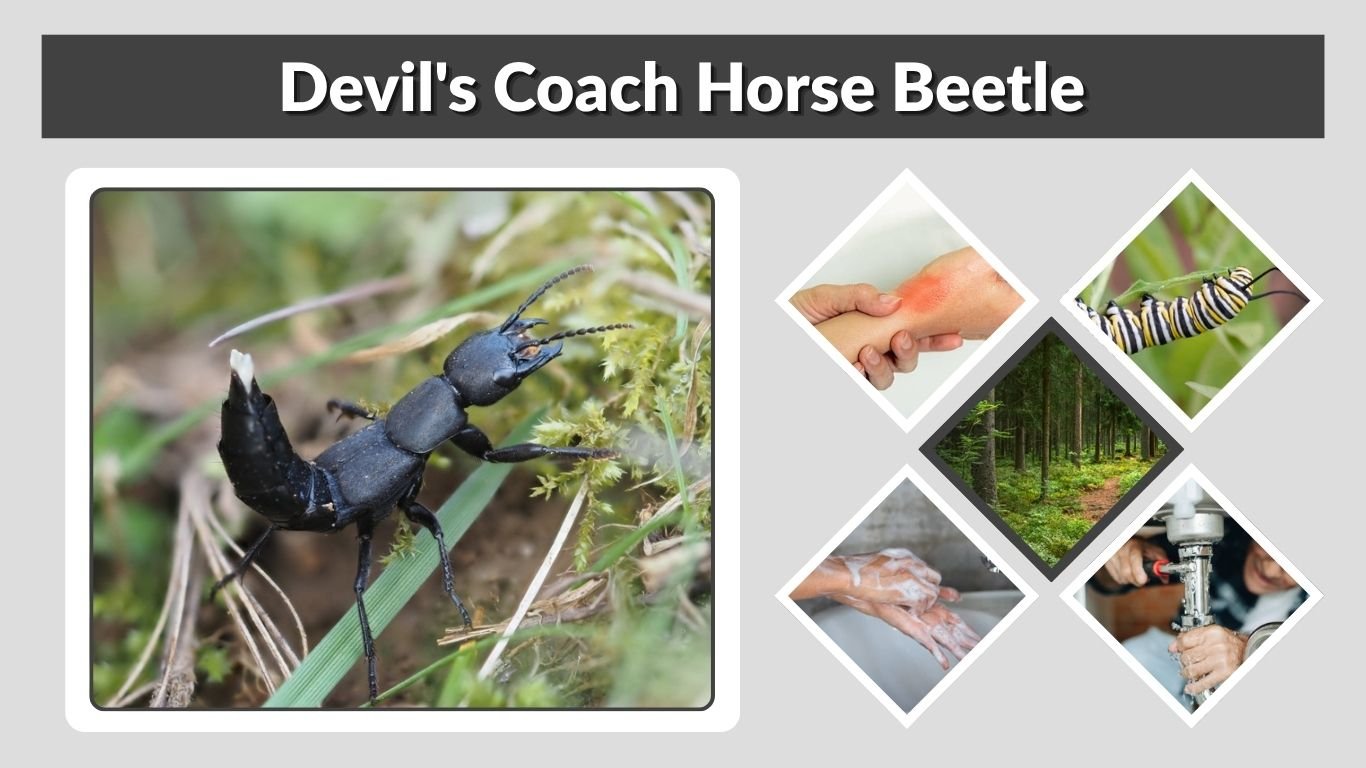
The Devil’s Coach Horse Beetle (Ocypus olens) is a fascinating black beetle recognized for its long body, powerful jaws, and unusual scorpion-like defensive posture. Commonly found in gardens, woodlands, and grasslands, this predatory insect plays an important role in controlling smaller invertebrates. Although its raised abdomen and threatening appearance may seem alarming, it is not usually dangerous to humans. Understanding the Devil’s Coach Horse Beetle’s identification, bite, habitat, diet, and life cycle can help you recognize this remarkable insect and handle unexpected encounters safely.
What Is a Devil’s Coach Horse Beetle?
The Devil’s Coach Horse Beetle is a large rove beetle belonging to the Staphylinidae family. Its scientific name is Ocypus olens, although older references sometimes identify it as Staphylinus olens. It is especially famous for raising its abdomen and opening its jaws when threatened, creating an appearance similar to a defensive scorpion.
Devil’s Coach Horse Beetle Facts
- Scientific name: Ocypus olens
- Family: Staphylinidae
- Order: Coleoptera
- Color: Matte black
- Size: Approximately 20–32 mm long
- Habitat: Gardens, grasslands, woodlands, and hedgerows
- Diet: Predatory; eats various invertebrates
- Activity: Primarily nocturnal
- Flight: Capable of flying but rarely does
- Defensive behavior: Raises abdomen and releases a foul-smelling secretion
- Bite: Can bite painfully when handled or threatened
Devil’s Coach Horse Beetle Identification
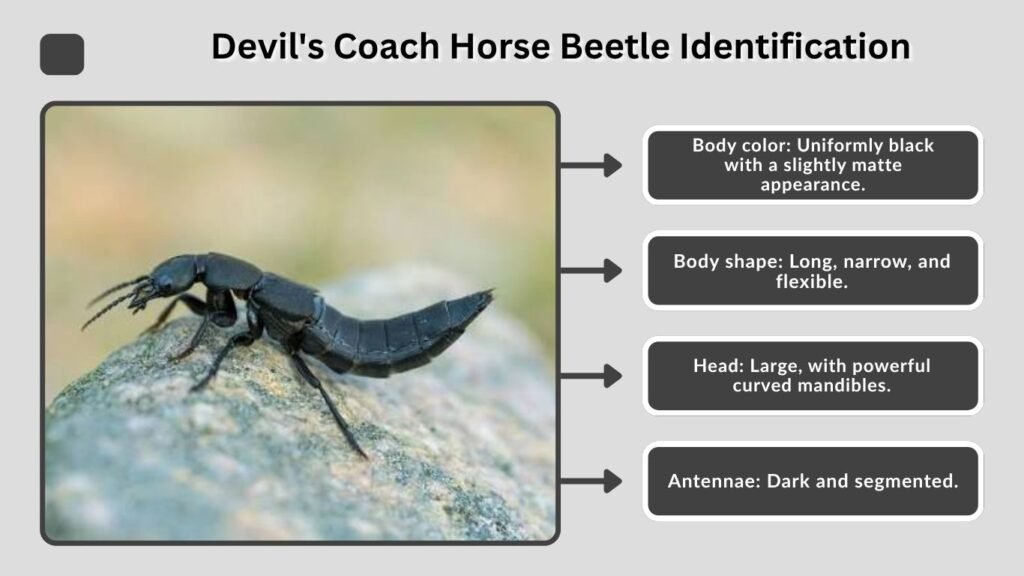
Identifying a Devil’s Coach Horse Beetle is relatively easy because of its elongated black body and unusually short wing covers. Unlike many beetles, its wing cases leave much of the abdomen exposed. Its distinctive posture, strong mandibles, and rapid movements provide additional clues that distinguish it from other common garden insects.
Physical Appearance and Body Features
- Body color: Uniformly black with a slightly matte appearance.
- Body shape: Long, narrow, and flexible.
- Head: Large, with powerful curved mandibles.
- Antennae: Dark and segmented.
- Wing covers: Short, exposing most abdominal segments.
- Legs: Six relatively long legs adapted for running.
- Abdomen: Flexible and capable of curling upward.
- Body surface: Covered with tiny dark hairs.
Devil’s Coach Horse vs. Other Rove Beetles
The Devil’s Coach Horse is itself a rove beetle. However, the Staphylinidae family contains thousands of species with similar elongated bodies.
Many rove beetles are considerably smaller and have different coloration.
The Devil’s Coach Horse is distinguished by its relatively large size, all-black appearance, powerful jaws, and characteristic defensive posture.
Are Devil’s Coach Horse Beetles Dangerous?
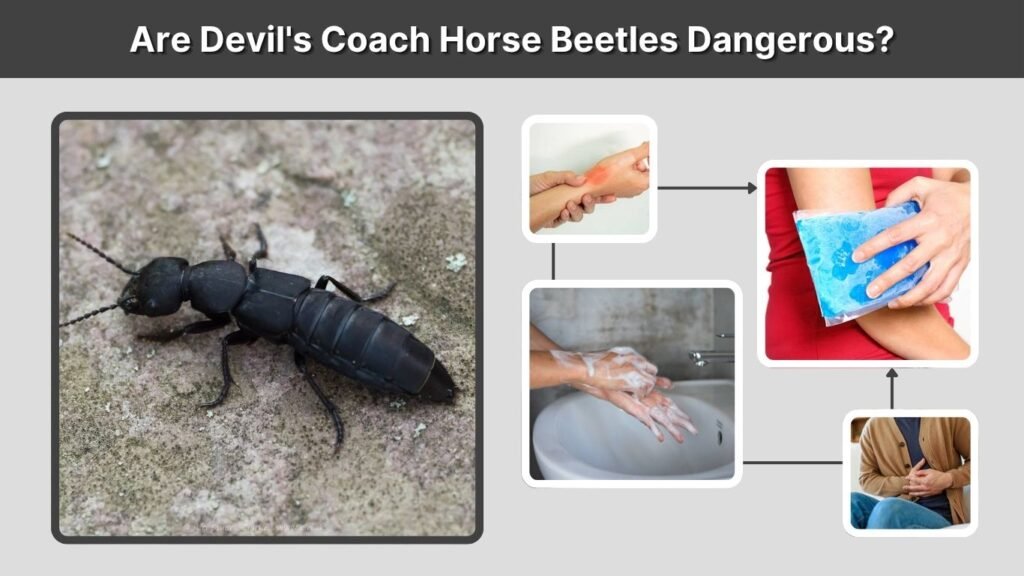
Despite their intimidating appearance, Devil’s Coach Horse Beetles are not considered a serious threat to humans. Their defensive behavior is primarily intended to discourage predators. However, their strong mandibles can cause painful bites, and the unpleasant-smelling secretion released from their abdomen may make close encounters uncomfortable.
Do Devil’s Coach Horse Beetles Bite?
Yes, Devil’s Coach Horse Beetles can bite humans when they are picked up, trapped, or threatened.
Their powerful jaws are designed to capture and crush small invertebrates. A defensive bite may cause temporary pain, redness, or minor skin injury.
These beetles do not normally seek out humans or attack without provocation. Most bites can be avoided by leaving them undisturbed.
Do Devil’s Coach Horse Beetles Sting or Have Poison?
No, Devil’s Coach Horse Beetles do not have a stinger, and their bites are not venomous.
When threatened, they sometimes raise their abdomen like a scorpion’s tail. This is a defensive display rather than preparation to sting.
They may also release foul-smelling chemical secretions to discourage predators.
What to Do If a Devil’s Coach Horse Beetle Bites You
If bitten, wash the affected area with soap and clean water. Apply a cold compress to help reduce discomfort.
Avoid scratching the wound, especially if the skin has been broken.
Seek medical advice if severe swelling, increasing redness, spreading pain, or signs of infection develop.
Where Do Devil’s Coach Horse Beetles Live?
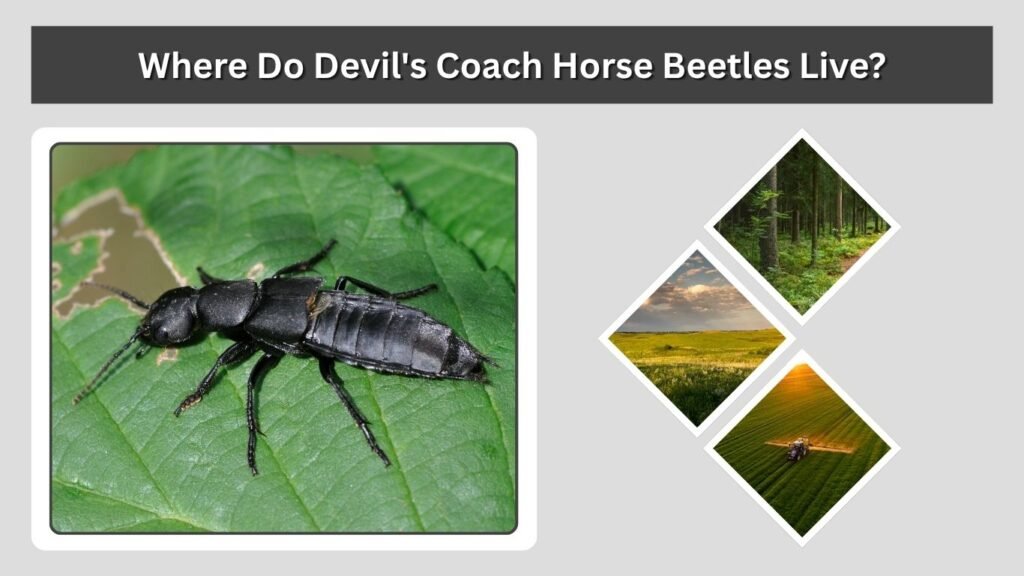
Devil’s Coach Horse Beetles occur in various terrestrial habitats where they can find shelter, moisture, and sufficient prey. They usually remain close to the ground, hiding beneath natural debris during daylight hours. Their preference for damp environments explains why they are frequently encountered in gardens and compost-rich areas.
Natural Habitat and Distribution
These beetles commonly inhabit woodlands, grasslands, farmland, gardens, and hedgerows.
They often shelter beneath stones, fallen logs, leaf litter, and compost heaps.
The species is native to parts of Europe and surrounding regions and has been introduced to other areas.
Devil’s Coach Horse Beetle in the UK and Ireland
The Devil’s Coach Horse is widespread across the United Kingdom and occurs in Ireland.
In Britain, adults are commonly observed between April and October, although activity varies with weather conditions.
Gardeners frequently encounter them when moving stones, turning compost, or clearing leaf litter.
Devil’s Coach Horse Beetle in North America
The species has also established populations in parts of western North America.
Documented records include California, Oregon, Washington, and Arizona.
However, not every large black rove beetle found in North America is Ocypus olens. Similar-looking native species may require closer examination for accurate identification.
What Do Devil’s Coach Horse Beetles Eat?
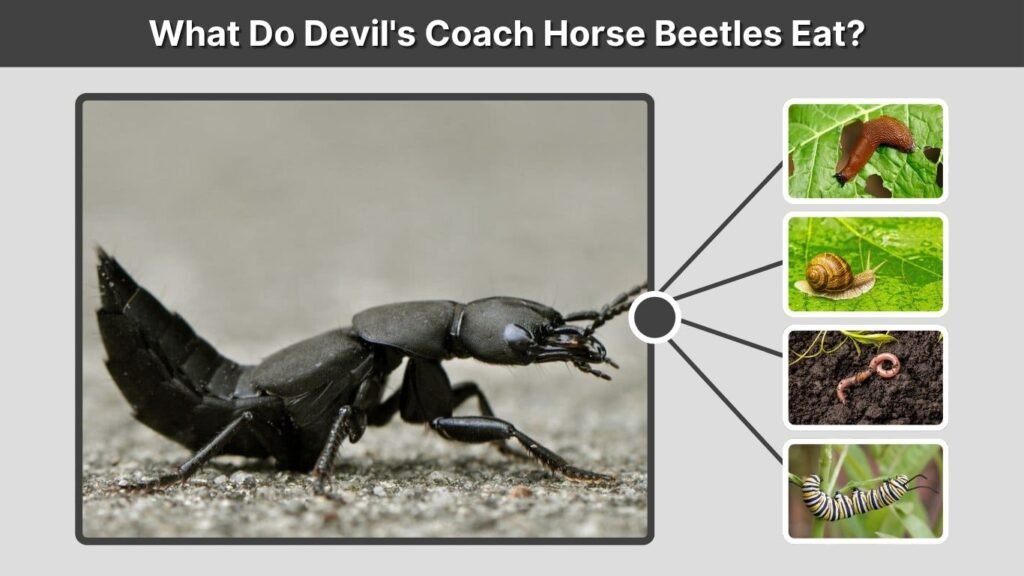
Devil’s Coach Horse Beetles are active predators that hunt smaller animals living near the ground. Their powerful jaws allow them to capture and consume a variety of invertebrates. Both adults and larvae are predatory, making them useful members of garden ecosystems where they can help regulate populations of certain pests.
Devil’s Coach Horse Beetle Diet
- Slugs: Small slugs may become prey.
- Snails: They can attack certain snails, including garden species.
- Earthworms: Soft-bodied worms provide food.
- Caterpillars: Vulnerable caterpillars may be captured.
- Woodlice: These ground-dwelling invertebrates are potential prey.
- Other insects: Various small insects and larvae are consumed.
- Spiders: Smaller spiders may occasionally be taken.
Are Devil’s Coach Horse Beetles Good for Gardens?
Yes, these beetles can be beneficial garden predators.
By feeding on slugs, snails, and other invertebrates, they contribute to natural population control.
They do not normally damage plants or feed on household materials.
Maintaining healthy soil, natural ground cover, and pesticide-free garden areas can support these useful insects.
Devil’s Coach Horse Beetle Life Cycle
The Devil’s Coach Horse Beetle undergoes complete metamorphosis, developing through four stages: egg, larva, pupa, and adult. Reproduction and development usually occur in sheltered environments, where moisture and available prey support immature beetles. Seasonal temperatures influence the timing of development.
Egg Stage
Females lay eggs individually in sheltered, damp environments such as soil, moss, or leaf litter.
These locations help protect developing eggs from drying out.
After hatching, the young larvae begin searching for small invertebrates to feed on.
Devil’s Coach Horse Beetle Larvae
The larvae have elongated, segmented bodies and prominent jaws. Older larvae are generally dark, often with brownish legs.
Like adults, they are active predators that hunt small soil-dwelling animals.
Larvae usually remain among soil particles, decaying vegetation, and other sheltered ground-level habitats.
Pupa and Adult Stages
After completing larval development, the beetle enters the pupal stage.
Inside the pupa, its body transforms into the recognizable adult form, complete with hardened wing covers and developed legs.
Adult beetles eventually emerge and begin hunting, mating, and occupying suitable habitats.
Devil’s Coach Horse Beetle in the House
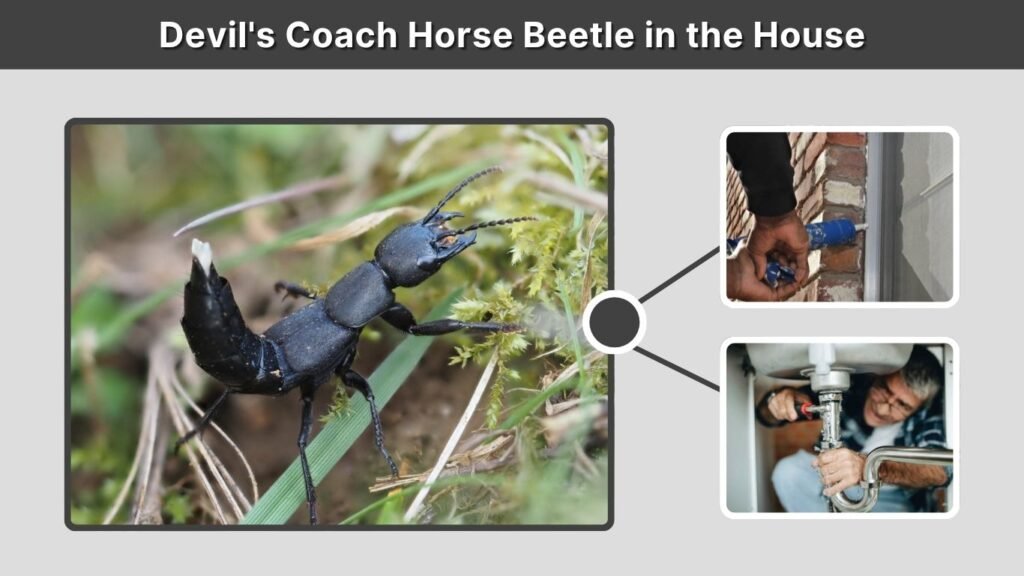
Finding a Devil’s Coach Horse Beetle inside a house can be surprising, especially because its appearance resembles a small scorpion. However, these beetles are not typical indoor pests. They generally enter buildings accidentally while searching for shelter or moving between outdoor habitats.
Why Do They Enter Houses?
They may enter through open doors, gaps around windows, or cracks near ground level.
Properties surrounded by gardens, compost heaps, and damp vegetation may occasionally experience indoor encounters.
A single beetle does not necessarily indicate an infestation.
These insects generally prefer outdoor environments where their natural prey is available.
How to Get Rid of Devil’s Coach Horse Beetles
- Avoid touching: Do not handle the beetle with bare hands.
- Use a container: Carefully place a cup or jar over the beetle.
- Slide cardboard underneath: Secure the beetle without crushing it.
- Release outdoors: Move it to sheltered vegetation away from entrances.
- Seal entry gaps: Check doors, windows, and foundation openings.
- Reduce indoor moisture: Repair leaks and address persistent dampness.
Chemical treatment is usually unnecessary for an occasional indoor visitor.
Can Devil’s Coach Horse Beetles Fly?
Although Devil’s Coach Horse Beetles have short outer wing covers, they possess folded flight wings underneath. They are capable of flying, but flight is rarely observed. Instead, these insects generally prefer moving rapidly across the ground, where they can search for prey and escape threats.
Defensive Behavior and Scorpion-Like Posture
When disturbed, a Devil’s Coach Horse Beetle frequently raises its abdomen and spreads its mandibles.
This posture makes the beetle appear larger and more threatening.
It may release a strong-smelling secretion from abdominal glands if the disturbance continues.
These defensive behaviors help discourage predators, including birds and other animals.
Devil’s Coach Horse Beetle Folklore and Meaning
The Devil’s Coach Horse Beetle has been surrounded by unusual beliefs for centuries. Its intimidating appearance and distinctive defensive posture contributed to its association with supernatural forces in European folklore. These stories reveal how people historically interpreted unfamiliar insects.
Historical Superstitions
In parts of Britain and Ireland, the beetle was traditionally associated with evil spirits, curses, and misfortune.
Some old beliefs suggested that its raised abdomen could direct a curse toward anyone who disturbed it.
These stories are folklore rather than scientific facts.
Today, the beetle is recognized as a natural predator with an important ecological role.
FAQs
1. Can a Devil’s Coach Horse Beetle Kill You?
No, the Devil’s Coach Horse Beetle is not considered deadly to humans. It can deliver a painful defensive bite, but it does not possess a venomous sting.
2. Do Devil’s Coach Horse Beetles Infest Houses?
They are not typical household infestation pests. Most indoor encounters involve individual beetles accidentally entering from nearby outdoor habitats.
3. How Big Is a Devil’s Coach Horse Beetle?
Adult Devil’s Coach Horse Beetles generally measure approximately 20–32 mm long. They are among the larger rove beetles commonly encountered in Britain.
4. Why Does a Devil’s Coach Horse Beetle Raise Its Tail?
The beetle raises its abdomen as a defensive display. This scorpion-like posture helps discourage predators, although the beetle has no stinger.
5. Are Devil’s Coach Horse Beetles Beneficial?
Yes, they are beneficial predators that consume slugs, snails, and other small invertebrates. Their feeding activities can contribute to natural pest control in gardens.
