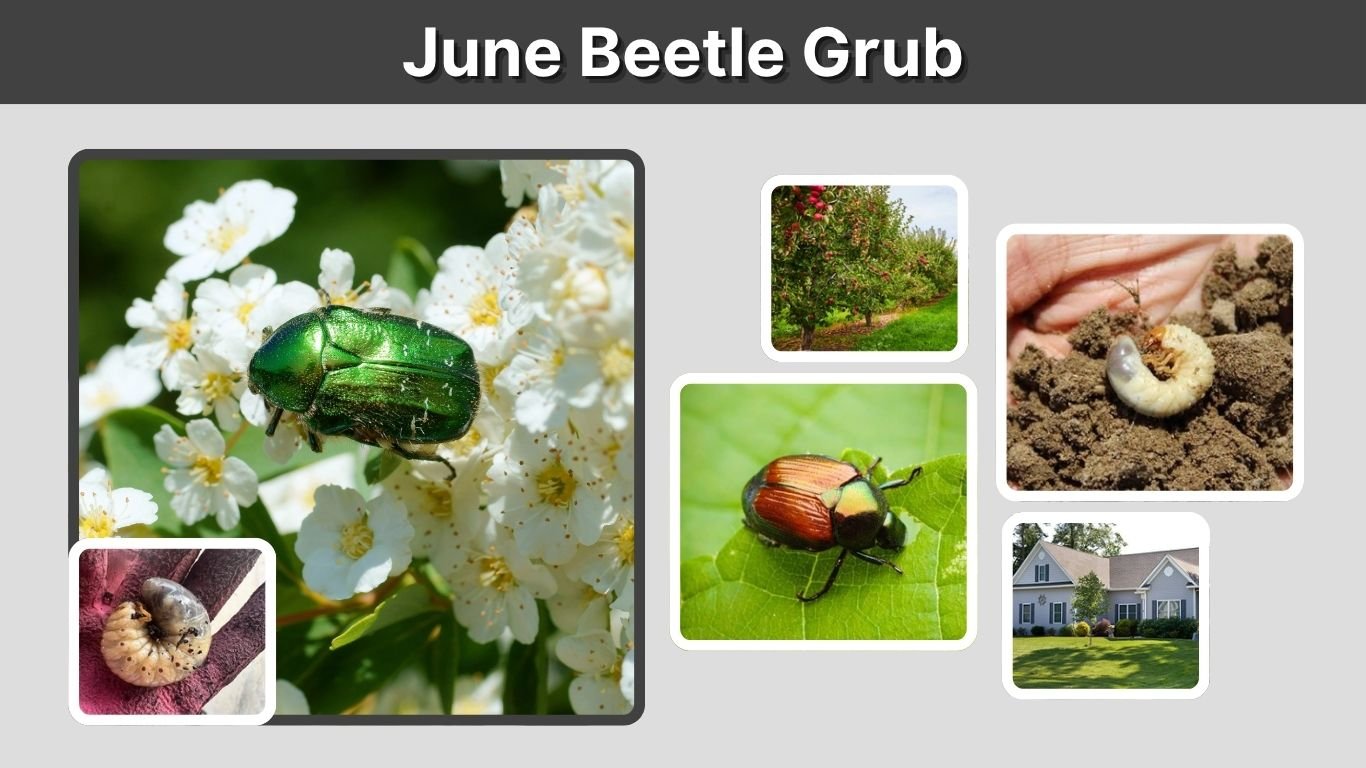
June beetle grubs are white, C-shaped larvae that live underground and sometimes cause serious damage to lawns, gardens, and plant roots. These larvae eventually develop into adult June bugs, commonly seen flying around outdoor lights during spring and summer. While some species feed heavily on grass roots, others primarily consume decaying organic matter. Identifying the correct grub species is important before choosing a treatment. This guide explains June beetle grub identification, life cycle, feeding habits, lawn damage, and effective control methods for maintaining healthy grass and garden soil.
What Is a June Beetle Grub?
A June beetle grub is the immature larval stage of a scarab beetle commonly called a June bug or May beetle. Many belong to the genus Phyllophaga, although other beetles, including green June beetles, also produce larvae commonly called June beetle grubs.
These grubs develop underground, where they feed, grow, and eventually transform into adult beetles. Depending on the species, their development may take one to several years.
Not all June beetle grubs are equally harmful. Some species consume living roots, while others primarily break down decaying organic materials.
How to Identify June Beetle Grubs

June beetle grubs have several recognizable features, including a pale body, brown head, and curved shape. However, accurately identifying the species can be difficult because many scarab beetle larvae look remarkably similar.
Their size, feeding behavior, and arrangement of tiny hairs near the abdomen can help distinguish different species.
Physical Appearance of June Beetle Grubs
Common identification features include:
- Body color: Creamy-white to pale yellow.
- Head: Brown or yellowish-brown with strong chewing mouthparts.
- Body shape: Thick, segmented, and usually curled into a C shape.
- Legs: Three pairs of short legs near the head.
- Size: Mature grubs commonly measure 1–2 inches, depending on species.
- Abdomen: Often slightly darker near the rear due to visible digestive contents.
How to Identify Green June Beetle Grubs
Green June beetle grubs (Cotinis nitida) are unusual because they often crawl on their backs using stiff body hairs.
Unlike typical white grubs, they may extend their bodies while moving rather than remaining curled.
Mature larvae can reach approximately 2 inches long and are sometimes found crawling across sidewalks after rainfall.
Common Types of June Beetle Grubs
Several beetle species are commonly associated with the name June bug. Their larvae share similar physical characteristics but differ in size, habitat, development, and feeding habits.
May/June Beetle Grubs
May/June beetle grubs belong primarily to the genus Phyllophaga. These creamy-white larvae live underground and feed on grass roots and other plant roots.
They commonly require two to three years to complete development, making them persistent lawn pests when populations become excessive.
Green June Beetle Grubs
Green June beetle grubs belong to Cotinis nitida. These large larvae primarily consume decomposing organic matter.
They frequently create tunnels through turfgrass and can damage lawns by disturbing roots and loosening the soil.
Unlike many Phyllophaga species, green June beetles usually complete their life cycle in one year.
Ten-Lined June Beetle Grubs
Ten-lined June beetle grubs, particularly Polyphylla decemlineata, are large, cream-colored larvae with brown heads.
They can grow approximately 2 inches long and feed underground on plant roots. They may damage trees and other plants, especially where larvae accumulate around root systems.
Development typically requires about two years.
June Beetle Grub vs. Japanese Beetle Grub

June bug grubs and Japanese beetle grubs look remarkably similar because both belong to the scarab beetle family. However, differences in their size, life cycle, and feeding behavior help distinguish them.
| Feature | June Beetle Grub (Phyllophaga) | Japanese Beetle Grub |
| Scientific name | Phyllophaga spp. | Popillia japonica |
| Appearance | Creamy-white, C-shaped | Creamy-white, C-shaped |
| Mature size | Often 1 inch or larger | About 1 inch |
| Life cycle | Usually 2–3 years | Usually 1 year |
| Feeding habits | Plant roots | Grass and other plant roots |
| Raster pattern | Two nearly parallel rows of spines | Short V-shaped arrangement of spines |
| Lawn damage | Can be severe | Can be severe |
The raster is the arrangement of hairs and spines on the underside of the grub’s final abdominal segment. Examining this feature with a magnifying lens provides a more reliable identification method than size alone.
June Beetle Grub Life Cycle
June beetle grubs undergo complete metamorphosis, passing through egg, larva, pupa, and adult stages. The development period depends on the species and environmental conditions.
Typical May/June beetles may require several years underground, while green June beetles usually develop within one year.
Four Stages of Development
- Egg stage: Adult females deposit eggs in soil during the breeding season. Eggs usually hatch within several weeks.
- Larval stage: Newly hatched grubs begin feeding and growing underground. They pass through three larval stages, called instars.
- Pupal stage: Mature larvae form protective chambers within the soil. Their bodies gradually transform into adult beetles.
- Adult stage: Adult beetles emerge, feed, mate, and reproduce. Many June beetle species become active during late spring and summer.
How Long Do June Beetle Grubs Live?
The larval stage of many Phyllophaga species lasts approximately one to three years, depending on the species and climate.
Green June beetle larvae develop more quickly, generally completing their development within a year.
Grubs often move deeper underground during winter and return closer to plant roots when temperatures rise.
Where Do June Beetle Grubs Live?

June beetle grubs live in soil beneath lawns, gardens, pastures, orchards, and wooded landscapes.
Many species prefer areas containing abundant roots, while green June beetle grubs are especially associated with soils rich in decomposing organic matter.
Their depth changes with seasonal conditions. During active feeding, root-feeding grubs remain closer to the surface. During winter or drought, they may move deeper underground.
What Do June Beetle Grubs Eat?
Most Phyllophaga grubs consume living plant roots, particularly grass roots.
Green June beetle grubs primarily eat decaying leaves, organic debris, compost, and other decomposing materials.
Although their feeding habits differ, both groups can create lawn problems when large numbers develop in the same area.
Signs of June Beetle Grub Damage in Lawns
Root-feeding June beetle grubs can damage lawns by weakening the underground root system. Their feeding reduces the grass’s ability to absorb water and nutrients.
Damage often becomes more noticeable during hot or dry weather, when weakened grass cannot tolerate additional environmental stress.
Common Signs of Grub Infestation
- Brown patches: Irregular areas of dying or discolored grass.
- Loose turf: Damaged grass may lift easily because roots have been eaten.
- Poor growth: Affected areas become thin and weak.
- Animal activity: Birds, skunks, and raccoons may dig for grubs.
- Visible larvae: White, C-shaped grubs appear beneath damaged turf.
- Soil mounds: Green June beetle grubs may produce small mounds around their tunnels.
June Beetle Grub Damage Threshold Per Square Foot
Grub thresholds vary by species, grass condition, and soil moisture. Cornell University provides the following general treatment thresholds for turfgrass.
| Grub Species | Approximate Threshold per Square Foot |
| May/June beetle | 3–4 |
| Green June beetle | 5 |
| Japanese beetle | 8–10 |
These figures are assessment guidelines rather than automatic reasons to spray. A healthy lawn may tolerate higher populations, while stressed turf can suffer damage at lower densities.
How to Get Rid of June Beetle Grubs

Effective June beetle grub control begins with identifying the species and confirming that larvae are causing damage.
Small populations may not require treatment, especially when the lawn remains healthy. Severe infestations may need a combination of cultural, biological, and carefully selected chemical controls.
Natural and Organic Control Methods
- Inspect the soil: Examine damaged lawn sections to identify grub populations before treatment.
- Maintain healthy grass: Proper mowing, fertilization, and irrigation help turf tolerate some root feeding.
- Use beneficial nematodes: Certain insect-parasitic nematodes may suppress susceptible grubs under suitable conditions.
- Encourage natural enemies: Birds, predatory insects, and parasitic wasps help regulate beetle populations.
- Improve soil management: Avoid excessive thatch buildup and manage decomposing organic material where green June beetles are problematic.
- Monitor regularly: Check previously damaged areas during periods when young grubs are actively feeding.
Chemical June Beetle Grub Control
Chemical treatment may be necessary when grub populations exceed locally recommended thresholds and significant damage is occurring.
Products labeled for the identified species should be applied according to their instructions. Treatments targeting young, actively feeding larvae are generally more effective than applications against mature grubs.
For many white grubs, late summer is an important treatment period, although timing varies by species and location.
Does Milky Spore Kill June Beetle Grubs?
Commercial milky spore products are intended primarily for Japanese beetle grubs, not ordinary May/June beetle or green June beetle grubs.
Even against Japanese beetles, university studies have found inconsistent control from commercial milky spore applications.
Therefore, milky spores should not be considered a dependable general treatment for June beetle grubs.
Are Green June Beetle Grubs Beneficial?
Green June beetle grubs contribute to soil ecosystems by breaking down decomposing organic materials.
Their feeding helps recycle nutrients, while their underground activity can influence soil structure. They also provide food for birds and other animals.
The blue-winged wasp (Scolia dubia) is a natural parasitoid of green June beetle grubs.
However, excessive grub tunneling may loosen soil and damage turfgrass. Their overall impact depends on population size and environmental conditions.
FAQs
1. Are June Beetle Grubs Harmful to Humans?
June beetle grubs are not poisonous or venomous and generally do not bite humans. They live underground and primarily feed on plant roots or decaying material. However, washing hands after handling grubs or garden soil is recommended for hygiene.
2. Why Are Green June Beetle Grubs Suddenly Everywhere?
Green June beetle grubs may suddenly appear after heavy rainfall or during periods of surface activity. Their underground tunnels can become saturated, encouraging movement above ground. Large populations may also emerge from soil containing abundant decomposing organic matter.
3. Do June Beetle Grubs Damage St. Augustine Grass?
Yes, root-feeding June beetle grubs can damage St. Augustine grass by consuming its roots. However, other scarab beetle larvae can also infest this grass. Correct species identification is important before choosing control measures or applying lawn treatments.
4. Can June Beetle Grubs Damage Strawberry Plants?
Yes, root-feeding June beetle grubs can damage strawberries by consuming underground roots. Severe infestations may cause wilting, weak growth, and reduced production. Examining soil around struggling plants helps determine whether white grubs are responsible for the damage.
5. Do June Beetle Grubs Turn Into June Bugs?
Yes, June beetle grubs eventually develop into adult beetles through complete metamorphosis. After feeding underground, mature larvae enter the pupal stage and transform into adults. Depending on the species, the process may take approximately one to three years.