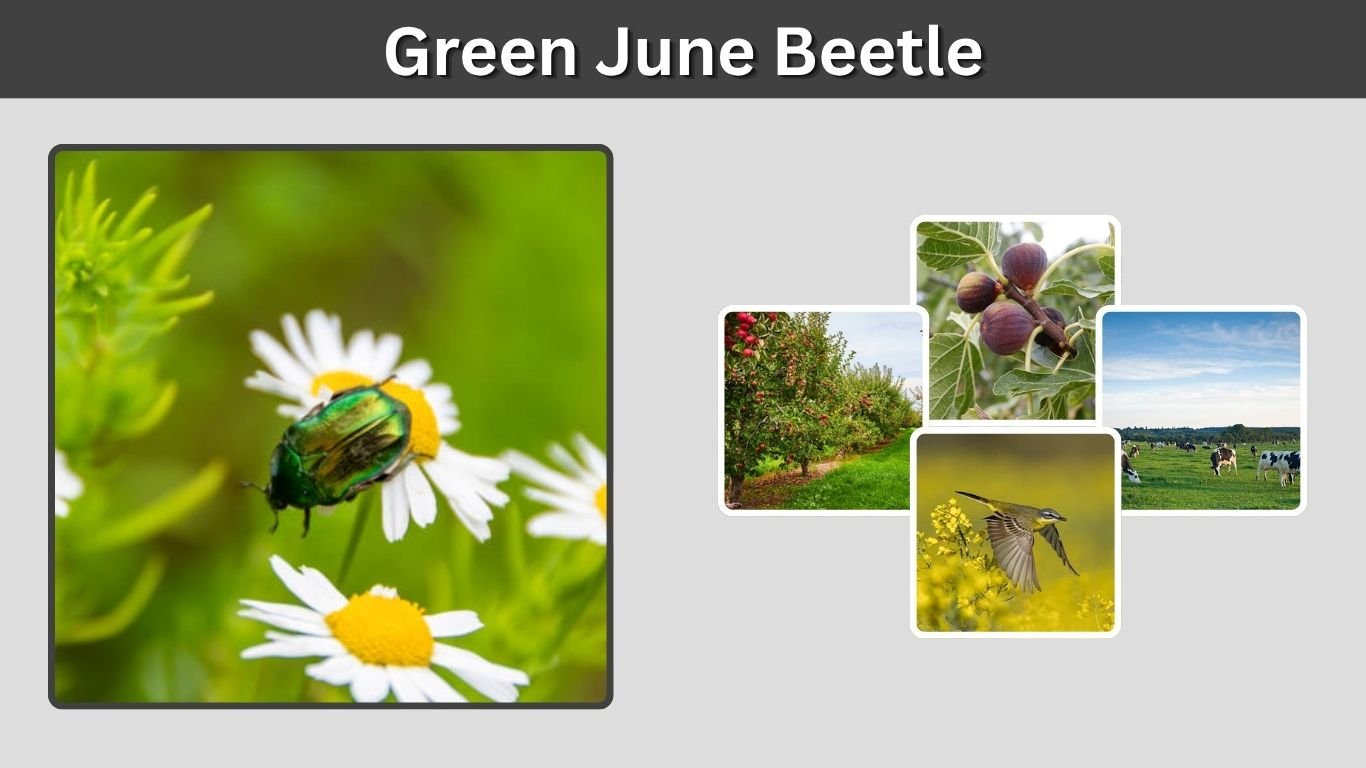
The green June beetle (Cotinis nitida) is a large, metallic-green insect commonly seen flying over lawns and gardens during summer. Although its loud buzzing and unusual flying behavior can seem intimidating, this beetle is generally harmless to humans. Adults feed on ripe fruits, while their larvae live underground and consume decaying organic matter. However, large populations can damage lawns, fruit trees, and gardens. Understanding green June beetle identification, habitat, diet, life cycle, and control methods can help homeowners manage these insects effectively.
What Is a Green June Beetle?
The green June beetle is a scarab beetle belonging to the family Scarabaeidae and the order Coleoptera. Its scientific name is Cotinis nitida. This species is native to North America and is particularly common in the eastern and southern United States.
Green June beetles are sometimes called green June bugs or fig-eater beetles, although the name figeater also refers to a closely related species. They are recognizable by their shiny appearance, substantial body size, and noisy daytime flights.
Unlike many ordinary June bugs, which are brown and commonly active at night, green June beetles are primarily daytime insects.
Green June Beetle Identification and Appearance
Adult green June beetles have a distinctive appearance that makes them relatively easy to recognize. Their metallic coloring, oval body, and large size distinguish them from many other garden beetles. However, they are sometimes confused with Japanese beetles and western figeater beetles.
Physical Characteristics
- Size: Adults generally measure ¾ to 1 inch long.
- Color: The upper body is velvety green with bronze, yellow, or brownish margins.
- Underside: Usually shiny metallic green or golden-green.
- Wings: Hardened wing covers protect the delicate flying wings underneath.
- Body shape: Broad, oval, and somewhat flattened.
- Antennae: Short, clubbed antennae with expandable leaflike tips.
- Legs: Six sturdy legs adapted for walking and gripping surfaces.
Male vs. Female Green June Beetles
Male and female green June beetles look remarkably similar. Both display metallic coloring and robust bodies.
Females may have broader abdomens, especially when carrying eggs. Males actively search for females during mating season, often flying close to the ground.
However, accurately identifying their sex usually requires examining anatomical features rather than relying on size or color alone.
Where Do Green June Beetles Live?
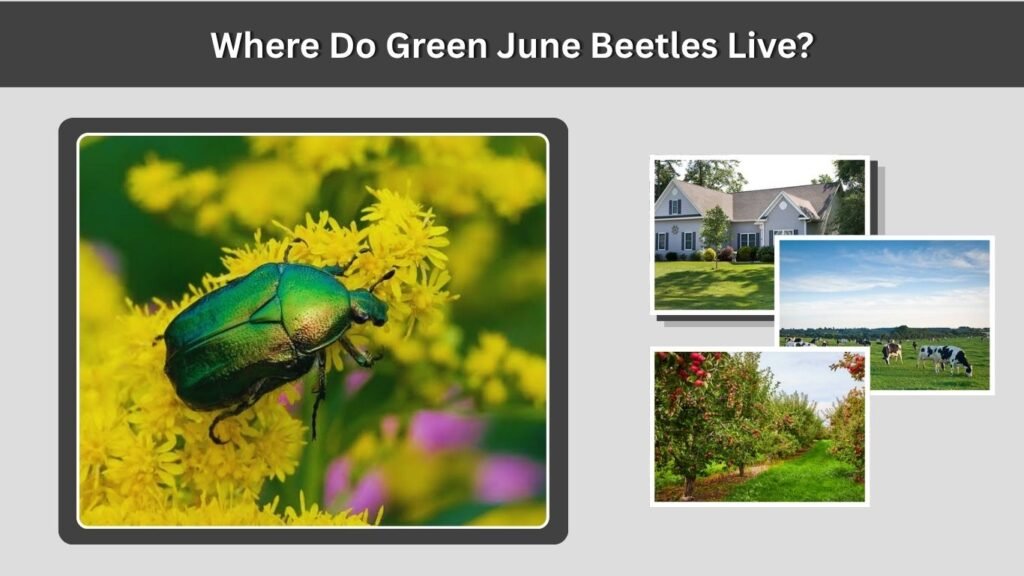
Green June beetles inhabit lawns, gardens, orchards, pastures, and grassy landscapes. They prefer areas where soil contains plenty of decomposing organic material because these conditions support larval development.
Their native range covers much of the eastern United States, extending south into Florida and west into portions of Texas, Oklahoma, Kansas, and nearby regions.
Green June Beetles in Different States
Green June beetles are frequently observed in Texas, North Carolina, Florida, Ohio, Maryland, and other eastern states.
Sightings can also occur in the Midwest. In California, however, large green beetles are more commonly the western figeater beetle (Cotinis mutabilis), which closely resembles the eastern green June beetle.
When Are Green June Beetles Active?
Adults usually appear from June through August, although local climate affects emergence.
They are particularly active during warm, sunny days, often flying low over grass while searching for mates. Their loud buzzing can resemble a bumblebee.
What Do Green June Beetles Eat?
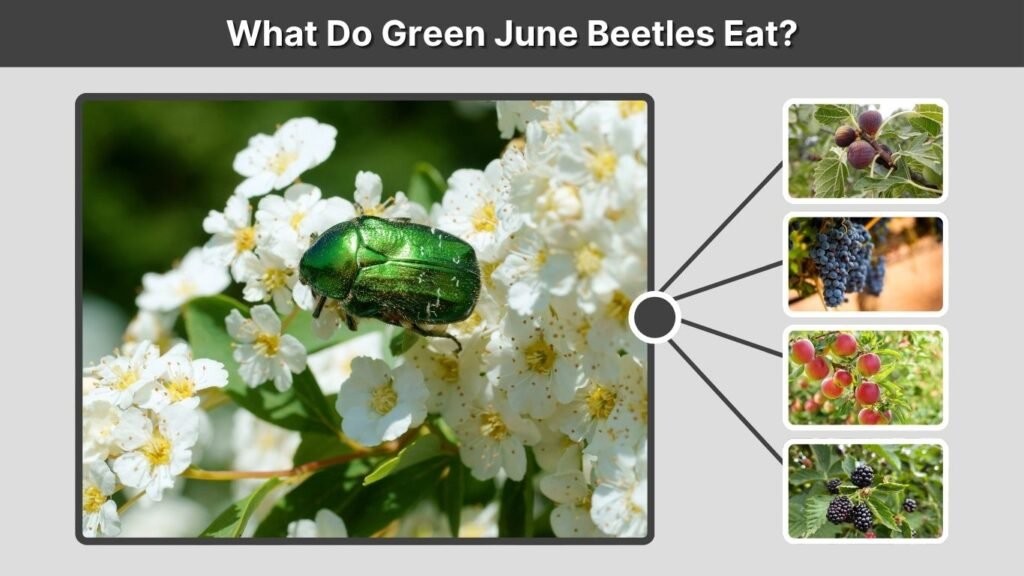
The green June beetle’s diet changes significantly between its larval and adult stages. Adult beetles primarily consume soft fruits and sugary plant materials, while underground grubs feed mostly on decomposing organic matter.
Adult Green June Beetle Diet
Adult beetles commonly feed on:
- Ripe figs and peaches
- Grapes and plums
- Apples and pears
- Blackberries and raspberries
- Damaged or fermenting fruits
- Soft plant tissues and sap
Adults are especially attracted to overripe fruits because softened skins are easier to feed on.
What Do Green June Beetle Grubs Eat?
Green June beetle larvae primarily consume decaying leaves, compost, manure, and other decomposing organic material.
They sometimes feed on tender roots or underground plant parts. However, much of their lawn damage comes from tunneling through soil rather than directly eating healthy grass roots.
Their feeding also helps break down organic debris, contributing to nutrient recycling.
Green June Beetle Life Cycle
Green June beetles undergo complete metamorphosis, developing through four stages: egg, larva, pupa, and adult. In most of their range, they complete approximately one generation each year.
Four Stages of Development
- Egg stage: After mating, females deposit eggs in moist soil containing organic matter. The eggs generally hatch within 10–15 days.
- Larval stage: White grubs develop underground, consuming decomposing material. They grow throughout late summer and autumn before overwintering in the soil.
- Pupal stage: Mature larvae form protective earthen chambers in spring. Inside these chambers, they transform into adult beetles.
- Adult stage: Adults emerge during summer, feed, mate, and lay eggs, beginning another generation.
Green June Beetle Grubs and Larvae
Green June beetle grubs are creamy-white, thick-bodied larvae that can grow approximately 2 inches long.
Unlike many other beetle larvae, they frequently crawl on their backs using stiff body hairs for movement. This unusual behavior is a useful identification feature.
Gardeners sometimes notice these large grubs on sidewalks, driveways, or lawns after heavy rainfall.
Are Green June Beetles Harmful or Dangerous?
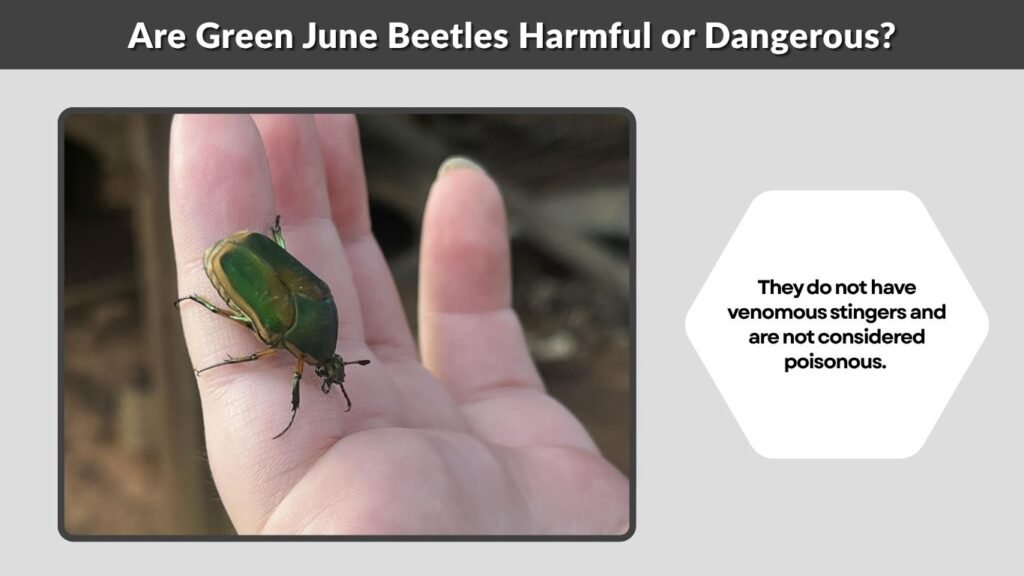
Green June beetles may appear threatening because of their large bodies and noisy flight. However, they pose little direct danger to humans or pets.
They do not have venomous stingers and are not considered poisonous. Their main importance comes from their potential to damage fruit crops and turfgrass when populations become excessive.
Do Green June Beetles Bite?
Green June beetles are not aggressive and rarely, if ever, bite people. Their mouthparts are adapted for feeding rather than defending themselves against humans.
A beetle might grip someone’s skin with its legs when handled, but this is not the same as a bite.
Are Green June Beetles Harmful to Dogs?
Green June beetles are not known to be poisonous to dogs. However, eating large numbers of insects can cause digestive discomfort.
Owners should discourage pets from swallowing beetles, especially if the insects may have been exposed to pesticides.
Can Green June Beetles Damage Plants?
Adult beetles can damage ripe fruits, particularly peaches, figs, and grapes.
Their larvae may disturb grass roots through tunneling, producing loose soil, small mounds, and thinning turf. Serious damage is more likely when grub populations become unusually high.
Green June Beetle vs. Japanese Beetle vs. Figeater Beetle

Green June beetles are frequently confused with Japanese beetles and figeater beetles because all three may display metallic-green coloring. However, their size, distribution, and physical characteristics help distinguish them.
| Feature | Green June Beetle | Japanese Beetle | Figeater Beetle |
| Scientific name | Cotinis nitida | Popillia japonica | Cotinis mutabilis |
| Average size | ¾–1 inch | About ½ inch | ¾–1⅓ inches |
| Appearance | Velvety green with tan margins | Green head, coppery wings, white hair tufts | Metallic green with tan margins |
| Main distribution | Eastern United States | Much of eastern United States | Western and southwestern United States |
| Adult diet | Ripe fruit | Leaves, flowers, fruits | Ripe and fermenting fruits |
| Typical lawn damage | Grub tunneling | Grub root feeding | Usually associated with organic-rich areas |
Green June beetles and figeater beetles can be extremely difficult to distinguish without expert examination. Geographic location often provides the most useful initial clue.
How to Get Rid of Green June Beetles

Green June beetle control should focus on protecting fruit, reducing favorable breeding conditions, and identifying damaging grub populations. A few beetles flying over the lawn usually do not require treatment.
Control becomes more important when numerous adults damage fruit or underground larvae cause visible turf deterioration.
Natural Green June Beetle Control Methods
- Remove fallen fruit: Collect overripe or rotting fruits regularly to reduce attraction.
- Protect ripening crops: Use suitable insect netting or physical barriers around vulnerable fruit.
- Manage organic debris: Avoid excessive accumulations of decomposing material in problem areas.
- Handpick adults: Remove beetles from accessible plants when practical.
- Maintain healthy lawns: Improve drainage, manage thatch, and avoid unnecessary manure accumulation.
- Encourage natural predators: Birds and certain parasitic wasps naturally help regulate beetle populations.
Green June Beetle Grub Control
Before treating a lawn, examine the soil for grubs and determine whether their activity is responsible for the damage.
Small soil mounds, open burrows, and loose grass may indicate green June beetle larvae.
If severe damage is confirmed, an insecticide specifically labeled for green June beetle grubs may be appropriate. Late summer, when young grubs are active near the surface, is often the best treatment period.
Always follow local pesticide regulations and product-label instructions.
Do Green June Beetle Traps Work?
Fruit-based traps may capture some adult beetles, but strong attractants can also draw additional insects into the area.
Trapping alone rarely provides dependable control of an established population. Removing fallen fruit and protecting vulnerable crops are generally better first steps.
Are Green June Beetles Good or Bad for the Environment?
Green June beetles have both beneficial and potentially damaging effects on their surroundings.
Their larvae help decompose organic matter, supporting nutrient cycling in soil. The beetles also serve as food for birds and other wildlife.
However, large numbers can damage fruit harvests and disrupt turfgrass through extensive burrowing.
Therefore, green June beetles are best considered native insects that occasionally become pests rather than insects that always require elimination.
FAQs
1. Are Green June Beetles Blind?
No, green June beetles are not blind. They have compound eyes that detect movement and surrounding objects. Their occasionally clumsy flight may cause collisions with people or structures, but this behavior does not indicate poor eyesight or blindness.
2. How Long Do Green June Beetles Live?
Green June beetles generally complete their entire life cycle in about one year. Most of that time is spent developing underground as larvae. Adults usually survive for several weeks during summer, depending on environmental conditions and natural threats.
3. Are Green June Beetles Invasive?
Green June beetles are native to much of the eastern United States and are not considered invasive within their natural range. However, their populations can occasionally become large enough to cause problems in lawns, orchards, and gardens.
4. Do Green June Beetles Bring Good Luck?
Some people associate green beetles with good luck, prosperity, renewal, or positive changes. These interpretations reflect personal or cultural symbolism rather than scientific facts. Green June beetles have no demonstrated ability to predict future events or influence someone’s fortune.
5. Can Green June Beetles Fly?
Yes, green June beetles are strong daytime fliers. Their flight produces a loud buzzing sound, and they frequently travel close to grassy surfaces. Although their movement sometimes appears awkward, they can fly between lawns, gardens, orchards, and feeding locations.