
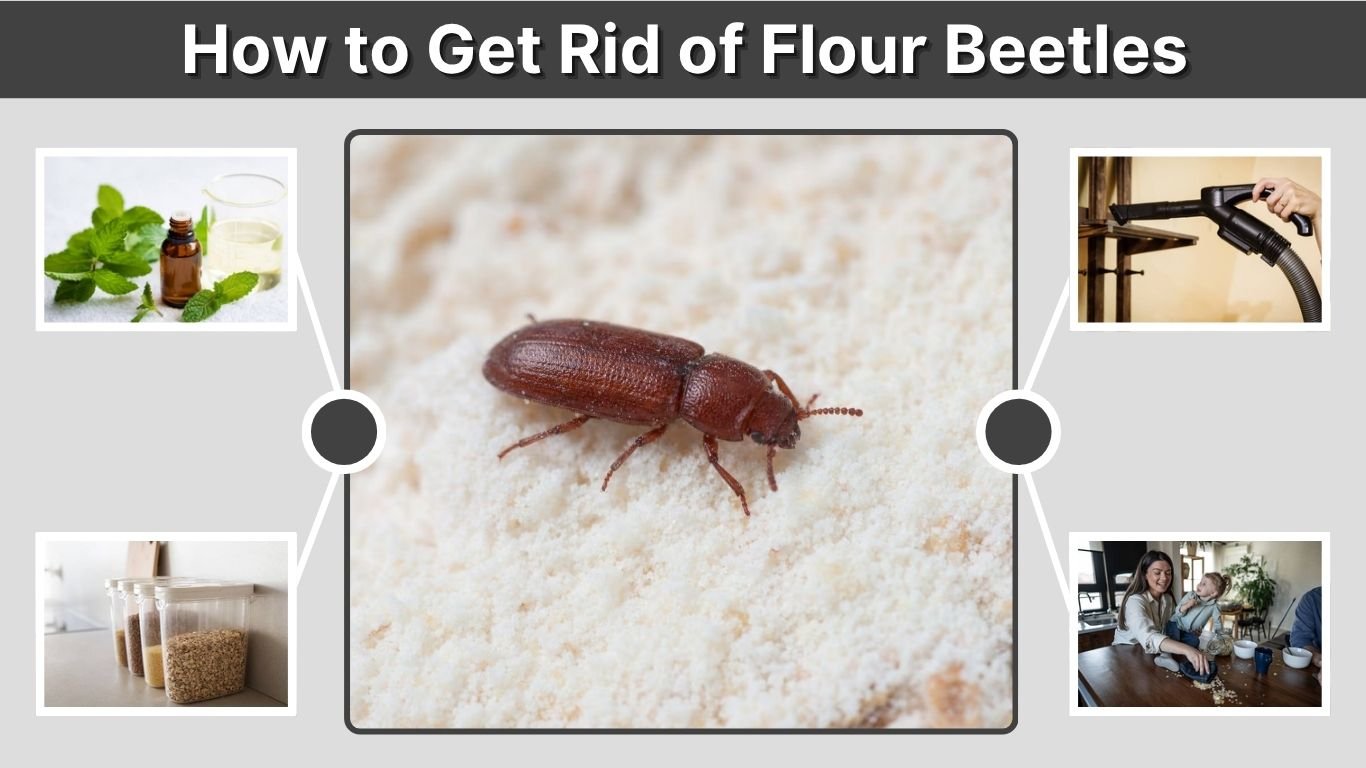
Finding tiny reddish-brown beetles crawling through flour, cereal, or pantry shelves can be frustrating. These pests reproduce in stored foods and can spread throughout your kitchen if left untreated. Fortunately, learning how to get rid of flour beetles doesn’t require complicated treatments or expensive chemicals. By identifying contaminated products, cleaning storage areas, and improving food storage, you can eliminate an infestation and prevent these unwanted insects from returning.
What Are Flour Beetles?
Flour beetles are small, reddish-brown insects that infest stored grain products, including flour, cereal, pasta, and baking mixes. Adults usually measure about 3–4 millimeters long. They feed on processed grain materials and reproduce inside food packages, making early infestations difficult to notice. Two species commonly invade household pantries.
Red Flour Beetles vs. Confused Flour Beetles
The red flour beetle (Tribolium castaneum) and confused flour beetle (Tribolium confusum) look nearly identical. Both have flattened bodies, reddish-brown coloring, and small antennae.
Red flour beetles have antennae ending in a distinct three-segmented club and can fly under suitable conditions. Confused flour beetles have antennae that gradually thicken toward the tips and generally cannot fly.
Fortunately, the same removal methods work for both species.
How Do Flour Beetles Get in Your House?
Flour beetles frequently enter homes through food products that are already infested when purchased. Eggs or larvae may be hidden inside flour bags, grain packages, or dry pet food.
Once indoors, adults can spread to nearby food sources. They may also survive on grain dust, crumbs, and spilled flour behind appliances or inside cabinets.
How to Get Rid of Flour Beetles Step by Step
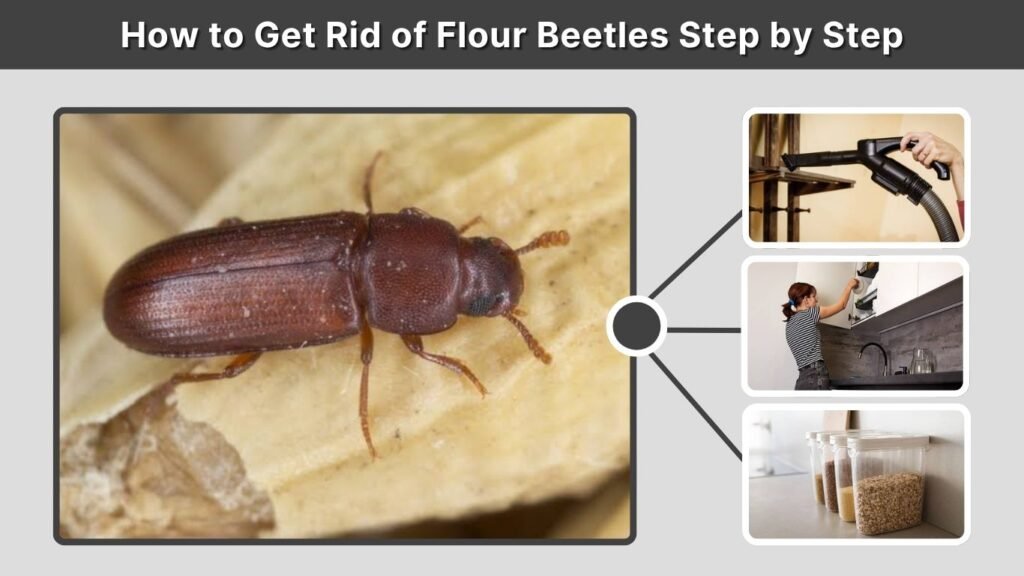
Successfully removing flour beetles requires eliminating their food sources and cleaning places where adults, larvae, and eggs may be hiding. Killing visible beetles alone will not solve the problem because additional insects may continue developing inside stored products.
Follow these seven steps to control the infestation.
1. Inspect All Dry Food Products
Start by removing everything from your pantry and checking each package carefully. Flour beetles often infest foods that have been stored for several weeks or months.
Pay particular attention to:
- Flour, cornmeal, and baking mixes
- Rice, cereal, pasta, and oatmeal
- Dried beans, nuts, and seeds
- Spices and dried herbs
- Pet food and birdseed
Look for crawling beetles, small cream-colored larvae, damaged packaging, or unusual odors.
2. Throw Away Infested Food
The most important step is removing the infestation source. Place heavily infested food in a sealed plastic bag and dispose of it in an outdoor trash container.
Avoid transferring contaminated flour into another storage container. This can spread beetles and eggs to additional foods.
Check nearby packages as well, even when the outside packaging appears undamaged.
3. Freeze Suspected Food Products
Freezing can kill flour beetles at different developmental stages. For dry products that are potentially infested but show no visible contamination, freezing at 0°F (-18°C) for approximately one week is a useful treatment.
Place the food in a freezer-safe, sealed container before freezing. Discard any food with obvious or extensive contamination rather than attempting to make it suitable for eating.
4. Vacuum Pantry Shelves and Corners
After removing stored food, thoroughly vacuum the pantry.
Concentrate on cabinet corners, shelf joints, cracks, and gaps where flour dust accumulates. Also clean underneath refrigerators, stoves, and other appliances.
Vacuuming removes loose food debris and exposed insects. Immediately empty the vacuum outdoors or discard its contents in a sealed bag to prevent beetles from escaping back into your house.
5. Clean Cabinets With Soap and Water
Use warm, soapy water to wipe shelves, cabinet walls, and storage surfaces. Remove any old shelf liners that trap crumbs.
Vinegar can also help wipe away food residue, but it is not a dependable treatment for flour beetle eggs or larvae.
Allow the shelves to dry completely before returning food containers. Remember that cleaning works best after all infested materials have been removed.
6. Store Food in Airtight Containers
Replace damaged cardboard boxes and thin plastic packaging with sturdy, pest-resistant containers.
Glass jars, metal canisters, and thick plastic containers with tightly fitting lids help prevent beetles from spreading between stored foods.
Label containers with purchase dates and use older products first. Avoid keeping large quantities of flour or grain products longer than necessary.
7. Monitor for Remaining Beetles
Continue inspecting your pantry after cleaning. Adult beetles may emerge from previously overlooked materials.
Sticky traps designed for stored-product beetles can help monitor activity, but traps alone will not eliminate the infestation.
If beetles continue appearing, inspect additional food sources and repeat the cleaning process.
How to Get Rid of Flour Beetles Naturally
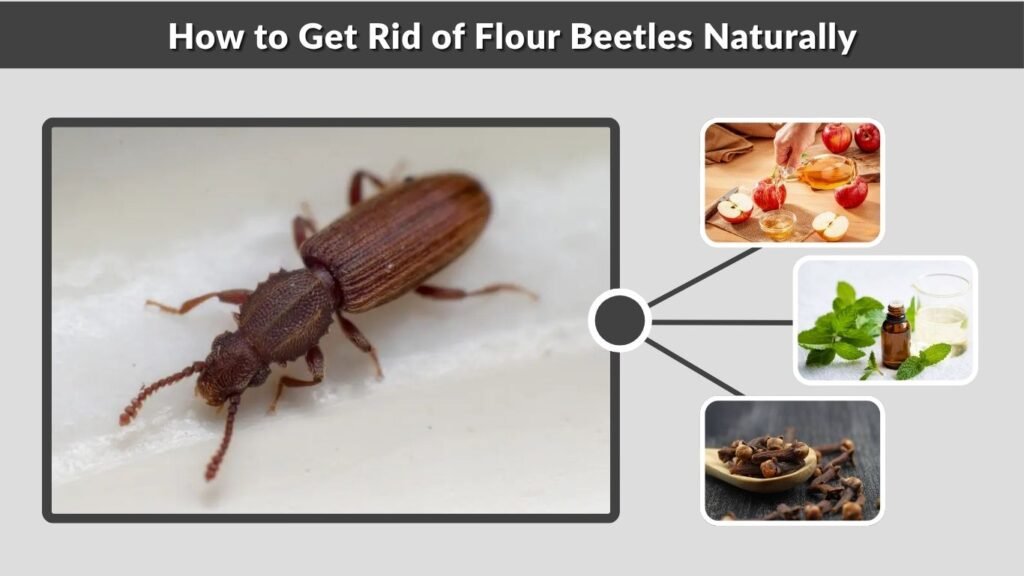
Natural flour beetle control focuses on sanitation, temperature treatments, and removing accessible food. These methods are generally more suitable for household kitchens than spraying pesticides around food storage areas. However, not every popular home remedy is scientifically proven to kill flour beetles or prevent reinfestation.
Vinegar and Other Home Remedies
White vinegar diluted with water can be used to clean empty pantry shelves and remove food residue. However, vinegar does not reliably eliminate hidden beetle eggs.
Similarly, bay leaves, cloves, and essential oils are sometimes recommended as natural repellents, but they should not replace proper cleaning and food disposal.
Avoid adding essential oils or household insecticides directly to stored food.
Using Freezing and Heat
Freezing is one of the most dependable nonchemical treatment methods.
Some stored dry foods can also be treated with controlled heat, but excessive temperatures may damage their quality. For home infestations, freezing suitable products or discarding contaminated foods is generally simpler.
Never use an oven, microwave, or heat source to treat food inside inappropriate packaging.
How to Get Rid of Flour Beetles in Your House
Flour beetles usually develop in stored food, although adults may wander into bedrooms, living rooms, and other spaces. Finding them outside the kitchen does not necessarily mean those rooms contain an active breeding population. The priority is discovering where the insects are feeding and reproducing.
Flour Beetles in the Pantry or Kitchen
Inspect every cupboard containing grain-based products. Check spilled food behind appliances, pet-feeding areas, and forgotten packages on high shelves.
Remove infested products, vacuum thoroughly, and store remaining food in sealed containers. Continue checking the area over the following weeks.
Flour Beetles in the Bedroom
If flour beetles appear in your bedroom, inspect stored snacks, pet treats, dried flower arrangements, and other possible food sources.
Vacuum along baseboards and furniture edges. Check nearby rooms because beetles may have wandered from an infested pantry.
If no stored-food source is found, confirm the insect’s identity before using treatments intended for flour beetles.
How to Get Rid of Flour Beetle Eggs and Larvae
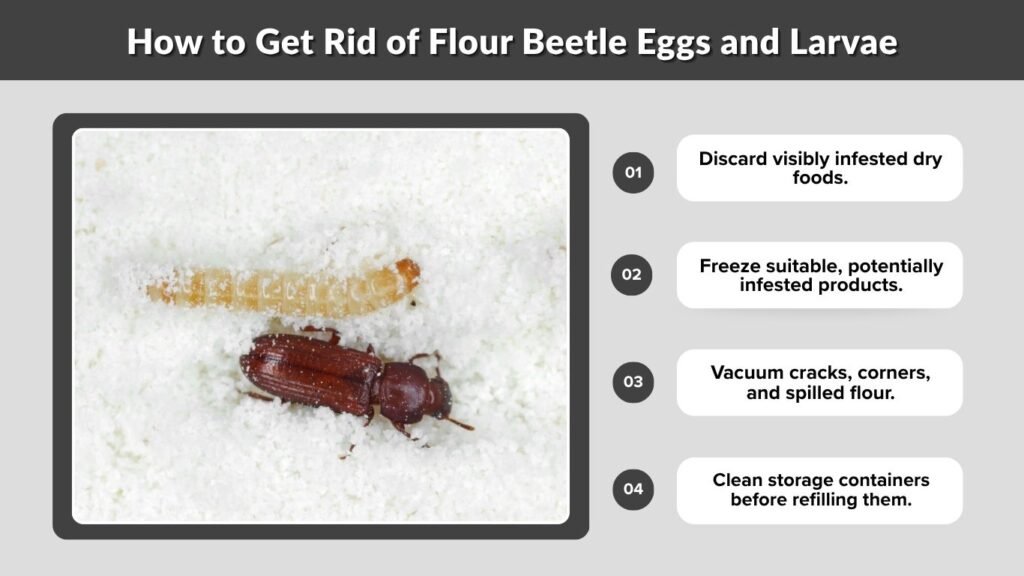
Flour beetles undergo four developmental stages: egg, larva, pupa, and adult. Females lay tiny eggs among food particles, making them difficult to detect without magnification. Larvae are cream-colored and wormlike, often hiding within contaminated food. Eliminating these immature stages is essential for long-term control.
Removing Hidden Eggs and Larvae
The most effective approach is to remove their food sources.
- Discard visibly infested dry foods.
- Freeze suitable, potentially infested products.
- Vacuum cracks, corners, and spilled flour.
- Clean storage containers before refilling them.
- Reinspect cupboards regularly for newly emerging beetles.
Surface cleaning alone cannot eliminate eggs buried inside infested food packages.
How to Prevent Flour Beetles From Coming Back
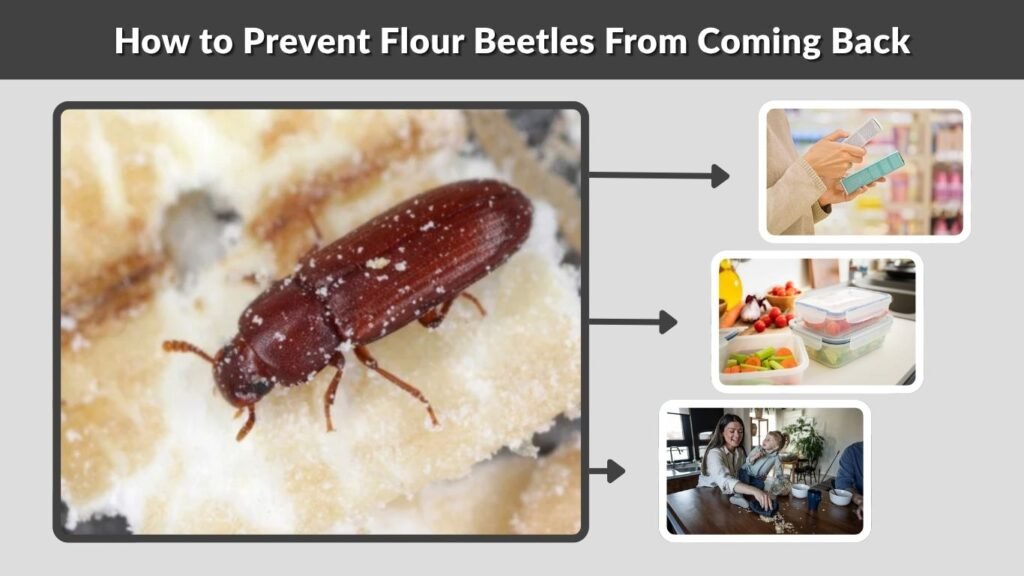
Preventing another infestation is easier than managing a large population. Flour beetles thrive where dry food is accessible and products remain undisturbed for long periods. Good storage habits and regular inspections help reduce the risk of repeated problems.
Simple Flour Beetle Prevention Tips
- Inspect groceries: Check dry food packages for damage before purchasing.
- Use airtight containers: Protect flour, cereal, grains, and pet food.
- Clean spills immediately: Remove flour dust and crumbs from hidden areas.
- Rotate food supplies: Use older products before opening newer packages.
- Avoid overstocking: Purchase quantities you can use within a reasonable time.
- Inspect regularly: Watch for adult beetles or larvae inside containers.
If an infestation continues despite thorough cleaning and removing food sources, consider contacting a qualified pest control professional.
FAQs
1. What kills flour beetles instantly?
Vacuuming removes exposed beetles immediately, while freezing or appropriate heat treatments can kill beetles inside food products over the recommended treatment period. Eliminating infested materials is the most effective overall approach.
2. Can vinegar get rid of flour beetles?
Vinegar helps clean pantry surfaces but does not reliably kill flour beetle eggs or larvae. It should be used alongside food disposal, vacuuming, and proper storage.
3. Are flour beetles harmful to humans?
Flour beetles are not generally known for biting people or transmitting diseases. However, they contaminate food with insects, shed skins, and waste. Discard visibly infested products.
4. Why do flour beetles keep coming back?
Recurring beetles usually indicate that an infested food package or another breeding source remains hidden. Check pet food, birdseed, baking ingredients, and spilled grain behind appliances.
5. How long does it take to get rid of flour beetles?
A small infestation may be controlled after one thorough cleanout, but continued monitoring over several weeks is advisable. Larger infestations can persist when hidden food sources remain.
