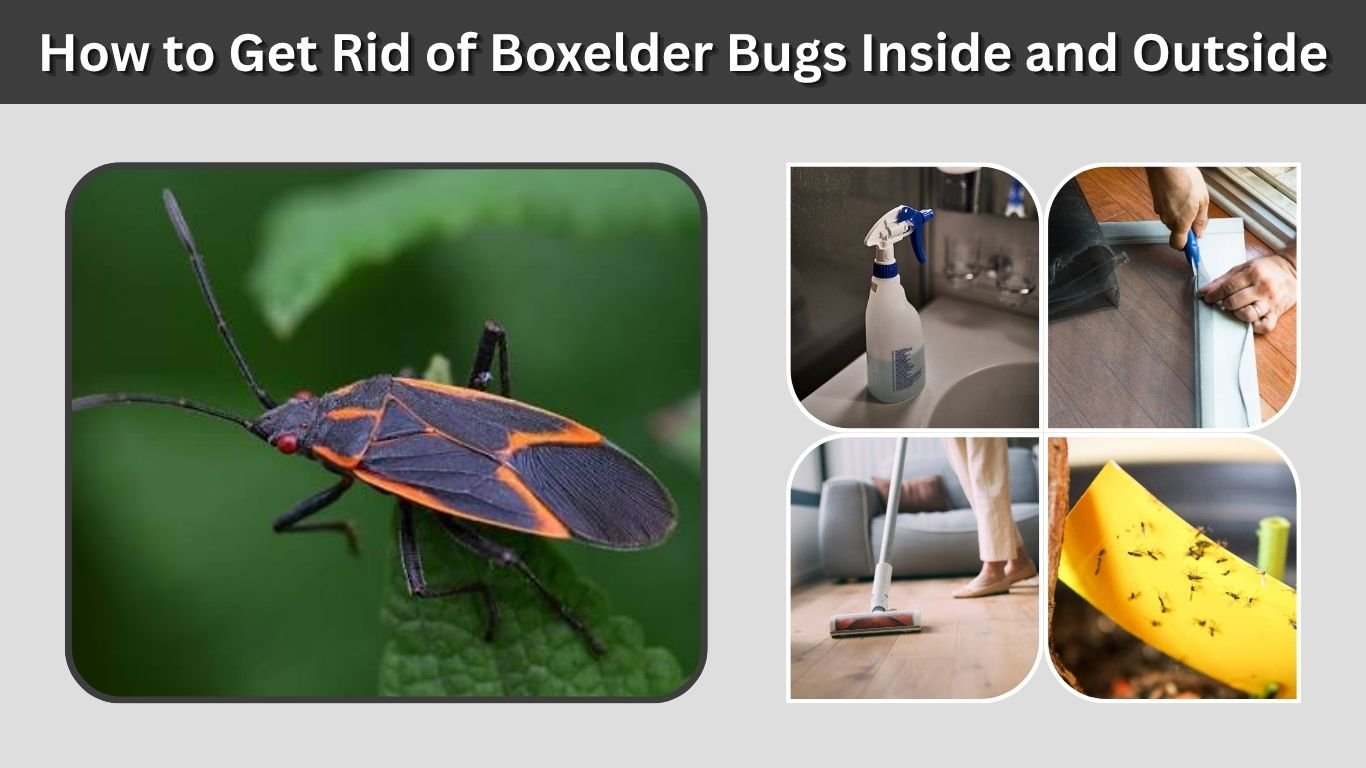
Boxelder bugs rarely damage homes, but hundreds of them crawling across siding, windows, and indoor walls can quickly become frustrating. These black-and-red insects gather on warm buildings in late summer and fall before entering cracks to spend the winter. The most effective way to get rid of boxelder bugs is to remove those already present, block their entry points, and treat outdoor gathering areas before the insects move indoors.
What Are Boxelder Bugs?
Adult boxelder bugs are approximately half an inch long. They have mostly black bodies with thin red or orange lines along the wings and behind the head. Young boxelder bugs, called nymphs, are smaller and often bright red.
They mainly feed on the seeds of female boxelder trees, although they may also visit maple, ash, and other plants. They usually cause little noticeable damage to healthy trees. Their biggest problem is their habit of entering buildings in large numbers during colder months.
| Common sign | What it means |
| Bugs covering sunny siding | They are warming themselves or searching for shelter |
| Bugs around doors and windows | They may be finding gaps into the building |
| Bugs appearing indoors during winter | Warm indoor temperatures have activated overwintering adults |
| Small bright-red insects near trees | These are probably boxelder bug nymphs |
How to Get Rid of Boxelder Bugs in the House
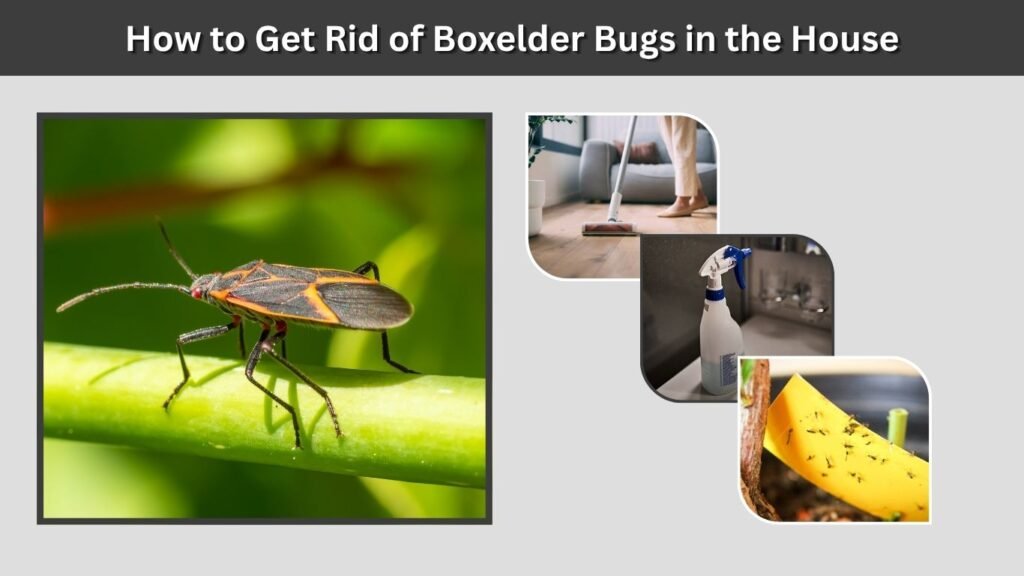
Once boxelder bugs are indoors, physical removal is usually more practical than spraying rooms with pesticides. The insects do not normally reproduce inside houses, so removing the visible bugs and sealing their entrances can gradually solve the problem.
Vacuum Them Up
Use a vacuum cleaner with a hose attachment to collect boxelder bugs from:
- Windowsills
- Curtains
- Walls and ceilings
- Door frames
- Basements and attics
- Areas around heating vents
Avoid crushing them because their bodies can produce an unpleasant odor and may stain curtains, carpets, walls, and light-colored furniture.
Empty a bagged vacuum outdoors soon after cleaning. When using a bagless machine, empty the container into a sealed outdoor trash bag and clean the collection chamber.
Use a Soap-and-Water Spray
A diluted soap solution can kill boxelder bugs when it completely covers their bodies. However, it works only through direct contact and leaves little or no lasting protection.
For indoor use, place a small amount of liquid dish soap in a spray bottle filled with water. Test the mixture on a hidden section of the surface before spraying widely, as some soaps may leave marks or damage finishes.
Spray individual insects lightly and wipe up the bugs and remaining liquid afterward. Do not spray electrical outlets, electronics, food, cooking surfaces, or delicate fabrics.
Install Sticky Traps Near Entry Areas
Sticky traps can catch individual bugs crawling near windows, doors, basements, and utility openings. They will not eliminate a major infestation, but they may help identify where the insects are entering.
Keep sticky traps where children and pets cannot touch them.
Do Not Crush the Bugs
Swatting boxelder bugs may create more work. Crushed insects can leave reddish stains and a noticeable odor. Vacuuming, sweeping, or gently collecting them in a container is cleaner and usually more effective.
How to Get Rid of Boxelder Bugs Outside
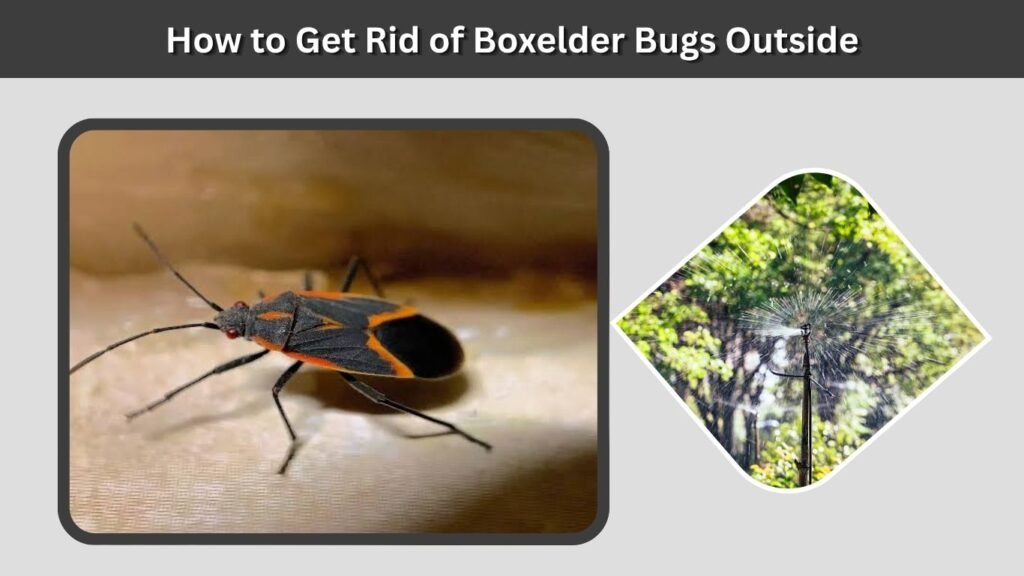
Outdoor control is most valuable during late summer and early fall, when adult bugs begin gathering on warm, south- and west-facing walls. Treating the problem before they enter the structure is easier than controlling them during winter.
Spray Clusters With Water
Use a strong stream of water from a garden hose to knock boxelder bugs from siding, foundations, patios, and tree trunks. Water may not kill every insect, but it quickly removes large gatherings without pesticide use.
Repeat the treatment when the bugs return. Check that water is not being forced behind siding, into vents, or around damaged window frames.
Apply Insecticidal Soap
A commercial insecticidal soap labeled for outdoor insect control can kill boxelder bugs through direct contact. It is generally a more predictable option around plants than homemade detergent mixtures.
Household soaps and detergents can sometimes control boxelder bugs, but they may damage leaves, flowers, siding, paint, and other surfaces. Test any solution on a small area first and avoid spraying plants during hot, sunny conditions.
Remove Yard Debris
Clear possible hiding places close to the house, including:
- Fallen leaves
- Weeds and tall grass
- Unused boards
- Stacked stones
- Loose bark
- Garden debris
- Clutter near the foundation
Move firewood away from exterior walls and store it above the ground. These changes will not remove the bugs’ food source, but they reduce protected spaces near possible entry points.
Use a Labeled Exterior Insecticide
When thousands of bugs gather around a building each year, an exterior perimeter treatment may help. Select a pesticide whose label specifically lists boxelder bugs and permits use on building exteriors.
Apply it only to the locations permitted by the label, which may include cracks, foundations, door frames, window frames, and other entry points. Some registered products direct users to treat areas where boxelder bugs congregate rather than spraying the entire property. Keep people and pets away until treated surfaces have dried, and never allow pesticide runoff to enter storm drains.
Professional treatment may be appropriate for tall buildings, inaccessible rooflines, or recurring infestations that cannot be controlled safely from the ground.
How to Get Rid of Boxelder Bugs Naturally
Natural control works best when several methods are combined. No essential oil, homemade spray, or single home remedy is likely to remove boxelder bugs permanently.
Try These Nonchemical Methods
Begin by vacuuming indoor bugs and spraying outdoor clusters with plain water. Follow this by repairing screens, sealing cracks, cleaning debris from the foundation, and installing door sweeps.
A direct-contact insecticidal soap may be used when water alone is insufficient. Essential oils are sometimes promoted as repellents, but they generally provide inconsistent, temporary results and may stain materials or irritate people and pets.
Protect Beneficial Insects
Avoid spraying flowers or treating an entire garden simply because boxelder bugs are present. These bugs seldom cause significant plant injury, while broad pesticide applications can affect pollinators and other useful insects.
Use targeted treatments only where bugs are gathering or entering the house.
How to Prevent Boxelder Bugs From Returning
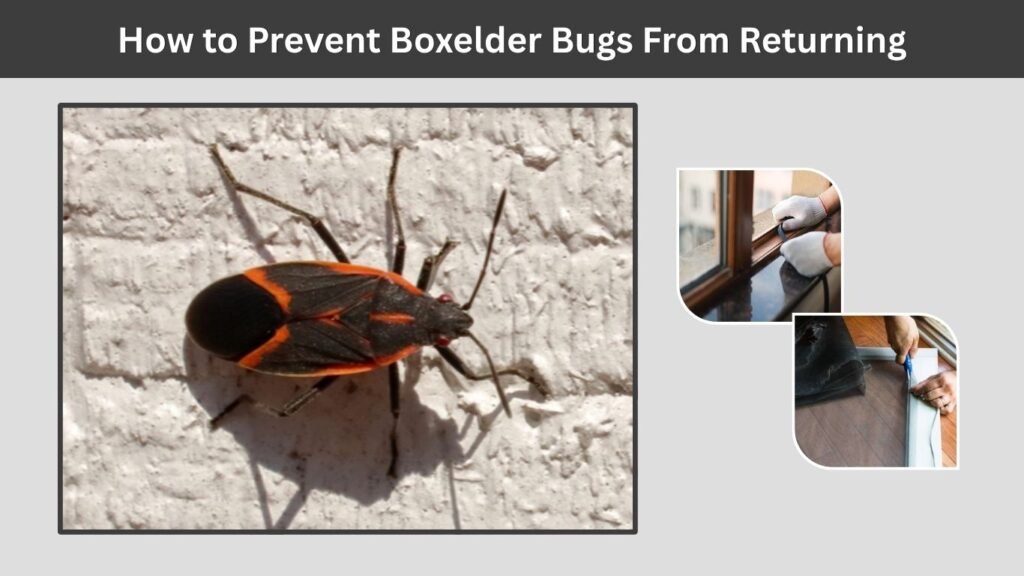
Exclusion is the most reliable long-term strategy. Boxelder bugs can squeeze through small gaps and remain hidden inside wall voids until warm winter or spring days awaken them.
Seal Exterior Openings
Inspect the house before autumn and seal gaps around:
- Window and door frames
- Utility pipes and cables
- Outdoor faucets
- Dryer and bathroom vents
- Rooflines and soffits
- Foundations
- Siding joints
- Air-conditioning lines
- Chimneys
Use an appropriate exterior-grade caulk or sealant. Cover necessary vents with insect screening rather than blocking airflow.
Repair Screens and Door Sweeps
Replace torn window screens and make sure exterior doors close tightly. Install or replace worn door sweeps, especially on garage, basement, and patio doors.
Check sliding doors carefully because gaps along the tracks can provide easy entry.
Focus on Sunny Walls
Boxelder bugs are particularly attracted to warm southern and western exposures. Inspect these walls regularly during late summer and early fall. Early removal prevents large clusters from settling near cracks and windows.
Consider Nearby Boxelder Trees Carefully
Female boxelder trees produce seeds that support large bug populations. Removing a heavily infested female tree close to the house may reduce local numbers, but it does not guarantee complete control because adult bugs can fly considerable distances.
Tree removal should be considered only after evaluating the tree’s shade, wildlife, environmental, and landscaping value. Sealing the building is usually less disruptive and more dependable.
Can You Get Rid of Boxelder Bugs Permanently?
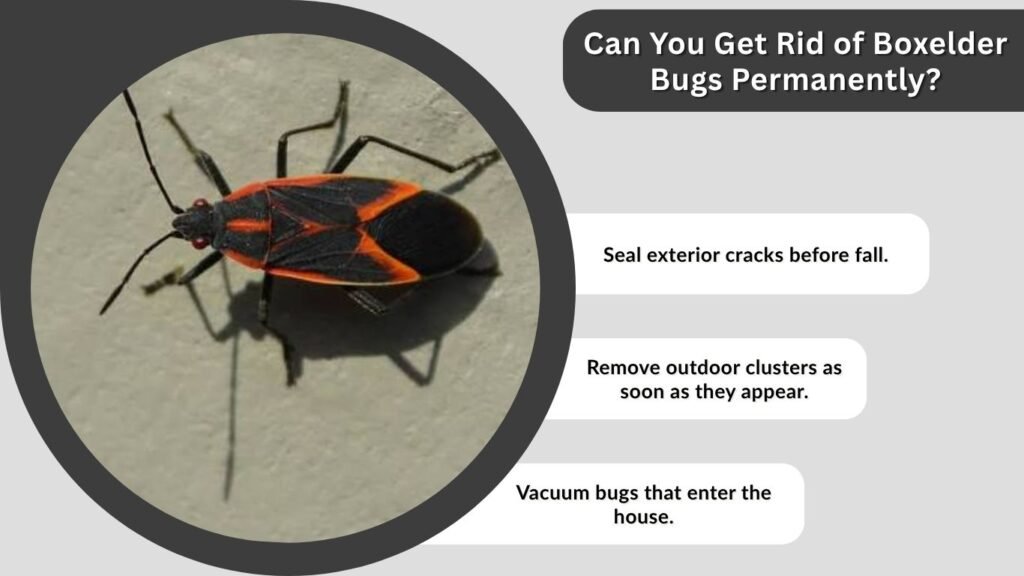
It is difficult to guarantee permanent elimination when boxelder or maple trees grow nearby. The insects live outdoors naturally and can return from surrounding properties.
However, you can greatly reduce recurring infestations by combining four steps:
- Seal exterior cracks before fall.
- Remove outdoor clusters as soon as they appear.
- Vacuum bugs that enter the house.
- Use a properly labeled perimeter treatment when infestations are severe.
Removing bugs without sealing their entry points provides only temporary relief.
FAQs
Why do I suddenly have boxelder bugs in my house?
Boxelder bugs enter cracks and wall spaces in autumn while searching for protected winter shelter. Indoor heating or sunny winter weather can activate them, causing the insects to emerge around windows, walls, and ceilings even though they entered the building months earlier.
Will vinegar get rid of boxelder bugs?
Vinegar may kill or disturb some insects when sprayed directly, but it is not a dependable long-term treatment. It can also damage stone, wood finishes, plants, and other materials. Vacuuming, insecticidal soap, water, and structural sealing are more reliable options.
Does dish soap kill boxelder bugs?
A diluted dish-soap solution can kill boxelder bugs when it directly coats them. It has no meaningful residual effect, so it will not stop additional insects from arriving. Household detergents may damage plants or finishes, making spot testing important.
Do boxelder bugs lay eggs inside houses?
Boxelder bugs generally do not reproduce while overwintering indoors. Adult females normally leave sheltered locations in spring and lay eggs outdoors near host trees. Finding bugs during winter usually indicates hidden overwintering adults rather than an active indoor breeding population.
When should I spray for boxelder bugs?
Late summer and early fall are usually the best times for exterior treatment, particularly when bugs first gather on sunny walls. Apply only a product labeled for boxelder bugs and exterior structural use, following all directions, restrictions, and safety precautions on its label.