
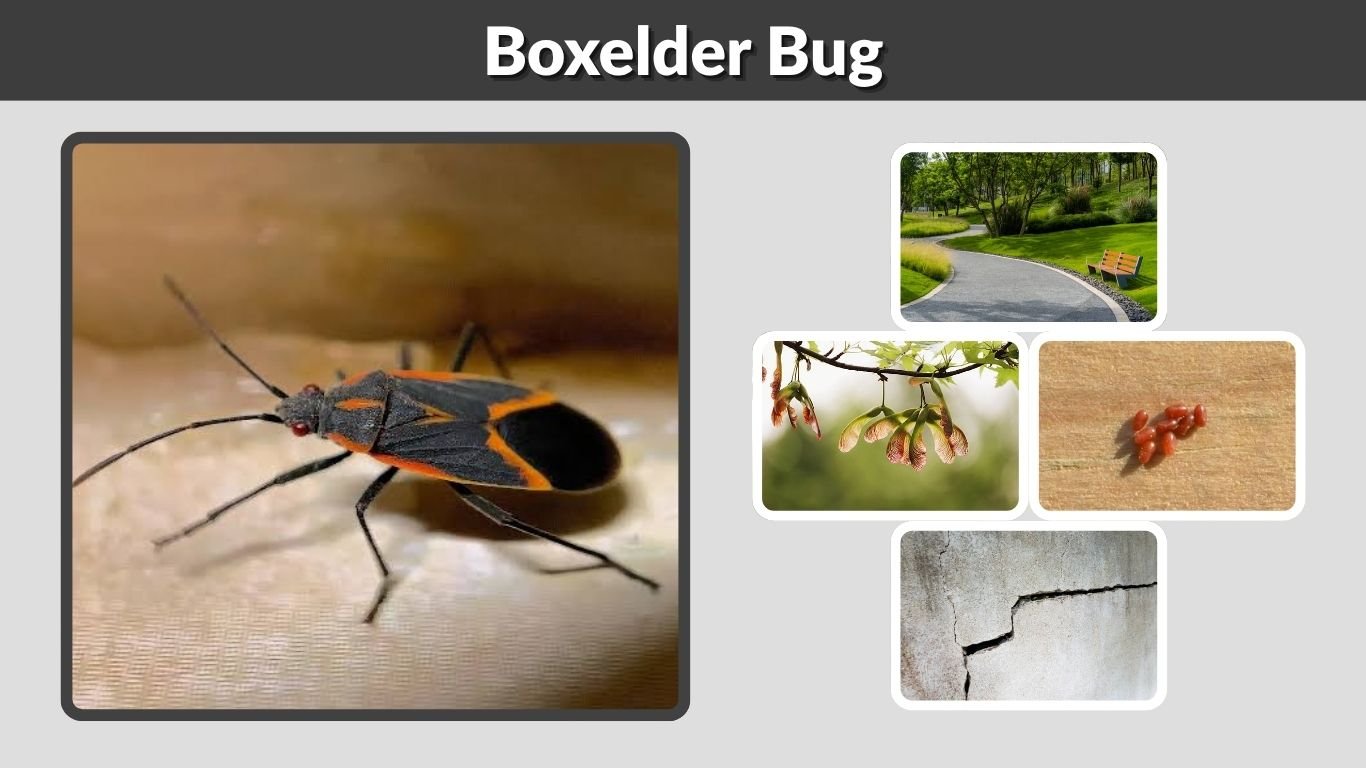
The boxelder bug is a black-and-red true bug commonly seen on trees, garden plants, and sunny exterior walls. Although it rarely causes serious plant or property damage, it can become a major nuisance when hundreds of adults gather around houses in autumn. These insects enter small cracks to survive winter and may reappear indoors during warm, sunny days. Understanding their appearance, habitat, diet, life cycle, and seasonal behavior makes them easier to identify and manage.
Boxelder Bug Quick Facts
| Feature | Description |
| Common name | Boxelder bug |
| Scientific name | Boisea trivittata |
| Insect group | True bug |
| Adult size | About 1/2 inch long |
| Adult color | Black with red or orange markings |
| Nymph color | Bright red, becoming red and black |
| Main food | Boxelder and maple seeds |
| Preferred habitat | Areas near female boxelder trees |
| Winter behavior | Adults overwinter in protected spaces |
| Risk to people | Generally harmless nuisance pest |
Boxelder bugs belong to the order Hemiptera, a group of insects with piercing and sucking mouthparts. They are related to stink bugs, cicadas, and several other plant-feeding true bugs.
What Is a Boxelder Bug?
The eastern boxelder bug, Boisea trivittata, is a North American insect named after its close association with boxelder trees. It is best known for forming large groups on warm buildings during late summer and fall.
Boxelder bugs spend most of the growing season outdoors. However, adult bugs search for protected winter shelters when temperatures begin to fall. Houses, sheds, garages, tree bark, rocks, and piles of debris can provide suitable hiding places.
They are considered nuisance insects rather than destructive household pests. Boxelder bugs do not normally reproduce indoors, eat wood, damage furniture, or infest stored food.
Boxelder Bug Size and Appearance
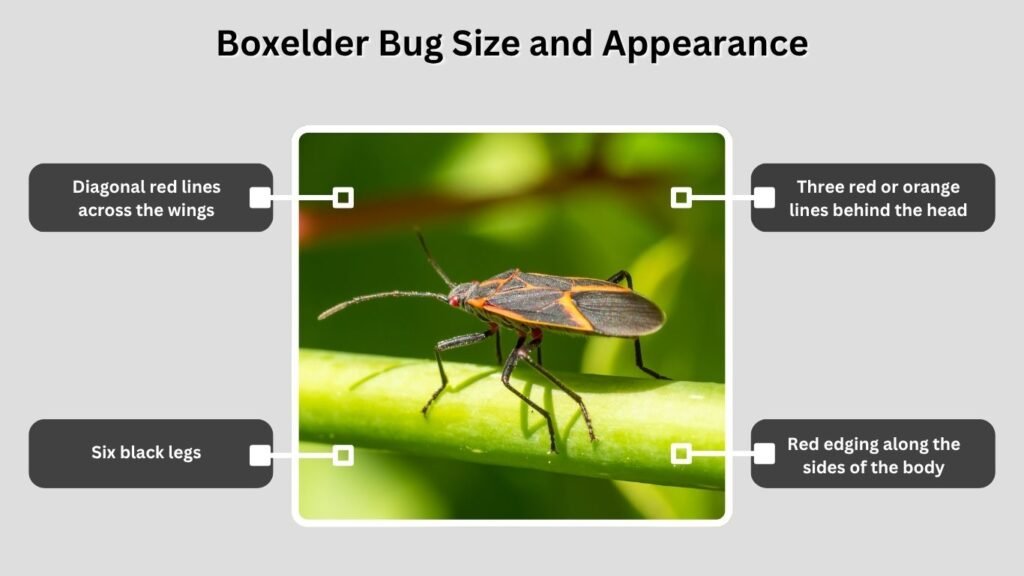
Adult boxelder bugs and immature nymphs look noticeably different. Recognizing both stages can prevent them from being mistaken for beetles, kissing bugs, or other red-and-black insects.
Adult Boxelder Bug Size and Color
An adult boxelder bug is approximately 1/2 inch long. Its body is elongated, somewhat flattened, and mostly black.
Important identification features include:
- Three red or orange lines behind the head
- Red edging along the sides of the body
- Diagonal red lines across the wings
- Six black legs
- Two long antennae
- Wings that overlap to create an X-like pattern
The bright markings are easiest to see when the insect is resting. Adults can crawl and fly, allowing them to travel between host trees and nearby buildings.
Boxelder Bug Nymph Appearance
Newly hatched nymphs may be only about 1/16 inch long. They are wingless and have bright red or orange-red abdomens with darker heads, legs, and antennae.
As the nymphs mature, black markings become more noticeable and dark wing pads develop on their backs. Older nymphs resemble adults but remain smaller and do not yet have fully developed wings. They are frequently found gathering in groups near fallen seeds, low plants, and tree trunks.
Boxelder Bug Eggs
Boxelder bug eggs are small and reddish. Females place them on leaves, branches, trunks, stones, and inside cracks in the bark of host trees. Eggs may be difficult to notice unless they occur in visible clusters.
Boxelder Bug Habitat
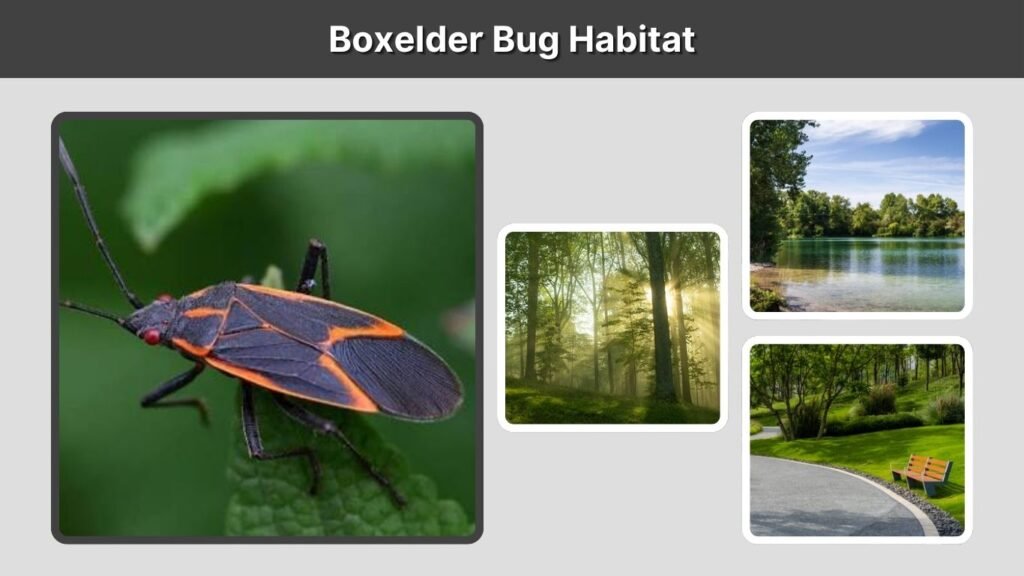
Boxelder bugs live primarily in areas where boxelder trees grow. However, they can also survive around maple and ash trees because these plants provide additional feeding opportunities.
Natural Habitat
Their natural habitat includes:
- Woodlands
- Riverbanks and floodplains
- Lakeshores
- Urban parks
- Residential yards
- Vacant lots
- Fence rows
- Gardens near boxelder trees
Boxelder trees can grow in dry or wet soils and are common in disturbed urban areas, along waterways, and in young forests. Female trees produce the winged seeds that boxelder bugs prefer to eat.
Habitat Around Houses
In late summer and fall, adults leave feeding areas and gather on sunny, warm surfaces. Houses with south- or west-facing walls are particularly attractive because these areas receive more afternoon sunlight.
The insects may shelter beneath siding, around doors, under windows, inside roof gaps, behind shutters, and within foundation cracks. Some travel into attics and wall spaces, where they remain inactive during cold weather. Adult boxelder bugs can fly several blocks and may travel as far as two miles while searching for food or shelter.
What Do Boxelder Bugs Eat?
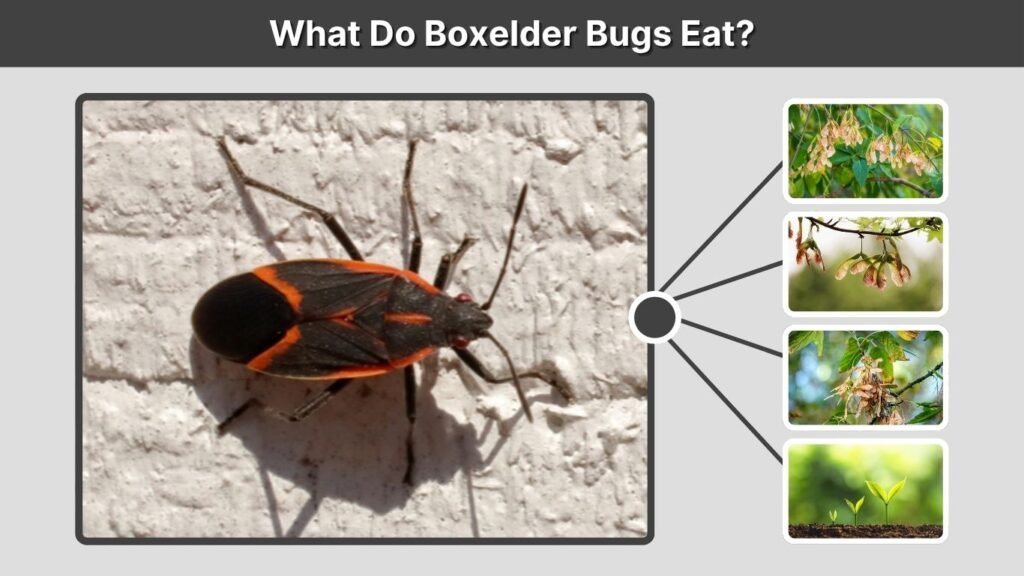
Boxelder bugs use their piercing mouthparts to extract liquid from seeds and plant tissues. Female boxelder trees are their primary host because only female trees produce seeds.
Common Foods
Their diet may include:
- Boxelder seeds
- Fallen boxelder seedpods
- Maple seeds
- Ash seeds
- Developing leaves
- Young plant tissue
- Plant juices
- Occasionally soft or overripe fruit
Adults often feed on fallen seeds during spring before moving into seed-bearing trees. Nymphs may gather on the ground beneath trees and around low vegetation until seeds become available on the branches.
Do Boxelder Bugs Damage Trees?
Boxelder bugs may cause minor spotting or distortion when populations are unusually large, but noticeable injury to healthy trees is uncommon. Nymphs can appear on garden plants without actually feeding on them.
They are not usually considered serious agricultural or garden pests. Their habit of entering buildings in large numbers creates far more concern than their feeding activity.
Boxelder Bug Life Cycle
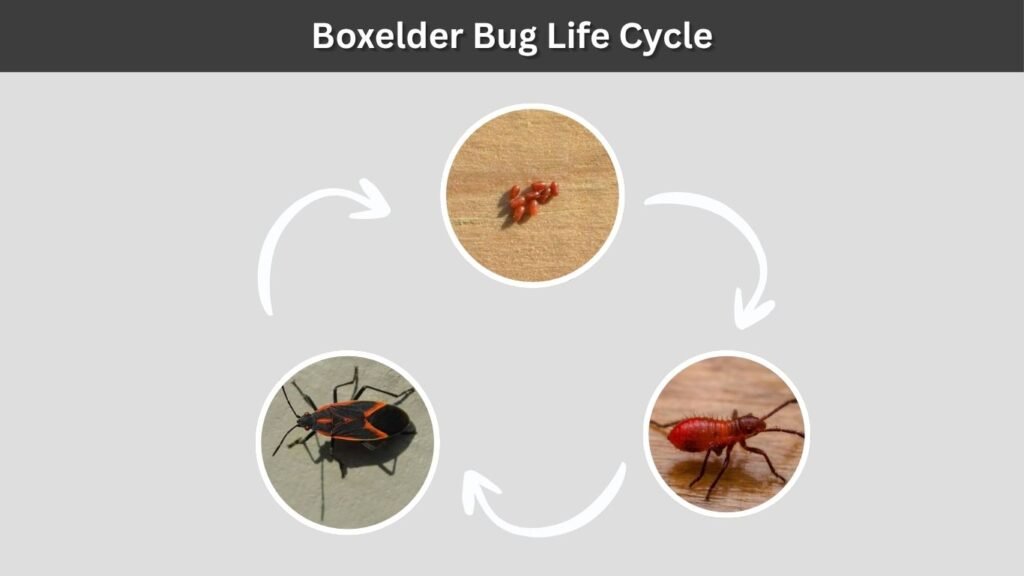
Boxelder bugs undergo incomplete metamorphosis. Their development has three main stages: egg, nymph, and adult. They do not have a caterpillar-like larval stage or a pupa.
Egg Stage
Overwintering adults become active as temperatures rise in spring. They leave their shelters, feed, mate, and move toward suitable host trees.
Females deposit reddish eggs on boxelder leaves, bark, branches, stones, and protected crevices. The exact timing depends on local temperatures and climate.
Nymph Stage
Nymphs hatch as tiny, bright-red insects without wings. They feed on fallen seeds, low vegetation, and the developing seeds of female boxelder trees.
As they grow, they shed their outer skin several times. Each developmental stage makes them larger, darker, and more similar to adult boxelder bugs. Wing pads gradually appear before the final molt produces a fully winged adult.
Different developmental stages may be present together throughout summer.
Adult Stage
Adults feed and remain near host trees during summer. Beginning in late summer or autumn, they move away from trees and search for dry, protected winter shelters.
Although some nymphs may remain when cold weather arrives, only fully developed adults normally survive winter. These adults overwinter beneath bark, inside debris, or within cracks and spaces in buildings.
Seasonal Behavior
Boxelder bug activity changes throughout the year.
Spring: Overwintering adults leave protected spaces and return outdoors. They feed, mate, and begin laying eggs.
Summer: Eggs hatch, and red nymphs gather near host trees and fallen seeds. Both adults and nymphs may be visible at the same time.
Fall: Adults form large groups on warm walls, rocks, tree trunks, and foundations. They enter cracks as temperatures cool.
Winter: Most remain inactive in sheltered areas. Indoor warmth may awaken some bugs, causing them to crawl toward windows and sunny rooms.
Why Do Boxelder Bugs Enter Houses?
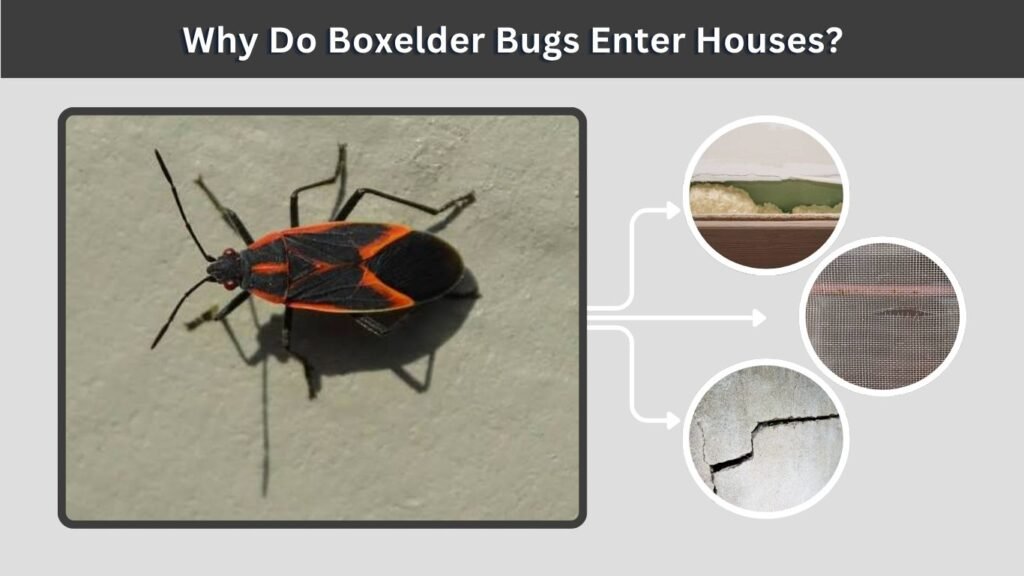
Boxelder bugs enter buildings for shelter, not because they want to eat household materials. Warm exterior walls attract them during autumn, and small openings provide access to protected spaces.
They commonly enter through:
- Gaps around windows and doors
- Damaged screens
- Roof and soffit vents
- Openings around utility pipes
- Siding joints
- Foundation cracks
- Garage doors
- Attic vents
Bugs seen indoors during winter usually entered the previous fall. They do not establish breeding colonies inside houses.
Are Boxelder Bugs Dangerous?
Boxelder bugs are not considered dangerous to people or pets. They do not transmit known diseases and are not aggressive. Reports of bites are extremely rare and are not typical behavior.
However, they may release an unpleasant odor when crushed. Their droppings and crushed bodies can also leave reddish or brown stains on curtains, walls, carpets, and furniture. Vacuuming is therefore preferable to crushing them.
FAQs
How big is a boxelder bug?
Adult boxelder bugs are approximately 1/2 inch long. Newly hatched nymphs may measure about 1/16 inch. Nymphs gradually increase in size and develop darker markings and wing pads before becoming fully winged adults.
What color are boxelder bugs?
Adults are mostly black with distinctive red or orange lines behind the head, along the body, and across the wings. Young nymphs are bright red or orange-red with black legs and antennae. They become darker as they mature.
Where do boxelder bugs live?
They live around boxelder, maple, and ash trees, particularly near female boxelder trees that produce seeds. During winter, adults shelter beneath bark, in natural crevices, under debris, and inside cracks in houses and other buildings.
How long do boxelder bugs live?
Adults that mature by autumn can survive through winter in protected shelters. They become active again during spring to feed and reproduce. Their exact lifespan varies with temperature, food availability, shelter quality, and seasonal conditions.
Do boxelder bugs reproduce inside homes?
No. Boxelder bugs normally do not mate, lay eggs, or complete their life cycle indoors. Bugs appearing around windows during winter or early spring are overwintering adults that entered the building during the previous autumn.
