
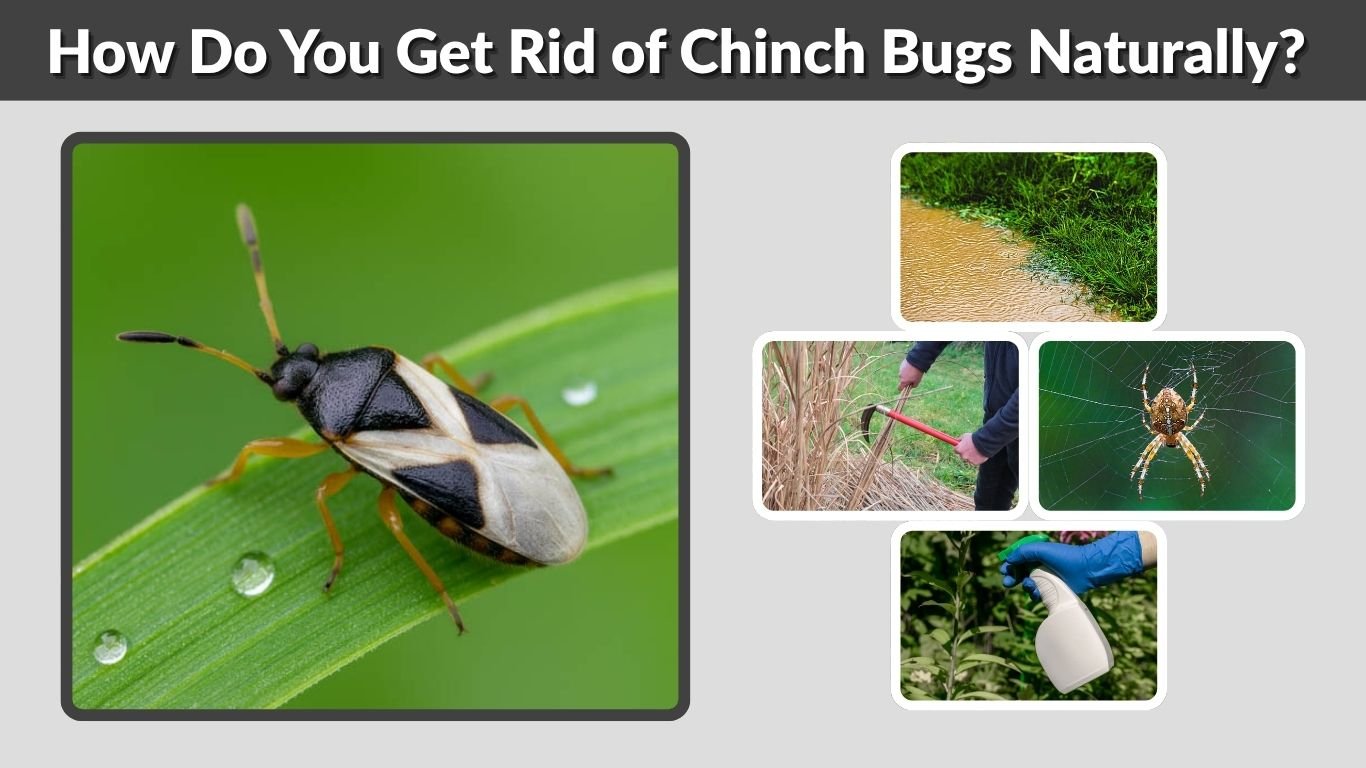
Chinch bugs are tiny lawn pests that feed on grass by piercing the blades and sucking out plant fluids. As their numbers increase, healthy turf may develop irregular yellow or brown patches that resemble drought damage. The safest natural control combines direct treatment with better lawn care. Deep watering, reduced thatch, insecticidal soap, beneficial organisms, and resistant grass varieties can suppress chinch bugs without relying on harsh pesticides.
How to Identify Chinch Bugs in Your Lawn
Chinch bugs are most active during warm, dry weather. They commonly attack sunny areas of lawns and may spread outward from sidewalks, driveways, foundations, or other hot surfaces.
Adult chinch bugs are small, but their contrasting colors make them recognizable when viewed closely.
Chinch Bug Identification
- Adults are approximately ⅛–¼ inch long
- Black or dark gray body
- White wings folded across the back
- Dark triangular markings on the wings
- Young nymphs may be red or orange
- Older nymphs gradually become darker
- Six legs and slender antennae
- Often hide near the soil surface and grass crowns
Chinch bugs move quickly when exposed. Because they are so small, using a magnifying glass can make identification easier.
What Does Chinch Bug Damage Look Like?
Damage usually begins as small yellow patches that gradually turn brown. The affected areas may expand and join together as the insects move into healthy grass.
Common warning signs include:
- Irregular yellow or brown lawn patches
- Damage that continues after watering
- Grass dying near sidewalks or driveways
- Numerous small bugs around grass crowns
- Turf that pulls up less easily than grub-damaged grass
- Damage spreading during hot, dry weather
Chinch bug injury can resemble drought, compacted soil, fungal disease, or pet urine. Confirm their presence before beginning treatment.
How to Test Your Lawn for Chinch Bugs
A simple flotation test can reveal whether chinch bugs are hiding in damaged turf.
Remove both ends from a large metal can and push one end approximately two inches into the soil at the edge of a brown patch. Fill the can with water and keep the water level high for several minutes.
Chinch bugs may float to the surface, where you can count and examine them. Test several locations because populations are often concentrated along the border between damaged and healthy grass.
How Do You Get Rid of Chinch Bugs Naturally?
Natural control works best when several methods are used together. Begin with the most heavily affected areas and continue monitoring the lawn throughout warm weather.
1. Water the Lawn Deeply
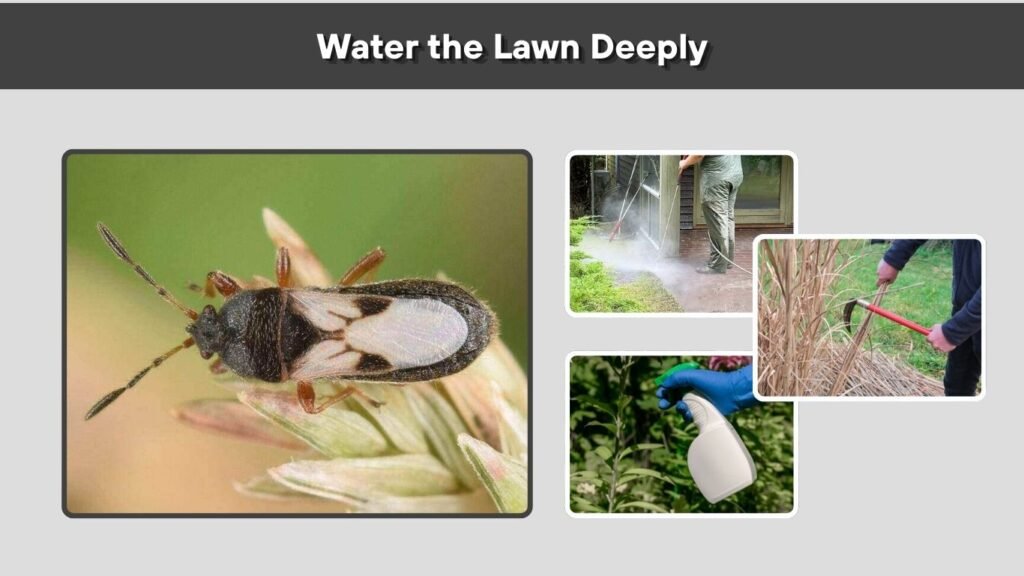
Chinch bugs often become more damaging when grass is hot, dry, and stressed. Deep watering strengthens the root system and helps turf tolerate feeding.
Water early in the morning so moisture reaches the root zone before the hottest part of the day. Apply water slowly enough that it soaks into the soil instead of running onto sidewalks.
Frequent, shallow watering should be avoided because it encourages weak roots and can promote disease. Water according to the grass species, soil type, recent rainfall, and local restrictions.
2. Apply Insecticidal Soap
Insecticidal soap can kill chinch bugs that are directly contacted by the spray. It works by disrupting the insects’ protective outer covering rather than leaving a long-lasting chemical residue.
Use a commercially prepared insecticidal soap labeled for lawns and chinch bugs. Apply it to the affected grass and the surrounding border, where active insects are likely to be feeding.
Follow the label carefully. Applying soap during very hot weather may damage stressed grass, so early morning or evening treatment is usually safer. Repeat applications may be required because the soap does not provide lasting protection.
Avoid making a highly concentrated homemade dish-soap spray. Household detergents may contain degreasers, fragrances, or additives that can burn grass.
3. Remove Excess Thatch
Thatch is the layer of dead stems, roots, and plant material between green grass and the soil. Chinch bugs use thick thatch for shelter, egg laying, and protection from natural enemies.
A thin layer is normal, but excessive buildup can create favorable pest conditions. Use a dethatching rake or mechanical dethatcher when the layer becomes thick and compacted.
Dethatch only during the appropriate growing season for your grass. Removing too much material from a stressed lawn can cause additional damage. After dethatching, collect loose debris and water the area properly.
4. Encourage Beneficial Insects
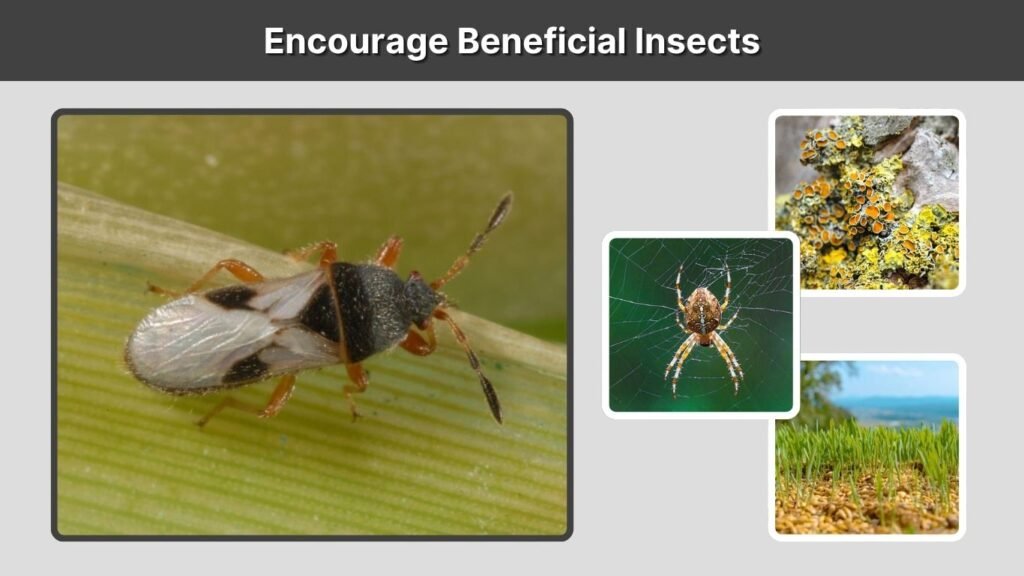
Several natural predators feed on chinch bugs, their eggs, or young nymphs. Supporting these beneficial organisms can help keep pest populations from becoming severe.
Helpful lawn predators may include:
- Big-eyed bugs
- Ground beetles
- Spiders
- Predatory ants
- Lacewings
- Minute pirate bugs
Avoid broad-spectrum insecticides that kill both pests and beneficial insects. Maintain plant diversity around the yard and provide flowering plants that supply nectar and shelter for predators.
Natural enemies may not eliminate a major infestation immediately, but they provide valuable long-term suppression.
5. Use Beneficial Fungi or Nematodes
Some biological lawn products contain organisms that infect or attack insect pests. Products based on beneficial fungi, such as Beauveria bassiana, may help reduce chinch bugs when environmental conditions and application timing are suitable.
Certain beneficial nematodes may also attack immature insects living near the soil surface. However, effectiveness varies by species, climate, soil temperature, moisture, and the chinch bug population.
Choose a biological product specifically labeled for the target pest and lawn use. Store and apply living products exactly as directed because heat, sunlight, or dry soil can reduce their effectiveness.
6. Mow at the Correct Height
Cutting grass too short weakens the lawn, exposes the soil to heat, and creates conditions that favor chinch bug damage. Maintaining the recommended height for your grass species helps shade the soil and supports deeper roots.
Never remove more than one-third of the grass blade in a single mowing. Keep mower blades sharp so they cut cleanly rather than tearing the turf.
| Grass type | Suggested mowing approach |
| St. Augustine grass | Keep relatively tall |
| Tall fescue | Maintain a taller, dense canopy |
| Kentucky bluegrass | Avoid scalping during summer |
| Bermudagrass | Follow the recommended height for the variety |
| Zoysiagrass | Mow regularly without cutting excessively low |
Return short, healthy clippings to the lawn unless disease or excessive thatch is present. Normal clippings decompose quickly and do not usually create thatch.
7. Overseed With Resistant Grass
A lawn containing grass varieties that tolerate heat, drought, and insect feeding is less likely to suffer severe chinch bug damage.
Endophyte-enhanced varieties of some cool-season grasses can offer improved resistance to surface-feeding insects. These beneficial fungi live inside the grass and produce natural compounds that discourage certain pests.
Select grasses suited to your climate, sunlight, soil, and lawn use. In regions where St. Augustine grass is common, choose locally recommended cultivars and maintain a mixed, healthy lawn whenever practical.
Overseeding will not eliminate an existing population immediately, but it can make future damage less severe.
Natural Chinch Bug Control Methods Compared
| Method | Best Purpose | Speed |
| Deep watering | Reduces turf stress | Gradual |
| Insecticidal soap | Kills exposed bugs | Fast |
| Dethatching | Removes shelter | Moderate |
| Beneficial insects | Long-term suppression | Gradual |
| Biological products | Targets active populations | Moderate |
| Correct mowing | Strengthens grass | Gradual |
| Resistant grass | Prevents recurring damage | Long-term |
Does Diatomaceous Earth Kill Chinch Bugs?
Food-grade diatomaceous earth may damage insects that crawl through a dry layer of the powder. However, its effectiveness outdoors is limited because moisture, irrigation, rain, and wind reduce its activity.
Applying large amounts may also affect beneficial crawling insects. It should not be inhaled or allowed to drift into eyes. If used, follow the product label and apply only to targeted, dry locations rather than covering the entire lawn.
Can Vinegar Kill Chinch Bugs?
Vinegar may kill some insects through direct contact, but it can also burn or kill grass. It is not a selective lawn treatment and should not be sprayed across infested turf.
Using vinegar may replace chinch bug damage with chemical injury to the lawn. Insecticidal soap labeled for turf is a safer direct-contact option.
How to Prevent Chinch Bugs From Returning
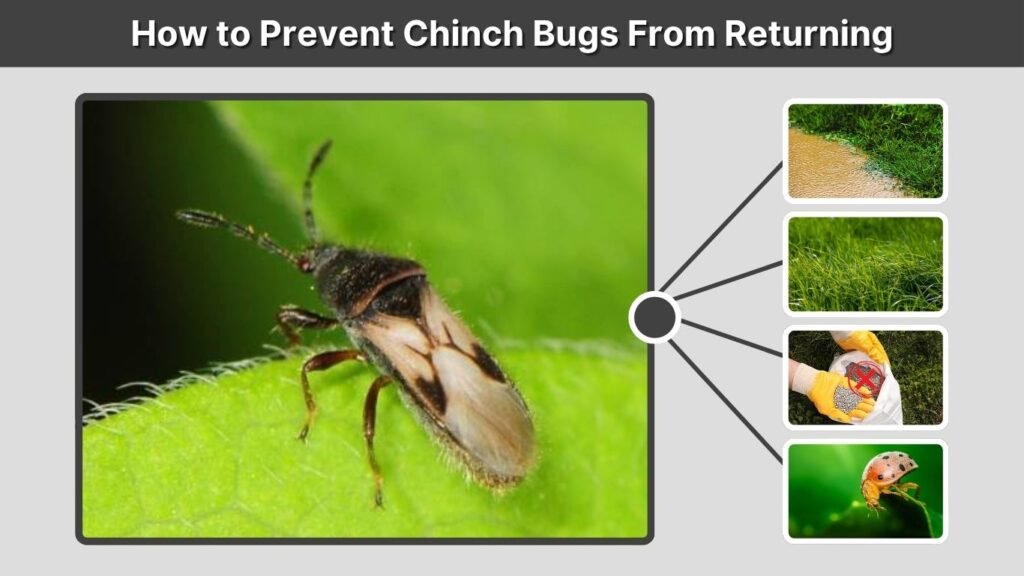
A healthy lawn can tolerate limited chinch bug feeding better than stressed turf. Prevention should focus on improving growing conditions without overfertilizing.
Lawn-Care Prevention Tips
- Water deeply rather than lightly every day.
- Keep grass at its recommended mowing height.
- Avoid excessive nitrogen fertilizer.
- Remove thick thatch when necessary.
- Improve compacted soil through aeration.
- Select grass suited to the local climate.
- Inspect hot, sunny lawn edges regularly.
- Preserve beneficial insects by limiting pesticide use.
Excess nitrogen may produce soft, rapidly growing grass that attracts more feeding and requires additional water. Base fertilizer applications on soil-test results whenever possible.
FAQs
Will chinch bugs go away on their own?
Chinch bug populations may decline during cold or wet conditions, but established infestations should not be ignored. The insects can continue spreading through stressed turf and may return when warm, dry weather arrives.
What kills chinch bugs immediately?
Insecticidal soap can kill exposed chinch bugs on contact when applied according to its label. However, it may not reach insects hidden in thick thatch, so repeat treatment and lawn-care improvements may be necessary.
Does watering get rid of chinch bugs?
Watering alone does not necessarily kill chinch bugs, but it reduces drought stress and makes grass better able to survive their feeding. Deep, properly timed irrigation is more useful than frequent shallow watering.
What time of year are chinch bugs most active?
They are generally most active during warm weather, especially when lawns become hot and dry. Activity may begin in late spring, peak during summer, and continue into early fall, depending on the region.
Can a lawn recover from chinch bug damage?
Grass with damaged leaves but living crowns and roots may recover after the insects are controlled and proper watering resumes. Completely dead patches may require raking, soil preparation, and reseeding or replacement with new sod.
