
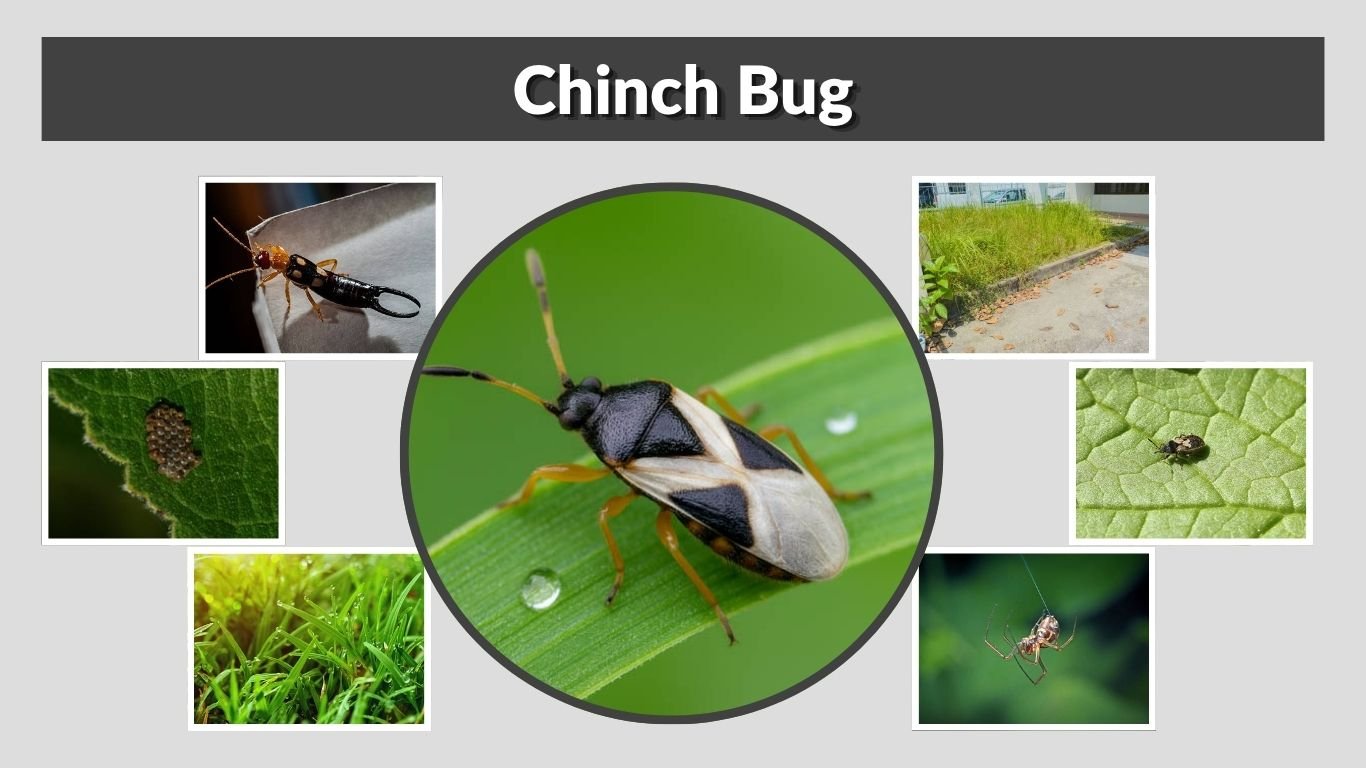
Chinch bugs are tiny plant-feeding insects best known for damaging lawns and agricultural grasses. They live close to the soil surface, hiding among grass stems, leaf sheaths, and thatch. Both immature and adult chinch bugs use piercing mouthparts to remove fluids from grass, causing expanding yellow or brown patches that can resemble drought damage. Several species occur across North America, including the southern chinch bug, hairy chinch bug, and common chinch bug. Although they can seriously weaken turfgrass, chinch bugs do not bite people, infest homes, or pose a medical danger to humans or pets.
What Is a Chinch Bug?
Chinch bugs are true bugs belonging to the genus Blissus. Unlike beetles or caterpillars, they do not chew pieces from grass blades. Instead, they insert slender, beak-like mouthparts into plant tissue and withdraw fluids. Different chinch bug species favor different grasses and climates, but their appearance, feeding habits, and lifecycle are broadly similar.
Common Chinch Bug Species
Important North American species include:
- Southern chinch bug: Primarily damages St. Augustine grass in the southern United States.
- Hairy chinch bug: Commonly attacks cool-season lawns, including fine fescue, Kentucky bluegrass, and perennial ryegrass.
- Common chinch bug: Feeds on grasses and crops such as wheat, corn, rice, and sorghum.
- Western chinch bug: Occurs mainly in western regions and may feed on several turf and native grasses.
The species present in a lawn depends on its geographic location and grass type. The southern chinch bug is especially destructive in Florida, where St. Augustine grass is widely planted.
Chinch Bug Size
Chinch bugs are small enough to remain hidden within a lawn even when hundreds are present. Adults are generally around 3/16 to 1/5 inch long, although the southern chinch bug may approach 1/4 inch. This makes an adult approximately the length of a small grain of rice.
Size at Different Life Stages
| Life stage | Approximate size |
| Egg | Too small to notice easily |
| Newly hatched nymph | Around 1/20 inch |
| Older nymph | Gradually approaches adult size |
| Adult | About 3/16–1/5 inch |
| Large southern adult | Up to nearly 1/4 inch |
Size alone does not confirm identification because several harmless insects live in turf at a similar scale. Color, wing markings, body shape, and location should also be considered.
What Color Are Chinch Bugs?
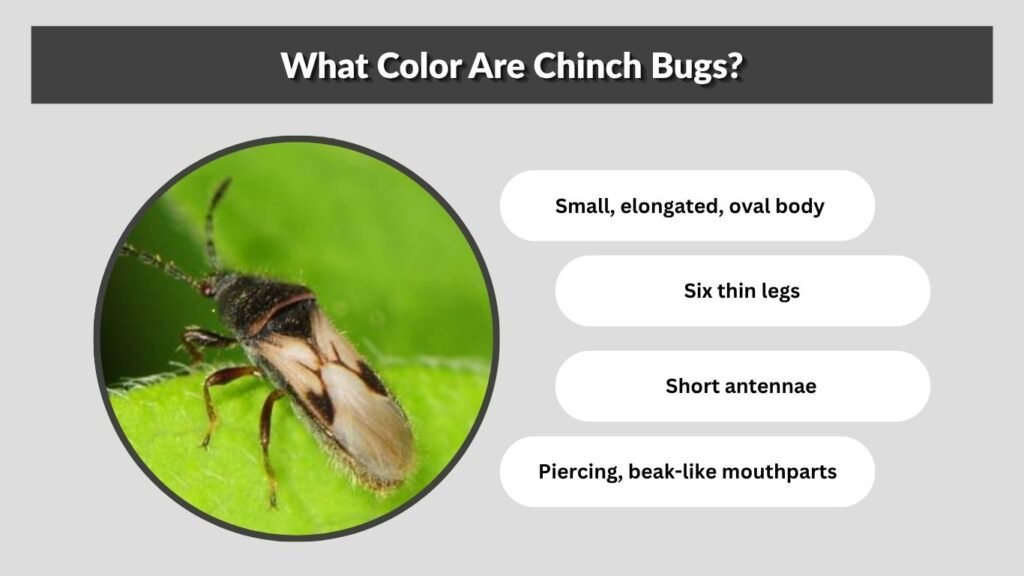
A chinch bug’s color changes significantly as it matures. Newly hatched nymphs are usually yellowish or orange-red. They later become red or orange with a pale band across the abdomen before gradually darkening through successive molts.
Identification
- Small, elongated, oval body
- Six thin legs
- Short antennae
- Piercing, beak-like mouthparts
- Young nymphs colored yellow, red, or orange
- Pale white band across a nymph’s back
- Older nymphs progressively darker
- Adult body mainly black
- Frosty-white wings with black triangular markings
- Wings folded flat over the back
- Long-winged and short-winged adult forms
Adults may have orange or reddish legs. When their folded white wings are viewed from above, the dark markings can create a noticeable black-and-white pattern.
Chinch Bug or Big-Eyed Bug?
Beneficial big-eyed bugs are sometimes mistaken for chinch bugs because they are similar in size and color. Big-eyed bugs have noticeably broad heads and large, prominent eyes. They are predators that eat chinch bugs and other small pests, so they should not be destroyed unnecessarily.
Where Do Chinch Bugs Live?
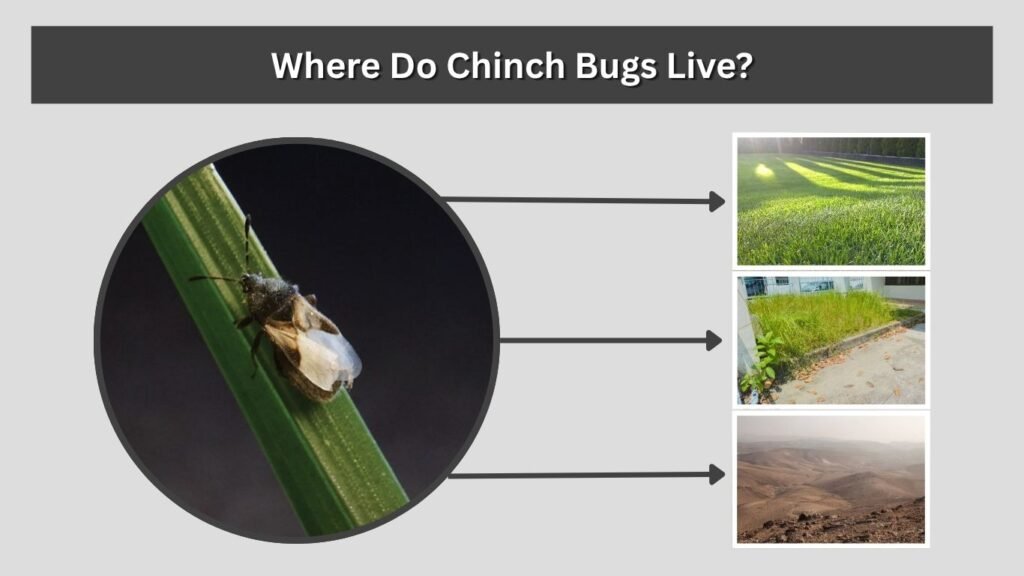
Chinch bugs live within grass rather than deep underground. They commonly occupy the area between the turf’s thatch and the upper organic layer of soil, where they can remain protected while feeding on the lower portions of grass plants. Southern chinch bugs may also hide between leaf sheaths and around roots and stolons.
Preferred Lawn Habitat
Chinch bugs are frequently associated with:
- Warm, sunny sections of lawn
- Grass beside driveways and sidewalks
- Water-stressed turf
- Thick thatch
- High, dry, or sandy soil
- Grass near heat-reflecting walls
- Improperly irrigated areas
- Lawns receiving excessive nitrogen fertilizer
Damage often becomes most visible during hot, dry weather. Stressed grass is less capable of tolerating sap loss, while thick thatch supplies protected feeding and egg-laying sites.
Geographic Distribution
Chinch bugs occur across much of North America, but the dominant species changes by region. Southern chinch bugs are associated with warm southern states and St. Augustine grass. Hairy chinch bugs are important pests of northern cool-season lawns, while common chinch bugs may occur in turf and agricultural fields.
What Do Chinch Bugs Eat?
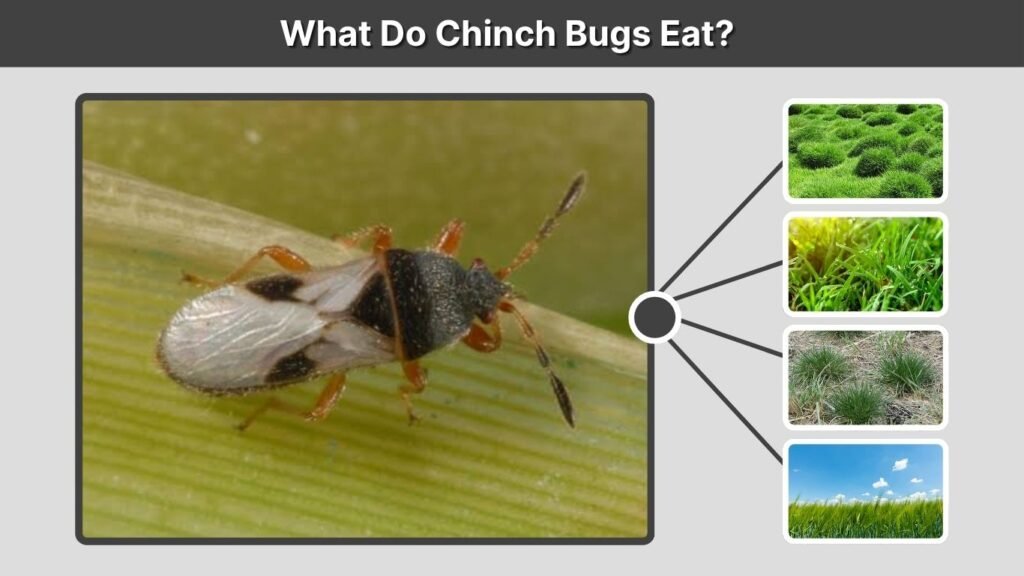
Chinch bugs feed primarily on grasses. They do not eat leaves in the same way as caterpillars or grasshoppers. Their piercing mouthparts penetrate stems, crowns, leaf sheaths, stolons, and other tender plant tissue, allowing the insects to withdraw sap and nutrients.
Turfgrass Hosts
Depending on species and location, chinch bugs may feed on:
- St. Augustine grass
- Zoysiagrass
- Bermudagrass
- Bahiagrass
- Centipedegrass
- Fine fescue
- Kentucky bluegrass
- Perennial ryegrass
The southern chinch bug strongly prefers St. Augustine grass but can also attack zoysia and several other southern turfgrasses.
Agricultural Hosts
Common chinch bugs may also feed on wheat, corn, rice, sorghum, small grains, bunch grasses, and related crops. Young or drought-stressed plants are particularly vulnerable because heavy feeding can interfere with their growth and water movement.
Chinch Bug Behavior
Chinch bugs commonly live and feed in groups. Their clustered behavior explains why lawn damage begins in localized patches rather than affecting an entire yard uniformly. When one section of grass dies, the insects usually walk together into neighboring healthy turf and continue feeding.
Movement and Activity
Adults may have either long or short wings, but flight is not always their primary means of dispersal. Southern chinch bug populations frequently move across lawns by walking. During heavy infestations, numerous insects may be visible running over grass blades or crossing pavement in search of new host plants.
Their activity increases in warm conditions. In colder regions, adults commonly overwinter in protected vegetation and become active again during spring. In warm southern climates, multiple life stages may remain active for much of the year.
Chinch Bug Lifecycle
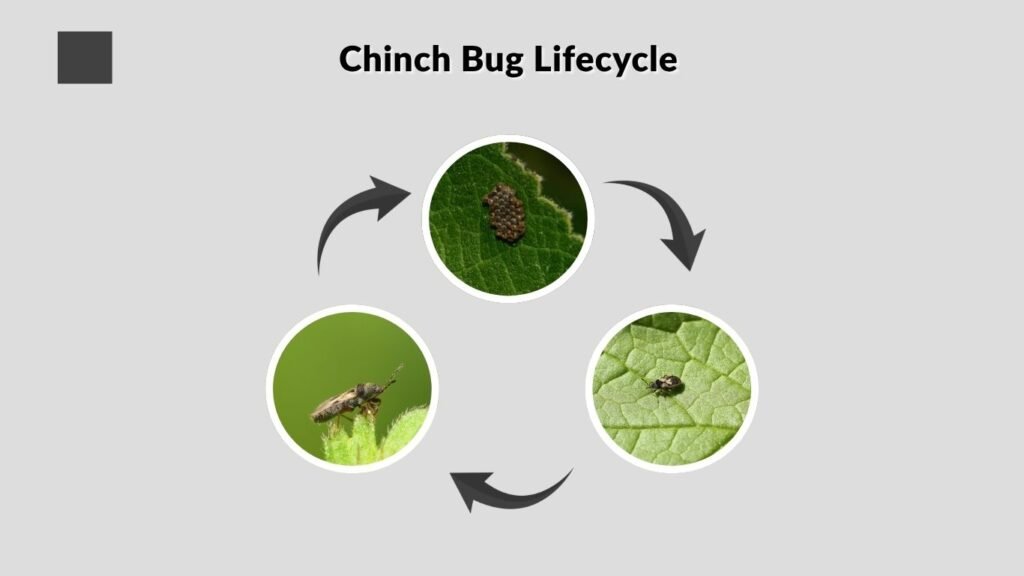
Chinch bugs undergo gradual or incomplete metamorphosis. Their lifecycle has three main stages: egg, nymph, and adult. There is no caterpillar-like larva or inactive pupal stage.
Eggs and Nymphs
Females place small oval eggs near the base of grass, behind leaf sheaths, within plant crevices, or in soil close to host plants. Southern chinch bug eggs begin pale white before changing to amber and then red as hatching approaches.
A nymph emerges looking like a smaller, wingless adult. It passes through five growth stages, called instars, gradually darkening and developing wing pads. Under favorable warm conditions, nymphs may develop into adults in approximately four to six weeks.
Adults and Reproduction
A female southern chinch bug may lay more than 250 eggs over several weeks. Adults may live for several weeks, although lifespan varies with species, temperature, food, and environmental conditions. Several generations can develop within a year, particularly in warm climates.
Interaction With Grass and Lawns
The most important chinch bug interaction is its relationship with turfgrass. Both nymphs and adults feed on living grass, causing plants to yellow, wilt, turn reddish-brown, and eventually die. Damage usually spreads outward as insects move from dead turf into healthy grass.
Signs of an Infestation
Typical signs include:
- Irregular yellow or brown lawn patches
- Grass that remains wilted after watering
- Damage concentrated in full sun
- Dead centers surrounded by yellowing turf
- Tiny red nymphs near the soil surface
- Black-and-white adults in the thatch
- Patches expanding during hot weather
The insects are most likely to be found along the boundary between damaged and healthy grass, where active feeding is continuing.
Interaction With Humans and Animals
Chinch bugs are medically harmless. They do not live on people, bite pets, drink blood, or spread human disease. They may occasionally crawl across sidewalks, patios, or building foundations, but they are interested in grass rather than entering homes.
Their main interaction with humans is economic and practical. Severe infestations can require lawn treatment, grass replacement, and changes to irrigation or mowing practices. Broad pesticide use can also affect beneficial predators, making accurate identification important before treatment.
Natural Predators
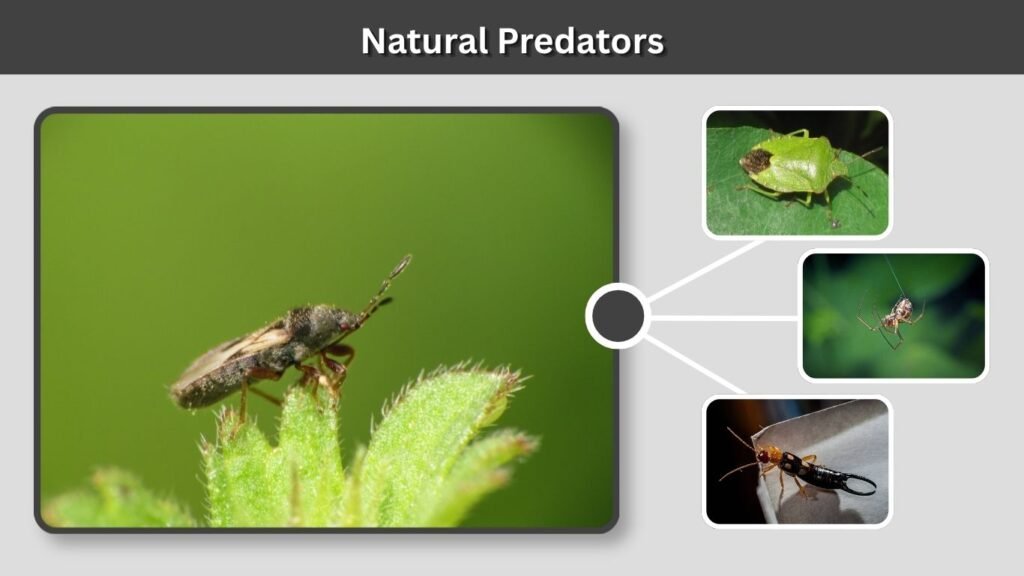
Chinch bugs are eaten by big-eyed bugs, earwigs, predatory true bugs, spiders, and some ants. Big-eyed bugs are particularly valuable because they live in the same turf habitat and prey on chinch bug eggs and immature stages. Natural predators may suppress low populations, although they may not stop a severe outbreak by themselves.
FAQs
Can chinch bugs fly?
Some adult chinch bugs have fully developed wings and can fly. Others have short wings and disperse mainly by walking. Even long-winged southern chinch bugs commonly travel through connected lawns on foot rather than relying entirely on flight.
Do chinch bugs bite humans?
No. Chinch bugs possess piercing mouthparts, but these are adapted for feeding on plant tissue. They are not blood-feeding insects and are considered medically harmless to humans and pets.
What time of year are chinch bugs most active?
Activity and lawn damage are usually greatest during warm weather, especially hot, dry periods. Southern populations may remain active for much of the year, while northern chinch bugs become inactive or overwinter during cold conditions.
Where should I look for chinch bugs?
Inspect the border where brown grass meets healthy green turf. Separate the blades and examine the lower stems, thatch, and soil surface. The insects are less likely to remain in the completely dead center of an old patch.
Are chinch bugs the same as bed bugs?
No. Chinch bugs are grass-feeding outdoor insects, while bed bugs are blood-feeding household pests. They belong to different families, have different habitats, and interact with people in completely different ways.
