
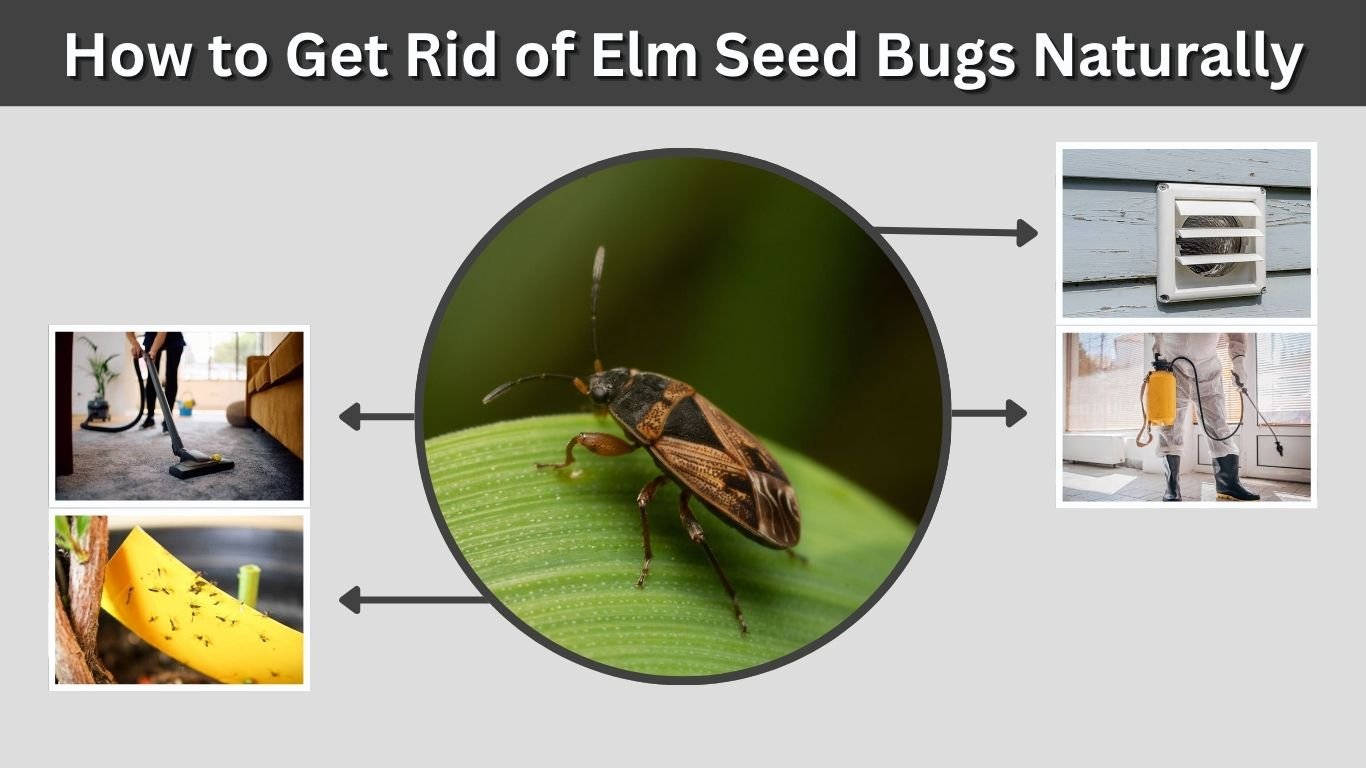
Elm seed bugs can gather on sunny walls and enter homes through gaps around windows, doors, vents, and siding. They do not reproduce indoors or damage furniture, but large numbers can become frustrating and may release an unpleasant odor when crushed. The most effective way to get rid of elm seed bugs is to vacuum the insects, remove fallen elm seeds, and seal exterior entry points. Natural control works best when indoor removal and outdoor prevention are used together.
What Are Elm Seed Bugs?
The elm seed bug, Arocatus melanocephalus, is a small reddish-brown and black insect that primarily feeds on elm seeds. It is native to Europe and the Mediterranean region but has established populations in parts of North America.
Adults are approximately one-third of an inch long. They often have reddish edges along the abdomen, a dark triangular marking behind the head, and a red underside. When disturbed or crushed, they can release a strong, unpleasant odor.
| Feature | Description |
| Scientific name | Arocatus melanocephalus |
| Size | Approximately one-third inch |
| Color | Brown, black, and reddish-orange |
| Main food | Elm seeds and plant sap |
| Indoor reproduction | No |
| Damage to homes | None |
| Human health risk | Very low |
| Main problem | Large indoor gatherings and odor |
Why Are Elm Seed Bugs in Your House?
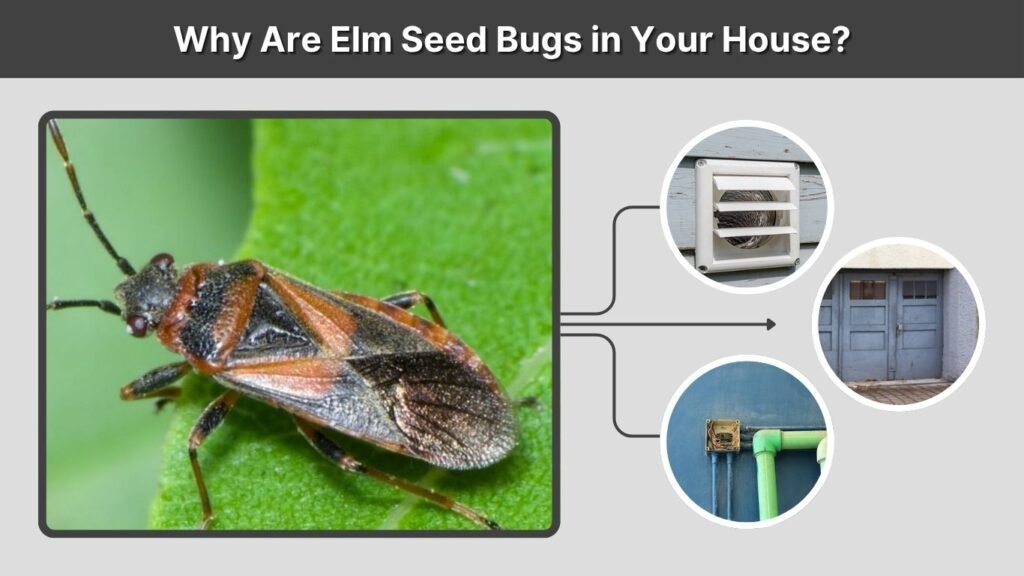
Elm seed bugs enter buildings while searching for shelter from unfavorable outdoor conditions. They may invade during hot summer weather and later seek protected places where adults can survive winter.
They commonly enter through:
- Cracks around window frames
- Gaps beneath exterior doors
- Torn window screens
- Openings around vents
- Spaces beneath siding
- Roof and soffit gaps
- Openings around pipes and utility cables
- Poorly sealed garage doors
Elm seed bugs do not enter because they want household food. They also do not establish a breeding infestation indoors. Bugs appearing inside generally developed outdoors on or near elm trees.
How to Get Rid of Elm Seed Bugs Indoors
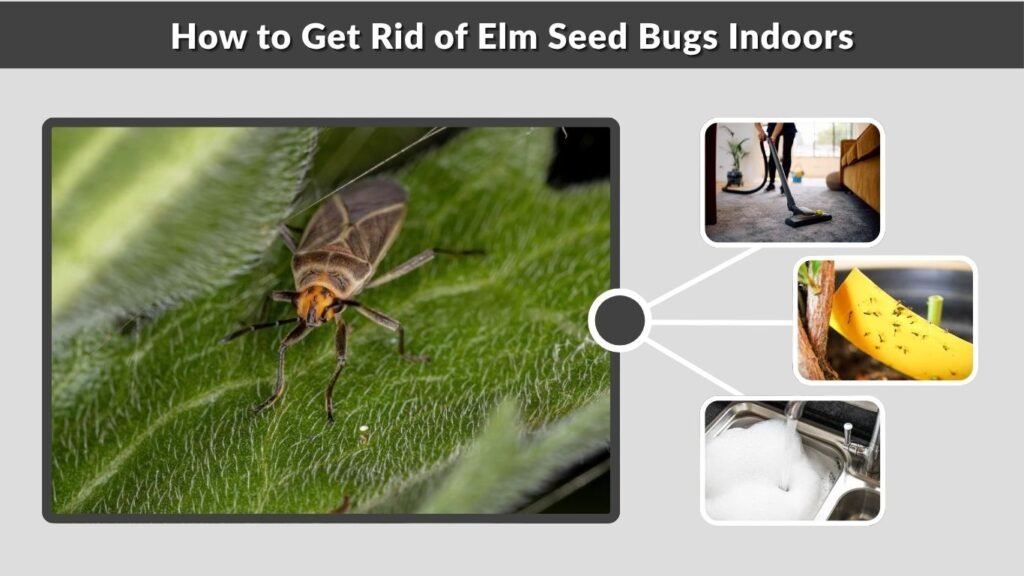
Elm seed bugs inside the house should be removed physically rather than sprayed. Indoor insecticides are unlikely to provide lasting control because additional bugs can continue entering through exterior gaps.
Vacuum the Bugs
Use a vacuum hose to collect bugs from windowsills, walls, curtains, floors, and corners. Empty the vacuum container into a sealed outdoor trash bag immediately afterward.
For large outdoor groups, Utah State University Extension recommends vacuuming the insects into soapy water. This quickly reduces their numbers without crushing them individually.
Avoid allowing large numbers to remain inside the vacuum because their odor may linger.
Use a Jar of Soapy Water
Fill a container with water and add a small amount of dish soap. Gently brush or shake visible bugs into the solution.
The soap prevents them from escaping and provides a simple method for removing groups from window frames, porches, or exterior walls. Avoid splashing soapy water directly onto delicate plants or finished indoor surfaces.
Use Sticky Traps Near Entry Points
Place plain sticky traps near windows, sliding doors, and other areas where elm seed bugs repeatedly appear. Sticky traps can catch wandering insects, but they will not stop more bugs from entering.
Keep traps away from children and pets. They are most useful as a temporary supplement to sealing exterior openings. University of Idaho Extension includes sticky traps among the available household management options.
Do Not Crush Them
Crushing elm seed bugs can release a pungent odor and may leave fecal stains on light-colored walls, curtains, or fabrics. Use a vacuum, tissue, container, or soapy-water trap instead.
How to Get Rid of Elm Seed Bugs Naturally Outside
Outdoor control should reduce both the insects gathering near the home and the elm seeds that attract them.
Remove Fallen Elm Seeds
Rake and remove elm seeds that have accumulated around foundations, patios, driveways, walkways, and garden beds. Place them in sealed bags or dispose of them according to local yard-waste rules.
Elm seed bugs mainly feed on sap from elm seeds and leaves. Removing accumulated seeds near buildings makes the immediate area less attractive.
Remove Volunteer Elm Seedlings
Pull small volunteer elm seedlings growing against foundations, fences, garden beds, or walls. These plants may produce additional food and shelter as they grow.
Removing mature established trees is usually unnecessary solely because of elm seed bugs. Large-tree treatment is difficult, and the bugs generally do not damage tree health. Consult an arborist before removing a healthy tree.
Clear Hiding Places
Reduce protected areas immediately beside the building by clearing:
- Leaf litter
- Loose bark
- Stacked boards
- Unused containers
- Dense plant debris
- Firewood touching the house
Keep firewood elevated and positioned away from exterior walls. This reduces protected overwintering locations close to potential entry points.
Seal the House to Prevent Elm Seed Bugs
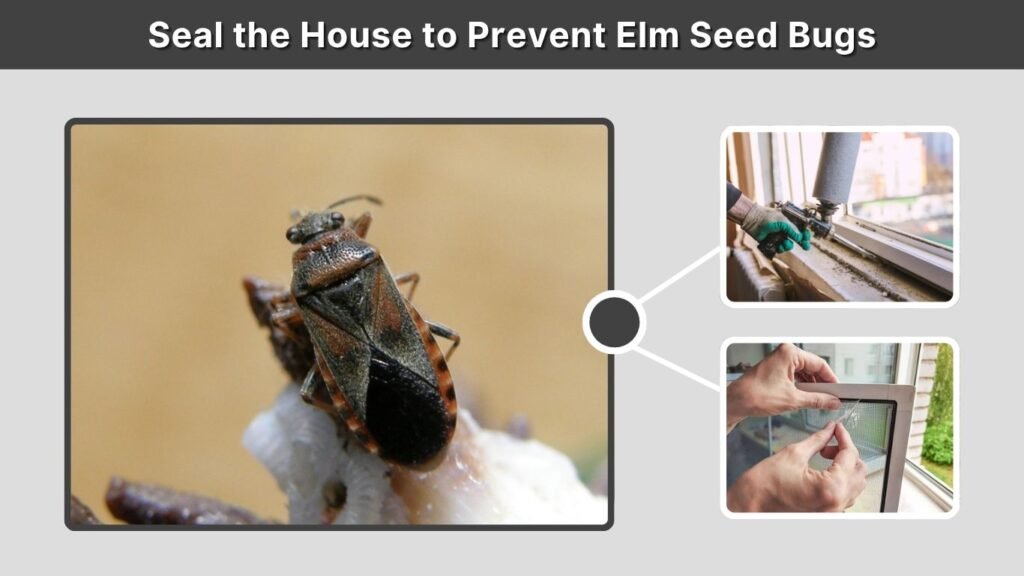
Exclusion is considered the most dependable long-term solution. Complete sealing before the bugs begin gathering on the building.
Seal Cracks and Openings
Inspect the exterior and seal gaps with an appropriate material, such as exterior-grade caulk. Pay particular attention to the foundation, siding, fascia, roofline, windows, doors, vents, and utility penetrations.
Elm seed bugs can enter through narrow spaces, so even small cracks should be repaired.
Repair Screens and Door Gaps
Repair torn window and vent screens. Install tight-fitting door sweeps and replace worn weatherstripping.
Check sliding doors and garage doors carefully because gaps along their lower edges can allow many insects to enter. Utah State University specifically recommends tight-fitting screens and door sweeps without gaps.
Does Vinegar Get Rid of Elm Seed Bugs?
Vinegar may kill or disturb an individual bug when sprayed directly, but it is not a dependable solution for a household invasion. It does not eliminate bugs hidden in wall gaps, remove elm seeds, or prevent new insects from entering.
Extension guidance emphasizes vacuuming, removing accumulated elm seeds, using traps, and sealing buildings rather than relying on vinegar. Based on that guidance, vinegar should not be treated as the main control method.
Vinegar may also damage stone, wood finishes, painted surfaces, and some plants. Test any homemade cleaner on a hidden area before widespread use.
Do Ultrasonic Repellers Work on Elm Seed Bugs?
Ultrasonic devices are not a reliable treatment. Residential sonic pest devices have generally not demonstrated effectiveness against common pests in scientific studies, according to the University of Arizona Cooperative Extension.
An EPA establishment number on an ultrasonic device does not mean the EPA has reviewed or approved its effectiveness. Manufacturers are generally responsible for supporting their own claims.
Spend resources on sealing openings, repairing screens, vacuuming adults, and removing elm seeds instead.
When Should You Use Insecticide?
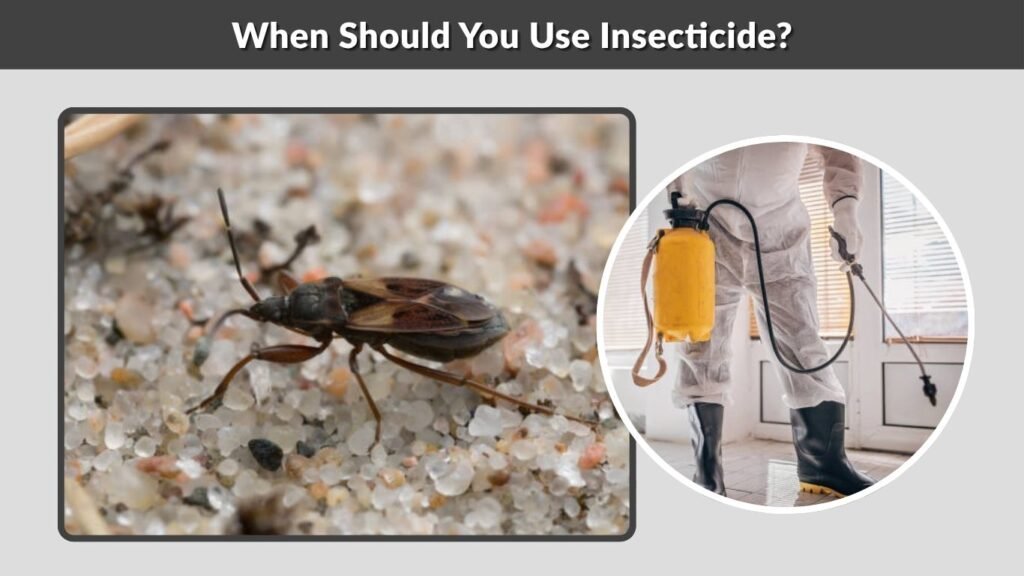
Most small infestations can be controlled without insecticide. Where large numbers repeatedly gather, an appropriately labeled exterior perimeter product may reduce entry when applied around foundations, windows, doors, vents, eaves, and other access points.
However, chemical treatments may not provide complete control because elm seed bugs are highly mobile. Apply only products whose labels permit use on the intended building surface, and follow all directions exactly. Consider a licensed pest-control professional for severe or recurring invasions.
Avoid indiscriminately spraying entire landscapes or large mature trees. Exterior exclusion remains more reliable as a long-term strategy.
FAQs
Are elm seed bugs dangerous?
Elm seed bugs are not considered a human health threat. They do not feed on blood or damage buildings. Their main problems are entering homes in large numbers, producing odor when disturbed, and occasionally leaving stains.
Do elm seed bugs bite people?
Elm seed bugs are plant feeders and are not known as biting household pests. Their mouthparts are adapted for extracting sap from elm seeds and leaves rather than feeding on people.
Why do elm seed bugs keep returning?
They may continue returning because elm trees and fallen seeds remain nearby or because exterior gaps provide easy access. Removing indoor bugs without sealing windows, doors, vents, and siding will provide only temporary relief.
Do elm seed bugs reproduce inside houses?
No. They may hide and overwinter in buildings, but they do not reproduce indoors. Bugs appearing in different rooms usually entered from outside or emerged from hidden structural spaces.
What is the fastest way to remove elm seed bugs?
Vacuum visible bugs, empty the vacuum outdoors, and collect exterior groups in soapy water. Then seal the entry points and rake up fallen elm seeds so the problem does not quickly return.
