
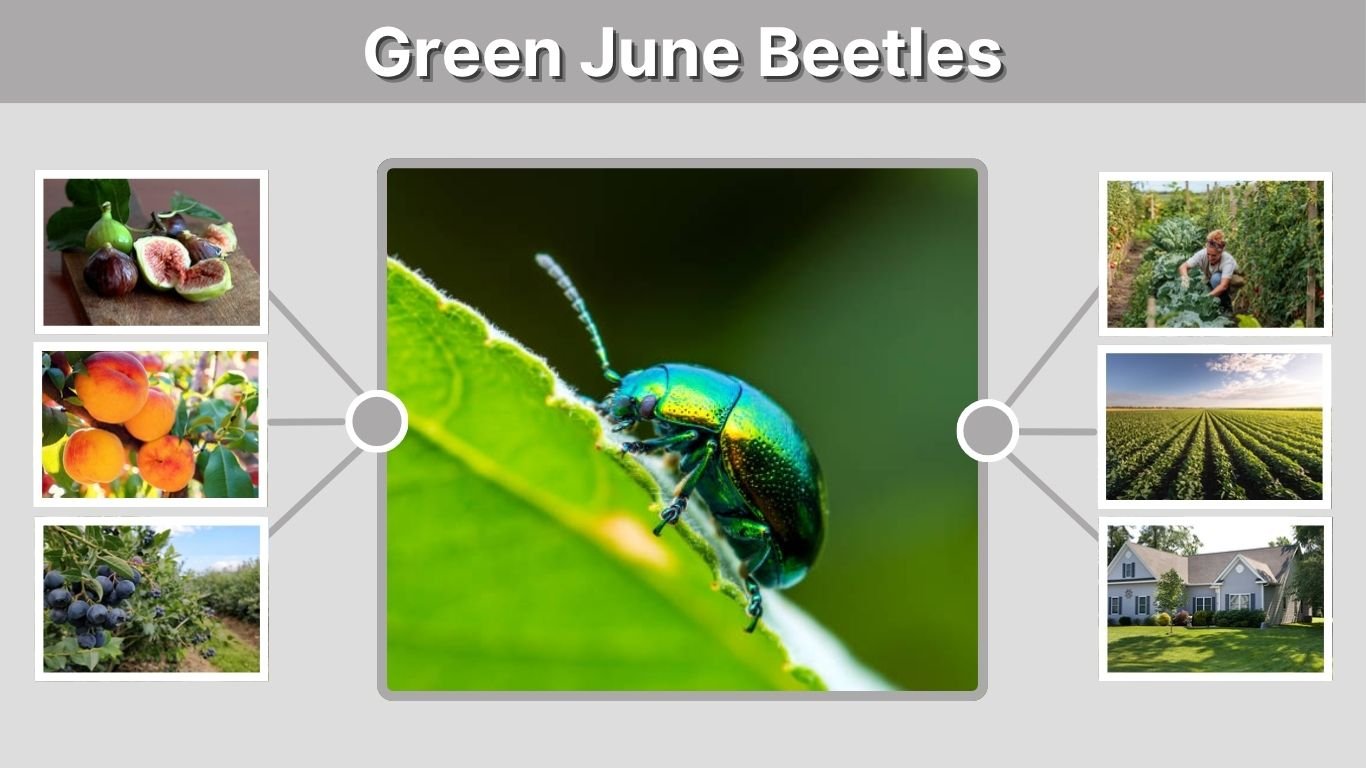
Green June beetles are striking insects known for their metallic color, loud buzzing flight, and strong presence during warm months. Often mistaken for other beetles, they can cause concern due to their size and behavior. However, they are not as harmful as many people assume. Learning how to identify them, understand their life cycle, and recognize their habits can help you manage them effectively while appreciating their role in nature.
What Is a Green June Beetle?
Green June beetles, scientifically known as Cotinis nitida, are members of the scarab beetle family. They are commonly seen in summer, especially in gardens, lawns, and areas with abundant organic material. Unlike many beetles that are active at night, these insects are active during the day and are often noticed because of their loud flying sound.
They are sometimes confused with figeater beetles or Japanese beetles, but they have distinct features that set them apart. Their bright green color and heavy body make them easy to recognize once you are familiar with their appearance.
Scientific Classification
- Scientific name: Cotinis nitida
- Family: Scarabaeidae
- Order: Coleoptera
- Common names: green June beetle, green June bug
Green June Beetle Identification
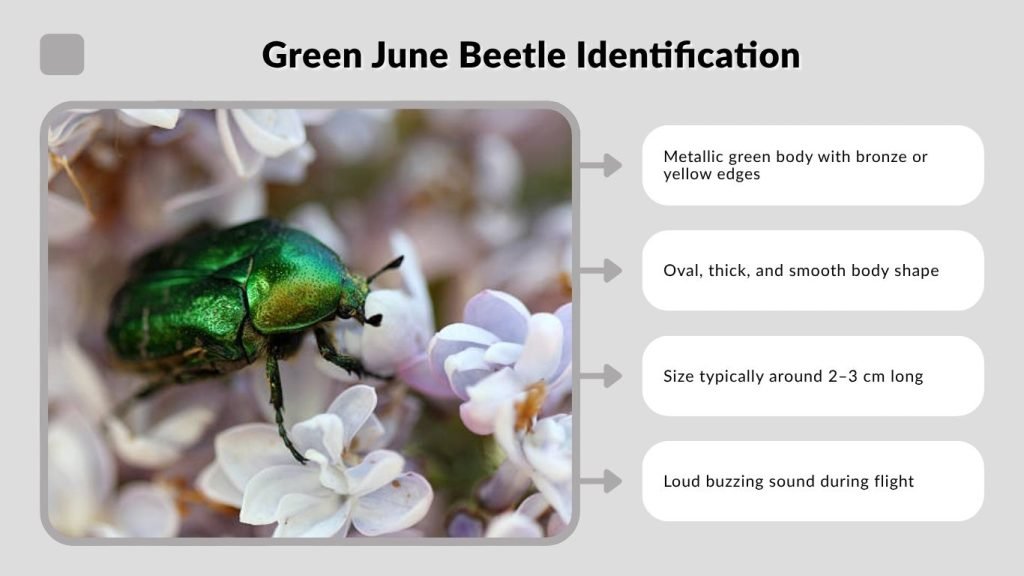
Identifying green June beetles correctly is important, especially when comparing them to other similar insects. Their physical traits are unique and help distinguish them from more harmful beetles.
Key Characteristics
- Metallic green body with bronze or yellow edges
- Oval, thick, and smooth body shape
- Size typically around 2–3 cm long
- Loud buzzing sound during flight
- Visible underside with lighter coloration
Wings and Flight Behavior
- Hard wing covers protect delicate flying wings
- Wings remain partially open while flying
- Strong but clumsy flight pattern
- Frequently seen flying low over grass
Green June Beetle Life Cycle
The life cycle of the green June beetle is an important factor in understanding its impact on lawns and gardens. Most of their development happens underground, making it easy to overlook until signs appear above the surface.
Egg Stage
Female beetles lay eggs in soil that is rich in organic matter. These eggs are usually deposited in lawns, compost piles, or garden beds where moisture levels are suitable for development.
Larvae (Grubs) Stage
After hatching, the larvae—often called green June beetle grubs—begin feeding on organic material in the soil. Unlike some other beetle larvae, they prefer decaying matter rather than living roots.
- Thick, white grub body
- Moves on its back rather than its legs
- Found in soil rich in organic debris
- Plays a role in breaking down organic matter
Pupa Stage
The larvae eventually form a protective cocoon in the soil and enter the pupal stage. During this phase, they transform into adult beetles. This stage occurs underground and is rarely seen.
Adult Stage
Adult beetles emerge during late spring and summer. They are active during the day, feeding and flying in search of mates. Their lifespan as adults is relatively short compared to their time as larvae.
Green June Beetle Habitat and Distribution
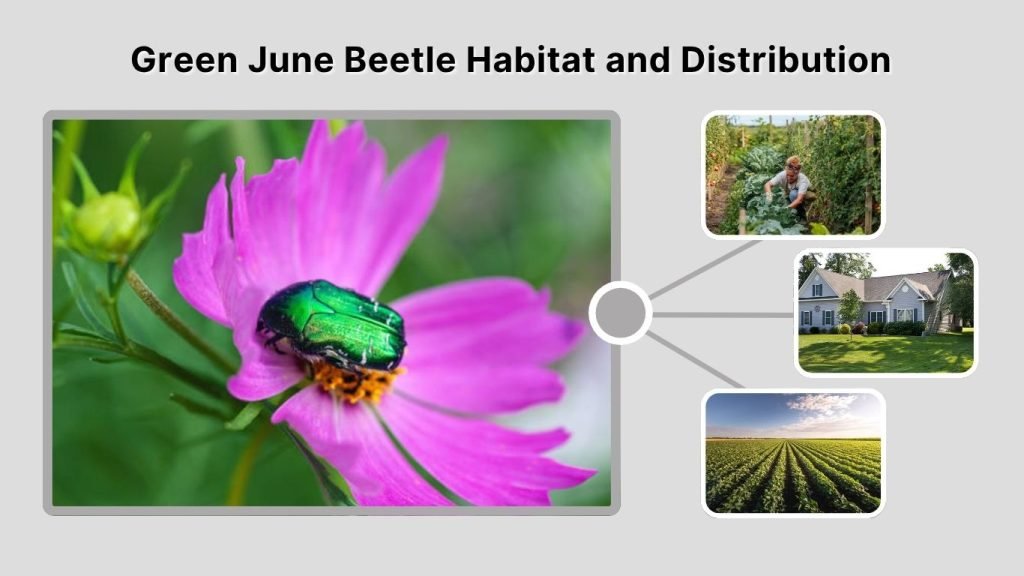
Green June beetles are widely distributed across many regions, particularly in warm climates. They are commonly found in the United States, including areas like California, Texas, Florida, and Virginia. Their ability to adapt to different environments allows them to thrive in both rural and suburban settings.
They prefer habitats where soil is rich in organic matter and moisture is readily available. Lawns, gardens, compost piles, and agricultural lands provide ideal conditions for both larvae and adults. Their presence is often more noticeable in areas with abundant vegetation and decaying organic material.
Common Locations
- Lawns and grassy areas
- Gardens and agricultural fields
- Compost piles and organic waste areas
Green June Beetle Behavior and Feeding Habits
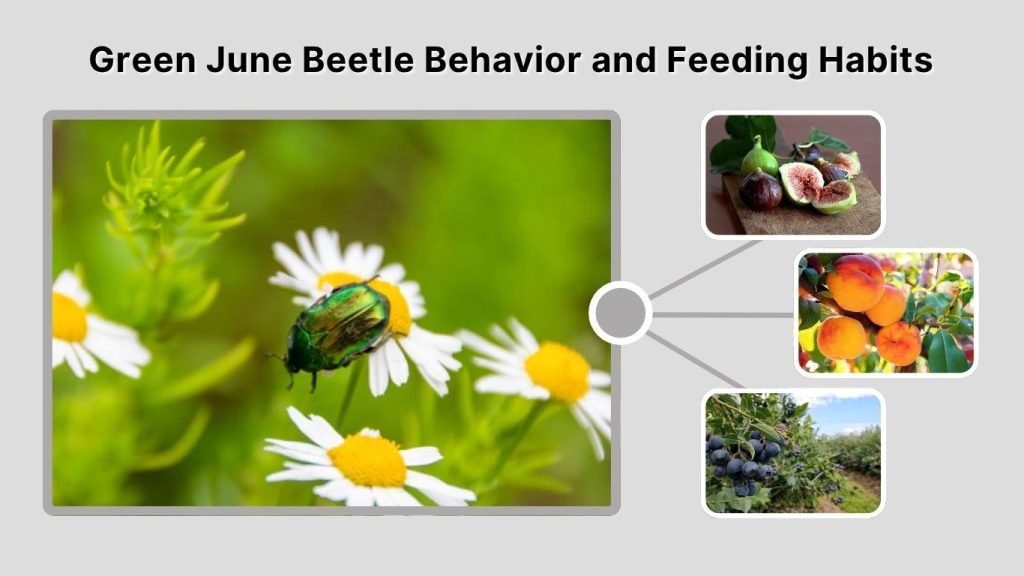
Green June beetles are active during the daytime, which sets them apart from many other beetle species. Their loud buzzing flight and tendency to fly low over the ground make them highly visible.
What Do Green June Beetles Eat?
- Overripe fruits such as figs, peaches, and berries
- Plant material and soft vegetation
- Organic matter found in soil
Flying and Swarming Behavior
- Fly in groups during warm days
- Produce a loud buzzing sound
- Often hover or circle above lawns
Mating and Activity Patterns
Green June beetles are most active during the summer months when temperatures are warm. Mating occurs during this time, and females lay eggs shortly afterward. Their activity usually peaks during midday when sunlight and heat are strongest.
Are Green June Beetles Harmful?
Green June beetles often look intimidating because of their size and loud buzzing flight, but their actual impact is usually less severe than many people expect. While they can cause some problems in gardens and lawns, they are not considered dangerous insects. Understanding their effects helps you decide whether control measures are necessary or not.
Impact on Humans and Pets
- Do green June beetles bite? No, they do not bite or sting
- Are they poisonous? They are not toxic to humans or pets
- Harmless physical contact, though they may feel heavy or startling
Impact on Plants and Lawns
- Adults feed on ripe and overripe fruits
- Can damage soft fruits like peaches and figs
- Larvae mainly feed on organic matter rather than live roots
Green June Beetle vs Other Beetles
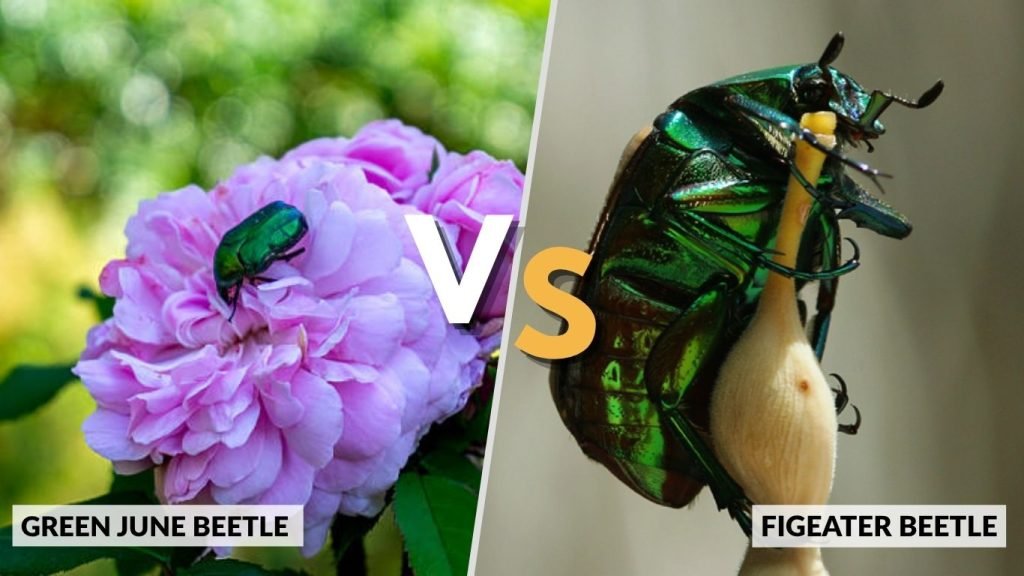
Many people confuse green June beetles with other similar-looking species. Proper identification is important because different beetles cause different levels of damage and require different control approaches.
Green June Beetle vs Figeater Beetle
- Very similar in appearance
- Found in different geographic regions
- Slight differences in color tone and size
Green June Beetle vs Japanese Beetle
- Japanese beetles are smaller and more destructive
- Japanese beetles damage leaves extensively
- Green June beetles focus more on fruits and organic matter
Green June Beetle vs June Bug
- June bugs are usually brown, not green
- June bugs are nocturnal, while green June beetles are active during the day
- Differences in feeding behavior and habitat
How to Get Rid of Green June Beetles
Controlling green June beetles depends on reducing their food sources and limiting suitable breeding conditions. In many cases, simple environmental changes can significantly reduce their population.
Natural Control Methods
- Remove overripe and fallen fruits from the ground
- Use beneficial nematodes to target larvae
- Encourage birds and natural predators
Lawn and Garden Practices
- Improve soil drainage to reduce egg-laying sites
- Avoid excessive organic buildup in soil
- Maintain healthy grass and plants
Traps and Chemical Options
- Use beetle traps in heavily affected areas
- Apply pesticides only if infestation is severe
- Follow safe application guidelines
Green June Beetle Prevention Tips
Preventing green June beetles is more effective than trying to eliminate them after they appear. A healthy, well-maintained environment reduces the chances of infestation and keeps their population under control naturally.
Reduce Attraction
- Limit compost exposure near living areas
- Clean up fallen fruit regularly
- Avoid overly moist soil conditions
Maintain Healthy Lawns
- Water properly without overwatering
- Aerate soil to improve structure
- Monitor for early signs of larvae
Ecological Importance
Green June beetles play a useful role in the environment despite being considered pests in some situations. Their larvae help break down organic matter in the soil, contributing to nutrient recycling and improving soil quality. They also serve as a food source for birds and other wildlife, supporting the natural food chain.
Rather than eliminating them completely, managing their numbers is often the most balanced approach.
FAQs
Do green June beetles bite humans?
No, green June beetles do not bite or sting. They are completely harmless to humans, though their large size and buzzing flight can make them seem intimidating.
How long do green June beetles live?
The adult beetle typically lives for a few weeks during the summer, while the full life cycle, including the larval stage, can last about one year.
What attracts green June beetles?
They are mainly attracted to ripe or fermenting fruits, compost, and moist soil conditions that provide ideal environments for feeding and egg-laying.
Are green June beetles harmful to lawns?
Their larvae mostly feed on organic matter rather than living roots, so they cause less damage than other beetle grubs. However, large populations can still disturb soil.
How can I get rid of green June beetles naturally?
You can remove food sources like fallen fruit, improve soil drainage, and introduce natural predators such as birds or beneficial nematodes to control their population.
