
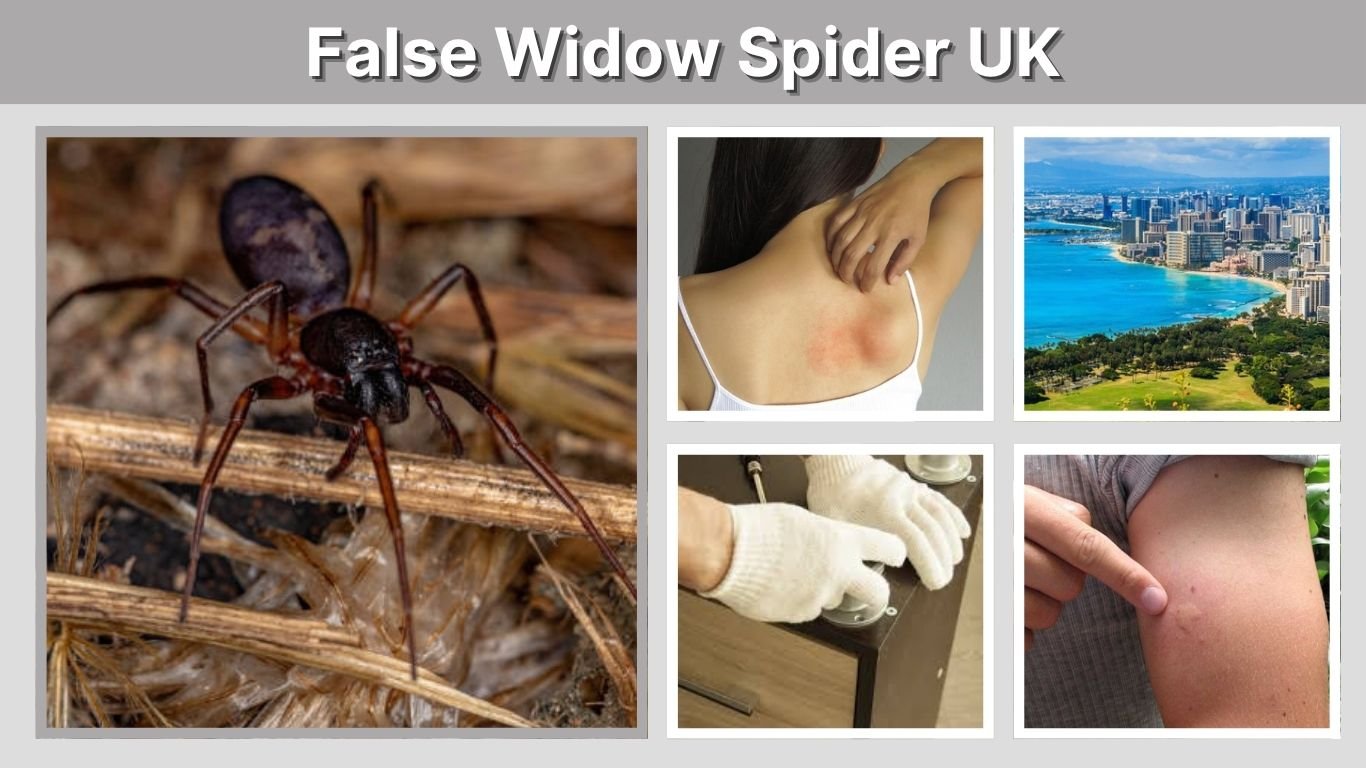
The false widow spider is one of the most talked-about spiders in the UK. News stories often describe it as dangerous, poisonous, or invasive, which can make people worry when they find one at home. In reality, false widow spiders can bite, but serious cases are uncommon. Learning how to identify them, where they live, what their webs look like, and what to do after a bite can help you react calmly and safely.
What Is a False Widow Spider?
False widow spiders are a group of spiders from the Steatoda genus. They get their common name because some species look similar to black widow spiders, although they are not the same and are generally much less dangerous.
In the UK, the most discussed species is the noble false widow spider. Its scientific name is Steatoda nobilis. It has become common in many parts of Britain, especially around homes, sheds, garages, walls, windows, and other sheltered places.
Noble False Widow Spider UK
The noble false widow spider is the species most people mean when they search for “false widow spider UK.” It is usually dark brown or blackish with a rounded body and pale cream markings on the abdomen. Some people describe the pattern as skull-like, although markings vary from spider to spider.
It is not always easy to identify from colour alone. Some are darker, some are brown, and some markings are faded. This is why many harmless house spiders are wrongly called false widows.
False Black Widow Spider UK
The phrase “false black widow spider UK” usually refers to the same confusion. False widows may resemble black widows because of their rounded abdomen and shiny body, but true black widow spiders are not established in the UK in the same way. False widows are less venomous and far less medically serious than true black widows.
False Widow Spider UK Size
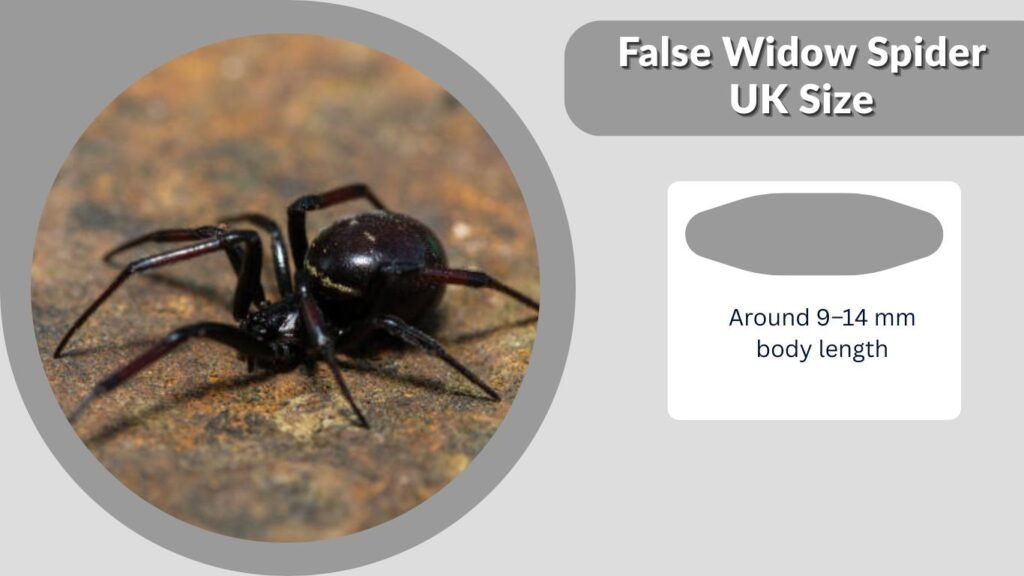
False widow spiders are not huge, but their rounded bodies can make them look larger than they really are. Adult females are usually bigger and heavier-bodied than males. Males tend to be smaller, slimmer, and more active when searching for females.
| Feature | Typical Description |
|---|---|
| Adult female size | Around 9–14 mm body length |
| Adult male size | Usually smaller and slimmer |
| Colour | Dark brown, blackish, or reddish-brown |
| Abdomen shape | Rounded and bulb-like |
| Markings | Pale cream or lighter pattern, often variable |
| Web type | Messy, tangled, three-dimensional web |
| Common places | Homes, sheds, garages, walls, windows, fences |
How Big Is a False Widow Spider UK?
A false widow spider may look alarming, but the body is usually only about the size of a small fingernail. When the legs are included, it can appear larger. Females look more noticeable because their abdomen is round and glossy.
If you see a large, fast-running spider on the floor, it may be a house spider rather than a false widow. False widows are more likely to stay close to their tangled web.
How to Identify a False Widow Spider UK
Correct identification is important because many UK spiders are mistaken for false widows. The best way to identify one is to look at body shape, web style, colour, and behaviour together.
False widows usually have a smooth, shiny, rounded abdomen. Their legs are often reddish-brown or dark brown. The abdomen may have pale markings, but the pattern is not always clear.
Key Identification Signs
Look for these features:
- A rounded, bulb-shaped abdomen
- Dark brown, blackish, or reddish-brown colouring
- Pale markings on the abdomen
- A messy, tangled web rather than a neat orb web
- A habit of hiding in corners, cracks, sheds, garages, and window frames
- A slower, more secretive behaviour compared with fast house spiders
False widows are often found hanging upside down in their webs. They usually do not run around open floors like giant house spiders.
Black, Brown, and Red False Widow Spiders
Searches like “black false widow spider UK” and “red false widow spider UK” often come from colour confusion. False widows can look dark, reddish-brown, or almost black depending on age, lighting, species, and individual markings.
A spider’s colour alone is not enough for identification. Many UK spiders are brown or black. The rounded abdomen and messy web are usually more useful clues.
False Widow Spider UK Web
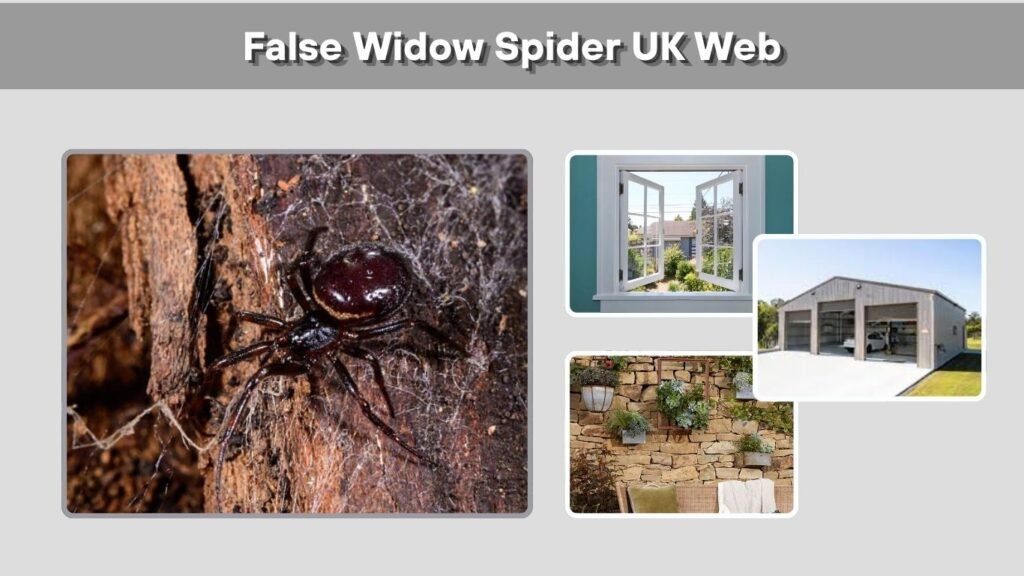
A false widow spider web does not look like a classic round garden spider web. It is usually messy, tangled, and irregular. These webs are often built in sheltered places where insects may pass.
You may find a false widow spider web in:
- Window frames
- Door frames
- Garages
- Sheds
- Loft spaces
- Outdoor walls
- Garden furniture
- Fence panels
- Behind bins or stored items
The web can look like a cluttered cobweb. The spider often hides nearby and comes out when prey becomes trapped.
Why Web Location Matters
False widow spiders prefer places where they are not disturbed. This is why bites usually happen when people accidentally press against, trap, or handle the spider. For example, a spider may be hidden in clothing, gloves, shoes, bedding, garden furniture, or stored boxes.
Checking and shaking out items that have been left in sheds or garages is a simple way to avoid unwanted contact.
False Widow Spider UK Locations
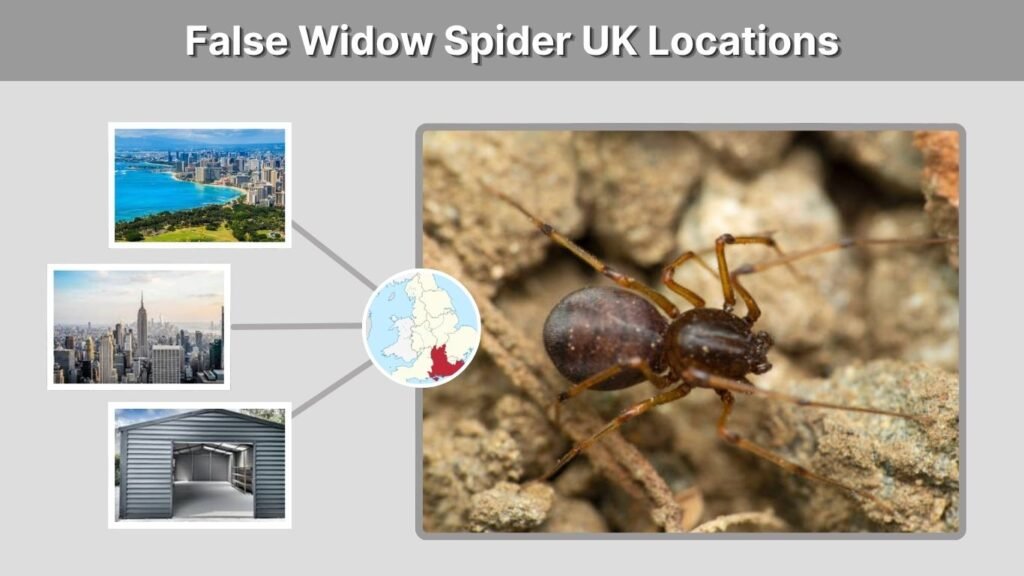
False widow spiders are now found in many parts of the UK, especially in southern England and urban areas. They are often linked with warmer buildings, sheltered gardens, coastal towns, and human-made structures.
Their range has expanded over time, which is why people search for “false widow spider UK map” and “false widow spider UK locations.” However, they are not evenly spread everywhere. They are more common in some areas than others.
Where Are They Most Common?
False widows are often reported in:
- Southern England
- Coastal areas
- Towns and cities
- Warm buildings
- Sheds and garages
- Garden structures
- Outdoor walls and fences
They can also appear farther north, but sightings tend to be more common in warmer and more built-up places.
False Widow Spider UK Invasion
The word “invasion” is often used in headlines, but it can be misleading. False widow spiders have spread in the UK, and the noble false widow is now established in many areas. However, that does not mean homes are being invaded in a dramatic way.
Their numbers may become more noticeable in late summer and autumn, when spiders are more visible and people spend more time noticing webs around homes. Media reports can also make normal seasonal sightings seem more alarming.
Is the False Widow Spider Dangerous in the UK?
False widow spiders can bite, and the noble false widow is considered one of the UK spiders most capable of causing a medically noticeable bite. However, this does not mean it is highly dangerous to most people.
Most bites are local and painful rather than life-threatening. Many people compare the pain to a wasp or bee sting. Serious reactions are uncommon and may involve infection, allergy, or individual sensitivity.
False Widow Spider UK Dangerous: The Real Risk
The real risk is usually low if the spider is left alone. False widows are not aggressive hunters of humans. They bite mainly when trapped, squeezed, or disturbed.
Risk may be higher when:
- You put on clothing or gloves where a spider is hiding
- You move boxes, furniture, or stored items without checking
- A spider is trapped against the skin
- Someone tries to pick up or crush the spider by hand
- The bite becomes infected afterward
For most people, awareness and caution are enough.
False Widow Spider UK Bite
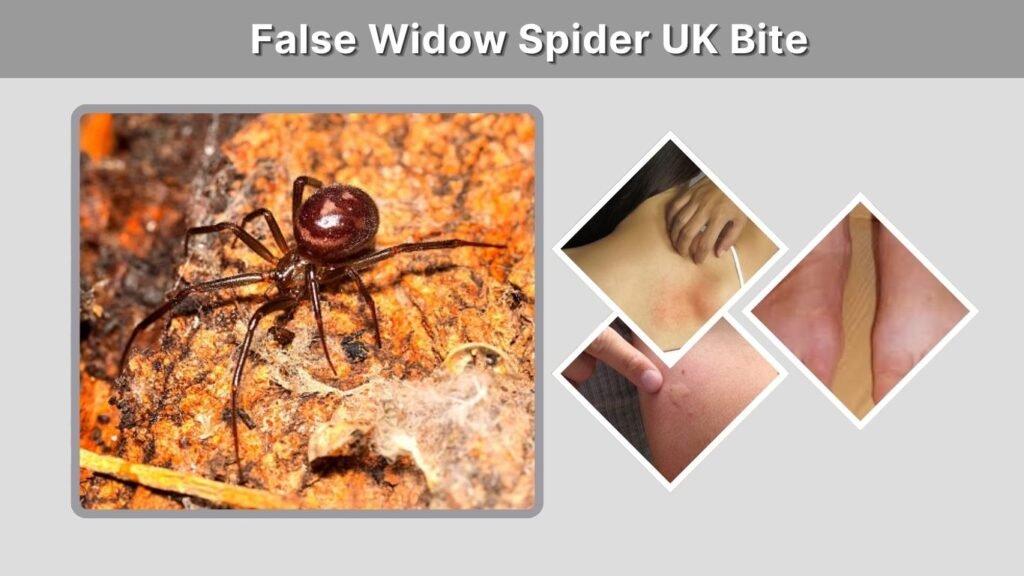
A false widow bite can be painful, but many suspected bites are never confirmed. Skin irritation, insect bites, infections, and allergic reactions are often blamed on spiders even when no spider is seen biting.
If a false widow does bite, symptoms are usually local. Some people may experience stronger reactions.
False Widow Spider UK Bite Symptoms
Possible bite symptoms include:
- Sharp pain or stinging at the bite site
- Redness around the bite
- Local swelling
- Tenderness or warmth
- Small puncture marks
- Itching or irritation
- Mild numbness around the area
- Headache or nausea in some cases
Most mild symptoms improve within a few days. However, worsening pain, spreading redness, pus, fever, or feeling very unwell can suggest infection or a stronger reaction.
What to Do After a Bite
If you think you were bitten by a false widow spider, stay calm and clean the area.
Basic steps include:
- Wash the bite with soap and water.
- Apply a cold compress to reduce swelling.
- Avoid scratching the area.
- Use simple pain relief if suitable for you.
- Watch for worsening redness, swelling, or infection.
- Seek medical advice if symptoms become severe or do not improve.
Get urgent help if you have breathing difficulty, facial swelling, severe pain, chest symptoms, spreading infection, or signs of an allergic reaction.
Is the False Widow Spider Poisonous?
People often ask whether the false widow spider is poisonous. Technically, spiders are venomous, not poisonous. Venom is injected by a bite, while poison is harmful when touched or eaten.
False widow spiders do have venom, which they use to catch prey. In humans, their venom can cause pain and local symptoms. It is not considered deadly to healthy adults in normal circumstances, but bites can still be unpleasant.
Venomous False Widow Spider UK
The phrase “venomous false widow spider UK” is accurate because false widows use venom. However, venomous does not automatically mean highly dangerous. Bees, wasps, and many spiders are venomous, but most encounters do not become medical emergencies.
The main concern is a bite followed by swelling, pain, or infection. Proper cleaning and monitoring are important.
Male and Baby False Widow Spiders
Male and baby false widow spiders can look different from adult females. This can make identification harder.
Male False Widow Spider UK
Male false widows are usually smaller and slimmer than females. They may wander more, especially when searching for a mate. Because males move around, people may notice them indoors more often.
Male spiders can still bite, but females are usually the ones people notice because of their larger rounded abdomen.
Baby False Widow Spider UK
Baby false widow spiders are very small and are often difficult to identify without magnification. Young spiders may have different markings or lighter colours. Seeing tiny spiders does not always mean there is a dangerous infestation.
If you find many spiderlings indoors, gentle removal, vacuuming webs, and sealing gaps can help reduce numbers.
Should I Kill a False Widow Spider UK?
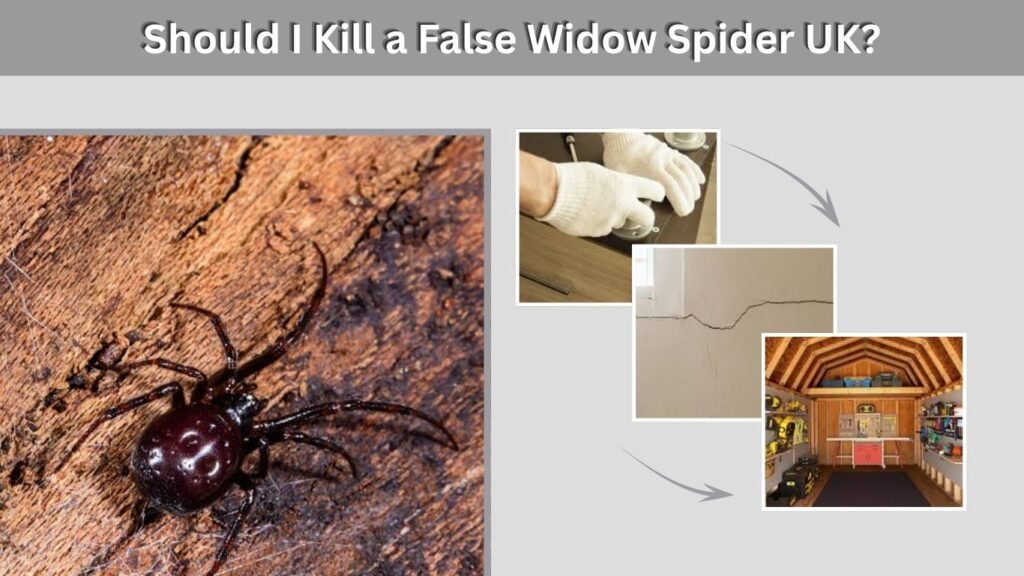
In most cases, you do not need to kill a false widow spider. Spiders help control flies, mosquitoes, moths, and other insects. If the spider is outside or in a low-risk area, leaving it alone is usually the best option.
If it is inside your home and you are uncomfortable, remove it safely instead of handling it directly.
Safe Removal Tips
You can remove a false widow by:
- Using a glass and card to trap and release it
- Wearing gloves when moving stored items
- Vacuuming old webs in corners
- Sealing cracks around windows and doors
- Keeping sheds, garages, and lofts less cluttered
- Moving outdoor bins and furniture away from walls
Do not pick up a suspected false widow with bare hands. If you have a heavy infestation or repeated sightings in sensitive areas, contact a pest control professional.
False Widow Spider UK News
False widow spiders often appear in UK news, especially when someone reports a painful bite or hospital visit. These stories can be frightening, but they do not always prove that a false widow was responsible.
Many bite cases are difficult to confirm unless the spider was seen biting and then identified correctly. Some severe cases may involve infection after the bite rather than venom alone.
Why Headlines Can Be Misleading
Headlines often use words like “deadly,” “invasion,” or “most dangerous spider.” While the noble false widow can bite and deserves caution, panic is not helpful.
A balanced view is better: false widows are established in the UK, they can bite, most bites are not severe, and medical advice is important if symptoms worsen.
How to Prevent False Widow Spiders at Home
You cannot remove every spider from a home or garden, but you can reduce hiding places and accidental contact.
Useful prevention steps include:
- Shake out garden gloves, shoes, and clothing stored outside
- Clean webs from window frames and sheds
- Reduce clutter in garages and lofts
- Seal gaps around doors and windows
- Use gloves when moving old boxes or garden furniture
- Keep beds and clothing away from damp storage areas
These steps are especially useful in late summer and autumn when spider activity becomes more noticeable.
FAQs
Are false widow spiders dangerous in the UK?
False widow spiders can bite, but they are not usually dangerous to most people. A bite may cause pain, redness, swelling, or irritation. Serious reactions are uncommon but possible, especially if the wound becomes infected or the person has a strong reaction.
What are false widow spider bite symptoms?
Common symptoms include stinging pain, redness, swelling, tenderness, itching, and sometimes small puncture marks. Some people may feel unwell, with headache or nausea. Seek medical advice if symptoms worsen, spread, or show signs of infection.
How do I identify a false widow spider in the UK?
Look for a rounded shiny abdomen, dark brown or blackish colour, pale abdominal markings, and a messy tangled web. False widows often hide in window frames, sheds, garages, and corners rather than running across open floors.
Should I kill a false widow spider?
You usually do not need to kill it. If it is outside or away from people, leave it alone. If it is indoors, use a glass and card or a vacuum to remove it safely. Avoid touching it with bare hands.
Where are false widow spiders found in the UK?
False widow spiders are found across many parts of the UK, especially southern England, coastal areas, towns, cities, and warm sheltered buildings. They are often seen in sheds, garages, window frames, walls, fences, and garden furniture.
