
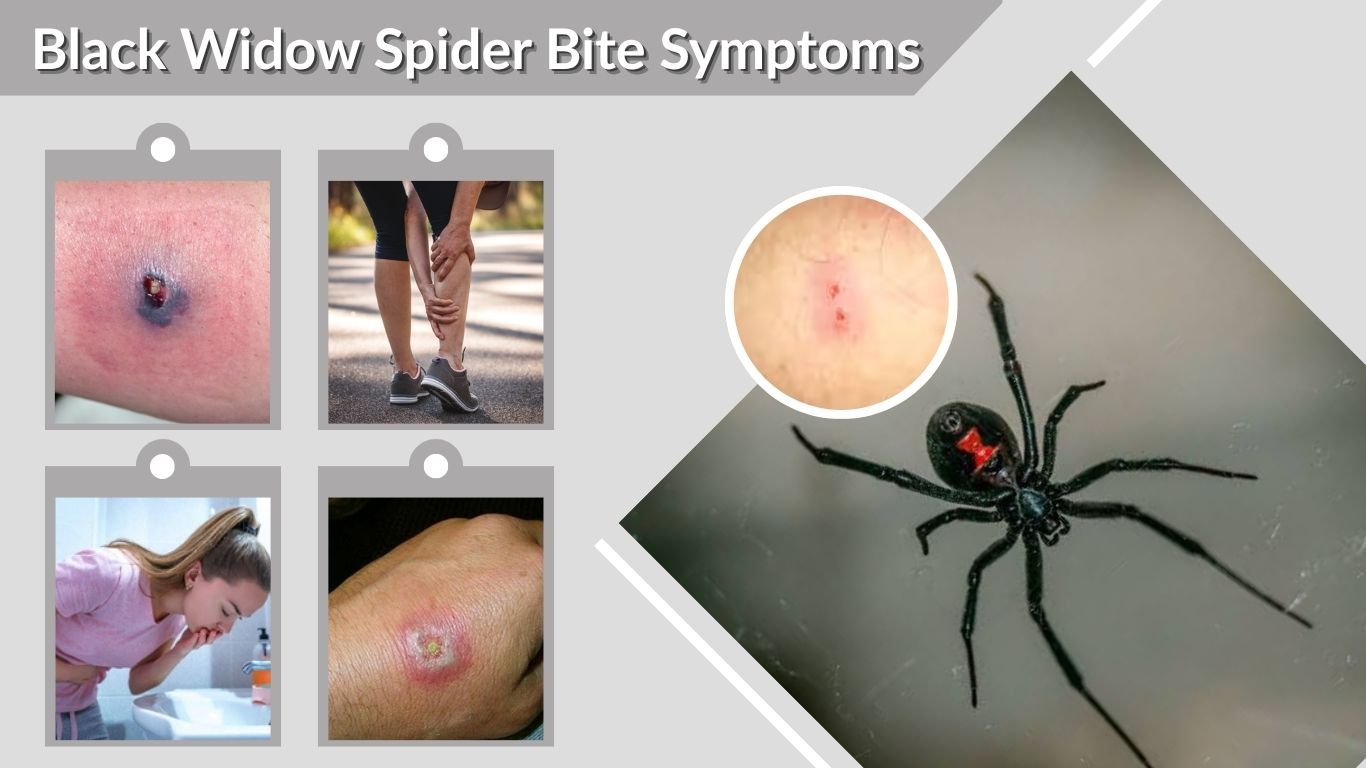
A black widow spider bite can cause more than a small red bump. Its venom affects the nervous system, which may lead to pain, muscle cramps, sweating, nausea, and other body-wide symptoms. Some bites stay mild, but others need urgent medical care. Knowing the early warning signs, symptom timeline, and when to seek help can make treatment faster and safer.
What Makes a Black Widow Spider Bite Different?
Most spider bites cause mild redness, itching, or swelling. A black widow bite is different because the venom is neurotoxic, meaning it affects nerves and muscles. The bite may start with a sharp pinprick feeling, then pain can spread from the bite area to the abdomen, back, chest, shoulders, or legs.
Black widow spiders are usually shiny black and may have a red hourglass-shaped mark on the underside of the abdomen. Bites often happen when the spider is accidentally pressed against the skin, such as when someone reaches into a garage, shed, woodpile, outdoor furniture, or cluttered storage area.
Not every bite causes severe symptoms. However, children, older adults, pregnant people, and people with heart or immune problems may be at higher risk of complications.
12 Common Symptoms of a Black Widow Spider Bite
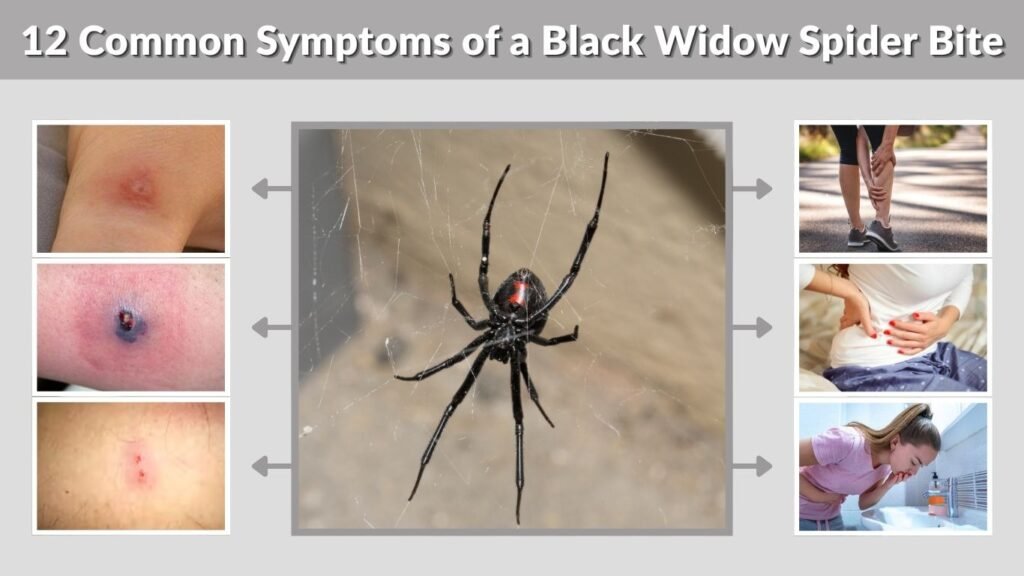
Black widow spider bite symptoms can appear locally around the bite or throughout the body. The following signs are the most common symptoms people search for after a suspected bite.
1. Sharp Pain at the Bite Site
Many people feel a sudden sharp pain, similar to a pinprick or needle stick. In some cases, the bite may be barely noticed at first. Pain can become stronger over the next several minutes to hours.
2. Redness Around the Bite
The skin near the bite may become red, irritated, or inflamed. This redness can look similar to other insect bites, so it is not always enough to confirm a black widow bite by appearance alone.
3. Swelling and Tenderness
Mild swelling may appear around the bite. The area can feel sore, warm, or tender to the touch. Severe swelling is less typical than with some allergic reactions, but it can still happen.
4. Two Small Fang Marks
Some black widow bites leave two tiny puncture marks. These marks may be hard to see, especially if swelling or redness develops. Their absence does not rule out a bite.
5. Muscle Cramps
Muscle cramping is one of the most important symptoms of a black widow spider bite. Cramps may begin near the bite and then spread to larger muscle groups.
6. Severe Abdominal Pain
Black widow venom can cause strong abdominal cramping. This pain may be intense enough to be confused with appendicitis, kidney stones, or another emergency condition.
7. Back, Chest, or Shoulder Pain
Pain may spread beyond the bite area. Some people feel tightness, aching, or cramping in the back, chest, shoulders, or thighs.
8. Nausea and Vomiting
As the venom affects the body, nausea may develop. Some people vomit, especially if the pain or cramping is severe.
9. Sweating
Heavy sweating is another common systemic symptom. Sweating may occur around the bite or across the whole body.
10. Headache
A headache can occur along with pain, nausea, and muscle tension. It may be mild or strong depending on the reaction.
11. Restlessness or Anxiety
Some people feel unusually restless, anxious, or unable to get comfortable. This may happen because of pain, venom effects, or fear after the bite.
12. High Blood Pressure or Fast Heartbeat
More serious bites may cause increased blood pressure, rapid heartbeat, or chest discomfort. These symptoms should be treated as urgent, especially in people with heart disease.
Black Widow Spider Bite Symptoms Timeline
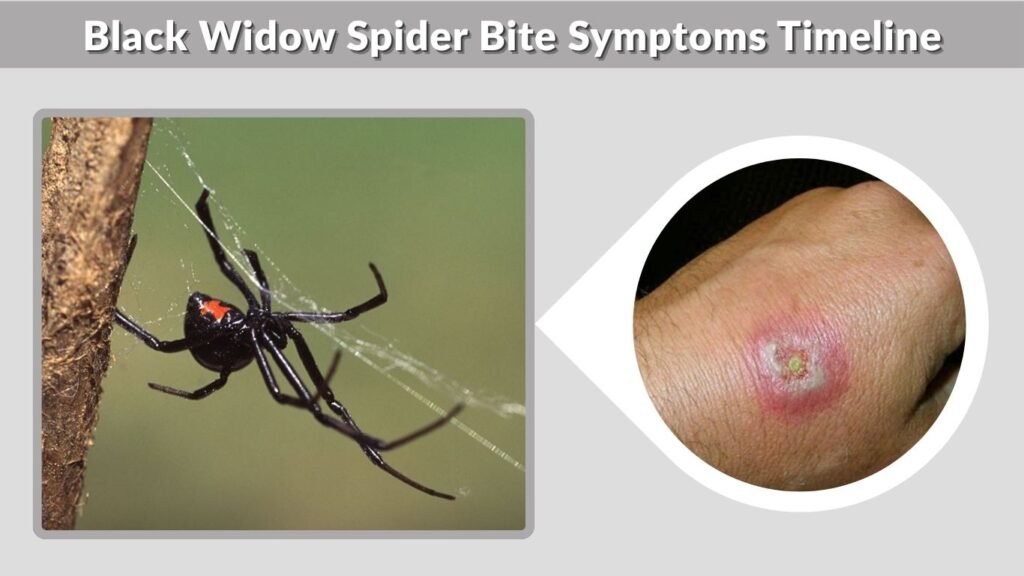
Symptoms do not always follow the same pattern, but many black widow bites develop in stages. The bite may look minor at first, while muscle and nerve symptoms become stronger later.
| Time After Bite | Possible Symptoms |
|---|---|
| First few minutes | Sharp pinprick pain, redness, mild swelling, tenderness |
| 30 minutes to 2 hours | Pain spreads, muscle cramps begin, sweating or nausea may appear |
| 2 to 6 hours | Cramps may worsen, abdominal pain, back pain, chest tightness, vomiting |
| 6 to 24 hours | Symptoms may peak; severe cases need medical treatment |
| 1 to 3 days | Pain and cramps often improve, but soreness or weakness may continue |
How Long Do Black Widow Spider Bite Symptoms Last?
Mild symptoms may improve within a day or two. More painful symptoms, especially muscle cramps and body aches, may last several days. Some people feel tired, sore, or weak after the worst symptoms fade.
The duration depends on several factors, including:
- The amount of venom injected
- The person’s age and size
- Existing health conditions
- How quickly medical care is received
- Whether severe muscle cramps or systemic symptoms develop
A bite should not be ignored if pain is spreading, symptoms are worsening, or the person bitten is a child, older adult, pregnant, or medically fragile.
What Does a Black Widow Spider Bite Look Like?
A black widow bite does not always look dramatic. At first, it may resemble a mosquito bite, bee sting, or small irritated bump. Some people notice two small puncture marks, redness, swelling, or a pale center.
The appearance alone can be misleading. Many skin problems, including bacterial infections, allergic reactions, and other insect bites, can look like spider bites. A black widow bite is more strongly suspected when skin changes appear with muscle cramps, severe pain, sweating, nausea, or abdominal pain.
Black Widow Bite vs Brown Recluse Bite Symptoms
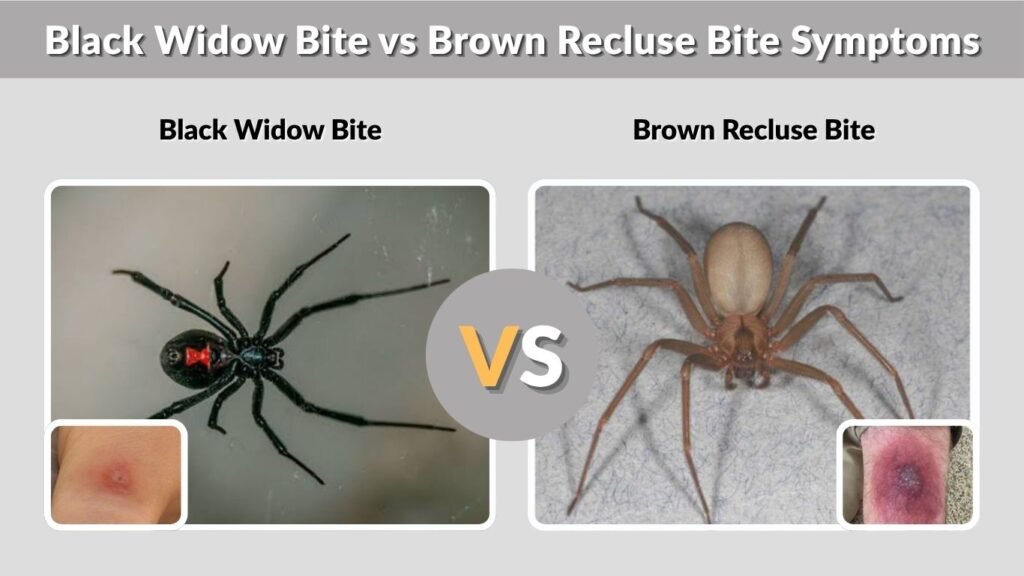
People often compare black widow and brown recluse bites because both spiders can cause medically important reactions. However, their symptoms are usually different.
A black widow bite mainly affects nerves and muscles. It is more likely to cause cramping, sweating, nausea, abdominal pain, and body-wide discomfort.
A brown recluse bite is more associated with skin damage. It may cause a blister, worsening wound, blue or purple discoloration, or tissue breakdown. Serious systemic symptoms can happen, but the classic concern is a growing skin lesion.
If you are unsure which spider caused the bite, seek medical advice instead of guessing. Treatment depends on symptoms, not just the suspected spider.
When to Seek Medical Help
You should get medical care right away if a black widow bite is suspected and symptoms are more than mild. Emergency care is especially important when pain spreads or body-wide symptoms appear.
Seek urgent help if you notice:
- Severe muscle cramps or abdominal pain
- Chest pain, trouble breathing, or fast heartbeat
- Repeated vomiting
- Heavy sweating or weakness
- Worsening pain after the first hour
- Bite in a child, older adult, or pregnant person
- Signs of infection, such as pus, fever, red streaks, or spreading warmth
If possible, safely take a photo of the spider or bring it in a sealed container for identification. Do not risk another bite trying to capture it.
First Aid for a Suspected Black Widow Bite
First aid can reduce discomfort while you arrange medical care. It should not replace professional treatment if symptoms are serious.
Basic first aid steps include:
- Wash the bite area with soap and water
- Apply a cold pack wrapped in cloth
- Keep the bitten limb elevated if possible
- Avoid scratching or cutting the bite
- Take an over-the-counter pain reliever only if safe for you
- Contact a healthcare provider or poison control for guidance
Doctors may treat severe pain and muscle spasms with prescription medicine. In serious cases, antivenom may be considered, but it must be used carefully because allergic reactions are possible.
Black Widow Spider Bite Symptoms in Dogs and Cats
Black widow bites can also affect pets. Dogs and cats may show pain, restlessness, muscle stiffness, tremors, weakness, drooling, vomiting, or difficulty breathing. A pet may cry, limp, hide, or act unusually anxious.
Small animals can become seriously ill because of their size. If you suspect a black widow bite in a dog or cat, call a veterinarian or emergency animal clinic immediately. Do not give human pain medicine unless a veterinarian tells you to.
How to Prevent Black Widow Spider Bites
Black widow spiders prefer dark, quiet, cluttered places. Prevention is especially important around garages, sheds, barns, crawl spaces, outdoor furniture, woodpiles, and storage boxes.
Helpful prevention tips include:
- Wear gloves when moving firewood, boxes, or outdoor items
- Shake out shoes, gloves, and clothing stored outside
- Reduce clutter in garages and sheds
- Seal cracks around doors, windows, and foundations
- Use caution when reaching into dark spaces
- Keep beds and furniture away from walls in infested areas
- Teach children not to touch spiders or webs
FAQs
What are the first symptoms of a black widow spider bite?
The first symptoms may include sharp pinprick pain, redness, swelling, and tenderness at the bite site. Some people do not notice the bite right away. Muscle cramps, sweating, nausea, and spreading pain may develop within minutes to a few hours.
Can black widow spider bite symptoms be delayed?
Yes. Local pain may start quickly, but body-wide symptoms can take longer to appear. Muscle cramps, abdominal pain, back pain, nausea, and sweating may develop within the first few hours. Delayed or worsening symptoms should be checked by a healthcare provider.
How long do black widow spider bite symptoms last?
Mild symptoms may improve within 24 to 48 hours. More severe pain, cramps, soreness, or weakness can last several days. Recovery time depends on the person’s health, the amount of venom, and how quickly treatment is received.
Are black widow spider bites fatal?
Fatal bites are rare, but black widow bites can be dangerous. Children, older adults, pregnant people, and people with medical conditions are at higher risk. Severe pain, chest symptoms, breathing trouble, vomiting, or widespread muscle cramps need urgent medical care.
What should I do if I think a black widow bit me?
Wash the bite, apply a cold pack, keep the area elevated, and contact a healthcare provider or poison control. Seek urgent care if symptoms spread, pain becomes severe, or the person bitten is a child, older adult, pregnant, or medically vulnerable.
