
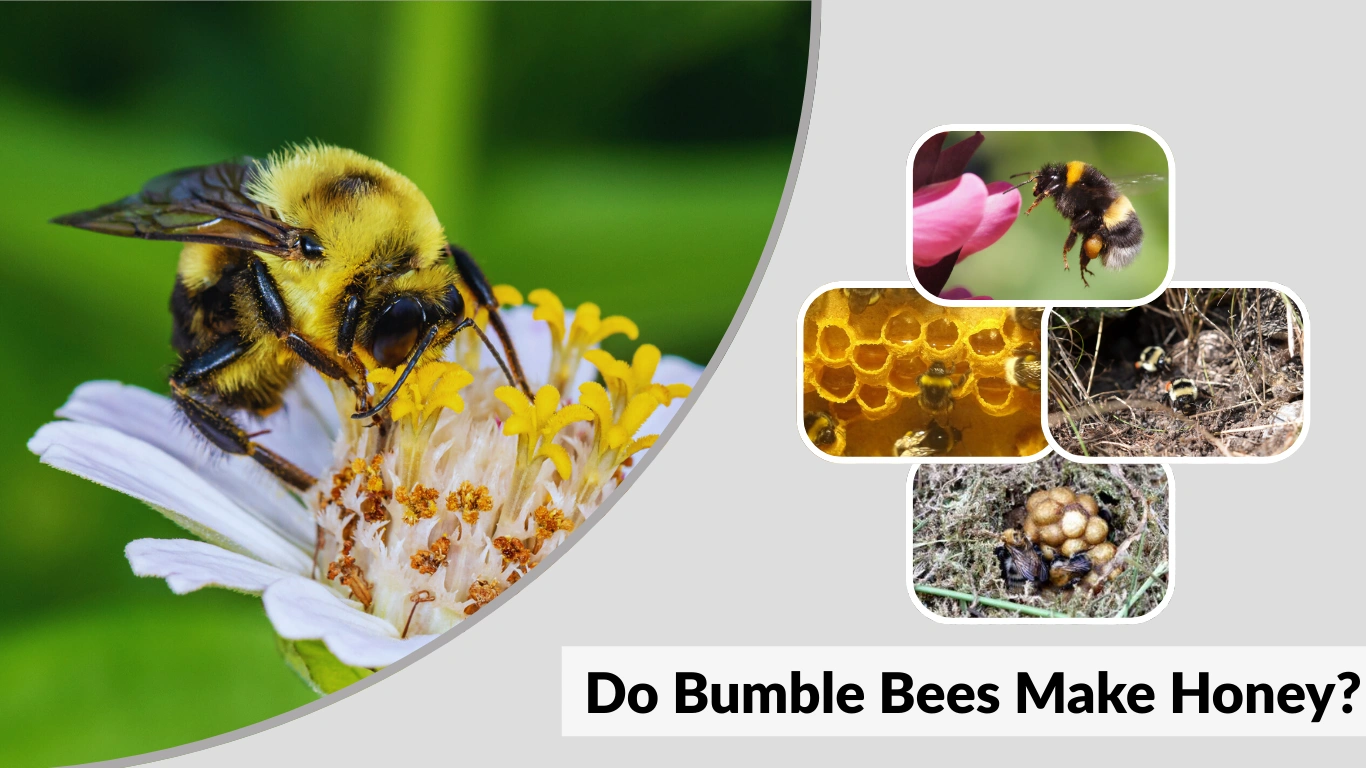
Bumble bees confuse many people because they look similar to honey bees—fuzzy bodies, constant buzzing, and busy flower-to-flower foraging. But when it comes to honey production, their behavior is very different. Bumble bees do produce honey, yet not in the way or quantity most people imagine. This guide explains how bumble bees make honey, why they produce so little, what species create it, and why their honey rarely ends up in human hands.
Do Bumble Bees Make Honey?
Yes—bumble bees absolutely make honey. But unlike honey bees, which can produce 60–100 pounds of honey per year, bumble bees generate only a few teaspoons to a few tablespoons during an entire season. Their honey is not stored in large hexagonal combs but instead inside small wax pots built within the nest.
These pots act as short-term storage rather than long-term reserves. Bumble bee colonies are seasonal and don’t survive winter, so they don’t need the massive honey stores that honey bees rely on.
Do All Bumble Bees Make Honey?
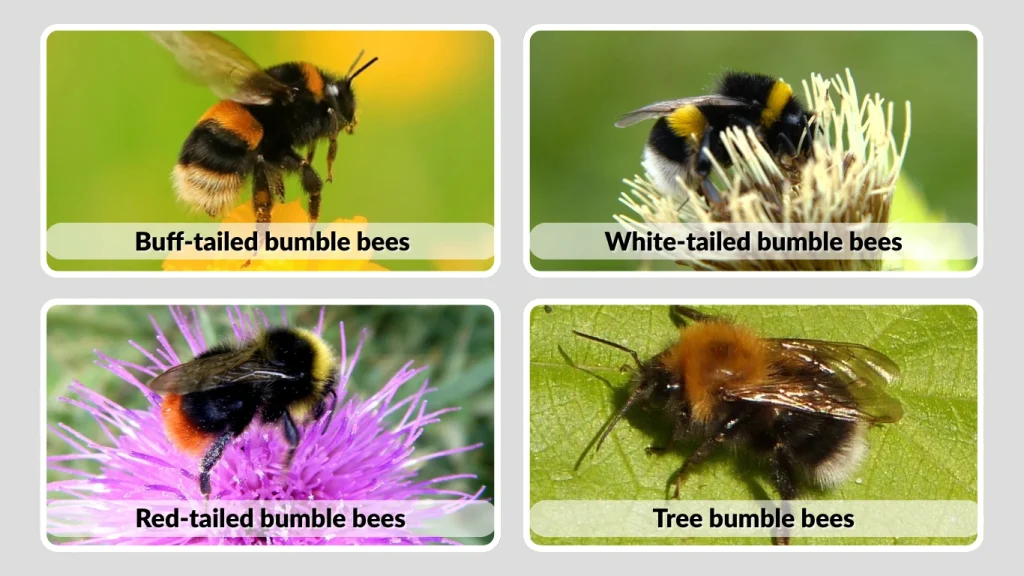
Most bumble bee species make some form of honey, though the quantity varies depending on the size and structure of the colony. Because bumble bees have simpler social systems than honey bees, not every species produces the same amount.
Species commonly known to produce some honey
- Buff-tailed bumble bees
- White-tailed bumble bees
- Red-tailed bumble bees
- Tree bumble bees
- Ground-nesting bumble bees
These species maintain small to medium colonies and need modest nectar reserves to fuel brood development and daily activity.
Species that produce minimal honey
Some species are partially or completely solitary or form tiny colonies. These bees may store extremely small amounts of nectar and honey, just enough to sustain their larvae and early workers.
It’s important to understand that every social bumble bee creates some honey, but none create it at the industrial or commercial scale of honey bees.
Why Bumble Bees Don’t Make Honey Like Honey Bees
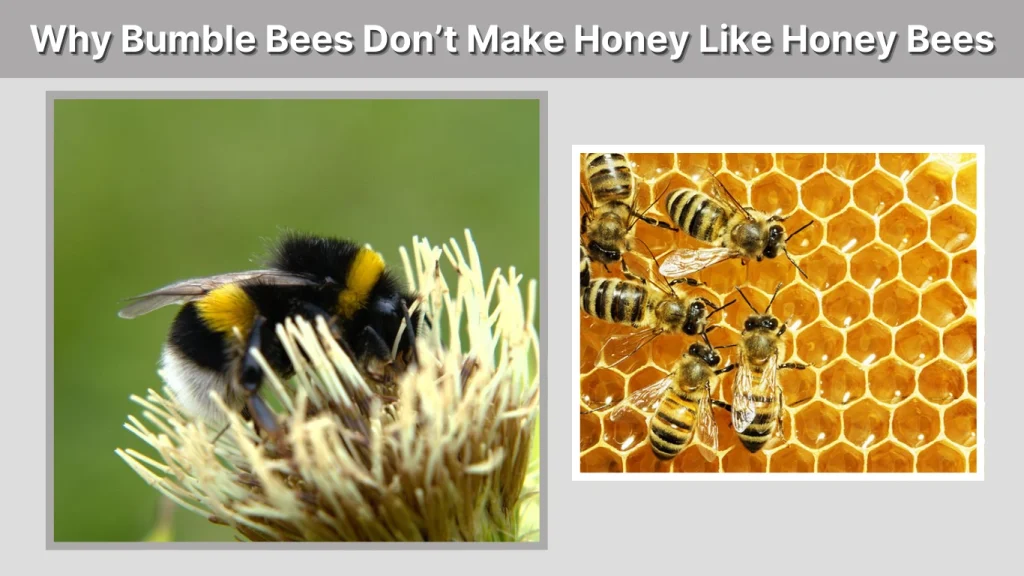
The main reason bumble bees don’t make large amounts of honey is simple biology. Honey bees evolved to survive harsh winters as entire colonies. To do this, they must stockpile enormous amounts of honey. Bumble bees, on the other hand, live completely different seasonal cycles.
Their colonies last only one summer. At the end of the season, all workers and the old queen die. Only newly produced queens overwinter.
Because bumble bee colonies don’t survive winter, they have no evolutionary need to produce extra honey. Instead, they store just enough nectar-turned-honey to feed their brood and support the colony on rainy or cold days.
Another key difference is colony size.
- Bumble bee colonies: 50–400 bees
- Honey bee colonies: 20,000–60,000 bees
Smaller colonies naturally require far less food, which is why bumble bee honey production is minimal.
How Bumble Bees Make Honey
Despite the quantity differences, the honey-making process is surprisingly similar to that of honey bees. Bumble bees follow a simple but efficient method to turn nectar into honey.
The process
- Workers forage for nectar from flowers.
- Nectar is stored in the crop, often called the “honey stomach.”
- Workers return to the nest and regurgitate the nectar into wax pots.
- Other bees help evaporate moisture by fanning their wings.
- The thickened nectar becomes a small store of honey.
This honey is used almost immediately, especially during cold spells or when nectar is temporarily scarce.
How Much Honey Do Bumble Bees Make?
Compared to honey bees, bumble bees produce extremely small quantities of honey. A single colony may create only a few teaspoons or at most a couple of tablespoons throughout its entire lifecycle. Climate, flower availability, and species size also affect output. For example, in regions like the UK or New Zealand, where cooler temperatures limit nectar flow, bumble bee honey production may be even lower. Their honey is never harvested commercially because colonies simply cannot spare it.
Where Do Bumble Bees Make Honey?
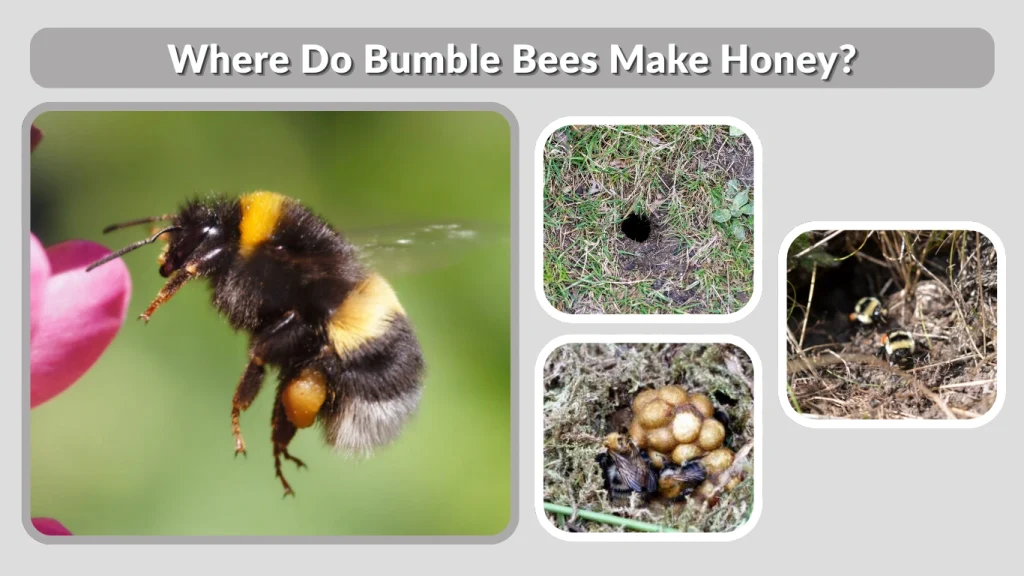
Bumble bees do not build man-made hives or large external structures. Instead, they create nests in protected, hidden spaces that provide warmth and insulation. Some of the most common nest locations include:
- Underground burrows
- Abandoned rodent holes
- Grass tussocks or thick vegetation
- Bird boxes (especially tree bumble bees)
- Compost heaps or sheltered cavities
Inside these nests, the bees create wax pots, small rounded containers that hold nectar, pollen, eggs, and honey. These pots replace the organized hexagonal combs we associate with honey bees.
Do Bumble Bees Make Honeycombs?
No. Bumble bees do not produce the familiar hexagonal honeycomb structure. Instead, they build irregularly shaped wax pots. These pots are functional but not symmetrical or efficient like honey bee comb. Each pot serves a purpose—some hold developing larvae, others store nectar or small amounts of honey. Because bumble bee colonies are small and temporary, they do not need the architectural precision of honey bees.
Is Bumble Bee Honey Edible?
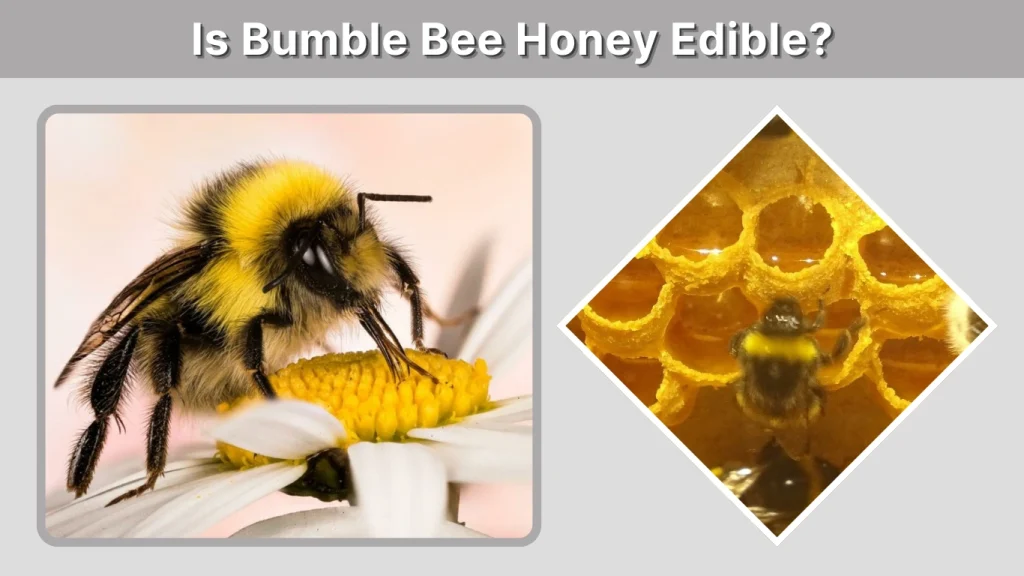
Yes, bumble bee honey is edible and safe for humans. It is usually described as sweeter, thinner, and richer in flavor than honey bee honey. However, harvesting it is strongly discouraged for two reasons:
- The colony depends on it for survival
Removing even a small portion can kill the colony because they produce so little. - Ethical and conservation reasons
Bumble bee populations are declining worldwide, and preserving their nests is essential.
Because of this, bumble bee honey should be appreciated for its biological value—not viewed as a resource for human consumption.
Regional Questions (UK, NZ, and More)
Many people ask whether bumble bees in the UK, New Zealand, or other regions make honey. The answer is yes. Bumble bees around the world share the same biological traits. Whether it’s buff-tailed bumble bees in the UK or introduced species in New Zealand, their honey production methods are nearly identical. Geography affects food availability, but not their fundamental biology.
Why Bumble Bees Make Honey
Bumble bees create honey for short-term survival, not long-term storage. Their honey serves three main purposes:
- Fuel for growing larvae
- Emergency food source during cold, rainy, or low-nectar days
- Energy for new queens establishing a nest in early spring
Because workers do not overwinter, large honey stores are unnecessary. Only new queens survive winter by hibernating underground.
Bumble Bees vs. Honey Bees (Comparison Table)
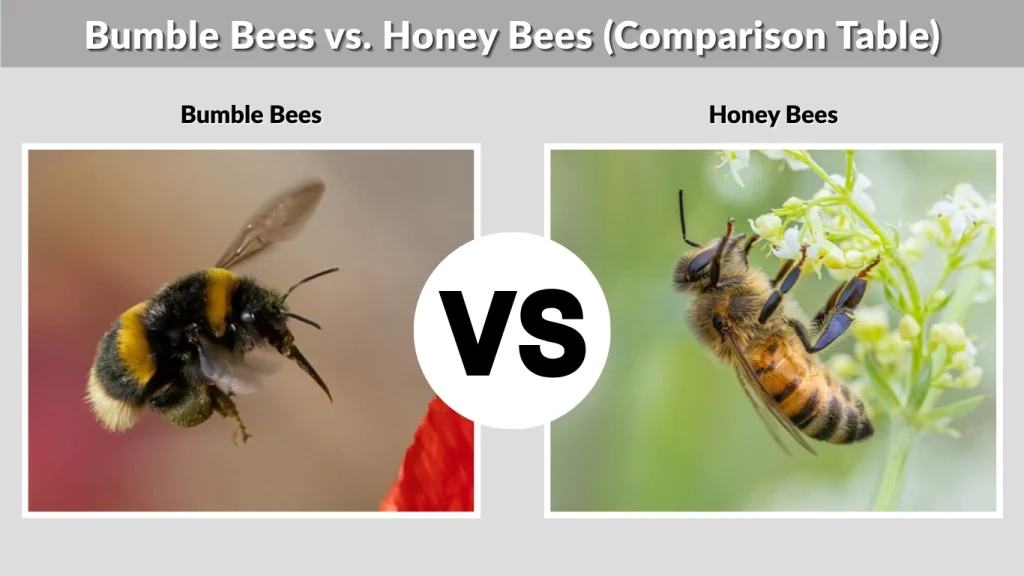
| Feature | Bumble Bees | Honey Bees |
| Colony Size | 50–400 | 20,000–60,000 |
| Honey Production | Teaspoons | Pounds per year |
| Nest Type | Ground/cavities | Large comb hives |
| Colony Lifespan | Summer only | Year-round |
| Honey Storage | Wax pots | Hexagonal comb |
FAQ
Do big or black bumble bees make honey?
Yes. Size or color does not affect honey production. Big, black, red-tailed, or buff-tailed bumble bees all create small amounts of honey. Their honey storage depends on colony size, not appearance.
Do bumble bees make honey in winter?
No. Bumble bees do not produce winter honey because the colony dies in autumn. Only new queens overwinter, and they survive by hibernating underground rather than relying on honey stores.
Do wild or fuzzy bumble bees make honey?
Yes. All social wild bumble bees make small quantities of honey. Their fuzzy appearance has no impact on this behavior—it’s simply part of their biology and nesting habits.
Do both bumble bees and honey bees make honey?
Yes, but only honey bees produce surplus honey. Bumble bees make just enough to feed their colony for short-term needs. Their honey is never harvested for commercial use.
Why don’t bumble bees make large amounts of honey?
Their colonies are seasonal and small, so there is no evolutionary need to store large quantities. They produce only what they require for daily survival and brood development.
