
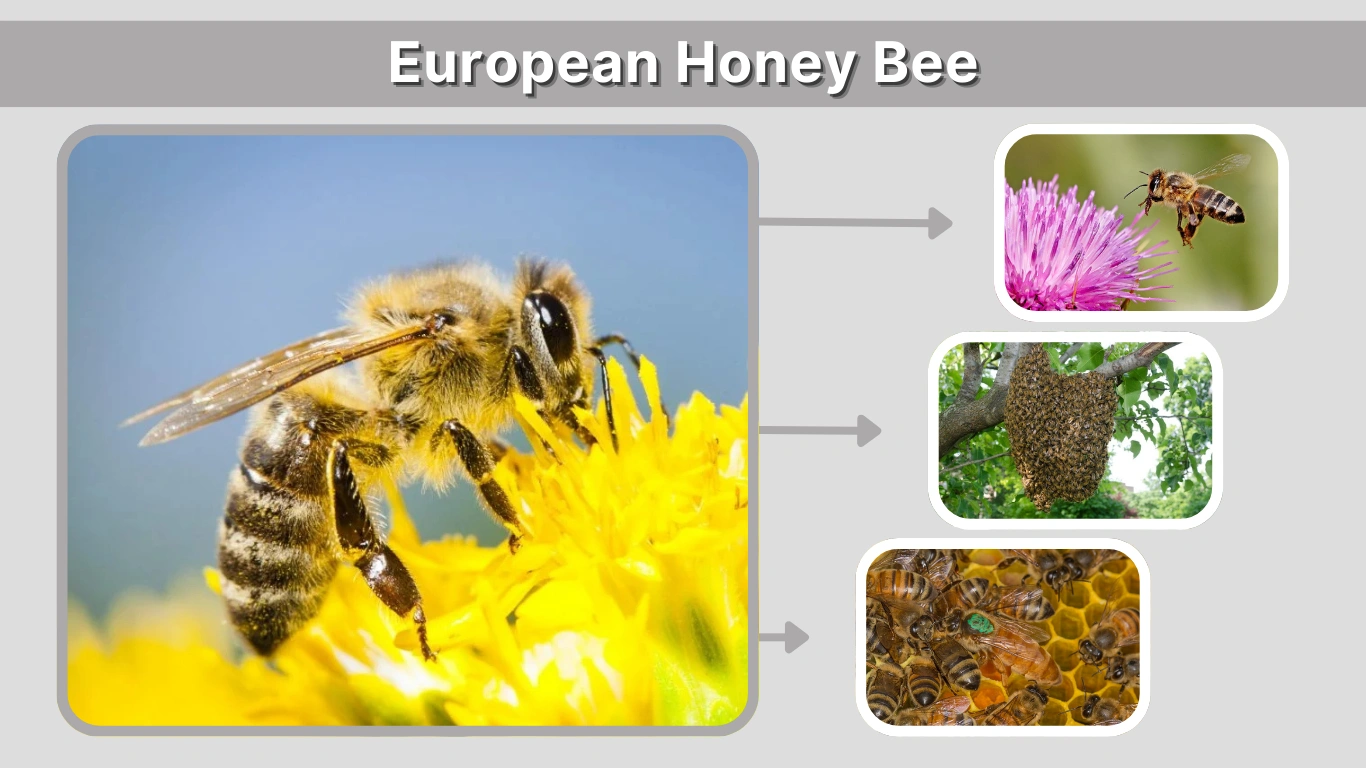
The European honey bee is the world’s most widespread and economically important bee species. Known scientifically as Apis mellifera, it has been essential to honey production, agriculture, and pollination for thousands of years. Because of its global spread, the European honey bee is frequently compared to African, Asian, American, and even Japanese honey bees. This guide explains its scientific classification, habitat, biology, behavior, and how it differs from other honey bee populations worldwide.
What Is the European Honey Bee?
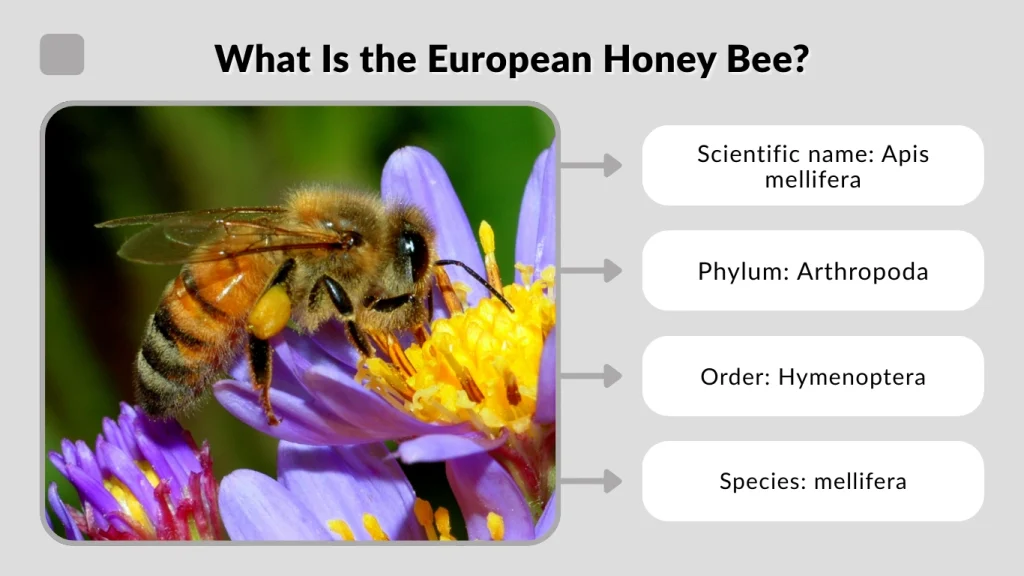
The European honey bee, also called the Western honey bee, is a domesticated species used for beekeeping, honey production, and commercial pollination. It is the primary bee kept by beekeepers across Europe, North America, Australia, and many other regions.
Scientific name and full classification
- Scientific name: Apis mellifera
- Kingdom: Animalia
- Phylum: Arthropoda
- Class: Insecta
- Order: Hymenoptera
- Family: Apidae
- Genus: Apis
- Species: mellifera
The name mellifera means “honey-bearing,” a reflection of its importance to humans.
Subspecies and types of European honey bees
The European honey bee includes many regional races, such as:
- Italian honey bee (A. m. ligustica)
- Carniolan honey bee (A. m. carnica)
- European dark bee (A. m. mellifera)
- Caucasian honey bee (A. m. caucasica)
These subspecies differ in temperament, color, productivity, and climate adaptability.
Physical Description of the European Honey Bee
European honey bees are medium-sized bees with a characteristic banded yellow-and-black appearance. Although coloration varies by subspecies, most display:
Size and appearance
- Workers: ~12–15 mm
- Drones: larger, with bigger eyes and thicker bodies
- Queen: longest (up to 20 mm) and most slender
The European dark bee appears nearly black, while Italian bees are golden with bright stripes. Drones have no stinger, while workers and queens both can sting, though queens rarely use their stinger except against rival queens.
European Honey Bee Habitat and Distribution
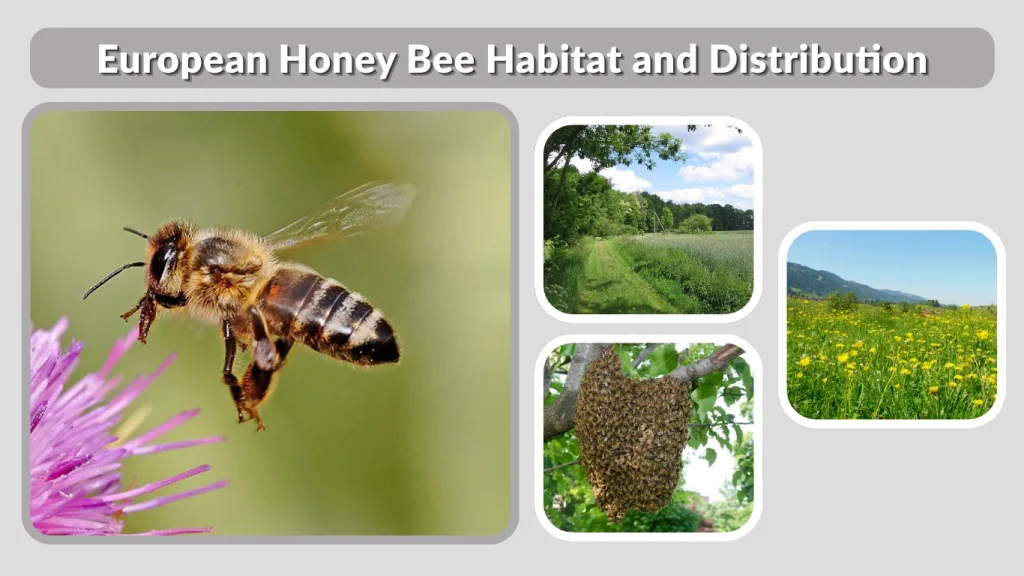
Natural habitat
Originally native to Europe, Western Asia, and parts of Africa, European honey bees thrive in temperate climates. They prefer environments rich in flowering plants, including:
- Forest edges
- Meadows and grasslands
- Agricultural fields
- Urban gardens
Global expansion
The European honey bee has been transported worldwide for honey production and crop pollination. Today, it is found in:
- North America
- Australia
- New Zealand
- South America
- Asia
- Africa
- Hawaii
Introduction to Australia
European honey bees arrived in Australia in the early 1820s, quickly spreading across the continent due to abundant flowers and mild climate.
European Honey Bee Behavior and Colony Biology
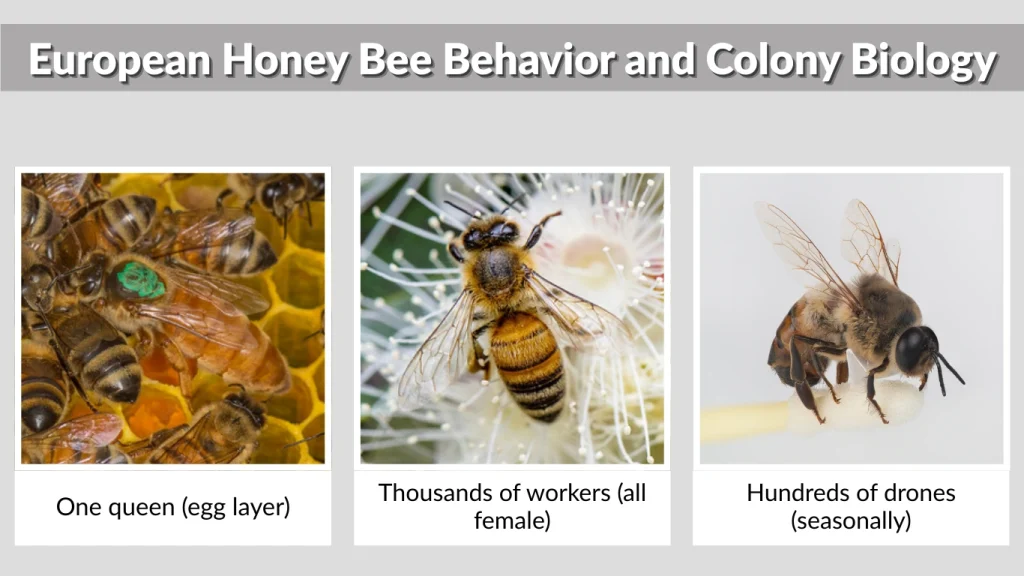
European honey bees are highly social insects. Their colonies are structured around cooperation, communication, and division of labor.
The colony structure
A typical hive includes:
- One queen (egg layer)
- Thousands of workers (all female)
- Hundreds of drones (seasonally)
Workers handle foraging, brood care, temperature regulation, wax building, and defense. Drones exist solely for mating with virgin queens.
Nest structure
European honey bees create large, complex comb nests made of beeswax. These combs contain:
- Storage cells for honey
- Storage cells for pollen
- Brood cells for larvae and pupae
Compared to African honey bees, European colonies are calmer, slower to swarm, and build larger, more stable nests.
Aggression and Defense
Are European honey bees aggressive?
European honey bees are generally less aggressive than African or Africanized honey bees. They defend their hive when threatened but do not pursue intruders long distances.
Do European honey bees sting?
Yes. Worker bees can sting, but they typically do so only when defending the colony. Drones cannot sting. Queens have stingers but rarely use them except during queen rivalry.
Can European honey bees defend themselves?
Yes—they can:
- Perform coordinated stinging defense
- Emit alarm pheromones
- Form protective clusters
- Guard hive entrances
However, they are still more docile than Africanized bees.
Hive Productivity and Honey Production
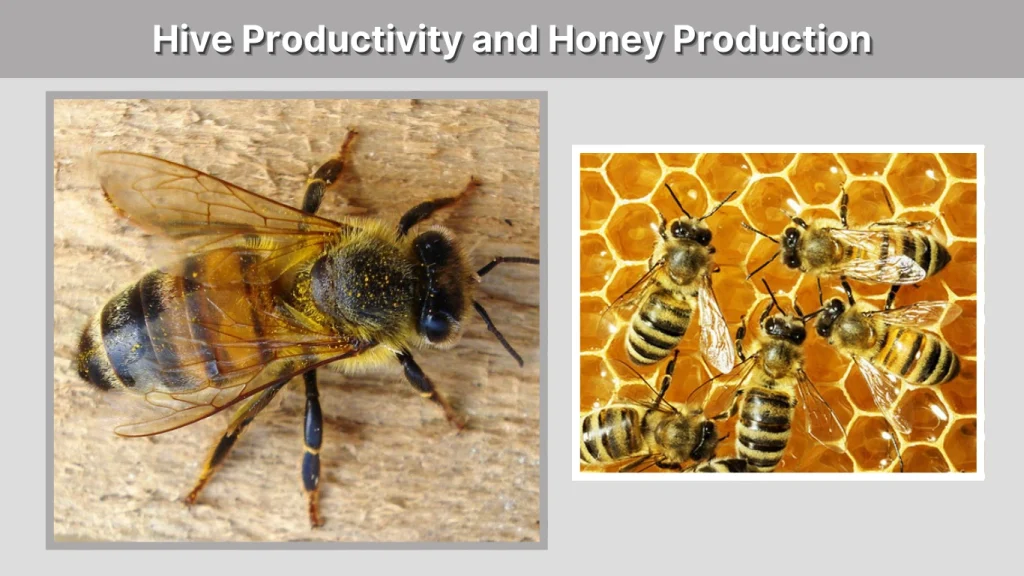
European honey bees are prized for their steady honey production and calm behavior. Their honey yield varies by region but is often higher than that of African or American strains due to:
- Larger colonies
- Efficient foraging
- Long foraging season in temperate climates
- Selective breeding for productivity
They also prefer nectar-rich flowers such as clover, lavender, sunflowers, lupines, and fruit blossoms.
Threats, Diseases, and Declines
European honey bees face numerous threats worldwide—from parasites to diseases and environmental stressors. These factors affect both wild and managed colonies.
Major diseases
- European foulbrood (EFB)
Caused by Melissococcus plutonius, this bacterial disease affects larvae before cells are capped. It weakens colonies, slows brood development, and requires strict management practices. - Colony Collapse Disorder (CCD)
Seen most prominently in North America and Europe, CCD involves sudden disappearance of worker bees, leaving behind brood and food stores. Stress, pesticides, and pathogens are believed contributors. - Varroa destructor mites
These parasitic mites weaken bees, spread viruses, and are a primary cause of colony decline globally.
Are honey bees endangered in Europe?
Honey bees are not classified as endangered, but managed colonies have experienced periodic declines. Factors include habitat loss, pesticide exposure, intensive agriculture, and climate change.
Declines of beekeepers in Europe
Europe has seen reductions in small-scale beekeeping, although commercial operations have remained stable. Increased costs, disease pressure, and reduced forage plants contribute to this trend.
European Hornets and Honey Bees
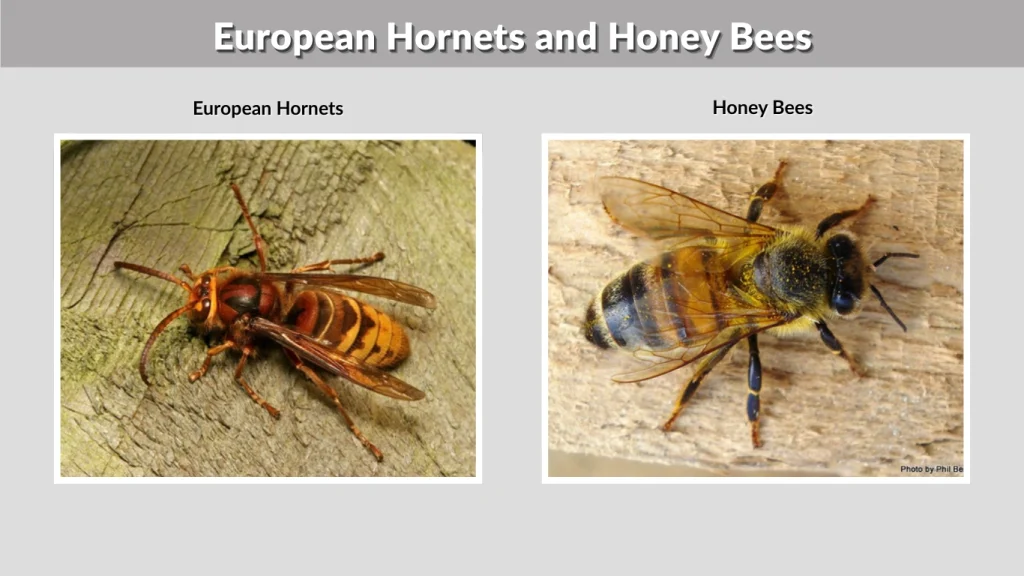
European hornets (Vespa crabro) are large predators capable of killing honey bees.
Are European hornets dangerous to honey bees?
Yes. Hornets can:
- Kill individual bees
- Rob weak colonies
- Attack hive entrances
- Consume brood and honey
Do European hornets kill or eat honey bees?
They do both. Hornets ambush bees mid-flight, then chew them into protein “pellets” to feed their larvae.
European hornet vs honey bee
- Hornet size: much larger
- Sting: more painful
- Behavior: aggressive predator, not a pollinator
- Interaction: disrupts weak or stressed bee colonies
Despite this, healthy European honey bee colonies can defend themselves through coordinated stinging and heating behavior.
Are European Honey Bees Invasive?
European honey bees are invasive in several regions, especially Australia.
Why are European honey bees bad for Australia?
- Overcompete native bees for nectar and nesting sites
- Spread European bee diseases to native species
- Alter pollination patterns
- Take over tree hollows needed by native birds and mammals
- Disrupt native ecosystems due to sheer population density
European honey bees in Australia
They were introduced in the early 1820s for honey production and quickly spread across the continent. Today, they are among Australia’s most invasive insects.
Comparisons With Other Honey Bee Types
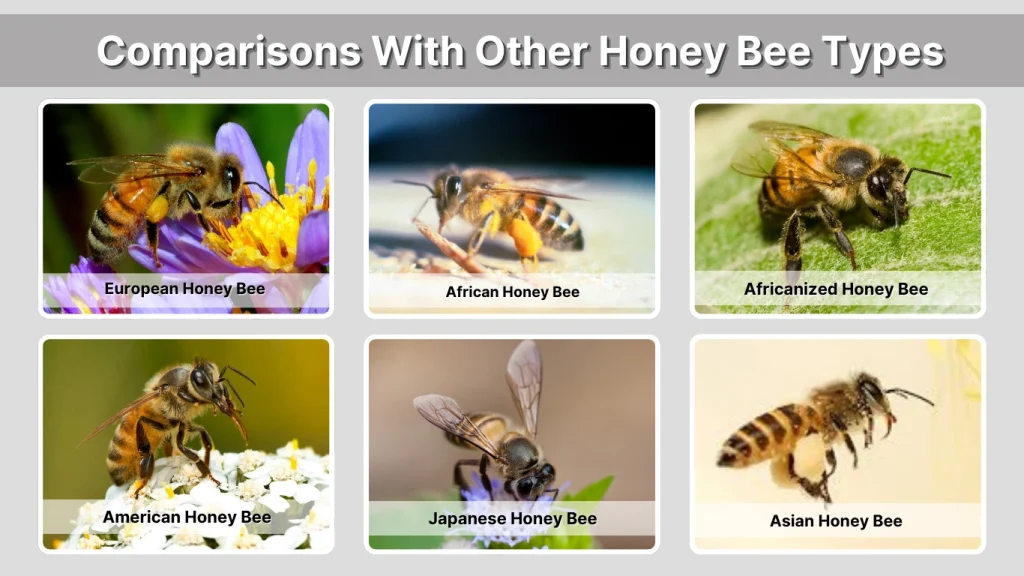
African Honey Bee vs European Honey Bee
African honey bees (A. m. scutellata) are smaller, more defensive, and build smaller nests. They swarm frequently and reproduce quickly.
Key differences:
- Size: African bees are slightly smaller
- Temperament: African bees are more aggressive
- Nest size: Smaller in African bees
- Venom: Similar potency, but African bees sting in greater numbers
- Foraging: African bees are more heat-tolerant
Africanized Honey Bee vs European Honey Bee
Africanized honey bees (the “killer bee”) are hybrids of African and European bees, first bred in Brazil in the 1950s.
They display:
- Faster reproduction
- Extreme defensiveness
- Ability to outcompete European bees above 2,000 meters
- Stronger response to threats
- Faster colony growth
Relationship or symbiosis?
They do not form symbiotic relationships with European bees—competition dominates.
American Honey Bee vs European Honey Bee
American honey bees are essentially European bees maintained in the Americas. Genetic lines may differ slightly due to selective breeding, but they are the same species.
Asian or Japanese Honey Bee vs European Honey Bee
Asian honey bees (Apis cerana) are smaller, more disease-resistant, and better adapted to tropical climates. Japanese honey bees famously use heat balling to kill hornets—something European bees are weaker at performing.
Buying and Managing European Honey Bees
European honey bees for sale
Available through beekeeping suppliers as:
- Package bees
- Nucleus colonies (nucs)
- Established hives
- Mated queens
Colonies of European races are characterized by…
- Calm temperament
- Strong honey production
- Low swarming tendency
- Efficient comb building
- Good overwintering ability in temperate climates
European Honey Bee Facts (Quick List)
- Scientific name: Apis mellifera
- Origin: Europe, Western Asia
- Usually gentle
- Largest global pollinator for agriculture
- Highly social and colony-based
- Produces commercial quantities of honey
- Introduced worldwide
FAQ
What is the scientific name of the European honey bee?
The scientific name of the European honey bee is Apis mellifera. The name means “honey-bearing,” reflecting the species’ long history of honey production. It is the most widely domesticated bee on Earth and includes many subspecies such as Italian, Carniolan, and European dark bees.
Are European honey bees aggressive?
European honey bees are generally gentle and calm, especially compared to African or Africanized honey bees. They defend their hive when disturbed, but they rarely chase intruders long distances. Their mild temperament is one of the reasons they are preferred by beekeepers worldwide.
Do European honey bees sting?
Yes, worker European honey bees can sting when defending the hive. Their stinger is barbed, so it detaches and kills the bee afterward. Queens rarely sting except during queen rivalry, and drones cannot sting at all. Most stings occur only when the hive is threatened.
Are European honey bees endangered?
European honey bees are not officially endangered, but they face serious pressures from habitat loss, pesticides, parasites, diseases, and climate stress. Managed colonies occasionally decline, but strong beekeeping practices and breeding programs help maintain stable populations across Europe and other regions.
Are European honey bees invasive?
Yes, in several regions—especially Australia—European honey bees are considered invasive. They compete with native pollinators for nectar, spread introduced diseases, occupy nesting hollows, and disrupt ecosystems. Their high population numbers and wide foraging range allow them to dominate many habitats.
