
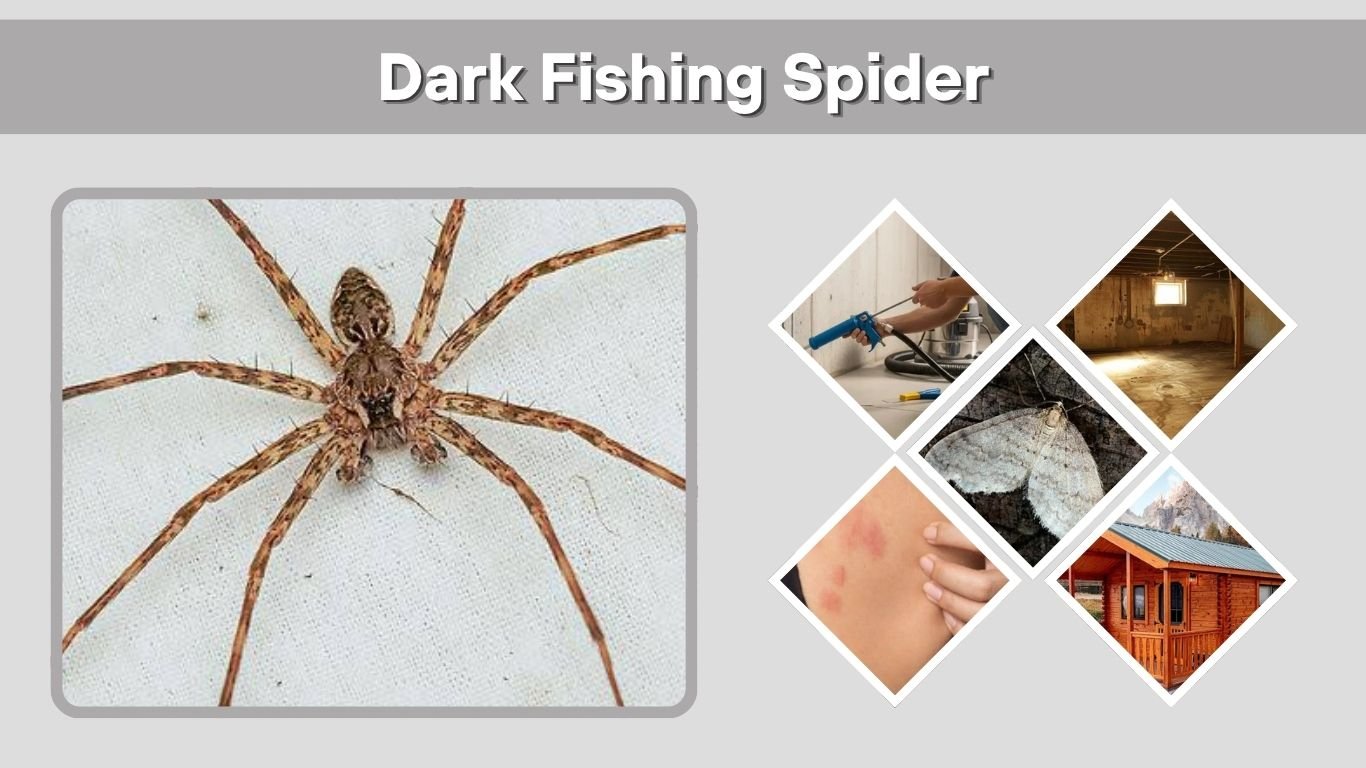
The dark fishing spider is a large brown spider often found on trees, walls, basements, and wooded homes. Its size can look alarming, but this spider is not aggressive and usually avoids people. Known scientifically as Dolomedes tenebrosus, it belongs to the nursery web spider group and is common in many parts of North America.
What Is a Dark Fishing Spider?
The dark fishing spider is a large, fast-moving spider from the genus Dolomedes. Even though its name suggests it always lives near water, this species is often found in wooded areas and can climb trees, walls, logs, and house siding. Penn State Extension notes that Dolomedes tenebrosus is more closely linked with wooded habitats than water and may enter houses in those areas.
Many people notice this spider because of its long legs, flat body posture, and dark brown pattern. It is sometimes mistaken for a wolf spider, brown recluse, or giant house spider. However, the dark fishing spider has different markings, longer legs, and a different hunting style.
Quick Identification
- Common name: Dark fishing spider
- Scientific name: Dolomedes tenebrosus
- Family: Pisauridae, also called nursery web spiders
- Color: Brown, gray-brown, or dark brown
- Body markings: Light and dark patterns with chevron-like marks
- Legs: Long, banded, and often spread flat
- Behavior: Fast runner, active hunter, not a web trapper
- Common places: Tree trunks, wooded homes, garages, basements, sheds, and walls
Dark Fishing Spider Size
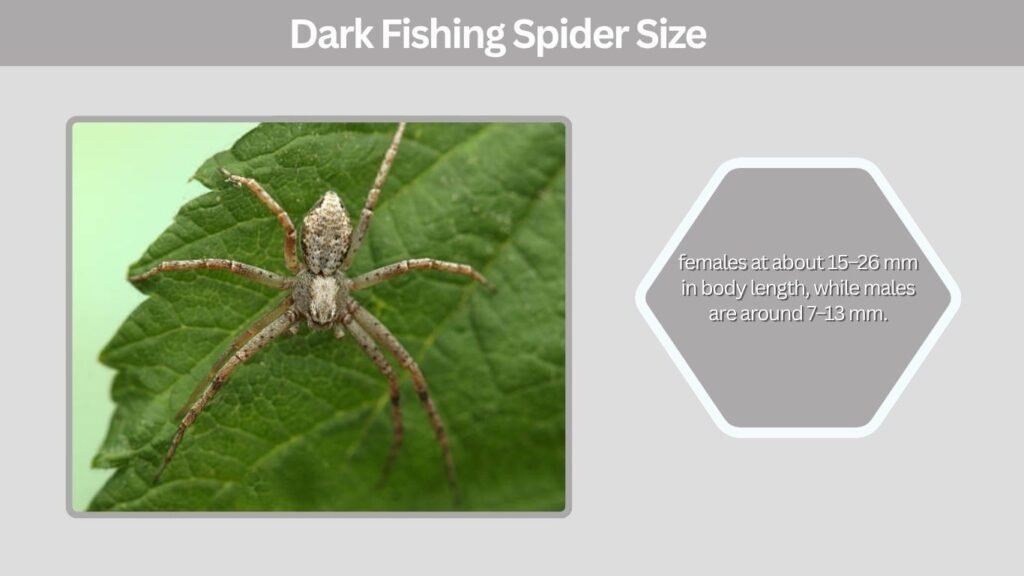
Dark fishing spiders are among the larger spiders seen around homes in the eastern and central United States. Females are bigger than males. Penn State Extension lists females at about 15–26 mm in body length, while males are around 7–13 mm. Their long legs make them look much larger than their body size alone.
A full-grown female can look very large when her legs are spread out. This is why people often describe it as a “huge brown spider” on a wall or ceiling. However, most of the size comes from the legs, not the body.
Size Comparison Table
| Feature | Dark Fishing Spider |
| Female body length | About 15–26 mm |
| Male body length | About 7–13 mm |
| Overall look | Large because of long legs |
| Similar-looking spiders | Wolf spider, brown recluse, nursery web spider |
| Biggest visual feature | Long, banded legs and flat resting posture |
Is the Dark Fishing Spider Poisonous?
The dark fishing spider is venomous, but that does not mean it is dangerous to humans. Almost all spiders use venom to control prey. The better question is whether it is medically dangerous. For most people, the answer is no.
A dark fishing spider can bite if trapped, pressed, or handled roughly, but it usually runs away first. Penn State Extension describes this spider as capable of biting, but not aggressive toward people.
Bite and Venom Facts
- A bite is possible but uncommon.
- The spider usually flees instead of attacking.
- Most bites are compared to a bee or wasp sting.
- Symptoms may include mild pain, redness, swelling, or itching.
- Serious reactions are uncommon but possible for sensitive people.
- Clean the bite area and monitor symptoms.
- Seek medical help if swelling spreads, breathing problems occur, or symptoms worsen.
The dark fishing spider is not considered as dangerous as black widows or medically significant recluse spiders. Still, it is best not to handle any large spider with bare hands.
Dark Fishing Spider Bite Symptoms
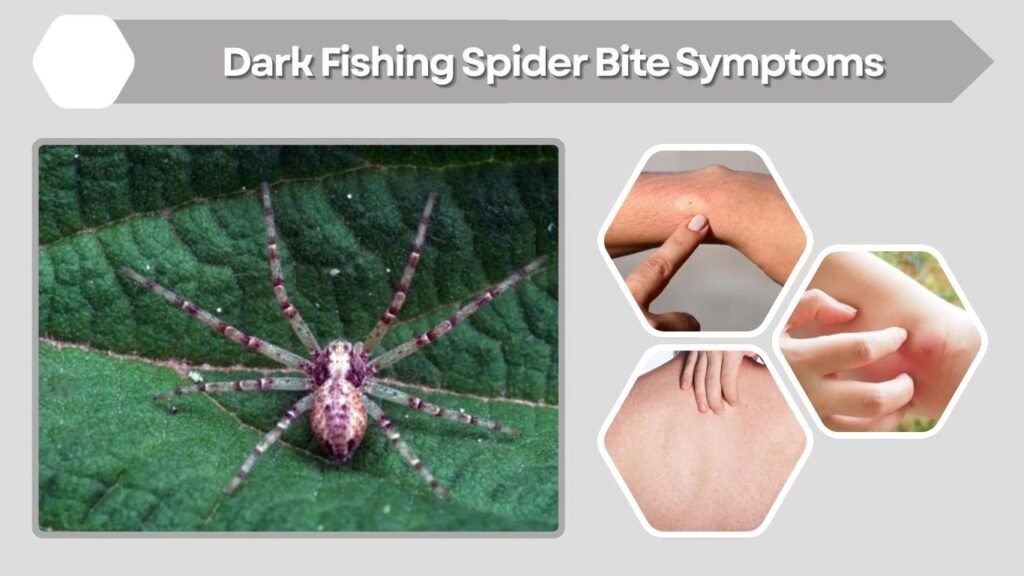
A dark fishing spider bite may cause local discomfort. Some people may feel a sharp pinch at first, followed by mild swelling or redness. The area may feel warm, itchy, or tender for a short time.
Most cases do not need special treatment beyond basic first aid. Wash the area with soap and water, apply a cold compress, and avoid scratching. If pain, swelling, or irritation becomes worse, contact a healthcare professional.
When to Be Careful
You should be more cautious if the bite happens to a child, elderly person, pet, or someone with allergies. Medical advice is also important if the bite area becomes infected, develops severe pain, or forms an open wound. These symptoms are not typical for a simple dark fishing spider bite and may have another cause.
Dark Fishing Spider vs Wolf Spider
The dark fishing spider and wolf spider are often confused because both are brown, fast, and hairy-looking. Both are hunters, and neither builds a classic web to catch flying insects. However, they belong to different spider families and have different habits.
Wolf spiders usually stay on the ground, hunting in grass, leaf litter, gardens, and soil. Dark fishing spiders are more likely to rest on vertical surfaces such as tree trunks, walls, fences, and house siding. They also have a flatter posture and longer-looking legs.
Main Differences
- Body shape: Dark fishing spiders often look flatter and wider.
- Legs: Dark fishing spiders have long, banded legs.
- Habitat: Wolf spiders are more ground-based; dark fishing spiders often climb trees and walls.
- Egg care: Female dark fishing spiders carry an egg sac and later protect spiderlings in a nursery web.
- Appearance: Wolf spiders usually look stockier, while dark fishing spiders look more spread out.
If you find a large brown spider high on a wall or tree trunk, it may be a dark fishing spider rather than a wolf spider.
Dark Fishing Spider vs Brown Recluse
Many people worry when they see a large brown spider indoors. The dark fishing spider is sometimes mistaken for a brown recluse, but they are not the same.
Brown recluses are usually smaller, more plain brown, and have a violin-shaped marking on the front part of the body. Dark fishing spiders are larger, more patterned, and have long banded legs. They also often sit with their legs spread wide on walls, trees, or siding.
How to Tell Them Apart
- Dark fishing spiders are usually larger and more patterned.
- Brown recluse spiders have a simpler brown body and a violin-like marking.
- Dark fishing spiders have visible leg bands.
- Brown recluses have six eyes arranged in pairs, while fishing spiders have eight eyes.
- Dark fishing spiders are commonly seen in open areas; brown recluses prefer hidden, undisturbed places.
If you are unsure about a spider, avoid handling it. Use a cup and paper to move it outside or contact a local pest expert for identification.
Where Do Dark Fishing Spiders Live?
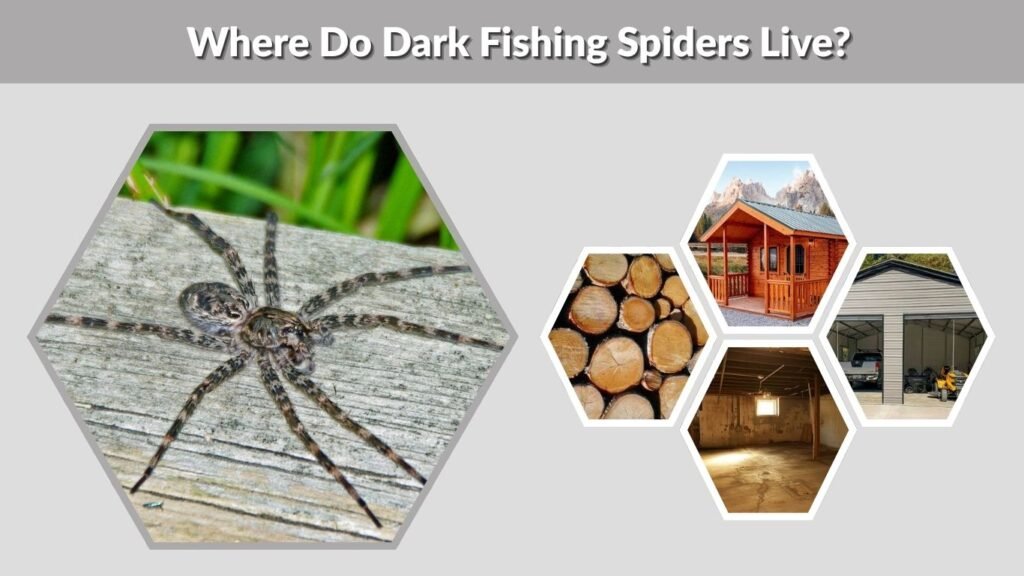
The dark fishing spider is found in the United States and Canada. Penn State Extension reports its range from New England and Canada south to Florida and Texas.
This explains why people search for dark fishing spiders in states such as Ohio, Michigan, Illinois, Minnesota, Missouri, North Carolina, Maryland, Pennsylvania, Wisconsin, Tennessee, Virginia, and New York.
Common Habitat
Dark fishing spiders prefer wooded areas, tree bark, logs, rock piles, and structures near forests. They may also appear near streams, ponds, and damp places, but this species is not limited to water. It can live far from ponds and still be called a fishing spider.
Around homes, they may be found in:
- Basements
- Garages
- Sheds
- Cabins
- Wood piles
- Exterior walls
- Window frames
- Doorways
- Attics
- Porches
They enter homes mostly by accident while searching for shelter, prey, or cooler hiding places.
Dark Fishing Spider in the House
Finding a dark fishing spider indoors can be surprising because of its size. However, one spider inside does not always mean you have an infestation. These spiders do not usually gather in large colonies, and they do not damage wood, fabric, or stored food.
They may enter through cracks, gaps around doors, basement openings, vents, or firewood brought indoors. Homes near wooded areas are more likely to see them.
What to Do If You Find One Indoors
The safest option is removal instead of killing. Place a cup or container over the spider, slide a stiff paper underneath, and release it outside away from doors and windows. Wear gloves if you are nervous.
To reduce future sightings, seal cracks, install door sweeps, fix torn screens, reduce clutter, and move firewood away from the house. Outdoor lights can also attract insects, which may attract hunting spiders.
What Do Dark Fishing Spiders Eat?
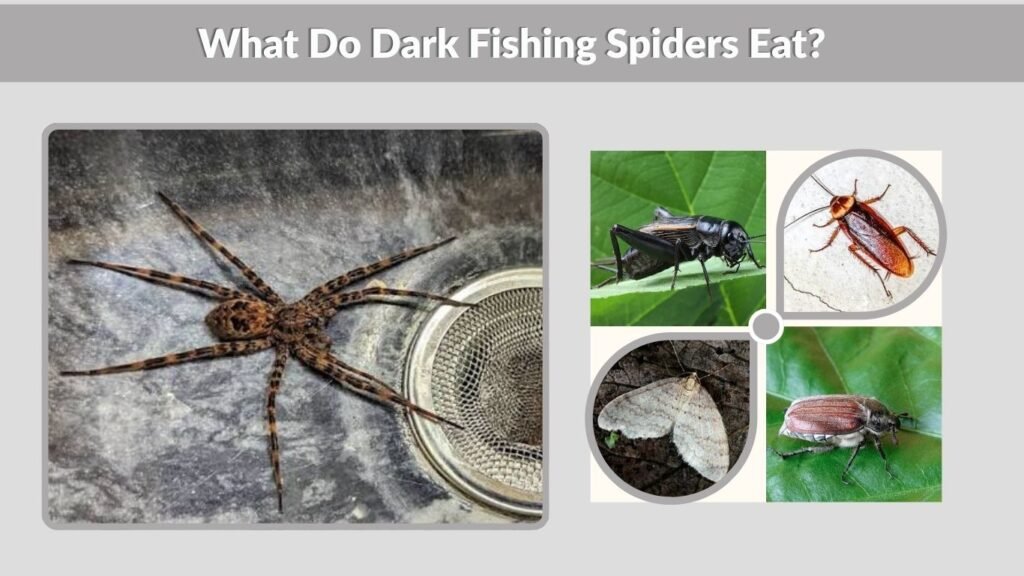
Dark fishing spiders are predators. They eat insects and other small arthropods. Like other fishing spiders, they may also take prey near water, but D. tenebrosus is often found in trees and wooded spaces rather than always hunting in ponds.
They do not rely on sticky webs to catch prey. Instead, they wait, sense movement, and rush forward quickly. Their speed helps them capture insects on bark, walls, rocks, or the ground.
Common Food Sources
- Crickets
- Moths
- Flies
- Beetles
- Cockroaches
- Other spiders
- Small aquatic insects near water
- Soft-bodied insects around lights or wooded homes
Because they eat pest insects, dark fishing spiders can be helpful around outdoor spaces.
Do Dark Fishing Spiders Make Webs?
Dark fishing spiders do not build classic orb webs like garden spiders. They are active hunters and use speed instead of sticky traps. However, females can make nursery webs for their young.
This is why they belong to the nursery web spider family. After producing an egg sac, the female carries it and later creates a protective nursery area where spiderlings can stay for a short time.
Egg Sac and Young
Female dark fishing spiders carry egg sacs with their mouthparts. Later, they attach the sac to a protected spot and guard the young spiderlings. This behavior is different from wolf spiders, which carry egg sacs attached to their spinnerets and later carry spiderlings on their backs.
BugGuide notes that this species may live 1–2 years, with males and females developing on different timelines. Males may mature earlier, while females can take longer to mature.
Male vs Female Dark Fishing Spider
Female dark fishing spiders are larger and more noticeable. Males are smaller, slimmer, and often harder to notice. The difference in size is important because females carry egg sacs and need more body mass for reproduction.
One interesting fact about this species is its unusual mating behavior. Research has found that males die after mating, and females may cannibalize them. This behavior has been discussed in scientific reporting on Dolomedes tenebrosus mating biology.
Female Features
- Larger body size
- Wider abdomen
- More likely to be seen carrying an egg sac
- Stronger appearance because of longer body and legs
- Usually more noticeable around homes or wooded surfaces
Male Features
- Smaller body size
- Slimmer shape
- Longer-looking legs compared with body size
- More active when searching for females
- Less likely to be mistaken for a giant spider
Are Dark Fishing Spiders Dangerous to Dogs or Cats?
A dark fishing spider bite could irritate a dog or cat, but serious problems are not common. Pets may get bitten if they paw at, bite, or trap the spider. Most healthy pets may show mild swelling or discomfort.
However, small pets, allergic pets, or pets with swelling near the face or mouth should be watched carefully. Contact a veterinarian if your pet seems weak, vomits, has trouble breathing, develops severe swelling, or shows unusual behavior after a suspected bite.
How to Get Rid of Dark Fishing Spiders
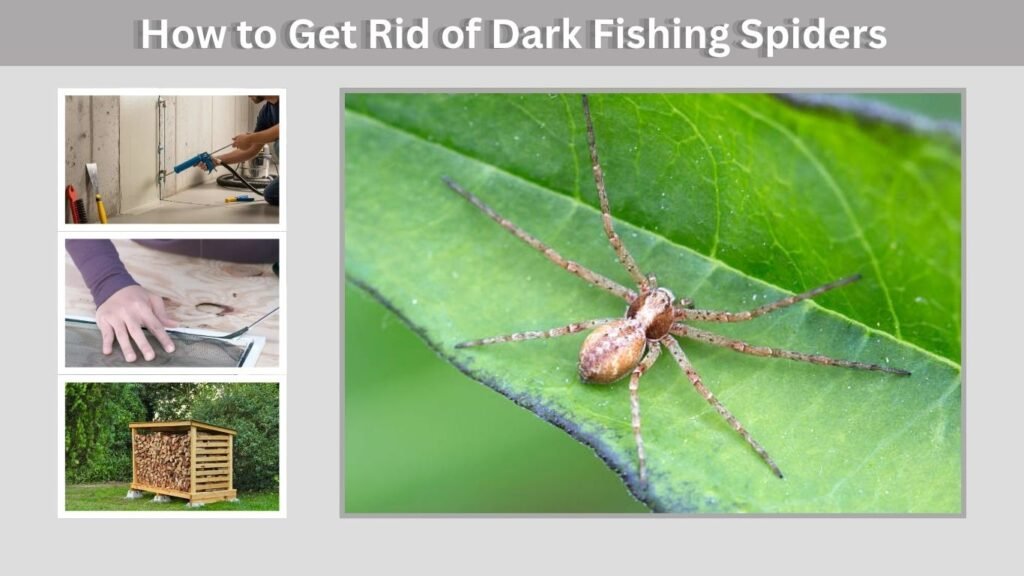
Dark fishing spiders are not household pests in the same way as ants, roaches, or termites. Usually, control means reducing entry points and removing hiding places.
Prevention Tips
- Seal cracks around doors, windows, and foundations.
- Repair damaged window screens.
- Add door sweeps to basement and garage doors.
- Keep firewood stacked away from the house.
- Reduce clutter in basements, sheds, and garages.
- Vacuum corners, storage areas, and spider hiding spots.
- Turn off unnecessary outdoor lights at night.
- Remove insects that attract hunting spiders.
If you see many large spiders indoors, the real issue may be insect prey, gaps in the building, or nearby wooded habitat.
Interesting Dark Fishing Spider Facts
The dark fishing spider is more than just a large brown spider. It has several features that make it different from common house spiders.
Fast Facts
- It is one of the larger spiders commonly noticed around homes.
- Its scientific name is Dolomedes tenebrosus.
- It is often found in wooded areas.
- It may enter homes near forests or trees.
- It does not use a sticky web to catch prey.
- It can bite, but it usually avoids people.
- Females are much larger than males.
- Females carry egg sacs and guard young spiderlings.
- It is often confused with wolf spiders and brown recluse spiders.
- It helps control insects outdoors.
FAQs
Are dark fishing spiders poisonous?
Dark fishing spiders have venom, but they are not considered dangerous to most people. Their venom is used to control prey, not to attack humans. A bite may feel like a bee or wasp sting, causing mild pain, redness, or swelling. Serious reactions are uncommon but possible for sensitive people.
Do dark fishing spiders bite humans?
Yes, dark fishing spiders can bite humans, but bites are uncommon. They usually run away when disturbed. Most bites happen when the spider is trapped, handled, or pressed against skin. If bitten, clean the area, apply a cold compress, and watch for unusual symptoms.
Why is a dark fishing spider in my house?
A dark fishing spider may enter your house by accident while searching for shelter or prey. Homes near woods, trees, sheds, or firewood piles are more likely to see them. They may come inside through door gaps, cracks, vents, basement openings, or damaged window screens.
What is the difference between a dark fishing spider and a wolf spider?
A dark fishing spider usually has longer, banded legs and often rests flat on walls, trees, or siding. Wolf spiders are usually stockier and more ground-dwelling. Female wolf spiders carry spiderlings on their backs, while female fishing spiders make nursery webs for young spiderlings.
Should I kill a dark fishing spider?
You do not need to kill a dark fishing spider. It is not aggressive and can help control insects. If it is indoors, capture it with a cup and paper, then release it outside. To prevent more spiders, seal entry points, reduce clutter, and keep insects under control.
