
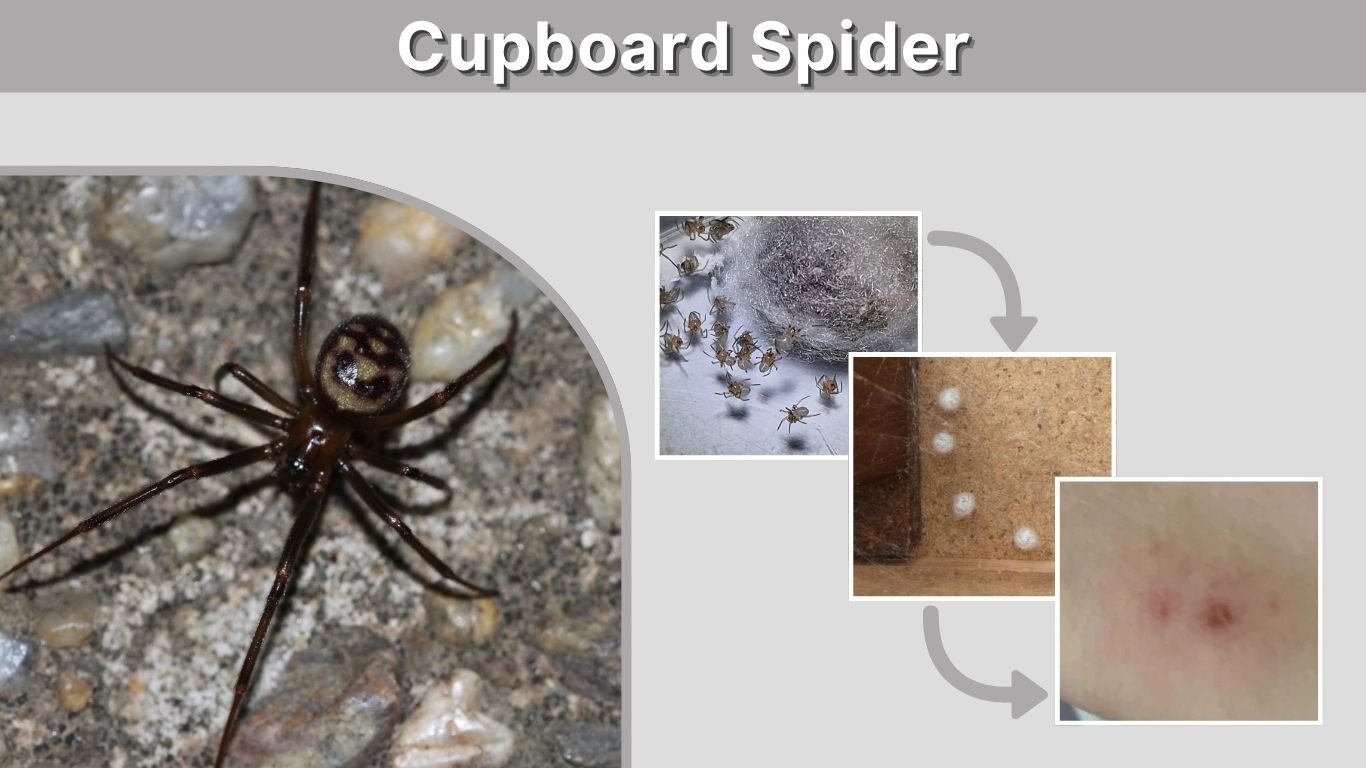
The cupboard spider is a dark, glossy house spider often found in hidden indoor spaces such as cupboards, sheds, garages, basements, and wall corners. Its scientific name is Steatoda grossa. It is also called the false black widow because it can resemble a black widow, but it lacks the famous red hourglass marking and is usually far less dangerous to people.
What Is a Cupboard Spider?
The cupboard spider is a cobweb spider in the family Theridiidae. It belongs to the genus Steatoda, a group commonly known as false widow spiders. The name “cupboard spider” comes from its habit of living in dark, sheltered places around houses and buildings.
This spider is found in many parts of the world. It is native to Europe and parts of temperate Asia, but it has been introduced to other regions, including North America, South America, Africa, New Zealand, and Hawaii. It builds irregular three-dimensional cobwebs in dark places and is often seen indoors.
Quick Identification
- Common name: Cupboard spider
- Scientific name: Steatoda grossa
- Other names: False black widow, dark comb-footed spider, brown house spider
- Family: Theridiidae
- Color: Dark brown, purplish brown, blackish, or reddish brown
- Body shape: Round, shiny abdomen with smaller head section
- Web type: Messy cobweb or tangled three-dimensional web
- Common places: Cupboards, basements, sheds, garages, corners, under furniture
- Bite risk: Possible, but usually only if trapped or handled
Cupboard Spider Size
Cupboard spiders are not huge, but their dark color and rounded abdomen can make them look alarming. Females are larger than males and are more commonly noticed because they stay near webs. Males are slimmer and may wander when looking for females.
Female Steatoda grossa are commonly described as about 6–10.5 mm in body length. They have a round, bulbous abdomen that may look similar to a small black widow, although they do not have the bright red hourglass marking.
| Feature | Cupboard Spider |
| Female body length | About 6–10.5 mm |
| Male body length | Usually smaller and slimmer |
| Abdomen shape | Round, glossy, and bulbous |
| Main color | Dark brown, blackish, or purplish brown |
| Web style | Irregular tangled cobweb |
| Common look-alike | Black widow or noble false widow |
Why It Looks Like a Widow Spider
The cupboard spider has a rounded abdomen and dark shiny body. These features can make it look like a black widow, redback, or other widow spider at first glance. However, the cupboard spider usually has duller markings and does not have the clear red hourglass pattern found on many true widow spiders.
How to Identify a Cupboard Spider
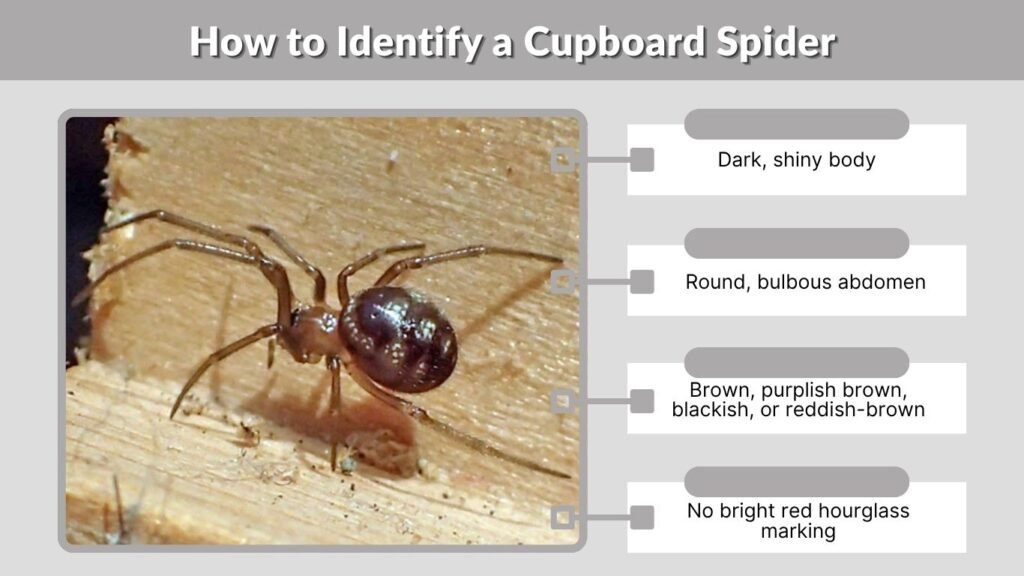
Cupboard spiders are best identified by their body shape, dark color, web style, and location. They often sit in messy webs in dark corners rather than running openly across the floor. Their webs may look like random tangled silk, not a neat orb web.
The Natural History Museum explains that false widow spiders belong to the genus Steatoda and are often concerning because they resemble black widows. The cupboard spider, Steatoda grossa, is one of the common false widow species found around buildings.
Identification Features
- Dark, shiny body
- Round, bulbous abdomen
- Brown, purplish brown, blackish, or reddish-brown color
- Pale or cream markings may be present on the abdomen
- No bright red hourglass marking
- Messy cobweb in dark sheltered places
- Female usually larger and rounder
- Male usually smaller with longer-looking legs
- Often found indoors or near buildings
Young or pale individuals may look brown rather than black. Some may have faint pale marks on the abdomen, while others look almost plain dark. Because color varies, the absence of a red hourglass and the presence of a tangled cobweb are useful clues.
Cupboard Spider Web
The cupboard spider builds a messy three-dimensional web. It does not make a neat round web like an orb-weaver. Its web is usually placed in sheltered corners where insects may pass through. Cupboard spider webs can appear dusty, tangled, and irregular.
These spiders have poor eyesight compared with active hunters. They rely heavily on vibrations in the web to sense prey, threats, and movement. When an insect touches the web, the spider can detect the vibration and move toward it.
Common Web Locations
- Inside cupboards
- Behind furniture
- Basement corners
- Garage shelves
- Sheds
- Window frames
- Under stairs
- Around storage boxes
- Wall cracks
- Quiet indoor corners
If you keep seeing cupboard spider webs, it may mean the area has insects or undisturbed hiding places. Regular cleaning and removing clutter can reduce both webs and prey.
Cupboard Spider Bite
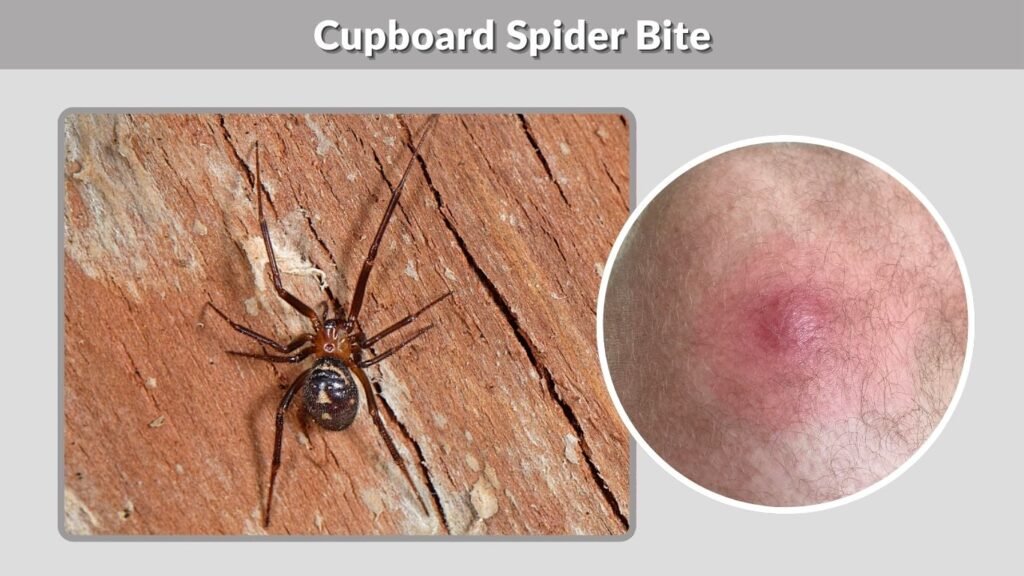
A cupboard spider can bite, but bites are uncommon. This spider is not aggressive and usually tries to hide or retreat. Most bites happen when the spider is accidentally squeezed, trapped in clothing, or handled with bare hands.
A bite may feel like a sharp pinch or mild sting. Symptoms are usually local and may include pain, redness, swelling, itching, or a small blister. Some reports mention stronger symptoms such as nausea, sweating, or general discomfort, but these are less common.
Bite Symptoms
- Mild to moderate pain
- Redness around the bite
- Local swelling
- Itching or irritation
- Tenderness
- Small blister in some cases
- Rare nausea or sweating
- Rare general unwell feeling
Most bites improve with basic care. Wash the area with soap and water, apply a cold compress, and avoid scratching. Seek medical advice if symptoms worsen, swelling spreads, pain becomes severe, or signs of infection appear.
Is the Cupboard Spider Poisonous?
The cupboard spider is venomous, not poisonous. Venomous means it can inject venom through a bite. Poisonous means something is harmful when touched or eaten. Like many spiders, the cupboard spider uses venom to subdue prey.
For most people, cupboard spider venom is not considered highly dangerous. However, it may cause discomfort, especially if a person is sensitive. The Natural History Museum notes that false widow spiders can bite, but serious problems are rare, and media panic around false widows is often exaggerated.
Safety Notes
- It is venomous but not usually dangerous.
- It is not aggressive toward people.
- Bites usually happen by accident.
- Symptoms are normally local.
- Sensitive people may react more strongly.
- Children, elderly people, and allergic individuals should be monitored after any bite.
If you are unsure whether a bite came from a cupboard spider, do not guess. Many skin marks are caused by insects, irritation, infections, or other spiders.
Cupboard Spider vs False Widow
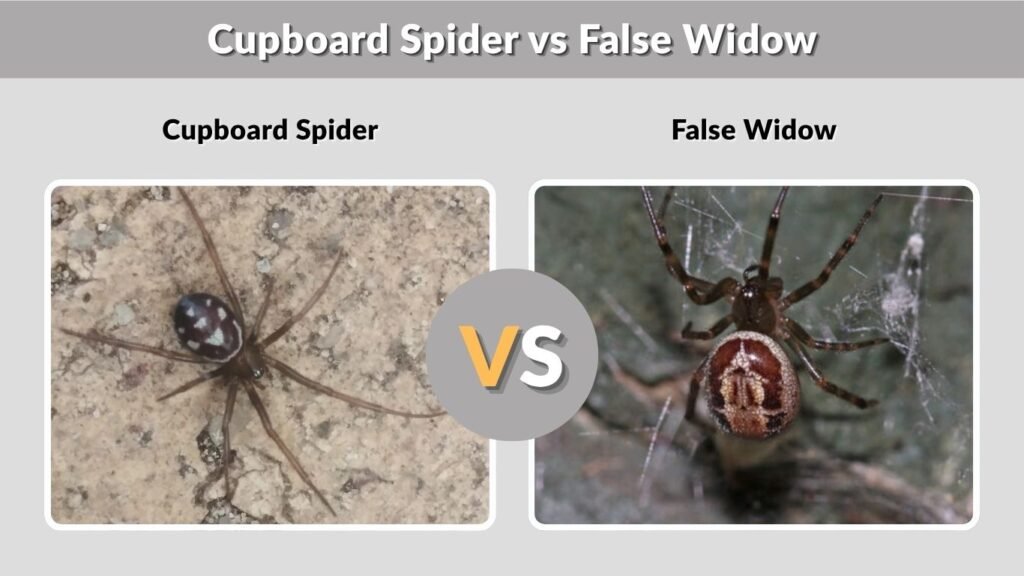
The cupboard spider is actually one type of false widow. “False widow” is a common name used for several Steatoda spiders. In the UK, common false widow spiders include the cupboard spider, noble false widow, and rabbit hutch spider. The British Arachnological Society notes that the false widow name is most often used for Steatoda bipunctata, Steatoda grossa, and Steatoda nobilis.
| Feature | Cupboard Spider | Noble False Widow |
| Scientific name | Steatoda grossa | Steatoda nobilis |
| Group | False widow | False widow |
| Body shape | Round, dark abdomen | Round, patterned abdomen |
| Common habitat | Dark indoor spaces | Buildings, walls, sheds, windows |
| Markings | Often dull or faint | Often more patterned |
| Bite risk | Low, defensive | Low, defensive |
| Danger level | Usually mild | Usually mild, but can be painful |
Simple Difference
All cupboard spiders are false widows, but not all false widows are cupboard spiders. If someone says “false widow,” they may be talking about several species. If they say “cupboard spider,” they usually mean Steatoda grossa.
Cupboard Spider vs Black Widow
Cupboard spiders are often confused with black widows because both can be dark, shiny, and round-bodied. However, black widows belong to the genus Latrodectus, while cupboard spiders belong to Steatoda. True black widows are usually more medically important.
The cupboard spider does not have the bright red hourglass marking commonly associated with black widows. This is one of the easiest clues. Black widows also tend to have a more dangerous bite, while cupboard spider bites are usually much milder.
Key Differences
- Cupboard spiders lack the bright red hourglass.
- Black widows are usually more medically significant.
- Cupboard spiders may have dull pale markings.
- Black widows often have a very glossy black body.
- Cupboard spiders are false widows, not true widows.
- Both may build messy cobwebs in hidden places.
If you live in an area where black widows occur, avoid handling any dark shiny spider. Use a photo for identification or contact a pest professional.
Cupboard Spider vs Brown Recluse
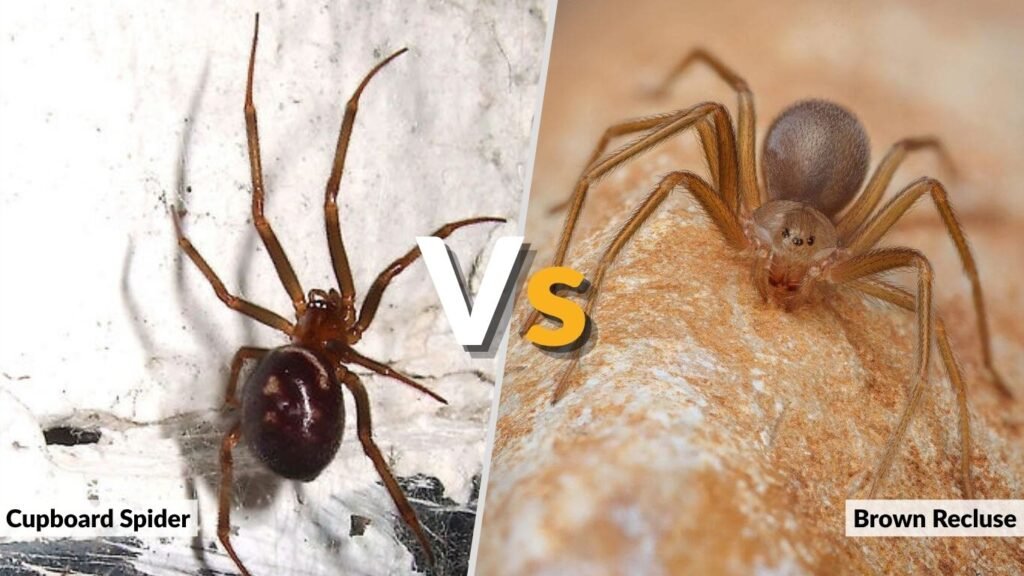
The cupboard spider and brown recluse are very different spiders, but both may be blamed for indoor bites. A cupboard spider has a rounded abdomen and messy cobweb. A brown recluse has a flatter body, long legs, and a violin-like marking on the front body section.
Brown recluse spiders do not build the same type of exposed cobweb as cupboard spiders. They prefer hidden, undisturbed spaces. Their bite can be more concerning than a cupboard spider bite, especially if tissue damage develops.
| Feature | Cupboard Spider | Brown Recluse |
| Body shape | Round, bulbous abdomen | Flatter body |
| Web | Messy cobweb | Irregular retreat silk |
| Color | Dark brown to blackish | Light to medium brown |
| Key marking | No red hourglass | Violin-like mark |
| Eye count | Eight eyes | Six eyes |
| Bite concern | Usually mild | Can be medically serious |
| Common confusion | Black widow look-alike | Many brown spiders |
Identification Tip
If the spider is sitting in a messy cobweb with a shiny rounded abdomen, it is more likely a cobweb spider such as Steatoda. If it is a plain brown spider hiding in a box, closet, or undisturbed area, careful identification is needed before assuming it is a recluse.
Cupboard Spider vs Redback
In Australia, the cupboard spider may be called the brown house spider and can be confused with the redback spider. Redbacks are true widow spiders in the genus Latrodectus and are more medically important than cupboard spiders.
A redback usually has a red stripe or red marking on the upper abdomen, and females may also have an hourglass-like marking underneath. Cupboard spiders are generally duller and lack the clear red warning marks.
Main Differences
- Redbacks usually have red markings.
- Cupboard spiders do not have bright red hourglass markings.
- Redback bites are more medically significant.
- Cupboard spiders are false widows.
- Both may live in sheltered human-made spaces.
- Both should be left alone and not handled.
In Australia, if you are unsure whether a spider is a redback or cupboard spider, treat it with caution and avoid bare-hand contact.
Male and Female Cupboard Spiders
Female cupboard spiders are larger and rounder. They usually remain close to their webs. Males are smaller, slimmer, and more likely to wander while searching for females. This is why a male cupboard spider may appear in a sink, bathtub, hallway, or floor space.
Males can still bite, but they are less likely to be noticed unless they are moving around the house. Females are easier to identify because of the round abdomen and web-building behavior.
Male vs Female Features
- Females are larger and rounder.
- Males are slimmer and smaller.
- Females stay near webs more often.
- Males may wander indoors.
- Females may guard egg sacs.
- Both can be dark brown or blackish.
Cupboard Spider Egg Sac and Baby Spiders
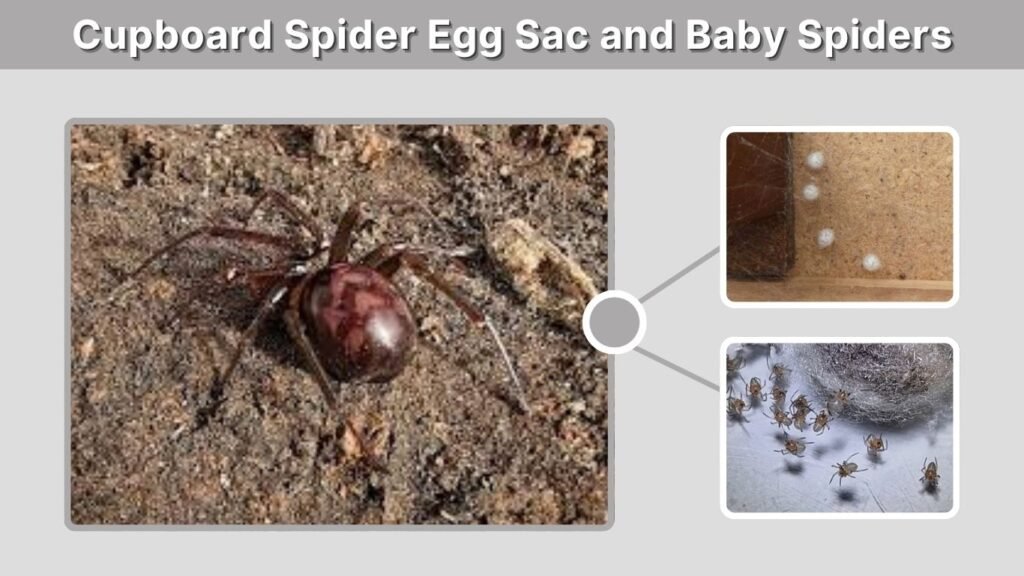
Female cupboard spiders make silk egg sacs. These sacs are usually placed near or inside the web in a protected area. The spiderlings hatch and later disperse to find their own hiding spots.
Egg sacs may look like small pale silk balls or rounded sacs in the web. If you find several webs and egg sacs indoors, the area may be undisturbed and insect-rich.
Egg Sac Control Tips
- Vacuum webs and egg sacs carefully.
- Empty the vacuum outside or seal the debris bag.
- Clean dark corners regularly.
- Reduce clutter in cupboards and storage spaces.
- Seal cracks where insects and spiders enter.
- Keep food crumbs and insects under control.
Removing egg sacs can help reduce future spider numbers indoors.
Where Do Cupboard Spiders Live?
Cupboard spiders prefer dark, quiet, protected places. Indoors, they may hide in cupboards, garages, sheds, basements, closets, under stairs, and behind furniture. Outdoors, they may live in cracks, walls, fences, wood piles, and sheltered structures.
They are common around buildings because buildings provide warmth, darkness, insects, and safe corners for webs. They are also found in the UK, Ireland, Australia, California, and many other regions because Steatoda grossa has a wide global distribution.
Common Indoor Locations
- Kitchen cupboards
- Utility rooms
- Garages
- Sheds
- Basements
- Storage closets
- Behind appliances
- Under shelves
- Window corners
- Cupboards under stairs
What Do Cupboard Spiders Eat?
Cupboard spiders eat small insects and other arthropods that get caught in their cobwebs. They are helpful because they reduce flies, small beetles, moths, mosquitoes, and other household pests.
They wait in or near the web and respond to vibrations. When prey becomes trapped, the spider moves in and subdues it. Because they catch pest insects, they can be considered beneficial, even though most people do not want them indoors.
Common Prey
- Flies
- Mosquitoes
- Moths
- Small beetles
- Ants
- Other small spiders
- Household insects
- Crawling pests near storage areas
How to Get Rid of Cupboard Spiders
Cupboard spiders can be controlled by cleaning, reducing insect prey, and sealing entry points. Chemical treatment is not always necessary unless there is a large infestation or repeated indoor problem.
Prevention and Removal Tips
- Vacuum webs, spiders, and egg sacs.
- Clean cupboards, shelves, and dark corners.
- Reduce clutter in garages and storage rooms.
- Seal cracks around doors, windows, and foundations.
- Fix torn screens and gaps around vents.
- Move stored boxes away from walls.
- Keep food areas clean to reduce insects.
- Use sticky traps in hidden corners if needed.
- Wear gloves when cleaning old storage areas.
- Avoid handling spiders with bare hands.
If you are uncomfortable or suspect a dangerous look-alike, contact a local pest control expert.
FAQs
Is a cupboard spider dangerous?
A cupboard spider is not usually dangerous to most people. It can bite if trapped or handled, but it is not aggressive. Most bites cause local symptoms such as pain, redness, swelling, or itching. Serious reactions are uncommon, but worsening symptoms should be checked by a medical professional.
Is a cupboard spider the same as a false widow?
Yes, the cupboard spider is one type of false widow spider. Its scientific name is Steatoda grossa. However, “false widow” can refer to several Steatoda species, including the noble false widow and rabbit hutch spider. So all cupboard spiders are false widows, but not all false widows are cupboard spiders.
What does a cupboard spider bite look like?
A cupboard spider bite may look like a small red bump with mild swelling, tenderness, or itching. Some people may develop a small blister. However, many skin marks look similar, so a bite cannot be confirmed by appearance alone unless the spider was clearly seen biting.
Where do cupboard spiders live in the house?
Cupboard spiders live in dark, quiet, sheltered places. Indoors, they may be found in cupboards, garages, basements, sheds, closets, under stairs, behind furniture, and near storage boxes. They build messy cobwebs in corners where insects may pass through.
How do I remove cupboard spiders safely?
Use a vacuum to remove webs, spiders, and egg sacs from corners and cupboards. Wear gloves when cleaning cluttered storage areas. Seal cracks and reduce insects to prevent more spiders. If you want to remove one alive, use a cup and paper instead of touching it.
