
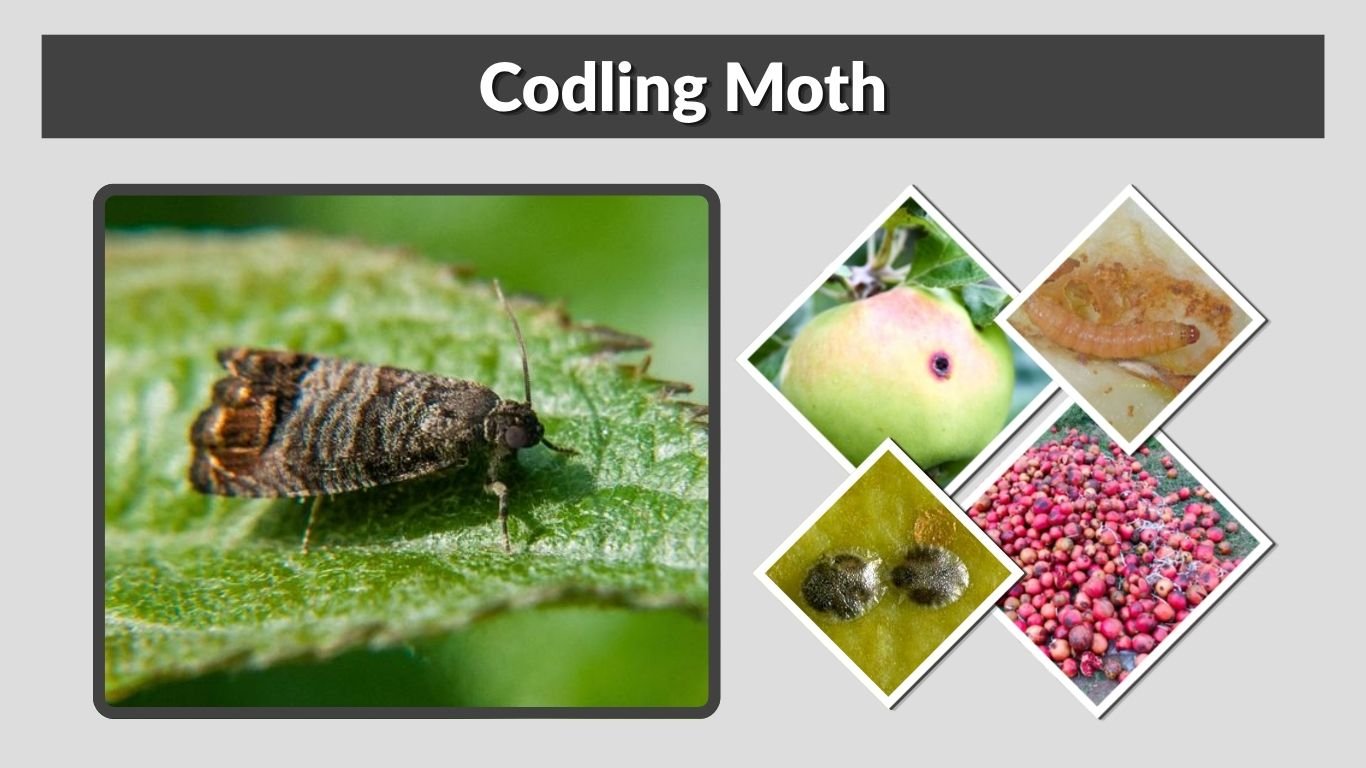
The codling moth (Cydia pomonella) is one of the most important pests of apples and pears. The adult moth itself causes little damage, but its larvae tunnel directly into developing fruit, often leaving brown frass around the entry hole and feeding near the core. Infested apples may drop early or become unmarketable. Effective codling moth control depends heavily on timing because larvae become difficult to kill once they enter the fruit. Pheromone traps, sanitation, degree-day monitoring, mating disruption, biological products, and correctly timed sprays can all help reduce infestations.
What Is a Codling Moth?
Codling moth is a small moth in the family Tortricidae. It is best known as an apple pest but can also infest pears, walnuts, and several other fruits.
The insect spends much of its damaging larval stage protected inside fruit, which makes prevention and early treatment especially important.
Codling Moth Identification
- Scientific name: Cydia pomonella
- Adult body is grayish-brown
- Wings have mottled gray markings
- Coppery or bronze markings occur near the wing tips
- Adults hold their wings roof-like when resting
- Larvae are cream to pinkish
- Mature larvae have a brown head
- Caterpillars can reach about 1/2–3/4 inch long
Adult moths are mainly active around dusk and may go unnoticed even when larvae are damaging fruit.
Codling Moth Larvae
The codling moth larva, or caterpillar, is the stage responsible for apple damage.
After hatching, a young larva searches for fruit and quickly begins boring beneath the skin.
What Do Codling Moth Larvae Look Like?
Young larvae are small and whitish. As they develop, they become cream-colored or pinkish with a clearly visible brown head capsule.
Once inside an apple, they may tunnel toward the seed cavity and feed around the core.
Because pesticides have difficulty reaching larvae after they enter fruit, control measures are most effective around egg hatch.
Codling Moth Damage on Apples
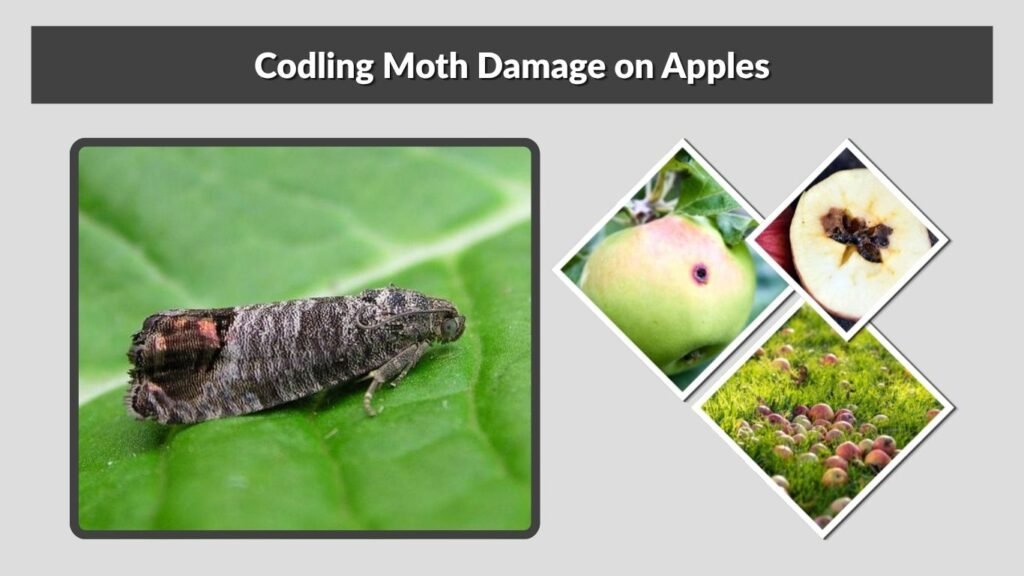
Codling moth larvae can seriously reduce apple quality.
One of the most obvious symptoms is an entry or exit hole accompanied by frass, a mixture of caterpillar waste and chewed fruit material.
Signs of Codling Moth Damage
Look for:
- Small holes in apples
- Brown frass around an opening
- Tunnels through the flesh
- Damage around the apple core
- Seeds that have been eaten
- Premature fruit drop
- Larvae inside cut fruit
Some larvae enter from the side of an apple, while others attack near the blossom end.
What Is a Codling Moth “Sting”?
A codling moth sting is not an insect sting.
In orchard terminology, a sting is a small, shallow feeding injury created when a newly hatched larva starts entering fruit but dies or abandons the attempt.
Finding fresh stings can indicate that egg hatch has begun and help determine when control is needed. UC IPM specifically recommends monitoring new stings as one way for home gardeners to time treatments.
Codling Moth Eggs
Female moths lay tiny, flattened eggs individually rather than in large clusters.
Eggs may be deposited on:
- Apples
- Pears
- Leaves
- Fruit spurs
- Developing nuts
The eggs can be difficult to detect without careful inspection.
When Do Eggs Hatch?
Development depends strongly on temperature. This is why commercial growers commonly use degree-day models rather than relying on calendar dates alone.
Once an egg hatches, the larva has only a relatively brief exposed period before entering fruit.
Codling Moth Life Cycle
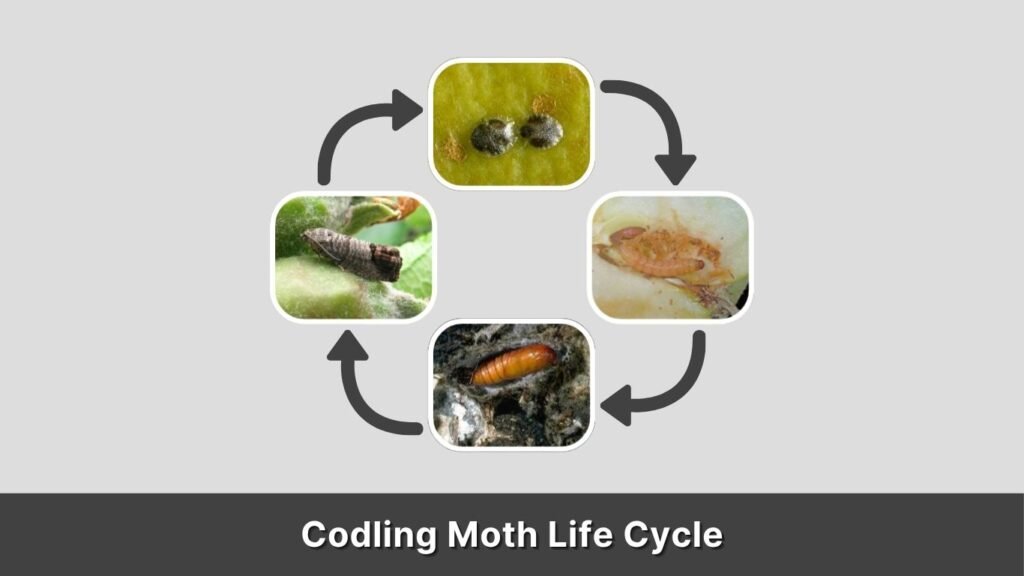
Codling moths undergo complete metamorphosis:
Egg → Larva → Pupa → Adult
Depending on climate, there may be two, three, or sometimes four generations in a year.
Overwintering
Codling moths commonly survive winter as mature larvae inside silken cocoons.
They hide beneath loose bark, in debris around trees, and in other protected locations.
Spring Emergence
The larvae pupate in spring, producing the first adult moths as temperatures become favorable.
After mating, females lay eggs near developing fruit.
Summer Generations
Larvae hatch, enter fruit, feed, leave the fruit when mature, and seek protected places to pupate.
Warm climates may allow additional generations before cold conditions cause late-season larvae to enter dormancy.
Codling Moth Traps
Pheromone traps are among the most useful tools for monitoring codling moth activity.
A lure releases a chemical similar to the sex pheromone produced by female moths.
How Pheromone Traps Work
The pheromone attracts male codling moths onto a sticky trap.
Traps help growers determine:
- When adult moth flight begins
- When to establish a biofix
- When eggs are likely to hatch
- Whether later generations are appearing
- Whether mating disruption is working
Pheromone traps are primarily monitoring tools, not a reliable stand-alone method for eliminating an established population.
When to Put Out Codling Moth Traps
Timing varies by climate.
UC IPM recommends placing traps around bud break or by approximately mid-March in relevant California orchard systems, but gardeners in other regions should follow local extension guidance because moth emergence depends on temperature.
Where to Place a Trap
Hang the trap within the tree canopy rather than close to the ground.
Check it regularly and replace the lure according to manufacturer instructions.
The first consistent moth captures combined with suitable evening temperatures can establish a biofix, from which degree-days are calculated.
Codling Moth Degree Days
Degree-day models estimate insect development using accumulated heat.
They provide a much more accurate treatment guide than simply spraying on the same date every year.
For codling moths, UC IPM uses a 50°F lower developmental threshold and 88°F upper threshold. Beginning egg hatch is commonly predicted roughly 250–300 degree-days after biofix, depending on the specific management program.
When to Spray for Codling Moth
The best time to treat is before or as eggs hatch, while young larvae remain exposed.
Once a caterpillar tunnels into an apple, most surface treatments cannot reach it effectively.
Treatment Timing
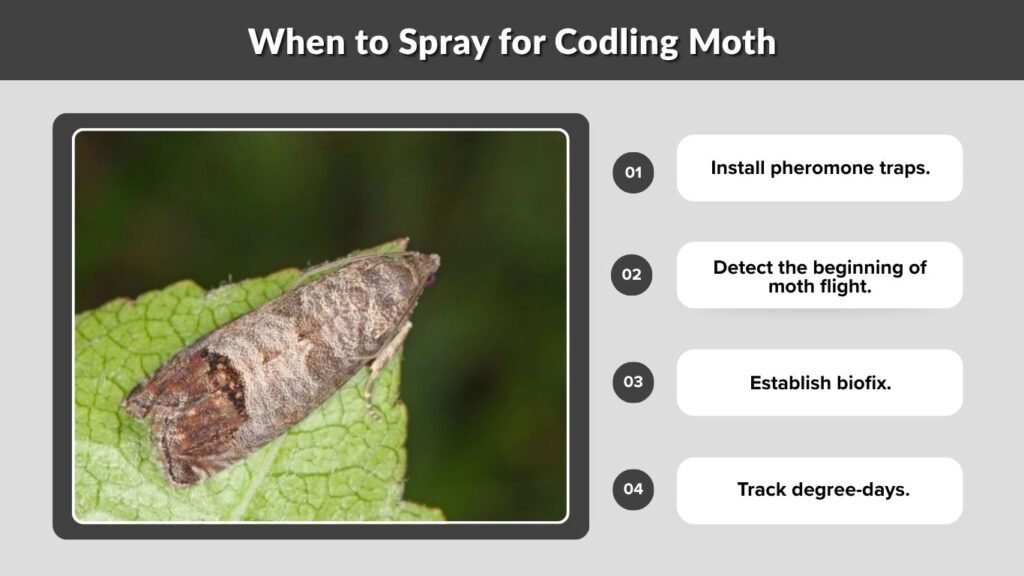
Rather than choosing a fixed calendar date:
- Install pheromone traps.
- Detect the beginning of moth flight.
- Establish biofix.
- Track degree-days.
- Treat around the predicted egg hatch.
- Monitor for additional generations.
UC IPM recommends timing treatments according to degree-day accumulation and fresh fruit stings rather than spraying randomly.
Spinosad for Codling Moth
Spinosad is one option used against young codling moth larvae in certain home-orchard programs.
Timing remains critical.
It needs to be present when eggs hatch and before larvae penetrate deeply into fruit. UC IPM lists spinosad among lower-toxicity options for home codling moth management and recommends following its application schedule carefully.
Always use a pesticide only on crops listed on the product label and follow all harvest intervals and application directions.
Codling Moth Granulovirus
Codling moth granulovirus is a biological control specifically targeting codling moth larvae.
Products containing the virus can be valuable where reduced impact on beneficial insects is desired.
How It Works
Young larvae must ingest the virus.
For this reason, applications need good coverage and often must be repeated during the egg-hatching period.
UC IPM notes that codling moth granulosis virus products have relatively little impact on beneficial insects and bees.
Codling Moth Mating Disruption
Mating disruption uses synthetic pheromone throughout an orchard to make it difficult for males to locate females.
If mating decreases, fewer fertile eggs are produced.
When Does It Work Best?
Mating disruption works particularly well in:
- Larger orchard blocks
- Isolated orchards
- Areas with low to moderate moth populations
- Orchards with uniform tree structure
It is less suitable as a simple single-tree treatment for many home gardens.
UC IPM recommends installing mating-disruption products before the first significant moth flight and continuing to monitor populations with appropriate traps.
Organic Codling Moth Control
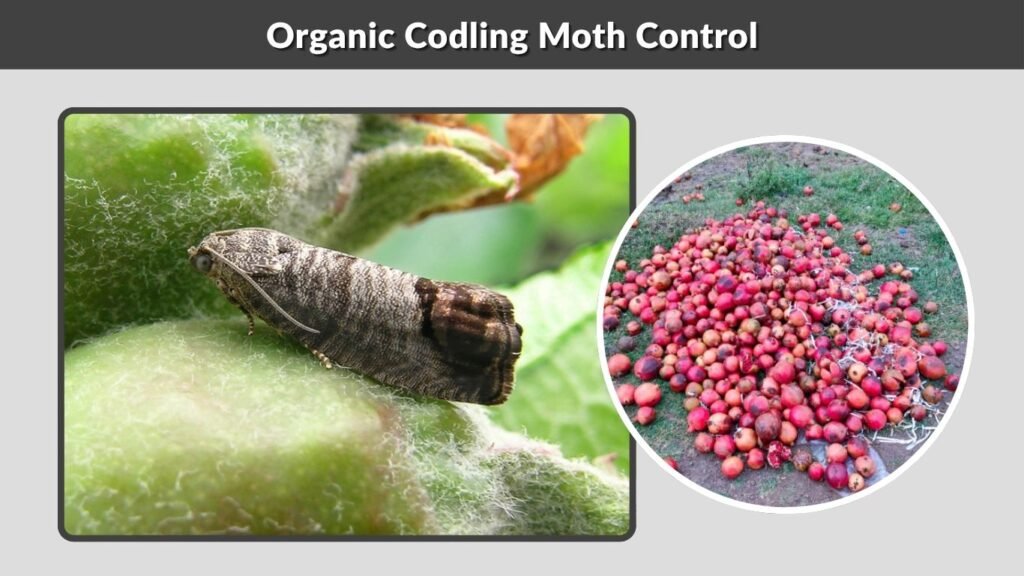
An integrated approach usually provides better results than relying on one product.
Useful Methods
Remove infested and fallen fruit promptly. Destroy fruit containing larvae instead of leaving it beneath trees.
Inspect loose bark and debris where mature caterpillars might overwinter.
Corrugated cardboard bands around trunks can sometimes collect mature larvae searching for pupation sites; the bands must then be removed and destroyed.
Pheromone monitoring, mating disruption, granulovirus, and certain appropriately labeled biological pesticides can also fit organic or reduced-spray programs.
Do Homemade Codling Moth Traps Work?
Homemade bait traps may catch some moths, but they are not as useful for accurate monitoring as species-specific pheromone traps.
If the purpose is to determine treatment timing, a commercial codling moth pheromone lure provides much more meaningful information.
Removing a few adults with a homemade trap should not be considered complete control.
Apple Maggot vs Codling Moth
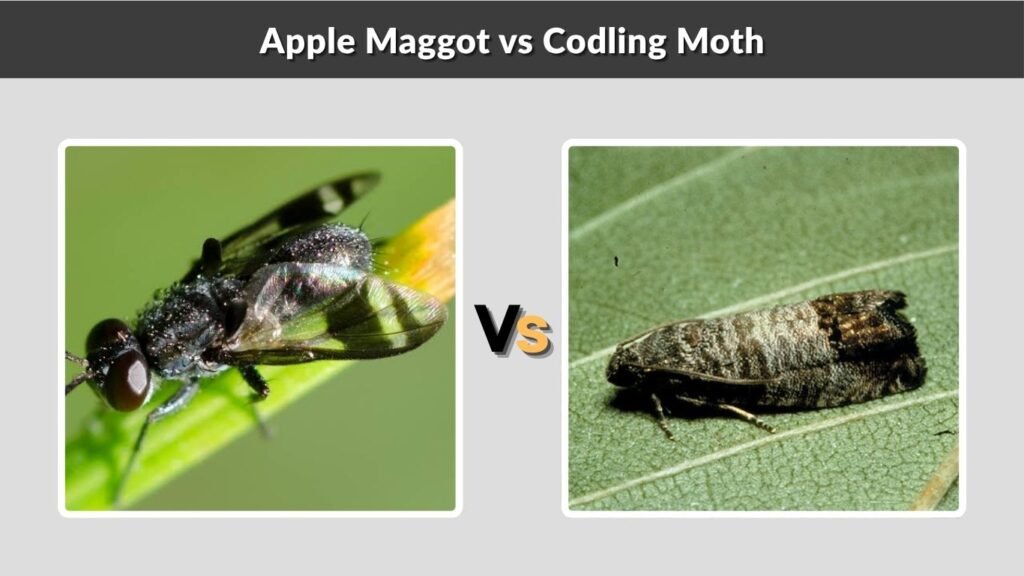
Both pests damage apples, but their larvae and feeding patterns differ.
Codling Moth
Codling moth caterpillars frequently tunnel toward the core and seeds. Entry holes may contain visible frass.
Apple Maggot
Apple maggots are legless fly larvae that create winding tunnels through the flesh.
If an apple has a pinkish caterpillar with a distinct head, codling moth is more likely. A small, headless-looking white maggot suggests an apple maggot.
False Codling Moth vs Codling Moth
False codling moth (Thaumatotibia leucotreta) is a different species.
It is an important pest in parts of Africa and attacks a much broader range of fruits and crops.
Although both pests produce larvae that bore into fruit, they differ in geographic distribution, identification, host plants, and quarantine importance.
FAQs
1. What does codling moth damage look like?
Affected apples often have small entry holes with brown frass, internal tunnels, damaged cores, and sometimes larvae inside.
2. Do codling moth pheromone traps kill the infestation?
Usually not. Their main purpose is monitoring adult activity and helping determine the correct time for treatment.
3. What is the best time to spray for codling moth?
Treatments work best around egg hatch, before young larvae enter the fruit. Pheromone traps and degree-day calculations provide the most accurate timing.
4. Can you eat an apple with codling moth damage?
Undamaged portions are not automatically unsafe because of the caterpillar, but badly damaged, rotting, or contaminated fruit should be discarded.
5. What is the best codling moth control?
The strongest approach combines sanitation, pheromone monitoring, precisely timed treatments, removal of infested fruit, and—where appropriate—mating disruption or biological controls.
