
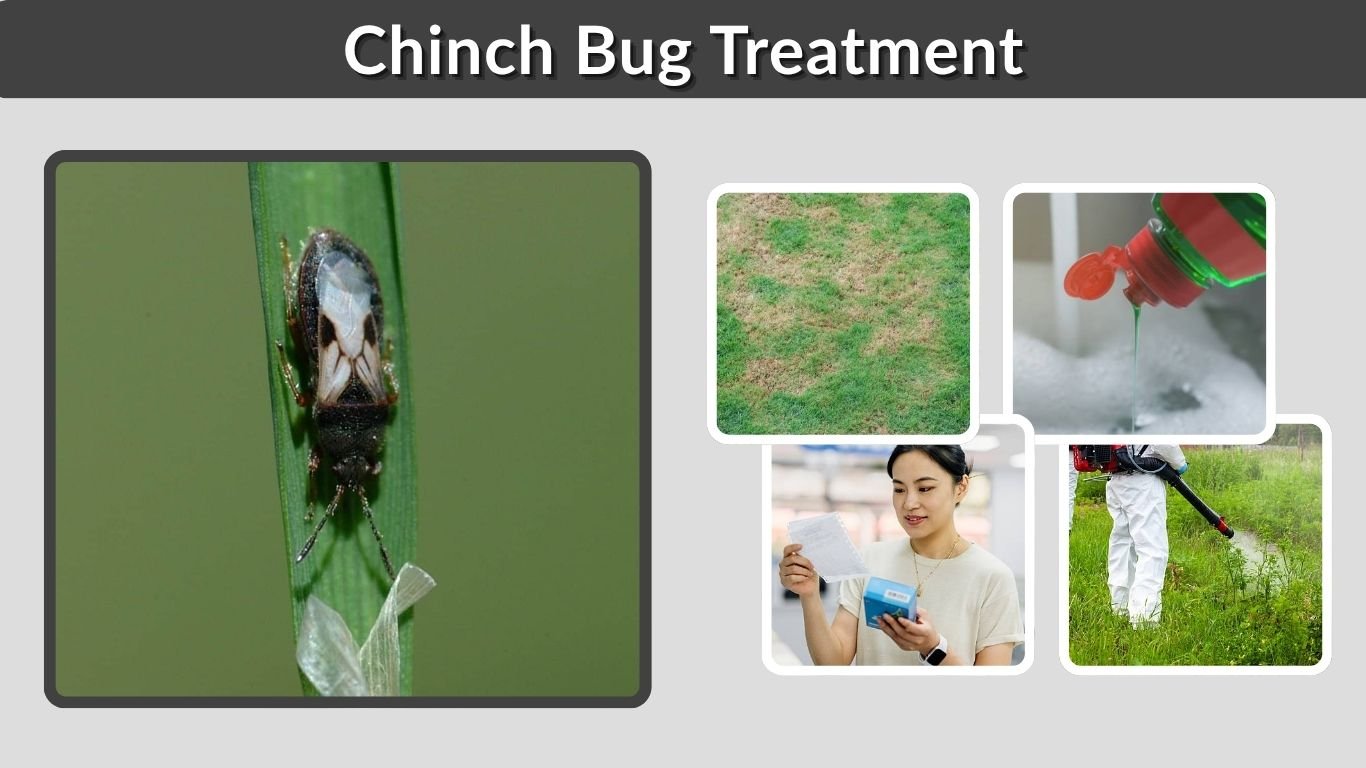
Chinch bug treatment should begin only after confirming that these insects are causing the damage. Their feeding creates irregular yellow and brown patches that closely resemble drought stress, fungal disease, fertilizer burn, or irrigation failure.
Southern chinch bugs are especially destructive to St. Augustine grass in Florida, Texas, and other warm regions. Treatment usually combines targeted pest control with proper watering, mowing, fertilization, and follow-up inspection. Applying a lawn insecticide without identifying active bugs can waste money, harm beneficial insects, and encourage pesticide resistance.
Signs Your Lawn Needs Chinch Bug Treatment
Chinch bugs pierce grass tissue and remove plant fluids. Damage often begins in sunny, hot, dry sections of the lawn, particularly beside sidewalks, driveways, walls, and other heat-reflecting surfaces. St. Augustine grass is their most important turf host, although they may also feed on nearby centipede, zoysia, Bahia, and Bermuda grass.
Watch for:
- Small yellow patches that gradually turn brown
- Grass that remains wilted after adequate watering
- Damage spreading from brown turf into healthy grass
- Problems concentrated in full sun
- Red-orange nymphs moving near the soil surface
- Black adults with white wings in the thatch
- Green turf surrounding an expanding dead patch
The insects are usually easiest to find along the boundary where damaged grass meets healthy green turf.
Confirm Chinch Bugs Before Treatment
Brown grass alone is not enough to diagnose chinch bugs. Examine the living edge of the affected patch rather than its completely dead center.
The Flotation Test
Remove both ends of a large metal can and push it several inches into the soil. Fill the can with water and maintain the water level for approximately five minutes. Chinch bugs living around the grass crowns and thatch should float to the surface.
Repeat the test in several locations when the first sample is negative. Some extension guidance suggests treatment when populations reach approximately 20 bugs per square foot, although local thresholds and turf conditions may differ.
Also check sprinkler coverage. If the grass becomes greener after correcting irrigation, drought stress may have been the primary cause.
Best Treatment for Chinch Bugs
There is no single treatment that works equally well in every lawn. Grass species, climate, infestation size, pesticide resistance, soil moisture, and product availability all affect the result.
| Treatment option | Best use | Main limitation |
| Improved lawn care | Mild damage and prevention | May not stop a large active population |
| Targeted lawn insecticide | Confirmed, damaging infestation | Resistance and incorrect application may reduce control |
| Natural-predator conservation | Long-term population suppression | Too slow for severe damage |
| Professional treatment | Recurring or widespread infestation | Costs vary by property and service |
| Soap flush | Finding and counting insects | Not a dependable full-lawn treatment |
How to Treat Chinch Bugs in a Lawn
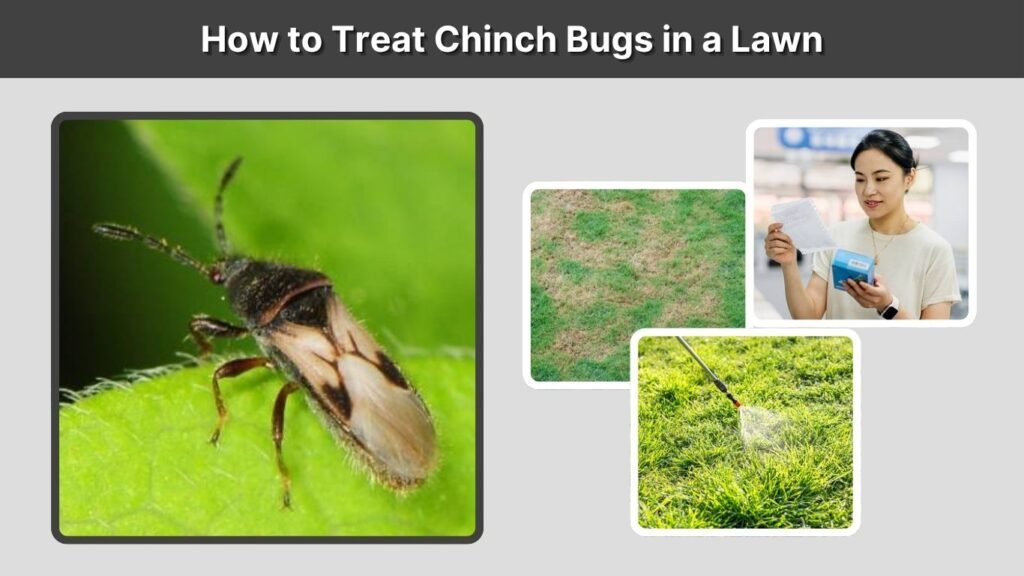
1. Mark the Active Damage Boundary
Identify the green-to-yellow transition surrounding the brown area. This is where actively feeding chinch bugs are most likely to be concentrated.
Treating only the completely dead center may miss insects that have already moved into living grass. A targeted application should generally include the affected zone and a surrounding band of healthy turf, following the product label.
2. Correct Lawn Stress
Check irrigation coverage, mowing height, soil compaction, drainage, and thatch before applying anything. Hot, drought-stressed turf is especially vulnerable to chinch bug injury.
Water deeply according to the needs of your grass and local climate rather than applying small amounts every day. Avoid flooding the lawn because excessive moisture can contribute to shallow roots and disease.
Do not apply excessive nitrogen in an attempt to force damaged grass to recover. Heavy nitrogen fertilization can create tender growth and increase turf stress during hot weather. Proper mowing, moderate fertilization, and suitable irrigation make the lawn more tolerant of insect feeding.
3. Select a Properly Labeled Product
Choose a lawn insecticide whose current label specifically lists:
- Chinch bugs
- Residential lawns or turf
- Your grass type, when specified
- The intended application method
Do not select a treatment based only on a familiar brand name. Product formulas can change, and two products from the same brand may contain different active ingredients.
Liquid treatments can provide good coverage when enough water is used to reach the lower grass canopy. Granular treatments may need irrigation after application. The label determines the correct rate, spray volume, watering instructions, and retreatment interval.
4. Apply It to the Target Zone
Chinch bugs live near grass crowns, stolons, and thatch rather than on the tops of tall blades. The treatment must reach this lower zone.
Mississippi State University Extension recommends using sufficient spray volume and, for certain treatments, applying no more than approximately 1/8 to 1/4 inch of water afterward to move the material into the thatch. However, the directions printed on your product always take priority because some formulations require different watering procedures.
Avoid treatment immediately before heavy rain, which may move the pesticide away from the target area or into drains and waterways.
5. Reinspect the Lawn
Do not judge the treatment only by grass color. Dead turf will not instantly become green after the insects are controlled.
Inspect the advancing edge again for live chinch bugs according to the product’s follow-up interval. A few new adults may move into the area, while eggs present during the first application may hatch later.
Never exceed the labeled rate or apply repeated treatments more frequently than permitted.
Chinch Bug Treatment for St. Augustine Grass
Southern chinch bugs are considered a major insect pest of St. Augustine grass. Damage can spread rapidly during warm summer weather, particularly in full-sun lawns.
For St. Augustine grass:
- Confirm active bugs at the patch boundary.
- Correct dry spots and uneven irrigation.
- Mow at the recommended height for your cultivar.
- Apply a labeled treatment to active areas.
- Inspect again before repeating treatment.
- Repair dead sections only after the infestation is controlled.
Grass can recover when some healthy stolons and growing points remain. Completely dead sections may require plugs or replacement sod.
Florida Chinch Bug Treatment
Florida populations can be difficult to treat because southern chinch bugs have developed resistance to multiple insecticide groups. UF/IFAS reported documented resistance to five classes, including commonly used pyrethroids and neonicotinoids.
This means a product that worked previously may perform poorly against another population. Do not respond by doubling the rate. Reconfirm the insect, check application coverage, and seek current recommendations from a local extension office or licensed lawn professional.
Rotating brand names does not necessarily rotate insecticide classes. Two brands may contain active ingredients that act in the same way.
Natural and Organic Chinch Bug Treatment
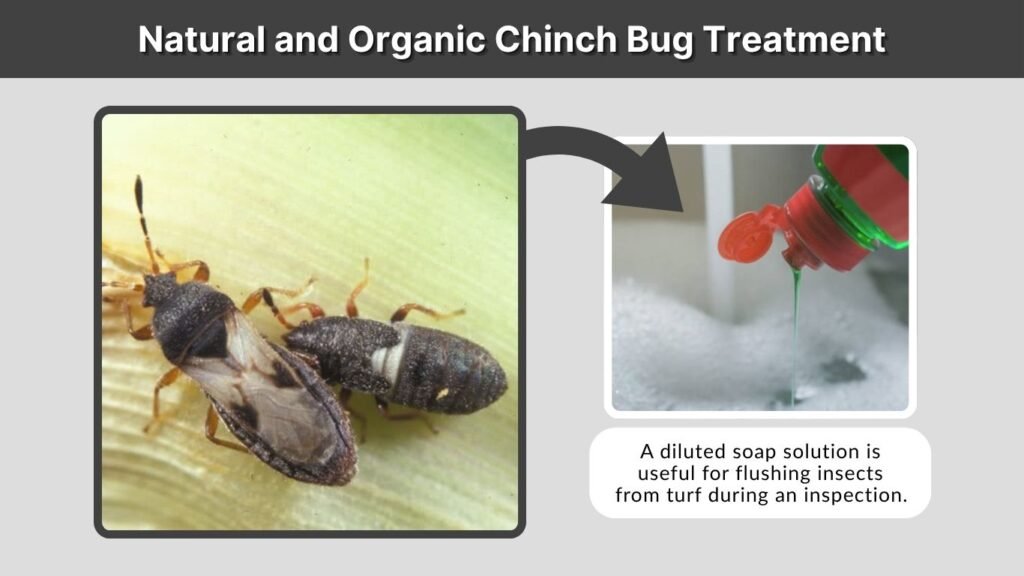
Healthy lawn care and protection of natural predators can help reduce chinch bug populations. Big-eyed bugs, spiders, earwigs, and other predatory insects feed on chinch bugs; one earwig species consumed large numbers in laboratory observations.
Does Dish Soap Kill Chinch Bugs?
A diluted soap solution is useful for flushing insects from turf during an inspection. It is not a reliable cure for an established lawn infestation.
Strong or repeated detergent applications can damage grass. Household dish soap is not formulated or tested as a turf pesticide, so it should not replace a properly labeled treatment.
Do Beneficial Nematodes Work?
Beneficial nematodes are effective against certain soil-dwelling insects, but chinch bugs feed mainly around grass stems and thatch. Results may therefore be inconsistent.
Use a biological product only when its label specifically includes chinch bugs and the manufacturer provides suitable temperature, moisture, and application instructions.
Avoid homemade applications of bleach, vinegar, concentrated essential oils, or salt. These materials may burn grass and damage soil without eliminating the infestation.
Chinch Bug Treatment Safe for Dogs
No pesticide should be described as completely risk-free for every pet. Safety depends on the product, dose, application, exposure route, and label directions.
Remove pets, children, toys, food bowls, and water dishes before treatment. Keep them away for the period stated on the label or until the lawn is completely dry—whichever instruction is more protective. Granular products may require watering and a longer waiting period.
Do not allow dogs to lick wet grass, eat granules, or walk through the treatment and then lick their paws.
When to Call a Lawn Professional
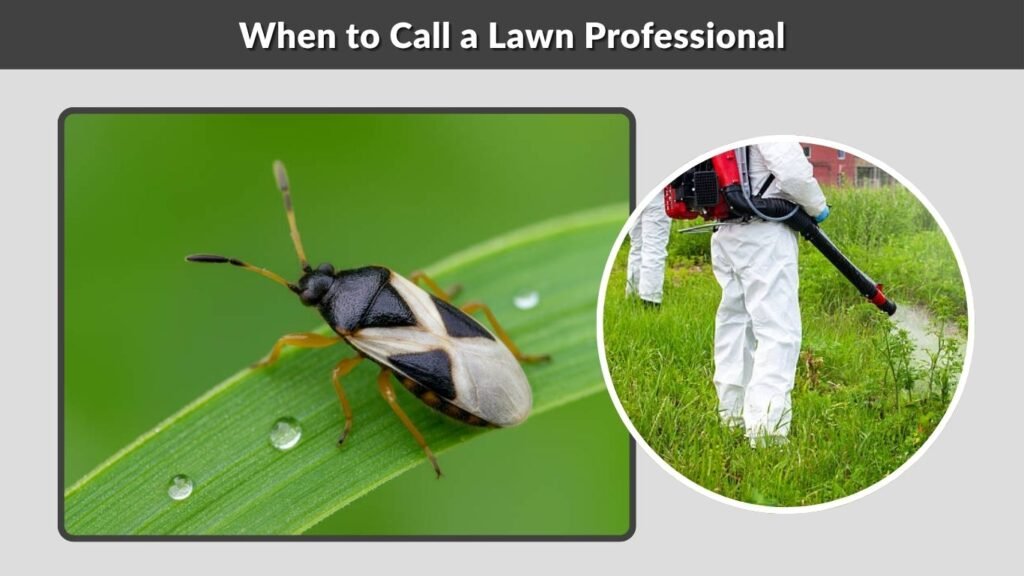
Professional treatment is useful when the infestation covers a large area, returns after properly applied treatment, or continues despite corrected lawn care.
A qualified service should confirm the pest before spraying and explain:
- The active ingredient being used
- The target treatment area
- Pet and child reentry instructions
- Whether a follow-up visit is included
- How pesticide resistance will be addressed
- When damaged turf should be repaired
Treatment costs depend on lawn size, infestation severity, location, application type, and whether repeat visits are required.
FAQs
When Should Chinch Bug Treatment Be Applied?
Apply treatment when active chinch bugs are confirmed and damage is beginning to spread. Early treatment protects living grass more effectively than waiting until large sections are completely dead.
What Is the Best Chemical Treatment for Chinch Bugs?
No single active ingredient is universally best. Choose a currently registered product labeled for chinch bugs and turf, then follow local extension guidance. Resistance is an important concern, especially in Florida.
How Long Does Treatment Take to Work?
Some contact treatments may reduce active insects relatively quickly, but visible lawn recovery takes longer. Continue checking for live bugs because eggs may hatch after the first application and damaged grass may need several weeks to regrow.
Do Chinch Bugs Bite People?
Lawn chinch bugs are plant-feeding pests and are not considered biting pests of humans. An itchy mark is more likely to come from mosquitoes, fleas, chiggers, or another arthropod.
Should Dead Grass Be Replaced Immediately?
Wait until active chinch bugs are controlled. Grass with surviving stolons may recover with appropriate care, while completely dead patches may need plugs or sod. Replacing turf too early exposes the new grass to the same infestation.
