
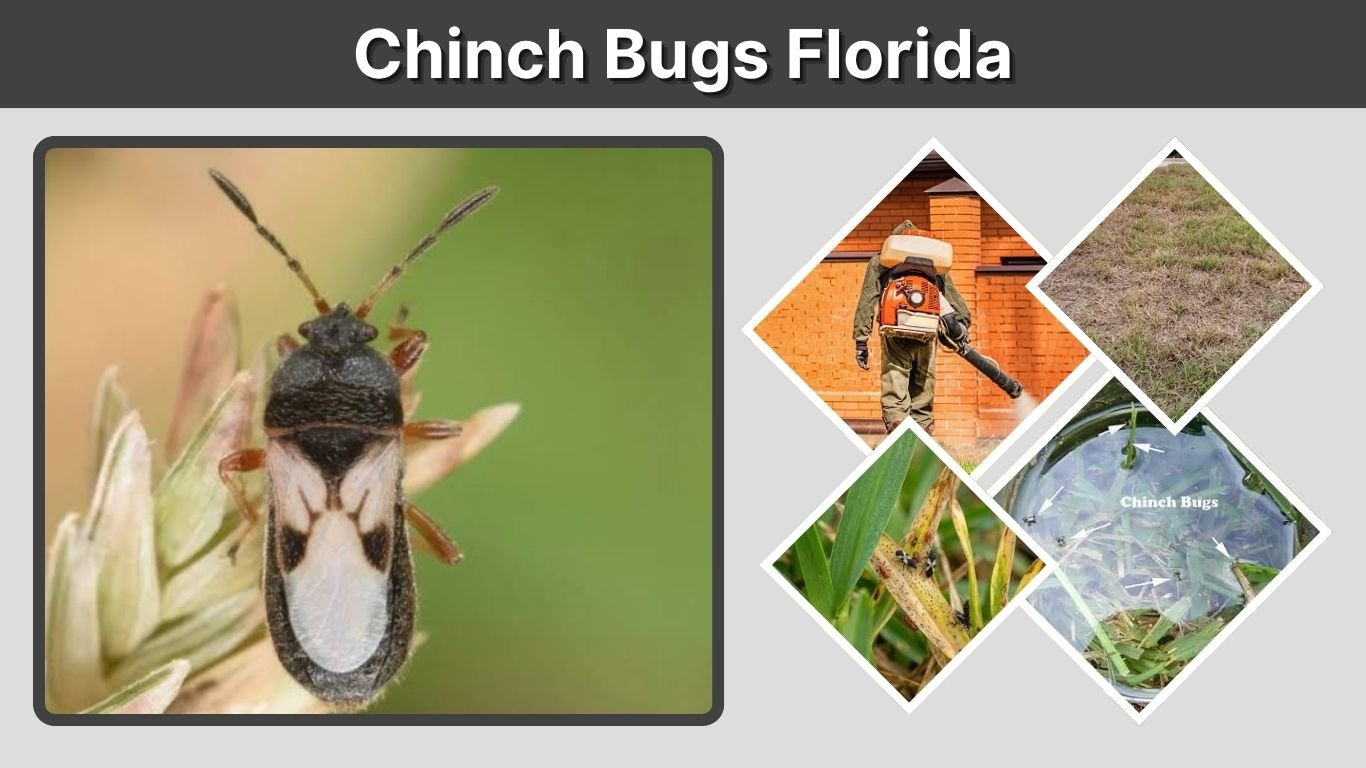
Chinch bugs are among the most destructive lawn pests in Florida, especially in St. Augustine grass. These tiny insects gather around the lower stems and thatch, pierce the grass with needle-like mouthparts, and remove plant fluids. Infested turf develops yellow patches that turn reddish-brown and eventually die.
Florida’s warm climate allows southern chinch bugs to remain active for much of the year. Damage is most noticeable during warm, sunny weather when lawns are already stressed by heat or uneven irrigation. Early identification is essential because chinch bug damage can closely resemble drought, disease, or fertilizer burn.
What Are Florida Chinch Bugs?
The species responsible for most Florida lawn damage is the southern chinch bug, Blissus insularis. It strongly prefers St. Augustine grass but may also attack zoysia and Bermuda grass.
Southern chinch bugs live mainly between the turf thatch and the upper organic soil layer. When populations become large, adults and nymphs may be seen moving across grass blades or spreading into surrounding healthy turf.
How to Identify Them
Look for the following characteristics:
- Adults approximately 3/16 to 1/4 inch long
- Black bodies with white wings
- Dark triangular markings on the wings
- Reddish-orange young nymphs
- A white band across the back of younger nymphs
- Older nymphs that gradually become darker
- Groups hiding near stems, stolons, and thatch
Adults are easier to recognize than nymphs, but finding several life stages together provides strong evidence of an active infestation.
What Does Chinch Bug Damage Look Like?
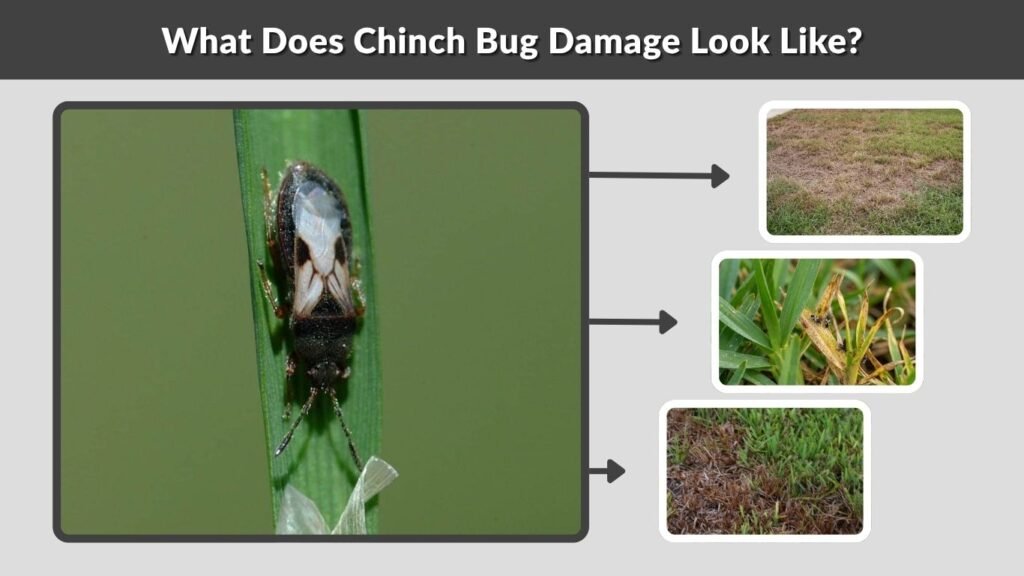
Chinch bug damage usually begins as a small yellow or wilted patch. The grass then becomes reddish-brown, straw-colored, and eventually dead.
Damage often starts in full-sun areas near:
- Driveways
- Sidewalks
- Buildings
- Curbs
- South-facing slopes
- Dry or poorly irrigated sections
The patches are usually irregular rather than perfectly circular. As the insects exhaust one section, they move together into neighboring healthy grass, causing the damaged area to expand.
Chinch Bugs vs. Drought Damage
Both problems can make grass look dry and brown. However, drought-stressed turf may improve after irrigation, while chinch bug damage continues spreading despite adequate moisture.
Chinch bugs also tend to gather along the boundary between dead and healthy grass. If one section remains brown after sprinkler coverage is corrected, inspect it closely before applying more water or fertilizer.
Chinch Bugs vs. Lawn Disease
Large patch, take-all root rot, gray leaf spot, fertilizer injury, grubs, and other turf problems may produce similar symptoms.
Disease is often associated with excessive moisture, root decline, or particular seasonal patterns. Chinch bugs are more frequently found in hot, sunny, water-stressed areas. Identification should be based on finding the insects—not on grass color alone.
How to Test for Chinch Bugs
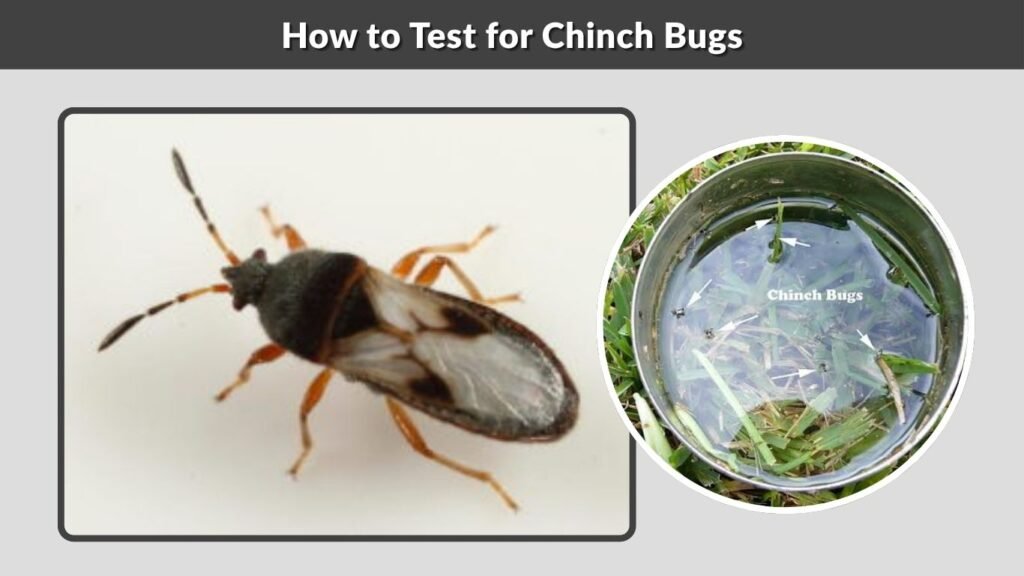
Inspect the outer edge of the damaged area where brown grass meets living green turf. Completely dead grass may no longer contain many insects because they have already moved.
Coffee-Can Test
Remove both ends from a large metal can. Push one end approximately two to three inches into the soil at the edge of the damaged patch.
Fill the can with water and maintain the water level for about five minutes. Chinch bugs present around the stems and thatch should float to the surface.
Repeat the test in several locations if the first attempt finds nothing. Florida lawns can contain scattered infestations, so one negative sample does not always rule them out.
Chinch Bug Season in Florida
Southern chinch bugs can feed throughout the year in Florida, although they are generally most active during spring and summer. Warm temperatures, sunny conditions, and drought-stressed grass encourage population growth and visible damage.
Historical Florida observations place peak infestations around early July. In North Florida, some bugs may become temporarily dormant during colder periods. In Central and South Florida, activity may continue during winter, particularly during warm spells.
| Florida season | Likely activity |
| Winter | Reduced in colder areas but may continue during warm weather |
| Spring | Populations become more active as temperatures rise |
| Summer | Highest risk of rapid damage and expanding infestations |
| Fall | Activity may continue until temperatures decline |
Because populations often remain in the same general area, spring damage may reappear near the location where the previous year’s infestation stopped.
Why St. Augustine Grass Is Vulnerable
St. Augustine is Florida’s most commonly affected lawn grass and the preferred host of the southern chinch bug. High, dry, sandy sites are especially vulnerable.
Chinch bugs feed around the crowns, stems, and stolons. Large groups can drain enough fluid to cause the turf to wilt and die, especially when heat or inadequate irrigation has already weakened the grass.
Florida homeowners should not assume that Floratam or another St. Augustine cultivar is immune. Resistance once associated with Floratam eventually failed, and UF/IFAS reported in 2025 that no commercially available St. Augustine, zoysia, or Bermuda cultivar was known to provide dependable resistance to southern chinch bugs.
How to Treat Chinch Bugs in Florida
Treatment should combine accurate diagnosis, targeted pest control, and improved lawn care. Treating the entire property without confirming the pest is usually unnecessary.
Correct Lawn Stress
Check irrigation coverage before using an insecticide. Repair clogged or poorly positioned sprinkler heads and water according to local restrictions and the needs of the grass.
Maintain St. Augustine grass at approximately three to four inches. Avoid removing more than one-third of the leaf blade during a single mowing, and keep the mower blade sharp.
Excessive nitrogen can produce rapid, soft growth and increase susceptibility. Follow Florida fertilizer regulations and local UF/IFAS recommendations rather than applying additional fertilizer to browned grass.
Apply Treatment to Active Areas
When chinch bugs are confirmed, target the boundary between injured and healthy turf. Include a surrounding band of green grass because bugs may already be moving outward.
Choose only a product whose current label lists chinch bugs and residential turf. Follow its application rate, watering directions, protective-equipment requirements, and retreatment interval exactly.
Dead grass will not immediately turn green after treatment. Success should be measured by the absence of living chinch bugs and the end of expanding damage.
Be Aware of Insecticide Resistance
Southern chinch bugs have developed resistance to several insecticide groups. UF/IFAS has documented resistance to five classes, including pyrethroids and neonicotinoids, and reported widespread control difficulties during 2024 and 2025.
Changing brand names may not solve the problem because different products can contain active ingredients from the same chemical class. Repeatedly increasing the dose is unsafe and violates the label. When treatment fails, reconfirm the pest and consult a Florida extension office or qualified lawn professional.
Natural Chinch Bug Management
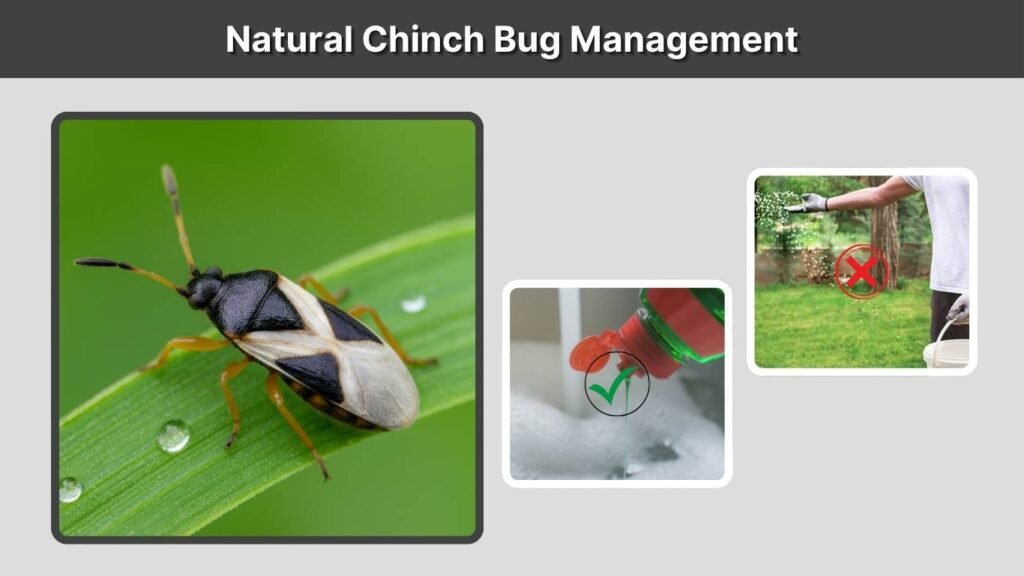
Natural management begins with maintaining healthy turf and protecting predatory insects. Big-eyed bugs, spiders, earwigs, and other predators can feed on chinch bugs.
However, natural predators may not suppress a severe infestation quickly enough to prevent damage. Broad preventive insecticide applications can also kill helpful insects and make long-term control more difficult.
Dish-soap solutions are sometimes used to flush pests from grass during inspection. They are not dependable full-lawn treatments and may burn turf when mixed too strongly or applied repeatedly.
Avoid applying bleach, vinegar, salt, concentrated detergent, or unregistered homemade mixtures. These substances can damage the lawn without eliminating bugs hidden in the thatch.
Preventing Chinch Bug Damage
Inspect sunny sections of St. Augustine grass regularly from spring through fall. Check areas beside pavement first because heat and water stress often make them vulnerable.
Keep the lawn healthy by:
- Mowing at the recommended height
- Maintaining even irrigation
- Avoiding excessive nitrogen
- Managing heavy thatch
- Using sharp mower blades
- Treating only confirmed infestations
- Rechecking previously damaged areas
Preventive calendar spraying is generally less useful than regular monitoring and early targeted treatment.
Pet and Child Safety
Remove children, pets, toys, food bowls, and water dishes before applying a pesticide. Keep people and animals away until the treatment has dried or for the longer period stated on the label.
Do not allow pets to walk through wet applications, eat granules, or lick treated grass. Store pesticides in their original labeled containers and out of reach of children and animals.
When to Call a Florida Lawn Professional
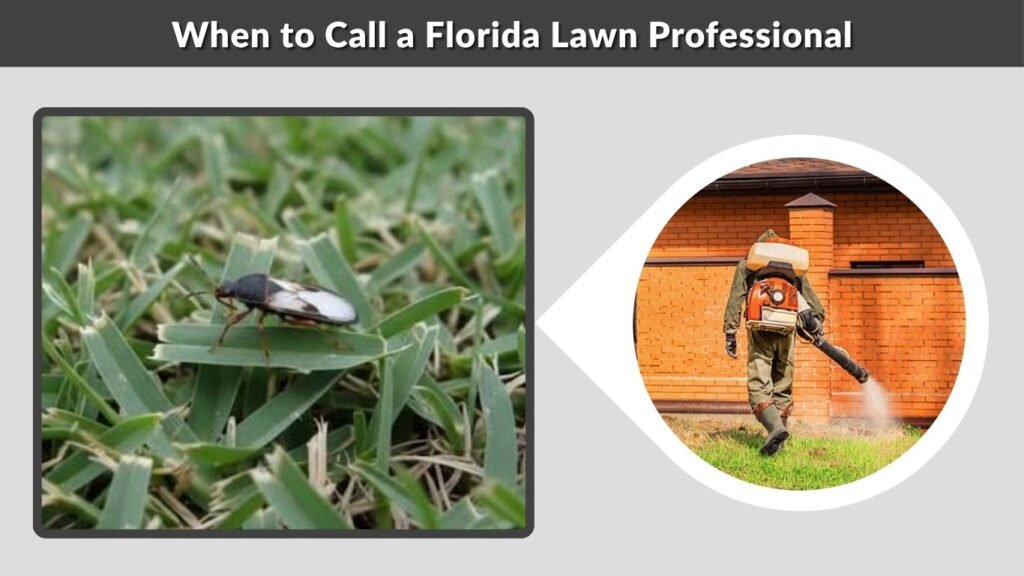
Professional inspection may be worthwhile when damage covers several areas, treatment repeatedly fails, or you cannot distinguish chinch bugs from disease or irrigation problems.
A responsible lawn service should identify active insects, explain the treatment area and active ingredient, provide pet-safety instructions, and schedule follow-up monitoring. Resistance problems mean that changing companies or repeatedly spraying the same products may not automatically improve control.
FAQs
When Are Chinch Bugs Most Active in Florida?
They are generally most active during spring and summer, with infestations historically peaking around early July. However, Florida’s mild climate allows them to remain active during warm fall and winter periods, particularly in Central and South Florida.
How Do I Get Rid of Chinch Bugs in Florida?
Confirm the insects with a flotation test, correct irrigation and mowing problems, and apply a Florida-registered lawn product specifically labeled for chinch bugs. Treat the active boundary rather than only the completely dead grass.
Can St. Augustine Grass Recover?
Partially injured grass may recover when healthy crowns and stolons remain. Completely dead sections will not regrow and may require plugs or sod after the active chinch bug population has been controlled.
Will Heavy Watering Kill Chinch Bugs?
No. Correct irrigation reduces grass stress but does not reliably eliminate an established population. Excessive watering may create disease and root problems, so flooding the damaged area is not recommended.
Do Chinch Bugs Bite People or Pets?
Southern chinch bugs are plant-feeding insects and are not considered human- or pet-biting pests. Their primary damage is caused by feeding on turfgrass stems, crowns, and stolons.
