
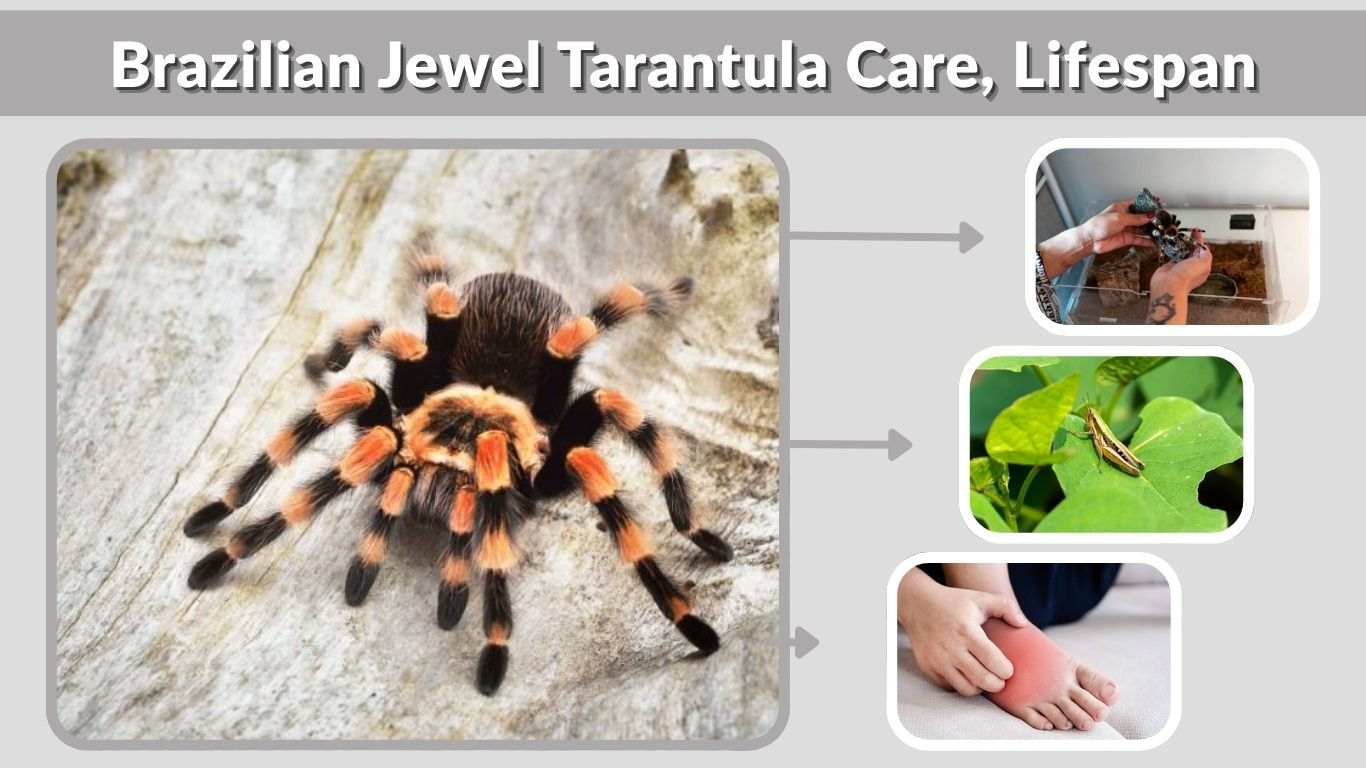
The Brazilian jewel tarantula (Typhochlaena seladonia) is one of the most beautiful and unique tarantulas in the world. Unlike the large, hairy spiders most people imagine, this species is tiny, colorful, and incredibly rare.
Known for its metallic blue, green, and orange patterns, it looks more like a piece of living jewelry than a typical tarantula. However, despite its beauty, this species requires specialized care and is not ideal for beginners.
What Is a Brazilian Jewel Tarantula?
The Brazilian jewel tarantula is a small arboreal tarantula native to Brazil. It belongs to a unique group of tarantulas that build trapdoor-style homes in tree bark, rather than living in ground burrows.
Key identification features:
- Scientific name: Typhochlaena seladonia
- Extremely small size
- Bright, jewel-like coloration
- Arboreal (tree-dwelling) lifestyle
This species is highly sought after due to its rare appearance and unusual behavior, making it one of the most prized tarantulas in the hobby.
Brazilian Jewel Tarantula Facts & Characteristics
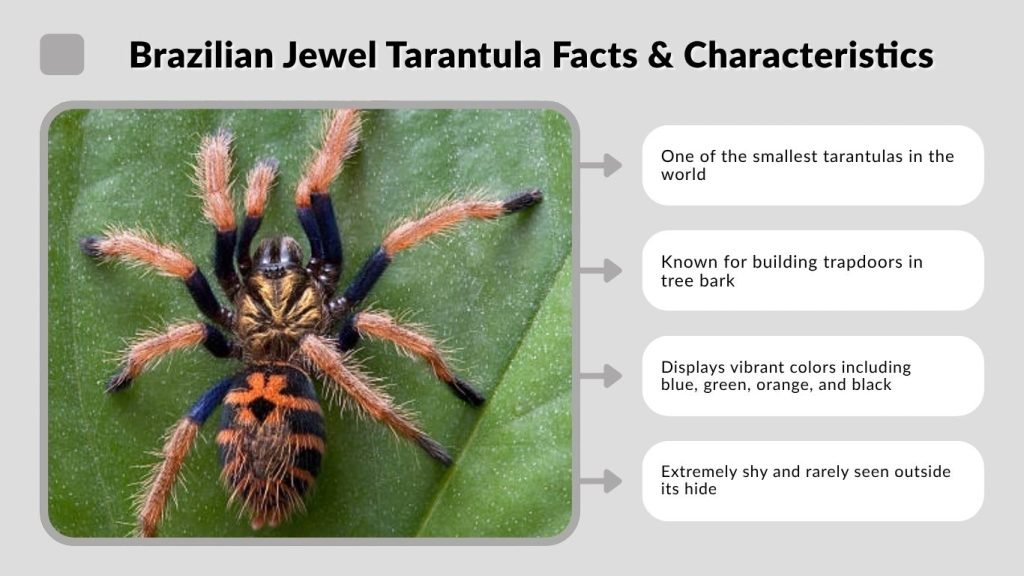
The Brazilian jewel tarantula stands out from other species in several ways. It is not only visually striking but also behaves differently from most common tarantulas.
Interesting facts:
- One of the smallest tarantulas in the world
- Known for building trapdoors in tree bark
- Displays vibrant colors including blue, green, orange, and black
- Extremely shy and rarely seen outside its hide
Unlike larger tarantulas, this species spends most of its time hidden, making it more of a display pet than an interactive one.
How Big Do Brazilian Jewel Tarantulas Get?
If you’re expecting a large spider, this species may surprise you. The Brazilian jewel tarantula is very small compared to most tarantulas.
Size details:
- Adult size: around 1.5 to 2 inches
- Spiderlings (slings): extremely tiny and delicate
- Full size reached after several molts
Because of its small size, it requires careful feeding and enclosure setup to ensure proper growth and safety.
Brazilian Jewel Tarantula Lifespan
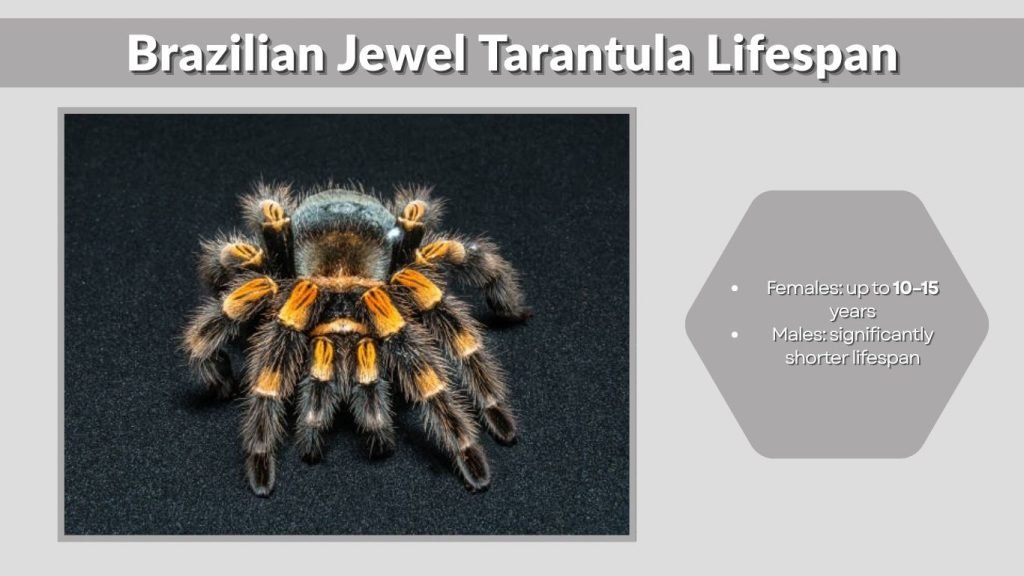
Lifespan is an important consideration when choosing any tarantula, and this species offers a decent lifespan despite its small size.
Lifespan overview:
- Females: up to 10–15 years
- Males: significantly shorter lifespan
As with most tarantulas, females live much longer and are often preferred by keepers. Proper care, stable humidity, and a suitable enclosure can help maximize lifespan.
Brazilian Jewel Tarantula Temperament
Unlike aggressive species, the Brazilian jewel tarantula is known for its calm and shy nature.
Behavior traits:
- Extremely reclusive and secretive
- Rarely leaves its trapdoor hide
- Avoids confrontation whenever possible
- Not aggressive but easily stressed
Because of this behavior, it is rarely seen in the open, which can be disappointing for owners expecting an active display.
Handling is strongly discouraged, as this species is fragile and stress-sensitive.
Are Brazilian Jewel Tarantulas Venomous or Poisonous?
This is a common question among beginners. Like all tarantulas, the Brazilian jewel tarantula is venomous, not poisonous.
- Venomous: injects venom through a bite
- Poisonous: harmful when touched or eaten
This means:
- You cannot be harmed by simply touching it
- Risk only comes from a bite
Fortunately, this species has mild venom and poses little danger to humans.
Brazilian Jewel Tarantula Bite & Venom
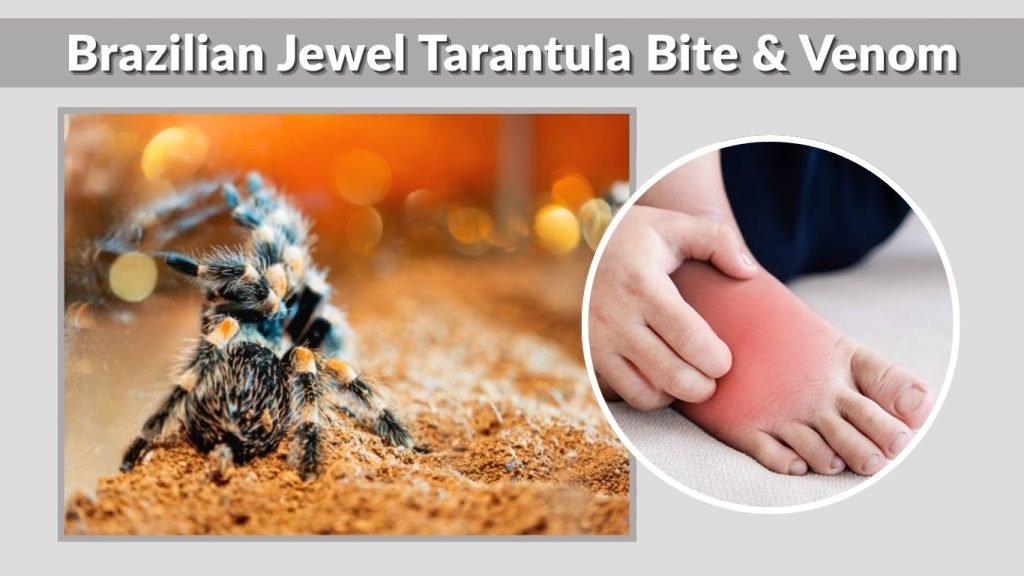
Although bites are very rare, it’s still important to understand what could happen.
Bite effects:
- Mild localized pain
- Slight swelling or redness
- Temporary discomfort
Serious reactions are extremely uncommon, and most people experience only minor symptoms.
The reason bites are rare is simple—this tarantula prefers to hide rather than defend itself aggressively.
Are Brazilian Jewel Tarantulas Good Pets?
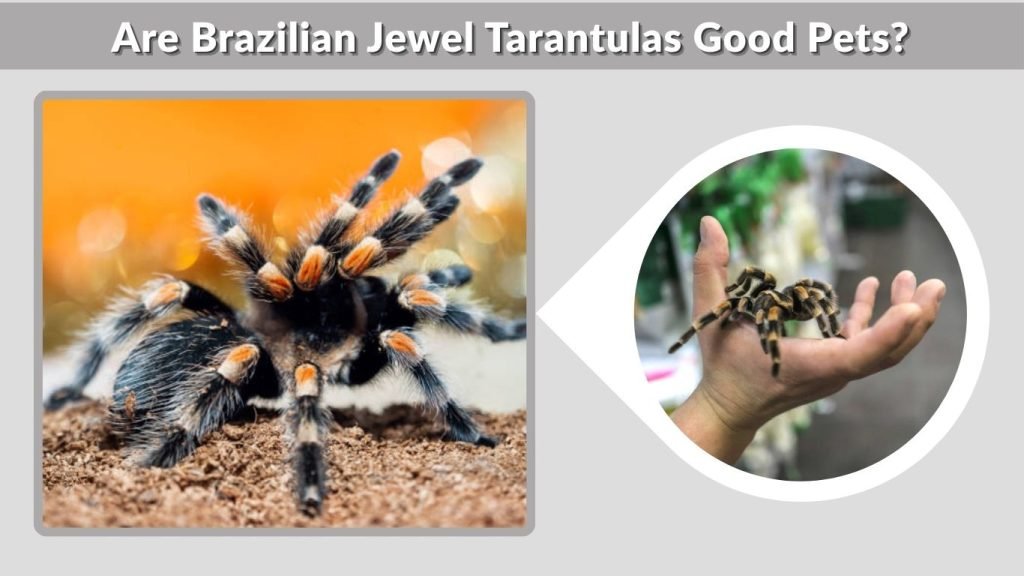
The Brazilian jewel tarantula can make a fascinating pet, but it is not for everyone.
Pros:
- Stunning, colorful appearance
- Unique trapdoor behavior
- Small size (requires less space)
Cons:
- Rarely visible
- Fragile and sensitive
- Requires precise care conditions
This species is best suited for intermediate to experienced keepers who appreciate its beauty and understand its needs.
Brazilian Jewel Tarantula Care Guide
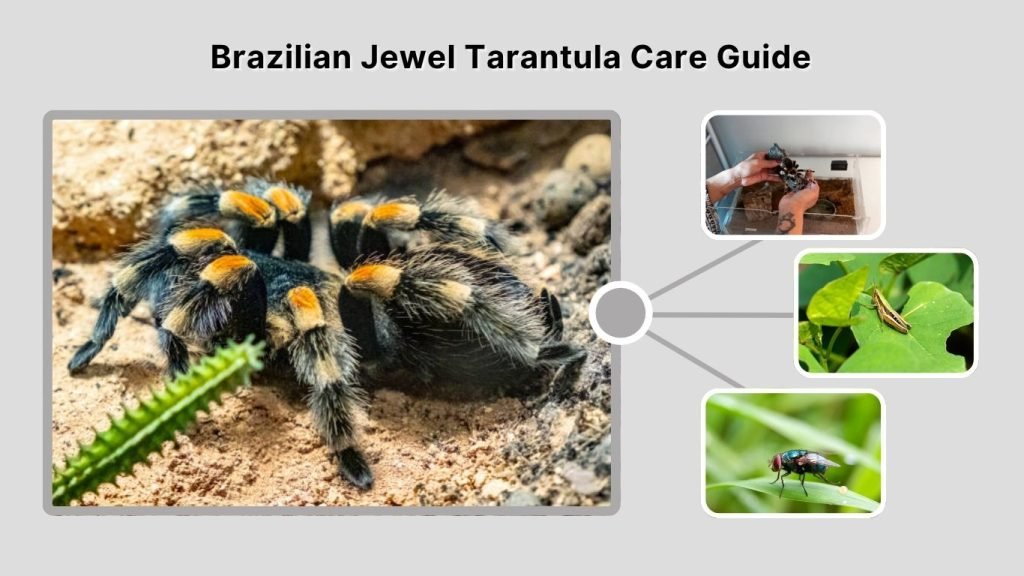
Proper care is essential due to the delicate nature of this species. Unlike larger tarantulas, it requires a more specialized setup.
Enclosure Setup
Since this is an arboreal species, it needs a vertical enclosure rather than a ground-based one.
- Use a small but tall enclosure
- Provide cork bark or wood pieces for trapdoor building
- Maintain good ventilation
- Keep humidity at moderate levels
The tarantula will create its own trapdoor hide, which is essential for its comfort and natural behavior.
Feeding & Diet
Due to its small size, feeding must be done carefully.
- Feed tiny insects such as fruit flies or small crickets
- Spiderlings require very small prey
- Feed adults less frequently
Always remove uneaten prey to prevent stress or injury, especially during molting.
Brazilian Jewel Tarantula Enclosure Setup
Creating the right enclosure is one of the most important parts of keeping this species healthy. Because the Brazilian jewel tarantula is arboreal and trapdoor-building, its setup is very different from ground-dwelling tarantulas.
Ideal enclosure features:
- Vertical space: allows climbing and natural behavior
- Cork bark or wood slabs: essential for trapdoor construction
- Moderate humidity: keeps the environment stable
- Good ventilation: prevents mold and stagnant air
Unlike other tarantulas, this species may seal itself inside its trapdoor for long periods. This is completely normal and should not be disturbed.
Brazilian Jewel Tarantula Price & Where to Buy
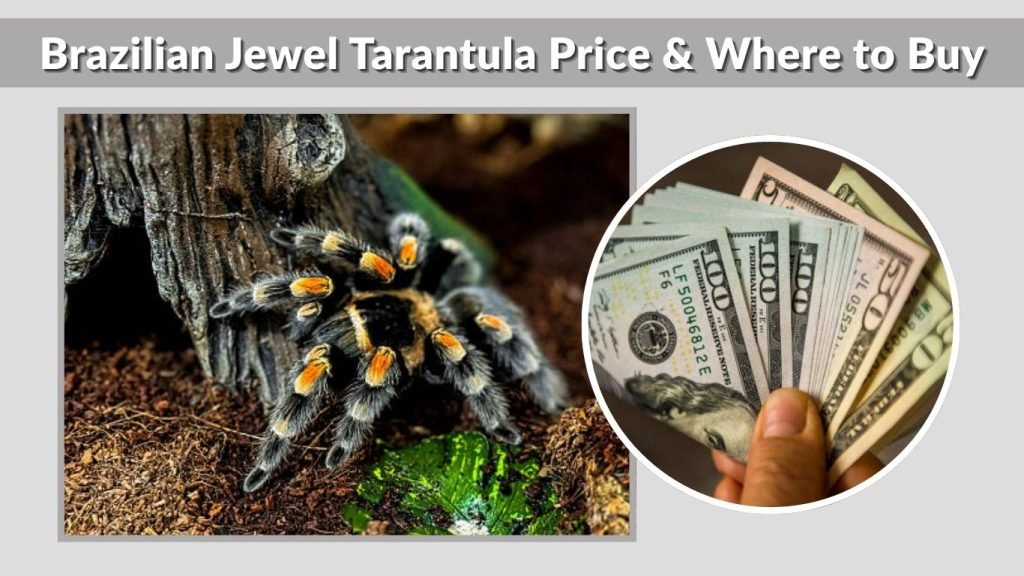
The Brazilian jewel tarantula is considered a premium species, which is reflected in its price.
Average cost:
- Spiderlings: $100–$200
- Juveniles and adults: $200–$400+
Prices vary depending on availability, age, and whether the specimen is male or female. Because of its rarity, it is often more expensive than common tarantulas.
Where to buy:
- Specialized tarantula breeders
- Online exotic pet stores
- Reptile expos and conventions
When buying, always ensure the tarantula is captive-bred and not taken from the wild. This helps protect natural populations and ensures better health.
Is the Brazilian Jewel Tarantula Illegal?
One important aspect many buyers overlook is legality. The Brazilian jewel tarantula has export restrictions from Brazil, which means wild-caught specimens are often illegal to trade.
Key points:
- Exporting wildlife from Brazil is heavily restricted
- Most specimens on the market should be captive-bred
- Laws vary depending on your country
Before purchasing, it’s important to check local regulations to ensure you are buying and keeping the species legally.
Male vs Female Brazilian Jewel Tarantula
Knowing the difference between males and females can help you make a better decision when purchasing.
Key differences:
- Lifespan: Females live much longer
- Size: Females are slightly larger
- Behavior: Males become more active when mature
- Price: Females are more expensive
For long-term keeping, females are usually preferred due to their extended lifespan and stability.
Life Cycle & Molting
Like all tarantulas, the Brazilian jewel tarantula grows through a process called molting, where it sheds its exoskeleton.
Signs of molting:
- Reduced appetite
- Staying hidden for long periods
- Darkening coloration
During molting:
- Do not disturb the tarantula
- Avoid feeding
- Maintain stable humidity
After molting, the tarantula is extremely fragile, and its fangs need time to harden before it can safely eat again.
Common Mistakes to Avoid
Due to its delicate nature, this species can be sensitive to mistakes. Avoiding these common errors will help ensure a healthy tarantula.
Common mistakes:
- Using the wrong enclosure type: lack of vertical space
- Disturbing the trapdoor: causes stress
- Low humidity: can lead to health issues
- Feeding oversized prey: dangerous for small tarantulas
Patience and minimal disturbance are key to successfully keeping this species.
FAQs
Are Brazilian jewel tarantulas venomous?
Yes, Brazilian jewel tarantulas are venomous, meaning they inject venom through their bite. However, their venom is mild and not considered dangerous to humans in most cases.
How big do Brazilian jewel tarantulas get?
They are one of the smallest tarantulas, reaching only about 1.5 to 2 inches in size when fully grown. This makes them much smaller than most common pet tarantulas.
How much is a Brazilian jewel tarantula?
The price typically ranges from $100 to $400 or more depending on size, age, and availability. Their rarity and unique appearance make them more expensive than many other species.
Are Brazilian jewel tarantulas good pets?
They can be good pets for experienced keepers who appreciate their beauty and unique behavior. However, they are not suitable for handling and require specific care conditions.
Where can I buy a Brazilian jewel tarantula?
You can buy them from specialized breeders, online exotic pet stores, and reptile expos. Always ensure the tarantula is captive-bred and legally sourced.
Conclusion
The Brazilian jewel tarantula (Typhochlaena seladonia) is one of the most fascinating and visually stunning tarantulas available. Its tiny size, vibrant colors, and unique trapdoor behavior make it stand out from all other species.
However, it is not a beginner-friendly pet. Its delicate nature, specific care requirements, and shy behavior require patience and experience. For the right keeper, though, it can be an incredibly rewarding and beautiful addition to a collection.
By understanding its needs, behavior, and legal considerations, you can decide whether this rare “living jewel” is the right tarantula for you.
