
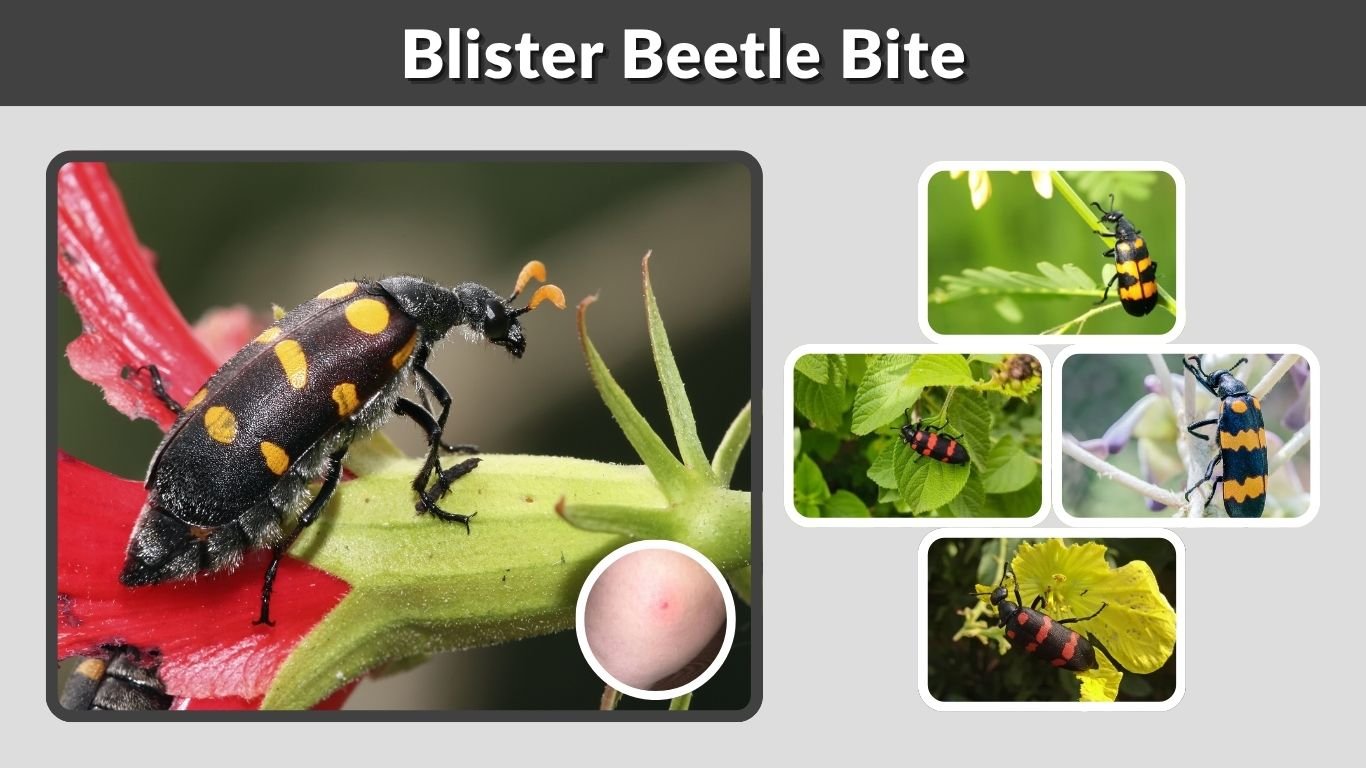
A blister beetle bite can cause redness, burning, irritation, and fluid-filled blisters on the skin. However, blister beetles usually do not actually bite humans. The reaction happens when the beetle releases cantharidin, a strong skin-irritating chemical, after being crushed or rubbed against the body. Because the symptoms can resemble insect bites, burns, or allergic reactions, many people are unsure what caused the blister. Understanding the appearance, symptoms, treatment, and healing stages can help you manage the reaction safely and know when medical care may be needed.
Do Blister Beetles Bite Humans?
Blister beetles are not considered typical biting insects. They do not normally attack humans for blood or food.
Instead, most so-called blister beetle bites happen when a beetle is crushed, slapped, or pressed against the skin. Its body contains cantharidin, a chemical that can irritate skin and cause blistering.
How Does a Blister Beetle Cause Blisters?
When a blister beetle feels threatened or is crushed, cantharidin may come into contact with your skin. The chemical damages the outer skin layers and can cause irritation.
Common situations include:
- Crushing a beetle against your skin
- Handling blister beetles with bare hands
- Rubbing a beetle off your body
- Wearing clothing containing a crushed beetle
- Touching your face after handling one
A beetle simply walking across your skin does not always cause a reaction, but it is still best to remove it gently.
What Does a Blister Beetle Bite Look Like?
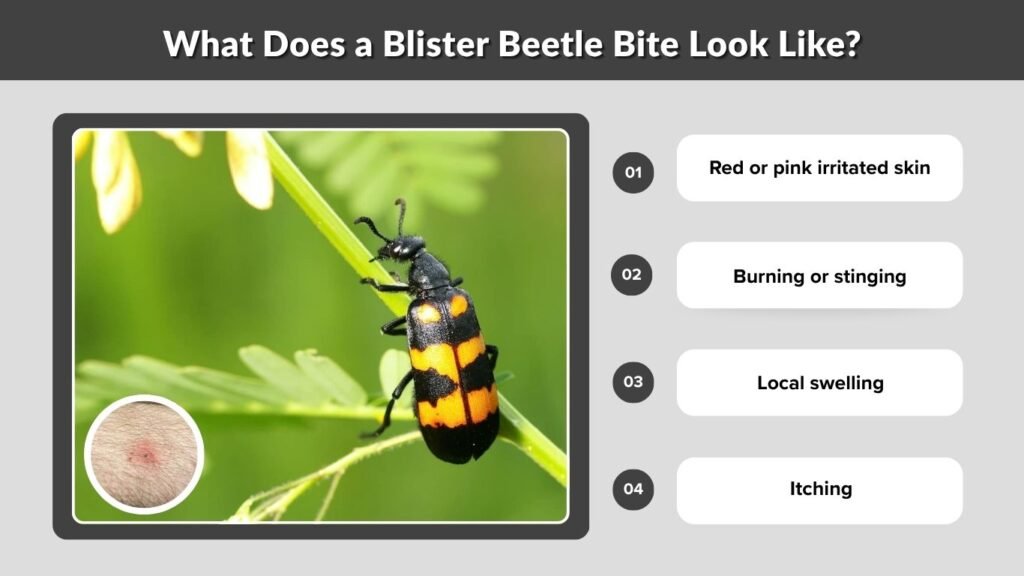
A blister beetle skin reaction usually looks more like contact dermatitis than a traditional insect bite.
The affected skin may appear red at first. Small or large fluid-filled blisters can then develop where the chemical touched the skin.
Blister Beetle Bite Identification
Common signs include:
- Red or pink irritated skin
- Burning or stinging
- Local swelling
- Itching
- Tenderness
- Clear fluid-filled blisters
- Irregular red patches
- Crusting after blisters break
- Peeling skin during healing
Unlike mosquito, flea, or some spider bites, there may be no obvious puncture mark in the center.
The shape of the affected area may also reflect where the beetle was crushed or rubbed against the skin.
Blister Beetle Bite Symptoms
Symptoms can range from mild irritation to painful blistering.
The severity usually depends on the amount of cantharidin exposure and how long it remained on the skin.
Early Symptoms
Early symptoms may include:
- Mild burning
- Redness
- Itching
- Tingling
- Tenderness
- Slight swelling
Some people may not notice the reaction immediately.
Later Symptoms
As the irritation develops, you may notice:
- Fluid-filled blisters
- Increased burning
- Pain around the affected skin
- Peeling
- Crusting
- Persistent redness
Larger areas of exposure may produce more noticeable symptoms.
Do Blister Beetle Bites Hurt?
A blister beetle reaction can be painful.
Some people mainly experience itching, while others notice burning or stinging. Larger blisters can also feel tender, especially if they are located where clothing or shoes repeatedly rub against the skin.
If the pain becomes severe or continues to increase, medical evaluation may be necessary.
Do Blister Beetle Bites Itch?
Yes, blister beetle dermatitis can itch.
However, itching may not always be the main symptom. Burning, soreness, and tenderness may be more noticeable in some people.
Try not to scratch the affected skin. Scratching can damage the blister and increase the chance of infection.
Blister Beetle Bite Stages
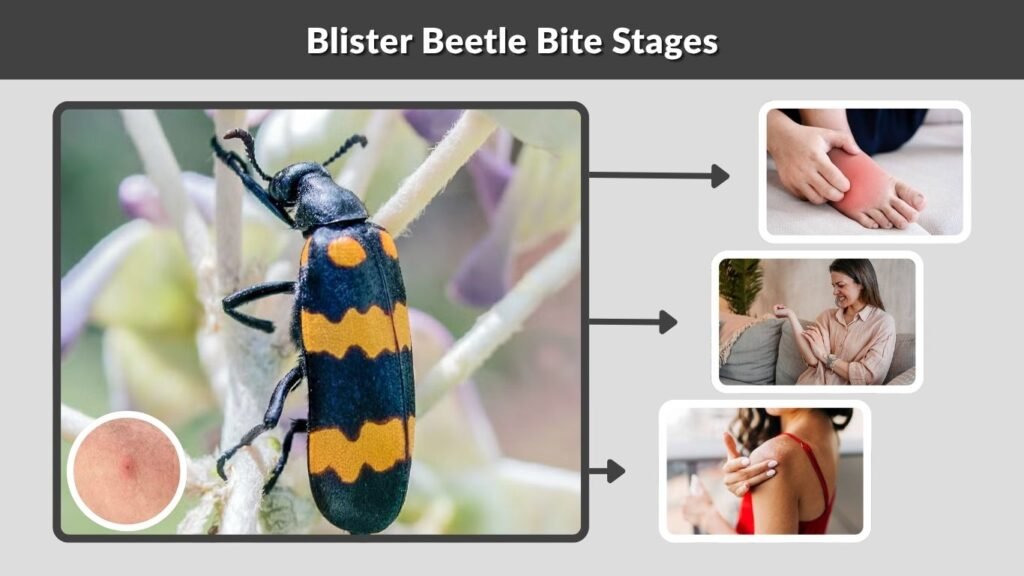
A blister beetle skin reaction may change appearance as it heals. Not every person experiences the same stages, but the process commonly follows a similar pattern.
Stage 1: Contact With the Beetle
Cantharidin reaches the skin after the beetle is crushed, handled, or rubbed against the body.
There may be little or no immediate discomfort.
Stage 2: Redness and Irritation
The affected area may start becoming:
- Red
- Warm
- Itchy
- Tender
- Slightly swollen
Burning may also develop.
Stage 3: Blister Formation
Fluid-filled blisters may appear.
The blisters can be small and scattered or larger depending on how much chemical contacted the skin.
Stage 4: Blister Drying
As the irritation begins to settle, the blister may flatten or dry.
If it breaks naturally, the area may temporarily appear moist or raw.
Stage 5: Healing
The damaged skin begins repairing itself.
You may notice:
- Peeling
- Dry skin
- Mild itching
- Temporary redness
- Slight skin discoloration
The skin should gradually return to normal.
How to Treat a Blister Beetle Bite
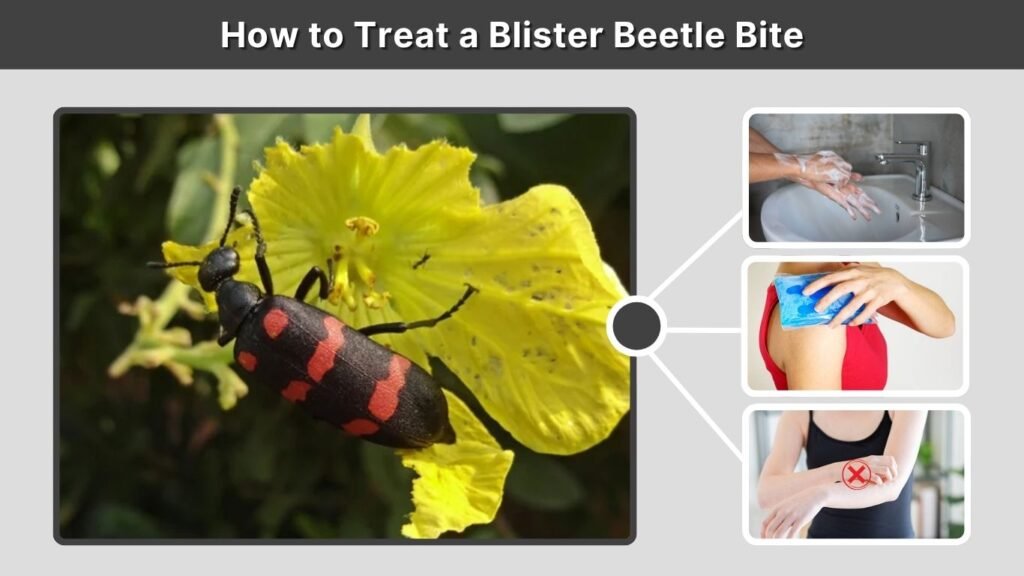
Most minor blister beetle skin reactions can be managed with basic skin care.
The most important step is removing the irritant from your skin.
Wash the Area
Wash the affected area gently with soap and clean water as soon as possible.
This can help remove any remaining chemical from the skin.
Also wash your hands if you handled the beetle.
Use a Cool Compress
Place a clean, cool, damp cloth over the irritated area for several minutes.
A cool compress can help reduce burning, swelling, and discomfort.
Avoid placing ice directly on the skin.
Keep the Blister Clean
If a blister forms, keep the area clean and dry.
You may cover it with a clean, loose bandage if clothing frequently rubs against it.
Change the dressing regularly.
Avoid Scratching
Scratching can break the blister and damage healing skin.
Keeping your fingernails short may help if the area is very itchy.
Blister Beetle Bite Treatment Ointment
Some people use mild over-the-counter skin treatments to reduce irritation.
A pharmacist or healthcare provider may recommend treatments such as:
- Hydrocortisone cream
- Calamine lotion
- An oral antihistamine for itching
Do not apply multiple products at once unless advised by a healthcare professional.
Avoid putting harsh chemicals or strong home remedies on broken skin.
Blister Beetle Bite Home Remedies
Simple home care may be enough for a mild reaction.
Helpful options include:
- Washing with soap and water
- Applying a cool compress
- Keeping the area protected
- Avoiding scratching
- Wearing loose clothing over the area
Avoid unproven remedies that may irritate the skin further.
Can You Pop a Blister Beetle Bite?
It is usually better not to pop the blister intentionally.
The skin covering the blister protects the sensitive tissue underneath and reduces the risk of infection.
If the blister breaks naturally:
- Wash the area gently.
- Do not pull off healthy skin.
- Pat it dry.
- Apply a clean dressing.
Seek medical advice if the area develops increasing pain, pus, warmth, or spreading redness.
How Long Do Blister Beetle Bites Last?
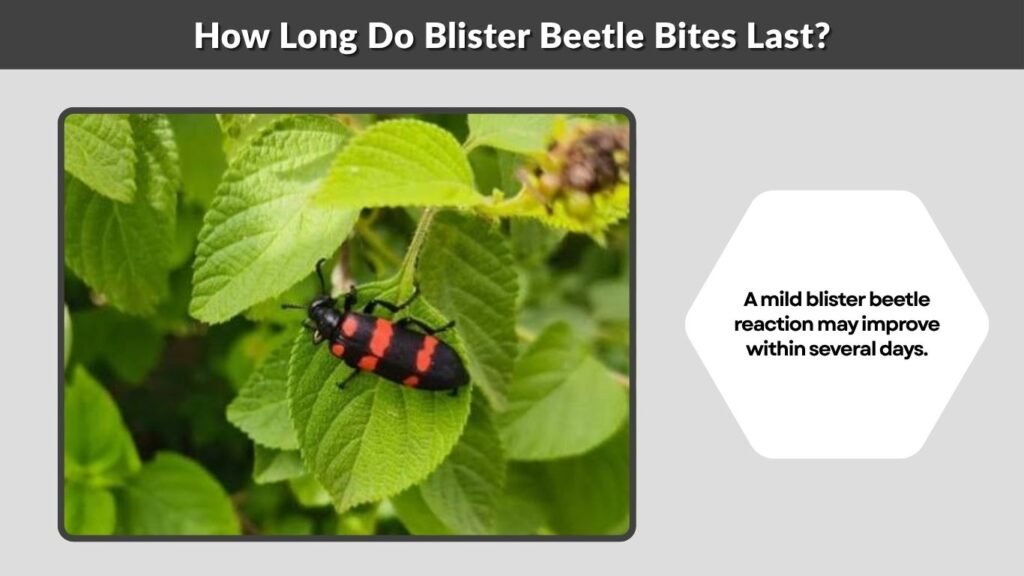
A mild blister beetle reaction may improve within several days.
Larger blisters or stronger reactions may take one to several weeks to completely heal.
Healing time can depend on:
- Amount of chemical exposure
- Size of the blister
- Location of the reaction
- Whether the blister broke
- Skin sensitivity
- Secondary infection
Temporary discoloration may sometimes remain after the blister heals.
Are Blister Beetle Bites Dangerous?
Most skin reactions are uncomfortable but not dangerous.
However, cantharidin is a toxic substance, and serious exposure can cause health problems.
Skin contact generally causes localized irritation. Greater concern exists if cantharidin reaches the eyes, mouth, digestive system, or other sensitive areas.
When to Seek Medical Attention
Contact a healthcare professional if you experience:
- Severe blistering
- A large affected area
- Increasing pain
- Significant swelling
- Pus or drainage
- Spreading redness
- Fever
- Blisters around the eyes
- Mouth exposure
- Genital exposure
- Persistent symptoms
Seek urgent medical help if a blister beetle or cantharidin has been swallowed.
Blister Beetle Exposure to the Eye
Cantharidin can seriously irritate the eyes.
If beetle material gets into your eye, rinse the eye with clean water immediately.
Avoid rubbing your eye.
Medical evaluation is recommended if burning, redness, blurred vision, pain, or excessive tearing continues.
Blister Beetle Bite vs Brown Recluse Bite
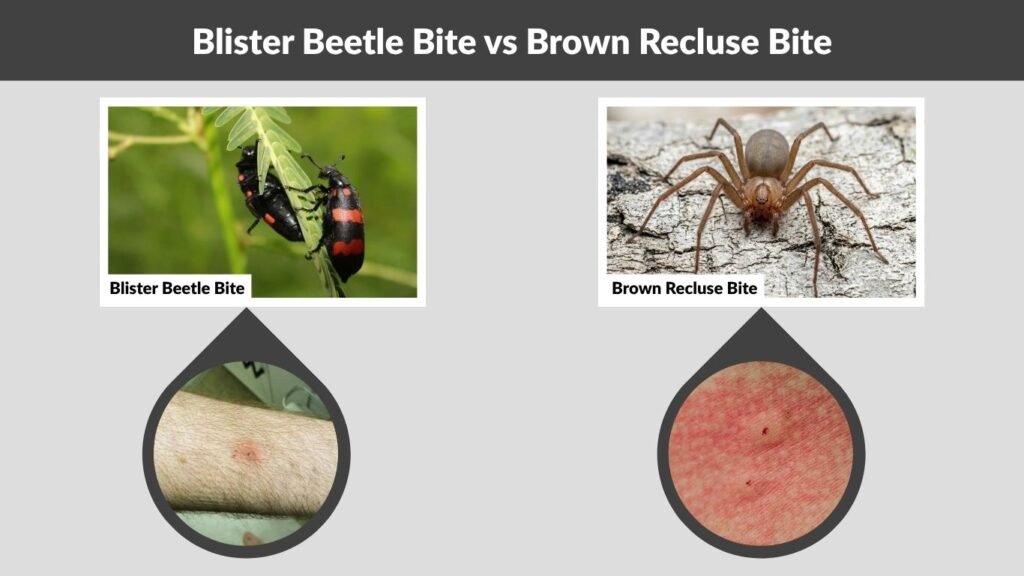
Blister beetle dermatitis can sometimes be confused with a brown recluse spider bite because both may cause skin damage.
However, they have different causes.
| Feature | Blister Beetle Reaction | Brown Recluse Bite |
|---|---|---|
| Cause | Cantharidin contact | Spider venom |
| Actual bite | Usually no | Yes |
| Blisters | Common | Possible |
| Puncture marks | Usually absent | May be present |
| Burning | Common | Can occur |
| Tissue damage | Usually superficial | Can occasionally become deeper |
It is difficult to identify many skin injuries from appearance alone.
If the affected area becomes severe, spreads, or does not improve, consult a medical professional.
False Blister Beetle Bite
Several other conditions can resemble a blister beetle reaction.
Possible causes include:
- Contact dermatitis
- Plant irritation
- Burns
- Spider bites
- Other insect bites
- Allergic reactions
- Skin infections
Seeing a blister does not automatically mean a blister beetle caused it.
The strongest clue is often recent contact with a blister beetle or outdoor activity where these insects are common.
Black, Striped, and Red-Headed Blister Beetle Reactions
Different blister beetle species may vary greatly in color and appearance.
Some are:
- Black
- Gray
- Striped
- Red-headed
- Yellow and black
- Metallic
Regardless of color, many species in the blister beetle family can contain cantharidin.
A black blister beetle bite or striped blister beetle bite therefore causes injury in essentially the same way: chemical contact with the skin rather than a true bite.
How to Prevent Blister Beetle Skin Reactions
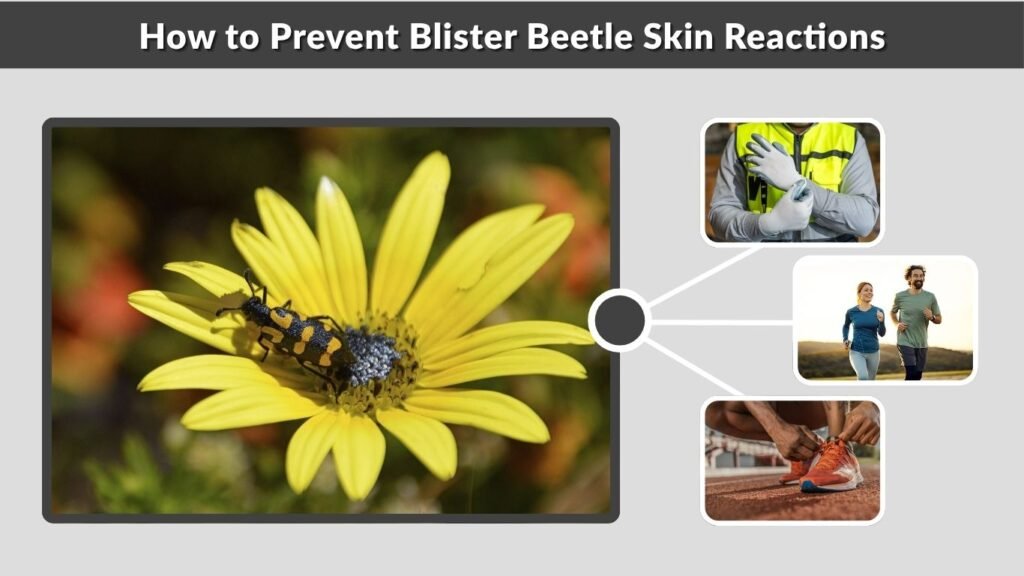
Avoiding direct contact is the easiest way to prevent blister beetle dermatitis.
Wear Protective Clothing
When gardening or working outdoors, consider wearing:
- Gloves
- Long sleeves
- Long pants
- Closed shoes
This is particularly useful in areas where blister beetles are abundant.
Do Not Crush Beetles on Your Skin
If a beetle lands on you, gently brush or blow it away.
Avoid slapping it.
Crushing the insect may release cantharidin directly onto your skin.
Wash After Outdoor Work
Wash your hands and exposed skin after gardening, farming, or handling plants.
Also inspect clothing before bringing it indoors if blister beetles are common in the area.
FAQs
1. Do blister beetles bite humans?
Blister beetles generally do not bite humans. Most skin reactions occur when cantharidin from the beetle’s body touches the skin after the insect is crushed, handled, or rubbed against the body.
2. What does a blister beetle bite look like?
A blister beetle reaction may appear as red, irritated skin followed by one or more clear fluid-filled blisters. Burning, itching, swelling, and tenderness can occur around the affected area.
3. How do you treat a blister beetle bite?
Wash the affected skin with soap and water, use a cool compress, keep blisters clean, and avoid popping them. Mild anti-itch treatments may help, but severe or widespread blistering should be checked by a healthcare professional.
4. How long does a blister beetle bite take to heal?
Minor reactions may improve within several days, while larger blisters can take one to several weeks to heal completely. The healing time varies depending on the amount of exposure and whether the skin becomes infected.
5. Is a blister beetle bite poisonous?
The typical skin reaction is caused by cantharidin rather than venom. Small skin exposures are usually localized, but cantharidin is toxic if swallowed and can also be dangerous if it reaches the eyes or other sensitive areas.
