
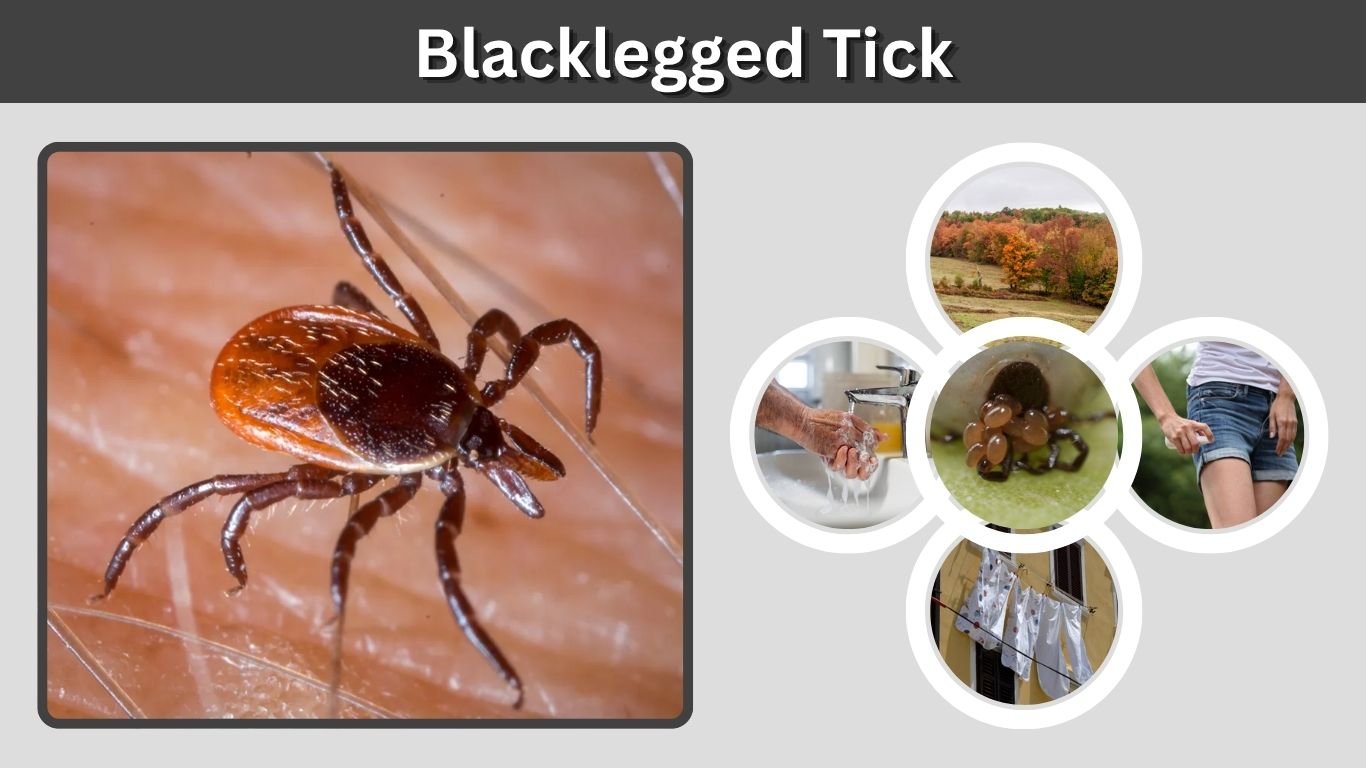
The blacklegged tick, also called the deer tick, is a small blood-feeding arachnid known for transmitting Lyme disease and several other infections. Eastern blacklegged ticks occur throughout much of the eastern United States, while western blacklegged ticks inhabit parts of the Pacific Coast. Because nymphs can be as small as a poppy seed, bites often go unnoticed. Correct identification, prompt removal, symptom monitoring, and personal protection can substantially reduce the risks associated with blacklegged tick bites.
What Is a Blacklegged Tick?
The blacklegged tick is a hard-bodied tick belonging to the family Ixodidae. It feeds on mammals, birds, reptiles, and amphibians during different stages of its development.
Two closely related species occur in the United States:
- Eastern blacklegged tick: Ixodes scapularis
- Western blacklegged tick: Ixodes pacificus
The term “deer tick” most commonly refers to Ixodes scapularis. Although deer are important hosts for adult ticks, they are not the only animals these ticks feed upon.
Blacklegged Tick vs. Deer Tick
There is no biological difference between a blacklegged tick and a deer tick when both names refer to Ixodes scapularis. “Blacklegged tick” is the preferred common name, while “deer tick” remains widely used.
The name deer tick can be misleading because immature ticks often feed on rodents and birds. Adult females frequently feed on deer, but they may also attach to people, dogs, livestock, and other medium-to-large mammals.
What Does a Blacklegged Tick Look Like?
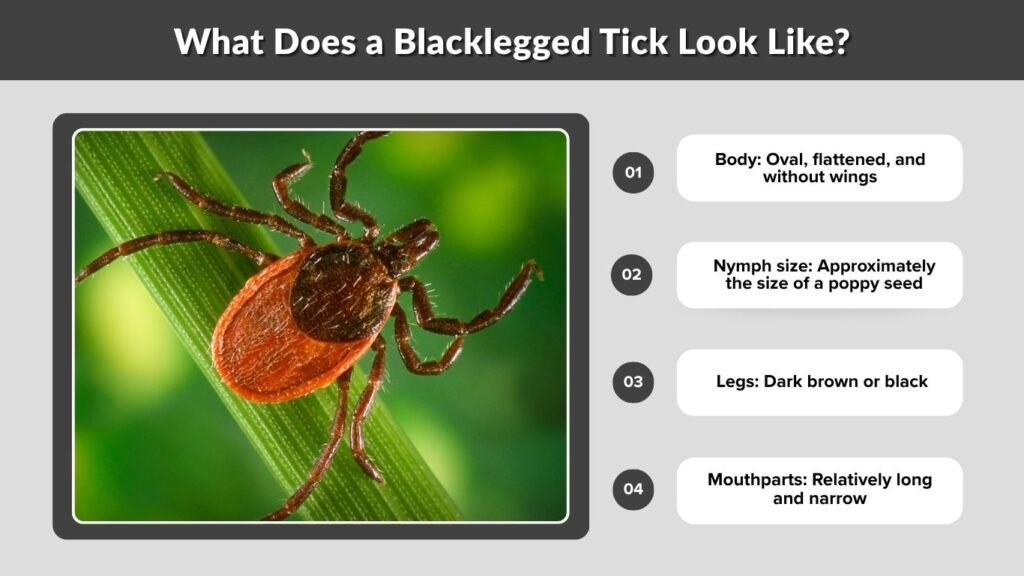
Blacklegged ticks are smaller and less patterned than many dog or wood ticks. Their bodies are flattened before feeding but become rounded and considerably larger after taking a blood meal.
Blacklegged Tick Identification
Look for the following characteristics:
- Body: Oval, flattened, and without wings
- Adult size: Generally comparable to a sesame seed before feeding
- Nymph size: Approximately the size of a poppy seed
- Larval size: Extremely small and difficult to see without magnification
- Legs: Dark brown or black
- Mouthparts: Relatively long and narrow
- Adult female: Dark shield behind the head with an orange-red abdomen
- Adult male: Mostly dark brown or black across the upper body
- Nymph: Dark brown or black with a lighter abdomen
- Engorged female: Gray, bluish gray, olive, or brownish and substantially enlarged
A tick’s color can change after feeding, so leg color, mouthpart length, body shape, location, and life stage should all be considered.
Male Blacklegged Tick
An adult male is small and predominantly dark brown or black. Its hard dorsal shield covers nearly the entire upper body, which prevents the abdomen from expanding as dramatically as that of a female.
Males may crawl on a host while searching for females, but they generally do not take the large, prolonged blood meals associated with adult females.
Female Blacklegged Tick
An unfed adult female typically has a black or dark-brown shield near its head and a reddish-orange abdomen. Her black legs contrast noticeably with the warmer body color.
After attaching, the female’s abdomen expands as it fills with blood. An engorged female may lose the familiar reddish appearance and become gray-blue or gray-brown.
Blacklegged Tick Nymph
A blacklegged tick nymph has eight legs and is roughly the size of a poppy seed. Its small size allows it to remain attached without being noticed, particularly on the scalp, behind the knees, or in other concealed areas.
Nymphs are responsible for many human encounters during spring and summer. Their bites are usually painless, and they can resemble a freckle, scab, or speck of dirt.
Blacklegged Tick Larva
Larvae are the smallest mobile life stage and have six legs rather than eight. They are sometimes called seed ticks and may occur in groups shortly after hatching.
Larvae require a blood meal before molting into nymphs. They commonly feed on small animals and birds, although they may also attach to people or pets.
How Big Is a Blacklegged Tick?
The size depends on its sex, life stage, and whether it has recently fed. Measurements also vary somewhat between individual ticks.
| Life stage | Approximate appearance and size |
|---|---|
| Larva | Less than 1 mm; similar to a grain of sand |
| Nymph | About 1–2 mm; comparable to a poppy seed |
| Unfed adult male | Approximately 2–3 mm |
| Unfed adult female | Approximately 3–4 mm; similar to a sesame seed |
| Engorged female | May expand to around 10 mm or more |
An engorged blacklegged tick does not retain the thin, flat shape seen in identification photographs. Its swollen abdomen may obscure important markings, making professional identification more difficult.
Engorged Blacklegged Tick Identification
An engorged blacklegged tick has been attached long enough to consume a noticeable quantity of blood. The abdomen becomes swollen and may appear gray, silver, blue-gray, olive, tan, or brown.
The dark legs and shield remain visible near the front of an engorged adult female, while most of the swollen body becomes pale. A nymph also expands after feeding but remains much smaller than a fully engorged adult.
The amount of swelling can provide a rough indication of feeding, but it cannot determine an exact attachment time at home. If the tick appears engorged, save it in a sealed container or photograph it clearly after removal and contact a healthcare professional promptly.
Eastern vs. Western Blacklegged Tick
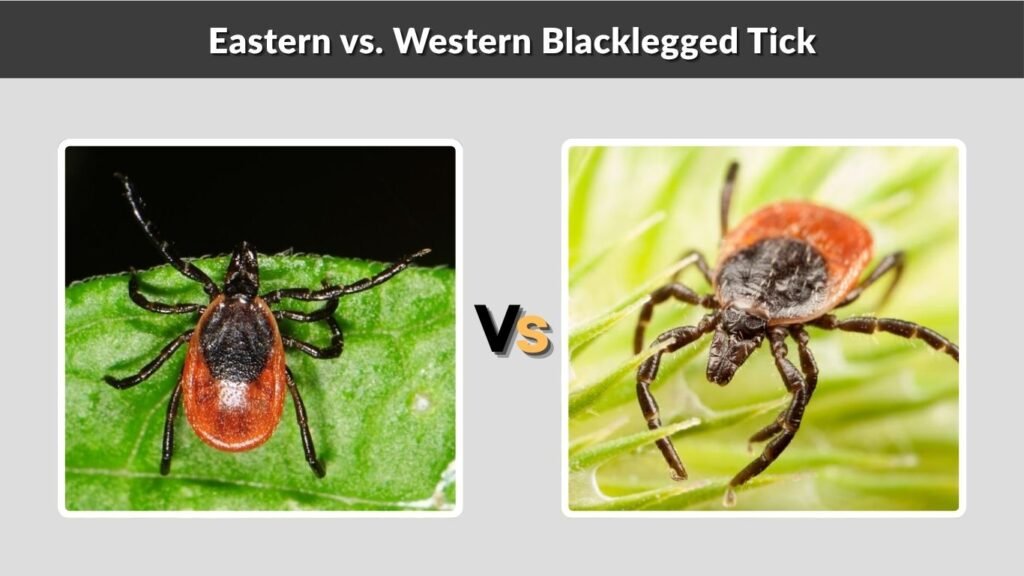
Eastern and western blacklegged ticks look very similar. Geographic location is often more useful than appearance when distinguishing them.
| Feature | Eastern blacklegged tick | Western blacklegged tick |
|---|---|---|
| Scientific name | Ixodes scapularis | Ixodes pacificus |
| Alternative name | Deer tick | Western deer tick |
| Main range | Eastern half of the United States | Pacific Coast |
| Common high-risk stages | Nymphs and adult females | Nymphs and adult females |
| Lyme disease vector | Yes | Yes |
| Typical life cycle | About two years | About three years |
The eastern species is widely distributed across the eastern United States. The western species occurs along the Pacific Coast, particularly in northern California. Tick presence does not automatically mean disease risk is equally high throughout every state or county. Local abundance and infection rates can differ substantially. CDC distribution guidance
Blacklegged Tick Habitat and Range
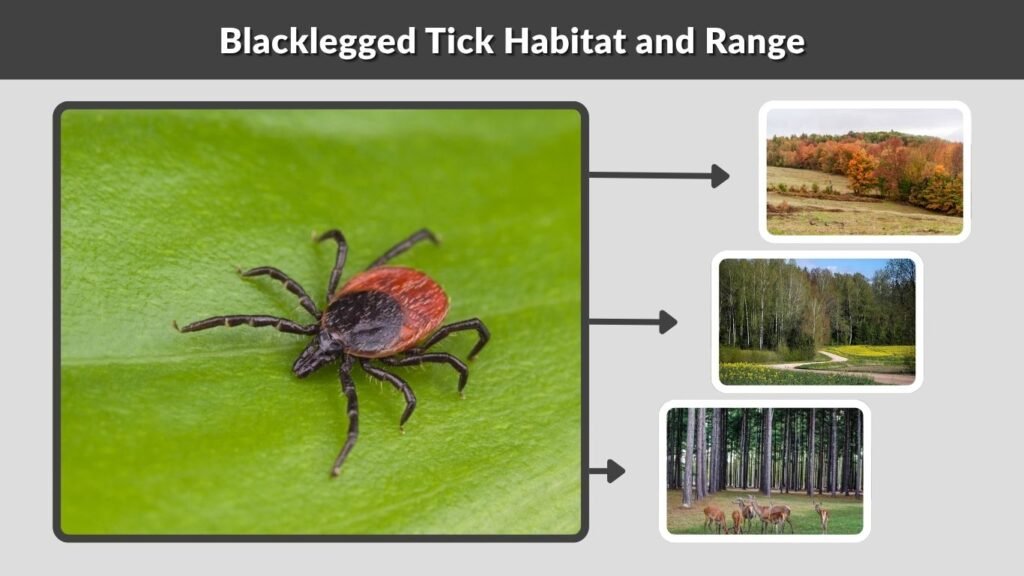
Blacklegged ticks need humid environments that prevent them from drying out. They are usually associated with wooded, brushy, or grassy habitats rather than open, dry ground.
Common habitats include:
- Deciduous and mixed forests
- Woodland edges
- Leaf litter
- Shaded trails
- Tall grass and dense brush
- Stone walls with rodent activity
- Overgrown yard borders
- Woodpiles and unmanaged vegetation
- Areas frequently visited by deer
They do not jump, fly, or deliberately drop from trees. Instead, they crawl onto vegetation and extend their front legs while waiting for a passing host. This behavior is called questing.
Blacklegged ticks occur in states such as Michigan, Wisconsin, Ohio, Indiana, New Jersey, and many other eastern locations. Populations also occur farther south, including Florida and parts of the Southeast, although seasonal activity and human disease risk differ by region. Western blacklegged ticks occur in California, Oregon, and Washington.
Blacklegged Tick Life Cycle
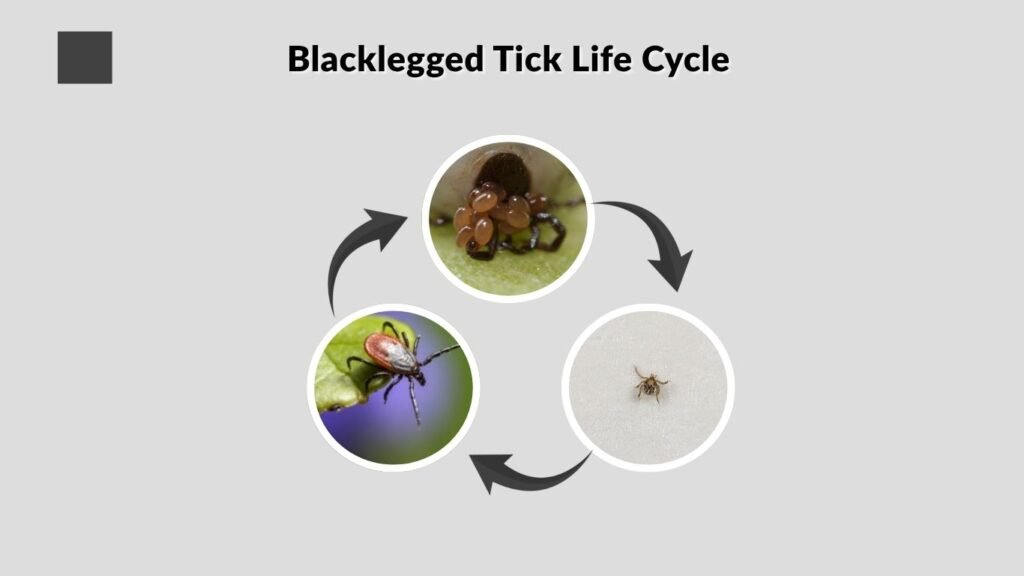
Blacklegged ticks develop through four stages: egg, larva, nymph, and adult. Each mobile stage requires a blood meal before it can continue developing.
Egg and Larval Stages
After feeding, an adult female drops from her host and eventually lays thousands of eggs. The eggs hatch into six-legged larvae.
Larvae feed on small animals such as mice, other rodents, and birds. During this blood meal, some acquire disease-causing organisms from infected hosts.
Nymph Stage
After feeding, a larva molts into an eight-legged nymph. Nymphs seek another host and may attach to rodents, birds, pets, deer, or humans.
The nymphal stage presents a significant concern because the tick is extremely small and can remain unnoticed. A fed nymph later molts into an adult.
Adult Stage
Adult females usually seek larger mammals for their final blood meal. After becoming engorged, a female drops from the host, produces eggs, and dies.
The Ixodes scapularis life cycle generally takes about two years, while that of Ixodes pacificus usually takes about three years.
Blacklegged Tick vs. Dog Tick
Blacklegged ticks are often confused with American dog ticks, wood ticks, and brown dog ticks. Size and markings provide the most useful differences.
| Feature | Blacklegged tick | American dog tick | Brown dog tick |
|---|---|---|---|
| Scientific name | Ixodes scapularis | Dermacentor variabilis | Rhipicephalus sanguineus |
| Unfed adult size | Small | Noticeably larger | Small to medium |
| Female pattern | Black shield and orange abdomen | Pale patterned shield | Mostly uniform reddish brown |
| Male pattern | Mostly black or dark brown | Pale mottling across the back | Uniform brown |
| Mouthparts | Relatively long | Shorter | Short |
| Common habitat | Woodlands and leaf litter | Grassy trails and open vegetation | Homes and kennels with dogs |
| Lyme disease vector | Yes | No | No |
The name “blacklegged dog tick” is sometimes used informally for a dark tick found on a dog, but it is not a recognized species name. A blacklegged tick and a brown dog tick are different species with different habits and disease risks.
Blacklegged Tick Bite
A blacklegged tick bite is generally painless because the tick’s saliva helps it feed without attracting immediate attention. The tick inserts its mouthparts into the skin and may remain attached for several days.
After removal, a small red bump similar to a mosquito bite may remain. Immediate, localized redness that fades within one or two days does not necessarily indicate Lyme disease.
Diseases Transmitted by Blacklegged Ticks
The eastern blacklegged tick can transmit organisms associated with:
- Lyme disease
- Anaplasmosis
- Babesiosis
- Hard tick relapsing fever
- Powassan virus disease
- A form of ehrlichiosis caused by Ehrlichia muris eauclairensis
The western blacklegged tick can transmit the organisms causing Lyme disease, anaplasmosis, and hard tick relapsing fever. Not every tick carries a pathogen, and finding an attached tick does not mean infection has occurred.
Signs to Watch After a Bite
Monitor your health for several weeks after removing a tick. Possible warning signs include:
- An expanding red rash
- Fever or chills
- Headache
- Unusual fatigue
- Muscle or joint pain
- Swollen lymph nodes
- Facial weakness or drooping
- Dizziness or heart palpitations
- Neurological symptoms
A Lyme disease rash does not always form a classic bull’s-eye. It may appear uniformly red, oval, irregular, or differently colored on darker skin. The rash usually expands gradually rather than remaining as a small stationary bump.
How to Remove a Blacklegged Tick
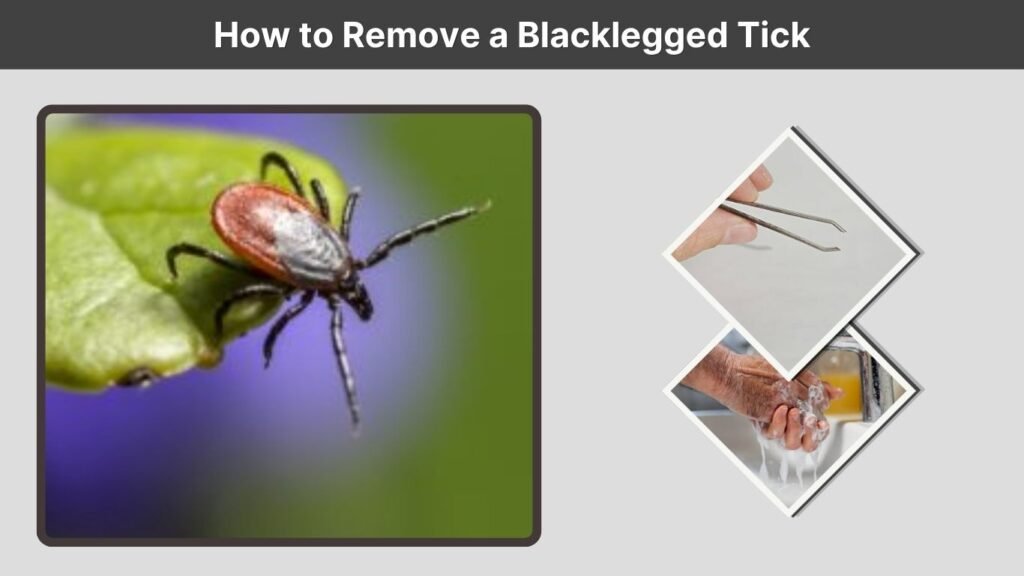
Remove an attached tick immediately rather than waiting for professional assistance.
- Use clean, fine-tipped tweezers.
- Grasp the tick as close to the skin as possible.
- Pull upward using steady, even pressure.
- Do not twist, jerk, crush, or squeeze the tick’s abdomen.
- Clean the bite and your hands with soap and water, rubbing alcohol, or hand sanitizer.
- Record the date and location where the exposure probably occurred.
- Place the tick in a sealed container or take clear photographs if identification may be needed.
If mouthparts break off and cannot be removed easily with tweezers, leave them alone and allow the skin to heal. Do not burn the tick or cover it with petroleum jelly, nail polish, gasoline, essential oil, or another substance. CDC tick-removal instructions
Blacklegged Tick Bite Treatment
Cleaning the skin and monitoring for symptoms may be sufficient after many bites. However, an engorged Ixodes tick acquired in an area where Lyme disease is common may require prompt medical assessment.
Contact a healthcare provider if:
- The tick was engorged.
- Its attachment time may have been prolonged.
- It was removed within the previous 72 hours.
- The exposure occurred in a Lyme disease area.
- You develop a rash, fever, headache, fatigue, or body aches.
- You are pregnant, immunocompromised, or concerned about medication risks.
In certain high-risk situations, a clinician may recommend a single preventive dose of doxycycline. It is not appropriate after every tick bite, so do not take leftover antibiotics or attempt to determine the dose yourself.
Blacklegged Ticks on Dogs and Cats
Blacklegged ticks can attach to dogs and cats after the animals enter wooded areas, brush, leaf litter, or tall grass. Dogs can develop Lyme disease and anaplasmosis, although an attached tick does not automatically mean the pet will become sick.
Check these areas carefully:
- Around the ears and eyelids
- Under the collar
- Between the toes
- Beneath the front legs
- Around the groin
- Under the tail
Use a veterinarian-recommended tick preventive for dogs. Cats are highly sensitive to certain chemicals, including some products intended for dogs, so never apply a canine treatment to a cat without veterinary guidance.
Contact a veterinarian if a pet develops fever, lethargy, reduced appetite, joint pain, limping, or unusual behavior after a tick bite.
How to Prevent Blacklegged Tick Bites
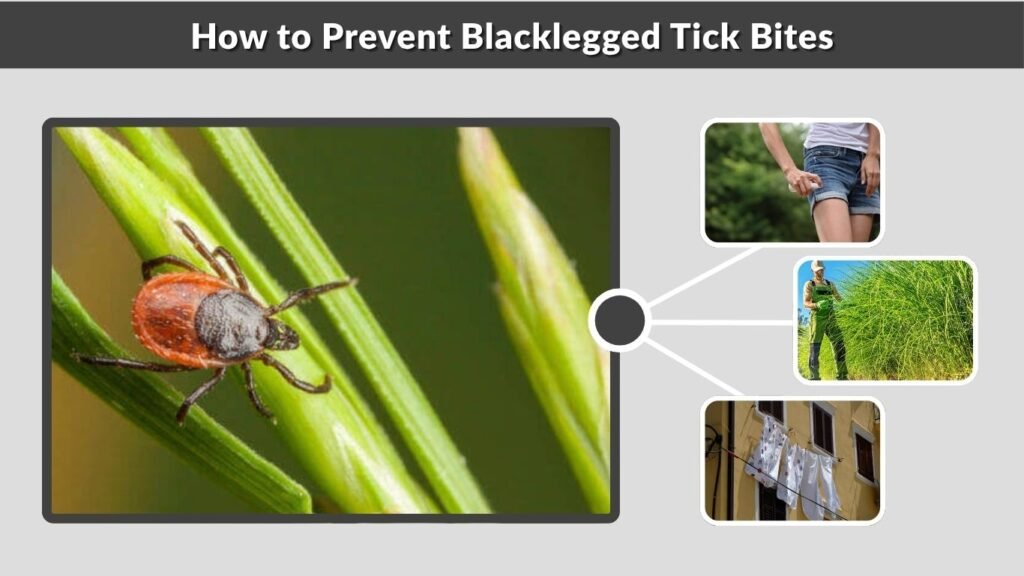
Before entering tick habitat, wear long sleeves, long pants, and closed shoes. Tucking pants into socks makes crawling ticks easier to spot.
Additional precautions include:
- Use an EPA-registered repellent as directed.
- Treat clothing and gear with a labeled 0.5% permethrin product.
- Walk near the center of trails.
- Avoid brushing against tall grass and vegetation.
- Check clothing, backpacks, children, and pets afterward.
- Shower soon after returning indoors.
- Examine the scalp, waist, groin, armpits, behind the knees, and around the ears.
- Dry clothing on high heat according to garment-care directions.
- Remove attached ticks immediately.
Around the yard, mow grass, remove leaf litter, clear brush, and create a wood-chip or gravel barrier between recreational areas and woodland edges. Position patios and children’s play equipment away from dense vegetation.
Frequently Asked Questions
Is a blacklegged tick the same as a deer tick?
Yes. In most North American usage, both names refer to Ixodes scapularis. The blacklegged tick is commonly called a deer tick because adults frequently feed on deer.
How small is a blacklegged tick nymph?
An unfed nymph is approximately 1–2 mm long, making it comparable to a poppy seed. Its small size allows it to remain attached without being noticed.
Does every blacklegged tick transmit Lyme disease?
No. Only infected ticks can transmit Lyme disease bacteria, and transmission risk depends on factors such as location, life stage, attachment, and feeding. Nevertheless, every attached tick should be removed immediately.
What does an engorged blacklegged tick look like?
An engorged female has a swollen gray, blue-gray, olive, or brown abdomen with dark legs and a small dark shield near the front. It can become several times larger than an unfed female.
When should I see a doctor after a blacklegged tick bite?
Seek medical advice promptly if the tick was engorged, the exposure occurred in a Lyme disease area, or preventive treatment may be considered within 72 hours of removal. Also contact a doctor if a rash, fever, headache, facial weakness, joint pain, or other illness develops within the following days or weeks.
