
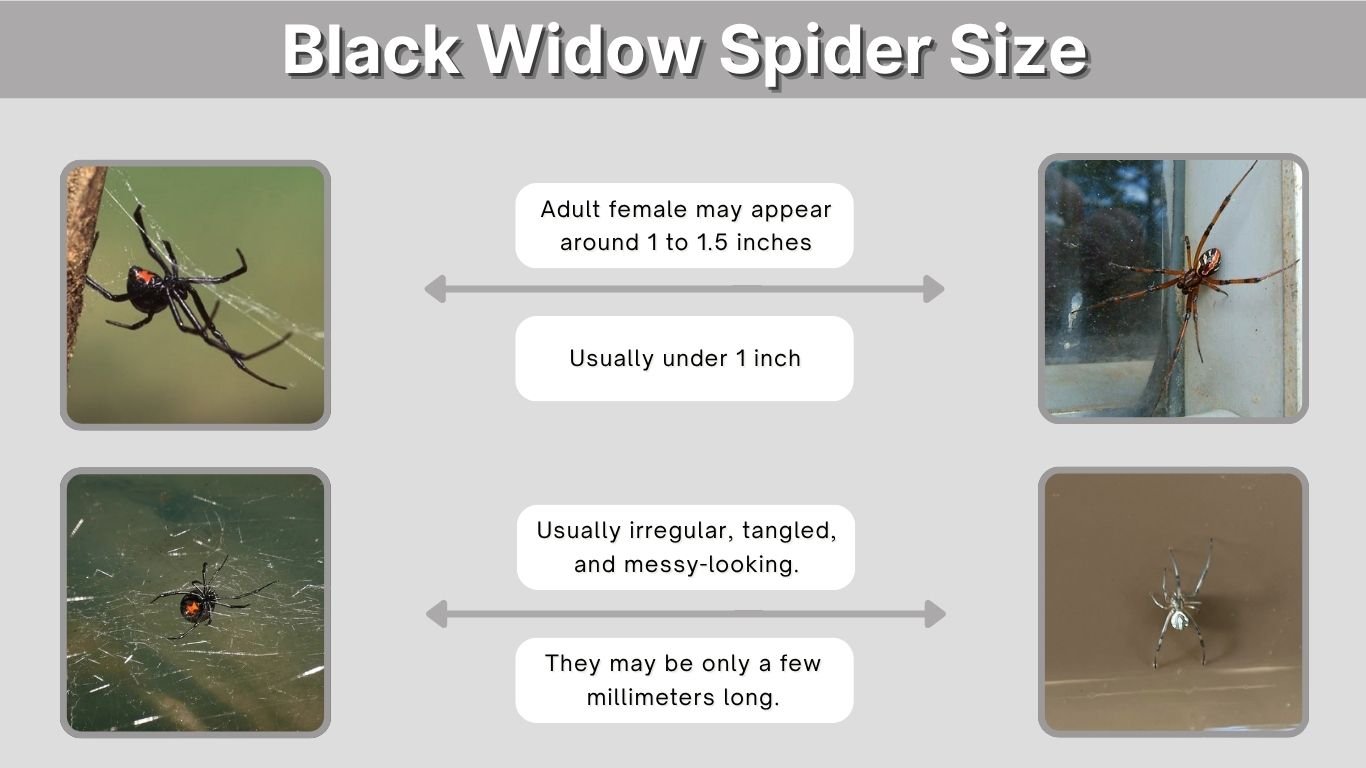
Black widow spiders are famous for their glossy black bodies, red hourglass markings, and venomous bite, but many people are unsure how large they actually are. Most black widows are smaller than people imagine, especially when measured by body length alone. Their size depends on sex, age, species, and whether you are measuring only the body or the full leg span.
How Big Is a Black Widow Spider?
A black widow spider is usually small to medium-sized compared with many household spiders. The adult female is the spider most people recognize. She has a rounded, shiny black abdomen and is much larger than the male.
When people ask about black widow spider size, they often mean the full size with legs included. In that case, an adult female may appear around 1 to 1.5 inches across when her legs are extended. Her body alone is much smaller, often around half an inch or slightly more, depending on species and condition.
Male black widows are much smaller and less noticeable. They are usually thinner, lighter in color, and not as round-bodied as females. Because they do not always have the classic black body and bright red hourglass, people may not recognize them as black widows.
Actual Size of a Black Widow Spider
The actual size depends on how it is measured:
- Body length: Measures only the head and abdomen.
- Leg span: Measures the spider from leg tip to leg tip.
- Abdomen size: Can change depending on feeding, maturity, and whether the female is carrying eggs.
This is why black widow size descriptions can seem confusing. A spider described as half an inch long may still look closer to an inch or more when its legs are spread out.
Black Widow Spider Size Chart
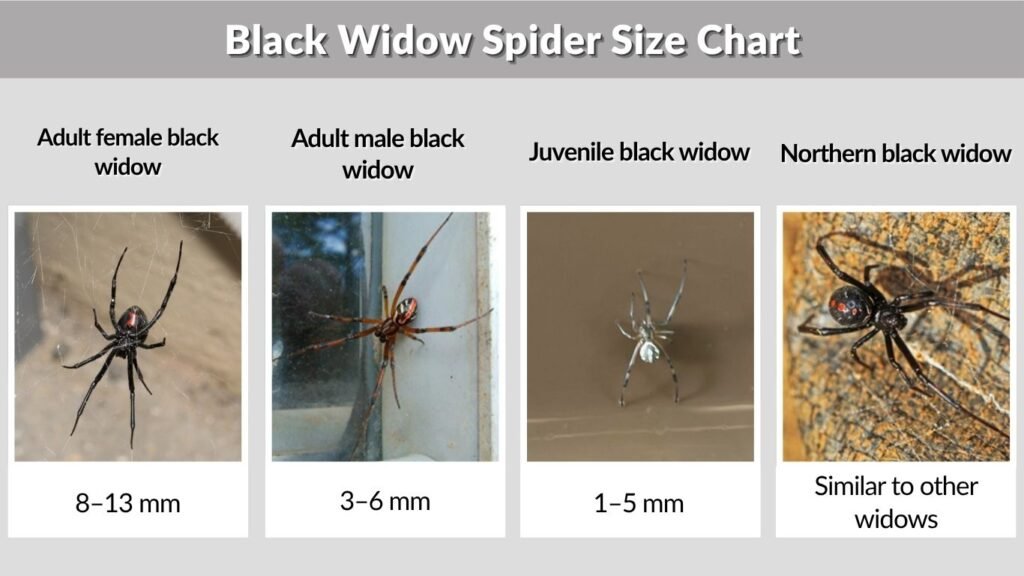
The table below gives a simple size comparison for common black widow size searches.
| Black Widow Type | Approximate Body Size | Approximate Size With Legs | Notes |
| Adult female black widow | 8–13 mm | Up to about 1–1.5 inches | Largest and most recognizable |
| Adult male black widow | 3–6 mm | Usually under 1 inch | Smaller, thinner, lighter colored |
| Juvenile black widow | 1–5 mm | Varies by age | Small and often not fully black |
| Northern black widow | Similar to other widows | Up to about 1.5 inches | Often has broken hourglass marking |
| Southern black widow | Similar to other widows | Up to about 1.5 inches | Classic red hourglass female |
| False black widow | 7–14 mm body length | Often similar-looking | Usually brownish, not true black widow |
These numbers are general estimates. Individual spiders can look larger or smaller depending on age, posture, and whether the abdomen is swollen after feeding.
Female Black Widow Spider Size
The female black widow is the larger and more dangerous-looking spider. She has a round abdomen, long thin legs, and a glossy appearance. The red hourglass marking is usually found on the underside of the abdomen, although the exact shape can vary.
Why Females Look Bigger
Female black widows look larger because their abdomen is much more rounded. A well-fed female or one carrying eggs may have an especially swollen abdomen. This can make her appear larger than the measurements suggest.
Adult females are also the ones most often seen guarding webs in dark, quiet areas. Their size, color, and web position make them easier to notice than males.
Common Female Size Features
A female black widow usually has:
- A shiny black body
- A rounded abdomen
- Long, slender legs
- A red or orange-red hourglass marking
- A body length often around 8–13 mm
- A larger appearance when legs are extended
The female is the one most people mean when they search for “black widow spider actual size.”
Male Black Widow Spider Size
Male black widows are much smaller than females. They are often overlooked because they do not have the same dramatic appearance. A male may be brown, grayish, or patterned, with a smaller body and longer-looking legs in proportion to his size.
Male vs Female Black Widow Size
The female is usually several times larger by body mass. Males are not just smaller; they also look more delicate. Their abdomen is less rounded, and their markings can be lighter or more complex.
This size difference is one reason people often mistake male black widows for another type of house spider. The male may wander in search of females, while the female usually stays near her web.
Baby Black Widow Spider Size
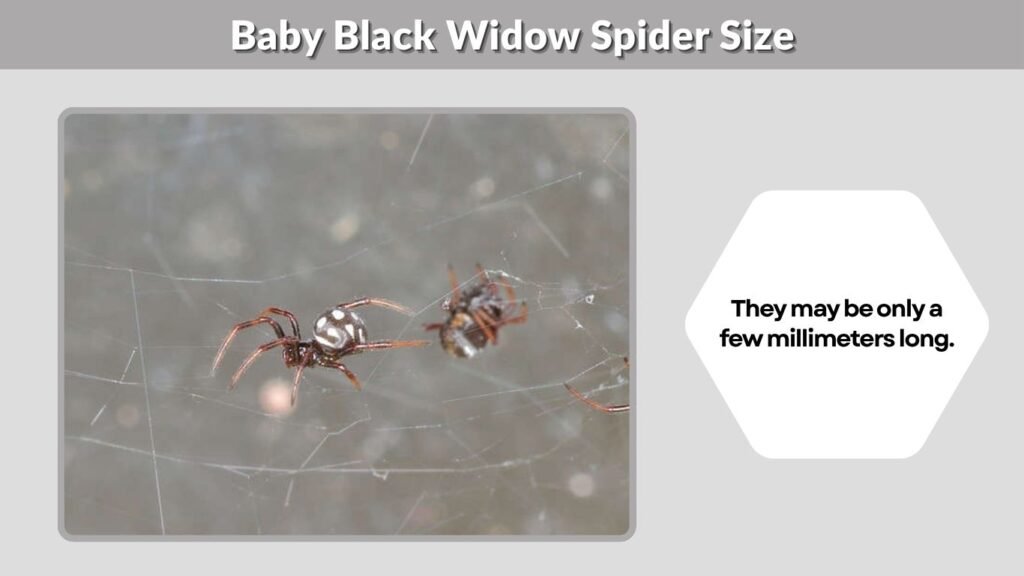
Baby black widow spiders, also called spiderlings, are tiny. When they first hatch, they may be only a few millimeters long. They are not glossy black at first and often look pale, tan, white, or lightly patterned.
What Baby Black Widows Look Like
Young black widows can be difficult to identify because they do not always look like adults. As they grow and molt, their color and markings change.
Baby or juvenile black widows may have:
- Very small bodies
- Pale or tan coloring
- Stripes or spots
- Thin legs
- Less obvious red markings
- A shape that becomes more widow-like with age
Because juveniles are small, they are easy to miss in garages, sheds, outdoor storage areas, and cluttered corners.
Northern, Southern, and Eastern Black Widow Size
Several black widow species are found in North America. Their size is broadly similar, but markings and distribution differ.
Southern Black Widow Spider Size
The southern black widow is the classic species many people picture. Adult females are glossy black with a red hourglass marking on the underside of the abdomen. Their full leg span may reach around 1 to 1.5 inches.
Northern Black Widow Spider Size
Northern black widows are similar in size to southern black widows. However, their hourglass marking may be divided or broken into separate red marks. Some individuals also have red or pale markings on the top of the abdomen.
Eastern Black Widow Spider Size
People sometimes use “eastern black widow” to describe black widows found in the eastern United States. Size is generally similar to other black widows, with adult females much larger than males.
Black Widow Spider Size Comparison
Black widows are not giant spiders. They are usually smaller than wolf spiders and many common house spiders when you include leg spread. However, their rounded abdomen and shiny black color make them stand out.
Compared With Common Objects
A female black widow’s body may be compared to:
- A small pea
- A pencil eraser
- A small button
- A small bead
- The width of a fingernail, depending on the individual
With legs extended, an adult female may look closer to the size of a large coin. Males and juveniles are much smaller.
Black Widow vs Brown Recluse Size
A brown recluse and black widow can be somewhat similar in overall leg span, but they look very different. A brown recluse is usually brown with a violin-shaped marking on the body, while a female black widow is glossy black with a rounded abdomen and red underside marking.
The black widow often looks more compact and shiny. The brown recluse usually looks flatter, more evenly brown, and less rounded.
False Black Widow Spider Size
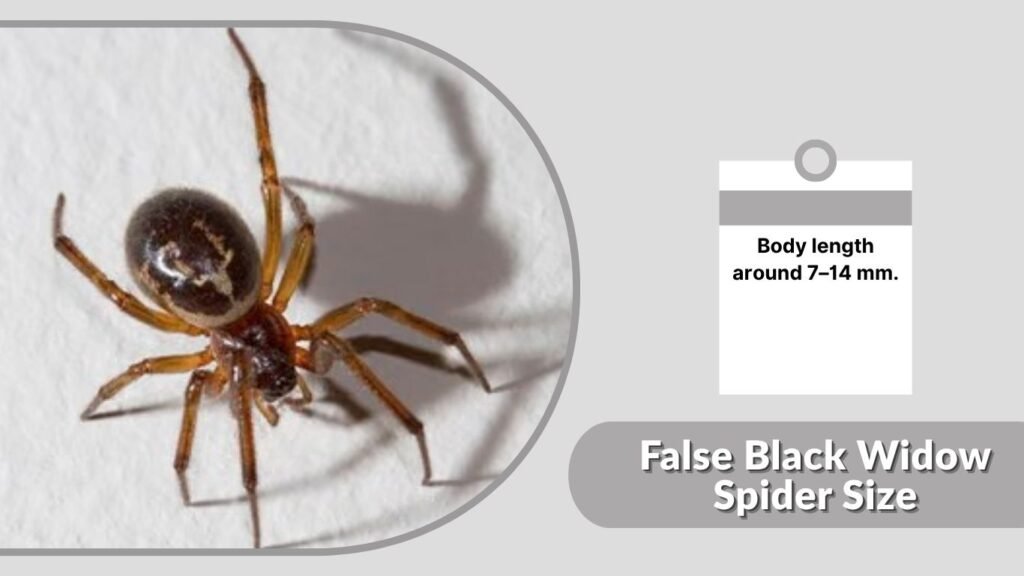
False black widow spiders are often confused with real black widows. The term “false widow” usually refers to spiders in the genus Steatoda. These spiders can have rounded bodies and dark coloring, but they are not true black widows.
A false black widow may have a body length around 7–14 mm, depending on species and sex. Some are similar in body size to black widows, but their color is usually brown, purplish-brown, or dark chocolate rather than glossy jet black.
False Black Widow vs Black Widow Size
False widows can overlap in size with black widows, which is why appearance and markings matter. A true female black widow usually has a more polished black body and a clear red hourglass marking underneath. False widows often have cream, tan, pale, or mottled markings instead.
False widows may look alarming, but they are different spiders. If identification matters, avoid handling the spider and compare clear photos from reliable pest or extension resources.
Redback Spider vs Black Widow Size
The redback spider is closely related to black widows and is commonly associated with Australia. It belongs to the same general widow spider group. Redbacks and black widows are similar in overall body style, but their markings differ.
Redback females often have a red stripe on the upper side of the abdomen, while black widows are best known for the red hourglass marking underneath. In size, they are broadly comparable, with females larger than males in both groups.
Black Widow Spider Web Size
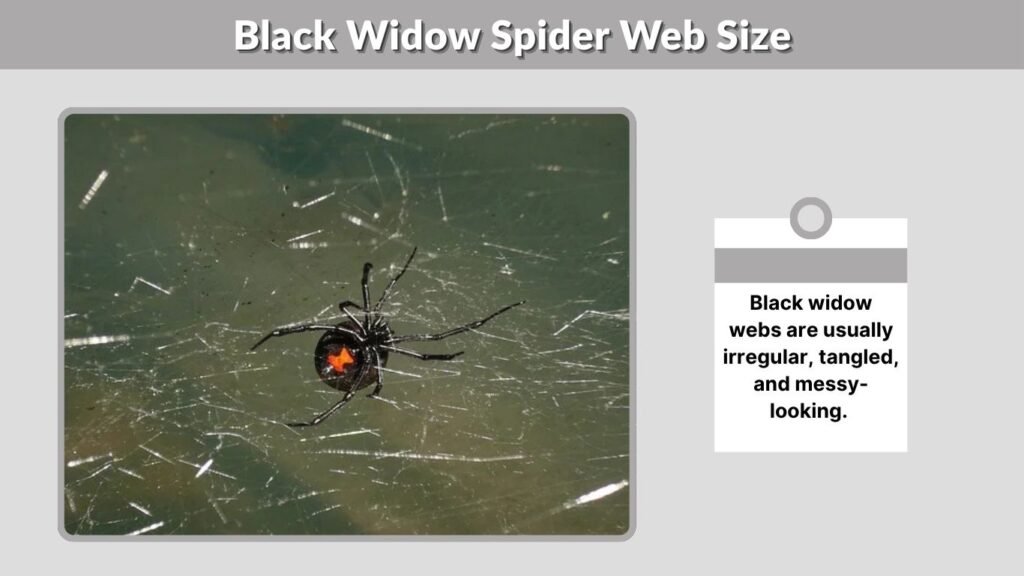
Black widow webs are usually irregular, tangled, and messy-looking. They are not neat circular orb webs. The web is often built close to the ground in protected spaces.
Common Web Locations
Black widows may build webs in:
- Garages
- Sheds
- Woodpiles
- Crawl spaces
- Outdoor furniture
- Basement corners
- Storage boxes
- Rock piles
- Fence gaps
- Meter boxes
The web size can vary depending on the space available. It may be small and tucked into a corner, or it may spread across a larger sheltered area. The silk is usually strong and sticky.
Does Size Affect Black Widow Danger?
A larger female black widow can deliver a more medically significant bite than a tiny juvenile or male, but size is not the only factor. The amount of venom injected, bite location, the person’s health, and how quickly care is received all matter.
Black widows are not aggressive spiders. Most bites happen when a spider is accidentally pressed, pinched, trapped in clothing, or disturbed near its web.
What to Do Around a Black Widow
If you find a spider that may be a black widow:
- Do not pick it up with bare hands.
- Keep children and pets away from the area.
- Wear gloves when moving stored items.
- Shake out outdoor shoes and clothing.
- Use a jar, tool, or professional help for removal.
- Seek medical advice if a bite causes severe pain, cramping, nausea, sweating, or spreading symptoms.
The spider’s small size does not mean it should be handled casually. A mature female black widow is small, but its bite can still be painful and medically important.
Why Black Widows Look Larger Than They Are
People often overestimate black widow spider size because the female’s abdomen is round and shiny. A spider sitting in a web with legs spread can look much bigger than its body measurement. Fear also plays a role. A spider that appears suddenly in a shed or garage may seem larger than it really is.
Lighting can also change perception. In a dark corner, the glossy body may reflect light, making the abdomen stand out. If the spider is hanging upside down, the red hourglass may draw attention and make the spider seem more dramatic.
FAQs
What is the average size of a black widow spider?
An adult female black widow usually has a body length around 8–13 mm and may appear about 1 to 1.5 inches across with legs extended. Males are much smaller, thinner, and less noticeable than females.
What is the actual size of a black widow spider?
The actual body is smaller than many people expect. The body may be around half an inch or less, but the spider can look larger when its legs are spread. This is why body length and leg span should be measured separately.
How big is a male black widow spider?
A male black widow is usually only a few millimeters long in body size. He is much smaller than the female, with a slimmer body and less obvious coloring. Many people do not recognize males as black widows.
Are baby black widow spiders black?
Not usually at first. Baby black widow spiders are often pale, tan, white, or lightly patterned. They become darker as they mature. Juveniles can be difficult to identify because they may not yet show the classic adult female appearance.
Is a false black widow the same size as a black widow?
Some false widows can be similar in body size to black widows, but they are different spiders. False widows are often brownish or mottled rather than glossy black, and they usually do not have the clear red hourglass marking of a true female black widow.
