
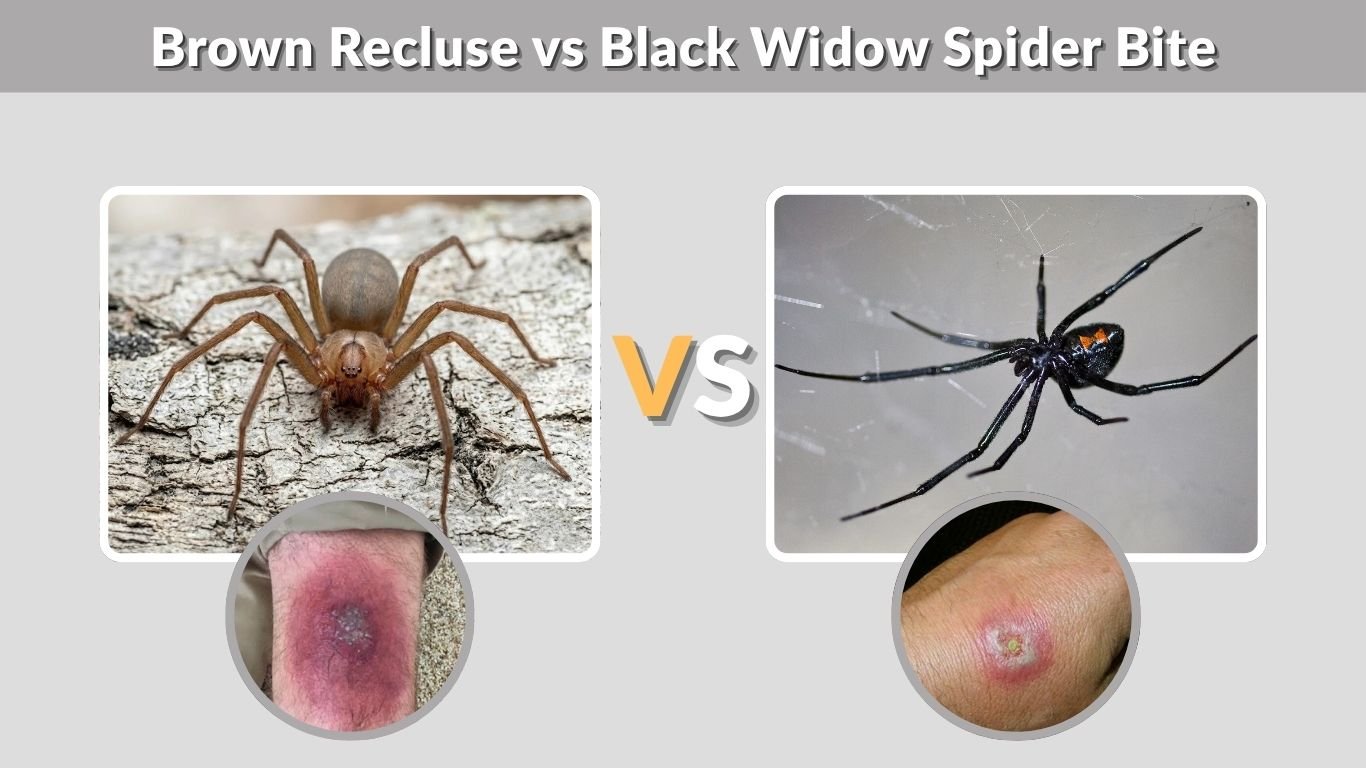
A spider bite can be scary, especially when people are unsure whether it came from a black widow, brown recluse, or brown widow spider. These names are often searched together because their bites can cause stronger reactions than common house spider bites. The main difference is that black widow bites usually affect nerves and muscles, while brown recluse bites are more likely to damage the skin.
What Does “Brown Black Widow Spider Bite” Mean?
The phrase “brown black widow spider bite” can be confusing because it may refer to three different things. Some people mean a brown recluse spider bite vs black widow bite. Others may mean a brown widow spider bite, which is related to black widows. Some searchers may simply be describing a dark brown or black spider they saw near the bite.
That difference matters because symptoms can vary. A black widow bite often causes sharp pain, muscle cramps, sweating, nausea, and abdominal pain. A brown recluse bite may start mild but later form a blister, dark center, open sore, or slow-healing wound. A brown widow bite can cause symptoms similar to a black widow bite, but many cases are reported as milder.
You should not rely only on the spider’s color or the bite’s appearance. Many rashes, infections, and insect bites can look like spider bites. If symptoms are severe, spreading, or unusual, it is safer to seek medical care.
Black Widow, Brown Widow, and Brown Recluse: Are They the Same?
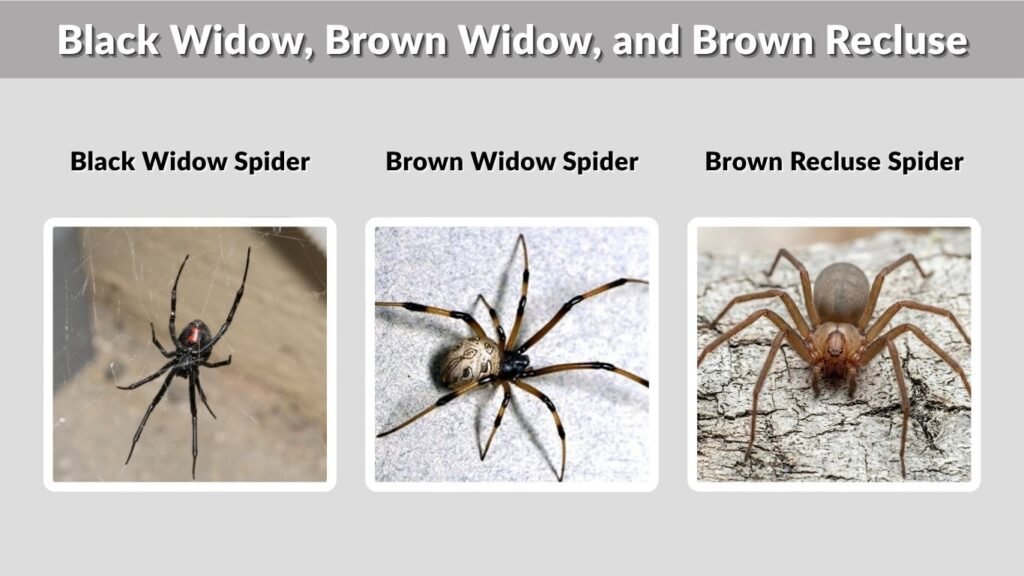
These spiders are not the same. Their names sound similar, but they belong to different groups or behave differently.
Black widows and brown widows are widow spiders. Their venom can affect the nervous system and muscles. Brown recluse spiders are recluse spiders, and their venom is more associated with local tissue injury.
Black Widow Spider
Black widow spiders are usually shiny black with a red or orange hourglass-shaped mark on the underside of the abdomen. They often build messy webs in dark, quiet spaces such as garages, sheds, crawl spaces, outdoor furniture, woodpiles, and storage boxes.
Brown Widow Spider
Brown widow spiders are usually tan, brown, or grayish-brown with markings on the body and legs. They may also have an orange or yellowish hourglass marking. Brown widows can be found around outdoor furniture, fences, mailboxes, garages, and sheltered areas.
Brown Recluse Spider
Brown recluse spiders are usually light to medium brown and may have a violin-shaped marking behind the head. They prefer quiet, dry, undisturbed places such as closets, boxes, basements, attics, and stored clothing. They are called “recluse” spiders because they tend to hide and avoid activity.
Brown Recluse vs Black Widow Spider Bite
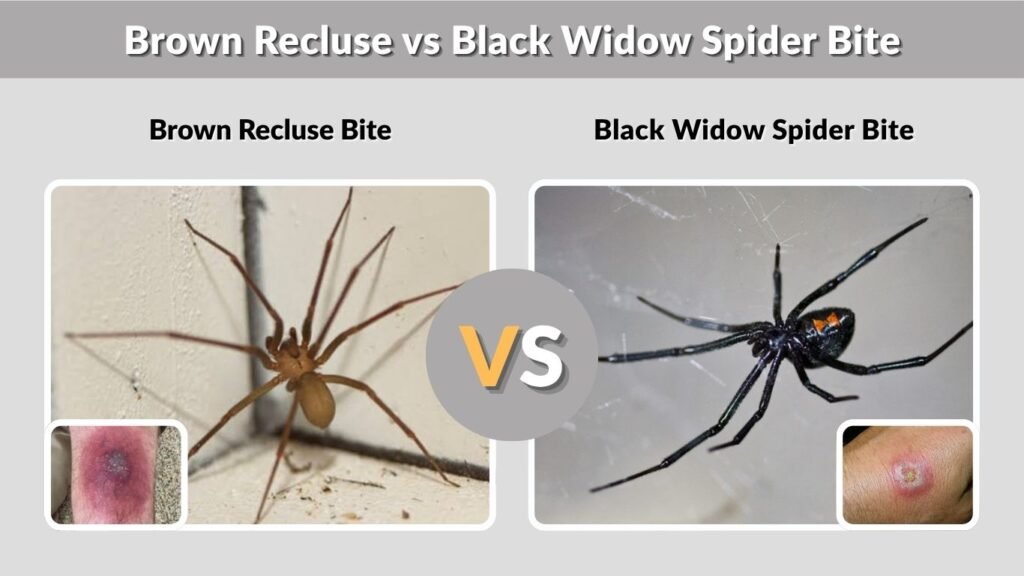
The easiest way to compare these bites is by the main effect on the body. Black widow bites are usually more nerve-and-muscle related. Brown recluse bites are usually more skin-and-wound related.
| Feature | Black Widow Bite | Brown Recluse Bite |
|---|---|---|
| Main venom effect | Nervous system and muscles | Skin and tissue injury |
| Pain timing | Often sharp or quick | May be mild at first, then worsen |
| Common symptoms | Muscle cramps, sweating, nausea, abdominal pain | Redness, blister, dark center, ulcer, slow healing |
| Bite appearance | Redness, swelling, possible two puncture marks | Blister, pale center, blue/purple area, open sore in some cases |
| Systemic symptoms | More common | Possible but less common |
| Main concern | Severe cramping and body-wide reaction | Skin breakdown or infected wound |
| Medical care | Needed for severe pain or systemic symptoms | Needed for worsening wounds or signs of infection |
Black Widow Spider Bite Symptoms
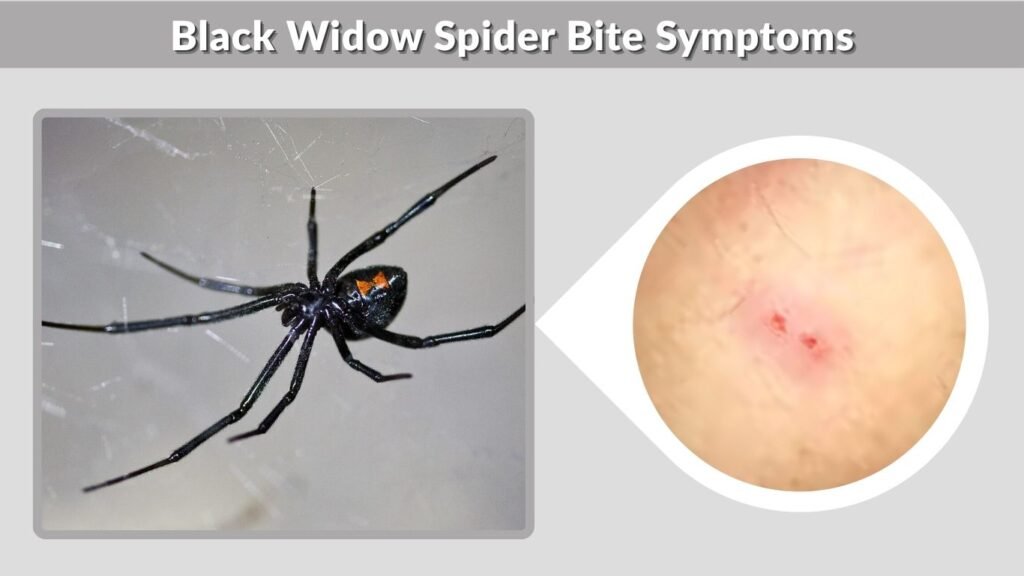
A black widow bite may feel like a sharp pinprick. In some cases, the person may not notice the bite immediately. The bite area may become red, swollen, painful, or numb. The pain can then spread to the abdomen, back, chest, shoulders, or legs.
Common black widow spider bite symptoms include:
- Sharp pain at the bite site
- Redness and swelling
- Two small puncture marks
- Muscle cramps or spasms
- Abdominal pain or tightness
- Back, chest, or shoulder pain
- Nausea or vomiting
- Sweating
- Headache
- Tremors or shaking
- Restlessness
- Fast heartbeat or high blood pressure
The abdominal cramping from a black widow bite can be strong enough to mimic appendicitis or another serious abdominal emergency. Chest tightness or severe pain can also make people worry about heart problems.
Black widow bites can be more serious in children, older adults, pregnant people, and people with heart disease or other medical conditions. Any severe or body-wide symptoms should be treated as urgent.
Brown Recluse Spider Bite Symptoms
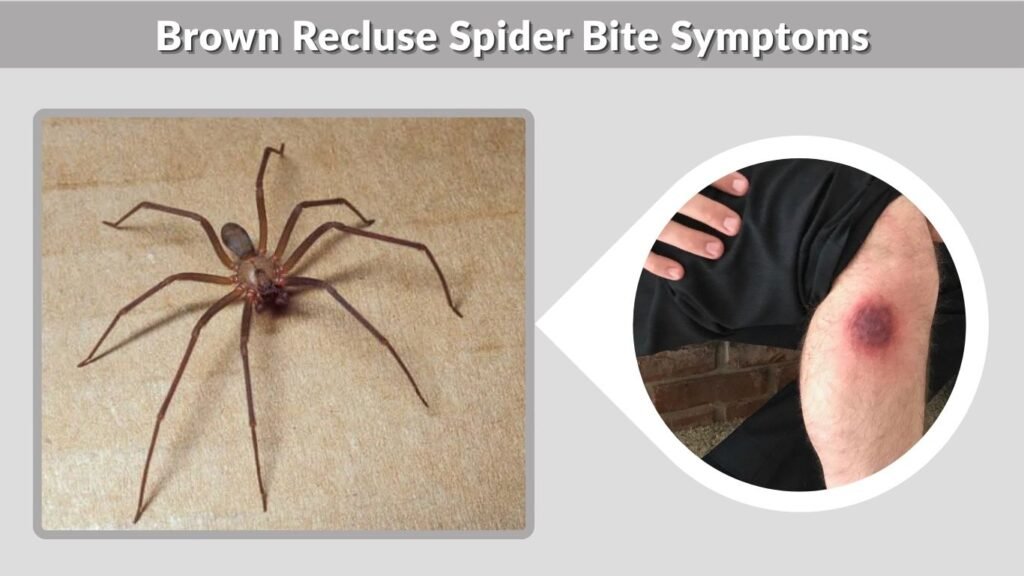
A brown recluse bite may not hurt much at first. Some people feel a mild sting, burning, or itching. Over several hours, the bite can become red, painful, swollen, or blistered. In more serious cases, the center may turn blue, purple, black, or develop into an open sore.
Common brown recluse spider bite symptoms include:
- Mild pain, burning, or itching at first
- Redness around the bite
- Swelling
- A blister
- A pale or white center
- Blue, purple, or dark discoloration
- A sore that grows larger
- Skin breakdown or ulceration
- Fever or chills
- Body aches
- Nausea
- Fatigue
Not every brown recluse bite causes a severe wound. Many suspected bites stay mild. However, if the skin starts turning dark, the wound grows, or infection signs appear, medical care is needed.
Brown Widow Spider Bite Symptoms
A brown widow bite can cause symptoms similar to a black widow bite because both are widow spiders. However, brown widow bites are often described as less severe than black widow bites. Symptoms may still be painful and should be monitored carefully.
Possible brown widow spider bite symptoms include:
- Local pain
- Redness
- Swelling
- Muscle cramps
- Nausea
- Sweating
- Headache
- Weakness
- Pain spreading from the bite area
Because many people cannot confidently identify the spider, it is better to focus on symptoms. If the bite causes severe pain, spreading cramps, vomiting, trouble breathing, or chest symptoms, seek urgent care.
Which Spider Bite Is Worse: Black Widow or Brown Recluse?
There is no single answer because each bite can be serious in a different way. A black widow bite may feel worse quickly because it can cause intense muscle cramps, abdominal pain, sweating, and nausea. A brown recluse bite may look mild at first but become worse over time if skin damage develops.
In general, black widow bites are more likely to cause strong body-wide nerve and muscle symptoms. Brown recluse bites are more likely to cause a wound that changes color, blisters, or heals slowly.
The “worse” bite depends on:
- The amount of venom injected
- The person’s age and health
- The bite location
- How quickly symptoms appear
- Whether the wound becomes infected
- Whether systemic symptoms develop
Both bites deserve attention. A black widow bite with severe cramping is urgent. A brown recluse bite with spreading skin damage is also urgent.
Bite Symptoms Timeline
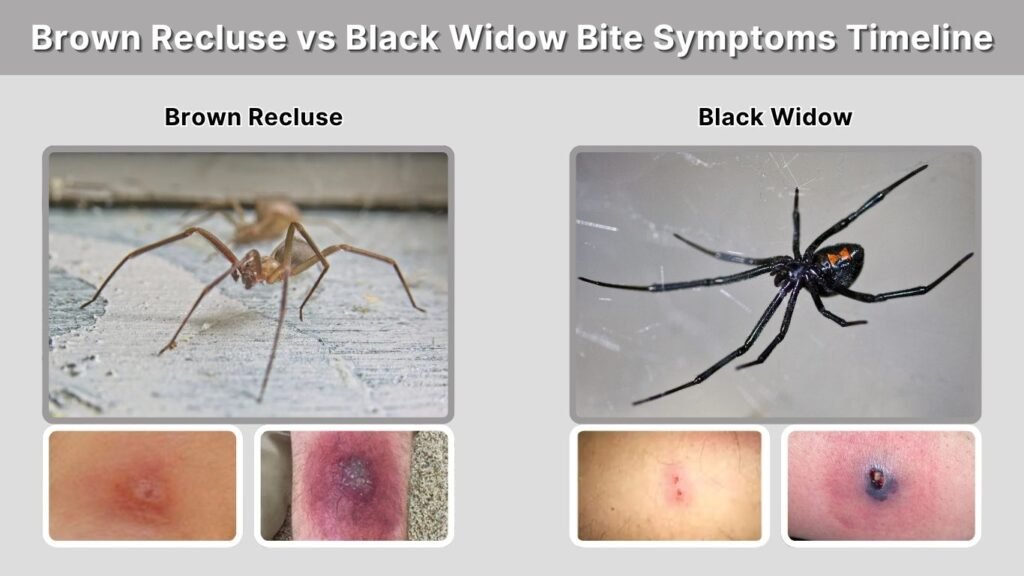
The timeline can help you understand what may be happening, but it cannot confirm the spider type by itself.
First Few Minutes
A black widow bite may cause immediate sharp pain. A brown recluse bite may cause mild stinging or no obvious pain at first. The skin may look normal or slightly red.
30 Minutes to 2 Hours
Black widow symptoms may spread. Muscle cramps, sweating, nausea, or pain in the abdomen, back, or chest may begin. Brown recluse symptoms may still look mild, but redness, burning, itching, or swelling can develop.
2 to 8 Hours
Black widow cramps and body-wide symptoms may become stronger. Brown recluse bites may become more painful and may form a blister or pale center.
1 to 3 Days
Black widow symptoms often begin to improve with proper care, although soreness may remain. Brown recluse wounds may become more noticeable, especially if discoloration, blistering, or tissue injury occurs.
Several Days to Weeks
A brown recluse wound may take longer to heal than a typical bite. Some wounds may leave a scar. Any wound that grows, drains pus, becomes hot, or causes fever should be checked by a healthcare provider.
What Do Black Widow and Brown Recluse Bites Look Like?
Bite appearance can be misleading. Many skin infections, allergic reactions, mosquito bites, tick bites, bed bug bites, and ingrown hairs can look like spider bites.
A black widow bite may show redness, swelling, tenderness, or two small puncture marks. However, the most important clues are pain spreading away from the bite, muscle cramps, sweating, nausea, and abdominal pain.
A brown recluse bite may start as a red or tender bump. Later, it may develop a blister, pale center, blue or purple discoloration, or an open sore. A worsening wound is more concerning than a simple red bump.
You should avoid squeezing, cutting, or trying to drain the bite at home. This can worsen irritation or increase the risk of infection.
First Aid for Suspected Spider Bites
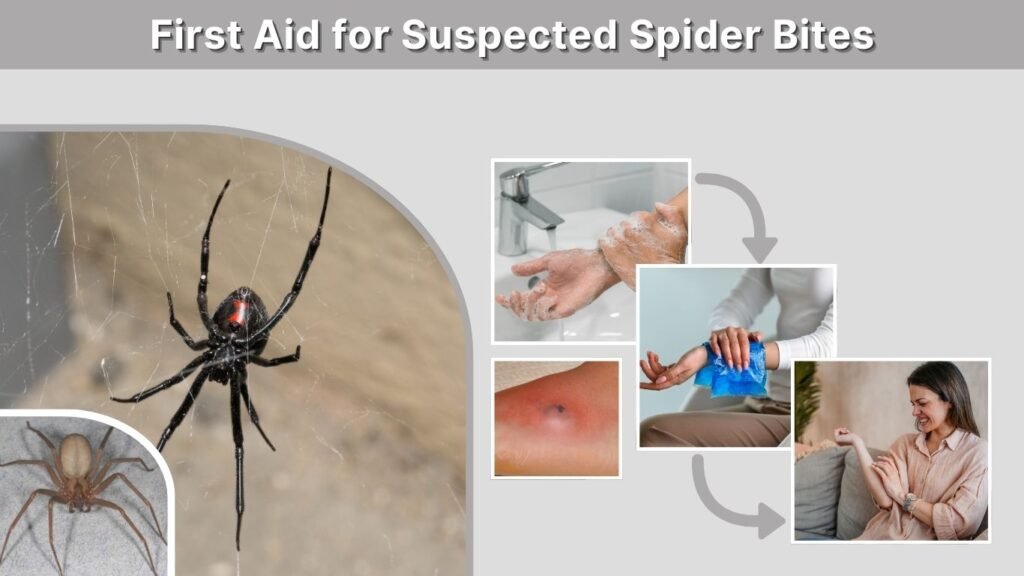
First aid is similar for many spider bites, whether you suspect a black widow, brown recluse, or brown widow. The goal is to clean the area, reduce pain and swelling, and watch for worsening symptoms.
Use these steps:
- Wash the bite with soap and water
- Apply a cool compress wrapped in cloth
- Keep the bite area elevated if possible
- Avoid scratching the bite
- Do not cut the wound
- Do not apply heat
- Take an over-the-counter pain reliever only if safe for you
- Mark the edge of redness with a pen to track spreading
- Seek medical advice if symptoms worsen
If the spider is safely available, take a clear photo or capture it in a sealed container. Do not risk another bite trying to catch it.
When to Get Medical Help
You should seek medical care right away if you suspect a black widow or brown recluse bite and symptoms are more than mild. Emergency care is especially important for children, older adults, pregnant people, or people with serious medical conditions.
Get urgent help for:
- Severe muscle cramps
- Severe abdominal pain
- Chest pain
- Trouble breathing
- Repeated vomiting
- Heavy sweating
- Fainting or severe weakness
- Fast heartbeat
- A wound that turns blue, purple, black, or open
- Red streaks spreading from the bite
- Fever, chills, or pus
- A bite on the face, neck, or near the eye
A healthcare provider may treat black widow symptoms with pain medicine, muscle relaxants, and supportive care. In some severe cases, antivenom may be considered. Brown recluse treatment focuses on wound care, pain control, infection monitoring, and follow-up.
Black Widow or Brown Recluse Bite on Dogs
Dogs can also be bitten by black widows, brown widows, or brown recluse spiders. Pets may not show the bite clearly because fur hides the skin. Instead, owners may notice behavior changes or sudden pain.
Possible symptoms in dogs include:
- Crying or yelping
- Limping
- Muscle stiffness
- Tremors
- Weakness
- Restlessness
- Vomiting
- Drooling
- Trouble breathing
- Swelling or redness
- A painful skin wound
- Collapse in severe cases
Small dogs may be at greater risk because venom can affect them more strongly. If you suspect a venomous spider bite, call a veterinarian or emergency animal clinic immediately. Do not give human pain medicine to a dog unless a veterinarian specifically recommends it.
How to Prevent Black Widow and Brown Recluse Bites
Prevention is mostly about reducing contact with spiders in dark, quiet places. Both widow and recluse spiders usually bite when they are trapped against skin or disturbed.
Helpful prevention steps include:
- Wear gloves when moving boxes, firewood, or outdoor furniture
- Shake out shoes, gloves, towels, and clothing before use
- Store clothes and bedding in sealed containers
- Reduce clutter in garages, sheds, closets, and basements
- Seal cracks around doors, windows, and foundations
- Move beds away from walls if spiders are common indoors
- Vacuum corners, storage areas, and under furniture
- Be careful around webs in dark outdoor areas
- Use pest control help if infestations are recurring
People who work outdoors, in storage areas, or in warehouses should be especially careful when reaching into boxes, equipment, woodpiles, and unused spaces.
FAQs
Is a brown recluse bite worse than a black widow bite?
A brown recluse bite is not always worse, but it can cause more skin damage. A black widow bite often causes stronger nerve and muscle symptoms, such as cramps, sweating, nausea, and abdominal pain. Both can be serious, depending on symptoms and the person’s health.
How can I tell if a bite is from a black widow or brown recluse?
A black widow bite usually causes sharp pain, muscle cramps, sweating, nausea, and pain that may spread to the abdomen, back, or chest. A brown recluse bite may start mild but later form a blister, dark center, open sore, or slow-healing wound. Medical evaluation is best if symptoms worsen.
What does a brown widow spider bite feel like?
A brown widow bite may cause local pain, redness, swelling, and sometimes muscle cramps or nausea. It can resemble a black widow bite, though many cases are milder. Severe pain, spreading symptoms, vomiting, or breathing trouble should be treated urgently.
Should I go to the ER for a black widow or brown recluse bite?
Go to urgent care or the ER if you have severe pain, muscle cramps, chest symptoms, trouble breathing, vomiting, fainting, fever, or a wound that turns dark or spreads. Children, older adults, pregnant people, and medically fragile people should be checked sooner.
Do black widow and brown recluse bites need antibiotics?
Not always. Antibiotics only help if there is a bacterial infection. Black widow bites usually need pain and muscle-spasm control if severe. Brown recluse bites may need wound care and monitoring. A healthcare provider can decide whether antibiotics or other treatment is needed.
