
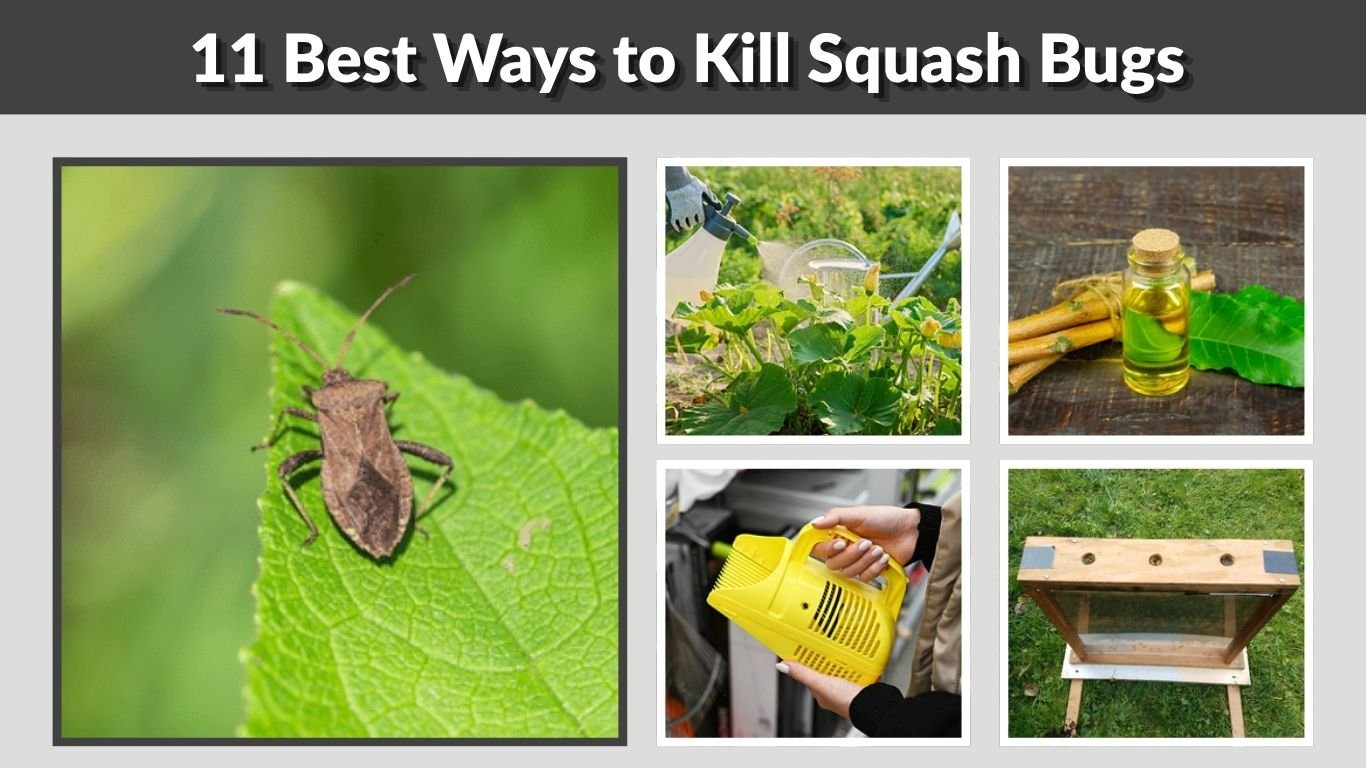
Squash bugs can seriously damage zucchini, pumpkins, cucumbers, gourds, and other cucurbit plants by sucking sap from their leaves and vines. Heavy infestations may cause yellow spots, wilting, damaged fruit, and plant collapse. Fortunately, you can control them by removing eggs, handpicking adults, using traps, and applying targeted treatments. The following methods explain 11 effective ways to kill squash bugs and prevent them from returning to your garden.
1. Handpick Adult Squash Bugs
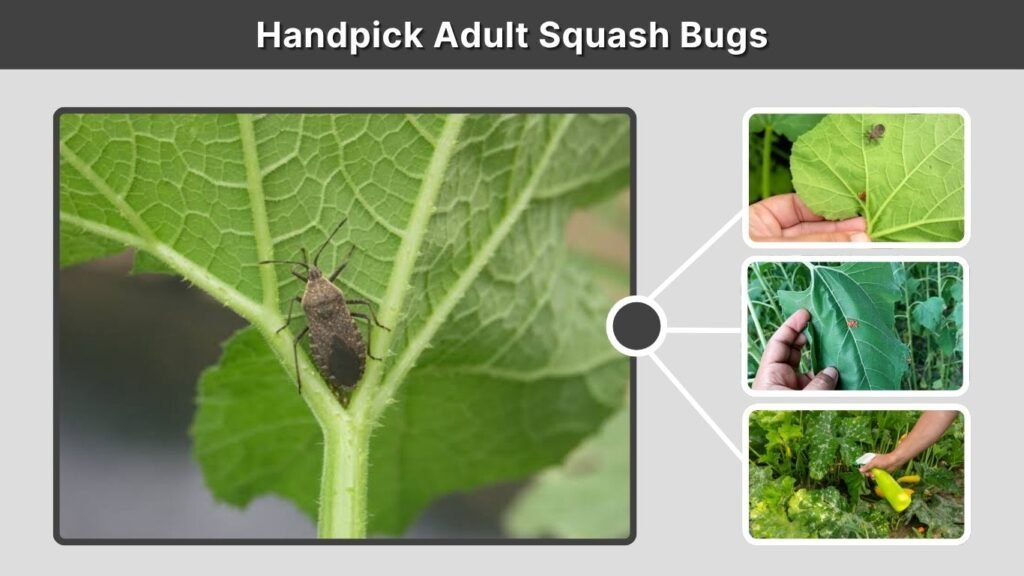
Handpicking is one of the simplest and most effective ways to kill squash bugs, especially when only a few plants are affected. Adult squash bugs usually hide beneath leaves, around plant crowns, under vines, or near developing fruits. Removing them regularly prevents further feeding and reduces the number of eggs laid in the garden.
How to Identify Adult Squash Bugs
Adult squash bugs are flat, oval insects that usually measure about 5/8 inch long. Their bodies are dark gray, brown, or nearly black, with orange markings along the edges of the abdomen.
Look for these features:
- Flat, shield-shaped body
- Grayish-brown coloration
- Orange or brown abdominal edges
- Six dark legs
- Unpleasant odor when crushed
- Slow movement during cool mornings
Best Time to Handpick Them
Early morning is usually the best time to collect adult squash bugs. Cooler temperatures make them less active, so they are easier to catch before they crawl or fly away.
Inspect both sides of the leaves, the base of the stems, and the soil beneath the vines. Gently lift large leaves and fruits because adults often hide in shaded areas.
How to Kill the Collected Bugs
Fill a small bucket or container with water and add a few drops of liquid dish soap. Pick up each bug with gloved fingers or knock it directly into the container.
The soapy water prevents the insects from escaping and kills them quickly. Avoid dropping captured bugs on the ground because they may return to the plants.
How Often to Inspect the Plants
Check affected squash plants every day during a serious infestation. Once the population declines, inspecting two or three times each week may be enough.
Continue checking throughout the growing season because new adult squash bugs can move into the garden and begin laying eggs again.
2. Remove and Destroy Egg Clusters
Removing squash bug eggs prevents dozens of young nymphs from hatching and feeding on your plants. Adult females usually lay their eggs on the undersides of squash leaves, particularly near thick veins. Inspecting plants frequently and destroying these clusters is one of the most effective early-control methods.
How to Identify Squash Bug Eggs
Squash bug eggs are small, hard, and usually arranged in neat groups. Look carefully under leaves and around the stems.
- Bronze, copper, or reddish-brown color
- Oval or diamond-like shape
- Usually arranged in clusters
- Commonly found near leaf veins
- Often laid in groups of 15–40 eggs
How to Remove the Eggs
Press a piece of sticky tape over the egg cluster and gently pull it away from the leaf. You can also scrape the eggs off using a plastic card, dull knife, or gloved fingernail.
Place removed eggs in soapy water or seal them inside a bag before disposing of them. Do not simply drop them onto the soil because some may still hatch.
When to Check the Plants
Begin inspecting your plants soon after seedlings emerge or transplants are placed in the garden. Female squash bugs may begin laying eggs once the plants develop several large leaves.
Check the undersides of leaves every two or three days during warm weather.
Should You Remove the Entire Leaf?
Removing the entire leaf is unnecessary when the egg cluster can be scraped off safely. However, you may prune a leaf when it contains several clusters or is already badly damaged.
Avoid removing too many healthy leaves because squash plants need them to produce energy and develop fruit.
3. Drop Squash Bugs Into Soapy Water
A container of soapy water provides a quick and inexpensive way to kill adult squash bugs and nymphs after removing them from plants. The soap breaks the water’s surface tension, making it difficult for the insects to float, escape, or survive.
What You Will Need
Prepare your container before beginning the garden inspection.
- A small bucket, bowl, or wide-mouth jar
- Clean water
- A few drops of liquid dish soap
- Gardening gloves
- A small stick or brush for knocking bugs down
How to Prepare Soapy Water
Fill the container halfway with water and add several drops of liquid dish soap. Stir gently without producing excessive foam.
You do not need a strong concentration. The water only needs enough soap to prevent the insects from remaining safely on the surface.
How to Collect Squash Bugs
Hold the container beneath the affected leaf or vine. Knock the bugs directly into the water using your fingers, a small brush, or a stick.
Young nymphs often gather in groups, making it possible to remove several at once. Adults may hide beneath fruit or around the plant crown.
How Often to Use This Method
Use the soapy-water method daily when squash bugs are abundant. Continue until you find very few bugs during each inspection.
This technique works especially well when combined with egg removal and board traps. Avoid pouring the used soapy water around plant roots because some detergents may damage soil organisms or sensitive foliage.
4. Use Wooden Board Traps
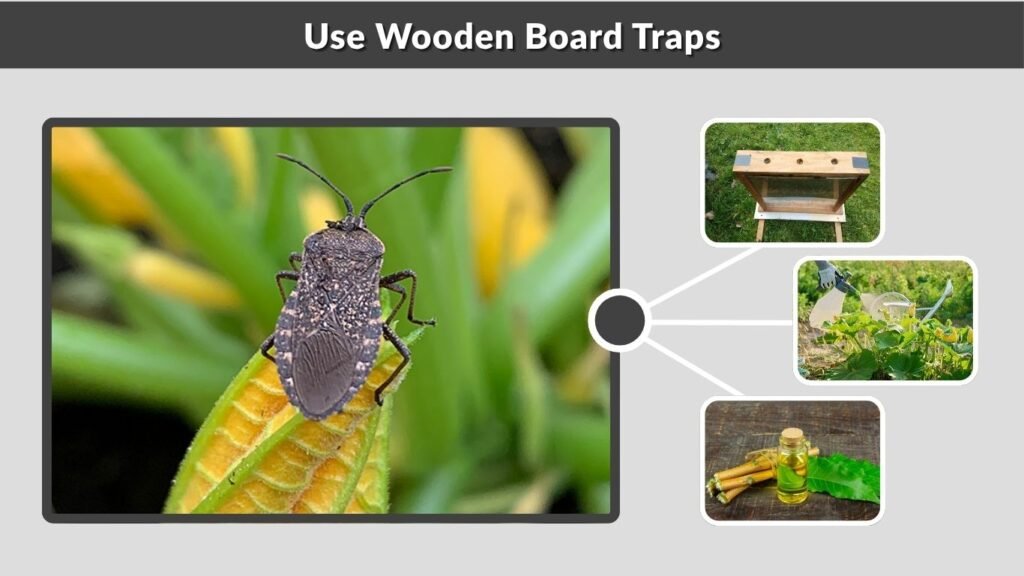
Wooden board traps attract squash bugs by providing the dark, protected shelter they seek at night. This simple method makes hidden adults and older nymphs easier to find and remove in the morning.
Materials You Can Use
Several flat materials can work as overnight squash bug traps.
- Short wooden boards
- Pieces of plywood
- Thick cardboard
- Roof shingles
- Folded newspaper
- Flat pieces of bark
How to Set the Traps
Place the boards flat on the soil beside affected squash, pumpkin, or zucchini plants during the evening. Position them close to vines and plant crowns where squash bugs are active.
Do not place heavy boards directly on stems because they may crush or damage the plants.
How to Check the Traps
Lift each board early the following morning. Squash bugs often gather underneath while temperatures are cool.
Knock the insects into a bucket of soapy water or crush them immediately. Check both the board and the soil underneath because bugs may begin scattering as soon as they are exposed.
How Long to Continue Trapping
Use board traps every night during an active infestation. Continue checking them until you repeatedly find no adults or nymphs underneath.
Never leave the traps unchecked for several days. An ignored board can become a permanent shelter that protects squash bugs from predators, sunlight, and weather.
5. Spray Insecticidal Soap
Insecticidal soap can help control newly hatched squash bug nymphs when it contacts them directly. It works by disrupting the protective outer layer of soft-bodied insects, causing them to lose moisture. It is less reliable against mature adults because their bodies are harder and more resistant.
Where to Apply the Spray
Direct coverage is essential because insecticidal soap does not leave a strong residual effect.
- Undersides of leaves
- Leaf stems and veins
- Plant crowns
- Young vines
- Areas beneath developing fruit
- Groups of newly hatched nymphs
How to Apply Insecticidal Soap
Choose a commercial insecticidal soap labeled for edible vegetables and squash bugs. Follow the mixing and application instructions printed on the product label.
Spray the insects thoroughly rather than lightly misting the entire garden. Avoid treating plants during the hottest part of the day.
Best Time for Treatment
Apply the spray early in the morning or during the evening when temperatures are cooler. Young nymphs are the easiest stage to kill, so treatment should begin shortly after egg clusters start hatching.
Do not spray open flowers while bees and other pollinators are actively visiting.
Protecting Squash Leaves
Test the product on one or two leaves before treating the entire plant. Wait approximately 24 hours and check for spotting, yellowing, or burning.
Avoid using homemade detergent mixtures because household soaps may contain degreasers, fragrances, or other ingredients that damage foliage.
6. Apply Neem Oil
Neem oil is a plant-based treatment that may help reduce squash bug eggs and young nymphs. It works best as part of a larger control plan that includes handpicking, egg removal, trapping, and regular plant inspections.
What Neem Oil May Control
Neem oil is generally most useful against early squash bug stages.
- Newly laid egg clusters
- Recently hatched nymphs
- Small, soft-bodied nymphs
- Bugs directly covered by the spray
It is usually less effective against mature adults with hardened bodies.
How to Apply Neem Oil
Select a neem oil product labeled for use on vegetables and follow its instructions carefully. Coat the undersides of leaves, stems, and areas where young nymphs are gathering.
Shake or mix the product as directed because oil and water may separate during application.
When to Spray Squash Plants
Apply neem oil during the early morning or evening. Avoid spraying plants during hot, sunny conditions because the oil may burn leaves.
Evening applications also reduce the chance of exposing bees, although you should still avoid spraying flowers directly.
How Often to Reapply It
Neem oil may need to be reapplied according to the product label, especially after rain or overhead watering. Continue checking the plants between treatments because the oil will not kill every hidden insect.
Stop relying on neem oil alone if large adults remain abundant. Combine it with hand removal and soapy-water collection for better results.
7. Use Horticultural Oil
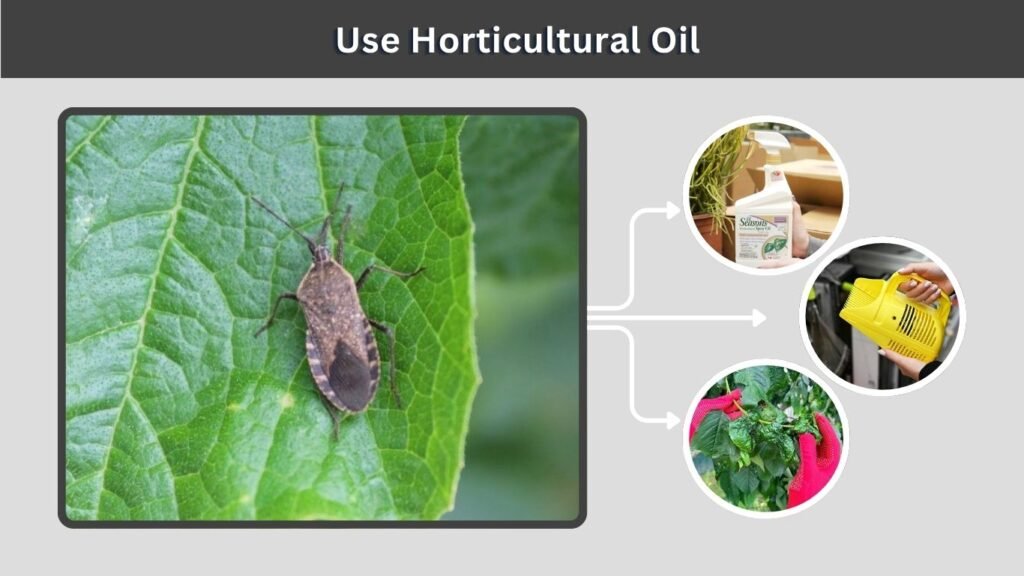
Horticultural oil can help control squash bug eggs and newly hatched nymphs by coating and suffocating them. It is most effective when infestations are discovered early and the oil makes direct contact with the pests. Older nymphs and adults are harder to kill, so combine this treatment with handpicking and egg removal.
What Horticultural Oil Controls
Horticultural oil works best against the most vulnerable squash bug stages.
- Newly laid egg clusters
- Eggs close to hatching
- Recently hatched nymphs
- Small nymphs gathered beneath leaves
- Bugs directly covered by the spray
It generally provides limited control of mature adults because their bodies are protected by a tougher outer covering.
How to Apply the Oil
Choose a horticultural oil labeled for vegetables and edible cucurbit crops. Mix and apply it exactly as instructed on the product label.
Spray beneath the leaves, along thick leaf veins, around stems, and near plant crowns. Complete coverage is important because the oil must contact eggs or nymphs to work effectively.
Best Time to Spray
Apply horticultural oil early in the morning or during the evening when temperatures are cooler. Spraying during hot, sunny weather can increase the risk of leaf damage.
Avoid treating drought-stressed or wilted plants. Water them appropriately and allow them to recover before applying an oil-based product.
Protecting Pollinators and Plants
Do not spray open flowers or areas where bees are actively feeding. Test the oil on a small section of the plant before treating all the leaves.
Wait at least 24 hours and check for yellowing, spotting, or burning. Reapply only at the interval listed on the label.
8. Vacuum Bugs From Plants
A small handheld vacuum can remove large numbers of squash bug nymphs and adults without requiring chemical treatment. This method is helpful when insects are gathered in visible groups, but it must be performed carefully to avoid tearing leaves or damaging fragile stems.
Equipment You Can Use
Choose a lightweight vacuum with gentle suction.
- Cordless handheld vacuum
- Small shop vacuum on a low setting
- Narrow hose attachment
- Disposable collection bag
- Soft brush attachment
- Bucket of soapy water
Avoid using powerful suction that could pull leaves or flowers into the machine.
How to Vacuum Squash Bugs
Move the nozzle slowly beneath leaves, around plant crowns, and beside developing fruits. Hold the leaf steady with one hand while collecting bugs with the other.
Concentrate on groups of young nymphs first because they are easier to remove. Keep the nozzle away from blossoms, tender vine tips, and loose soil.
How to Dispose of Collected Bugs
Empty the vacuum outdoors immediately after finishing. Drop the collected insects into soapy water or seal the disposable bag tightly before placing it in the trash.
Do not leave live bugs inside the vacuum because they may crawl out and return to the plants.
When Vacuuming Works Best
Vacuum during the cool morning hours when adults are less active. Repeat the process daily during a heavy infestation.
This method works best in gardens with a limited number of plants and should be combined with egg removal to prevent new nymphs from appearing.
9. Remove Heavily Infested Leaves
Removing heavily infested leaves can eliminate numerous eggs and nymphs at one time. It also opens dense foliage, making hidden squash bugs easier to find. However, excessive pruning can weaken the plant, reduce fruit production, and expose developing squash to sun damage.
When a Leaf Should Be Removed
Consider pruning a leaf when it contains:
- Several squash bug egg clusters
- Large groups of feeding nymphs
- Extensive yellow or brown damage
- Dry, brittle, or dead tissue
- Signs of disease or decay
- Damage covering most of the leaf
Healthy leaves with only a few eggs should usually be cleaned rather than removed.
How to Prune the Leaf
Use clean, sharp pruning shears and cut the leaf stem near its connection to the main vine. Avoid cutting or crushing the vine itself.
Disinfect the shears before moving to another plant, particularly when the removed leaf shows signs of fungal or bacterial disease.
How to Dispose of Infested Material
Place removed leaves directly into a sealed bag or bucket. Crush the eggs and insects, or submerge the plant material in soapy water before disposal.
Do not leave infested leaves beside the garden or add living squash bugs to an open compost pile.
Avoid Removing Too Many Leaves
Squash plants depend on their large leaves for photosynthesis and fruit development. Remove only the most severely affected foliage.
If many leaves are infested, focus on destroying eggs and insects individually rather than stripping the plant. A weakened vine may struggle to recover even after the bugs are gone.
10. Apply a Labeled Garden Insecticide
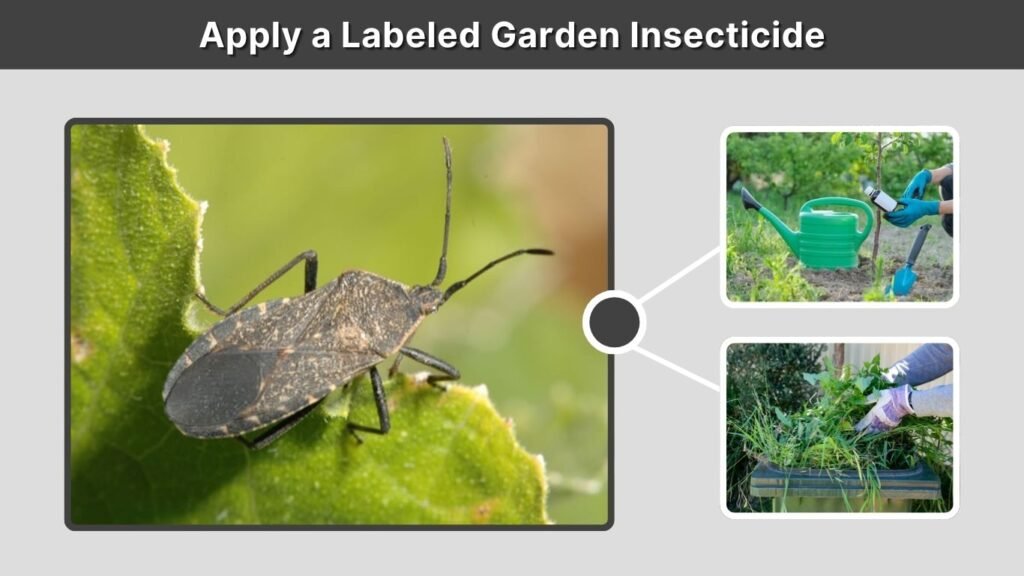
A garden insecticide may be necessary when squash bugs are numerous, young plants are wilting, and physical removal no longer provides enough control. Treatment is most successful against newly hatched nymphs. Adult squash bugs are difficult to kill because they hide deeply and have protective outer bodies.
Choosing a Suitable Product
Select an insecticide whose label specifically allows use on:
- Squash, pumpkin, or zucchini
- Edible vegetable gardens
- Squash bugs or true bugs
- The growth stage of your plants
- Home gardens
- Outdoor food crops
Never use an indoor pesticide or an unlabeled chemical on edible plants.
How to Apply the Insecticide
Follow the label’s mixing rate and safety instructions exactly. Direct the spray beneath leaves, around leaf stems, along vines, and near the base of the plant.
Spraying only the upper leaf surface will miss many insects. Squash bugs commonly hide beneath foliage and around the crown.
Best Time for Treatment
Apply the product when eggs are hatching and small nymphs are visible. Early morning or late evening is usually preferable, depending on the label instructions.
Avoid spraying before rain or irrigation because water may wash the treatment away before it works.
Protecting Bees and Harvested Produce
Never spray open flowers while bees and other pollinators are present. Squash flowers are highly attractive to bees, making careless pesticide use especially harmful.
Observe the preharvest interval printed on the label. This tells you how many days must pass between treatment and safely harvesting the vegetables.
11. Clean Up Garden Debris
Garden cleanup helps prevent squash bugs from surviving winter and returning the following growing season. Adults often hide beneath dead vines, fallen leaves, boards, mulch, weeds, and other protected materials after crops stop producing.
Materials That Should Be Removed
Clear away potential overwintering shelters such as:
- Dead squash vines
- Fallen cucurbit leaves
- Rotten pumpkins and squash
- Weeds surrounding the garden
- Unused boards and cardboard
- Thick piles of straw
- Empty containers and plant pots
Inspect each item because adult squash bugs may be hiding underneath.
When to Clean the Garden
Begin cleanup as soon as the squash crop has finished producing. Do not leave dying vines in the garden throughout autumn and winter.
Removing debris early reduces the number of protected hiding places available before cold weather arrives.
How to Dispose of Old Plants
Pull up spent vines and place heavily infested material in sealed garden-waste bags. You may also dispose of it according to local yard-waste rules.
Avoid placing large numbers of live squash bugs or egg-covered leaves in a cool compost pile, where some insects may survive.
Prepare the Garden for Next Season
After clearing the bed, remove weeds and lightly cultivate the surface soil where appropriate. Plan to grow squash in a different section of the garden the following year.
Crop rotation cannot stop every flying adult, but combining it with thorough cleanup, row covers, and early inspections can greatly reduce future infestations.
FAQs
What is the fastest way to kill squash bugs?
The fastest method is to handpick adult bugs and nymphs and drop them into a container of soapy water. Removing bronze-colored egg clusters at the same time prevents new squash bugs from hatching and quickly reduces the infestation.
Will vinegar kill squash bugs?
Vinegar is not a reliable squash bug treatment and may damage squash leaves if sprayed directly on the plant. Handpicking, egg removal, insecticidal soap, neem oil, and labeled garden insecticides are safer and more effective options.
What naturally keeps squash bugs away?
Row covers, regular egg removal, garden cleanup, crop rotation, and resistant squash varieties can help reduce squash bug problems naturally. Keeping the garden free of dead vines, weeds, boards, and other hiding places also limits their shelter.
Can squash plants recover from squash bug damage?
Mature squash plants can recover if the bugs are removed before the vines suffer severe damage. Keep the plants properly watered and remove only badly damaged leaves. Young plants that have completely wilted or collapsed may not survive.
When are squash bugs most active?
Squash bugs are most active during warm weather, but early morning is the easiest time to collect them because cooler temperatures make them slower. Check beneath leaves, around stems, under fruit, and near the plant crown.
