
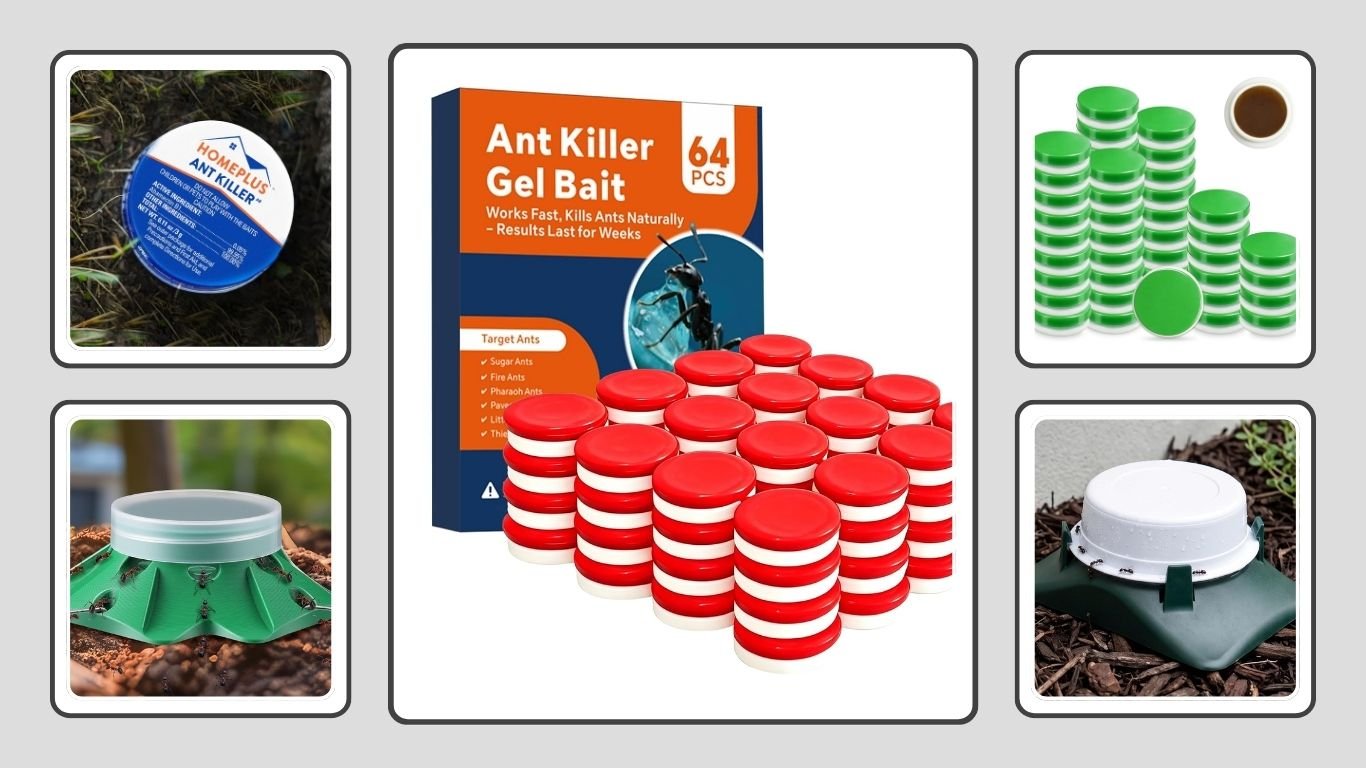
Outdoor ant bait stations can be a practical way to target ants around patios, foundations, gardens, driveways, and entry points before they move deeper into the home. The best stations use slow-acting bait that worker ants can carry back to the colony, helping reduce activity at the source rather than only killing visible ants. In this guide, we review six of the best outdoor ant bait stations based on bait design, weather resistance, ease of placement, target species, and overall convenience for managing common household and carpenter ants.
1. Slow-Acting Outdoor Ant Bait Stations for Carpenter Ants
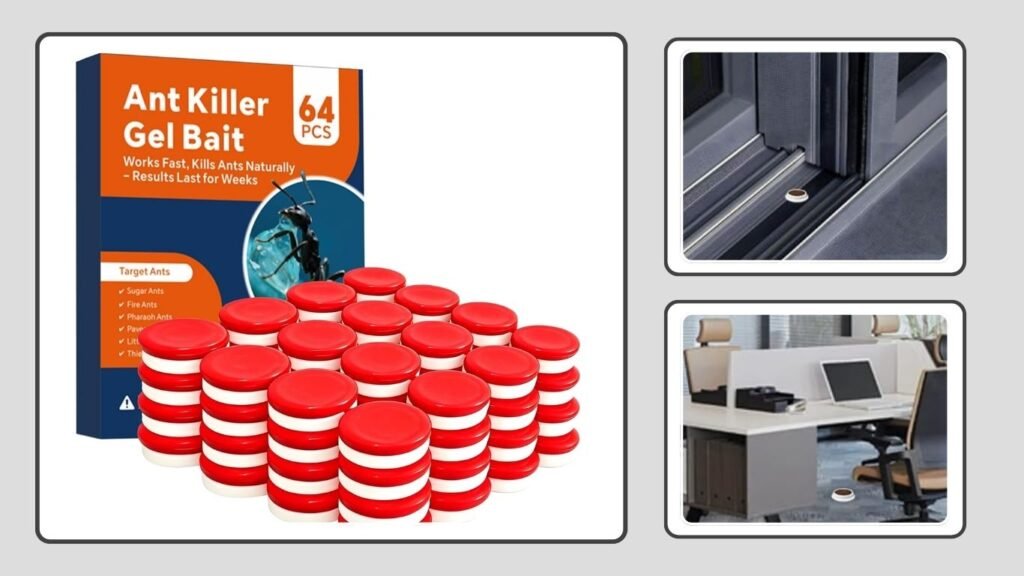
These Slow-Acting Outdoor Ant Bait Stations are designed for homeowners who want to target ant activity around foundations, patios, yards, entry points, and other outdoor areas. Their slow-action approach is intended to give foraging ants enough time to feed on the bait and return to the colony. This colony-focused method can be more useful for recurring ant activity than simply killing the workers visible on the surface.
Key Features
- Slow-acting bait station design
- Marketed for carpenter ants and household ants
- Designed for outdoor placement
- Enclosed bait delivery system
- Suitable for placement along ant trails
- Helps target ants beyond visible workers
- Convenient ready-to-place format
- Useful around foundations and outdoor entry points
Why It’s Best for Colony-Focused Control
The biggest advantage of slow-acting ant bait is that it works with normal ant foraging behavior. Workers locate the food source, feed, and can carry bait back toward nestmates before its effects become apparent.
That approach is particularly relevant for carpenter ants because eliminating a handful of workers usually does little to affect a well-established colony. Carpenter ant bait should always be specifically labeled for that species, since feeding preferences vary and not every household ant bait works effectively on carpenter ants.
Outdoor Performance & Placement
Placement is just as important as the bait itself. Stations generally work best near active trails, suspected nest areas, foundation edges, patios, or locations where ants repeatedly enter a structure.
Avoid placing strong repellent sprays directly around bait stations because repellents can discourage ants from approaching the bait. Stations should also be positioned according to label directions and kept inaccessible to children and pets.
Patience matters with colony baiting. A properly functioning slow bait may take days or even weeks to noticeably reduce a large colony.
Overall Verdict
These stations are technically most appealing for homeowners who prefer gradual colony-level control rather than immediate surface knockdown. Their enclosed format simplifies placement and helps keep the treatment concentrated in selected outdoor areas.
For persistent carpenter ant activity, the slow-action concept is particularly valuable, provided the specific product label confirms carpenter ants as a target species. When combined with moisture correction and identification of damaged wood, these stations can become a practical part of a broader carpenter ant management strategy.
2. Home Plus Outdoor Ant Bait Stations
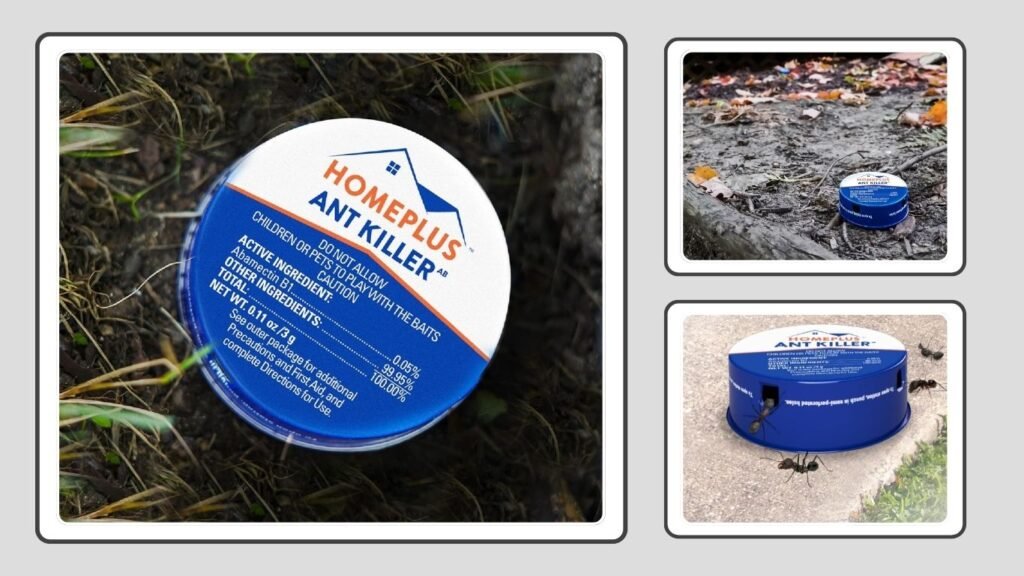
Home Plus Outdoor Ant Bait Stations are designed for straightforward ant management both around and outside the home. The product is marketed as a colony-targeting bait that kills ants workers encounter while also allowing the treatment to reach the queen and colony. Its enclosed station format eliminates the need to measure loose granules or manually mix liquid bait, making it convenient for homeowners wanting simple strategic placement.
Key Features
- Suitable for indoor and outdoor use
- Ready-to-use bait station format
- Designed to target the colony
- Marketed to kill the queen
- Useful near ant trails and entry points
- Compact enclosed design
- Requires minimal preparation
- Suitable for perimeter placement
Why It’s Best for Simple Outdoor Placement
Home Plus stands out for convenience. Instead of preparing bait or applying loose insecticide around large portions of a property, users can position individual stations where ants are already traveling.
This targeted strategy can be particularly useful around doors, porches, garages, patios, foundation edges, and other locations where outdoor ants repeatedly approach the house.
Because the bait remains contained within a station, the treatment area can also remain more organized than it would with loose bait scattered across surfaces.
Outdoor Performance & Colony Control
Bait stations perform best when ants are allowed to forage naturally. If workers discover and accept the bait, colony-wide distribution can potentially reach individuals that never leave the nest.
Ant activity may not disappear immediately. In some baiting situations, more ants become noticeable initially because workers recruit nestmates to a newly discovered food source. The bait should therefore remain available according to the product label rather than being removed simply because ant traffic temporarily increases.
Placement away from heavy rain, sprinklers, and competing food sources may also improve bait accessibility.
Overall Verdict
Home Plus Outdoor Ant Bait Stations provide a practical balance between ease of use and colony-targeting pest management. Their ready-to-place construction works especially well for homeowners who do not want to measure, spread, or handle loose bait materials.
For routine perimeter ant problems and recurring trails near entrances, the simple station design makes strategic treatment easy. Following the label carefully and keeping stations appropriately positioned can help deliver better results than repeatedly killing only the visible workers.
3. TERRO T1804SR Outdoor Liquid Ant Baits
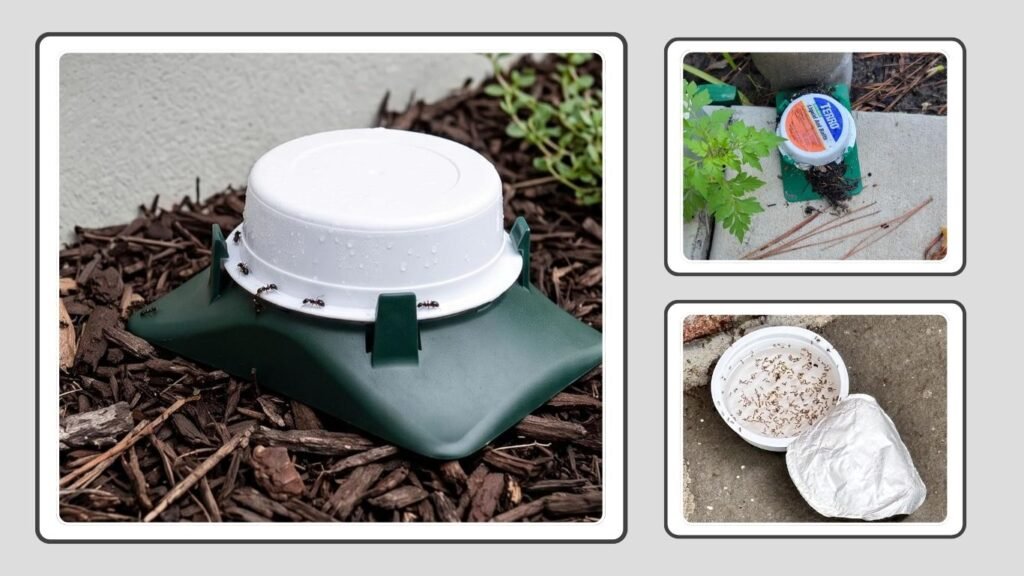
TERRO T1804SR Outdoor Liquid Ant Baits are among the more established options for controlling sweet-feeding household ants around the exterior of a home. Each station contains liquid bait designed to work slowly enough for worker ants to return to the colony and share it with other members. The outdoor housing helps protect the bait while offering flexible placement around foundations, decks, garages, sheds, and active ant trails.
Key Features
- Pre-filled liquid ant bait
- Slow-acting borax formula
- Ready-to-use design
- Four bait stations
- One ounce of liquid bait per station
- Push-and-twist activation
- Designed for common sweet-feeding household ants
- Suitable around home perimeters
- Can be placed on flat outdoor surfaces
- Enclosed bait reservoir
Why It’s Best for Sweet-Feeding Household Ants
TERRO’s biggest advantage is its liquid formula. Many common household ants actively seek carbohydrates, making sweet liquid bait highly attractive when colonies are in a sugar-feeding phase.
Workers can consume the bait and return to the colony before dying, helping distribute it to other workers and potentially the queen.
One important limitation should be understood: TERRO’s official product information specifically excludes carpenter ants, fire ants, pharaoh ants, and harvester ants from this product’s target list. Therefore, it should not be selected specifically for carpenter ant control.
Outdoor Performance & Placement
The stations can be positioned near visible colonies and around the perimeter of a home. TERRO recommends placing outdoor baits roughly 10–20 feet apart where appropriate.
Although the housing is intended for outdoor use, direct rain or sprinkler exposure can dilute the liquid. Sheltered placement provides better protection.
Ant numbers may initially increase as workers recruit additional foragers. This is expected with attractive slow-acting bait and does not necessarily indicate treatment failure.
Overall Verdict
TERRO T1804SR is a technically strong choice for sweet-feeding outdoor household ants, especially when homeowners want pre-filled liquid bait with minimal preparation.
The combination of simple activation, colony-oriented action, and flexible perimeter placement gives it considerable practical value. However, species identification matters: homeowners specifically targeting carpenter ants should choose a bait whose label explicitly includes carpenter ants rather than assuming all ant baits work on every species.
4. Qualirey Outdoor Ant Bait Stations
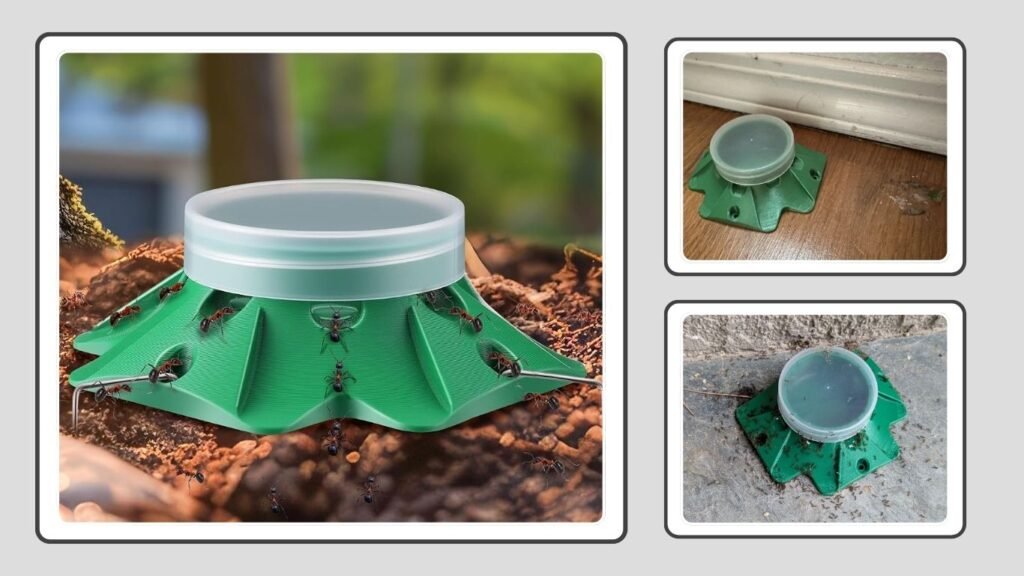
Qualirey Outdoor Ant Bait Stations offer an enclosed approach to household ant management, allowing multiple stations to be positioned strategically around areas where ants regularly travel. The design is particularly useful when homeowners want targeted treatment without broadly scattering bait across patios, foundations, or other outdoor surfaces. By keeping the bait within individual stations, users can concentrate control efforts around active trails and suspected entry locations.
Key Features
- Multiple bait station format
- Suitable for household ant management
- Designed for targeted placement
- Enclosed bait construction
- Useful around outdoor ant trails
- Convenient for perimeter applications
- Minimal setup required
- Allows several locations to be treated simultaneously
Why It’s Best for Multi-Point Treatment
Ant colonies may use several trails rather than relying on a single route. Having multiple bait stations makes it easier to cover different activity zones around a property.
For example, stations can be positioned near a patio trail, another close to the foundation, and additional units near doors or other entry areas. This distributed approach increases the chance that actively foraging workers encounter bait somewhere along their normal route.
It also provides more flexibility when one particular bait location receives little activity.
Outdoor Performance & Strategic Placement
Outdoor baiting works most efficiently when stations are placed where ants already forage instead of being positioned randomly across a yard.
Watch worker movement for several minutes and identify consistent trails. A station located close to that pathway has a better chance of being discovered.
Competing food should also be removed where practical. Open garbage, sweet spills, fallen fruit, and pet-food residues can provide ants with alternative meals and reduce their interest in bait.
As with any pesticide-containing bait, label instructions determine appropriate locations and safety precautions.
Overall Verdict
Qualirey Outdoor Ant Bait Stations are most appealing for properties where ant activity occurs in several separate locations. The multi-station approach allows homeowners to build a more complete perimeter strategy instead of relying on one treatment point.
Their enclosed format also keeps bait placement relatively neat and controlled. For recurring household ants around outdoor living areas and structural entry points, strategic multi-location use makes these stations a convenient option within an overall ant-management plan.
5. Long-Lasting Ant Bait Stations for Carpenter Ants
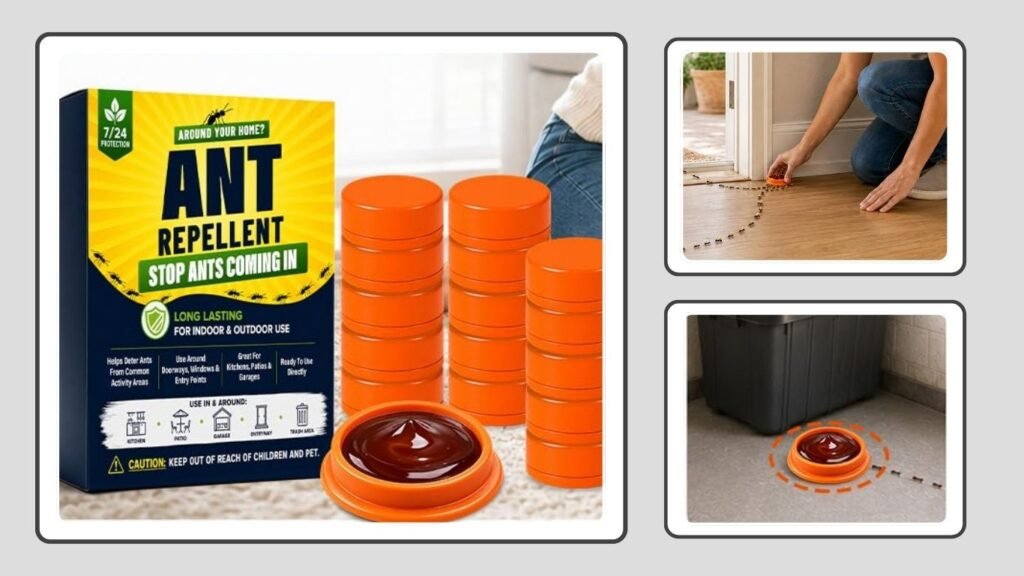
These Long-Lasting Ant Bait Stations are marketed for persistent household and carpenter ant problems where a bait needs to remain available long enough for repeated worker visits. Rather than relying on rapid contact action, the bait-station concept focuses on attracting foragers and allowing them to interact with a treatment over time. Their compact format also makes them adaptable for selected outdoor areas as well as appropriate labeled household locations.
Key Features
- Marketed for carpenter and household ants
- Long-lasting bait concept
- Enclosed bait station
- Designed for repeated ant feeding
- Suitable for targeted placement
- Compact and easy to position
- Useful near active ant trails
- Colony-oriented control approach
Why It’s Best for Persistent Ant Activity
Large ant colonies can continue producing foragers even after many individual workers have been eliminated. That is why a bait that remains available over a longer period can be advantageous.
Workers need enough time to repeatedly locate the food source and transfer bait through the colony. This principle is particularly relevant for carpenter ants, where only a relatively small proportion of workers may be visible outside the nest at any one time.
The bait must still be specifically labeled for carpenter ants to be appropriate for that use.
Outdoor Performance & Placement
For carpenter ants, outdoor stations can be especially useful near trails leading between trees, logs, decks, structural wood, and buildings.
Carpenter ants often forage at night, so observing activity after sunset can help identify stronger placement locations. Stations should remain undisturbed while workers are actively feeding.
Avoid spraying repellent insecticide immediately around the bait. Repellents may disrupt trails and reduce the number of ants reaching the station.
Moisture problems should also be addressed because carpenter ants frequently establish nests around water-damaged or decaying wood.
Overall Verdict
These Long-Lasting Ant Bait Stations make the most technical sense for homeowners who want bait to remain available during an extended control program.
Their colony-focused format is preferable to repeatedly eliminating individual workers when the underlying nest remains active. For carpenter ants, they can be particularly useful as part of a broader approach that includes finding moisture problems, inspecting damaged wood, and confirming that the bait label specifically lists carpenter ants.
6. Slow-Acting Dual-Sided Carpenter Ant Bait Stations
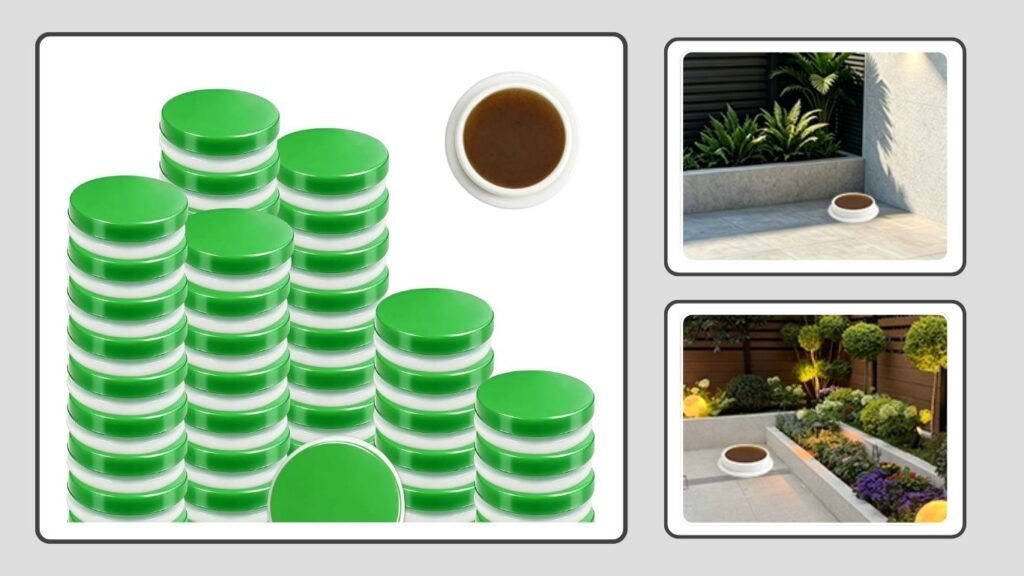
The Slow-Acting Dual-Sided Carpenter Ant Bait Stations are designed around two useful concepts: delayed bait action and easier access for foraging ants. A dual-sided station can provide more than one approach point along an active trail, while slow-acting bait gives workers an opportunity to return toward the nest before the treatment takes full effect. This makes the design especially interesting for targeted use around persistent carpenter and household ant activity.
Key Features
- Dual-sided bait station design
- Slow-acting bait approach
- Marketed for carpenter ants
- Multiple ant access points
- Suitable for household ant problems
- Designed for colony-focused control
- Compact placement format
- Useful along active ant trails
Why It’s Best for Active Ant Trails
The dual-sided layout is particularly practical when a station is positioned directly alongside a busy trail. Workers approaching from different directions can potentially access the bait without needing to circle around one small entrance.
That can improve convenience in areas where ants travel along walls, foundation edges, decks, or other narrow pathways.
Combined with delayed bait action, the design aims to allow foragers to return to nestmates rather than dying immediately next to the station.
Outdoor Performance & Placement
For outdoor carpenter ant control, stations should be positioned close to known trails while remaining protected from unnecessary disturbance. Checking for ants during evening hours can help locate active routes.
Do not assume that seeing more ants around a bait station means the problem is getting worse. Recruitment to an attractive bait can temporarily concentrate foragers around the station.
Results from slow-acting carpenter ant bait may also require several weeks. UC Integrated Pest Management notes that effective carpenter ant bait must work slowly enough for workers to return to the colony, and visible results may not appear immediately.
Overall Verdict
The Slow-Acting Dual-Sided Carpenter Ant Bait Station has a sensible design for targeted trail placement, especially where carpenter ants repeatedly travel through one outdoor area.
Its combination of multiple access points and delayed action supports the basic biology behind colony baiting rather than relying solely on immediate worker mortality. For homeowners who have confirmed carpenter ant activity and want an easy-to-position station, this type of design can be a practical component of a larger control strategy that also addresses nesting sites and moisture conditions.
FAQs
1. Do outdoor ant bait stations really work?
Yes. Outdoor ant bait stations can be effective when worker ants are attracted to the bait and carry it back toward the colony. Slow-acting formulas are especially useful because they give ants enough time to share the bait with nestmates before dying. Results are usually gradual rather than immediate.
2. Where should I place outdoor ant bait stations?
Place bait stations close to active ant trails, foundation edges, patios, decks, doorways, garages, or other areas where ants regularly travel. Avoid random placement when possible. Watching ant activity first can help identify the strongest feeding routes and improve the chances of workers finding the bait.
3. How long do outdoor ant bait stations take to work?
The time required depends on the ant species, colony size, bait formula, and how readily workers accept the food. Some activity may decrease within several days, while larger colonies can require a few weeks. Slow action is intentional because bait needs time to spread through the colony.
4. Can outdoor ant bait stations kill carpenter ants?
Some can, but only products specifically labeled for carpenter ants should be used for that purpose. Carpenter ants may have different food preferences from common household ants, so a bait that works well for one species may be less effective for another. Always check the target-species information on the product label.
5. Should I use ant spray together with bait stations?
Avoid applying strong repellent sprays directly around bait stations or active feeding trails. Repellents can discourage workers from approaching the bait and may reduce colony transfer. Bait usually works best when ants are allowed to forage naturally. Other treatments can still be used in separate areas when appropriate and according to label directions.
