
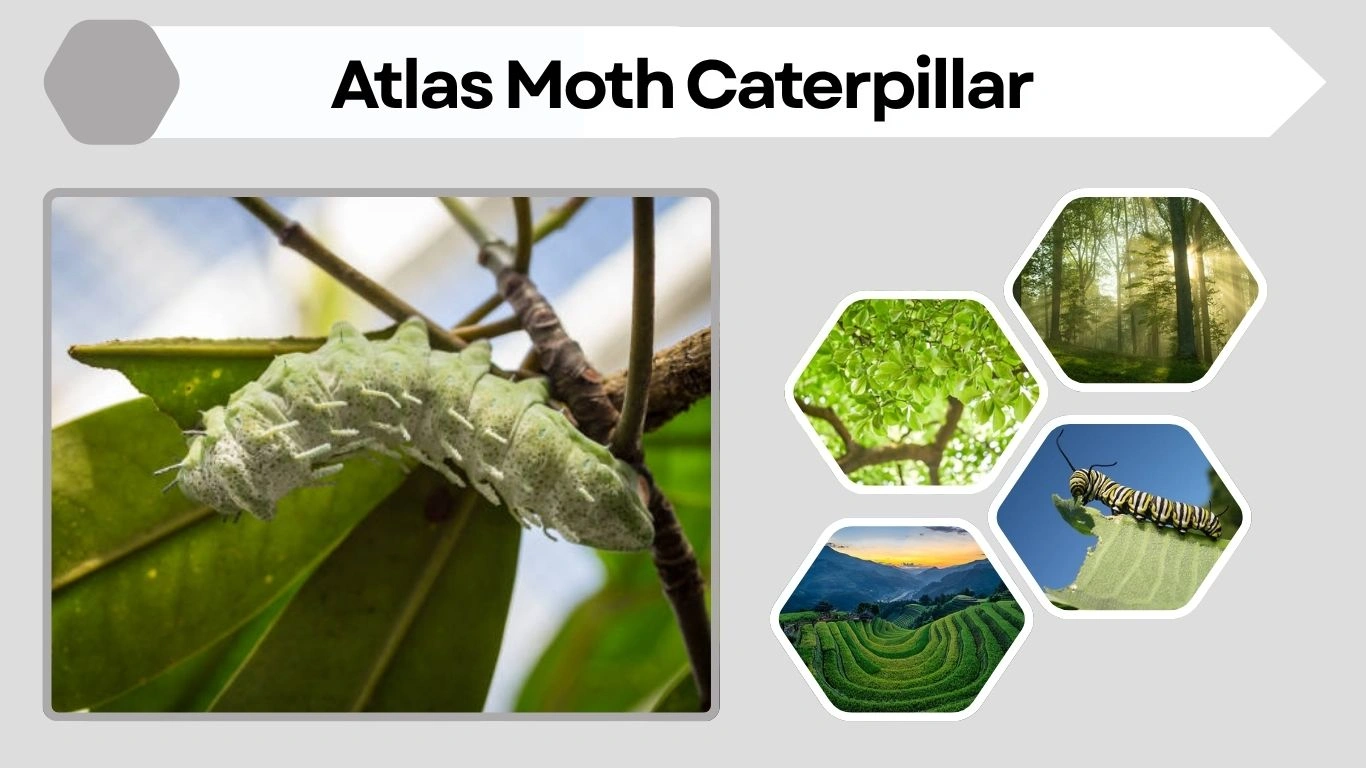
The atlas moth caterpillar is one of the largest and most fascinating larval insects in the world. As the early stage of Attacus atlas, it plays a crucial role in the moth’s life cycle by storing energy needed for adulthood. Known for its size, green body, and rapid growth, this caterpillar attracts attention from nature enthusiasts and pet keepers. Despite its unusual appearance, it is harmless and easy to observe, making it a popular subject in insect studies.
What Is the Atlas Moth Caterpillar?
The atlas moth caterpillar is the larval stage of the giant atlas moth, one of the largest moth species globally. This stage focuses entirely on feeding and growth, preparing the insect for transformation into its adult form. It is commonly found in tropical regions and thrives on plant leaves.
Scientific Background
- Belongs to species Attacus atlas
- Part of Saturniidae (giant silk moth family)
- Known for large larval size and fast development
Why It Is Unique
- One of the biggest caterpillars in the world
- Stores energy for non-feeding adult stage
- Produces silk cocoon before transformation
Atlas Moth Caterpillar Size
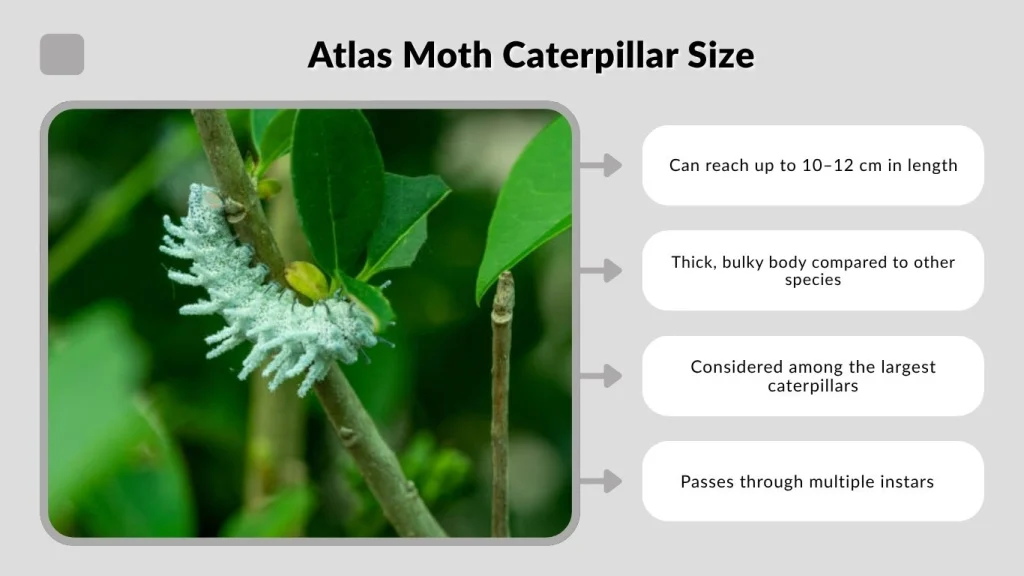
The size of the atlas moth caterpillar is one of its most striking features. It grows rapidly through several stages, becoming much larger than most common caterpillars. This growth is essential for storing energy needed later in its life cycle.
How Big Do They Get?
- Can reach up to 10–12 cm in length
- Thick, bulky body compared to other species
- Considered among the largest caterpillars
Growth Stages
- Passes through multiple instars
- Size increases after each molt
- Final stage shows maximum body size
Atlas Moth Caterpillar Appearance
The atlas moth caterpillar has a distinctive appearance that helps it survive in nature. Its green body and soft texture make it blend easily with leaves, while its unusual coating provides added protection. These features help it avoid predators during its vulnerable stage.
Key Physical Features
- Bright green body with segmented structure
- Covered in a waxy, powder-like coating
- Small protrusions along the body
Defensive Traits
- Camouflage with surrounding leaves
- Appearance may discourage predators
- Non-aggressive and harmless behavior
Atlas Moth Caterpillar Life Cycle
The caterpillar stage is part of a complete metamorphosis process that transforms the insect into a fully developed moth. Each stage plays a specific role, but the caterpillar phase is the most active and energy-intensive.
From Egg to Caterpillar
- Eggs hatch on host plant leaves
- Young larvae begin feeding immediately
Caterpillar to Cocoon
- Spins a strong silk cocoon
- Prepares for transformation
From Cocoon to Moth
- Metamorphosis occurs inside cocoon
- Adult moth emerges after development
Atlas Moth Caterpillar Diet and Feeding
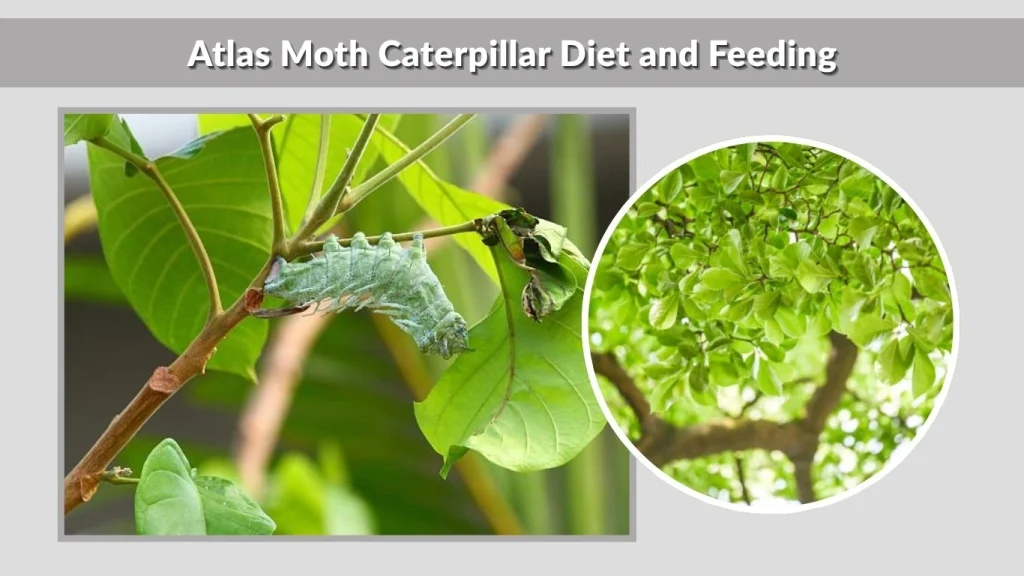
The diet of the atlas moth caterpillar is simple but essential for its survival. During this stage, it consumes large amounts of plant material to fuel rapid growth and prepare for its next phase. Feeding behavior is constant and focused.
What Do They Eat?
- Leaves from various host plants
- Commonly found on trees and shrubs
- Requires fresh foliage daily
Feeding Behavior
- Eats continuously throughout the day
- Growth depends on food availability
- Stores energy for adult stage
Atlas Moth Caterpillar Lifespan
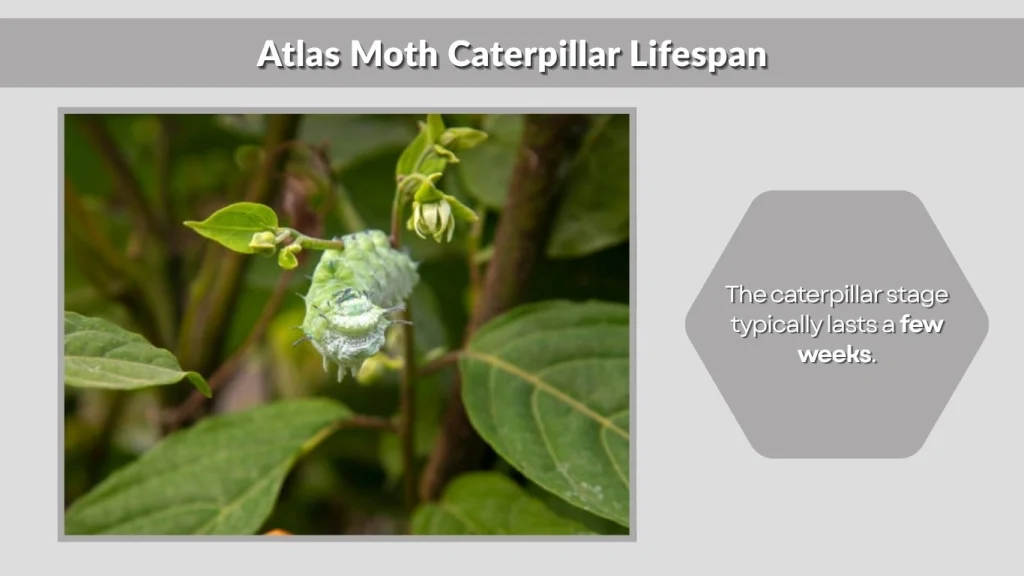
The lifespan of the atlas moth caterpillar is relatively short but highly active. Most of its time is spent eating and growing before it enters the pupal stage. This phase is critical because it determines the strength and survival of the adult moth.
The caterpillar stage typically lasts a few weeks, depending on environmental conditions such as temperature and food supply. During this period, it undergoes several molts and reaches its maximum size. Once fully grown, it forms a cocoon and transitions into the next stage of its life cycle.
Are Atlas Moth Caterpillars Poisonous?
Atlas moth caterpillars may look unusual or intimidating, but they are not harmful to humans. Their appearance is mainly a defense mechanism to avoid predators rather than to attack. Understanding their harmless nature helps reduce fear and encourages safe observation in natural environments.
Safety Facts
- Not poisonous or venomous
- Do not bite or sting
- Safe to handle with care
Why They Look Dangerous
- Waxy coating gives a strange appearance
- Large size can seem intimidating
- Defensive look helps deter predators
Atlas Moth Caterpillar Care
Keeping an atlas moth caterpillar as a pet has become popular among insect enthusiasts. Proper care is essential to ensure healthy growth and successful transformation into a moth. Attention to environment, food, and cleanliness plays a key role.
Basic Care Requirements
- Use a well-ventilated container
- Maintain clean surroundings
- Provide fresh leaves daily
Feeding and Maintenance
- Replace old leaves regularly
- Monitor growth and molting stages
- Keep environment slightly humid
Buying Atlas Moth Caterpillars
Atlas moth caterpillars are sometimes available through specialized breeders and insect sellers. Before purchasing, it is important to understand legal regulations and ethical considerations. Responsible sourcing ensures the species is not harmed in the wild.
Where to Buy
- Online insect breeders
- Educational or specialty stores
- Licensed insect suppliers
Important Considerations
- Check local laws and restrictions
- Ensure ethical breeding practices
- Avoid wild collection
Atlas Moth Caterpillar Habitat and Location
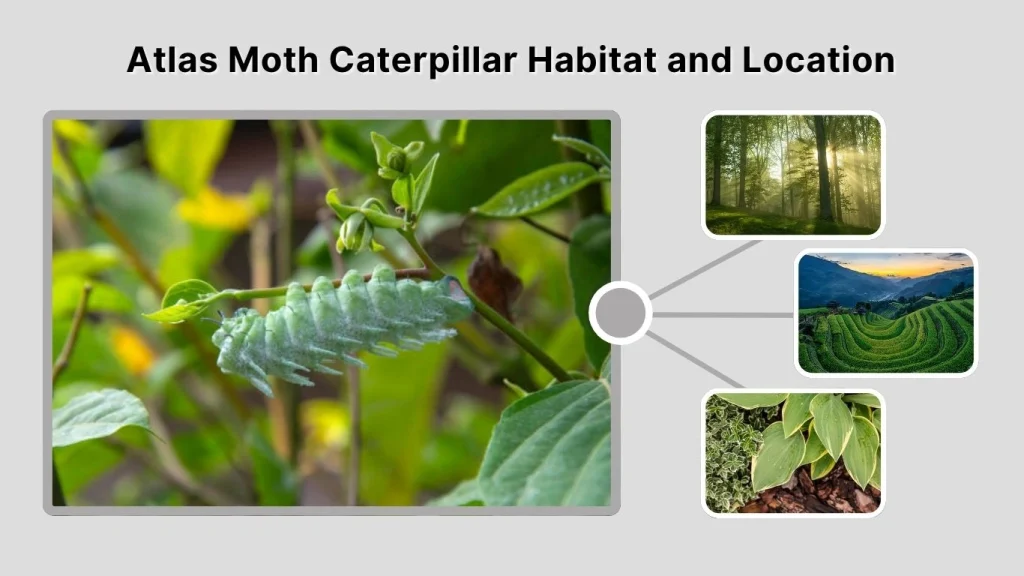
The atlas moth caterpillar is native to tropical and subtropical regions where warm temperatures and abundant vegetation support its growth. These environments provide the necessary food sources and shelter for development.
Natural Habitat
- Tropical forests and green landscapes
- Areas with dense plant life
- Warm and humid climates
Regional Presence
- Common in South and Southeast Asia
- Found in countries like India and Singapore
- Often seen on host plants in natural areas
Atlas Moth Caterpillar vs Other Caterpillars
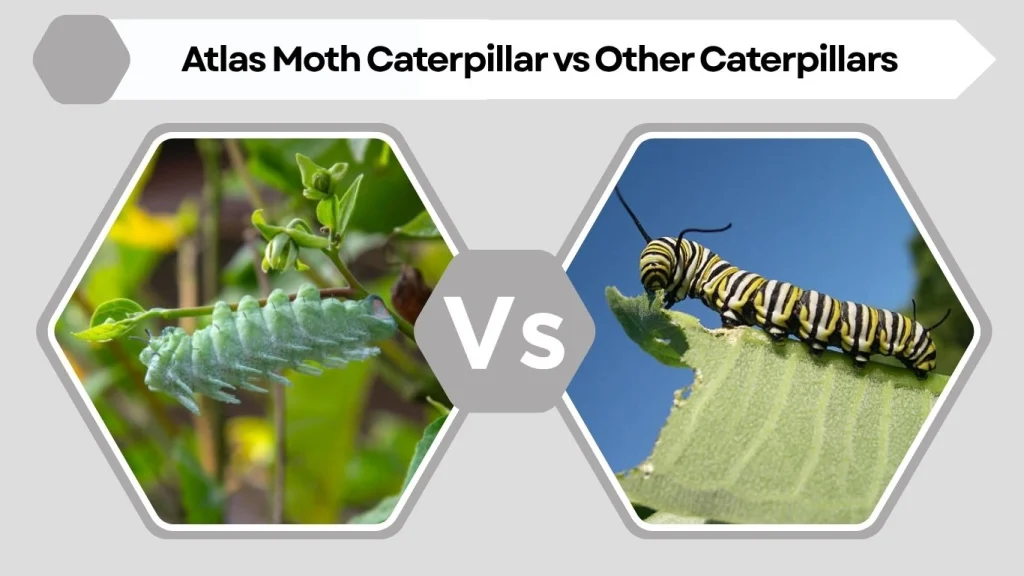
The atlas moth caterpillar stands out when compared to other species due to its size and feeding behavior. While many caterpillars share similar life cycles, this species is unique in both scale and appearance.
Unlike smaller caterpillars, the atlas moth larva grows rapidly and consumes significantly more food. When compared to species like the luna moth caterpillar, it is bulkier and has a thicker body. Its waxy coating and calm behavior also make it visually distinct from other common caterpillars found in nature.
Interesting Facts About Atlas Moth Caterpillars
- One of the largest caterpillars in the world
- Eats almost constantly during growth stage
- Stores energy for non-feeding adult phase
- Produces strong silk cocoon
- Completely harmless to humans
FAQs
How long does an atlas moth caterpillar take to grow?
Atlas moth caterpillars usually take a few weeks to fully grow. During this time, they go through several molting stages, increasing in size rapidly before forming a cocoon.
What plants do atlas moth caterpillars prefer?
They prefer leaves from a variety of trees and shrubs, including citrus, guava, and other broadleaf plants. Fresh, chemical-free leaves are essential for healthy growth.
Can atlas moth caterpillars be handled safely?
Yes, they can be handled carefully as they are not poisonous or aggressive. However, it is best to handle them minimally to avoid stress or damage to their delicate bodies.
Why do atlas moth caterpillars eat so much?
They eat continuously to store enough energy for their adult stage. Since adult atlas moths do not eat, all energy must be accumulated during the caterpillar phase.
What happens after the caterpillar stage ends?
After reaching full size, the caterpillar spins a silk cocoon and enters the pupal stage. Inside the cocoon, it undergoes metamorphosis and eventually emerges as an adult moth.
