

Sap beetles are small insects commonly found around fermenting plant materials, tree sap, and overripe fruits. They play an important role in decomposition but can also become minor pests in gardens and crops. This guide introduces seven different types of sap beetles, helping you identify them through their appearance, habitat, and behavior.
1. Picnic Sap Beetle
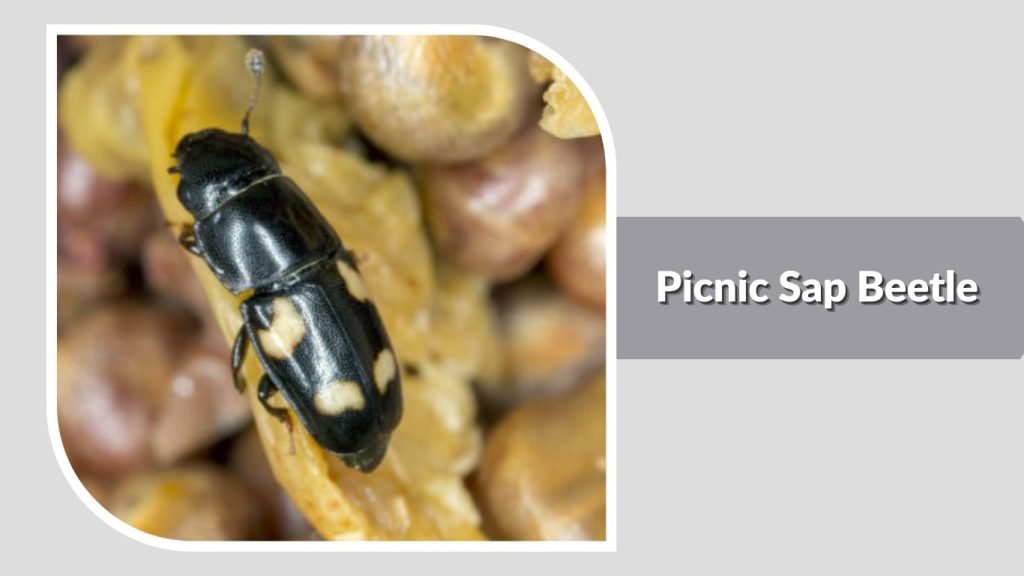
A small, common beetle often found around ripe or decaying fruits. It is well known for being attracted to sugary substances and fermented plant materials, making it a frequent visitor in gardens, orchards, and picnic areas.
Characteristics
- Small beetle with an oval, slightly flattened body
- Dark brown to black coloration, sometimes with lighter markings
- Smooth and somewhat shiny outer surface
- Short antennae with a clubbed tip
- Wings fully cover the abdomen
Habitat and Distribution
The Picnic Sap Beetle is widely distributed across North America and other temperate regions. It is commonly found in orchards, gardens, and areas where fruits are abundant. It prefers environments with fermenting plant material, such as overripe fruits and tree sap.
Behavior and Diet
This beetle is strongly attracted to sweet, fermenting substances. It feeds on overripe fruits, plant sap, and occasionally damaged crops. It is often seen gathering in groups and may become a nuisance around food during outdoor activities. It is most active during warm seasons.
Life Cycle
Females lay eggs in decaying fruit or plant material. The larvae feed on the same food source and develop through several stages. After maturing, they pupate in the soil. Adult beetles emerge and continue feeding and reproducing, often completing multiple generations in a year.
2. Dusky Sap Beetle
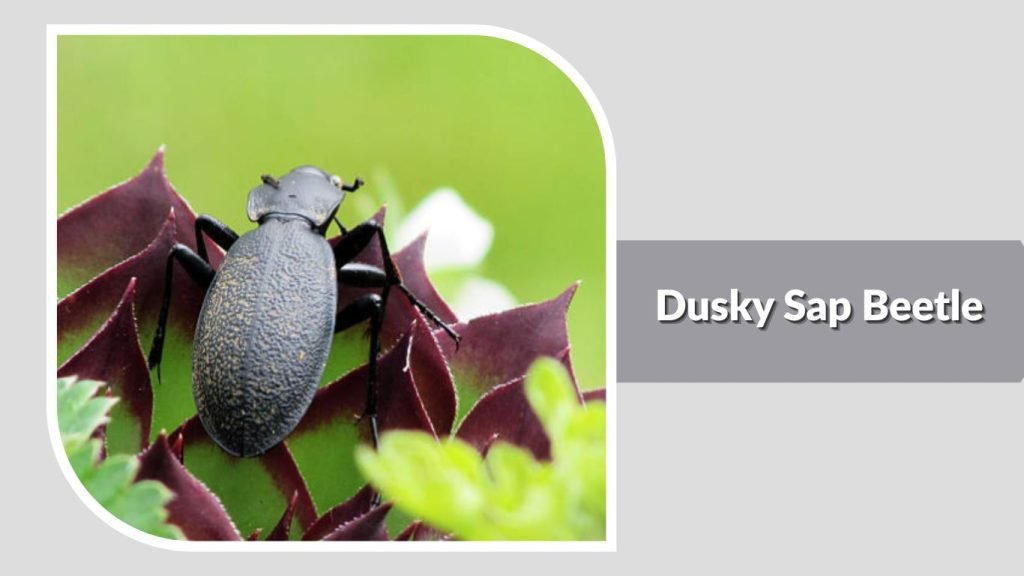
A small but widespread sap beetle known for its dark coloration and strong attraction to fermenting plant materials. It is commonly found in agricultural areas and gardens, where it feeds on damaged or overripe fruits and can sometimes become a minor pest.
Characteristics
- Small beetle with a compact, oval-shaped body
- Dark brown to black coloration with a slightly dull appearance
- Smooth outer surface with fine texture
- Clubbed antennae adapted for detecting food odors
- Elytra fully cover the abdomen
Habitat and Distribution
The Dusky Sap Beetle is widely distributed across North America and has also spread to other regions. It is commonly found in orchards, gardens, farms, and areas with abundant fruit crops. This beetle prefers warm environments and is often associated with ripening or damaged fruits such as corn, berries, and melons. It is especially active during the growing and harvest seasons.
Behavior and Diet
This species is highly attracted to sugary and fermenting substances. It feeds primarily on overripe fruits, plant sap, and decaying vegetation. The beetles are often found in large numbers on damaged crops, where they consume soft tissues and may contribute to further decay. They are active during warm periods and can fly readily to locate food sources using their strong sense of smell. While mostly feeding on plant material, they may also consume fungi growing on decaying matter.
Life Cycle
Females lay eggs in or near fermenting plant material, especially in damaged fruits or crop residues. The larvae hatch and feed on the same food source, growing through several stages. Once mature, they leave the feeding site and pupate in the soil. The development cycle is relatively quick, allowing multiple generations to occur within a single warm season. Adults emerge ready to feed and reproduce, continuing the cycle in suitable environments.
3. Strawberry Sap Beetle
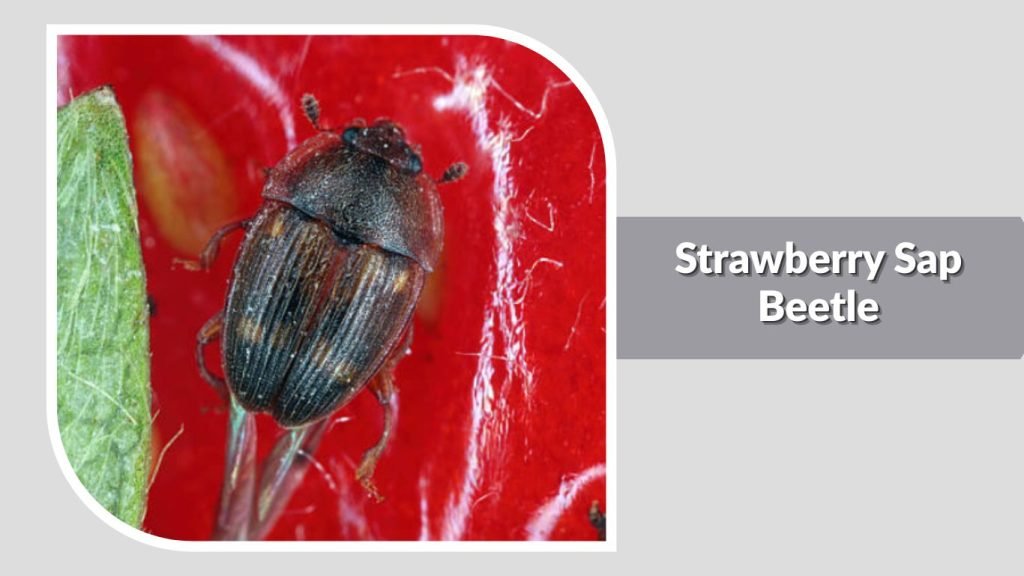
A small sap beetle commonly associated with soft fruits, especially strawberries. It is known for feeding on ripe or damaged fruit, often making it a concern in gardens and agricultural fields where fruit crops are grown.
Characteristics
- Small beetle with a short, oval-shaped body
- Light brown to dark brown coloration, sometimes with faint markings
- Slightly flattened body that helps it enter soft fruit
- Clubbed antennae used to detect sugary odors
- Elytra typically cover most of the abdomen
Habitat and Distribution
The Strawberry Sap Beetle is widely found in North America and other temperate regions. It is especially common in fruit-growing areas such as strawberry fields, gardens, and farms. It prefers environments where soft, ripe fruits are abundant. These beetles are often found directly on fruit surfaces or hiding within damaged portions of the fruit.
Behavior and Diet
This beetle is strongly attracted to ripe, overripe, or damaged fruits. It feeds on strawberries, raspberries, and other soft fruits, as well as fermenting plant material. The beetles are most active during warm weather and can often be seen in groups on fruit surfaces. Their feeding can cause visible damage and may also allow fungi or bacteria to enter the fruit, increasing spoilage. They are capable of flight and can quickly locate new food sources.
Life Cycle
Females lay eggs on or near ripe or damaged fruit. After hatching, the larvae feed inside the fruit, making them difficult to detect. They pass through several growth stages while consuming the soft tissue. Once mature, larvae leave the fruit and pupate in the soil. The life cycle is relatively rapid, allowing multiple generations within a single growing season, especially in warm climates where food sources are continuously available.
4. Corn Sap Beetle
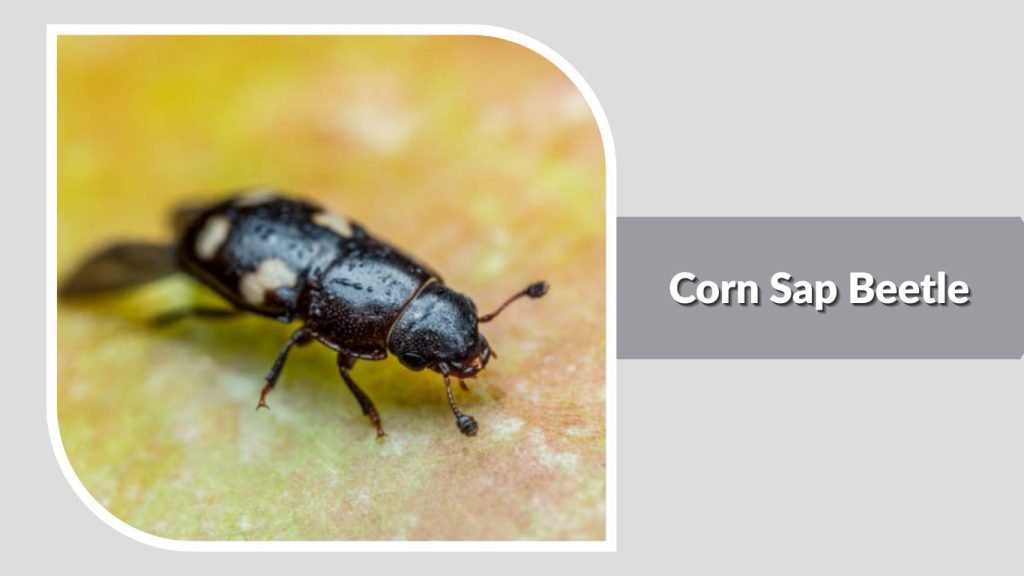
A small agricultural pest commonly found in cornfields and other crop areas. It is known for feeding on damaged or ripening crops, particularly corn, and is attracted to fermenting plant material, making it a frequent visitor in farming environments.
Characteristics
- Small beetle with a short, oval, and slightly flattened body
- Dark brown to black coloration, sometimes with lighter brown tones
- Smooth outer surface with a subtle shine
- Clubbed antennae sensitive to sweet and fermenting odors
- Elytra fully cover the abdomen
Habitat and Distribution
The Corn Sap Beetle is widely distributed across North America and other warm regions. It is most commonly found in agricultural settings, especially cornfields, but also appears in gardens and orchards. It prefers areas where crops are ripening or have been damaged, as these provide easy access to food. The beetle thrives in warm climates and is most active during the growing season.
Behavior and Diet
This species feeds primarily on corn kernels, especially when they are soft, ripening, or damaged. It is also attracted to other crops such as tomatoes, melons, and berries. The beetles are drawn to fermenting plant juices and often gather in groups. Their feeding can increase crop damage by creating openings for fungi and bacteria. They are active flyers and can quickly locate food sources using their strong sense of smell.
Life Cycle
Females lay eggs in or near damaged crops, particularly within corn ears. After hatching, larvae feed on the soft plant tissue and continue developing through several stages. Once mature, they drop to the soil to pupate. The life cycle is relatively fast, allowing several generations to develop within a single growing season, especially in warm agricultural regions.
5. Yellow Sap Beetle
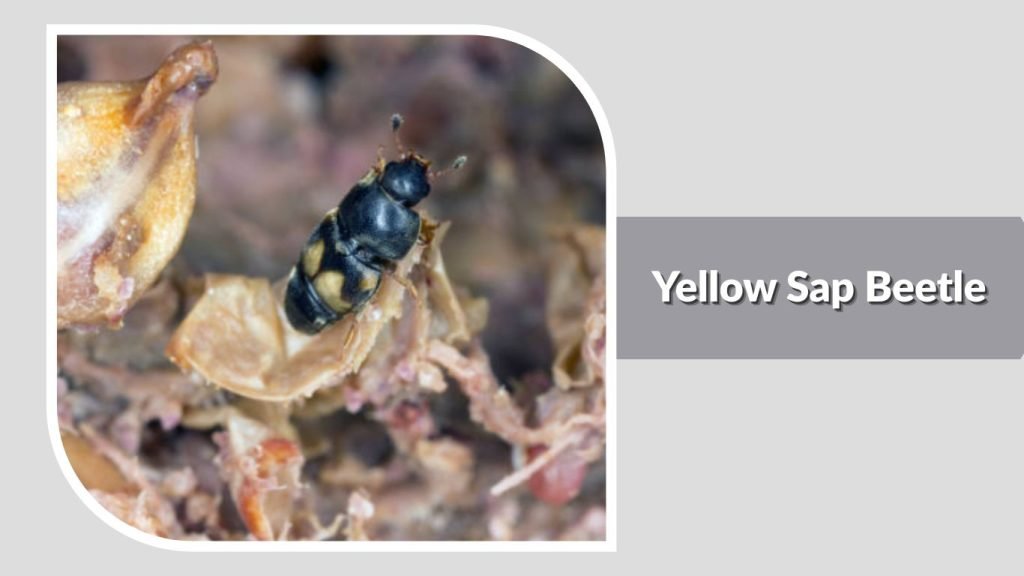
A small and brightly colored sap beetle known for its yellowish appearance and strong attraction to fermenting plant materials. It is commonly found in gardens, orchards, and crop fields, where it feeds on ripe or damaged fruits.
Characteristics
- Small beetle with a compact, oval-shaped body
- Yellow to light brown coloration, sometimes with darker markings
- Smooth and slightly glossy outer surface
- Clubbed antennae specialized for detecting sugary odors
- Elytra fully cover the abdomen
Habitat and Distribution
The Yellow Sap Beetle is found in various temperate and warm regions, particularly in North America and parts of Europe. It is commonly seen in orchards, gardens, and agricultural fields where fruits and crops are abundant. This beetle prefers environments with fermenting plant material, including overripe fruits and sap flows from damaged trees.
Behavior and Diet
This species is highly attracted to sweet, fermenting substances. It feeds on ripe and overripe fruits such as berries, peaches, and melons, as well as plant sap and decaying vegetation. The beetles are often found in groups and may become a nuisance in fruit-growing areas. Their feeding can damage crops and allow microorganisms to enter, leading to faster spoilage. They are active during warm weather and can fly efficiently to locate food sources.
Life Cycle
Females lay eggs on or near fermenting fruits or plant material. After hatching, the larvae feed on the same food source, growing through several developmental stages. Once mature, they leave the feeding site and pupate in the soil. The life cycle progresses quickly, often allowing multiple generations to develop within a single season, especially in warm climates with abundant food.
6. Shining Sap Beetle
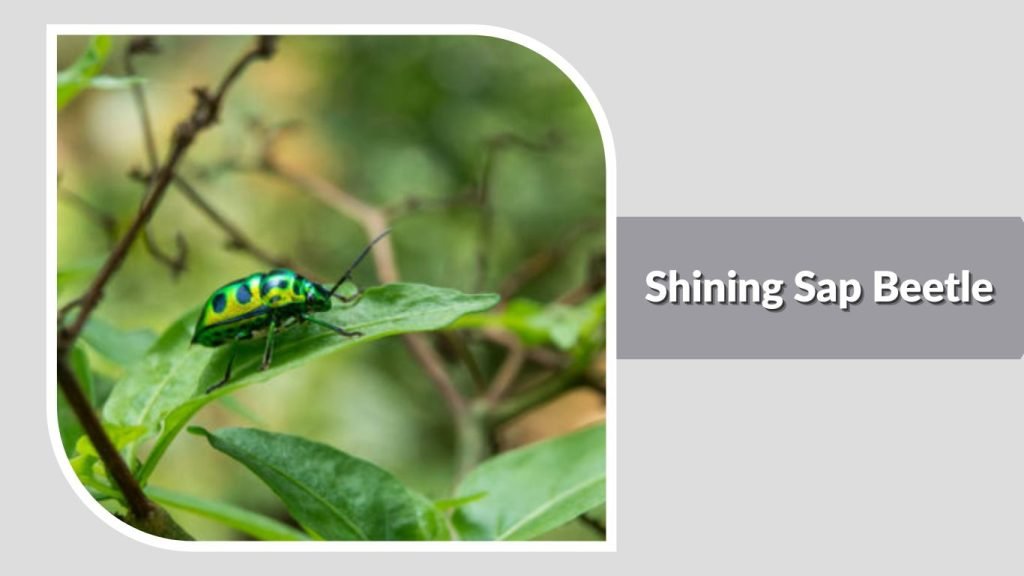
A small, glossy beetle known for its smooth, reflective body and attraction to sugary, fermenting plant materials. It is commonly found in gardens, orchards, and wooded areas where sap flows or overripe fruits are present.
Characteristics
- Small beetle with a compact, oval body shape
- Dark brown to black coloration with a shiny, polished appearance
- Smooth outer surface that reflects light
- Clubbed antennae used to detect food sources
- Elytra fully cover the abdomen
Habitat and Distribution
The Shining Sap Beetle is widely distributed across North America, Europe, and parts of Asia. It is commonly found in orchards, gardens, forests, and areas with abundant plant life. This beetle prefers habitats where fermenting sap, damaged fruits, or decaying vegetation are available. It is often seen on tree trunks with sap flows or around fallen fruit on the ground.
Behavior and Diet
This beetle is strongly attracted to sweet, fermenting substances. It feeds on plant sap, overripe fruits, and decaying organic material. It may also consume fungi growing on decomposing plant matter. The beetles are often active during warm weather and can be found in groups feeding together. They are capable fliers and use their keen sense of smell to locate food sources from a distance. Their activity may sometimes contribute to fruit spoilage in orchards.
Life Cycle
Females lay eggs in or near fermenting plant material, such as sap flows or rotting fruit. The larvae feed on the same food source and develop through several stages. Once fully grown, they leave the feeding site and pupate in the soil. Adult beetles emerge after metamorphosis and quickly return to feeding and reproduction. Multiple generations can occur in a single season under favorable conditions.
7. Flat Sap Beetle
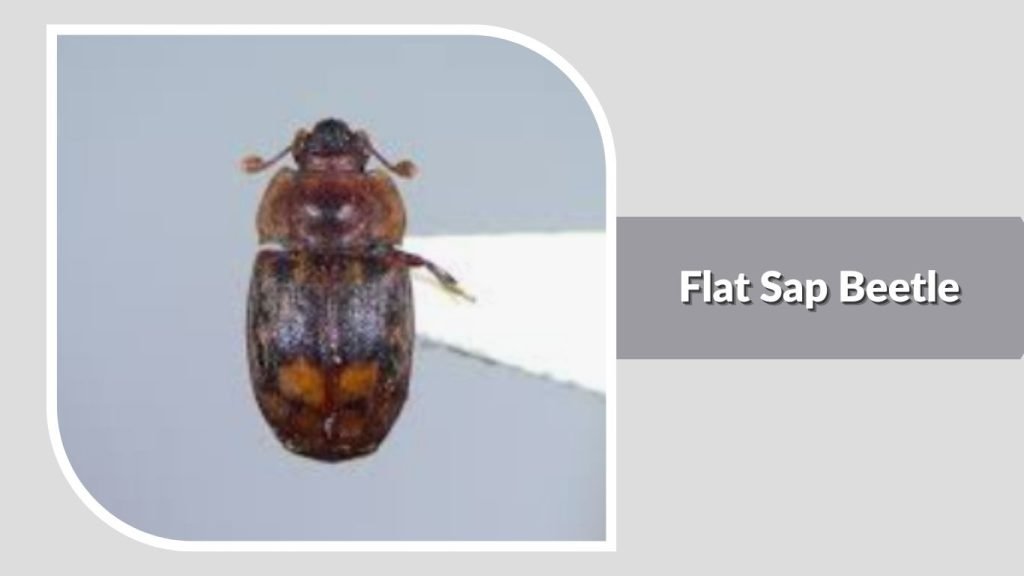
A small sap beetle recognized for its flattened body shape, which allows it to easily move under bark and within tight spaces. It is commonly associated with tree sap, decaying wood, and fermenting plant material.
Characteristics
- Small beetle with a distinctly flattened, elongated body
- Brown to dark brown coloration with a slightly dull finish
- Thin body structure adapted for narrow spaces
- Clubbed antennae used for detecting sap and decay
- Elytra fully cover the abdomen
Habitat and Distribution
The Flat Sap Beetle is widely distributed across North America, Europe, and parts of Asia. It is commonly found in forests, woodlands, and areas with abundant trees. This species prefers habitats with decaying wood, tree bark, and sap flows. It is often found under loose bark, inside rotting logs, or near damaged trees where sap is present.
Behavior and Diet
This beetle feeds primarily on tree sap, decaying plant matter, and fungi. Its flattened body allows it to hide under bark and avoid predators while feeding. It is usually active in warm conditions and may be found in small groups. Unlike some other sap beetles, it is less commonly seen on exposed fruits and more often stays within wood or bark environments.
Life Cycle
Females lay eggs in crevices of bark or within decaying wood. After hatching, larvae feed on sap, fungi, and decomposing plant material. They develop through several stages while remaining hidden in protected environments. Once mature, they pupate within the wood or nearby soil. Adult beetles emerge and continue the cycle, often staying within the same habitat.
FAQs
What are sap beetles?
Sap beetles are small insects belonging to the family Nitidulidae. They are commonly found around fermenting plant materials, tree sap, and overripe fruits. These beetles play a role in decomposition by feeding on sugary and decaying organic substances.
Are sap beetles harmful to humans?
Sap beetles are not harmful to humans. They do not bite or sting and are generally harmless. However, they can become a nuisance when they gather around food or in large numbers near fruits and sugary substances.
What do sap beetles eat?
Sap beetles mainly feed on overripe fruits, plant sap, and decaying vegetation. Some species also consume fungi growing on decomposing materials. Their preference for sugary and fermenting substances makes them common in orchards and gardens.
Where can sap beetles be found?
They are commonly found in orchards, gardens, forests, and agricultural areas. Sap beetles prefer environments where fermenting plant material, damaged fruits, or tree sap is available, as these provide both food and breeding sites.
Why are sap beetles important?
Sap beetles help break down decaying plant material and contribute to nutrient recycling in ecosystems. Although some species can damage crops, their overall role supports natural decomposition processes and helps maintain environmental balance.
