
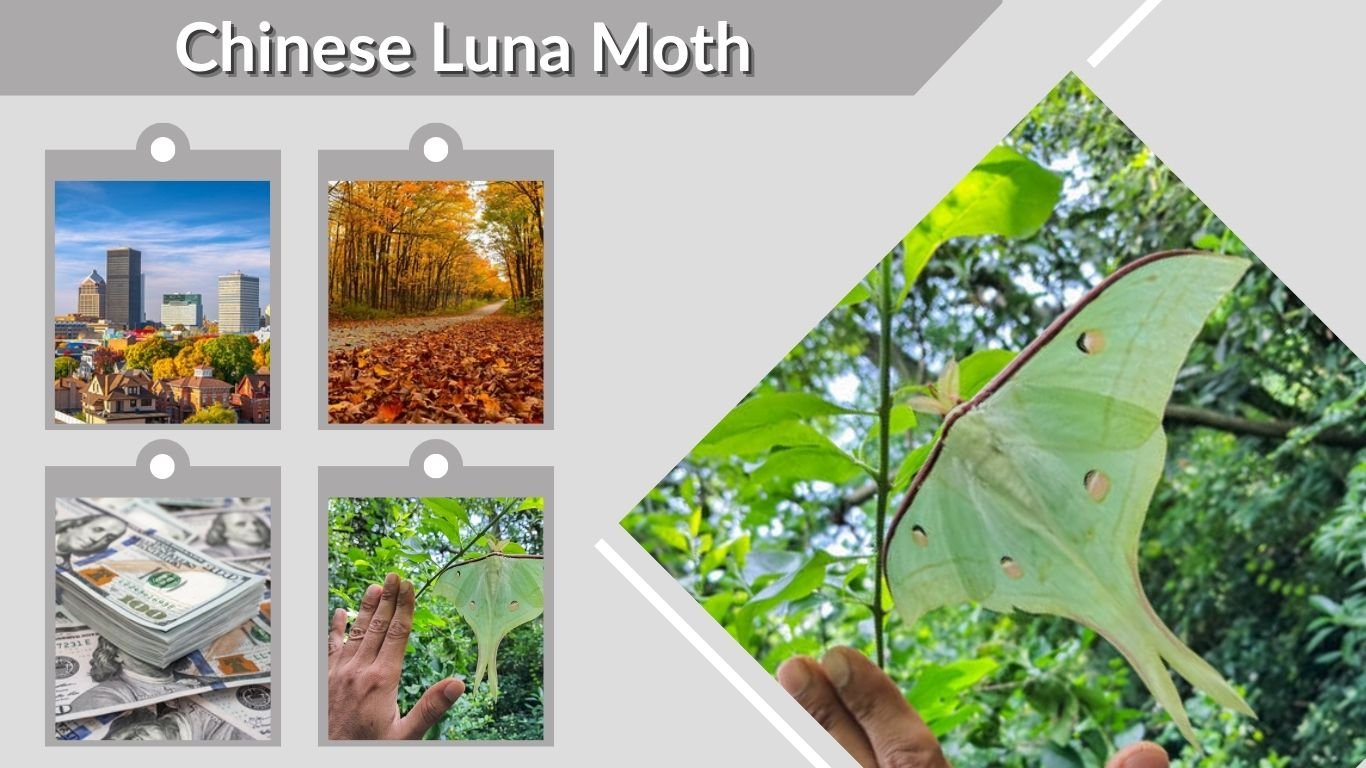
The Chinese luna moth, often known as the Asian moon moth, is a stunning insect admired for its soft green wings and long, elegant tails. Belonging to the Actias genus, it is closely related to the North American luna moth but has its own unique features and habitat. Found across parts of Asia, this moth is popular among nature enthusiasts and collectors. Understanding its life cycle, appearance, and care needs helps in appreciating its beauty and ecological role in the natural world.
What Is a Chinese Luna Moth?
The Chinese luna moth is a species of giant silk moth known for its delicate appearance and short adult lifespan. It spends most of its life in earlier stages, particularly as a caterpillar, before transforming into an adult moth whose primary purpose is reproduction.
Scientific Background
This moth belongs to the Saturniidae family, which includes some of the largest and most visually striking moths in the world. Commonly associated with Actias selene, it is native to regions of China, India, and Southeast Asia. Like other moon moths, it is nocturnal and attracted to light sources at night.
Chinese Luna Moth Identification
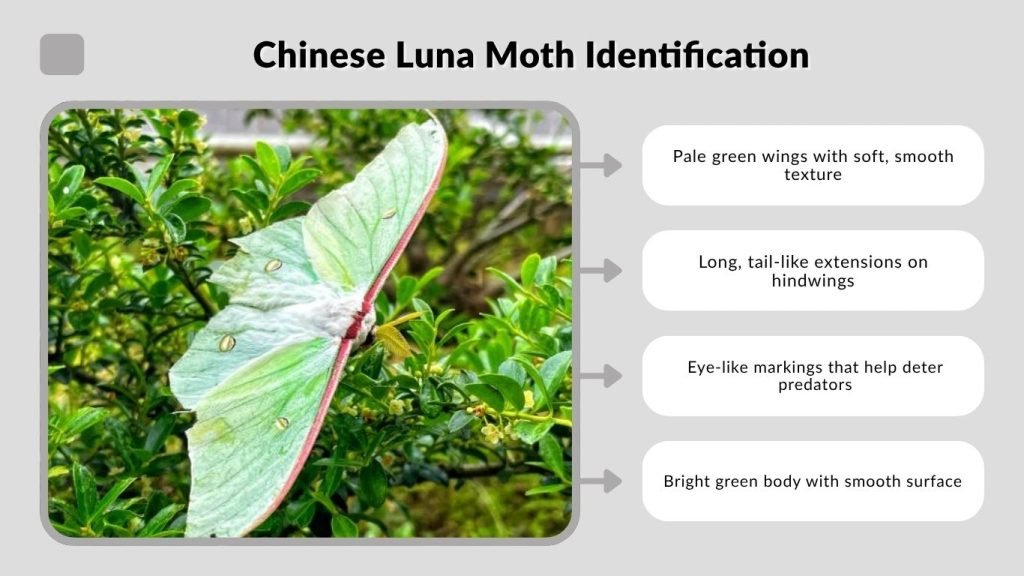
Identifying the Chinese luna moth is relatively easy due to its distinctive appearance. Both the caterpillar and adult stages have features that set them apart from other moth species.
Adult Moth Features
- Pale green wings with soft, smooth texture
- Long, tail-like extensions on hindwings
- Eye-like markings that help deter predators
Caterpillar Features
- Bright green body with smooth surface
- Small colored spots along the sides
- Thick and slow-moving structure
Chinese Luna Moth vs North American Luna Moth
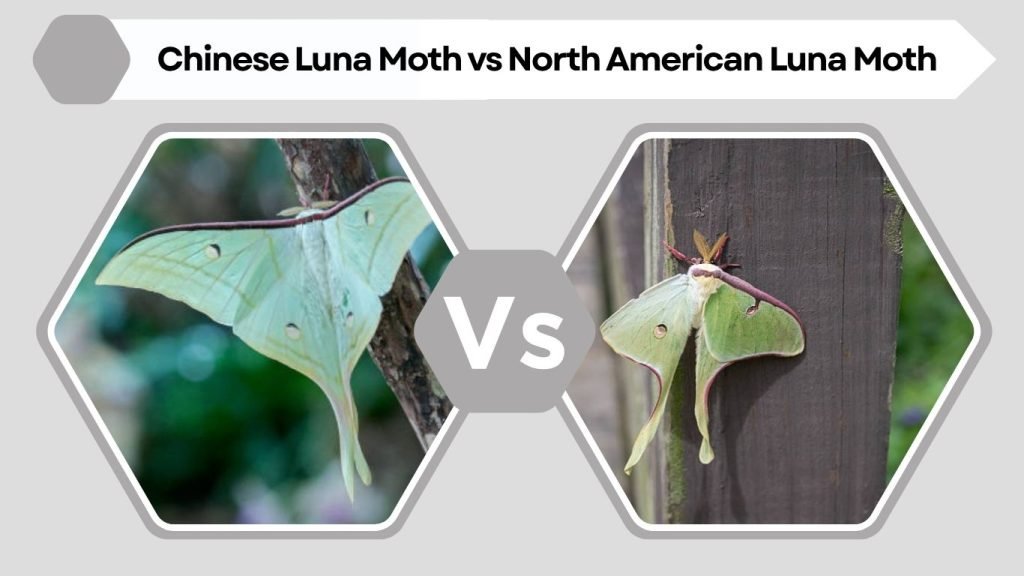
While closely related, the Chinese luna moth and the North American luna moth have noticeable differences. These differences are important for accurate identification and understanding their ecological adaptations.
Key Differences
- Chinese luna moth has longer and more dramatic wing tails
- Slight variation in wing shade and markings
- Native to Asia, while the North American species lives in the U.S. and Canada
Similarities
- Both belong to the Actias genus
- Share a similar life cycle and behavior
- Adults do not feed and rely on stored energy
Chinese Luna Moth Life Cycle
The life cycle of the Chinese luna moth follows a complete metamorphosis process. Each stage plays a vital role in the insect’s development and survival. The duration of each phase can vary depending on environmental conditions such as temperature and humidity.
Egg Stage
The female moth lays eggs on the leaves of suitable host plants. These eggs remain attached to the surface until they hatch, usually within one to two weeks.
Caterpillar Stage
Once hatched, the caterpillar begins feeding immediately. This is the longest and most active stage, where it consumes large amounts of leaves and grows rapidly through several instars.
Pupa Stage
After reaching full size, the caterpillar spins a silk cocoon. Inside this cocoon, it undergoes transformation into a pupa, preparing for adulthood.
Adult Stage
The adult moth emerges with fully developed wings. It lives for a short time, focusing on mating and laying eggs before completing its life cycle.
Chinese Luna Moth Caterpillar
The caterpillar stage of the Chinese luna moth is one of the most important phases, as it determines the insect’s growth and energy storage. It is also the stage most commonly observed by people in nature.
Appearance and Size
- Bright green coloration helps with camouflage
- Can grow up to 2–3 inches long
- Smooth body without spines or horns
Diet and Feeding
- Feeds on leaves of host trees
- Prefers fresh and tender foliage
- Eats continuously to support growth
Chinese Luna Moth Habitat and Distribution
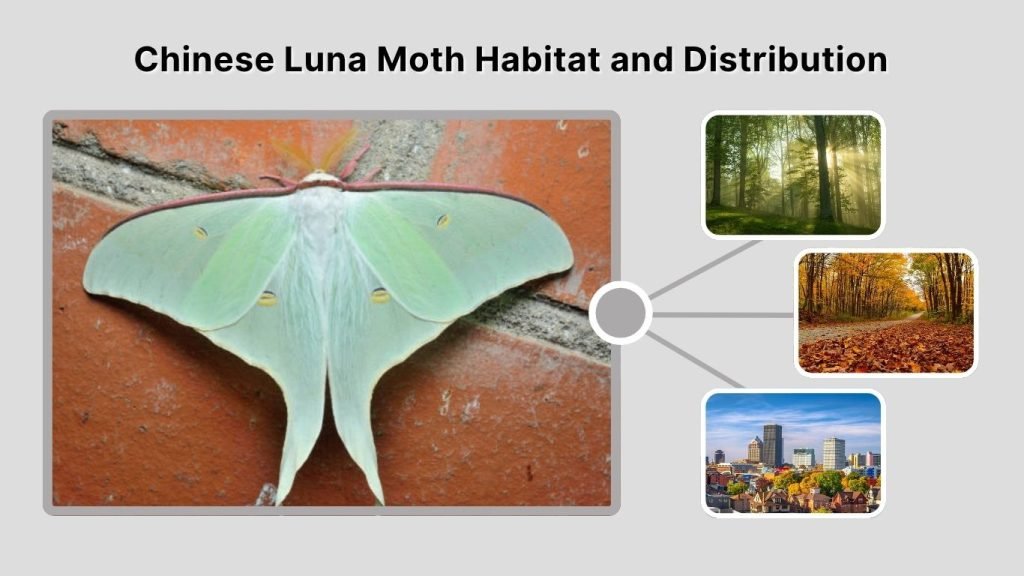
The Chinese luna moth is widely distributed across parts of Asia, where it thrives in natural environments that provide both food and shelter. Its presence is often linked to the availability of host plants and suitable climate conditions.
Natural Habitat
These moths are commonly found in forests, woodlands, and rural areas. They may also appear in suburban environments where host trees are present. Their ability to adapt to different environments makes them relatively widespread in their native regions.
Chinese Luna Moth Lifespan
The lifespan of the Chinese luna moth varies significantly across its life stages. Most of its life is spent growing and developing before reaching adulthood. The adult stage is very short and focused entirely on reproduction rather than feeding or survival.
Lifespan Breakdown
- Egg stage lasts about 1–2 weeks
- Caterpillar stage lasts around 3–4 weeks
- Pupal stage may last several weeks or longer
- Adult moth lives only about 5–10 days
Key Lifespan Insight
- Adult moths do not eat and rely on stored energy
- Most growth and energy storage happens in the caterpillar stage
Chinese Luna Moth Care
Caring for a Chinese luna moth, especially during its caterpillar stage, requires attention to its natural needs. Proper care ensures healthy development and successful transformation into an adult moth.
Basic Care Requirements
- Provide fresh host plant leaves daily
- Use a well-ventilated enclosure
- Keep the habitat clean and dry
- Maintain moderate humidity levels
Tips for Raising Successfully
- Avoid overcrowding when keeping multiple caterpillars
- Limit handling to reduce stress
- Keep the enclosure in indirect natural light
Is the Chinese Luna Moth Poisonous?

The Chinese luna moth is completely harmless to humans and animals. It does not have venom, stingers, or toxic features. Both the caterpillar and adult moth are safe to observe closely. While the caterpillar may release a small amount of fluid when threatened, this is a natural defense mechanism and not dangerous. Overall, it is considered a safe and non-aggressive insect, making it suitable for study and observation.
Chinese Luna Moth Meaning and Symbolism
The Chinese luna moth holds symbolic meaning in various cultures, particularly in regions where it is commonly found. Its transformation from caterpillar to moth represents change and renewal, making it a powerful symbol in nature and art.
Symbolic Meanings
- Transformation and personal growth
- Renewal and new beginnings
- Beauty and delicacy in nature
Cultural Significance
- Often associated with positive change
- Appears in art and decorative designs
- Represents the cycle of life in natural symbolism
Can You Buy a Chinese Luna Moth?
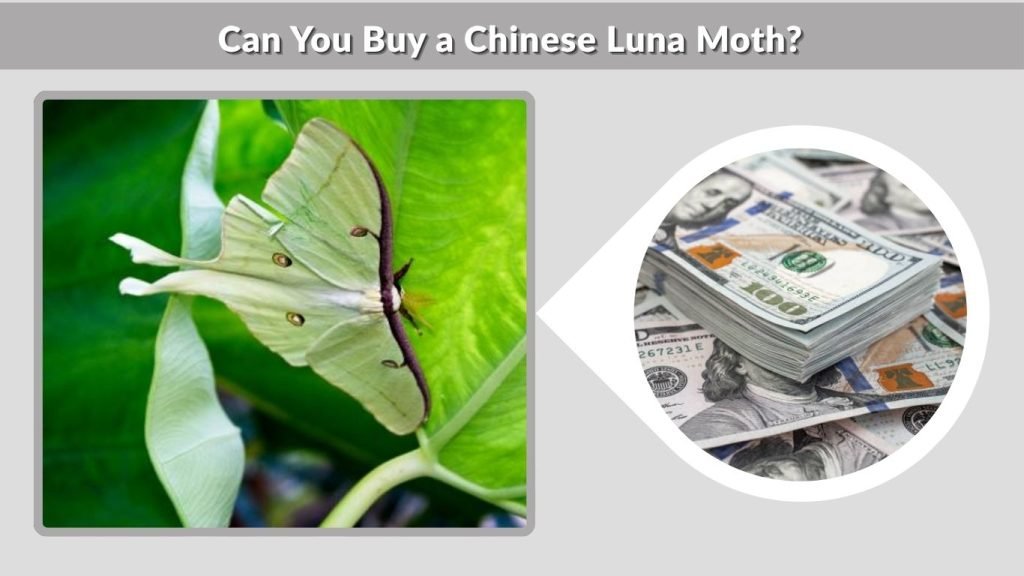
Chinese luna moths are sometimes available for purchase through insect breeders or specialty suppliers. They may be sold as eggs, caterpillars, or cocoons for educational or hobby purposes.
Availability Options
- Eggs for hatching and raising
- Caterpillars for observation and care
- Cocoons ready to emerge as adults
Important Considerations
- Check local regulations before purchasing
- Ensure proper knowledge of care requirements
- Avoid releasing non-native species into the wild
Interesting Facts About Chinese Luna Moths
Chinese luna moths are known for their unique features and fascinating biology. These facts highlight why they are considered one of the most beautiful and intriguing moth species in the world.
Unique Features
- Long tail-like extensions help confuse predators
- Large wingspan compared to many moth species
- Soft green coloration provides camouflage
Fun Facts
- Attracted to light during nighttime
- Adults do not have functional mouthparts
- Popular among collectors and insect enthusiasts
Common Confusions
Many people confuse the Chinese luna moth with other unrelated terms or species. Clarifying these misunderstandings helps ensure accurate knowledge and avoids mixing biological facts with unrelated concepts.
Naming Confusion
- “Chinese lunar age” is unrelated to the moth
- Gender prediction charts have no connection
- The moth name refers only to the insect species
Species Confusion
- Often mistaken for North American luna moth
- Similar to other moon moth species in Asia
- Differences mainly in size and wing shape
FAQs
What is a Chinese luna moth?
The Chinese luna moth is a species of moon moth from the Actias genus, commonly associated with Actias selene. It is native to Asia and known for its pale green wings and long tail-like extensions.
Is the Chinese luna moth poisonous?
No, the Chinese luna moth is not poisonous or harmful. Both the caterpillar and adult moth are safe to observe and handle gently, making them popular among insect enthusiasts.
How long does a Chinese luna moth live?
The full life cycle lasts several weeks to months, but the adult moth typically lives only 5 to 10 days. During this time, it focuses on reproduction rather than feeding.
What do Chinese luna moth caterpillars eat?
They feed on the leaves of various host trees, such as walnut, sweetgum, persimmon, and other regional plants. Fresh leaves are essential for their growth and development.
Can you keep a Chinese luna moth as a pet?
Yes, they can be raised from eggs, caterpillars, or cocoons. However, proper care, knowledge of host plants, and awareness of local regulations are important before keeping them.
