
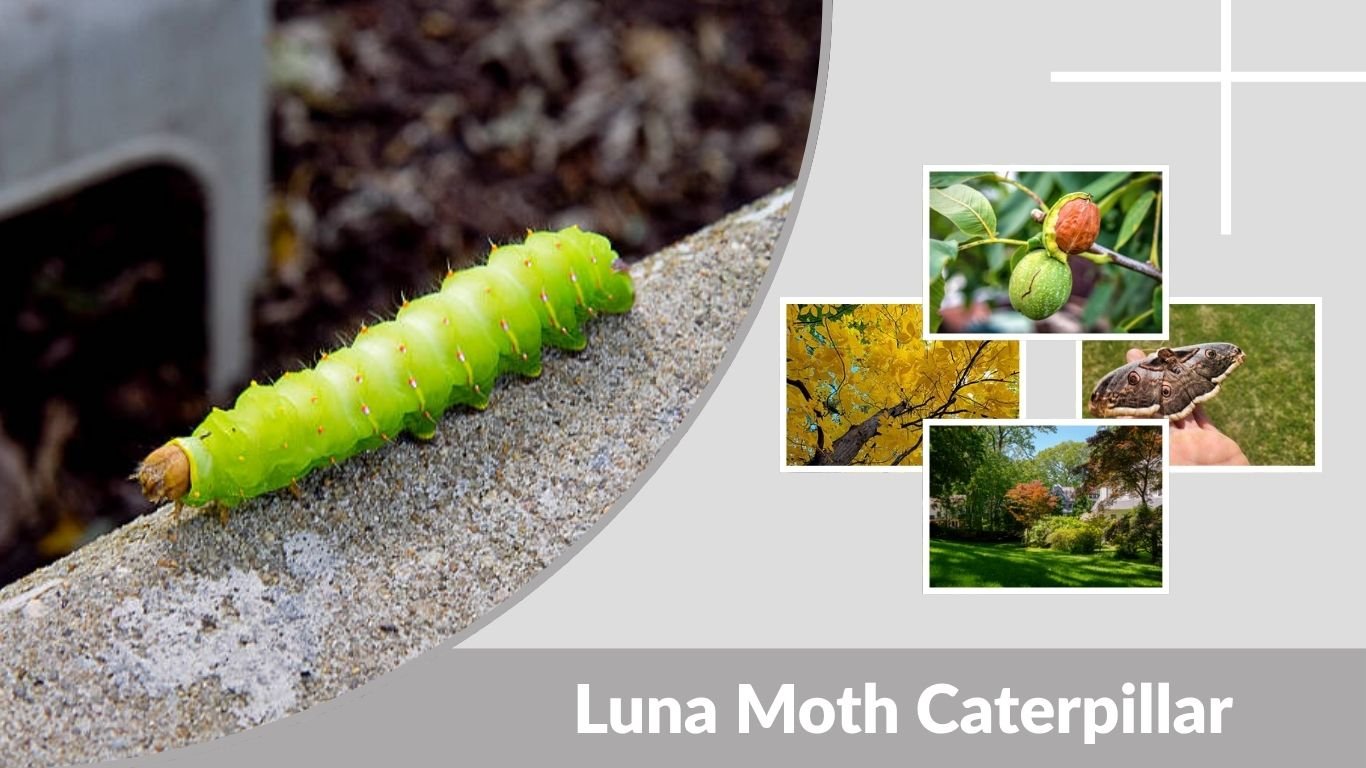
The luna moth caterpillar is one of the most eye-catching insects found in North America. Known for its bright green color and large size, it represents the larval stage of the luna moth (Actias luna), a member of the giant silk moth family. These caterpillars are harmless to humans and play an important role in natural ecosystems. Many people are curious about how to identify them, what they eat, and how to care for them if found in the wild. This guide covers everything you need to know in a simple and structured way.
What Is a Luna Moth Caterpillar?
The luna moth caterpillar is the larval stage of a large, pale-green moth known for its long tail-like wing extensions. This stage is focused entirely on feeding and growth before transformation into an adult moth. It is commonly found on trees and shrubs in forested and suburban environments.
Scientific Background
The species belongs to the Saturniidae family, which includes some of the largest moths in the world. The luna moth is native to North America and is especially common in the eastern regions. Its caterpillar stage is short but very active, as it must gather enough energy to complete metamorphosis.
Luna Moth Caterpillar Identification
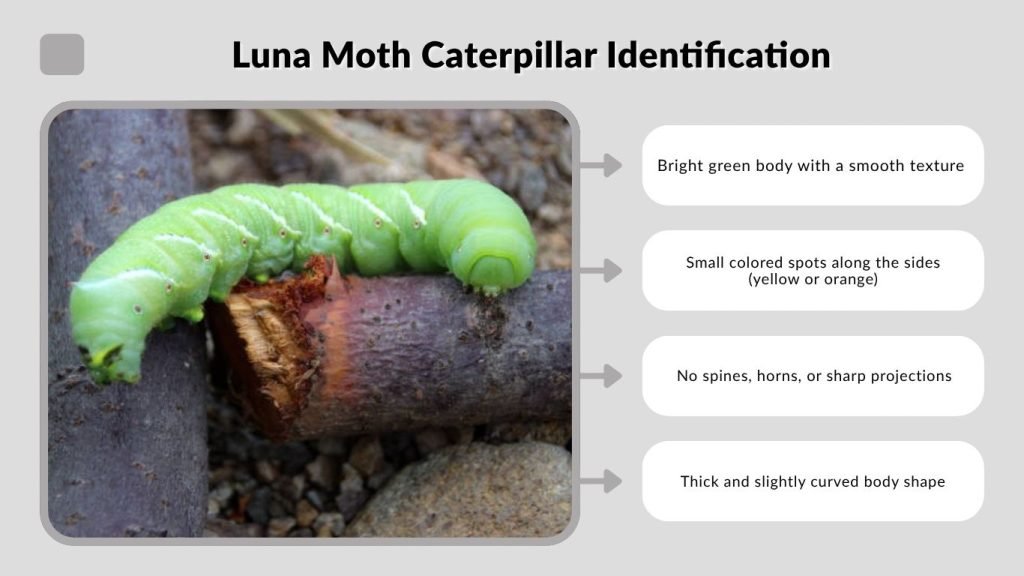
Identifying a luna moth caterpillar is relatively easy once you know what to look for. Its appearance is quite distinct compared to many other caterpillars found in similar habitats.
Physical Features
- Bright green body with a smooth texture
- Small colored spots along the sides (yellow or orange)
- No spines, horns, or sharp projections
- Thick and slightly curved body shape
Size and Growth
- Can grow up to 2.5–3 inches long
- Becomes bulkier with each growth stage
- Color may deepen slightly as it matures
Luna Moth Caterpillar Life Cycle
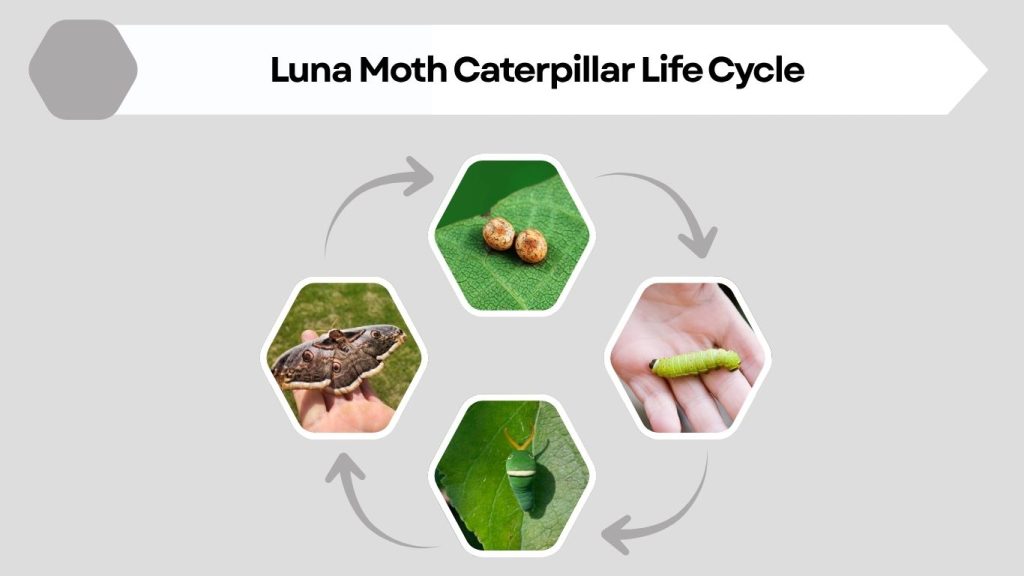
The life cycle of the luna moth caterpillar is a fascinating transformation that occurs over several stages. Each phase plays a critical role in its development and survival. Understanding this cycle helps in recognizing behavioral changes and preparing for its next stage.
Egg Stage
Eggs are laid on the leaves of host plants, where they remain until they hatch. This stage usually lasts about one to two weeks depending on environmental conditions.
Caterpillar Stage
Once hatched, the caterpillar begins feeding immediately. This stage involves rapid growth and several molting phases known as instars. It is the longest and most active part of the life cycle.
Prepupal Stage
As the caterpillar reaches maturity, it stops eating and begins searching for a suitable place to form its cocoon. It may change color slightly, often turning duller or brownish.
Cocoon and Adult Stage
The caterpillar spins a silk cocoon, usually wrapped in leaves. Inside, it transforms into a pupa and later emerges as an adult luna moth, completing the cycle.
Luna Moth Caterpillar Diet and Food
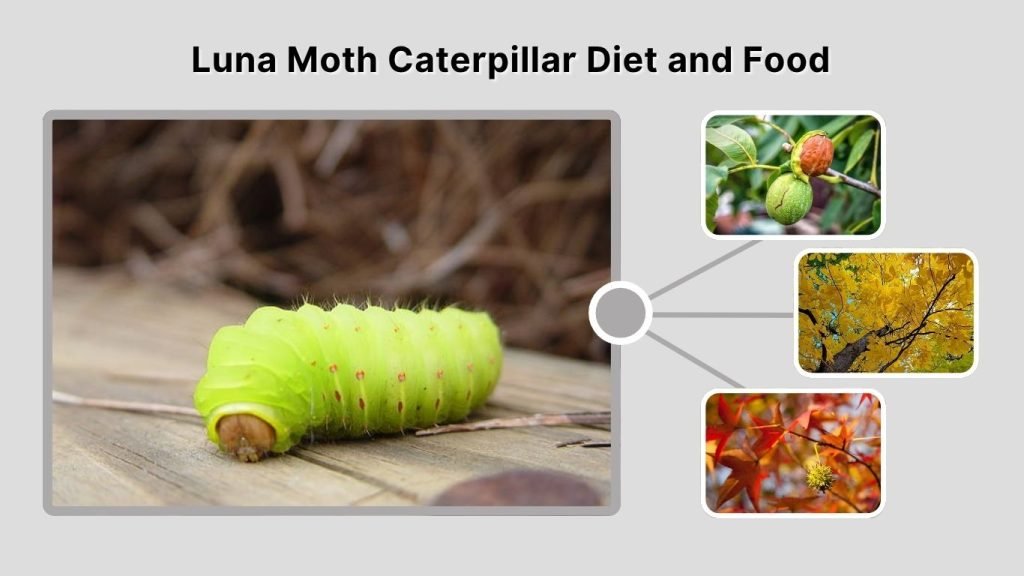
Feeding is the primary activity of the luna moth caterpillar. Its diet consists mainly of leaves from specific types of trees, and proper nutrition is essential for healthy development.
Common Food Sources
- Walnut trees
- Hickory trees
- Sweetgum trees
- Birch trees
Feeding Behavior
- Eats frequently throughout the day and night
- Prefers fresh, tender leaves
- Consumes large quantities to support rapid growth
Habitat and Natural Environment
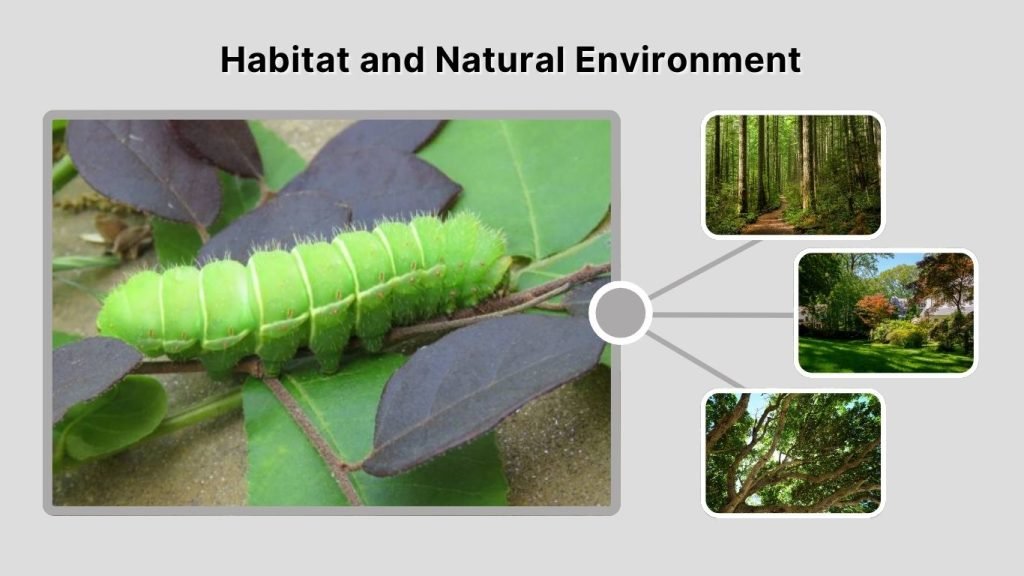
Luna moth caterpillars are typically found in natural outdoor environments where suitable host plants are available. They thrive in areas that provide both food and shelter.
Where They Live
- Forests and wooded areas
- Suburban gardens with host trees
- Tree branches and leaves rather than ground level
Seasonal Activity
- Most active during warmer months
- Commonly seen in late spring and summer
- Lifecycle timing depends on climate conditions
Are Luna Moth Caterpillars Poisonous?
Luna moth caterpillars are completely harmless to humans. They do not possess venom, stingers, or toxic substances. Unlike some other caterpillar species, they lack defensive spines or irritating hairs. When threatened, they may regurgitate a small amount of fluid as a defense mechanism, but this is not dangerous. Overall, they are safe to observe and can even be gently handled, although minimal interaction is recommended to avoid stress.
How to Care for a Luna Moth Caterpillar
Caring for a luna moth caterpillar can be a rewarding experience, especially for those interested in observing its transformation. Proper care focuses on providing a natural environment, fresh food, and minimal disturbance. Since this caterpillar grows quickly, consistent attention is important to ensure healthy development through each stage.
Basic Care Requirements
- Provide fresh host plant leaves daily (same tree species)
- Use a well-ventilated container or enclosure
- Keep the habitat clean by removing waste regularly
- Maintain a natural environment with moderate humidity
Tips for Successful Raising
- Avoid overcrowding if raising multiple caterpillars
- Handle only when necessary to reduce stress
- Keep the container in a shaded, well-lit area (no direct sun)
Luna Moth Caterpillar Behavior and Growth
The behavior of a luna moth caterpillar changes as it grows. Early stages are focused on constant feeding, while later stages involve preparation for metamorphosis. Observing these behaviors can help you understand when the caterpillar is healthy and when it is transitioning to the next phase.
Instars and Development
- Passes through several growth stages called instars
- Sheds its skin multiple times as it grows
- Each stage increases in size and slightly changes appearance
Defensive Behavior
- Uses camouflage to blend with green leaves
- May regurgitate fluid when disturbed
- Remains mostly inactive when not feeding
Luna Moth Caterpillar vs Similar Species
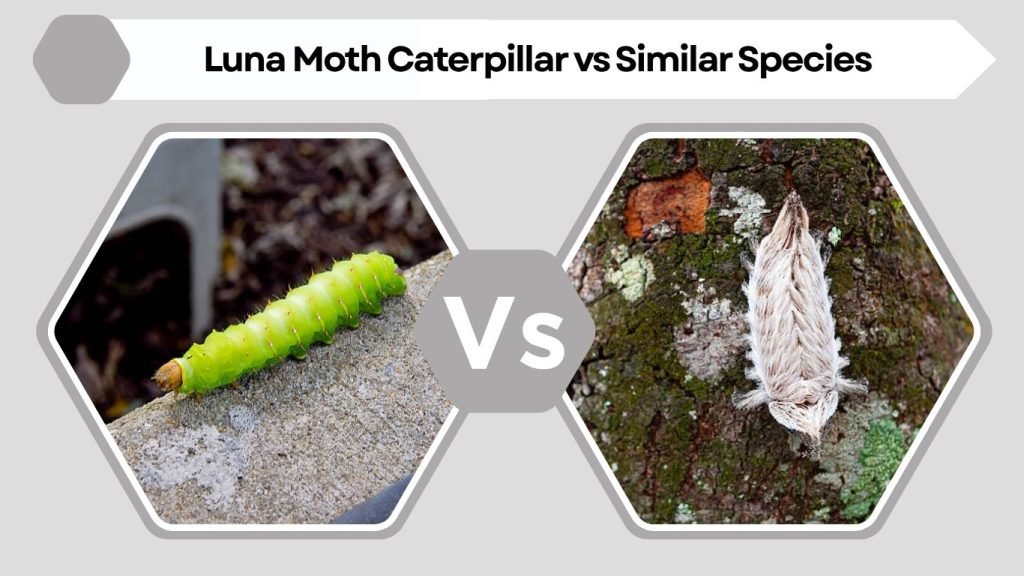
Many caterpillars look similar to the luna moth caterpillar, which can lead to confusion. However, there are key differences that make identification easier when comparing closely related or look-alike species.
Polyphemus Moth Caterpillar vs Luna Moth
- Both are large and green in appearance
- Polyphemus caterpillar has more noticeable markings
- Luna caterpillar appears smoother and lighter green
Other Look-Alike Caterpillars
- Hornworms have a distinct tail horn
- Cecropia caterpillars have spiky, colorful bodies
- Luna caterpillars lack spines and remain smooth
Common Changes and Growth Signs
As the luna moth caterpillar develops, it shows several natural changes that may concern beginners but are completely normal. Recognizing these signs helps prevent unnecessary worry and ensures proper care during transformation.
Color Changes
- May turn dull green or brown before cocoon stage
- Indicates entry into prepupal phase
- Normal part of development
Signs of a Healthy Caterpillar
- Actively feeding and moving
- Firm, plump body structure
- Regular shedding during growth
What to Do If You Find One in the Wild
If you come across a luna moth caterpillar outdoors, it is best to observe it in its natural habitat. These caterpillars play an important role in the ecosystem and do not require human intervention to survive. Leaving them undisturbed allows them to complete their life cycle naturally. If you choose to relocate one, ensure it is placed on a proper host plant to continue feeding safely.
FAQs
What does a luna moth caterpillar eat?
Luna moth caterpillars feed on the leaves of hardwood trees such as walnut, hickory, birch, and sweetgum. They prefer fresh, tender leaves and eat frequently to support their rapid growth during the larval stage.
Can you touch a luna moth caterpillar?
Yes, you can gently touch a luna moth caterpillar as it is harmless. However, it is best to limit handling to avoid stressing the caterpillar or interrupting its natural behavior and feeding routine.
How long does the luna moth caterpillar stage last?
The caterpillar stage typically lasts around 3 to 4 weeks. During this time, the caterpillar grows quickly, molts several times, and prepares for the cocoon stage.
Is a luna moth caterpillar poisonous?
No, luna moth caterpillars are not poisonous or venomous. They do not sting or bite, though they may regurgitate a harmless fluid as a defense mechanism if threatened.
What should you do if you find a luna moth caterpillar?
If you find one in the wild, it’s best to leave it on its host plant so it can continue feeding naturally. If moved, place it on a suitable tree with proper leaves to ensure its survival.
