
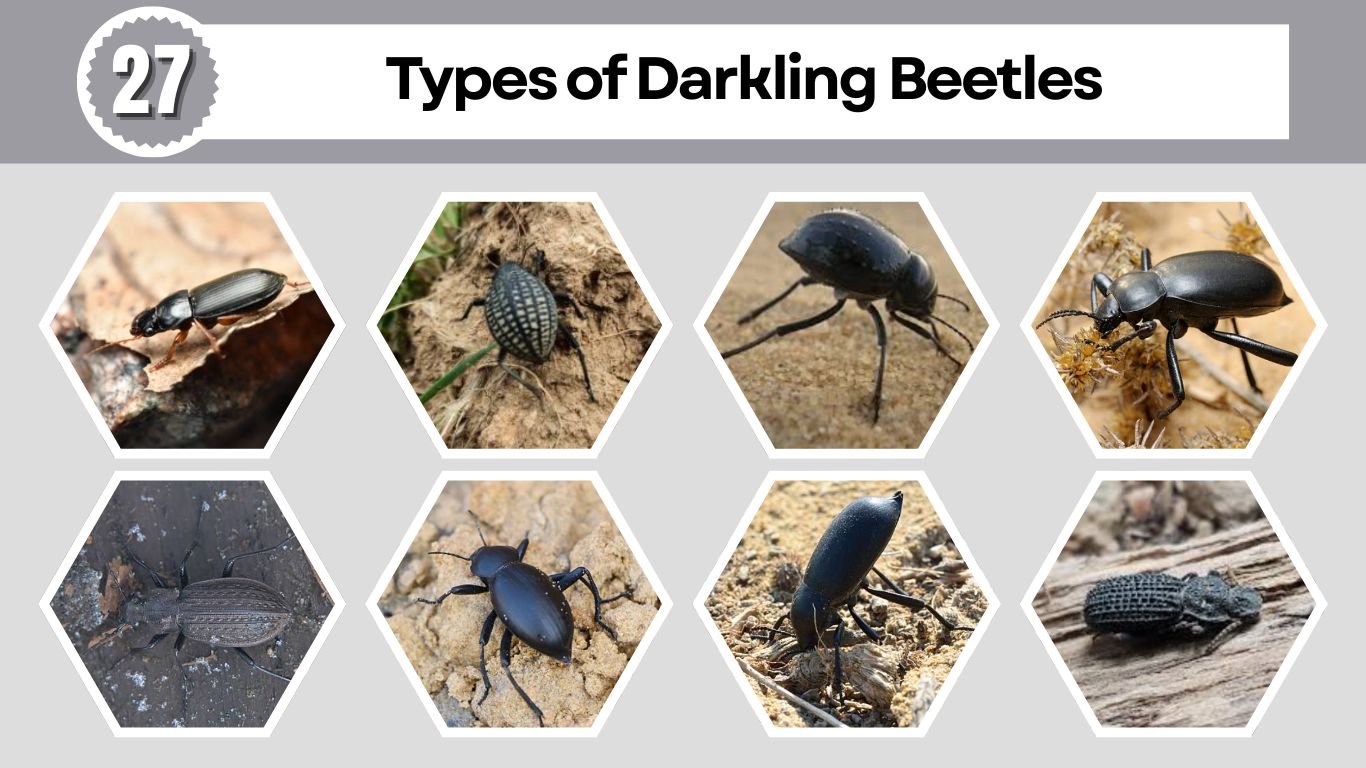
Darkling beetles are a diverse group of insects found in a wide range of environments, from deserts and forests to coastal and agricultural areas. With over 20,000 species worldwide, they vary greatly in size, shape, and behavior. Some are well-known pests of stored products, while others play an essential role in ecosystems by breaking down organic matter.
This guide highlights 27 different types of darkling beetles, focusing on their key identification features, habitats, behaviors, and life cycles. Whether you are a student, researcher, or nature enthusiast, this list will help you recognize and understand these fascinating beetles more easily.
1. Blapstinus spp.

Blapstinus is a diverse genus of small darkling beetles commonly found in sandy or dry habitats. These beetles are widespread, especially in warmer regions, and are often seen on the ground or under debris. They play a role in breaking down organic material and are generally harmless to humans.
Identification
- Small size, typically 3–8 mm in length
- Oval to elongated body shape
- Dark brown to black coloration
- Smooth or slightly textured wing covers (elytra)
- Antennae are short and slightly clubbed at the ends
- Legs adapted for running, often seen moving quickly on soil
Habitat and Distribution
Blapstinus species are commonly found in sandy soils, deserts, grasslands, and coastal areas. They prefer dry environments and are often active on the ground surface, especially at night. During the day, they hide under rocks, leaf litter, or other debris to avoid heat and predators. Their distribution spans across North and South America, with many species adapted to arid and semi-arid climates.
Behavior and Diet
These beetles are primarily scavengers. They feed on decaying plant material, organic debris, and sometimes fungi. Their activity helps recycle nutrients back into the soil. Blapstinus beetles are generally nocturnal, becoming more active after sunset when temperatures are cooler. They move quickly and may burrow into loose soil when disturbed.
Life Cycle
Blapstinus beetles undergo complete metamorphosis, including egg, larva, pupa, and adult stages. Eggs are laid in soil, where larvae develop by feeding on organic matter. The larval stage resembles small, worm-like forms similar to mealworms. After pupation in the soil, adults emerge and continue the cycle, often living for several months depending on environmental conditions.
2. Eleodes spp.
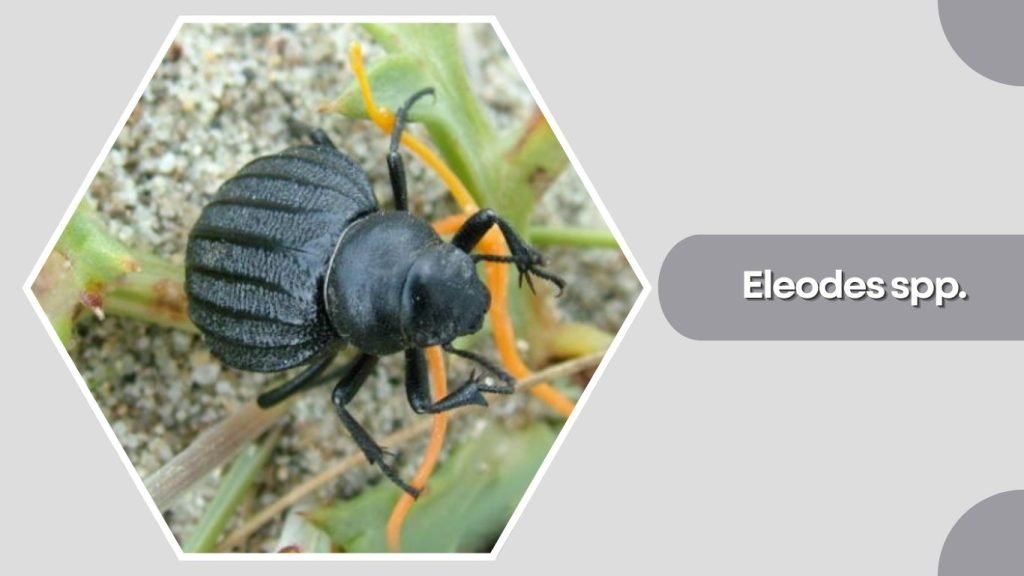
Eleodes, commonly known as “pinacate beetles” or “desert stink beetles,” are one of the most recognizable darkling beetles in arid regions. They are well known for their defensive posture, where they raise their abdomen when threatened. These beetles are hardy and play an important ecological role in desert ecosystems.
Identification
- Medium to large size, usually 10–35 mm long
- Elongated, robust body shape
- Matte black or dark brown coloration
- Fused wing covers (elytra), unable to fly
- When disturbed, raises abdomen in a defensive stance
- Emits a foul-smelling chemical as a defense
Habitat and Distribution
Eleodes species are primarily found in deserts and dry regions, especially across North America, including the southwestern United States and Mexico. They thrive in sandy, rocky, or loose soils where they can easily burrow. These beetles are commonly seen walking on open ground, particularly during cooler parts of the day or at night. They avoid extreme daytime heat by hiding under rocks, logs, or in burrows.
Behavior and Diet
Eleodes beetles are scavengers and detritivores. They feed on decaying plant matter, seeds, and organic debris, contributing to nutrient recycling in harsh environments. Their slow, deliberate movement is typical, but they rely more on chemical defense than speed. When threatened, they perform their signature headstand and release a strong odor to deter predators.
Life Cycle
Like other darkling beetles, Eleodes undergo complete metamorphosis: egg, larva, pupa, and adult. Females lay eggs in soil, where larvae develop by feeding on organic matter. The larval stage resembles mealworms. After pupation underground, adults emerge and can live for several months, adapting well to dry environmental conditions.
3. Tenebrio molitor
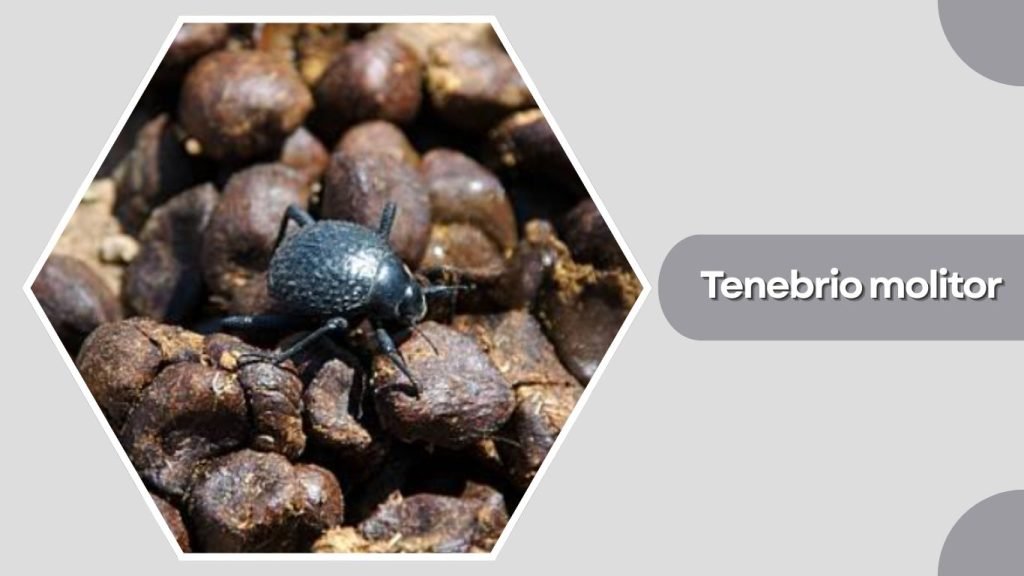
Tenebrio molitor, commonly known as the yellow mealworm beetle, is one of the most well-known darkling beetles due to its importance in animal feed and scientific research. Its larval stage, the mealworm, is widely used as food for pets and in studies.
Identification
- Medium size, about 12–18 mm long
- Elongated, slightly flattened body
- Reddish-brown to dark brown coloration
- Smooth, shiny wing covers (elytra)
- Well-developed wings, capable of limited flight
- Larvae are yellowish, segmented, and worm-like
Habitat and Distribution
This species is commonly found in stored grain products, barns, and human-made environments. Originally native to Europe, it is now distributed worldwide due to human activity. It prefers dark, warm places with abundant dry organic material such as wheat bran, flour, and cereals.
Behavior and Diet
Tenebrio molitor feeds on grains, decaying plant matter, and organic debris. In larval form, mealworms are highly active feeders and grow quickly under suitable conditions. Adults are less active but continue feeding and reproducing. They are mostly nocturnal and avoid light.
Life Cycle
The life cycle includes egg, larva, pupa, and adult stages. Females lay eggs in food material. Larvae (mealworms) go through multiple molts before pupating. The pupal stage is inactive, after which adult beetles emerge. The entire cycle can take a few months, depending on temperature and food availability.
4. Tenebrio obscurus
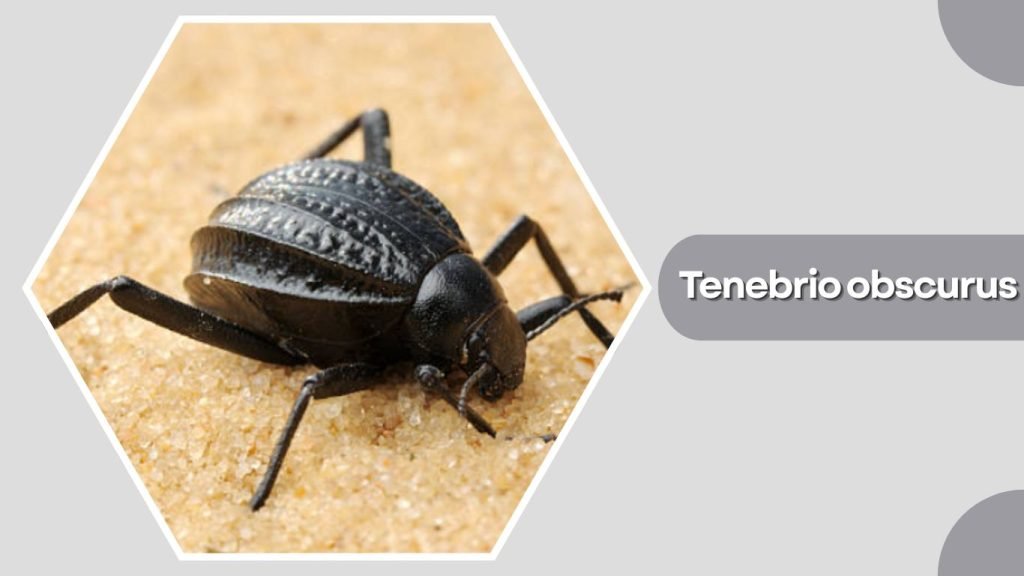
Tenebrio obscurus, often called the dark mealworm beetle, is closely related to Tenebrio molitor but prefers slightly cooler and more humid environments. Its larvae are also used as feed, though less commonly.
Identification
- Slightly smaller, about 10–15 mm long
- Dark brown to nearly black coloration
- Slender, elongated body
- Elytra are smooth but less shiny than T. molitor
- Antennae are segmented and slightly thicker toward the tip
- Larvae resemble mealworms but are darker in color
Habitat and Distribution
This species is found in temperate regions and often inhabits stored products, barns, and grain storage facilities. It is less tolerant of high heat compared to T. molitor and prefers cooler, damp environments with organic material.
Behavior and Diet
Tenebrio obscurus feeds on grains, flour, and decomposing organic matter. The larvae are active feeders and contribute to the breakdown of stored materials, sometimes becoming pests. Adults are less active and tend to stay hidden in dark areas.
Life Cycle
The beetle undergoes complete metamorphosis. Eggs are laid in food sources, where larvae hatch and grow through several molts. After reaching maturity, they pupate and later emerge as adults. The life cycle duration varies but is generally similar to other Tenebrio species, influenced by environmental conditions.
5. Alphitobius diaperinus
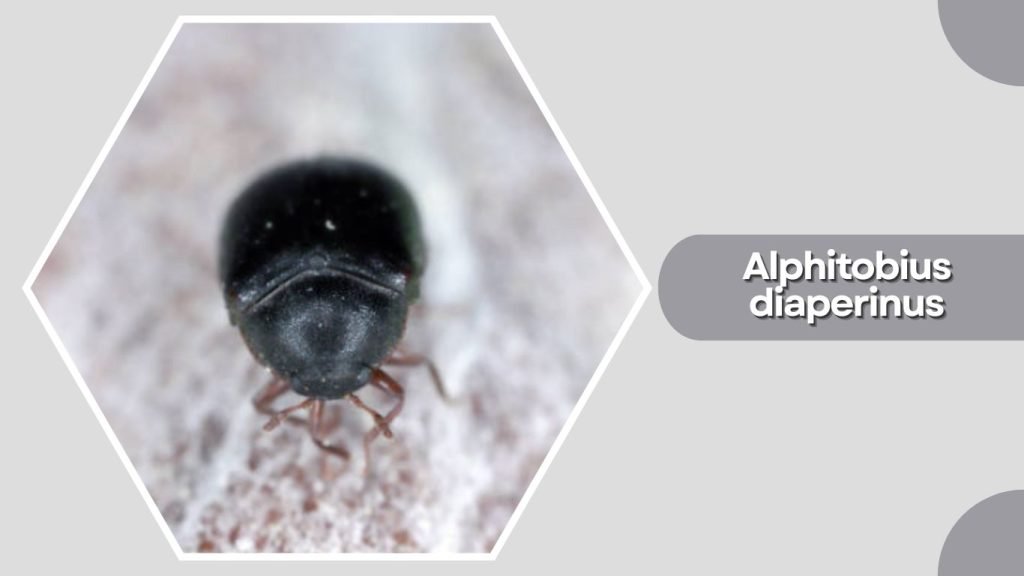
Alphitobius diaperinus, commonly known as the lesser mealworm, is a small darkling beetle often associated with poultry farms and stored products. It is considered both a pest and a decomposer, depending on the context.
Identification
- Small size, about 5–7 mm long
- Oval, slightly flattened body
- Shiny dark brown to black coloration
- Elytra smooth and glossy
- Antennae short with a gradual club
- Larvae are slender, yellowish-brown, resembling tiny mealworms
Habitat and Distribution
This species is widely distributed worldwide, especially in warm regions. It is commonly found in poultry litter, barns, and grain storage areas. The beetles thrive in moist, organic-rich environments where waste material accumulates, making farms an ideal habitat.
Behavior and Diet
Alphitobius diaperinus feeds on decaying organic matter, spilled feed, and animal waste. In poultry environments, it can become a pest by damaging insulation and spreading pathogens. Both larvae and adults are active feeders and tend to hide in cracks, litter, or soil during the day.
Life Cycle
The life cycle includes egg, larva, pupa, and adult stages. Eggs are laid in organic material, where larvae develop rapidly under warm conditions. After several molts, larvae pupate in protected areas. Adults emerge and can reproduce quickly, leading to large populations in favorable environments.
6. Tribolium castaneum
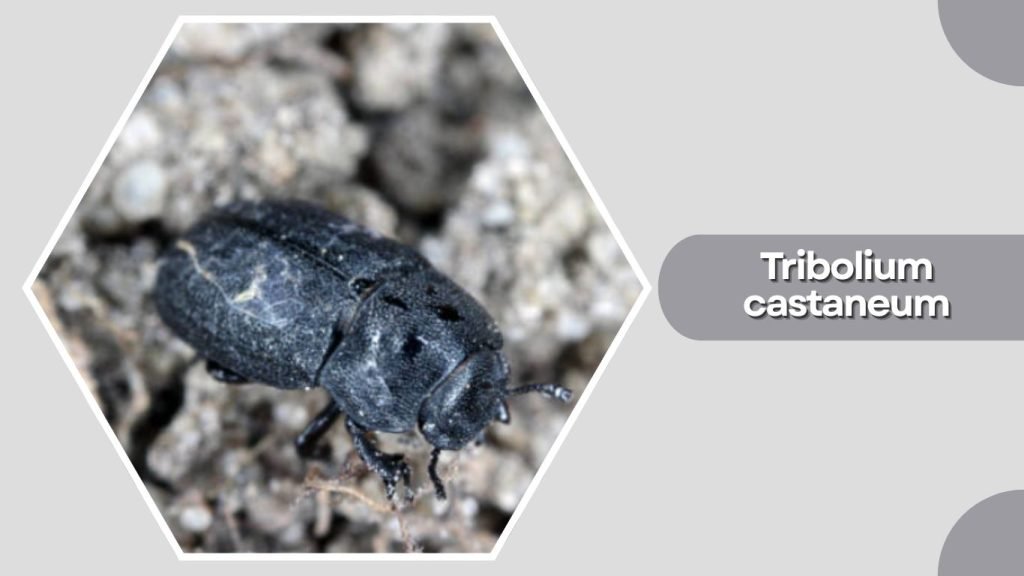
Tribolium castaneum, known as the red flour beetle, is a common pest of stored food products. It is widely studied in laboratories due to its adaptability and ease of breeding.
Identification
- Small size, about 3–4.5 mm long
- Reddish-brown coloration
- Flattened, elongated body
- Elytra finely grooved
- Antennae end in a distinct three-segmented club
- Larvae are pale yellow and slender
Habitat and Distribution
This beetle is found globally, especially in stored food environments such as flour mills, warehouses, and kitchens. It prefers warm, dry conditions and is rarely found outdoors. Infestations are common in improperly stored grains and processed foods.
Behavior and Diet
Tribolium castaneum feeds on flour, cereals, and other processed grain products. It cannot feed on whole grains unless they are damaged. Both adults and larvae contribute to contamination, often giving food a foul odor. They are active and reproduce quickly in suitable conditions.
Life Cycle
The species undergoes complete metamorphosis. Eggs are laid directly in food material. Larvae develop through multiple stages before pupating. The life cycle can be completed in as little as a month under optimal conditions, allowing rapid population growth in infested areas.
7. Tribolium confusum
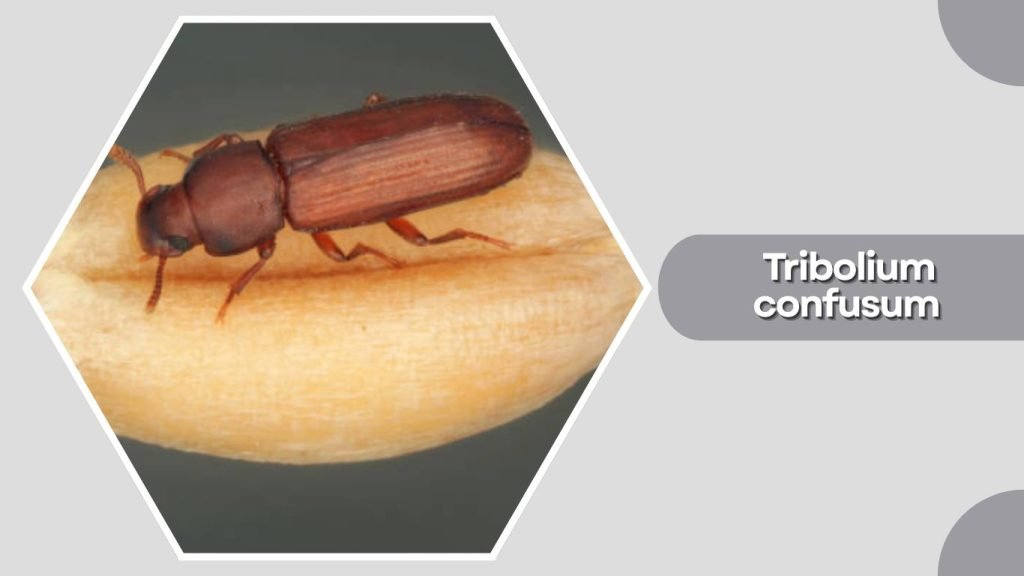
Tribolium confusum, commonly called the confused flour beetle, closely resembles the red flour beetle but has slight differences in behavior and structure. It is a widespread pest of stored food products and is frequently found in households and storage facilities.
Identification
- Small size, about 3–4.5 mm long
- Reddish-brown to dark brown color
- Elongated, flattened body
- Elytra with fine grooves
- Antennae gradually clubbed (not sharply segmented)
- Unable to fly, unlike some related species
Habitat and Distribution
This species is found worldwide, especially in temperate regions. It thrives in stored food environments such as flour mills, warehouses, and kitchen pantries. It prefers dry, warm conditions and is commonly associated with processed grain products rather than whole grains.
Behavior and Diet
Tribolium confusum feeds on flour, cereals, and other finely ground food materials. It is less capable of infesting whole grains unless they are already damaged. Both larvae and adults contribute to food contamination, often causing unpleasant odors and spoilage. They are active and tend to hide in cracks and crevices.
Life Cycle
The life cycle includes egg, larva, pupa, and adult stages. Eggs are laid directly in food sources. Larvae pass through several molts before pupating. Under favorable conditions, the entire cycle can be completed within a few weeks, allowing rapid infestation growth.
8. Zophobas morio
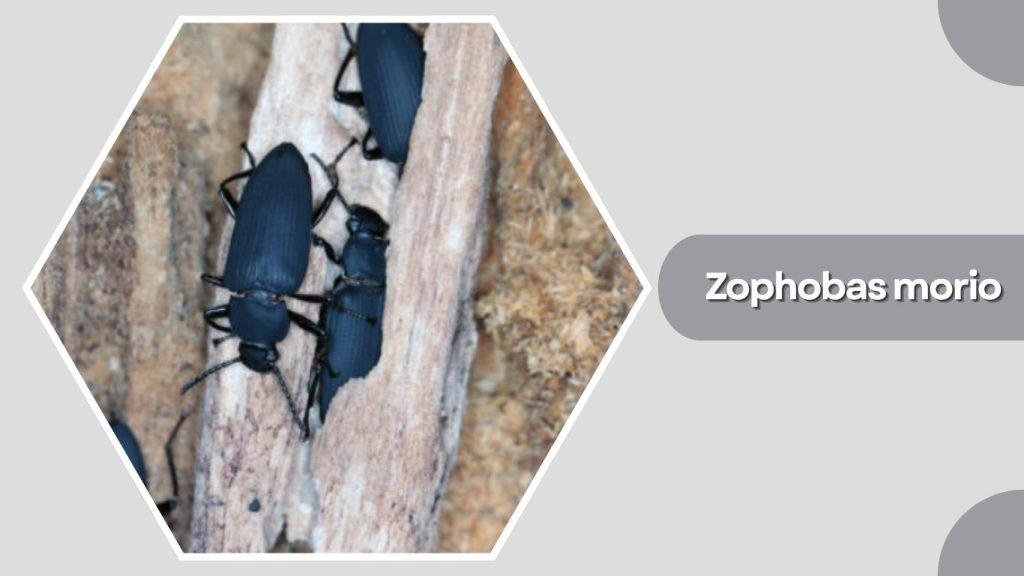
Zophobas morio, often known as the superworm beetle, is popular in the pet trade due to its large larvae used as feed for reptiles and birds. It is a larger and more robust darkling beetle compared to many others.
Identification
- Large size, about 18–30 mm long
- Dark brown to black coloration
- Sturdy, elongated body
- Elytra smooth and slightly shiny
- Strong legs adapted for movement
- Larvae (superworms) are large, thick, and yellowish
Habitat and Distribution
Originally native to Central and South America, Zophobas morio is now found globally in controlled environments such as breeding facilities. It prefers warm, humid conditions and is rarely found in the wild outside its native range.
Behavior and Diet
Zophobas morio feeds on decaying organic matter, fruits, vegetables, and grain-based materials. The larvae are highly active and voracious feeders. Adults are less active and tend to stay hidden in dark environments. They are commonly raised in captivity for animal feed.
Life Cycle
The beetle undergoes complete metamorphosis. Eggs hatch into large larvae that grow through multiple molts. Unlike mealworms, superworms require isolation to pupate successfully. After pupation, adults emerge and reproduce, continuing the cycle under controlled conditions.
9. Asbolus verrucosus
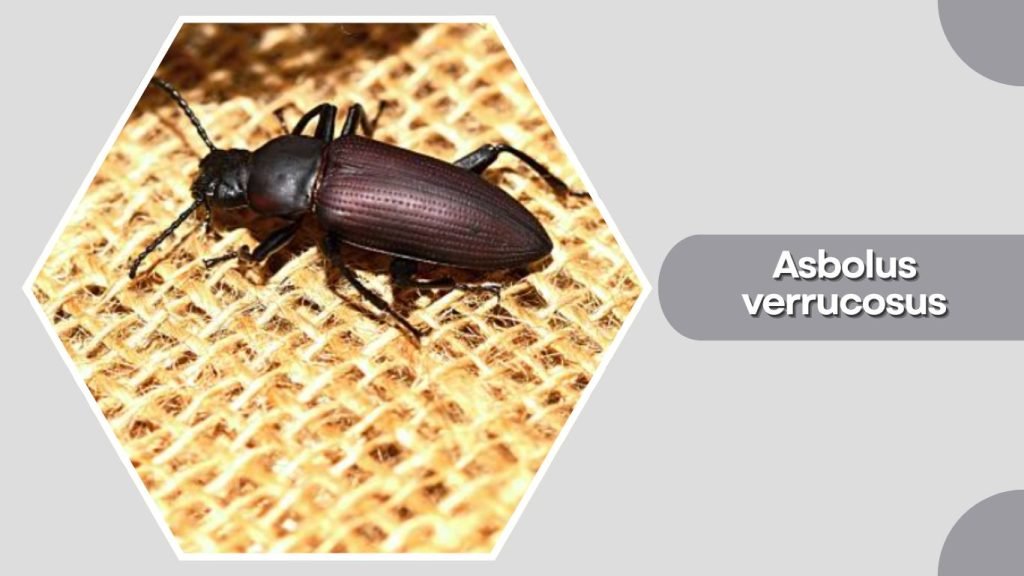
Asbolus verrucosus, commonly known as the blue death-feigning beetle, is a striking desert species famous for its unusual coloration and defensive behavior. It is often kept as a pet due to its hardy nature and unique appearance.
Identification
- Medium size, about 18–25 mm long
- Distinct bluish-gray or powdery blue coloration
- Rough, bumpy (warty) texture on elytra
- Oval, robust body shape
- Slow-moving with sturdy legs
- Feigns death by remaining motionless when disturbed
Habitat and Distribution
This species is native to the deserts of the southwestern United States and parts of Mexico. It thrives in extremely dry, sandy environments with minimal vegetation. During the day, it hides under rocks or debris to avoid heat, becoming more active during cooler periods.
Behavior and Diet
Asbolus verrucosus is a scavenger, feeding on decaying plant material and organic debris. It is well adapted to arid conditions and can survive long periods with little moisture. When threatened, it plays dead as a defense mechanism, which helps deter predators.
Life Cycle
The life cycle follows complete metamorphosis. Eggs are laid in sandy soil, where larvae develop by feeding on organic matter. After several molts, they pupate underground. Adults emerge and can live for several years, especially in stable, dry environments.
10. Nyctoporis spp.
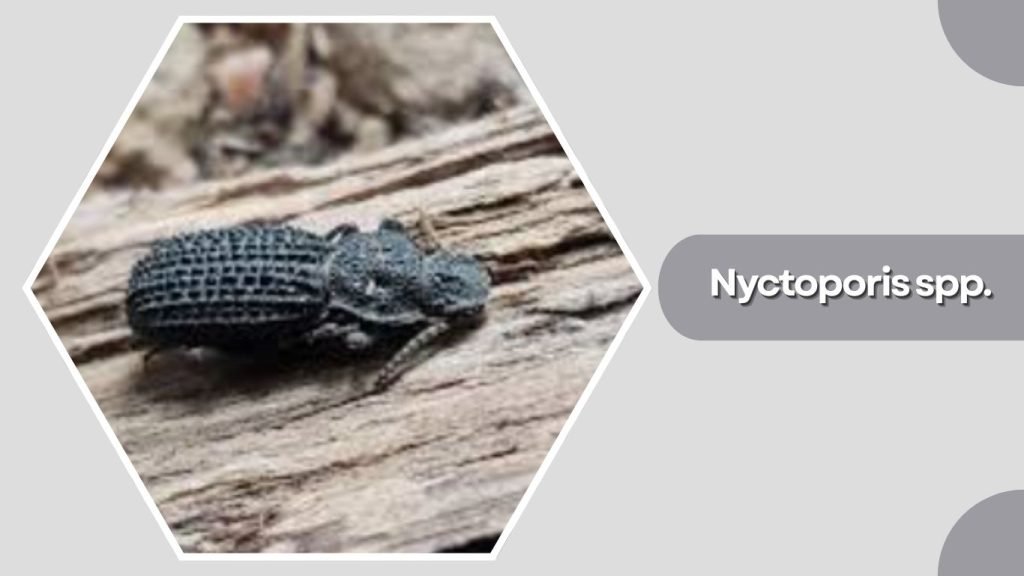
Nyctoporis is a genus of darkling beetles commonly found in desert and semi-arid environments. These beetles are less well known but play an important role in nutrient recycling within their ecosystems.
Identification
- Medium size, typically 10–20 mm long
- Dark brown to black coloration
- Elongated, slightly flattened body
- Elytra may be ridged or textured
- Antennae short and segmented
- Legs adapted for ground movement
Habitat and Distribution
Nyctoporis species are primarily found in arid and semi-arid regions, particularly in North America. They inhabit sandy soils, rocky terrain, and desert landscapes. These beetles are usually hidden under stones or debris during the day and emerge at night.
Behavior and Diet
These beetles are nocturnal scavengers. They feed on decaying plant material, organic debris, and sometimes fungi. Their nighttime activity helps them avoid extreme daytime temperatures. They move steadily across the ground and may burrow when disturbed.
Life Cycle
Nyctoporis beetles undergo complete metamorphosis. Eggs are deposited in soil, where larvae develop by feeding on organic matter. After pupation underground, adults emerge and continue the cycle. Their development time depends on environmental conditions such as temperature and moisture.
11. Cryptoglossa spp.
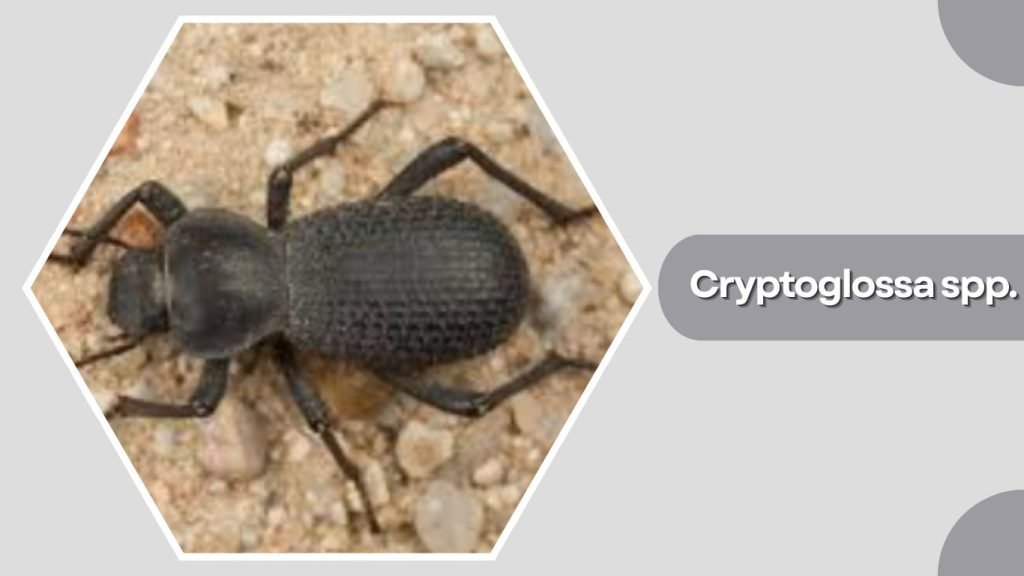
Cryptoglossa is a genus of darkling beetles adapted to sandy desert environments. These beetles are well suited for life in loose soils and are often overlooked due to their ground-dwelling habits and dark coloration.
Identification
- Medium size, about 12–20 mm long
- Oval to slightly elongated body
- Dark brown to black coloration
- Elytra smooth or lightly textured
- Head often partially hidden under the pronotum
- Legs adapted for digging in sandy soil
Habitat and Distribution
Cryptoglossa species are mainly found in desert regions of North America, especially in sandy habitats such as dunes and dry plains. They prefer loose, shifting soils where they can burrow easily. During the day, they remain hidden beneath the surface or under debris to escape extreme heat.
Behavior and Diet
These beetles are nocturnal and emerge at night to feed. Their diet consists of decaying plant material, organic debris, and sometimes seeds. They are important decomposers in desert ecosystems, helping to recycle nutrients in nutrient-poor environments.
Life Cycle
Like other darkling beetles, Cryptoglossa undergo complete metamorphosis. Eggs are laid in sandy soil, where larvae develop underground. After several growth stages, larvae pupate and eventually emerge as adults. Their life cycle is closely tied to environmental conditions, especially moisture availability.
12. Coelocnemis spp.
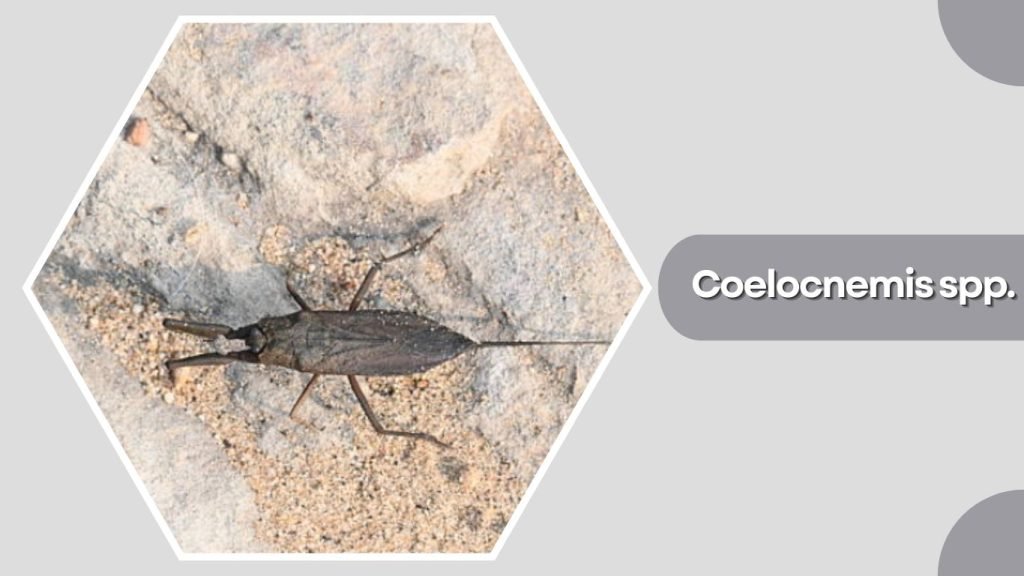
Coelocnemis is a genus of darkling beetles commonly found in arid and semi-arid regions. These beetles are known for their sturdy bodies and adaptation to dry environments.
Identification
- Medium size, typically 10–18 mm long
- Elongated, somewhat cylindrical body
- Dark brown to black coloration
- Elytra often ridged or grooved
- Antennae short and segmented
- Strong legs suited for walking on rough terrain
Habitat and Distribution
Coelocnemis species are widely distributed in North America, especially in dry habitats such as deserts, scrublands, and grasslands. They are usually found under rocks, logs, or leaf litter during the day and become active at night.
Behavior and Diet
These beetles are scavengers that feed on decaying plant matter and organic debris. They are primarily nocturnal, which helps them avoid high daytime temperatures. Their slow but steady movement allows them to forage efficiently across the ground.
Life Cycle
Coelocnemis beetles follow complete metamorphosis: egg, larva, pupa, and adult. Eggs are deposited in soil, where larvae develop by feeding on organic material. After pupation underground, adults emerge and continue the life cycle, with timing influenced by environmental factors.
13. Ecnomoderes spp.
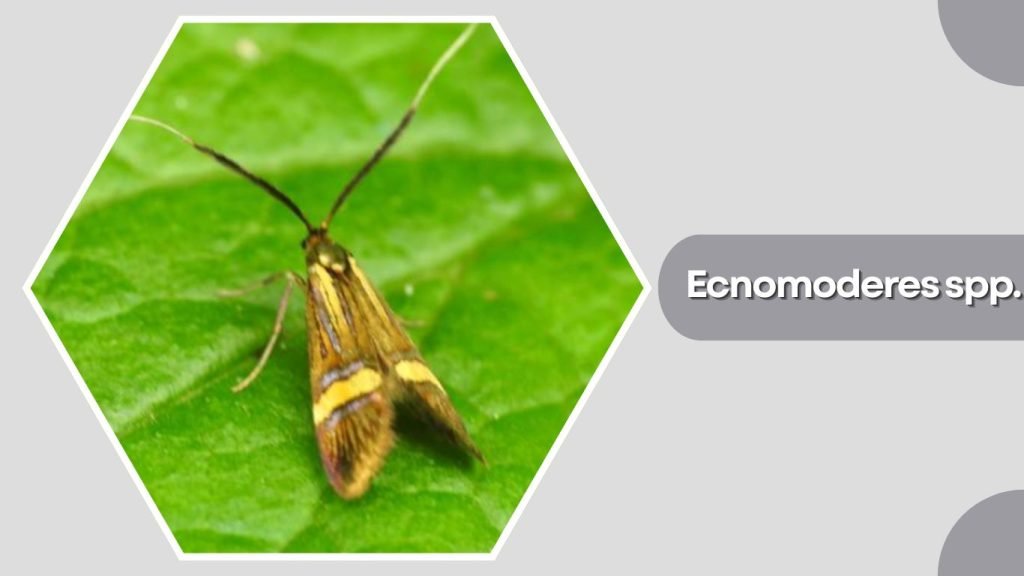
Ecnomoderes is a lesser-known genus of darkling beetles found in dry and semi-arid regions. These beetles are adapted to ground-dwelling life and contribute to decomposition processes in their ecosystems.
Identification
- Medium size, around 8–15 mm long
- Elongated oval body shape
- Dark brown to black coloration
- Elytra smooth or slightly ridged
- Antennae short with segmented appearance
- Legs slender, suited for walking on soil
Habitat and Distribution
Ecnomoderes species are typically found in arid and semi-arid environments, including deserts and dry grasslands. They prefer loose soil and are often discovered under stones, logs, or plant debris. Their distribution is mainly in North America, where they occupy warm, dry habitats.
Behavior and Diet
These beetles are nocturnal scavengers that feed on decaying plant material and organic debris. They play a useful role in nutrient cycling by breaking down dead matter. During the day, they remain hidden to avoid predators and heat, becoming active after sunset.
Life Cycle
Ecnomoderes undergo complete metamorphosis, including egg, larva, pupa, and adult stages. Eggs are laid in soil, where larvae grow by feeding on organic material. After pupation underground, adults emerge. Their development time varies depending on environmental conditions like temperature and moisture.
14. Stenomorpha spp.
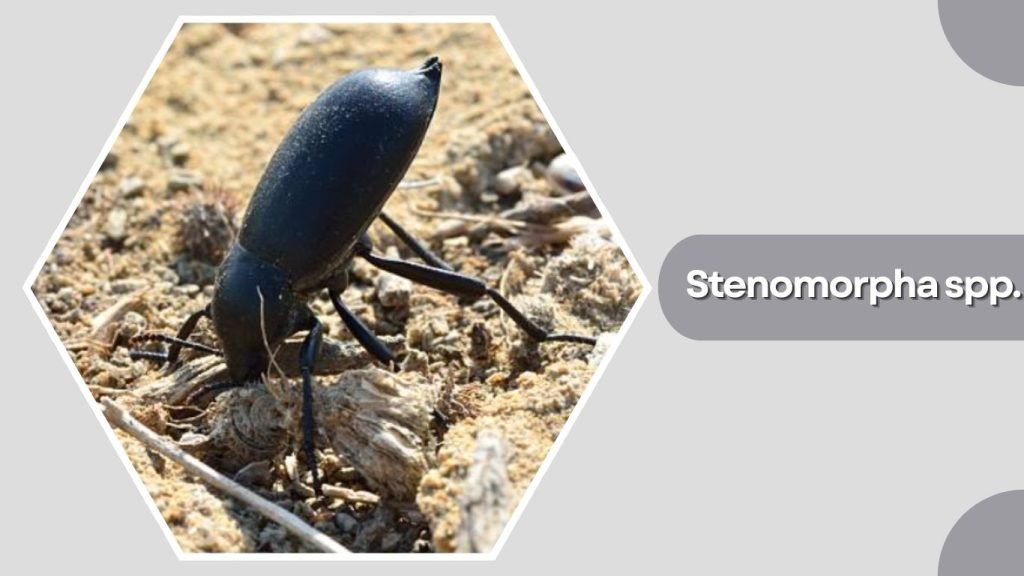
Stenomorpha is a genus of slender darkling beetles commonly found in desert regions. These beetles are adapted to dry climates and are known for their narrow body shape and ground-based lifestyle.
Identification
- Medium size, about 10–20 mm long
- Slender, elongated body form
- Dark brown to black coloration
- Elytra often smooth with slight grooves
- Long legs relative to body size
- Antennae moderately long and segmented
Habitat and Distribution
Stenomorpha species are primarily distributed in desert and semi-arid regions of North America. They inhabit sandy or rocky terrain and are often found under debris or within loose soil. These beetles are well adapted to hot, dry conditions.
Behavior and Diet
They are mostly nocturnal and feed on decaying plant material and organic debris. Their slender bodies allow them to move easily through narrow spaces in soil and litter. Like many darkling beetles, they help recycle nutrients in their environment.
Life Cycle
Stenomorpha beetles follow complete metamorphosis. Eggs are laid in soil, and larvae develop underground by feeding on organic matter. After pupation, adults emerge and continue the cycle. Their life cycle duration depends on environmental factors such as temperature and food availability.
15. Helops spp.
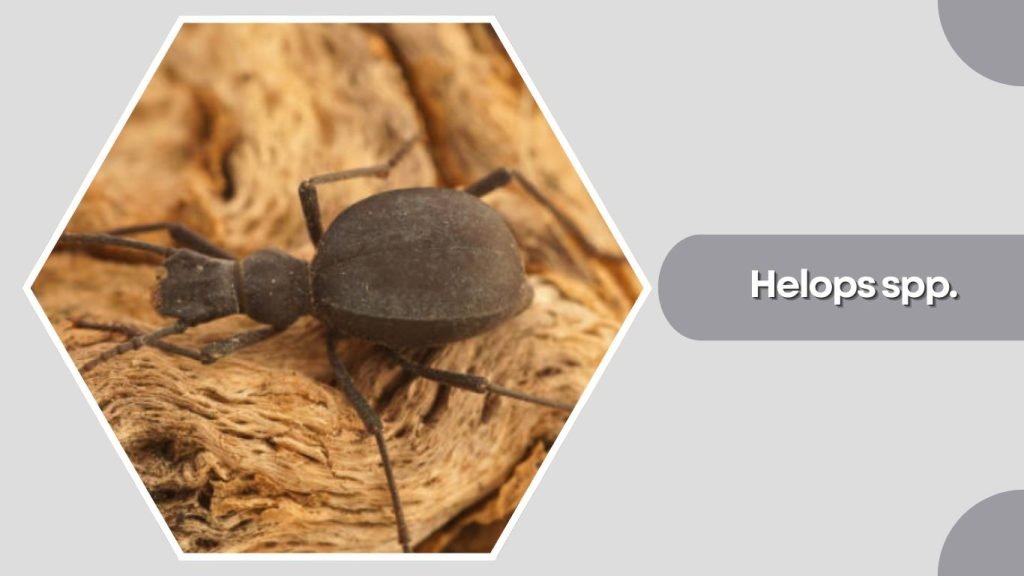
Helops is a genus of darkling beetles commonly found in woodland and temperate environments. Unlike many desert-adapted species, these beetles prefer more humid habitats and are often associated with decaying wood and forest floors.
Identification
- Medium size, about 10–20 mm long
- Elongated, slightly flattened body
- Dark brown to black coloration, sometimes slightly glossy
- Elytra smooth or finely grooved
- Antennae moderately long and segmented
- Legs relatively long, suited for walking on leaf litter
Habitat and Distribution
Helops species are widely distributed across Europe, Asia, and parts of North America. They are typically found in forests, woodlands, and areas with abundant leaf litter. These beetles prefer moist environments and are often seen under bark, logs, or decaying plant material.
Behavior and Diet
These beetles are primarily nocturnal and feed on decaying plant matter, fungi, and organic debris. They play an important role in breaking down wood and leaf litter. During the day, they remain hidden in moist, shaded areas to avoid predators and dehydration.
Life Cycle
Helops beetles undergo complete metamorphosis. Eggs are laid in soil or decaying wood, where larvae develop by feeding on organic material. After several molts, larvae pupate and eventually emerge as adults. The duration of their life cycle depends on environmental conditions such as moisture and temperature.
16. Nalassus spp.
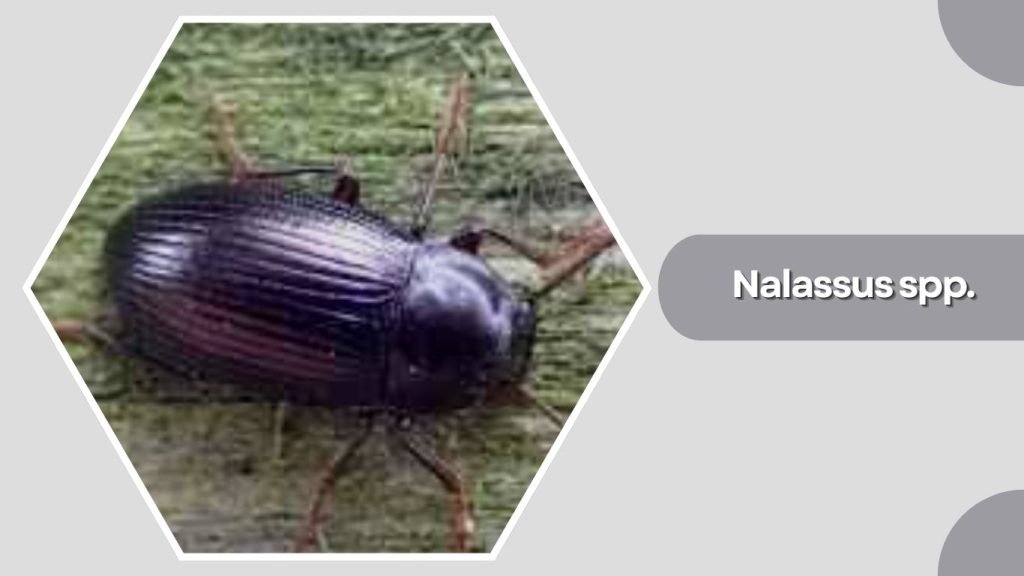
Nalassus is a genus of darkling beetles commonly found in forested and mountainous regions. These beetles are often associated with tree bark and decaying wood, where they remain well camouflaged.
Identification
- Medium size, about 8–18 mm long
- Elongated oval body shape
- Dark metallic blue, green, or black coloration
- Elytra smooth and often slightly shiny
- Antennae slender and segmented
- Body surface may appear slightly reflective
Habitat and Distribution
Nalassus species are mainly found in Europe and parts of Asia. They inhabit forests, especially areas with old trees and decaying wood. These beetles are often located under bark or within rotting logs, where they find shelter and food.
Behavior and Diet
These beetles are mostly nocturnal and feed on decaying wood, fungi, and organic debris. Their coloration helps them blend into their surroundings. They are slow-moving and rely on camouflage for protection rather than speed.
Life Cycle
Nalassus beetles follow complete metamorphosis. Eggs are laid in crevices of wood or soil. Larvae develop by feeding on decaying organic material, then pupate before emerging as adults. The life cycle can take several months, depending on environmental conditions.
17. Pimelia spp.
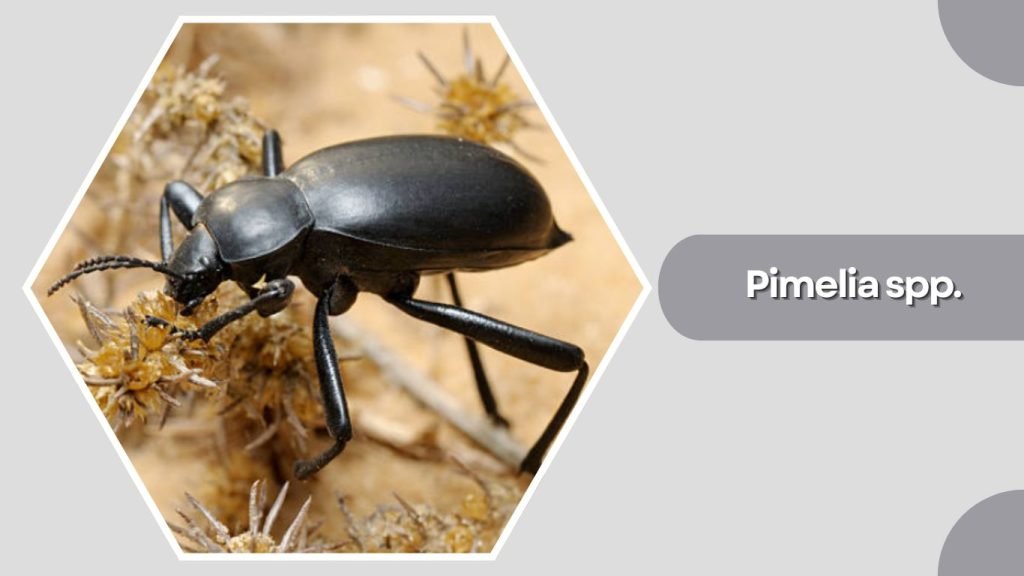
Pimelia is a well-known genus of darkling beetles commonly found in arid and semi-arid regions. These beetles are highly adapted to dry environments and are often recognized by their robust bodies and textured appearance.
Identification
- Medium to large size, about 15–30 mm long
- Broad, oval, and robust body shape
- Dark brown to black coloration
- Elytra often rough, granulated, or ridged
- Short antennae with segmented structure
- Strong legs adapted for walking on sand
Habitat and Distribution
Pimelia species are widely distributed across North Africa, the Middle East, and parts of southern Europe. They thrive in deserts, scrublands, and dry open areas. These beetles are usually found on sandy or rocky ground and often hide under stones or burrow into soil during the hottest parts of the day.
Behavior and Diet
These beetles are primarily nocturnal scavengers. They feed on decaying plant material, dry vegetation, and organic debris. Pimelia beetles are well adapted to conserve moisture, allowing them to survive in extremely dry conditions. Their slow movement and tough exoskeleton help protect them from predators.
Life Cycle
Pimelia beetles undergo complete metamorphosis. Eggs are laid in soil, where larvae develop by feeding on organic matter. After several growth stages, larvae pupate underground. Adults emerge and continue the cycle, with development time influenced by environmental factors like temperature and moisture.
18. Akis spp.
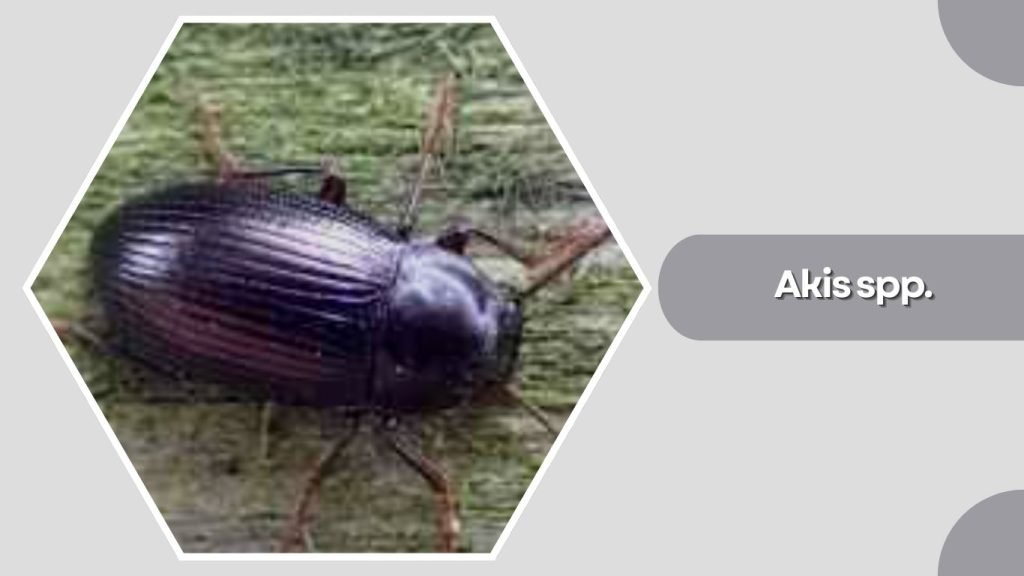
Akis is a genus of darkling beetles commonly found in Mediterranean and desert regions. These beetles are known for their strong, compact bodies and ability to survive in harsh, dry climates.
Identification
- Medium to large size, about 15–25 mm long
- Compact, oval, and robust body
- Matte black or dark brown coloration
- Elytra fused and often slightly textured
- Short, thick antennae
- Legs strong and adapted for ground movement
Habitat and Distribution
Akis species are mainly found in southern Europe, North Africa, and parts of the Middle East. They inhabit dry habitats such as deserts, scrublands, and rocky terrain. During the day, they hide under stones or in soil to escape heat, becoming active during cooler periods.
Behavior and Diet
Akis beetles are scavengers that feed on decaying plant matter and organic debris. They are mostly nocturnal and move slowly across the ground in search of food. Their tough exoskeleton and ability to conserve water make them well suited for arid environments.
Life Cycle
Like other darkling beetles, Akis undergo complete metamorphosis. Eggs are deposited in soil, where larvae develop by feeding on organic material. After pupation, adults emerge and continue the cycle. Their life cycle duration varies depending on environmental conditions.
19. Adesmia spp.
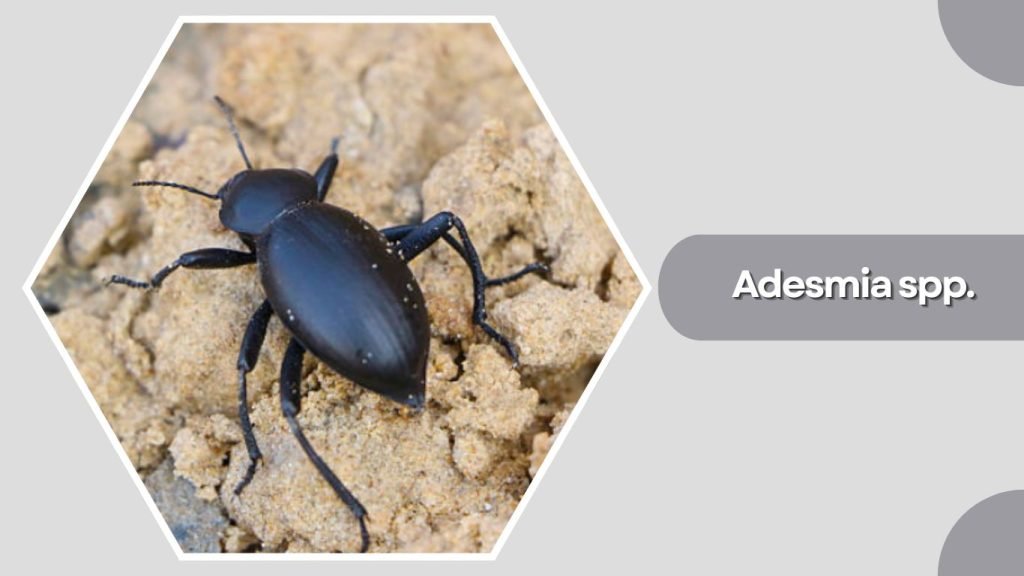
Adesmia is a genus of darkling beetles well adapted to some of the harshest desert environments on Earth. Many species are known for their ability to survive extreme heat and limited water availability, especially in African deserts.
Identification
- Medium size, about 10–25 mm long
- Oval to slightly elongated body
- Dark brown to black coloration
- Elytra smooth or lightly textured
- Long legs, often raised body posture
- Some species have adaptations for fog or moisture collection
Habitat and Distribution
Adesmia species are primarily found in African deserts, including the Namib and Sahara. They inhabit sandy dunes and arid plains where vegetation is sparse. These beetles are highly specialized for desert survival and are often active during cooler times of the day.
Behavior and Diet
They are scavengers that feed on dry plant material and organic debris. Some species exhibit unique behaviors such as standing on their heads to collect moisture from fog. This adaptation helps them survive in extremely dry environments where water is scarce.
Life Cycle
Adesmia beetles undergo complete metamorphosis. Eggs are laid in sandy soil, and larvae develop underground by feeding on organic matter. After pupation, adults emerge and continue the cycle. Their development is closely linked to environmental conditions like humidity.
20. Onymacris unguicularis
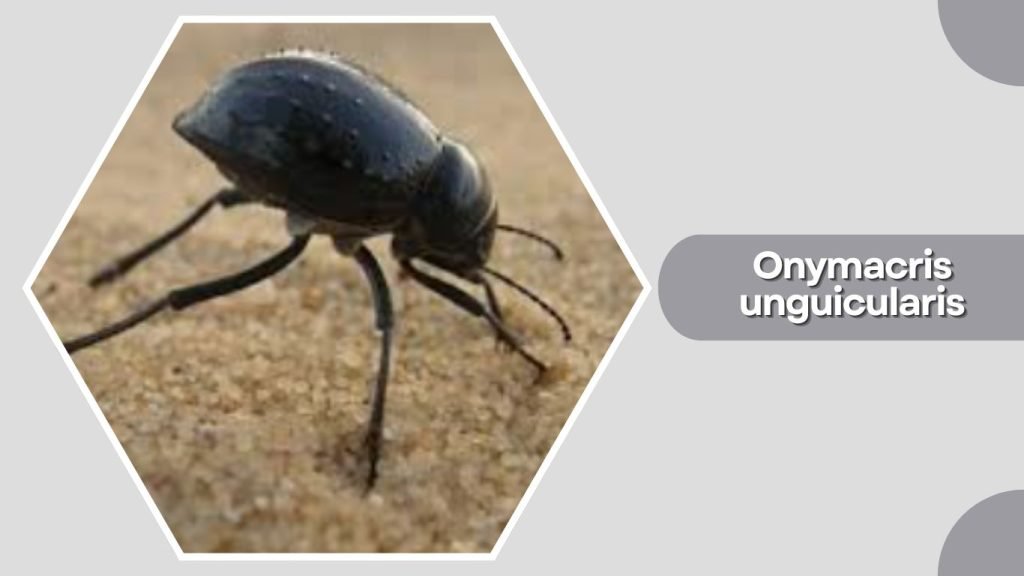
Onymacris unguicularis is a famous desert darkling beetle known for its fog-basking behavior. It is one of the iconic species of the Namib Desert and is often studied for its water-collection adaptations.
Identification
- Medium size, about 12–20 mm long
- Smooth, oval body shape
- Black coloration with a slightly glossy surface
- Elytra smooth and fused
- Long legs adapted for walking on sand
- Body posture often elevated from the ground
Habitat and Distribution
This species is native to the Namib Desert in southwestern Africa. It lives in sandy dune environments where rainfall is extremely rare. Instead of relying on rain, it depends on coastal fog for moisture.
Behavior and Diet
Onymacris unguicularis feeds on dry plant material and organic debris. Its most notable behavior is fog-basking, where it climbs dunes and positions its body to collect water droplets from fog, which then run down to its mouth. This is a key survival strategy in its habitat.
Life Cycle
The beetle follows complete metamorphosis. Eggs are laid in sand, where larvae develop underground. After pupation, adults emerge and adapt quickly to desert conditions. Their life cycle is influenced by the availability of moisture and food resources.
21. Onymacris plana
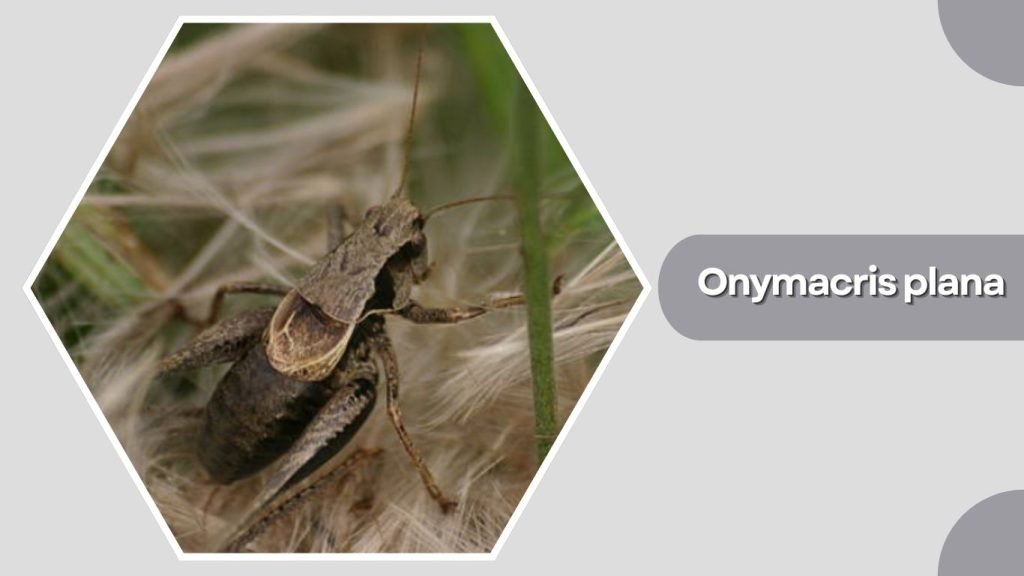
Onymacris plana is another desert-adapted darkling beetle closely related to other fog-basking species of the Namib Desert. It is well known for its survival strategies in one of the driest environments on Earth.
Identification
- Medium size, about 10–18 mm long
- Flattened, oval body shape
- Black to dark brown coloration
- Smooth, fused elytra
- Long legs adapted for movement on sand
- Slightly flatter body compared to related species
Habitat and Distribution
This species is native to the Namib Desert in southwestern Africa. It inhabits sandy dunes and arid plains where rainfall is minimal. Like other Onymacris species, it relies heavily on coastal fog as a source of moisture rather than direct rainfall.
Behavior and Diet
Onymacris plana feeds on dry plant material and organic debris. It is primarily active during cooler parts of the day. Some populations exhibit fog-collecting behavior, positioning their bodies to channel moisture toward their mouth, helping them survive in extreme dryness.
Life Cycle
The beetle undergoes complete metamorphosis. Eggs are laid in sandy soil, where larvae develop underground. After pupation, adults emerge and adapt to harsh desert conditions. Their development is closely linked to environmental moisture and temperature.
22. Phaleria spp.
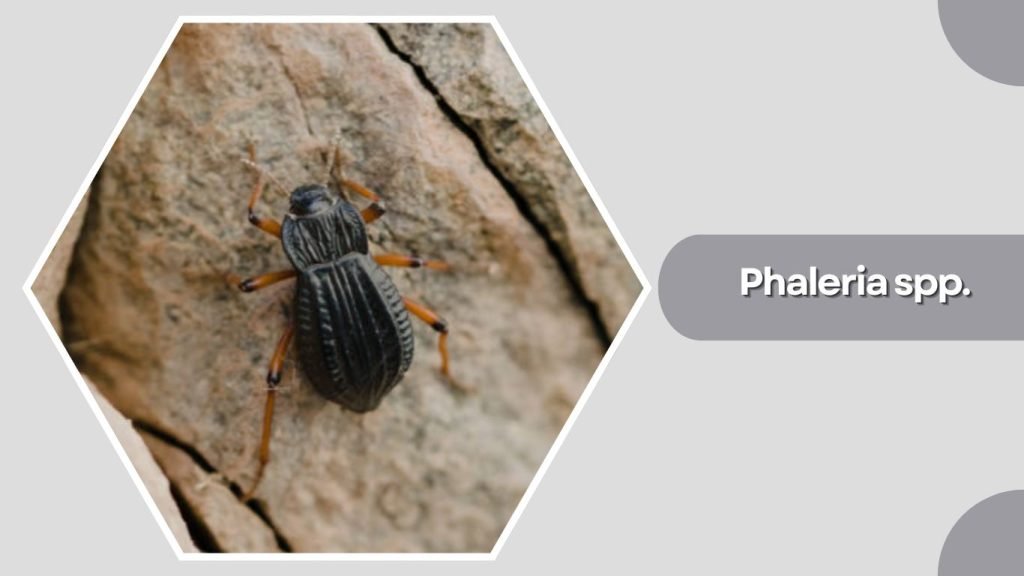
Phaleria is a genus of darkling beetles commonly found in coastal and sandy environments. These beetles are often associated with beaches and dunes, where they play a role in breaking down organic debris.
Identification
- Small to medium size, about 5–12 mm long
- Oval, compact body shape
- Light brown to dark brown coloration
- Elytra smooth and slightly shiny
- Short antennae with gradual clubbing
- Legs adapted for digging in sand
Habitat and Distribution
Phaleria species are widely distributed in coastal regions around the world. They are commonly found on sandy beaches, dunes, and near shorelines. These beetles often hide under seaweed, driftwood, or sand during the day.
Behavior and Diet
These beetles are scavengers that feed on decaying organic matter, including seaweed and plant debris washed ashore. They are mostly nocturnal and emerge at night to forage. Their activity helps recycle nutrients in coastal ecosystems.
Life Cycle
Phaleria beetles undergo complete metamorphosis. Eggs are laid in sandy substrates, where larvae develop by feeding on organic material. After pupation in the sand, adults emerge and continue the cycle. Their life cycle is adapted to coastal environmental conditions.
23. Gonocephalum spp.
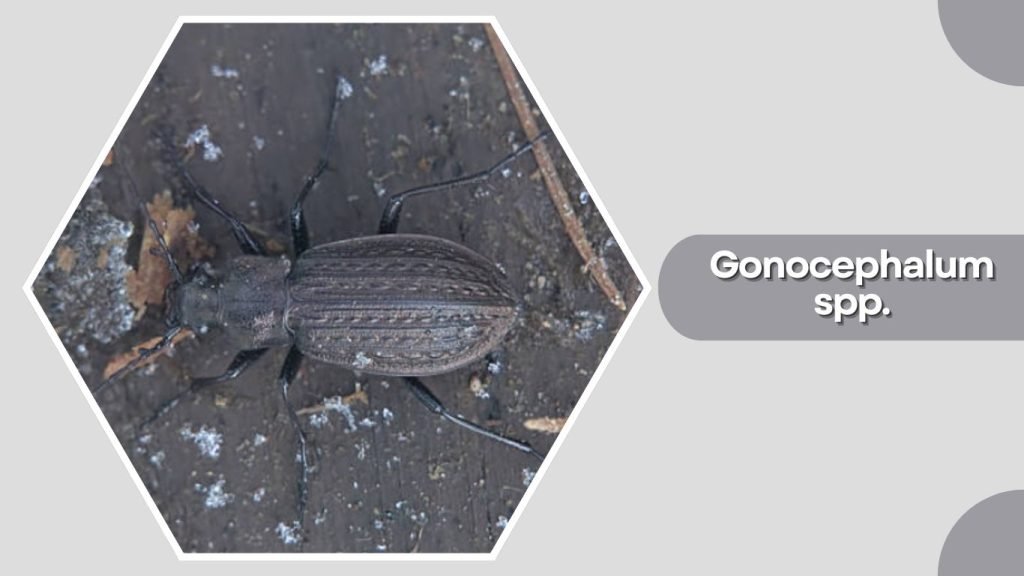
Gonocephalum is a widespread genus of darkling beetles commonly found in warm and dry regions. These beetles are often associated with agricultural areas and can sometimes be considered minor pests.
Identification
- Small to medium size, about 5–12 mm long
- Oval to slightly elongated body
- Dark brown to black coloration
- Elytra often ridged or grooved
- Head relatively large compared to body
- Antennae short and segmented
Habitat and Distribution
Gonocephalum species are widely distributed across Africa, Asia, and parts of Europe. They are commonly found in dry fields, grasslands, and agricultural lands. These beetles prefer loose soil and are often seen on the ground or under debris.
Behavior and Diet
They are primarily scavengers but may also feed on seeds and plant material. In agricultural settings, some species can damage crops by feeding on seedlings. They are mostly active at night and hide in soil or under objects during the day.
Life Cycle
Gonocephalum beetles undergo complete metamorphosis. Eggs are laid in soil, where larvae develop by feeding on organic matter. After pupation underground, adults emerge. Their life cycle duration depends on environmental conditions such as temperature and food availability.
24. Opatrum spp.
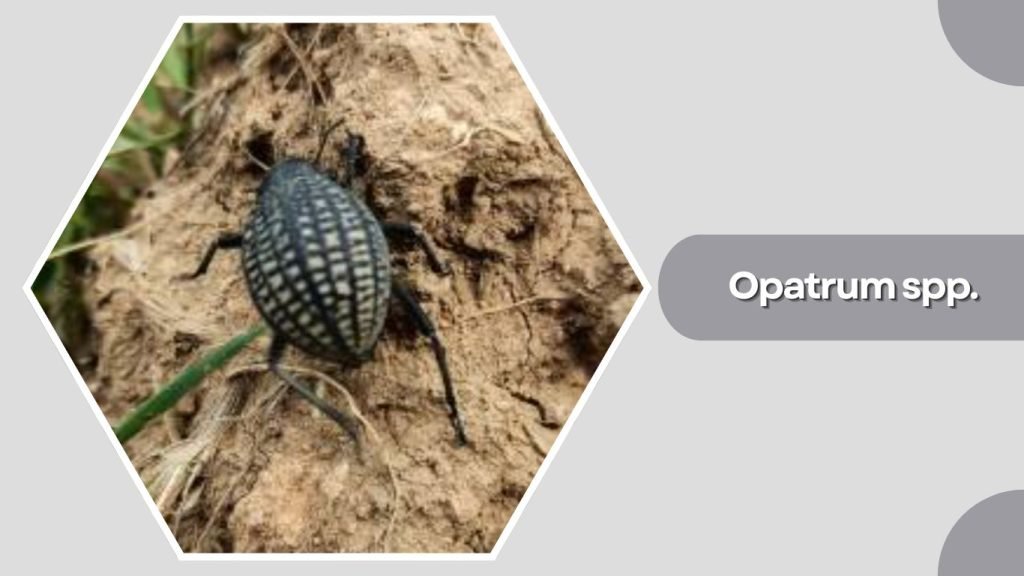
Opatrum is a genus of darkling beetles often found in dry, open habitats. Some species are known to affect crops, especially in their larval stages.
Identification
- Medium size, about 6–10 mm long
- Oval, slightly flattened body
- Dark brown to black coloration
- Elytra rough or finely textured
- Antennae short with slight clubbing
- Legs adapted for ground movement
Habitat and Distribution
Opatrum species are commonly found in Europe, Asia, and North Africa. They inhabit dry soils, farmlands, and grasslands. These beetles are often associated with cultivated land and can be found under stones or within soil.
Behavior and Diet
These beetles feed on plant material, seeds, and organic debris. Larvae, sometimes called false wireworms, may damage crops by feeding on roots and young plants. Adults are mostly nocturnal and remain hidden during the day.
Life Cycle
Opatrum beetles follow complete metamorphosis. Eggs are deposited in soil, where larvae develop and feed on plant roots or organic matter. After pupation, adults emerge and continue the cycle. Population growth can be significant in favorable agricultural conditions.
25. Pedinus spp.
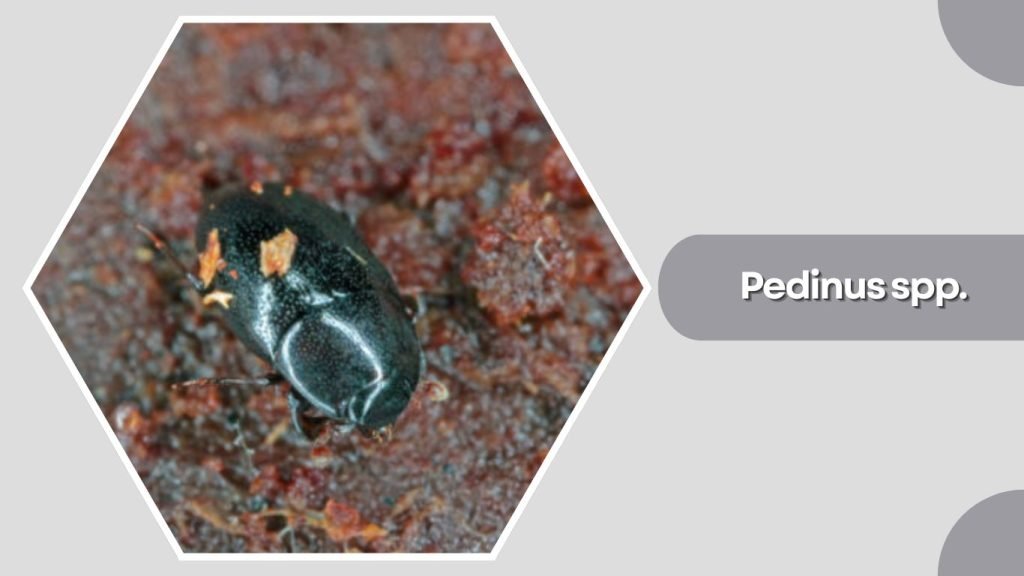
Pedinus is a genus of darkling beetles commonly found in dry, open habitats. These beetles are ground-dwelling and are often associated with sandy or loose soils where they can easily move and hide.
Identification
- Small to medium size, about 6–12 mm long
- Oval to slightly elongated body
- Dark brown to black coloration
- Elytra smooth or lightly grooved
- Antennae short and gradually clubbed
- Legs adapted for walking and burrowing in soil
Habitat and Distribution
Pedinus species are widely distributed across Europe, Asia, and North Africa. They are commonly found in grasslands, farmlands, and dry open areas. These beetles prefer loose, well-drained soils and are often hidden under stones, leaf litter, or soil during the day.
Behavior and Diet
These beetles are mainly scavengers, feeding on decaying plant material and organic debris. They may also consume small seeds. Pedinus beetles are typically nocturnal, emerging at night to forage while avoiding daytime heat and predators.
Life Cycle
Pedinus beetles undergo complete metamorphosis. Eggs are laid in soil, where larvae develop by feeding on organic matter. After several molts, larvae pupate underground. Adults emerge and continue the cycle, with development time influenced by environmental conditions.
26. Strongylium spp.
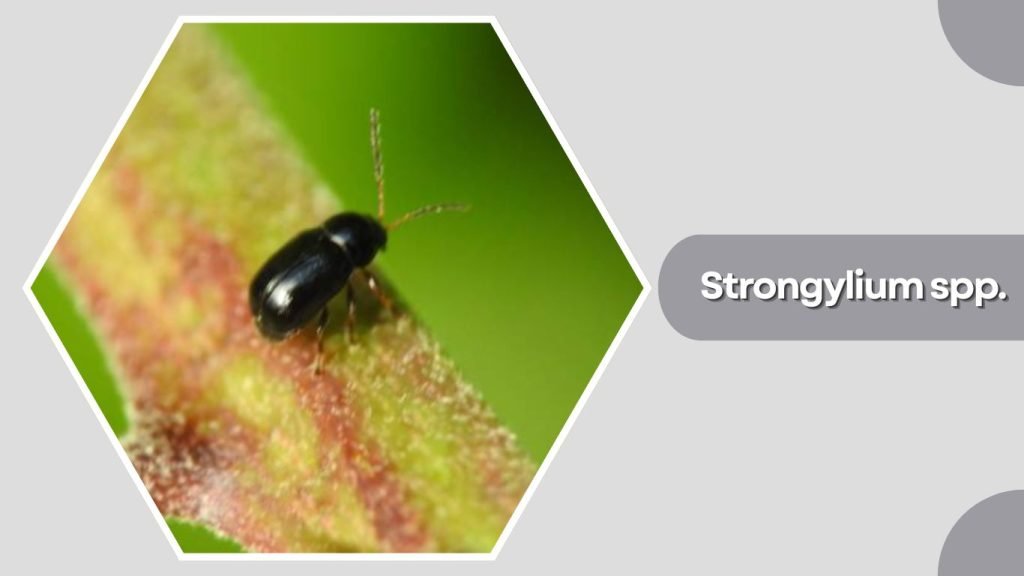
Strongylium is a diverse genus of darkling beetles often found in forested and tropical environments. These beetles are usually associated with decaying wood and play an important role in decomposition.
Identification
- Medium size, about 10–25 mm long
- Elongated, cylindrical body shape
- Dark brown to black coloration
- Elytra smooth or slightly ridged
- Long legs suited for movement on wood surfaces
- Antennae moderately long and segmented
Habitat and Distribution
Strongylium species are widely distributed in tropical and subtropical regions around the world. They are commonly found in forests, especially in areas with abundant dead wood, leaf litter, and organic material. These beetles often hide under bark or within rotting logs.
Behavior and Diet
These beetles are primarily scavengers and decomposers. They feed on decaying wood, fungi, and organic debris. Most species are nocturnal and remain hidden during the day. Their presence helps break down forest material and recycle nutrients.
Life Cycle
Strongylium beetles follow complete metamorphosis. Eggs are laid in decaying wood or soil. Larvae develop by feeding on organic material, then pupate before emerging as adults. Their life cycle duration varies depending on environmental conditions such as moisture and temperature.
27. Uloma spp.
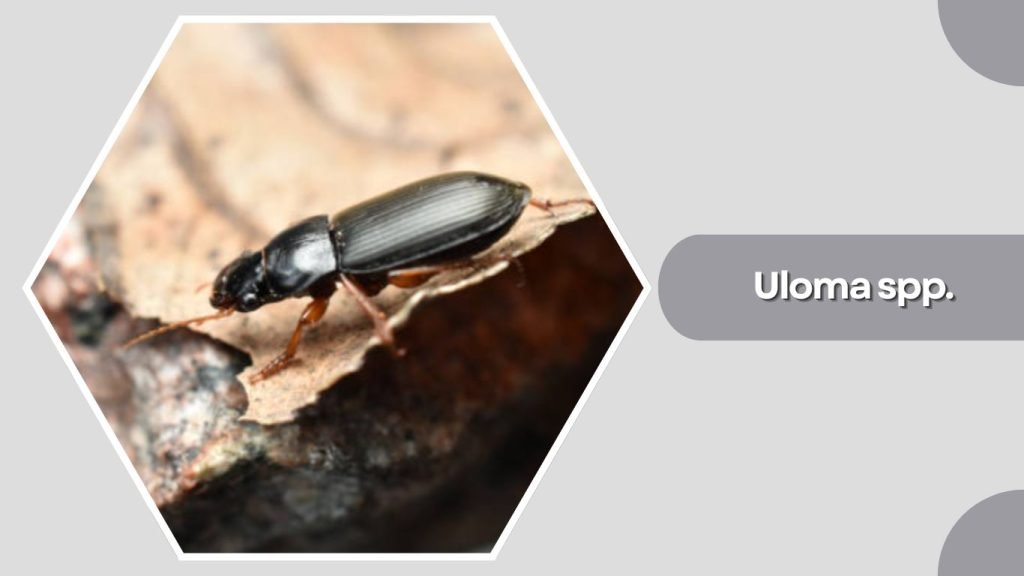
Uloma is a genus of darkling beetles commonly found in forested environments. These beetles are typically associated with decaying wood and are often discovered under bark or inside rotting logs.
Identification
- Medium size, about 8–20 mm long
- Elongated, slightly flattened body
- Dark brown to black coloration
- Elytra smooth with fine grooves
- Antennae short to moderately long, segmented
- Strong mandibles adapted for feeding on wood-related material
Habitat and Distribution
Uloma species are widely distributed across Europe, Asia, and the Americas. They are commonly found in forests, woodlands, and areas with abundant dead wood. These beetles prefer moist environments and are usually located beneath bark, inside decaying logs, or within leaf litter.
Behavior and Diet
These beetles are primarily decomposers. They feed on decaying wood, fungi, and organic debris. Uloma species are mostly nocturnal and remain hidden during the day to avoid predators and dry conditions. Their activity contributes significantly to the breakdown of forest material.
Life Cycle
Uloma beetles undergo complete metamorphosis. Eggs are laid in decaying wood or nearby soil. Larvae develop by feeding on organic material within the wood. After pupation, adults emerge and continue the cycle. The duration of their life cycle depends on environmental factors such as moisture and temperature.
