
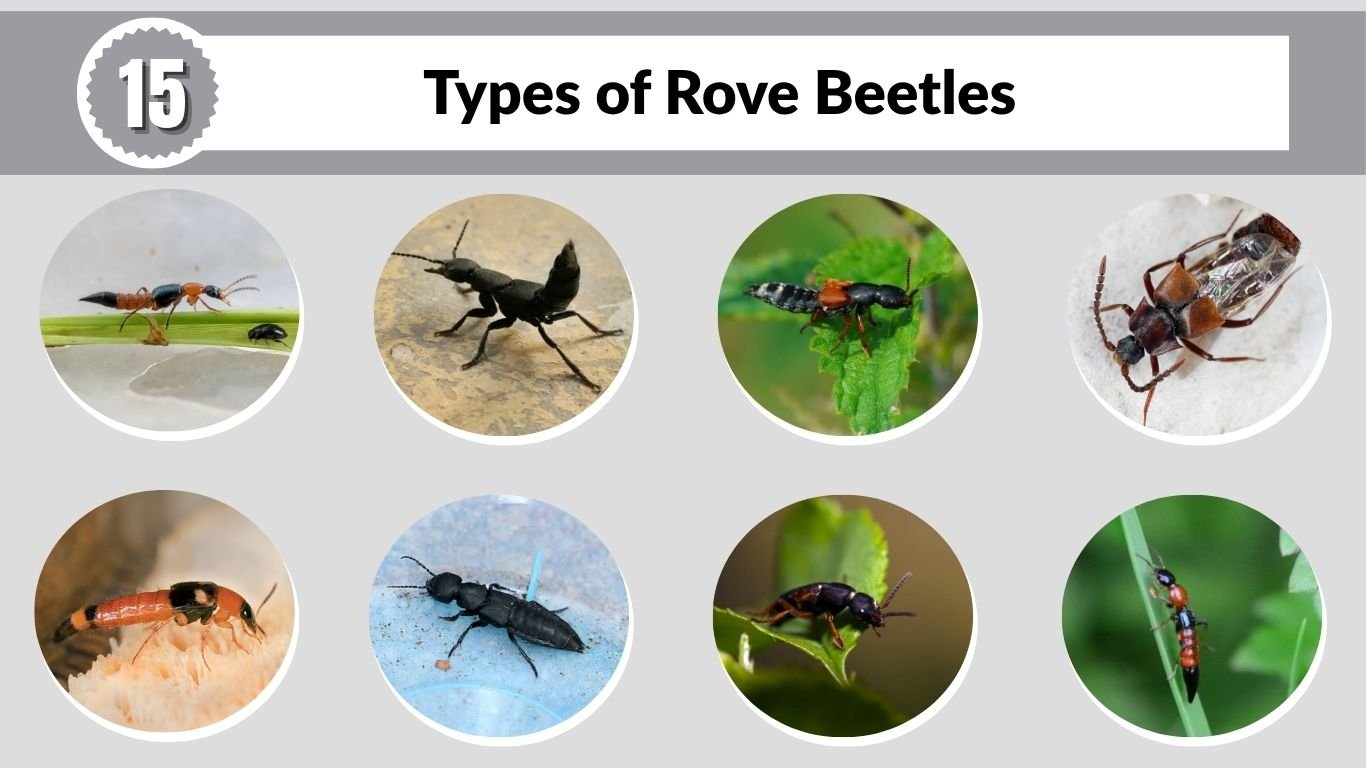
Rove beetles are a diverse group of insects known for their elongated bodies and very short wing covers that leave much of their abdomen exposed. They are commonly found in a wide range of habitats, from forests and gardens to compost piles and shoreline environments. Despite their unusual appearance, most rove beetles are beneficial insects that play a key role in ecosystems.
This guide covers 15 different types of rove beetles, helping you identify them based on their appearance, habitat, and behavior. Understanding these species can help you recognize their ecological importance, especially their role in controlling pests and aiding in decomposition.
1. Devil’s Coach Horse Beetle
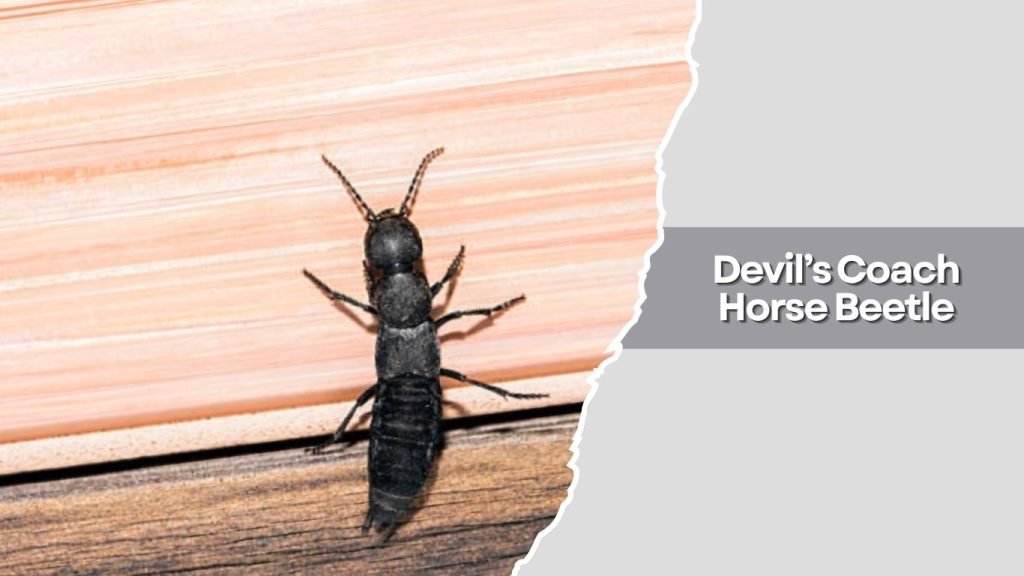
The Devil’s coach horse beetle is one of the most recognizable rove beetles, known for its aggressive posture and striking appearance. Despite its intimidating name, it is not dangerous to humans but can deliver a mild bite if disturbed. This beetle is commonly found in gardens, woodlands, and grassy areas, where it plays a beneficial role as a predator of other insects.
Identification
This beetle is large for a rove beetle, typically measuring 20–30 mm in length. It has a shiny black body with very short wing covers, leaving much of its abdomen exposed. When threatened, it raises its abdomen like a scorpion, which is a key identifying behavior.
Habitat and Distribution
The Devil’s coach horse beetle is widely distributed across Europe and parts of North America. It prefers damp environments such as leaf litter, under logs, stones, and garden debris. It is mostly active at night.
Key Characteristics
- Glossy black elongated body
- Short wing covers exposing abdomen
- Raises abdomen in a defensive posture
- Nocturnal and fast-moving predator
Behavior and Diet
This beetle is a carnivorous predator that feeds on slugs, worms, and other small insects. It uses strong jaws to capture prey, making it helpful in controlling garden pests.
2. Hairy Rove Beetle
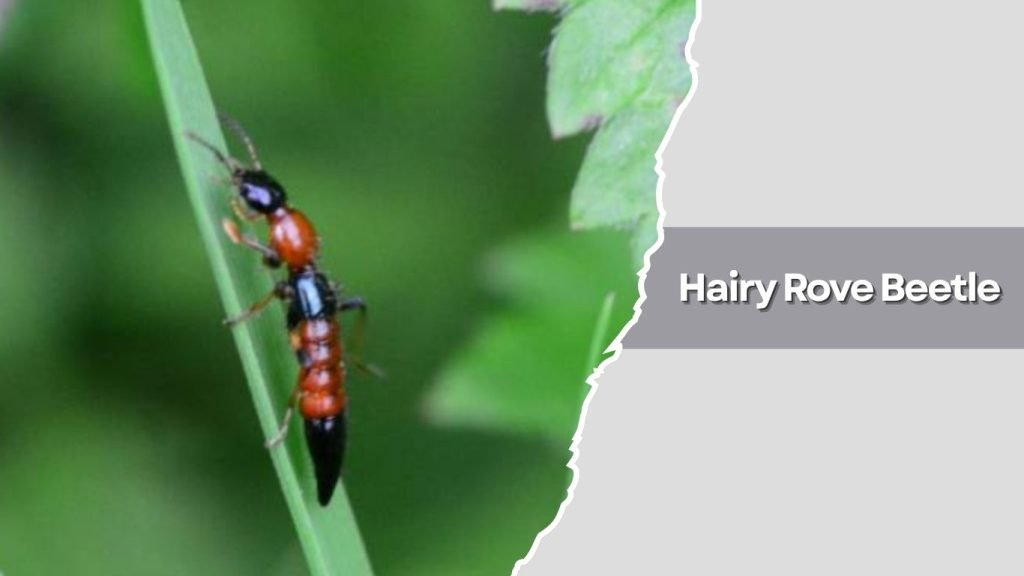
The hairy rove beetle is a distinctive member of the rove beetle family, known for its slightly fuzzy appearance and active predatory behavior. It is commonly found in decaying organic matter and plays an important ecological role by helping break down waste and controlling other small insect populations.
Identification
Hairy rove beetles are medium-sized, usually around 6–12 mm long. They have a dark brown to black body covered with fine hairs, giving them a slightly fuzzy look. Like other rove beetles, they have short wing covers that leave much of the abdomen exposed.
Habitat and Distribution
These beetles are widely distributed across Europe, North America, and other temperate regions. They are commonly found in compost piles, manure, leaf litter, and other moist environments rich in organic material.
Key Characteristics
- Dark body covered with fine hairs
- Short wing covers exposing abdomen
- Active and fast-moving
- Common in decomposing organic matter
Behavior and Diet
Hairy rove beetles are predatory and feed on small insects, larvae, and other invertebrates found in decaying material. Their presence is beneficial, as they help reduce pest populations and contribute to natural decomposition processes.
3. Golden Rove Beetle
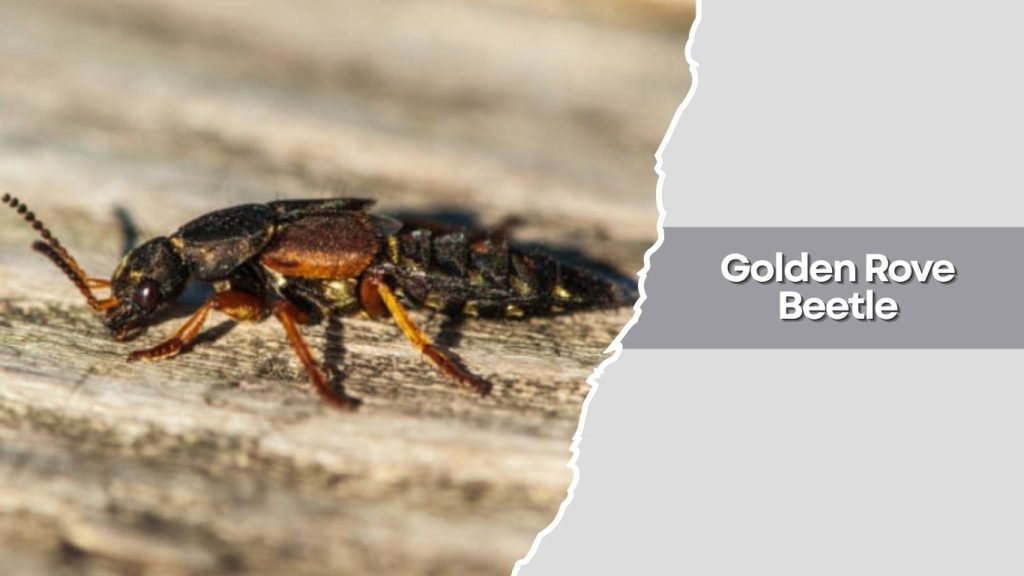
The golden rove beetle is a striking and easily recognizable species within the rove beetle family, admired for its shiny, metallic appearance. Unlike many dull-colored beetles, this species stands out due to its golden or bronze sheen. It is commonly found in natural habitats where it plays an important role as a predator, helping maintain ecological balance by feeding on smaller invertebrates.
Identification
Golden rove beetles are relatively small to medium in size, typically measuring around 5–10 mm in length. Their most notable feature is their metallic golden, bronze, or coppery coloration, which may shimmer in sunlight. Like other rove beetles, they have short wing covers (elytra) that leave a large portion of the flexible abdomen exposed. Their bodies are slender, and they move quickly when disturbed.
Habitat and Distribution
This species is found in various regions across Europe, Asia, and parts of North America. Golden rove beetles prefer moist environments such as forest floors, leaf litter, under logs, and near decaying organic material. They are also sometimes seen in gardens, especially in areas rich in organic debris.
Key Characteristics
- Metallic golden or bronze body coloration
- Slender body with exposed abdomen
- Short wing covers typical of rove beetles
- Fast-moving and active hunter
Behavior and Diet
Golden rove beetles are active predators that feed on small insects, larvae, and other tiny invertebrates. They often hunt in leaf litter and soil, using their speed and strong jaws to capture prey. Their role as natural pest controllers makes them beneficial in both natural ecosystems and garden environments, where they help keep harmful insect populations in check.
4. Shore Rove Beetle
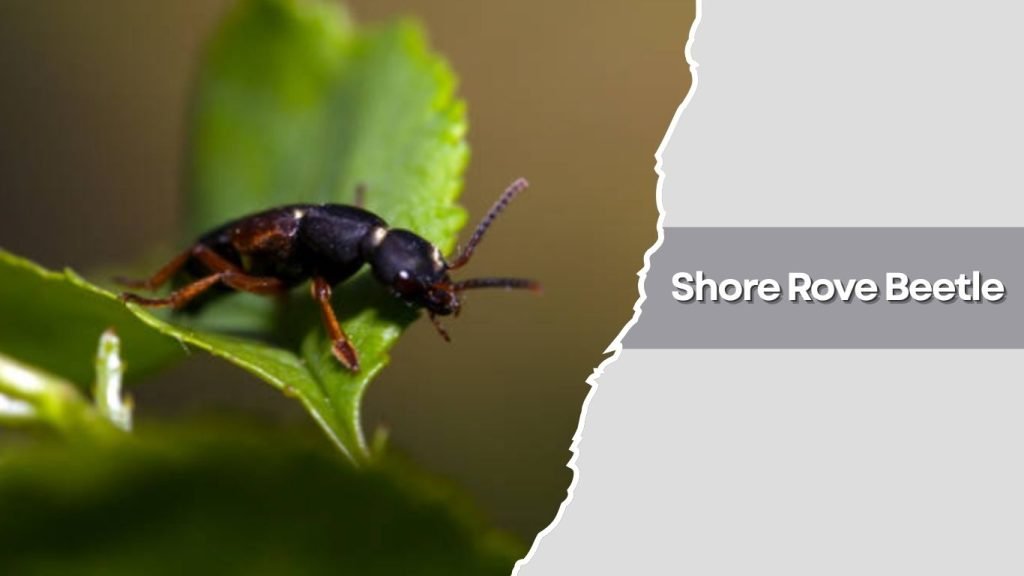
The shore rove beetle is a unique species adapted to coastal environments. It is commonly found along beaches, riverbanks, and lakeshores, where it thrives in sandy or muddy habitats. This beetle is well-suited to life near water and plays an important role in controlling small invertebrates in these ecosystems.
Identification
Shore rove beetles are small to medium-sized, usually measuring 4–8 mm in length. They have a dark brown to black body, often with a slightly glossy appearance. Like other rove beetles, they have short wing covers that leave most of the abdomen exposed, giving them a flexible and elongated look.
Habitat and Distribution
These beetles are widely distributed across coastal regions and inland water bodies around the world. They are commonly found in damp sand, mud, or debris along shorelines. Shore rove beetles are highly adaptable and can tolerate fluctuating moisture levels.
Key Characteristics
- Dark, elongated body with exposed abdomen
- Adapted to sandy and muddy environments
- Fast-moving and often found near water
- Tolerates changing moisture conditions
Behavior and Diet
Shore rove beetles are active predators that hunt small insects, larvae, and other tiny organisms found in shoreline habitats. They are quick and agile, often hiding under debris or burrowing into sand when disturbed. Their feeding habits help maintain ecological balance in coastal and freshwater environments.
5. Aleocharine Rove Beetle
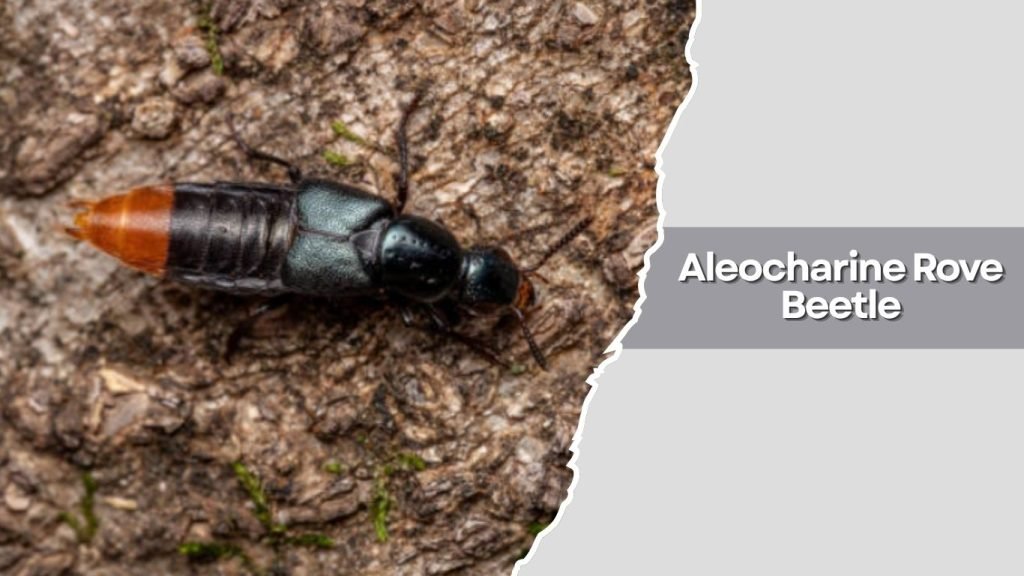
Aleocharine rove beetles belong to one of the largest subfamilies within the rove beetle group, containing thousands of species. These beetles are incredibly diverse and are known for their adaptability to various environments. Despite their small size, they play a crucial role in ecosystems by contributing to decomposition and controlling other small organisms.
Identification
Aleocharine rove beetles are typically very small, usually ranging from 1–4 mm in length. They have slender, elongated bodies that are often brown or black. Like other rove beetles, they have short wing covers, leaving much of their abdomen exposed. Due to their tiny size, they can be difficult to identify without close observation.
Habitat and Distribution
These beetles are found worldwide in a wide range of habitats. They are commonly seen in leaf litter, soil, compost, decaying organic matter, and even in association with ants or termites. Their adaptability allows them to thrive in both natural and human-influenced environments.
Key Characteristics
- Very small size compared to other rove beetles
- Slender body with exposed abdomen
- Highly diverse group with many species
- Found in a wide range of habitats
Behavior and Diet
Aleocharine rove beetles have varied diets depending on the species. Many are predators that feed on tiny insects and larvae, while others consume decaying organic material. Some species even form symbiotic relationships with ants, living inside their colonies and feeding on available resources.
6. Paederus Rove Beetle
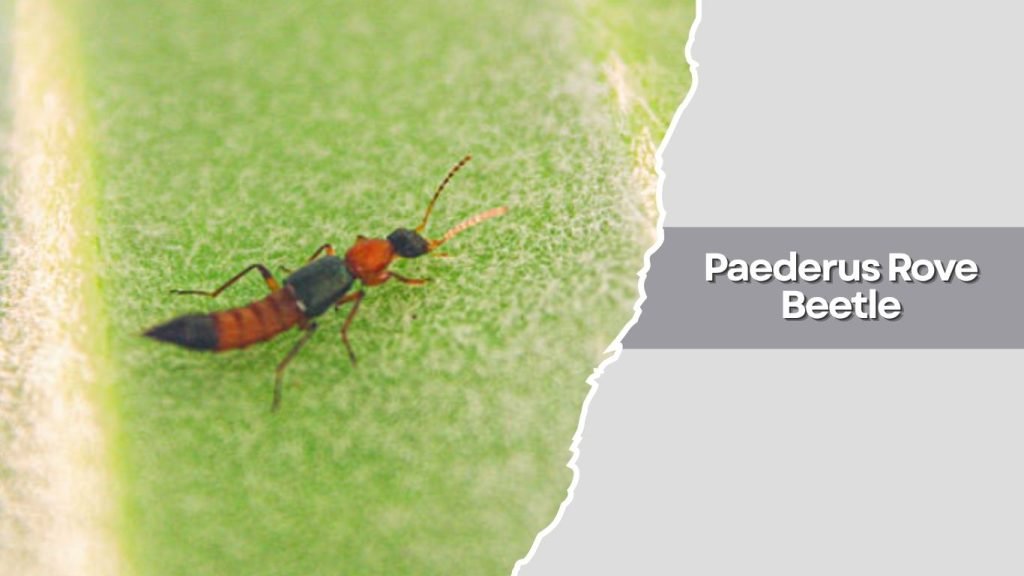
The Paederus rove beetle is a well-known species due to its medical importance rather than agricultural impact. Unlike many beetles, it does not bite or sting, but it can cause skin irritation when crushed. This species is often found in moist environments and is recognized for its bright coloration.
Identification
Paederus rove beetles are small, usually about 7–10 mm long. They have a slender body with distinctive bright coloring—typically a combination of black, orange, or red segments. Their short wing covers leave much of the abdomen exposed, which is typical of rove beetles.
Habitat and Distribution
These beetles are widely distributed across tropical and subtropical regions, including Asia, Africa, and parts of South America. They are commonly found in agricultural fields, grasslands, and areas with high moisture levels, especially near water sources.
Key Characteristics
- Bright black and orange/red coloration
- Slender body with exposed abdomen
- Attracted to light at night
- Found in moist environments
Behavior and Impact
Paederus beetles are predators that feed on small insects, making them beneficial in agriculture. However, when crushed against human skin, they release a toxin that can cause irritation and blistering, known as dermatitis. Avoid direct contact to prevent skin reactions.
7. Philonthus Rove Beetle
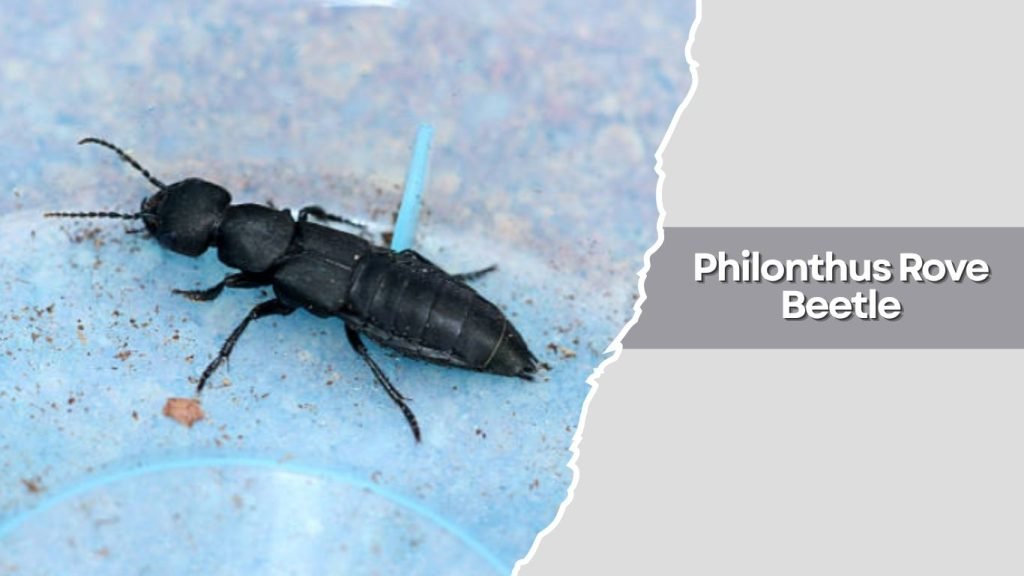
The Philonthus rove beetle is a common and widespread group within the rove beetle family, often found in environments rich in organic matter. These beetles are known for their active predatory behavior and are frequently seen in compost, manure, and decaying vegetation, where they help control pest populations.
Identification
Philonthus species are typically medium-sized, ranging from 6–12 mm in length. They usually have a shiny black body, though some may show metallic or slightly colored tones. Their bodies are elongated with short wing covers, exposing a flexible abdomen. They are fast-moving and alert when disturbed.
Habitat and Distribution
These beetles are found worldwide, especially in temperate regions. They thrive in moist habitats such as compost piles, animal dung, decaying plant matter, and agricultural fields. Their presence is common in both natural ecosystems and human-managed environments.
Key Characteristics
- Shiny black or slightly metallic body
- Medium size with elongated form
- Short wing covers exposing abdomen
- Common in decomposing organic material
Behavior and Diet
Philonthus rove beetles are active predators that feed on fly larvae, small insects, and other invertebrates. They are highly beneficial in reducing pest populations, particularly in farms and compost systems. Their quick movements and strong jaws make them effective hunters in their habitat.
8. Stenus Rove Beetle
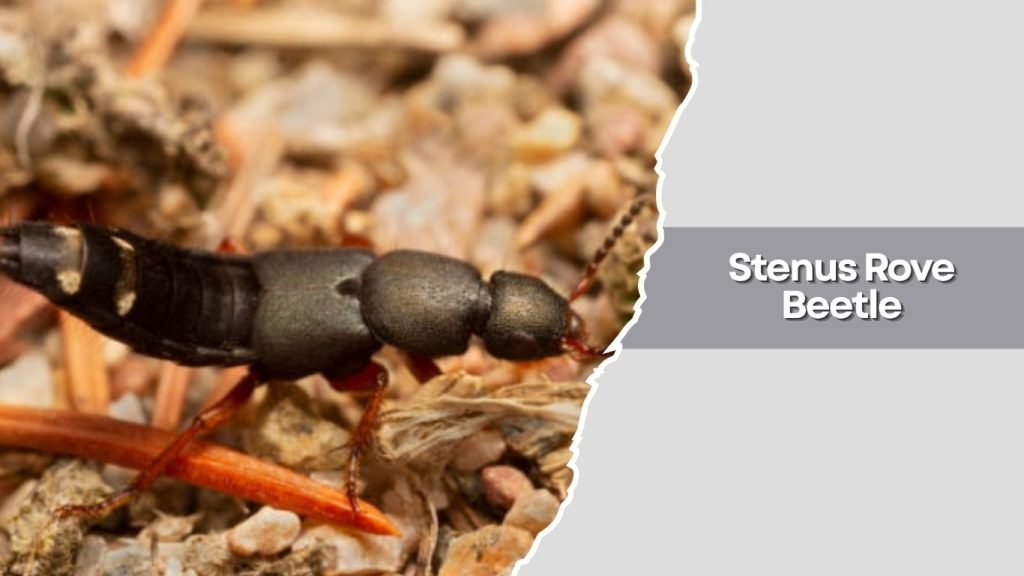
The Stenus rove beetle is a fascinating species known for its unique hunting technique and association with wet environments. It is especially notable for its ability to capture prey using a specialized mouthpart, making it one of the more unusual members of the rove beetle family.
Identification
Stenus beetles are small, typically measuring around 3–7 mm in length. They have a slender, elongated body that is usually dark brown or black. Like other rove beetles, they have short wing covers, leaving most of the abdomen exposed. Their eyes are relatively large, giving them good vision for hunting.
Habitat and Distribution
These beetles are widely distributed across Europe, Asia, and North America. They are most commonly found in damp environments such as near ponds, streams, marshes, and wet soil. They prefer areas with high moisture and abundant small prey.
Key Characteristics
- Small, slender body with exposed abdomen
- Large eyes for improved vision
- Found near water and moist habitats
- Unique prey-capturing mechanism
Behavior and Diet
Stenus rove beetles are predators that feed on tiny insects and springtails. They use a specialized, sticky tongue-like organ to quickly capture prey. This rapid hunting method makes them highly effective predators in their environment, contributing to natural pest control.
9. Quedius Rove Beetle
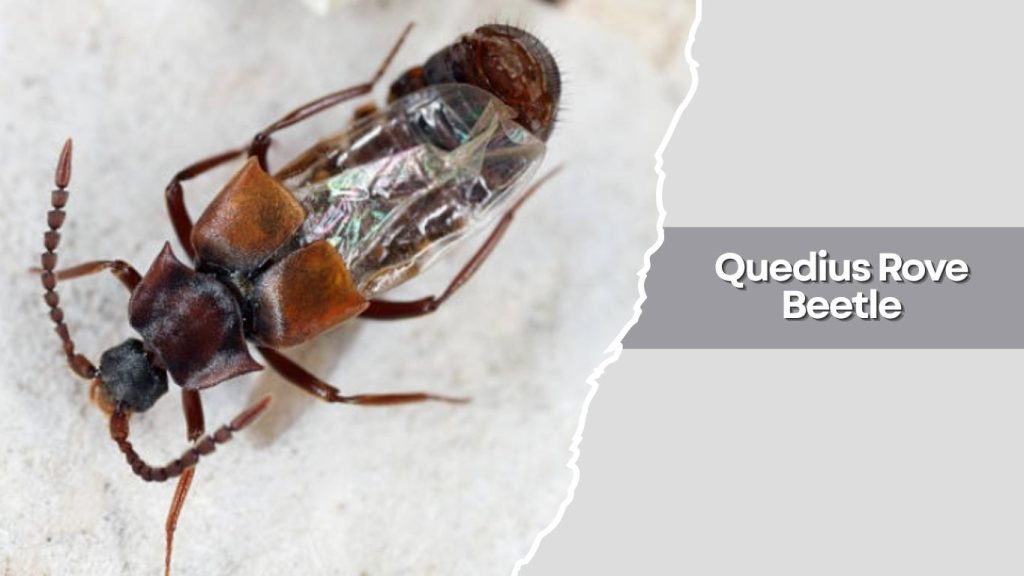
The Quedius rove beetle is a widespread and adaptable group of rove beetles commonly found in natural and semi-natural environments. These beetles are known for their role as predators, helping to control populations of small insects and other invertebrates. They are often encountered in decaying organic matter and forest habitats.
Identification
Quedius species are medium-sized rove beetles, typically measuring 6–12 mm in length. They usually have a dark brown to black body, sometimes with a slightly glossy or metallic appearance. Their bodies are elongated, and like other rove beetles, they have short wing covers that leave the abdomen exposed.
Habitat and Distribution
These beetles are widely distributed across Europe, Asia, and North America. They are commonly found in forests, under bark, in leaf litter, and in decaying organic materials. Quedius beetles prefer moist environments where prey is abundant.
Key Characteristics
- Medium-sized with elongated body
- Dark, often glossy coloration
- Short wing covers exposing abdomen
- Common in forests and decomposing matter
Behavior and Diet
Quedius rove beetles are active predators that feed on small insects, larvae, and other invertebrates. They are fast-moving and often hide in crevices or under debris. Their presence is beneficial, as they help maintain ecological balance by reducing pest populations.
10. Tachinus Rove Beetle
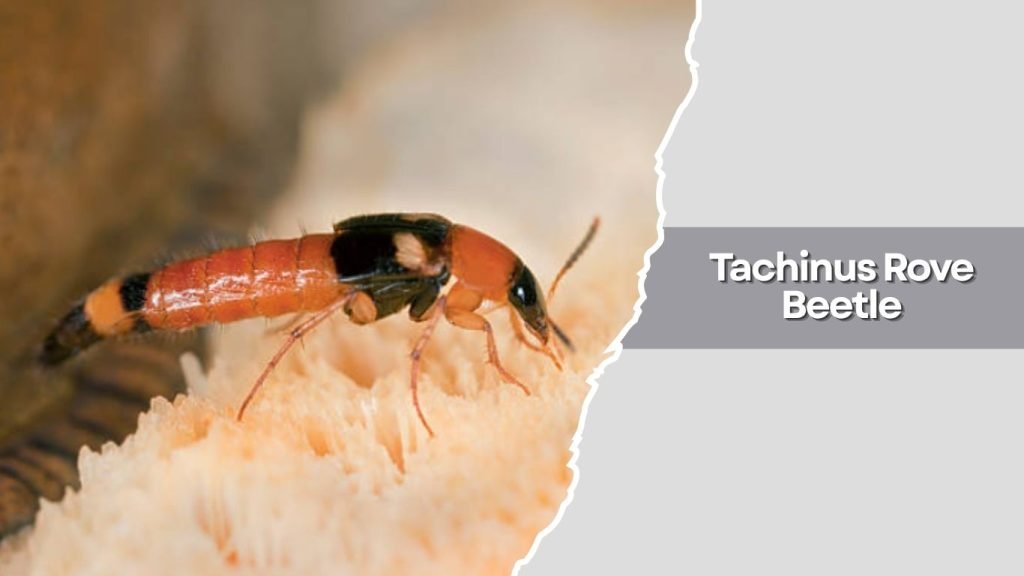
The Tachinus rove beetle is a lesser-known but ecologically important member of the rove beetle family. It is commonly found in decaying organic environments and is especially active during cooler seasons. These beetles contribute to decomposition and pest control, making them beneficial in natural ecosystems.
Identification
Tachinus beetles are small to medium-sized, typically measuring around 5–9 mm in length. They usually have a dark brown to black body, sometimes with a slightly matte or dull finish. Their elongated body and short wing covers expose much of the abdomen, which is flexible and mobile.
Habitat and Distribution
These beetles are widely distributed across Europe, North America, and parts of Asia. They are often found in leaf litter, compost piles, decaying plant material, and forest floors. Tachinus species are particularly active in autumn and early spring.
Key Characteristics
- Dark, elongated body with exposed abdomen
- Prefers cool, moist environments
- Common in leaf litter and compost
- Active in cooler seasons
Behavior and Diet
Tachinus rove beetles are primarily scavengers and predators. They feed on decaying organic matter as well as small insects and larvae found in their habitat. Their activity helps accelerate decomposition and reduce pest populations, making them an important part of the ecosystem.
11. Oxytelus Rove Beetle
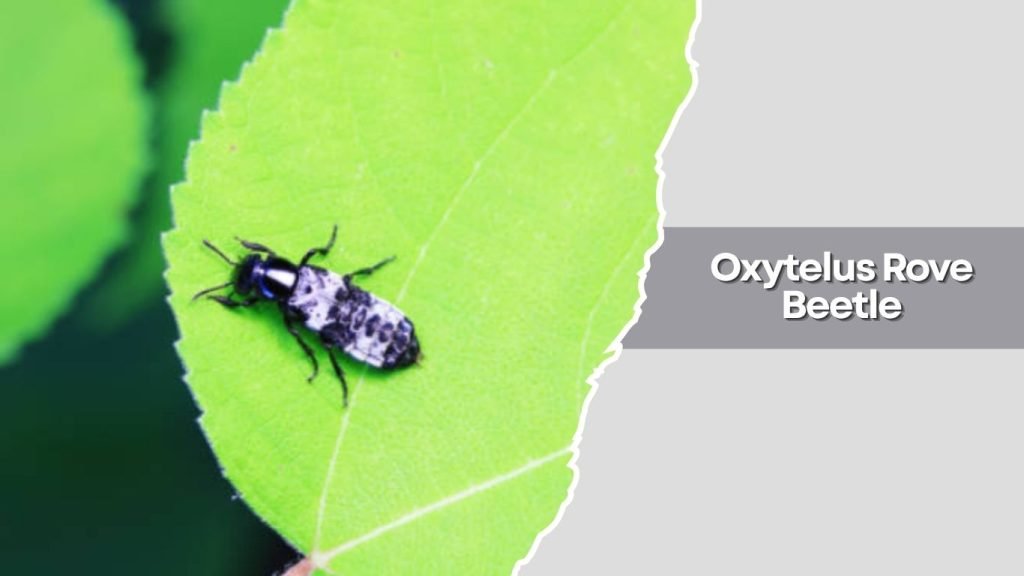
The Oxytelus rove beetle is a small but important species commonly found in environments rich in organic waste. It is especially associated with manure, compost, and decaying plant material, where it plays a key role in decomposition and nutrient recycling.
Identification
Oxytelus beetles are small, typically measuring 2–6 mm in length. They have a compact, slightly flattened body that is usually dark brown or black. Their head is relatively large compared to the body, and like other rove beetles, they have short wing covers that expose the abdomen.
Habitat and Distribution
These beetles are widely distributed across many regions of the world. They are commonly found in manure heaps, compost piles, agricultural fields, and other areas with decomposing organic matter. They thrive in moist, nutrient-rich environments.
Key Characteristics
- Small, compact, and slightly flattened body
- Dark coloration
- Common in manure and compost
- Short wing covers exposing abdomen
Behavior and Diet
Oxytelus rove beetles are both scavengers and predators. They feed on decaying organic material as well as small insects and larvae found in their habitat. Their activity helps break down waste and supports soil health by contributing to natural decomposition processes.
12. Ocypus Rove Beetle
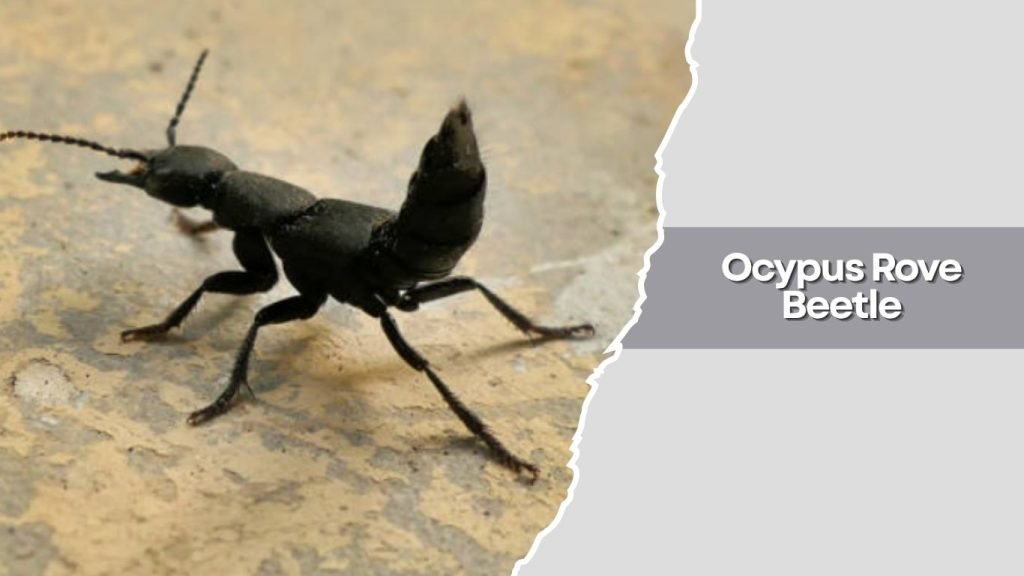
The Ocypus rove beetle is a large and aggressive member of the rove beetle family, closely related to the well-known Devil’s coach horse beetle. It is a fast-moving predator commonly found in natural habitats where it helps control populations of smaller insects and invertebrates.
Identification
Ocypus beetles are relatively large, typically measuring 15–30 mm in length. They have a shiny black body with a long, flexible abdomen that is partially exposed due to their short wing covers. Their strong jaws and robust build give them a fierce appearance.
Habitat and Distribution
These beetles are widely distributed across Europe and parts of Asia. They are commonly found in woodlands, gardens, grasslands, and under logs, stones, or leaf litter. They prefer moist environments where prey is abundant.
Key Characteristics
- Large, glossy black body
- Strong jaws and elongated form
- Short wing covers exposing abdomen
- Fast-moving and often defensive
Behavior and Diet
Ocypus rove beetles are active predators that feed on insects, worms, and other small invertebrates. When threatened, they may raise their abdomen in a defensive posture and can deliver a mild bite. Their presence is beneficial, as they help maintain ecological balance by controlling pest populations.
13. Creophilus Rove Beetle
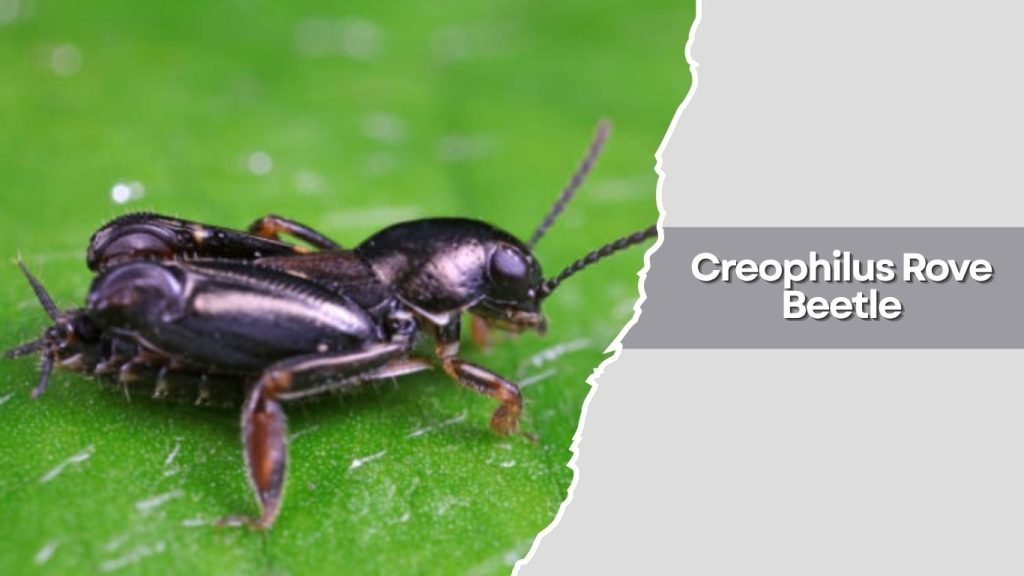
The Creophilus rove beetle is a distinctive species often found on decaying animal matter. It is easily recognized by its bold black-and-white pattern and its association with carrion. This beetle plays an important ecological role by helping break down dead animals and controlling fly populations.
Identification
Creophilus beetles are medium to large in size, typically measuring 12–22 mm long. They have a striking appearance with a black body marked by irregular white or gray patches. Like other rove beetles, they have short wing covers that leave much of the abdomen exposed.
Habitat and Distribution
These beetles are widely distributed across Europe, Asia, and North America. They are most commonly found on carcasses, decaying organic matter, and sometimes dung. Their presence is often linked to environments where decomposition is actively occurring.
Key Characteristics
- Black body with white or gray patches
- Medium to large size
- Strong association with carrion
- Short wing covers exposing abdomen
Behavior and Diet
Creophilus rove beetles are active predators that feed on maggots and other insects found on decaying matter. By consuming fly larvae, they help control fly populations and contribute to the decomposition process, making them beneficial in natural ecosystems.
14. Platydracus Rove Beetle
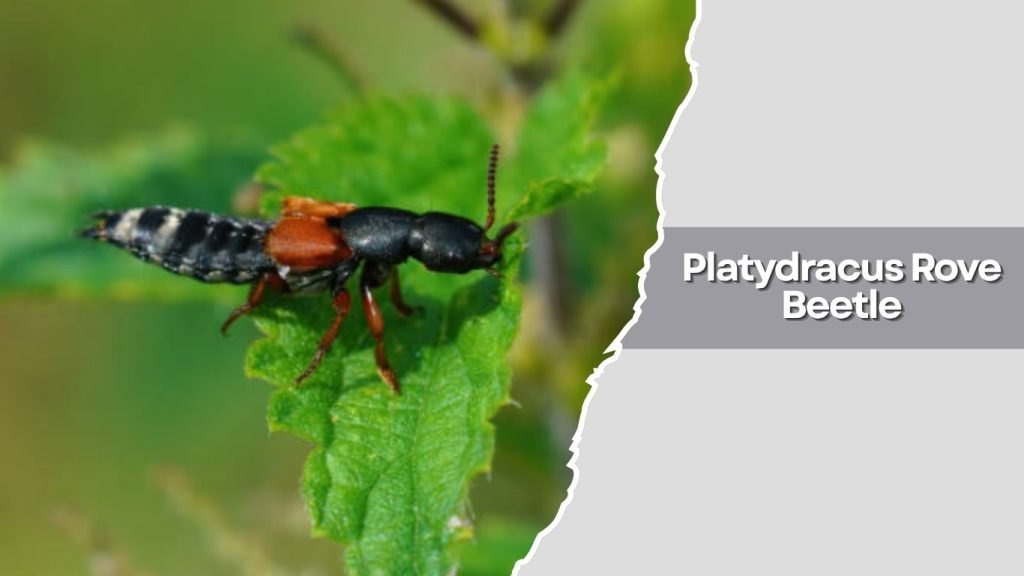
The Platydracus rove beetle is a large and visually striking member of the rove beetle family. It is often noticed due to its bright coloration and active behavior. These beetles are important predators in their ecosystems, helping to control populations of other insects.
Identification
Platydracus beetles are relatively large, typically measuring 15–25 mm in length. They often have a distinctive appearance, with a dark head and abdomen combined with a brightly colored thorax, which may appear orange or reddish. Their short wing covers expose a flexible abdomen.
Habitat and Distribution
These beetles are commonly found across Europe, Asia, and North America. They inhabit forests, grasslands, and areas with plenty of decaying organic matter. They are often seen under logs, stones, and leaf litter.
Key Characteristics
- Large size with contrasting body colors
- Bright thorax with darker head and abdomen
- Short wing covers exposing abdomen
- Active predator in natural habitats
Behavior and Diet
Platydracus rove beetles are carnivorous and feed on a variety of small insects, larvae, and other invertebrates. They are fast-moving and actively hunt for prey in their environment. Their presence is beneficial, as they help maintain ecological balance by reducing pest populations.
15. Lathrobium Rove Beetle
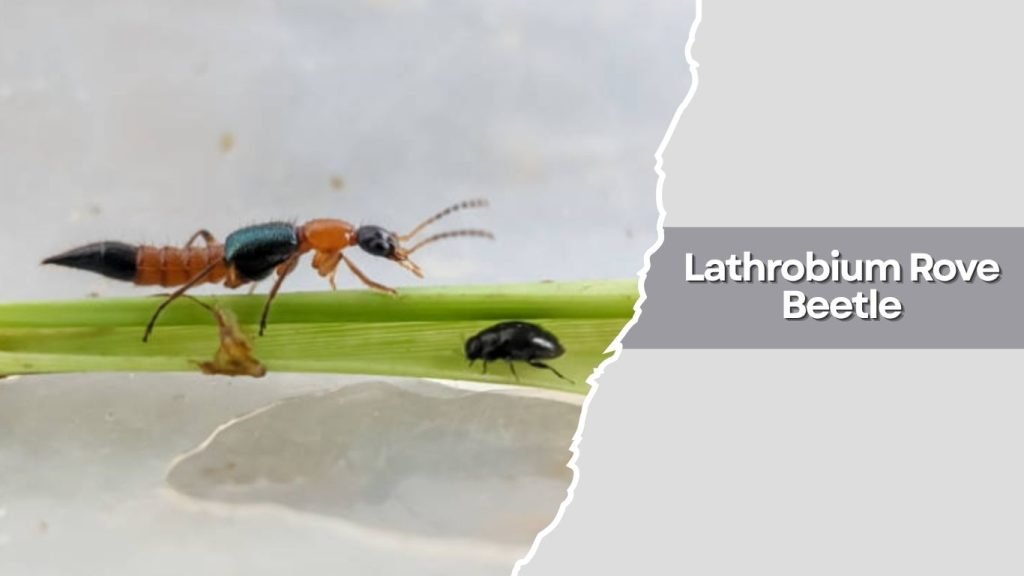
The Lathrobium rove beetle is a slender and less conspicuous member of the rove beetle family, often overlooked due to its small size and simple coloration. Despite this, it plays an important ecological role as a predator of tiny soil-dwelling organisms, contributing to the balance of micro-ecosystems.
Identification
Lathrobium beetles are small to medium-sized, typically measuring 4–10 mm in length. They have a narrow, elongated body that is usually brown or dark reddish-brown. Their short wing covers expose much of the abdomen, and their legs are relatively long, aiding in quick movement.
Habitat and Distribution
These beetles are widely distributed across Europe, Asia, and North America. They are commonly found in leaf litter, under stones, in soil, and within decaying plant material. Lathrobium species prefer moist environments with plenty of organic debris.
Key Characteristics
- Slender, elongated body
- Brown to reddish-brown coloration
- Long legs for fast movement
- Common in soil and leaf litter
Behavior and Diet
Lathrobium rove beetles are active predators that feed on very small invertebrates, including insect larvae and other soil organisms. They move quickly through leaf litter and soil, hunting for prey. Their activity helps regulate populations of tiny pests and supports healthy soil ecosystems.
FAQs
What are rove beetles known for?
Rove beetles are best known for their short wing covers and exposed, flexible abdomen. They are active insects often seen running quickly when disturbed. Many species are beneficial predators that help control pests, while others contribute to decomposition in soil and organic matter.
Are rove beetles harmful to humans?
Most rove beetles are harmless and do not pose a threat to humans. However, certain species like Paederus can cause skin irritation if crushed against the skin. In general, they do not bite or sting and should be left undisturbed.
Where can rove beetles be found?
Rove beetles are found worldwide in a variety of habitats, including forests, gardens, compost piles, and near water sources. They prefer moist environments where food such as small insects or decaying material is readily available.
What do rove beetles eat?
Rove beetles have varied diets depending on the species. Many are predators that feed on small insects, larvae, and mites, while others consume decaying organic matter. This makes them important for both pest control and nutrient recycling in ecosystems.
Why are rove beetles beneficial?
Rove beetles are beneficial because they help reduce populations of harmful insects and assist in breaking down organic matter. Their presence supports soil health and contributes to maintaining ecological balance in both natural and agricultural environments.
