
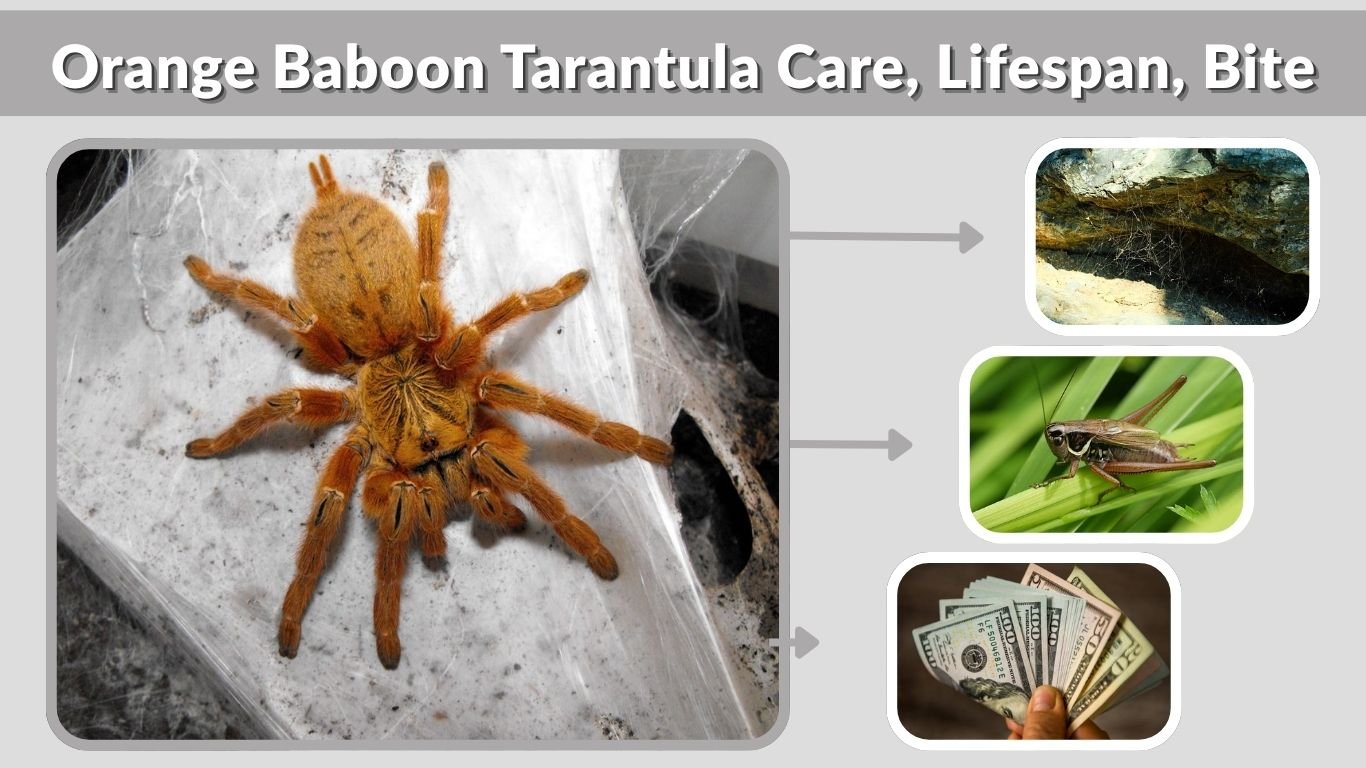
The Orange Baboon Tarantula, often called the OBT (Orange Bitey Thing), is one of the most famous tarantula species in the world. Known for its bright orange color and highly defensive nature, it has gained both admiration and fear among exotic pet enthusiasts. While visually stunning, this spider is not beginner-friendly and requires careful handling and proper care.
What Is the Orange Baboon Tarantula?
The Orange Baboon Tarantula (Pterinochilus murinus) is a terrestrial Old World tarantula species native to Africa. It is widely recognized for its vibrant coloration and aggressive temperament.
- Scientific name: Pterinochilus murinus
- Common names: Orange Baboon Tarantula, OBT, Usambara OBT
- Origin: East Africa
- Type: Old World tarantula
Unlike many New World tarantulas, OBTs lack urticating hairs, which means they rely more on speed and biting for defense.
Orange Baboon Tarantula Traits and Behavior
This species stands out due to both its appearance and personality.
- Bright orange to reddish coloration depending on locality
- Extremely fast and alert
- Builds heavy webbing structures
- Highly defensive rather than docile
OBTs are famous for constructing dense web tunnels across their enclosure. Instead of staying in open spaces, they prefer to hide within these silk structures, making them fascinating to observe but difficult to handle.
Orange Baboon Tarantula Size, Growth Rate, and Lifespan
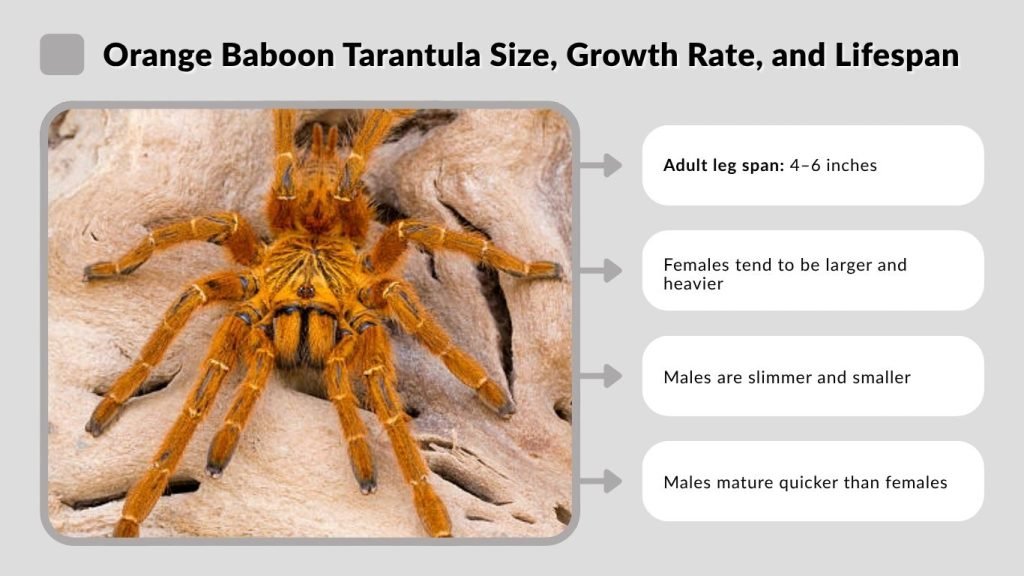
Size
The Orange Baboon Tarantula is considered medium-sized.
- Adult leg span: 4–6 inches
- Females tend to be larger and heavier
- Males are slimmer and smaller
Growth Rate
OBTs grow at a moderate pace compared to other tarantulas.
- Faster growth in warmer conditions
- Regular feeding promotes steady development
- Males mature quicker than females
Lifespan
There is a significant difference between male and female lifespans.
- Females: 10–15 years
- Males: 3–5 years
This is why female tarantulas are generally more valuable and preferred by hobbyists.
Natural Habitat: Where Do Orange Baboon Tarantulas Live?
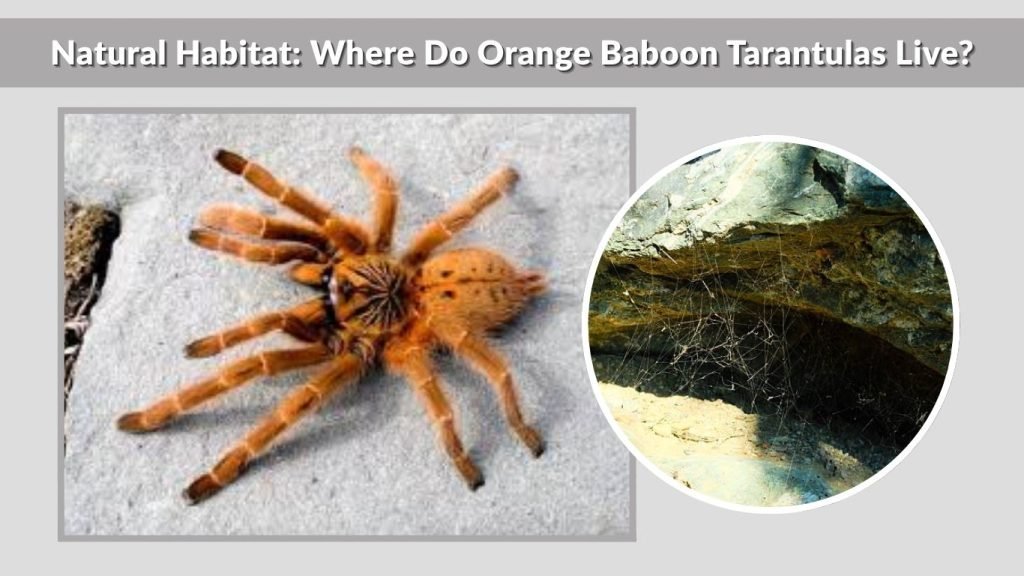
In the wild, Orange Baboon Tarantulas are found in parts of East Africa.
- Countries: Kenya, Tanzania, and nearby regions
- Environment: Dry savannas and scrublands
- Climate: Warm and relatively dry
They typically live in burrows or under rocks, where they can stay protected from predators and extreme weather. Their natural habitat explains why they prefer dry conditions and secure hiding spots in captivity.
Arboreal or Terrestrial? Understanding Its Lifestyle
The Orange Baboon Tarantula is primarily a terrestrial species.
- Ground-dwelling spider
- Strong burrowing instincts
- Heavy web builder
Although they are not arboreal, they will use vertical space if given the opportunity by creating web structures. Their webbing behavior is often more noticeable than their burrowing.
Orange Baboon Tarantula Aggression and Handling
One of the most important things to understand about OBTs is their temperament.
- Highly defensive and reactive
- Quick to assume threat posture
- Extremely fast movements
Handling an Orange Baboon Tarantula is strongly discouraged. Unlike calmer species, OBTs are more likely to bite when they feel threatened. For this reason, they are best kept as display pets rather than interactive ones.
Orange Baboon Tarantula Bite and Venom
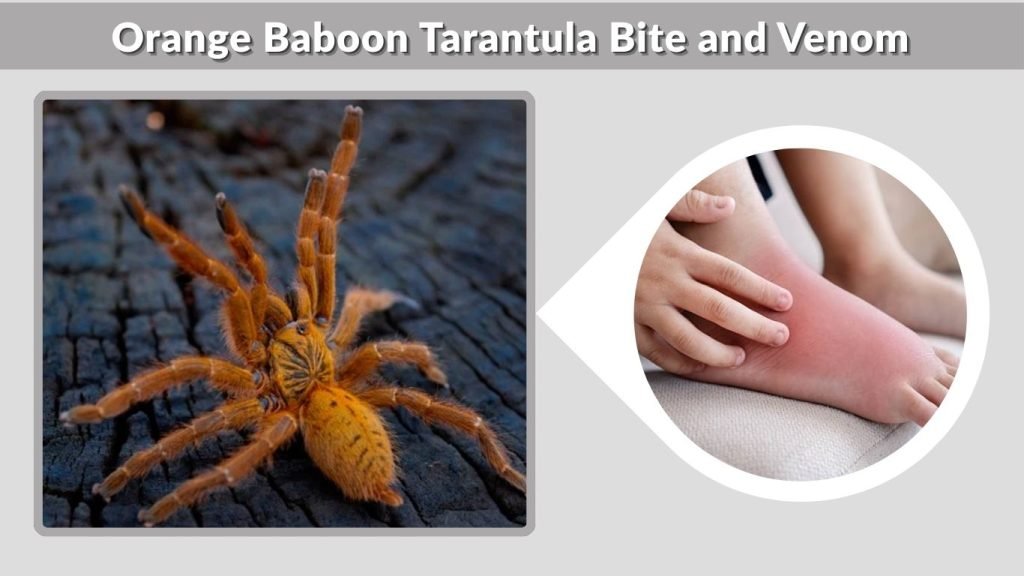
Are They Poisonous or Venomous?
Orange Baboon Tarantulas are venomous, not poisonous. This means they inject venom through their fangs rather than being harmful to touch or consume.
Bite Pain and Experience
A bite from an OBT is considered medically significant.
- Immediate sharp and intense pain
- Often described as severe and long-lasting
- More painful than many beginner tarantula species
Bite Symptoms
While not life-threatening for most healthy adults, the bite can cause strong reactions.
- Muscle cramps
- Swelling and redness
- Nausea or general discomfort
- Pain lasting hours or even days
Because of these effects, avoiding bites should always be a priority when caring for this species.
Orange Baboon Tarantula Care Guide
Caring for an Orange Baboon Tarantula requires attention to detail and respect for its defensive nature.
- Best suited for intermediate to advanced keepers
- Requires minimal handling
- Needs a secure and stable environment
Unlike beginner tarantulas, OBTs demand more caution due to their speed and temperament. Proper setup and routine maintenance can help keep both the spider and the owner safe.
Orange Baboon Tarantula Enclosure Setup
Tank Size and Type
A proper enclosure is essential for safety and comfort.
- 10–15 gallon tank for adults
- Secure, escape-proof lid
- Good ventilation
Substrate and Hiding
OBTs need space to dig and hide.
- Deep substrate (coco fiber or soil mix)
- Provide hiding spots
- Add anchor points for webbing
Temperature and Humidity
Maintaining the right conditions is crucial.
- Temperature: 24–28°C
- Humidity: Low to moderate
- Avoid overly damp conditions
Orange Baboon Tarantula Feeding and Diet
Feeding Schedule
Feeding frequency depends on age.
- Slings: 2–3 times per week
- Adults: once per week
Food Types
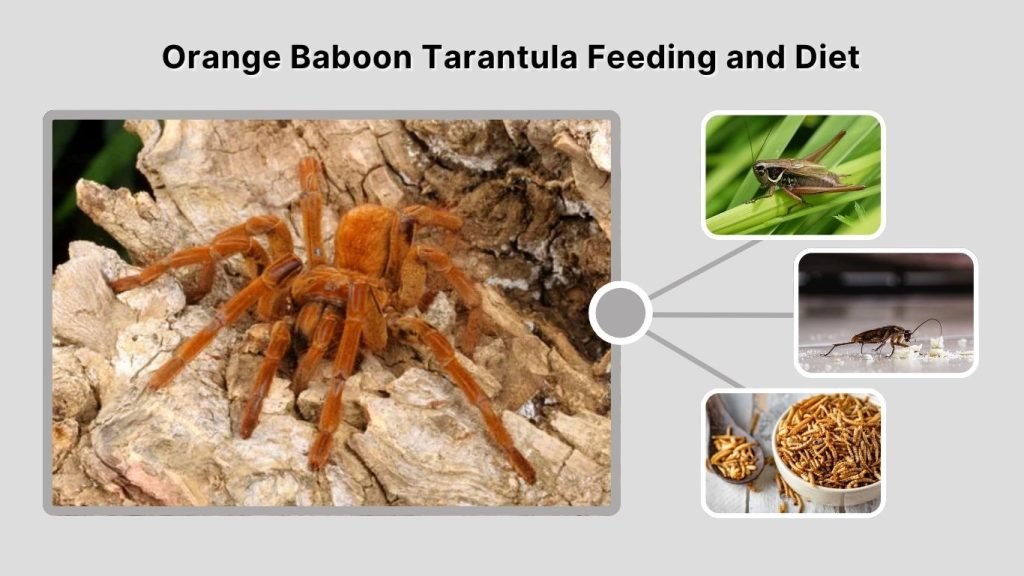
OBTs are opportunistic feeders.
- Crickets
- Roaches
- Mealworms
Overfeeding should be avoided, as it can lead to health issues and unnecessary molting stress.
Orange Baboon Tarantula Sling (Baby) Care
Caring for a baby OBT requires slightly different conditions than adults.
- Use a small enclosure to help locate food easily
- Maintain slightly higher humidity than adults
- Provide shallow substrate and a small hide
Young tarantulas are more sensitive to environmental changes, so stability is important. Feeding should be more frequent, using appropriately sized prey such as small crickets or fruit flies.
Orange Baboon Tarantula Female vs Male Differences
Understanding the difference between male and female OBTs is important for long-term care.
- Females grow larger and live significantly longer
- Males mature faster but have shorter lifespans
- Males develop slimmer bodies and longer legs
Because of their longevity, females are more desirable for hobbyists who want a long-term pet.
Breeding Orange Baboon Tarantulas
Breeding OBTs is considered an advanced task.
- Requires experience with tarantula behavior
- Males risk being attacked or eaten during mating
- Females produce egg sacs with 50–150 spiderlings
Proper timing and monitoring are essential to ensure both spiders’ safety. Due to their aggressive nature, breeding should only be attempted by experienced keepers.
Price and Availability
Orange Baboon Tarantula Price
The cost varies based on age, size, and sex.
- Slings: $30–$80
- Juveniles: $80–$150
- Adult females: $150–$300+
Females are typically more expensive due to their longer lifespan and breeding potential.
Orange Baboon Tarantula for Sale
If you’re looking to buy one, consider these tips:
- Purchase from reputable breeders or sellers
- Avoid wild-caught specimens
- Check for active and healthy behavior
Buying from trusted sources helps ensure the spider is healthy and ethically sourced.
Orange Starburst Baboon Tarantula (Color Variants)
The term “Orange Starburst Baboon Tarantula” refers to a color variation of the same species.
- Displays brighter orange patterns
- Often associated with the Usambara locality
- Same care requirements as standard OBT
Color differences depend on geographic origin, but behavior and care remain the same.
Are Orange Baboon Tarantulas Legal?
In most regions, Orange Baboon Tarantulas are legal to own as pets.
- Generally allowed in many countries
- Some areas may have restrictions on exotic animals
- Local laws (such as certain U.S. states) may vary
Always check your local regulations before purchasing to avoid legal issues.
Interesting Facts About Orange Baboon Tarantulas
These quick facts make the OBT even more fascinating:
- Nicknamed “Orange Bitey Thing” due to its temperament
- One of the fastest tarantulas in the hobby
- Builds thick, tunnel-like webs instead of simple sheets
- Rarely seen in the open due to its reclusive nature
Despite their aggressive reputation, they are highly admired for their beauty and unique behavior.
Conclusion
The Orange Baboon Tarantula is a stunning yet challenging species that stands out in the world of exotic pets. Its bright coloration, fast movements, and defensive nature make it both fascinating and intimidating. While it is not suitable for beginners, experienced keepers can enjoy observing its complex webbing and natural behaviors.
With proper care, a secure enclosure, and respect for its temperament, the OBT can be a rewarding species to keep. However, it should always be treated as a display animal rather than one to handle.
FAQs
Is the orange baboon tarantula aggressive?
Yes, the orange baboon tarantula is considered highly aggressive or, more accurately, defensive. It reacts quickly to threats and is more likely to bite than many other tarantula species, which is why it is not recommended for beginners.
How big does the orange baboon tarantula get?
An adult orange baboon tarantula typically reaches a leg span of 4 to 6 inches. Females are usually larger and heavier than males, making them more noticeable and longer-lasting in captivity.
How long do orange baboon tarantulas live?
Females can live between 10 and 15 years with proper care, while males usually live only 3 to 5 years. Lifespan depends on factors such as diet, environment, and overall health conditions.
Can beginners keep an orange baboon tarantula?
No, this species is not suitable for beginners. Its speed, defensive behavior, and medically significant venom make it better suited for experienced tarantula keepers who understand proper care and safety practices.
How much is an orange baboon tarantula?
Prices vary depending on age and sex. Slings are the most affordable, while adult females are more expensive due to their longer lifespan and breeding value in the exotic pet trade.
