
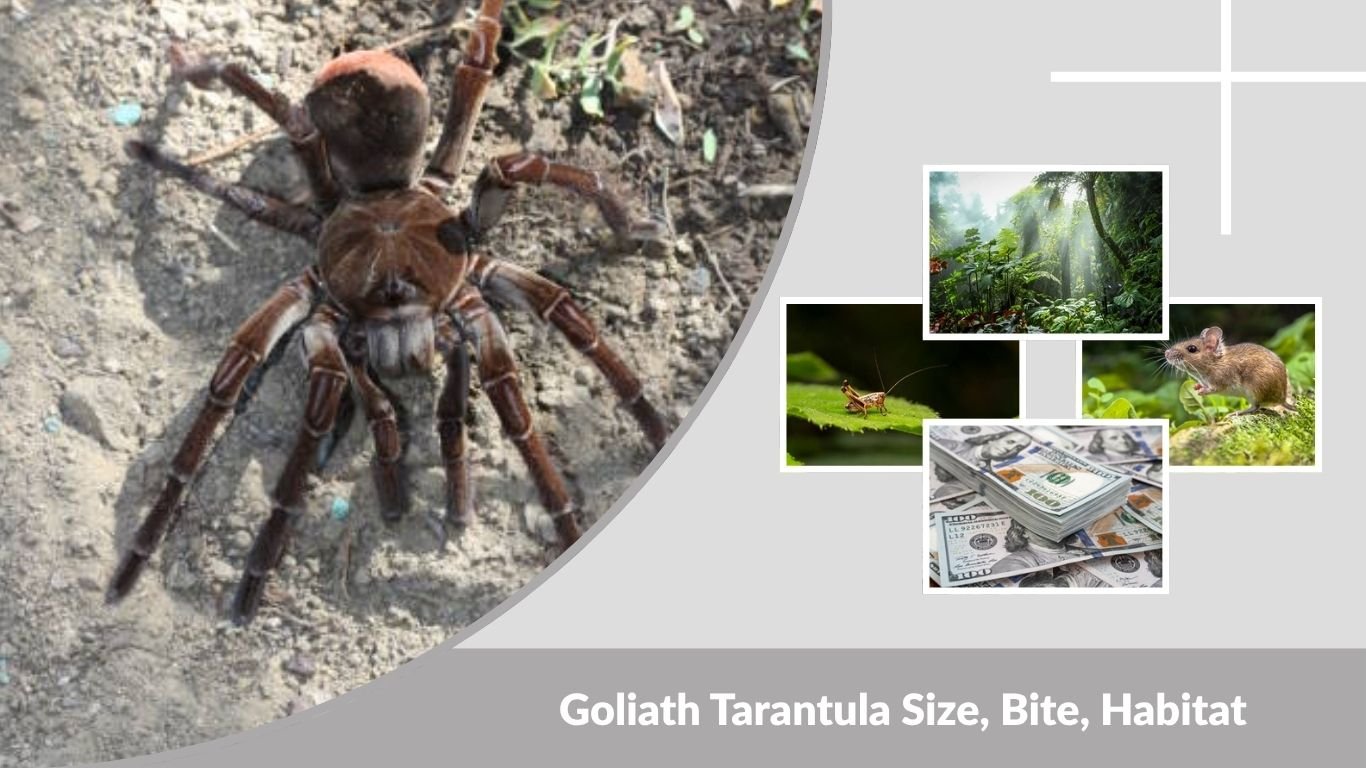
The Goliath tarantula (Theraphosa blondi), often called the Goliath birdeater, is the largest tarantula species in the world. Native to South America, this giant spider has gained global attention due to its massive size and the myth that it eats birds.
Searches like “how big is a Goliath tarantula,” “is it poisonous,” and “does it bite” are extremely common. Others are curious about keeping one as a pet or comparing it to other giant spiders. Understanding this species helps separate facts from myths and reveals why it is both terrifying and fascinating.
What Is a Goliath Tarantula?
The Goliath tarantula is a species of tarantula belonging to the Theraphosidae family. Yes, the Goliath birdeater is indeed a tarantula, and it is one of the largest members of this group.
It is known by several names:
- Goliath tarantula
- Goliath bird-eating tarantula
- Goliath birdeater tarantula
This spider has a dark brown body covered in dense hairs, with thick legs and a heavy build. Its size and appearance make it one of the most intimidating spiders in the world.
There are also closely related variations, such as the burgundy Goliath birdeater and Brazilian Goliath tarantula, which share similar characteristics.
Goliath Tarantula Size (Biggest Spider in the World)
The Goliath tarantula is widely considered the largest spider in the world by weight and body size.
An adult can reach:
- A leg span of up to 10–12 inches
- A weight of up to 150–170 grams
That is roughly the size of a dinner plate, making it one of the most impressive arachnids on Earth.
While some spiders like the giant huntsman may have a slightly larger leg span, the Goliath tarantula is much heavier and bulkier, which is why it holds the title of the biggest spider overall.
Females are typically larger and heavier than males, and they also live much longer.
Goliath Tarantula vs Other Giant Spiders
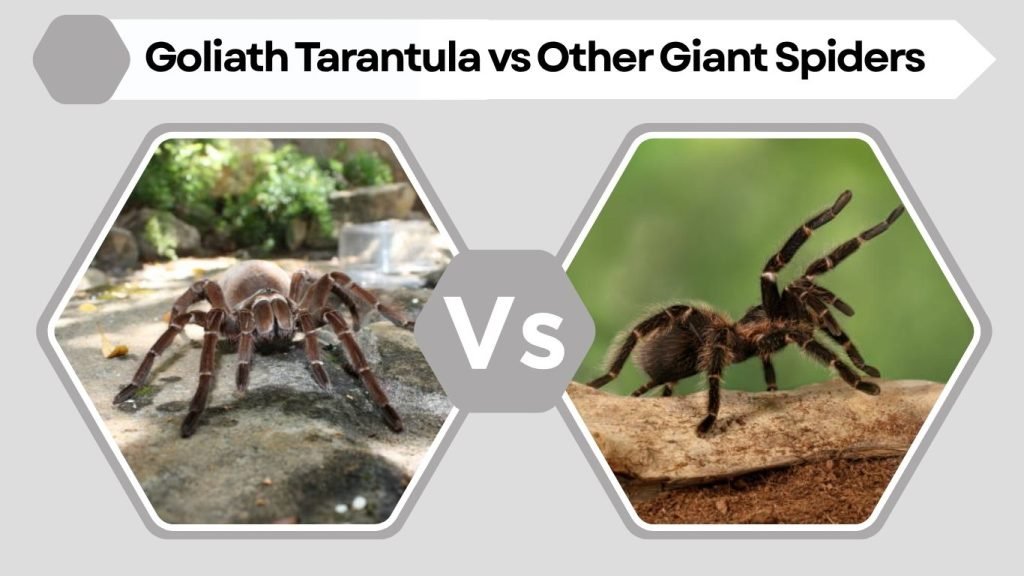
The Goliath tarantula is often compared to other large spiders, especially in online discussions.
Vs Giant Huntsman Spider:
- Huntsman: longer legs
- Goliath: heavier and bulkier
Vs Camel Spider:
- Camel spiders are fast but smaller
- Goliath tarantulas are larger and stronger
Vs Tarantula Hawk Wasp:
- The wasp is smaller but extremely dangerous
- It can paralyze tarantulas and use them as hosts
These comparisons show that while the Goliath tarantula is massive, it is not always the most dangerous creature in its environment.
Goliath Tarantula Habitat and Range
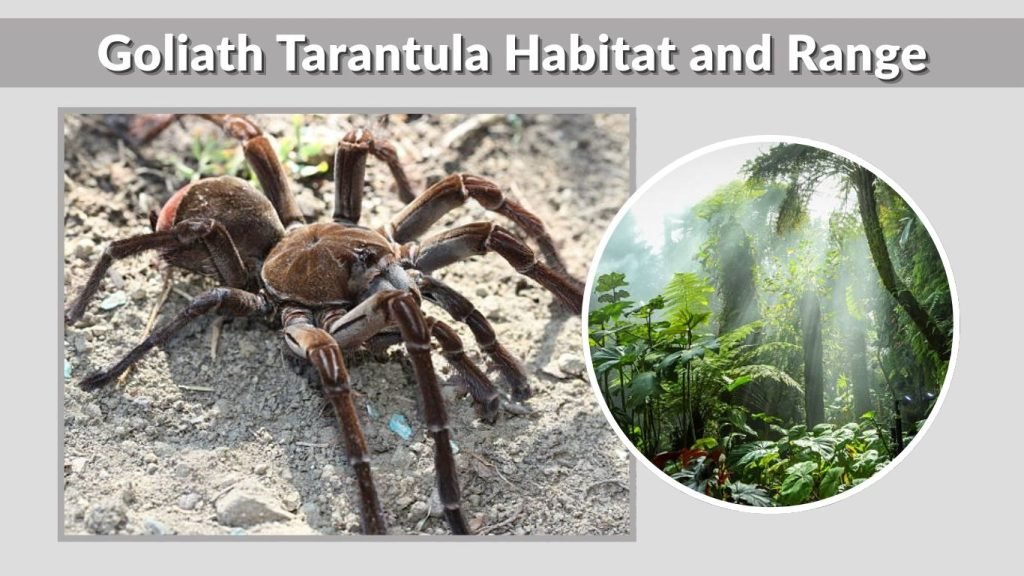
Goliath tarantulas are native to the rainforests of northern South America.
They are commonly found in:
- Brazil
- Venezuela
- Guyana
- Suriname
These spiders prefer warm, humid environments with dense vegetation. They live in burrows, which they dig or take over from other animals.
Their burrows provide:
- Protection from predators
- A stable temperature
- A safe place to hunt from
Because of their need for high humidity and warmth, they cannot survive in colder regions like Australia or North America in the wild.
Goliath Tarantula Behavior
Goliath tarantulas are nocturnal, meaning they are most active at night. During the day, they stay hidden in their burrows.
They are also:
- Solitary (live alone)
- Territorial
- Defensive when threatened
Unlike web-building spiders, they are ambush predators. They wait near their burrow entrance and strike quickly when prey comes close.
When threatened, they may:
- Raise their front legs
- Make a hissing sound by rubbing body parts together
- Flick irritating hairs
These behaviors are meant to scare off predators rather than attack.
What Do Goliath Tarantulas Eat?
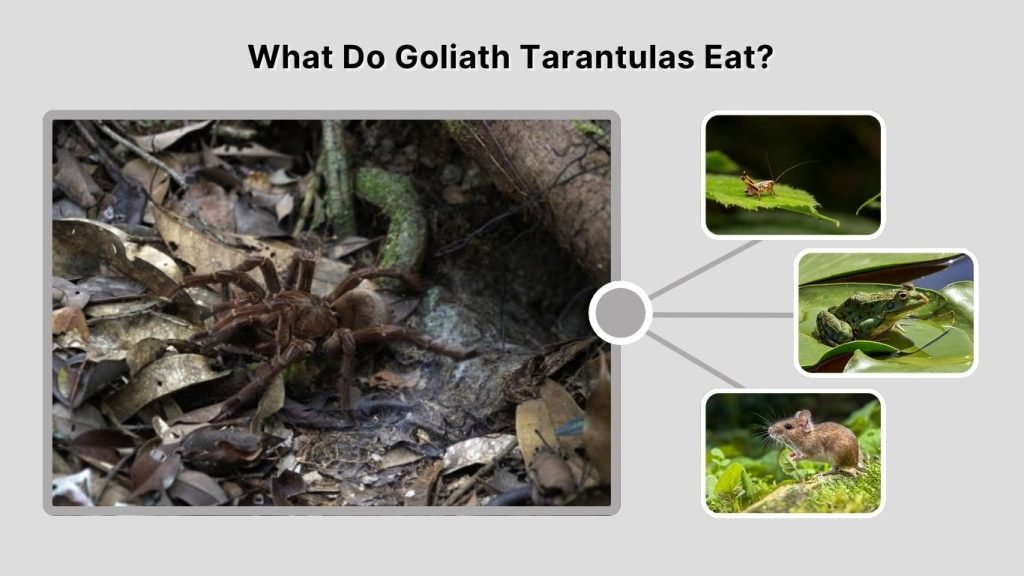
Despite their name, Goliath bird-eating tarantulas rarely eat birds.
Their actual diet mainly includes:
- Insects
- Frogs
- Small rodents
- Lizards
They may occasionally eat small birds, but this is very rare. The name “bird-eater” comes from an old observation, not their regular diet.
They hunt using an ambush technique:
- Wait silently near burrow
- Strike quickly
- Inject venom to immobilize prey
Their powerful fangs allow them to subdue relatively large prey compared to other spiders.
Goliath Tarantula Bite
The Goliath tarantula can bite, and due to its size, the bite can be painful.
Important points:
- Bites are rare
- Usually defensive
- Not deadly to humans
Symptoms of a bite may include:
- Sharp pain
- Swelling
- Mild nausea in some cases
The fangs of a Goliath tarantula are large—sometimes up to 2 cm—so the bite can feel similar to a wasp sting or worse. However, the venom itself is not considered medically dangerous.
Are Goliath Tarantulas Poisonous or Venomous?
Goliath tarantulas are venomous, not poisonous.
Their venom is used to:
- Subdue prey
- Defend against threats
For humans:
- The venom is moderate
- It is not life-threatening
A bigger concern is their urticating hairs, which they can flick into the air. These hairs can cause:
- Skin irritation
- Eye irritation
- Itching
So while they are not deadly, they can still be uncomfortable if disturbed.
Are Goliath Tarantulas Dangerous?
Goliath tarantulas may look terrifying, but they are not truly dangerous to humans.
They are:
- Defensive, not aggressive
- More likely to warn than attack
- Interested in survival, not confrontation
The main risks are:
- Painful bite (rare)
- Irritating hairs
As long as they are not provoked, they pose very little threat to people.
Goliath Tarantula Lifespan
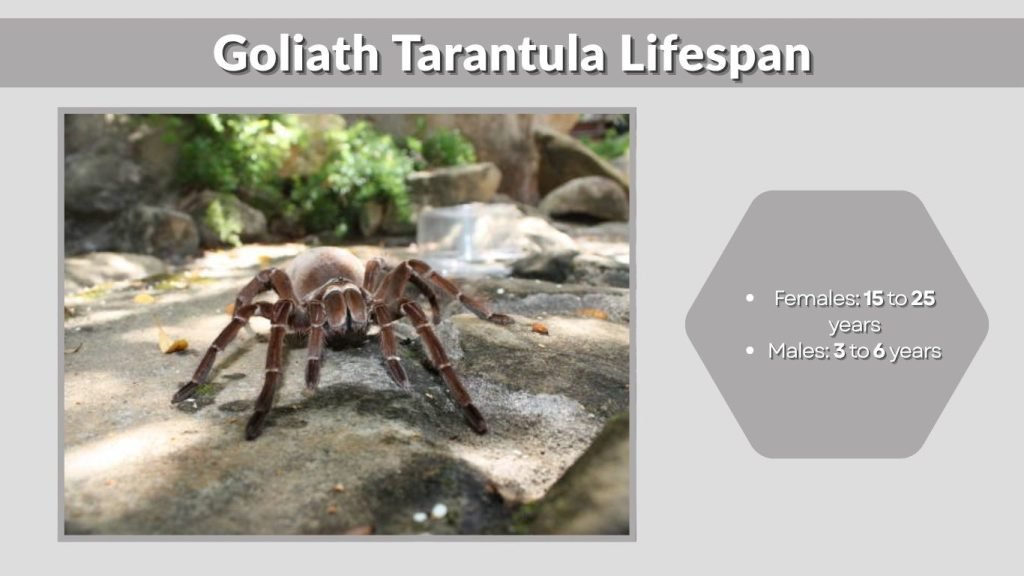
The lifespan of a Goliath tarantula varies significantly between males and females.
- Females: 15 to 25 years
- Males: 3 to 6 years
Females live much longer because they remain in their burrows and avoid many risks. Males, on the other hand, leave their shelter in search of mates, which exposes them to predators and environmental dangers.
In captivity, with proper care, females can live for decades, making them a long-term commitment for experienced keepers.
Goliath Tarantula Reproduction
The reproduction process of Goliath tarantulas is complex and often risky, especially for males.
Mating usually occurs in warm, humid conditions within their natural habitat. The male approaches the female cautiously, using vibrations and movements to signal that he is not prey.
After mating:
- The female produces an egg sac
- The sac can contain 50 to 200 eggs
The eggs hatch into tiny spiderlings, which remain close to the burrow for a short time before dispersing.
As with many tarantula species, males often die shortly after mating due to exhaustion or predation.
Goliath Tarantula as a Pet
The Goliath tarantula is sometimes kept as an exotic pet, but it is not recommended for beginners.
Reasons include:
- Large size and strength
- Defensive behavior
- High care requirements
While they are fascinating to observe, they are not suitable for frequent handling. These spiders can become stressed easily and may respond defensively if disturbed.
Experienced keepers who understand their needs may find them rewarding, but beginners should consider smaller, more docile species first.
Goliath Tarantula Care Guide
Proper care is essential when keeping a Goliath tarantula in captivity.
Basic care requirements include:
- Warm temperatures (24–28°C or 75–82°F)
- High humidity levels (70–85%)
- A secure and spacious enclosure
- Access to clean water
Feeding should include appropriately sized prey such as crickets, roaches, or small mice for adults. Overfeeding should be avoided to maintain health.
Handling is generally discouraged due to their defensive nature and the risk of irritation from their hairs.
Goliath Tarantula Enclosure Setup
A proper enclosure is critical for replicating the tarantula’s natural rainforest habitat.
Key setup elements include:
- Tank size: At least 15–20 gallons for an adult
- Substrate: Deep, moist soil for burrowing
- Humidity: Maintain high moisture levels
- Hiding spots: Logs, bark, or artificial caves
The enclosure should be well-ventilated but still able to retain humidity. Regular misting may be required to maintain proper conditions.
Cleanliness is important to prevent mold and pests, especially in humid environments.
Goliath Tarantula Price & For Sale
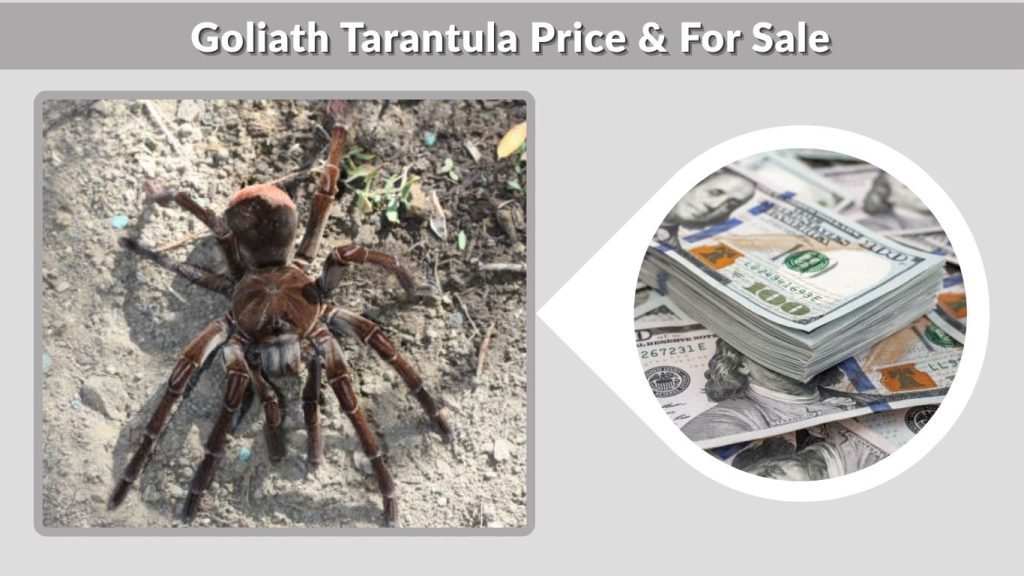
Goliath tarantulas are available through exotic pet markets, but they are not as common as smaller species.
You can find them from:
- Specialized breeders
- Exotic pet stores
- Online arachnid sellers
Before buying, consider:
- The spider’s health and activity level
- Its age (spiderling, juvenile, or adult)
- Whether it is male or female
Prices can vary widely depending on size and availability, but they are generally more expensive than common tarantulas.
Always buy from reputable sources that follow ethical breeding practices.
Different Types of Goliath Tarantulas
While Theraphosa blondi is the most famous, there are closely related species often grouped under the Goliath name.
Some variations include:
- Burgundy Goliath birdeater (Theraphosa stirmi)
- Brazilian Goliath tarantula
- Pinkfoot or pink toe Goliath tarantula (often confused with other species)
These species share similar characteristics but may differ slightly in color, size, or habitat preferences.
Interesting Facts About Goliath Tarantulas
Goliath tarantulas are among the most fascinating spiders in the world.
- They are the largest spider by weight on Earth
- They can produce a hissing sound as a warning
- Their fangs can reach up to 2 cm in length
- They rarely eat birds despite their name
These unique traits make them both intimidating and incredibly interesting to study.
FAQs
How big is a Goliath tarantula?
A Goliath tarantula can reach a leg span of 10 to 12 inches and weigh up to 170 grams. This makes it the largest spider in the world by mass. Its size is often compared to a dinner plate, making it one of the most impressive arachnids.
Is the Goliath bird-eating tarantula dangerous?
No, it is not considered dangerous to humans. While it can bite and may flick irritating hairs, it is not deadly. It is defensive rather than aggressive and usually tries to avoid confrontation whenever possible.
Do Goliath tarantulas really eat birds?
They can eat small birds, but this is extremely rare. Their diet mainly consists of insects, frogs, rodents, and other small animals. The name “bird-eater” comes from historical observations rather than typical feeding behavior.
Where do Goliath tarantulas live?
Goliath tarantulas live in the rainforests of northern South America, including countries like Brazil, Venezuela, and Guyana. They prefer warm, humid environments and spend most of their time in underground burrows.
Are Goliath tarantulas venomous?
Yes, they are venomous, but their venom is not dangerous to humans. It is mainly used to subdue prey. The bigger concern is their urticating hairs, which can cause irritation to the skin and eyes.
How much does a Goliath tarantula cost?
The price of a Goliath tarantula can vary depending on its size, age, and availability. They are generally more expensive than common tarantulas and are typically sold by specialized breeders or exotic pet stores.
Conclusion
The Goliath tarantula is one of the most remarkable spiders in the world. Despite its massive size and intimidating reputation, it is not as dangerous as many people believe.
With its unique behavior, impressive size, and fascinating biology, the Goliath birdeater continues to capture the curiosity of people worldwide. Whether you admire it from a distance or study it as an enthusiast, it remains one of nature’s most extraordinary creatures.
