
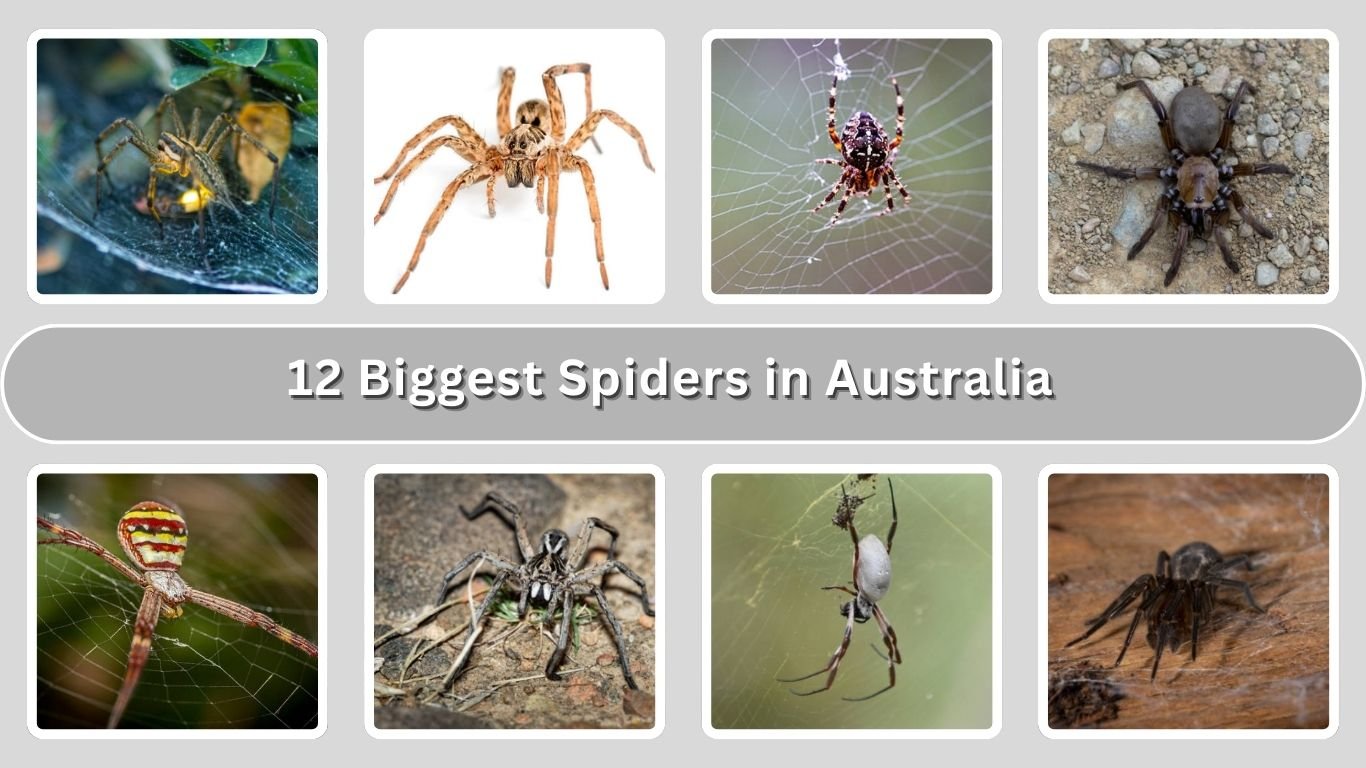
Australia is home to some of the largest and most fascinating spiders in the world. From massive huntsman spiders to powerful funnel-web species, these creatures are known for their size, unique behaviors, and ecological importance. While some may look intimidating, most are harmless and play a vital role in controlling insect populations. This list highlights 12 of the biggest spiders found across Australia, giving you a closer look at their diversity and characteristics.
1. Giant Huntsman Spider
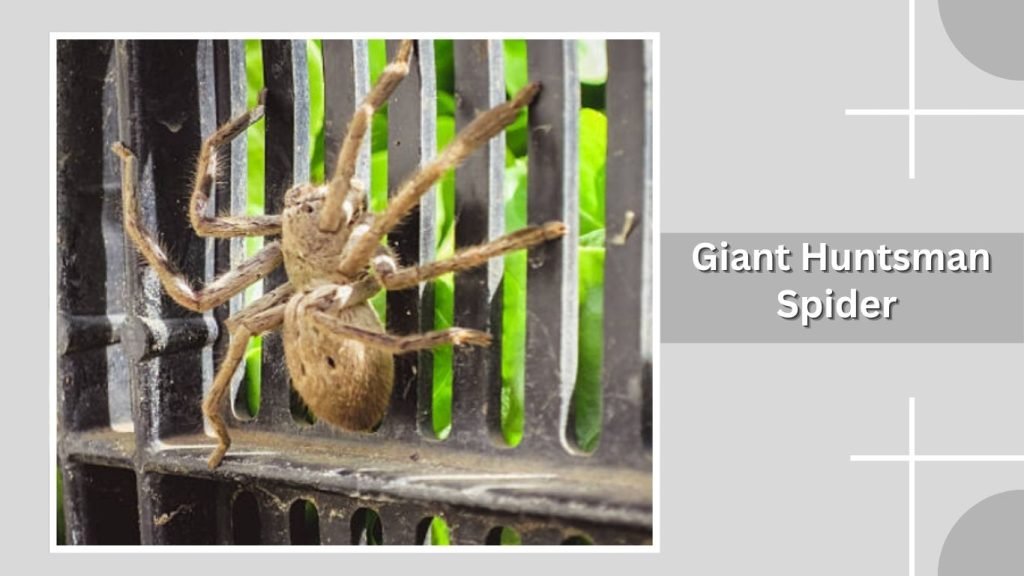
The Giant Huntsman Spider is considered one of the largest spiders in Australia, known for its impressive leg span and fast movement. Despite its intimidating appearance, it is generally not dangerous to humans and plays an important role in controlling insect populations.
Identification
- Large, flattened body adapted for squeezing into tight spaces
- Leg span can reach up to 25–30 cm (10–12 inches)
- Long, laterally extended legs with a crab-like stance
- Usually brown, grey, or tan with subtle patterns
- Covered with fine hairs, giving it a slightly fuzzy look
Habitat
The Giant Huntsman Spider is commonly found in warm regions of Australia. It prefers sheltered environments such as under tree bark, in rock crevices, and occasionally inside homes. These spiders are highly adaptable and can thrive in both natural bushland and urban areas, often hiding in garages, sheds, or behind furniture.
Behavior
This spider is known for its speed and agility rather than web-building. It actively hunts prey at night, feeding on insects and other small creatures. The Giant Huntsman is not aggressive but may bite if provoked or handled. Its bite can cause mild pain and swelling, though it is not considered medically significant.
Interesting Facts
The Giant Huntsman Spider holds records for having one of the largest leg spans among spiders worldwide. It is sometimes called the “wood spider” due to its preference for hiding under bark. Despite its fearsome size, it is beneficial to humans as it helps control pests like cockroaches and other insects inside homes.
2. Sydney Funnel-Web Spider
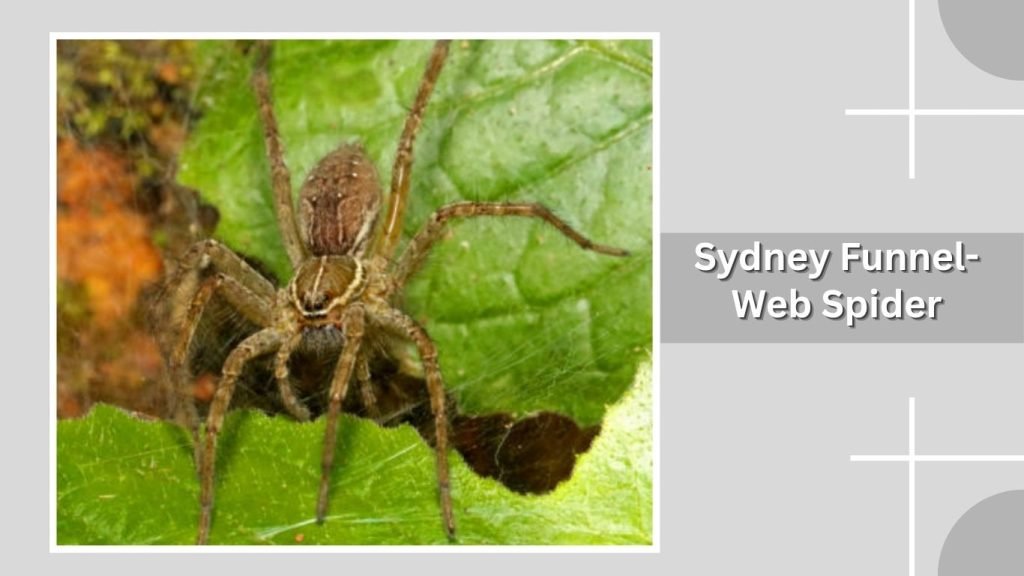
The Sydney Funnel-Web Spider is one of the most famous and dangerous spiders in Australia. Known for its potent venom, it has gained a reputation as one of the world’s most medically significant spiders. Despite this, modern antivenom has made fatalities extremely rare.
Identification
- Medium to large spider with a robust, glossy black body
- Body length typically 1.5–3.5 cm (legs longer)
- Smooth, shiny carapace with little visible hair
- Strong, downward-pointing fangs
- Legs are thick and powerful, often dark brown to black
Habitat
This species is mainly found in New South Wales, especially around Sydney. It prefers moist, cool environments such as under logs, rocks, and dense vegetation. The spider builds silk-lined burrows with funnel-shaped entrances, which give it its name. It may also wander into homes, particularly during humid weather.
Behavior
The Sydney Funnel-Web Spider is mostly nocturnal and stays inside its burrow during the day. At night, it waits at the entrance to detect vibrations from passing prey. Males are more likely to roam, especially during mating season, increasing human encounters. When threatened, it can raise its front legs and show its fangs in a defensive posture.
Interesting Facts
This spider’s venom is highly toxic to humans, especially males, which are more dangerous than females. Before the development of antivenom in 1981, bites could be fatal. Today, due to rapid medical treatment, survival rates are extremely high. It plays an ecological role by controlling insect populations in its habitat.
3. Northern Tree-Dwelling Funnel-Web Spider
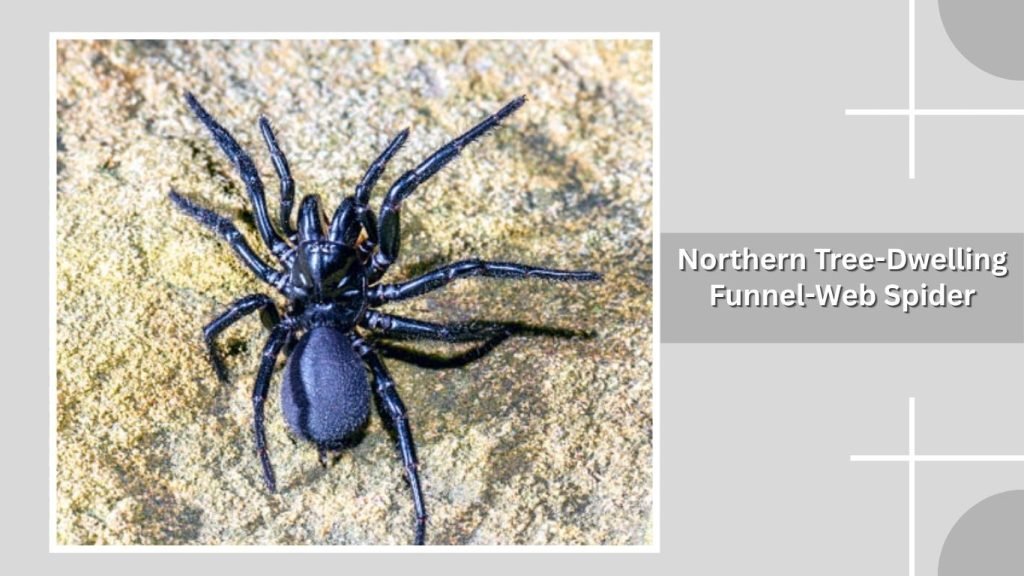
The Northern Tree-Dwelling Funnel-Web Spider is another large and highly venomous species found in Australia. It is closely related to the Sydney Funnel-Web but differs in habitat and distribution, often living above ground in trees rather than in soil burrows.
Identification
- Large, dark-colored spider with a glossy black or dark brown body
- Body length around 3–5 cm with long, strong legs
- Smooth and shiny cephalothorax
- Prominent, powerful fangs capable of delivering deep bites
- Less hairy compared to many other large spiders
Habitat
This spider is commonly found in eastern Australia, particularly in Queensland. Unlike ground-dwelling funnel-webs, it prefers living in tree hollows, under bark, or in rotting logs. It creates silk-lined retreats in elevated positions, making it well adapted to arboreal life.
Behavior
The Northern Tree-Dwelling Funnel-Web Spider is nocturnal and remains hidden during the day. At night, it waits near its retreat to ambush prey. It is considered more aggressive than many other spiders and may defend itself if disturbed. Males may wander in search of females, which can lead them into human environments.
Interesting Facts
This species is regarded as one of the most dangerous funnel-web spiders due to its potent venom. It can produce large amounts of venom and is capable of multiple bites. Like its relatives, antivenom is effective, and serious outcomes are rare with prompt treatment. Despite its danger, it contributes to the ecosystem by controlling insect populations.
4. Darling Downs Funnel-Web Spider
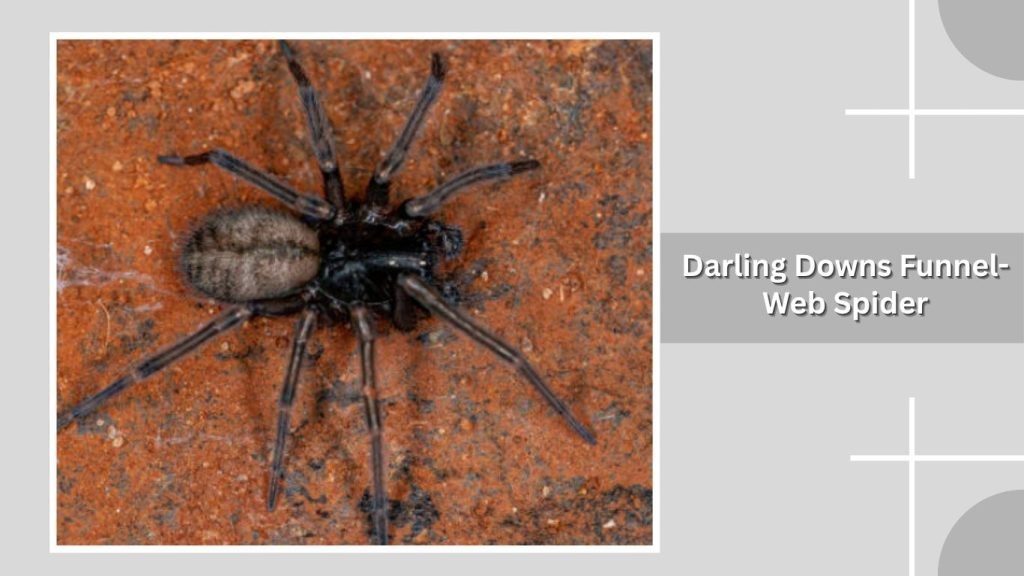
The Darling Downs Funnel-Web Spider is a large and lesser-known but potentially dangerous species found in Australia. Like other funnel-web spiders, it possesses strong venom and is capable of delivering a serious bite, though encounters with humans are relatively uncommon.
Identification
- Medium to large spider with a dark brown to black body
- Sturdy build with thick legs
- Body length typically around 2–4 cm
- Smooth, slightly shiny carapace
- Large fangs designed for penetrating prey
Habitat
This spider is mainly found in the Darling Downs region of Queensland. It prefers moist environments such as under rocks, logs, and leaf litter. The Darling Downs Funnel-Web constructs silk-lined burrows in the ground, often with a funnel-shaped entrance that helps detect prey movements.
Behavior
The spider is mostly nocturnal, spending daylight hours inside its burrow. At night, it positions itself near the entrance, sensing vibrations from nearby insects. It is generally reclusive but will defend itself if disturbed. Males may wander during breeding season, increasing the chance of accidental encounters with humans.
Interesting Facts
Although not as well-known as the Sydney Funnel-Web, this species is still considered medically significant due to its venom. Like other funnel-web spiders, it has a primitive design with powerful fangs and fast reflexes. Antivenom developed for funnel-web spiders is effective against its bite, greatly reducing the risk of severe outcomes.
5. Mouse Spider
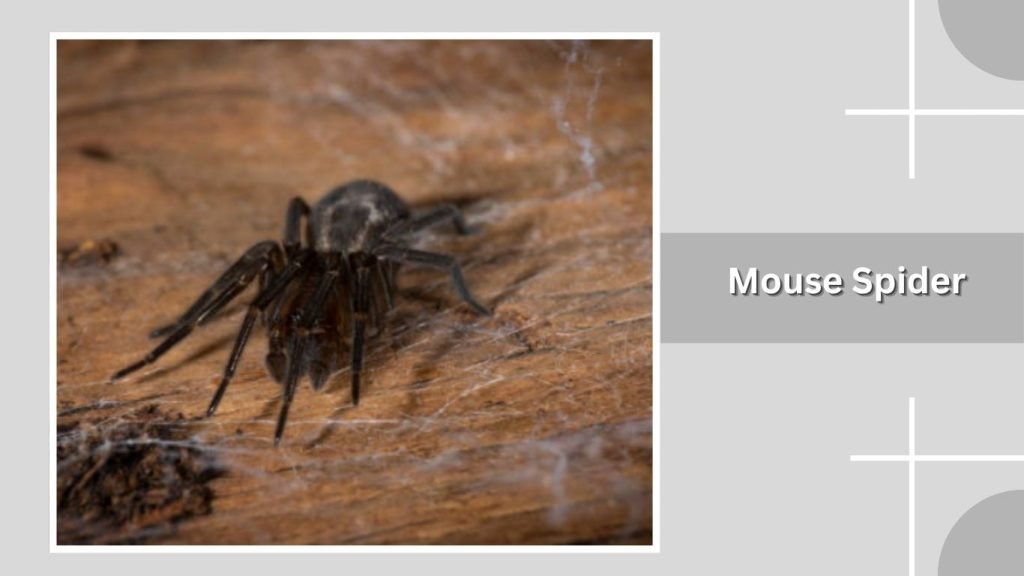
The Mouse Spider is a large and striking spider found across Australia. Despite its name, it is not related to mice but was given this name due to early myths about its burrowing behavior. It is known for its powerful build and venom, though serious bites are rare.
Identification
- Medium to large spider with a robust, heavy body
- Body length ranges from 1–3.5 cm
- Shiny, smooth appearance with short legs
- Colors vary: black, dark brown, or sometimes with red markings (especially males)
- Large, strong fangs similar to funnel-web spiders
Habitat
Mouse Spiders are widely distributed across Australia and prefer burrowing in soil. They are often found in gardens, forests, and open woodland areas. Their burrows may be covered with a small trapdoor or left open, usually located in sheltered ground.
Behavior
These spiders are mainly ground-dwelling and spend most of their time inside their burrows. They come out at night to hunt insects and other small prey. Males are more likely to wander, especially after rain, which increases the chance of encountering humans. They are not aggressive but will bite if handled.
Interesting Facts
Mouse Spiders are often confused with funnel-web spiders due to their similar appearance and venom. However, their venom is less dangerous, and effective antivenom exists. Interestingly, some bites have caused little to no symptoms, possibly because they sometimes deliver “dry bites” without injecting venom.
6. Trapdoor Spider
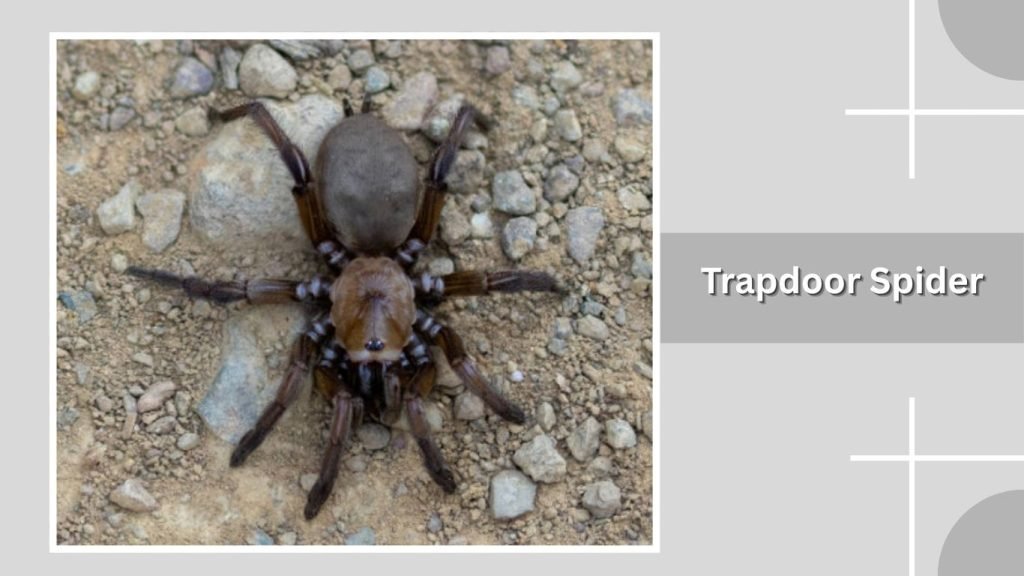
The Trapdoor Spider is a large, ground-dwelling spider known for its unique hunting technique and well-camouflaged burrow. It gets its name from the silk “trapdoor” it builds to hide and ambush prey. These spiders are generally shy and rarely pose a threat to humans.
Identification
- Medium to large spider with a thick, robust body
- Body length typically 1.5–3 cm
- Dark brown or black coloration
- Short, strong legs adapted for digging
- Often has a matte or slightly hairy appearance
Habitat
Trapdoor Spiders are found throughout Australia in forests, gardens, and bushland. They live in burrows dug into the soil, which are often lined with silk and covered by a hinged lid made of soil, vegetation, and silk. This door blends perfectly with the surroundings, making it difficult to detect.
Behavior
These spiders are ambush predators and rarely leave their burrow. They wait just beneath the trapdoor and sense vibrations from passing prey. When an insect comes close, they quickly burst out, capture it, and retreat back inside. They are solitary and highly secretive, avoiding contact with humans whenever possible.
Interesting Facts
The Trapdoor Spider can live for many years, sometimes over a decade in the same burrow. Its trapdoor is an excellent example of natural camouflage and engineering. Although it can bite if provoked, its venom is not considered dangerous to humans, making it more fascinating than threatening.
7. Golden Orb-Weaving Spider
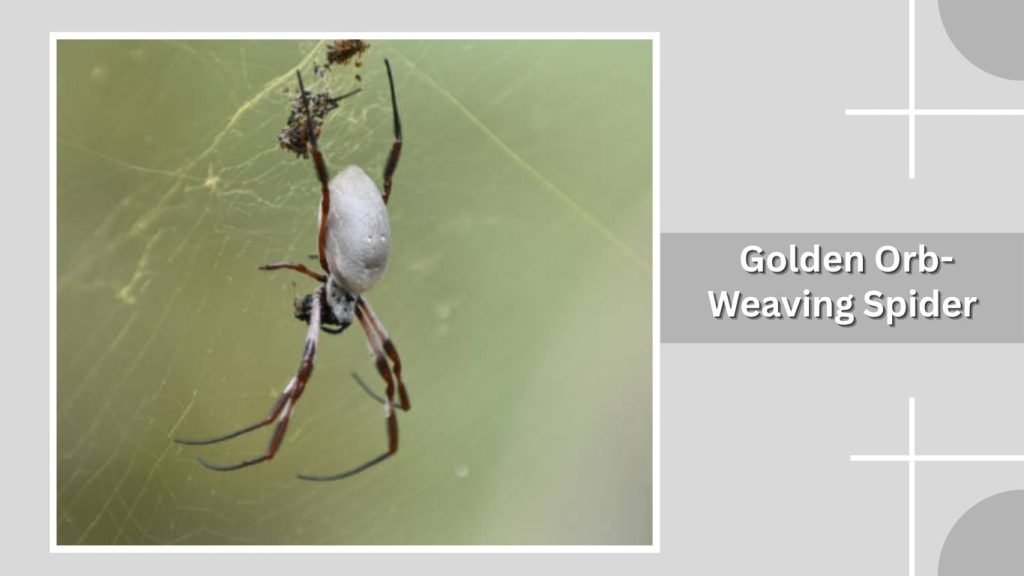
The Golden Orb-Weaving Spider is one of the largest web-building spiders in Australia, famous for its विशाल, चमकीले golden webs. It is visually striking and commonly seen in gardens and forests. Despite its size, it is harmless to humans and plays a beneficial role in controlling flying insects.
Identification
- Large spider with long, slender legs
- Females are much larger than males
- Body can be yellow, brown, or grey with distinctive patterns
- Legs often have banded markings
- Produces strong, golden-colored silk
Habitat
This spider is widely found across Australia, especially in forests, coastal areas, and gardens. It builds large, circular webs between trees or shrubs, often in sunny, open spaces. The golden silk web can span several meters and is very strong, capable of catching large insects.
Behavior
The Golden Orb-Weaver is a passive hunter that relies on its web to catch prey. It remains at the center or edge of the web, waiting for vibrations caused by trapped insects. It is non-aggressive and usually stays still when disturbed, though it may move away if threatened.
Interesting Facts
The silk of this spider is incredibly strong and has been studied for potential use in textiles and medical materials. Its golden sheen becomes visible in sunlight, making the web look almost magical. In some rare cases, small birds or bats have been found caught in its web due to its strength.
8. Garden Orb-Weaving Spider
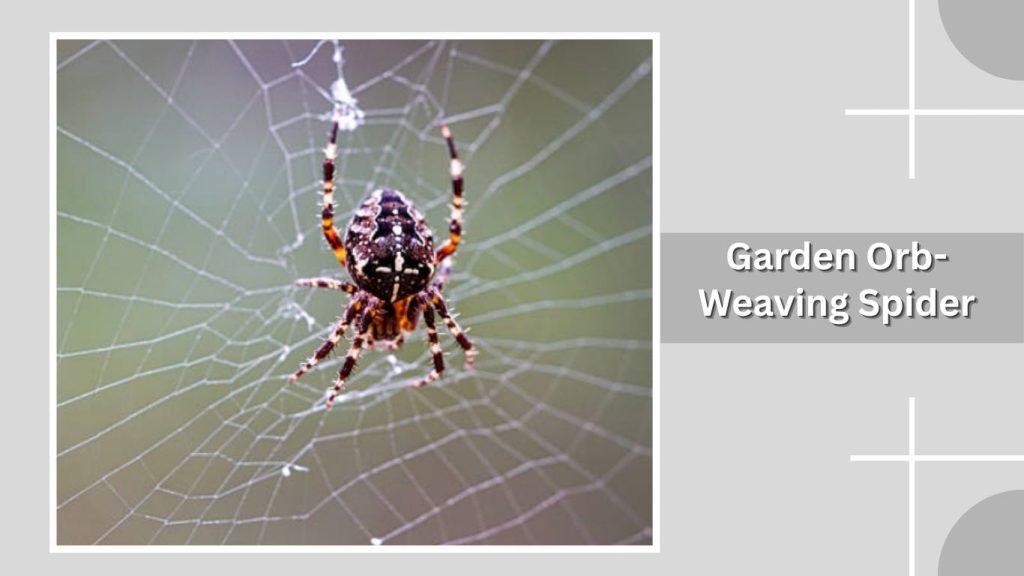
The Garden Orb-Weaving Spider is a common and large spider found throughout Australia. It is well known for spinning classic circular webs in gardens and outdoor spaces. Although its size may appear intimidating, it is harmless and beneficial for controlling insect populations.
Identification
- Medium to large spider with a rounded abdomen
- Body length usually 1–3 cm
- Colors vary widely: brown, grey, or reddish with patterns
- Often has spiny or textured legs
- Abdomen may have leaf-like markings
Habitat
This spider is commonly found in gardens, parks, forests, and around homes. It builds large, circular orb webs between plants, fences, or structures. During the day, it often hides in nearby foliage and rebuilds its web at night.
Behavior
The Garden Orb-Weaver is nocturnal and becomes active after sunset. It constructs its web in the evening and waits for flying insects to get trapped. If disturbed, it may drop to the ground or quickly retreat to safety. It is non-aggressive and rarely bites humans.
Interesting Facts
These spiders often rebuild their webs daily, consuming the old silk to recycle nutrients. Their webs are highly efficient at catching insects like mosquitoes and moths. Despite their large size and sudden appearance at night, they are completely harmless and helpful in maintaining ecological balance.
9. Australian Tarantula (Whistling Spider)
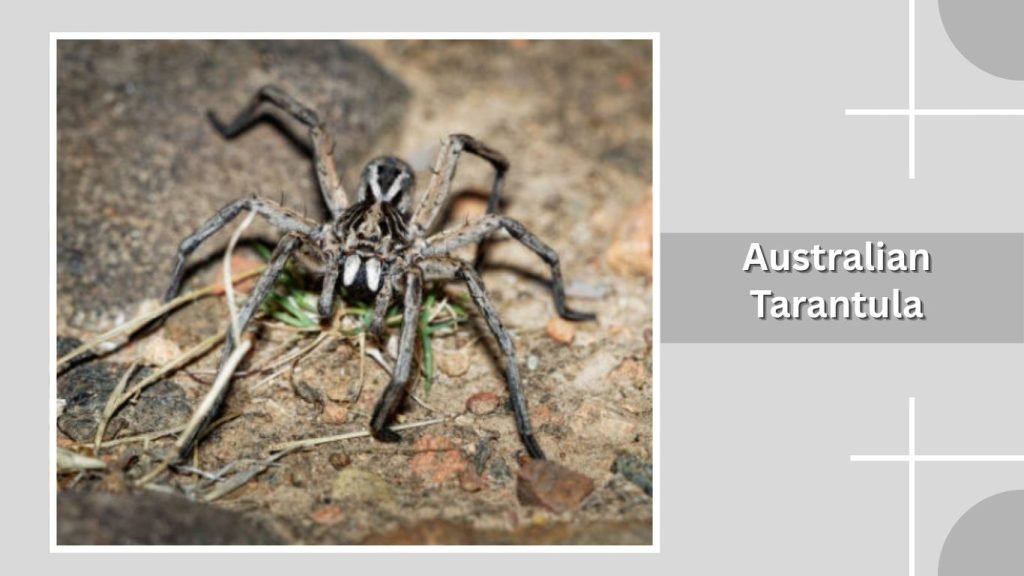
The Australian Tarantula, also known as the Whistling Spider, is one of the largest spiders in Australia. It is famous for the unique hissing or whistling sound it produces. Despite its size and intimidating look, it is generally not dangerous to humans.
Identification
- Very large, heavy-bodied spider
- Leg span can reach up to 16 cm (6 inches)
- Thick, hairy body with dark brown to black coloration
- Strong legs covered in dense hairs
- Capable of producing a faint whistling sound by rubbing body parts
Habitat
Australian Tarantulas are found in dry and tropical regions, especially in Queensland and Northern Territory. They live in deep burrows in the ground, often lined with silk. These burrows provide protection from heat and predators and may be reused for many years.
Behavior
These spiders are mostly nocturnal and stay inside their burrows during the day. At night, they emerge to hunt insects, small reptiles, and even frogs. They rely on ambush rather than webs. When threatened, they may rear up and display their fangs as a warning.
Interesting Facts
The “whistling” sound comes from stridulation, where the spider rubs its legs against its body. They can live for many years, especially females, which may survive over a decade. While their bite can be painful, it is not considered deadly, making them more fascinating than dangerous.
10. Wolf Spider
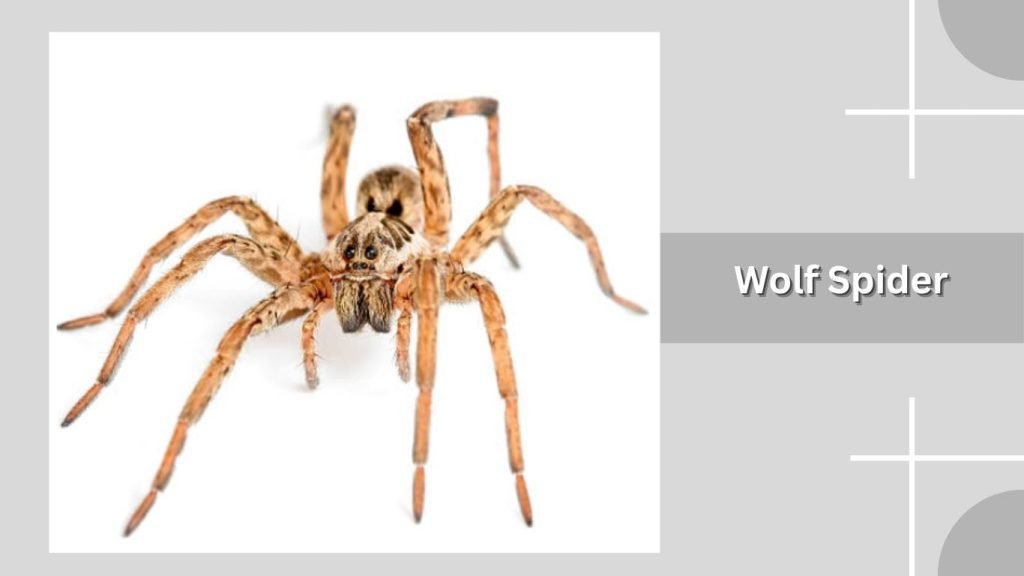
The Wolf Spider is a large and fast-moving spider commonly found across Australia. Unlike web-building spiders, it actively hunts its prey. It is known for its excellent eyesight and unique behavior, making it one of the most interesting ground-dwelling spiders.
Identification
- Medium to large spider with a robust body
- Body length typically 1–3.5 cm
- Brown, grey, or black with striped or mottled patterns
- Strong legs built for running
- Distinctive eye arrangement with two large front eyes
Habitat
Wolf Spiders are widely distributed across Australia and can be found in grasslands, forests, deserts, and even urban areas. They prefer ground habitats such as leaf litter, burrows, or under rocks. Some species dig shallow burrows, while others roam freely.
Behavior
These spiders are active hunters and do not rely on webs to catch prey. They chase down insects using speed and agility, mostly at night. Wolf Spiders are generally shy and will try to escape when disturbed. Females are known for carrying their egg sacs and even their young on their backs after hatching.
Interesting Facts
Wolf Spiders have excellent vision compared to most spiders, helping them detect and track prey. Their reflective eyes can sometimes be seen shining at night under light. Although they can bite if provoked, their venom is not dangerous to humans, usually causing only mild irritation.
11. St Andrew’s Cross Spider
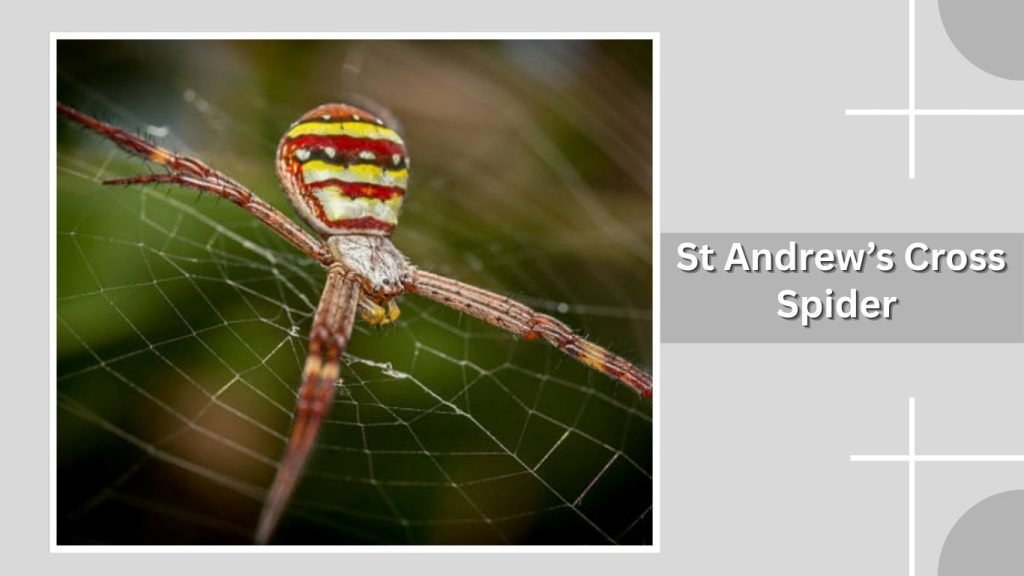
The St Andrew’s Cross Spider is a distinctive and medium-to-large spider found in Australia, easily recognized by its unique web decoration. Its striking appearance and behavior make it one of the most noticeable orb-weaving spiders in the wild.
Identification
- Medium-sized spider with long, slender legs
- Bright yellow and black coloration on the body
- Abdomen often has bold, contrasting patterns
- Legs are usually held in pairs forming an “X” shape
- Builds webs with a white zigzag pattern (stabilimentum)
Habitat
This spider is commonly found in gardens, forests, and bushland across Australia. It builds orb-shaped webs in sunny, open areas between plants or shrubs. The web often includes a visible zigzag silk structure that helps identify the species.
Behavior
The St Andrew’s Cross Spider typically rests in the center of its web, holding its legs in pairs to form a cross-like shape. It waits for flying insects to become trapped in its web. It is non-aggressive and rarely leaves its web unless disturbed.
Interesting Facts
The white zigzag pattern in its web is thought to attract prey or deter predators. Its name comes from the cross-like posture it maintains. Despite its bold appearance, it is harmless to humans and plays an important role in controlling insect populations.
12. Black House Spider
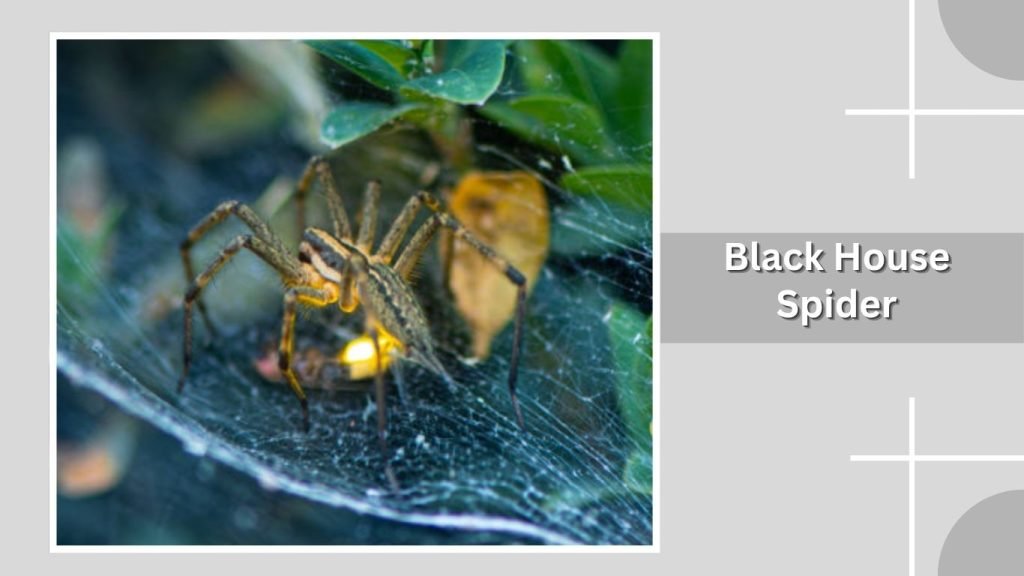
The Black House Spider is a large, common spider found in Australian homes and buildings. It is known for building messy, funnel-shaped webs in corners and cracks. Although its appearance may seem alarming, it is generally harmless and avoids human interaction.
Identification
- Medium to large spider with a dark brown to black body
- Body length around 1–2 cm
- Velvety texture with fine hairs
- Sturdy legs, often darker at the tips
- Females are larger than males
Habitat
The Black House Spider is commonly found around human structures such as windows, walls, and sheds. It prefers dry, sheltered areas where it can build its web undisturbed. In nature, it can also be found in tree bark and rock crevices.
Behavior
This spider builds irregular, lace-like webs with a funnel retreat where it hides. It stays in its web most of the time, waiting for insects to get caught. It is not aggressive and will usually remain still or retreat if disturbed rather than attack.
Interesting Facts
Black House Spiders can live in the same web for long periods, rarely leaving unless necessary. Their webs are often built in layers, making them look messy but effective. While they can bite if provoked, their venom is not dangerous and typically causes only mild symptoms.
FAQs
Are giant spiders in Australia dangerous to humans?
Most large spiders in Australia look scary but are not dangerous. Only a few species, like funnel-web spiders, have medically significant venom. The majority, including huntsman and orb-weavers, are harmless and rarely bite unless provoked.
Which is the biggest spider in Australia?
The Giant Huntsman Spider is considered one of the largest in Australia, mainly due to its huge leg span. However, Australian tarantulas are also very large and heavier in body size, making them equally impressive.
Do large spiders in Australia enter homes?
Yes, some large spiders like huntsman and black house spiders can enter homes. They usually come inside searching for shelter or prey. Despite their size, they are generally harmless and help control insects indoors.
What should you do if you see a big spider?
It’s best to stay calm and avoid touching or provoking the spider. Most spiders will not attack and prefer to escape. If needed, you can safely remove it using a container or call a pest control professional.
Why are Australian spiders so big?
Australia’s warm climate and diverse ecosystems provide ideal conditions for spiders to grow larger. Abundant food sources and fewer extreme winters allow many species to thrive and reach impressive sizes compared to other regions.
