
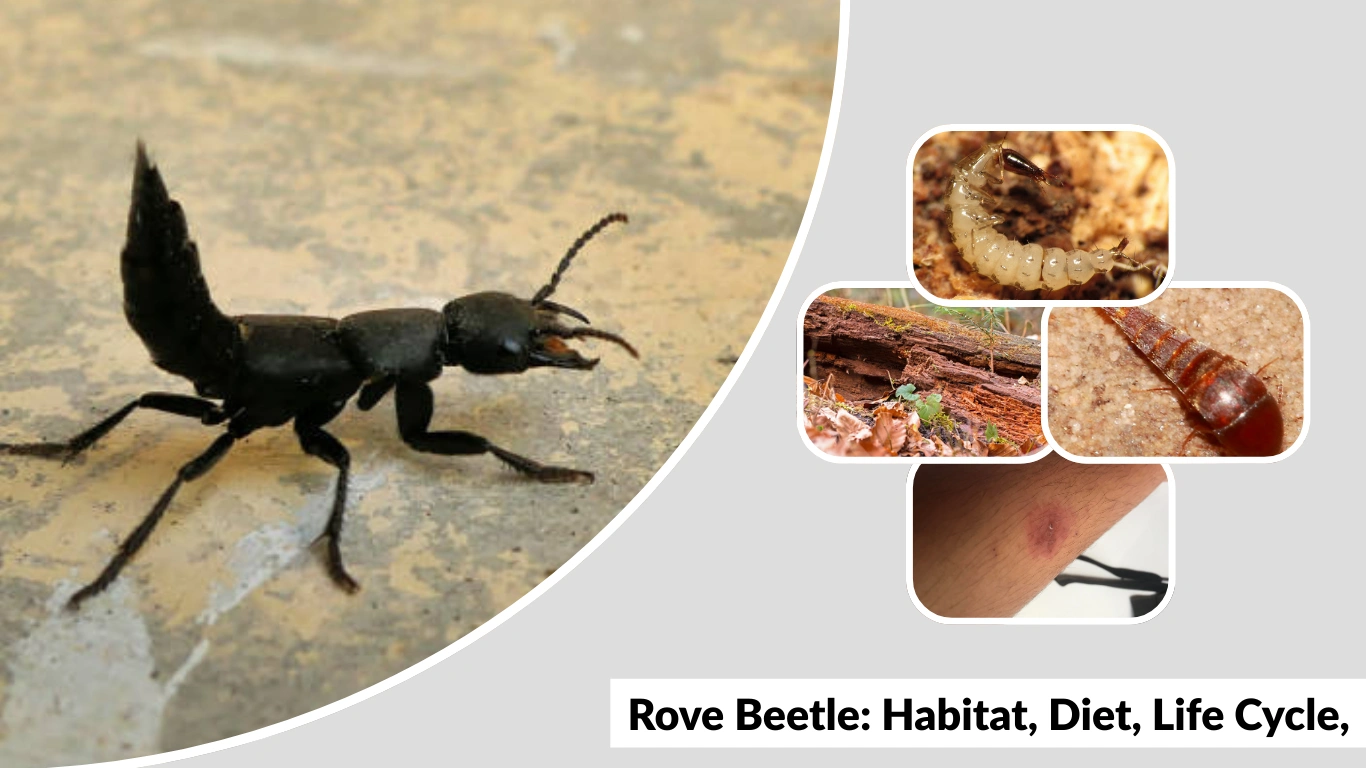
Rove beetles are small, fast-moving insects found in many parts of the world. Although they are usually harmless and even beneficial to ecosystems, people often become concerned when they encounter them indoors or experience skin irritation after contact. These beetles play an important role in controlling pests, but certain species can cause skin reactions if crushed on the skin. Understanding rove beetles—their habitat, life cycle, diet, and possible treatment for skin irritation—can help people avoid problems and appreciate their ecological value.
What Is a Rove Beetle?
Rove beetles belong to the Staphylinidae family, one of the largest beetle families in the world. Scientists have identified more than 60,000 species, making them extremely diverse and widespread.
Basic Characteristics
Rove beetles are easy to recognize because of their short wing covers (elytra) that leave most of their abdomen exposed. Unlike many other beetles, their bodies appear elongated and flexible. When disturbed, they often raise their abdomen in a posture that resembles a scorpion.
Common features of rove beetles include:
- Slender and elongated bodies
- Short wing covers exposing the abdomen
- Strong mandibles (mouthparts) for hunting
- Rapid movement across the ground
Most rove beetles measure 3 to 25 millimeters in length, depending on the species.
Where Rove Beetles Are Found
Rove beetles are found almost everywhere on Earth except in extremely cold regions like Antarctica. They thrive in environments where there is moisture and organic material.
You can commonly find rove beetles in:
- Gardens and farms
- Forest floors
- Compost piles
- Under rocks and logs
- Near rivers and lakes
Because they are attracted to light, they may occasionally enter homes, especially during humid seasons.
Why They Are Important in Nature
Despite their intimidating appearance, most rove beetles are beneficial insects. They are natural predators that help control populations of many agricultural pests.
Their ecological benefits include:
- Reducing harmful insect populations
- Helping maintain soil health
- Assisting in the decomposition of organic matter
For farmers and gardeners, rove beetles can actually serve as a natural form of pest control.
Rove Beetle Habitat
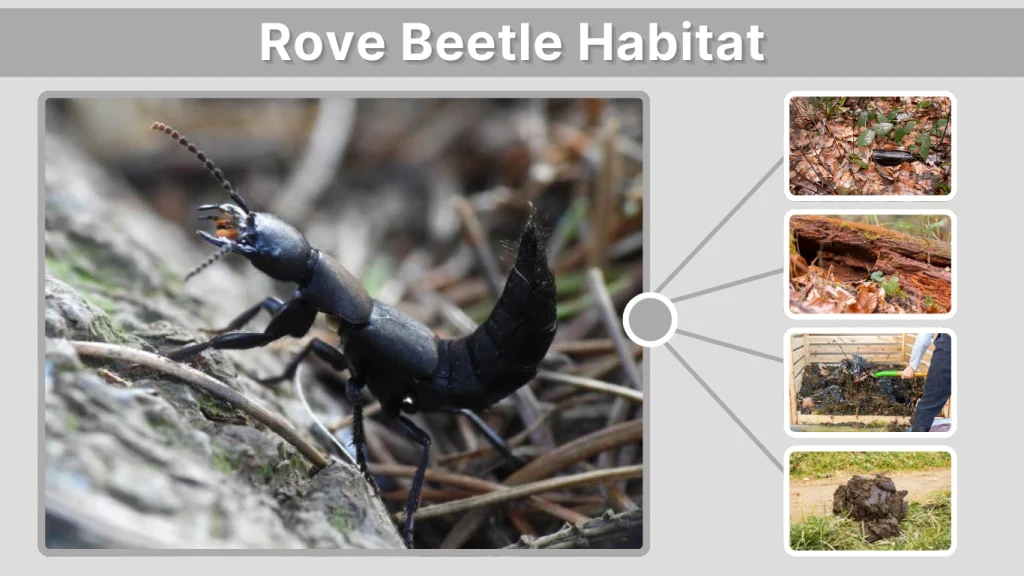
Understanding the rove beetle habitat helps explain why people encounter these insects in gardens, farms, or sometimes indoors.
Natural Habitats of Rove Beetles
Rove beetles prefer environments rich in organic material and moisture. These locations provide both food and shelter.
Common natural habitats include:
- Leaf litter on forest floors
- Decaying plant material
- Compost piles
- Animal dung
- Wet soil near water bodies
These environments allow rove beetles to hunt prey such as small insects and larvae.
Why Rove Beetles Enter Homes
Although rove beetles primarily live outdoors, they sometimes appear inside houses. Several factors can attract them indoors.
Possible reasons include:
- Bright lights at night
- High humidity levels
- Nearby vegetation or gardens
- Seasonal migration during rainy periods
In tropical and subtropical regions, rove beetles are more commonly seen during warm and humid months.
Common Places to Find Rove Beetles
If you are searching for rove beetles outdoors, they are most often found in areas rich in decaying organic matter.
Typical locations include:
- Agricultural fields
- Vegetable gardens
- Mulch beds
- Under stones or logs
- Around compost bins
These environments support the insects that rove beetles feed on.
Rove Beetle Life Cycle
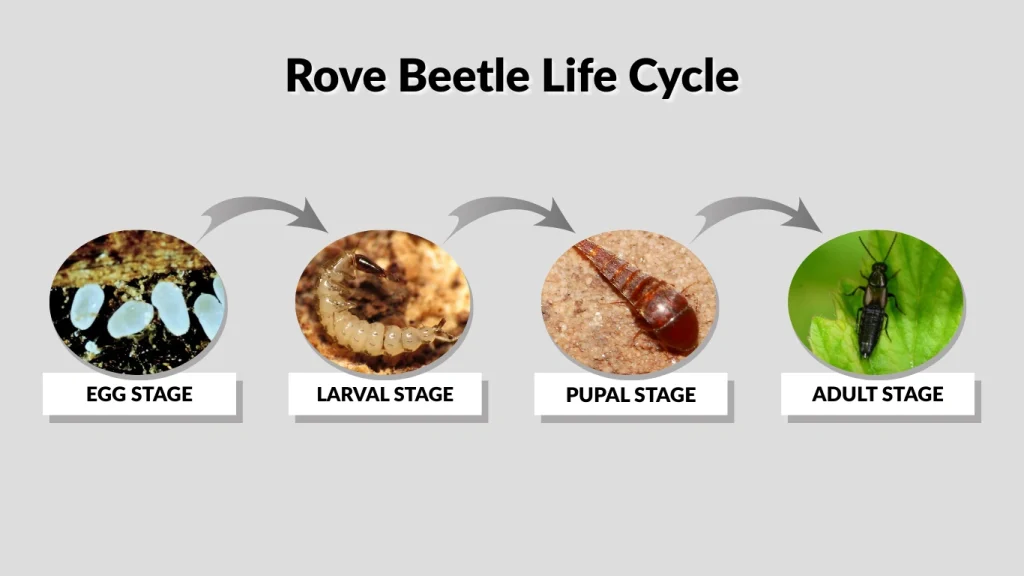
Like most beetles, the rove beetle life cycle consists of four stages: egg, larva, pupa, and adult. Each stage plays an important role in the insect’s development.
Egg Stage
Female rove beetles lay their eggs in protected environments where food is readily available for the larvae. These places often include:
- Soil rich in organic matter
- Decaying leaves
- Animal dung or compost
The eggs are usually very small and difficult to see with the naked eye. Depending on environmental conditions, the eggs may hatch within a few days to a week.
Rove Beetle Larvae
The rove beetle larvae resemble small, elongated worms with visible legs. They are active predators just like the adult beetles.
Characteristics of rove beetle larvae include:
- Dark-colored elongated bodies
- Strong jaws for catching prey
- Fast movement through soil or organic debris
During this stage, the larvae feed heavily to gain enough energy for the next stage of development.
Pupa Stage
After completing the larval stage, the insect enters the pupa stage, where it transforms into an adult beetle. This stage typically occurs in the soil or inside protected organic material.
Inside the pupa, the body undergoes major changes as the larva develops wings, hardened body parts, and adult structures.
Adult Rove Beetle
Once development is complete, the adult rove beetle emerges and begins searching for food and mates. Adult beetles are active hunters and continue to feed on other small insects.
The lifespan of a rove beetle varies by species but typically ranges from several weeks to several months.
Rove Beetle Diet
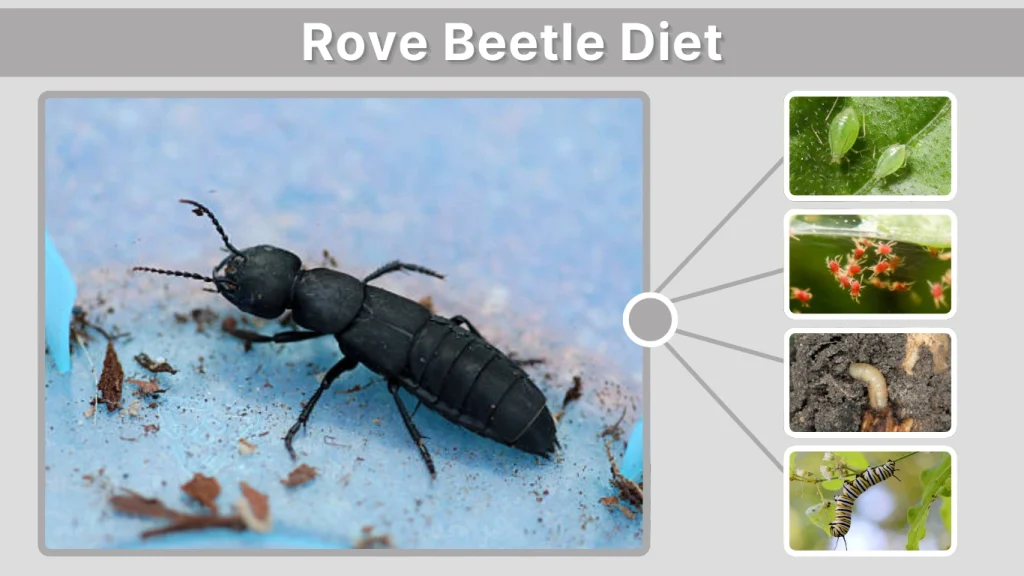
Rove beetles are primarily predatory insects, meaning they hunt and consume other small organisms. Their diet helps control many pests that damage crops and plants, making them valuable for gardens and agriculture.
What Do Rove Beetles Eat?
If you are wondering what rove beetles eat, their diet mainly consists of small insects and organic matter found in soil and decaying materials.
Common food sources include:
- Aphids
- Mites
- Fly larvae
- Maggots
- Small caterpillars
- Insect eggs
Some species may also feed on decaying plant material or fungi, depending on their habitat. Their strong mandibles allow them to quickly capture and consume prey.
Feeding Behavior
Rove beetles are active hunters. They move rapidly through soil, leaf litter, or compost searching for prey. Because they are fast and aggressive predators, they play an important role in controlling insect populations.
Their feeding behavior includes:
- Hunting in moist soil or organic debris
- Attacking small insects and larvae
- Feeding both during the day and night
This predatory nature makes them especially beneficial in agricultural ecosystems.
Benefits of Rove Beetle Diet
The diet of rove beetles helps maintain ecological balance. By feeding on harmful insects, they naturally reduce pest populations.
Benefits include:
- Natural pest control in gardens
- Reduced need for chemical pesticides
- Protection of crops from harmful insects
Because of these advantages, many farmers consider rove beetles to be beneficial insects rather than pests.
Rove Beetle Larvae
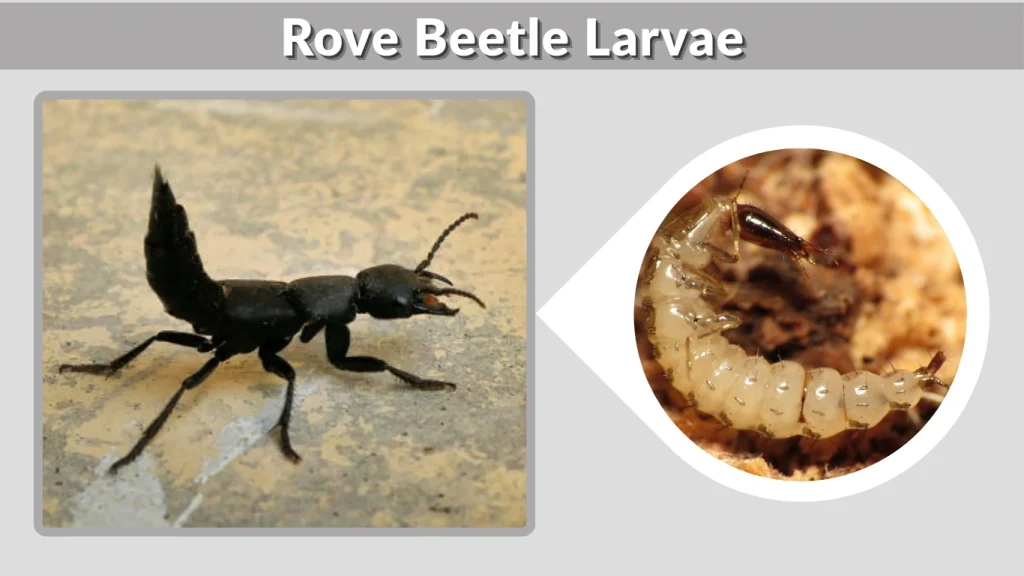
The rove beetle larvae stage is an important part of the insect’s development and also contributes to pest control in soil ecosystems.
Identification of Larvae
Rove beetle larvae look somewhat similar to adult beetles but without fully developed wings. They usually have elongated bodies and visible legs.
Typical features include:
- Slender, elongated bodies
- Dark brown or yellowish color
- Strong jaws for catching prey
- Active movement in soil or debris
Although small, they are efficient predators.
Habitat of Larvae
Rove beetle larvae live in environments where food is abundant. They are commonly found in:
- Moist soil
- Compost piles
- Decaying plant material
- Animal manure
- Leaf litter
These locations provide both shelter and plenty of prey.
Role in Ecosystem
Just like adult beetles, the larvae are predators of small insects. They help reduce populations of pests that may damage crops or plants.
Their ecological roles include:
- Controlling insect larvae populations
- Assisting in decomposition processes
- Supporting soil health
Because of these functions, rove beetle larvae are considered beneficial for natural ecosystems.
Rove Beetle Bite
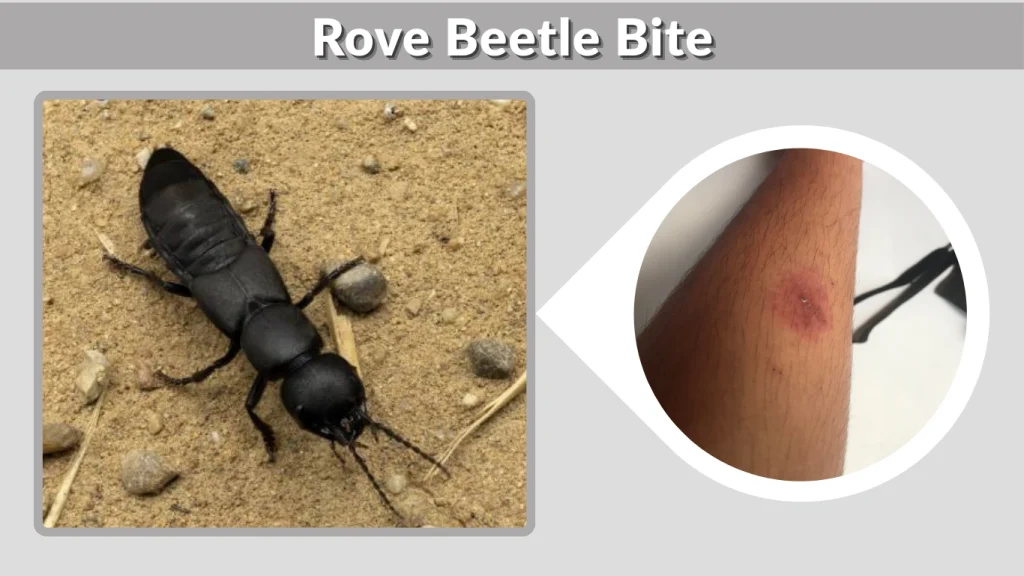
Many people worry about the rove beetle bite, especially when they encounter these insects indoors. However, rove beetles rarely bite humans.
Can Rove Beetles Bite Humans?
Most rove beetles do not bite unless handled or threatened. Even when they bite, it is usually mild and not dangerous.
The main concern with some species, particularly those in the Paederus group, is not the bite but the chemical toxin they release when crushed.
Symptoms of Rove Beetle Bite or Contact
When a rove beetle is accidentally crushed on the skin, it may release a toxin called pederin. This chemical can cause skin irritation known as Paederus dermatitis.
Common symptoms include:
- Redness of the skin
- Burning sensation
- Blisters or rash
- Mild swelling
These symptoms may appear several hours after contact.
Why Rove Beetles Cause Skin Reactions
The irritation occurs because the beetle’s body contains pederin, a defensive chemical that protects it from predators. When the insect is crushed on the skin, the toxin spreads and causes inflammation.
It is important not to crush rove beetles on the skin, as this increases the risk of irritation.
Rove Beetle Treatment
If skin irritation occurs after contact with a rove beetle, proper rove beetles treatment can help reduce discomfort and speed healing.
Immediate First Aid
The first step is to clean the affected area as soon as possible.
Recommended actions include:
- Wash the skin with soap and water
- Avoid touching or rubbing the area
- Apply a cold compress to reduce irritation
Cleaning the skin helps remove any remaining toxin.
Medical Treatment Options
If symptoms develop, several treatments can help relieve the reaction.
Common treatments include:
- Topical steroid creams to reduce inflammation
- Antihistamines to relieve itching
- Pain relievers for discomfort
In most cases, the skin reaction improves within a few days to a week.
When to See a Doctor
Medical attention may be necessary if symptoms become severe.
You should consult a doctor if:
- The rash spreads widely
- Severe swelling occurs
- The irritation affects the eyes
- Symptoms persist for more than a week
Doctors may prescribe stronger medications if needed.
How to Prevent Rove Beetle Contact
Preventing contact with rove beetles can reduce the chances of skin irritation.
Home Prevention Tips
To reduce the chances of rove beetles entering your home:
- Use window screens
- Turn off unnecessary outdoor lights at night
- Seal gaps around doors and windows
- Keep indoor spaces dry and clean
Reducing light attraction can significantly lower indoor encounters.
Garden and Outdoor Prevention
Managing outdoor environments can also help control rove beetle activity near homes.
Helpful practices include:
- Removing excess leaf litter
- Managing compost properly
- Reducing moisture buildup
- Maintaining clean garden areas
These steps make the environment less attractive for rove beetles.
Safe Removal Methods
If you find a rove beetle on your skin or indoors, it is best to remove it gently without crushing it.
Safe methods include:
- Blowing the beetle off the skin
- Using a piece of paper or cloth to move it away
- Wearing gloves when handling insects
Avoid direct contact whenever possible.
Conclusion
Rove beetles are fascinating insects that play a vital role in maintaining ecological balance. They are widely distributed and commonly found in moist environments such as gardens, forests, and compost areas. These insects are beneficial predators that help control pests by feeding on small insects and larvae.
Although rove beetles rarely bite, certain species can cause skin irritation if crushed on the skin due to the release of a toxin called pederin. Fortunately, proper cleaning and simple treatments usually resolve these reactions quickly. By understanding their habitat, life cycle, diet, and prevention methods, people can safely coexist with rove beetles while benefiting from their natural pest-control abilities.
