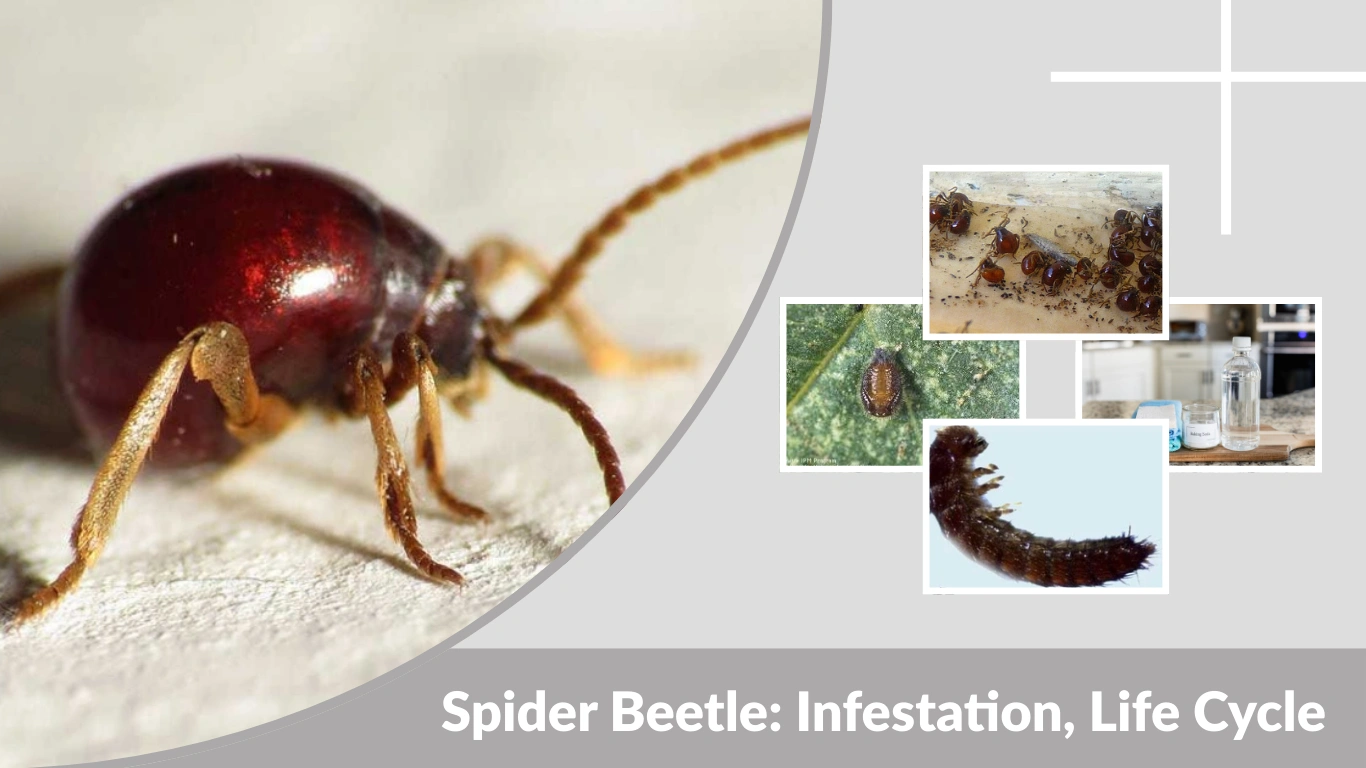
Spider beetles are small pantry pests that often appear in homes where dry food products are stored. Because of their round bodies and long legs, they are frequently mistaken for spiders or ticks. These insects are scavengers that feed on grains, cereals, pet food, and other stored items. Although spider beetles are not harmful to humans, they can contaminate food and spread quickly in pantries if the infestation is not controlled early.
What Is a Spider Beetle?
Spider beetles are tiny insects that belong to the Ptinidae family, a group of beetles commonly associated with stored food and organic materials. They are known for their unusual appearance, which resembles a small spider due to their long legs and rounded body.
These beetles are considered pantry pests because they commonly infest stored foods such as flour, grains, and cereals. They can also feed on a wide range of organic materials, making them highly adaptable pests in both homes and storage facilities.
Spider Beetle Definition
A spider beetle is a small scavenger beetle that feeds on stored food products and organic materials. Most spider beetles measure between 1.5 and 5 millimeters long and have a shiny brown or reddish-brown body.
Unlike many other pantry pests, spider beetles have a distinctive round abdomen and long thin legs, which gives them their spider-like appearance.
Why They Are Called Spider Beetles
The name “spider beetle” comes from their unusual body shape and movement. Their long legs and rounded body can make them look very similar to small spiders when they crawl across surfaces.
However, spider beetles are insects, not spiders. Unlike spiders, they have six legs and antennae, while spiders have eight legs and no antennae.
Common Types of Spider Beetles
Several species of spider beetles can infest homes and food storage areas. Some of the most common types include:
American Spider Beetle
This species is commonly found in food storage areas and warehouses. It feeds on grains, dried foods, and organic debris.
Smooth Spider Beetle
A common household pest that often infests pantries and food storage cabinets.
Whitemarked Spider Beetle
This species is easily recognized by small white patches on its body. It often infests stored food products.
Golden Spider Beetle
Known for its shiny golden-brown body, this species is commonly found in stored grain and food facilities.
Where Spider Beetles Are Found
Spider beetles can survive in many environments as long as food sources are available. In homes, they are most commonly found in:
- Kitchen pantries
- Food storage cabinets
- Bags of grains or flour
- Pet food containers
- Stored cereals and dried foods
Outside homes, spider beetles are frequently found in grain warehouses, food processing facilities, and storage buildings.
They can also live in bird nests, rodent nests, and other areas where organic materials accumulate.
Spider Beetles in the House
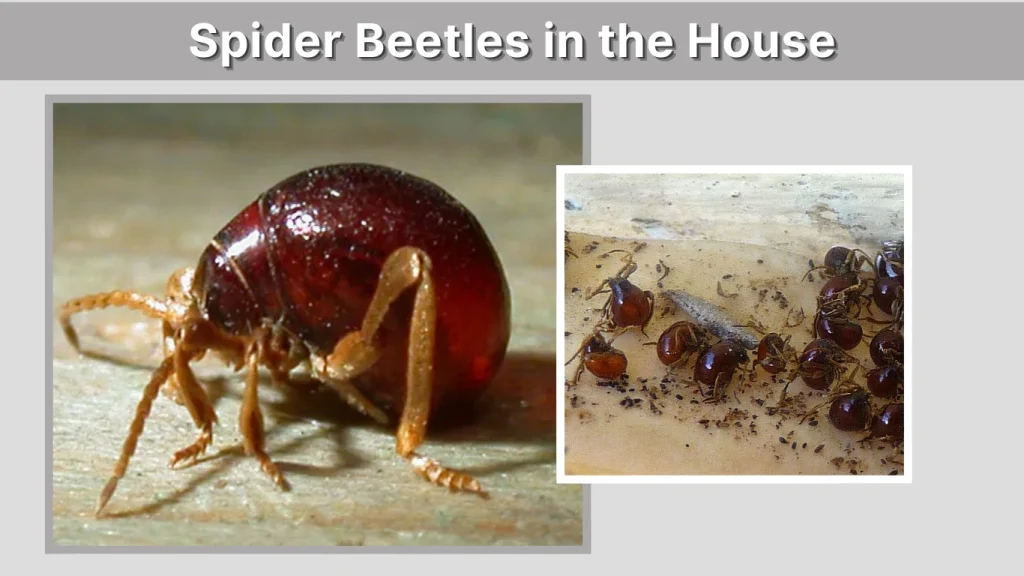
Finding spider beetles in the house usually indicates that a food source is available nearby. Because these pests are scavengers, they are attracted to a wide variety of stored foods and organic materials.
Most infestations start when contaminated food products are brought into the home from grocery stores or storage facilities.
Why Spider Beetles Enter Homes
Spider beetles may enter homes for several reasons. The most common cause is the presence of stored food products that provide an easy food source.
Common reasons spider beetles appear in homes include:
- Infested packaged food products
- Poor food storage practices
- Warm indoor environments
- Entry through cracks or small openings
Once they find a suitable food source, spider beetles can reproduce and spread throughout the pantry.
Foods and Materials They Infest
Spider beetles are not picky eaters and can survive on many different types of food and organic materials.
Common items they infest include:
- Flour
- Rice and grains
- Pasta
- Breakfast cereals
- Pet food
- Spices and dried herbs
- Nuts and seeds
In addition to food products, spider beetles may also feed on animal-based materials such as wool, leather, feathers, and dried animal products.
Are Spider Beetles Dangerous?
Spider beetles are not dangerous to humans. They do not bite, sting, or spread diseases.
However, they can contaminate food by leaving behind waste, shed skins, and eggs. For this reason, most people discard any food products that show signs of infestation.
In large numbers, spider beetles can become a nuisance pest and cause food waste in homes and food storage facilities.
Spider Beetle Identification
Correct identification is important because spider beetles are often confused with other household pests.
Size and Appearance
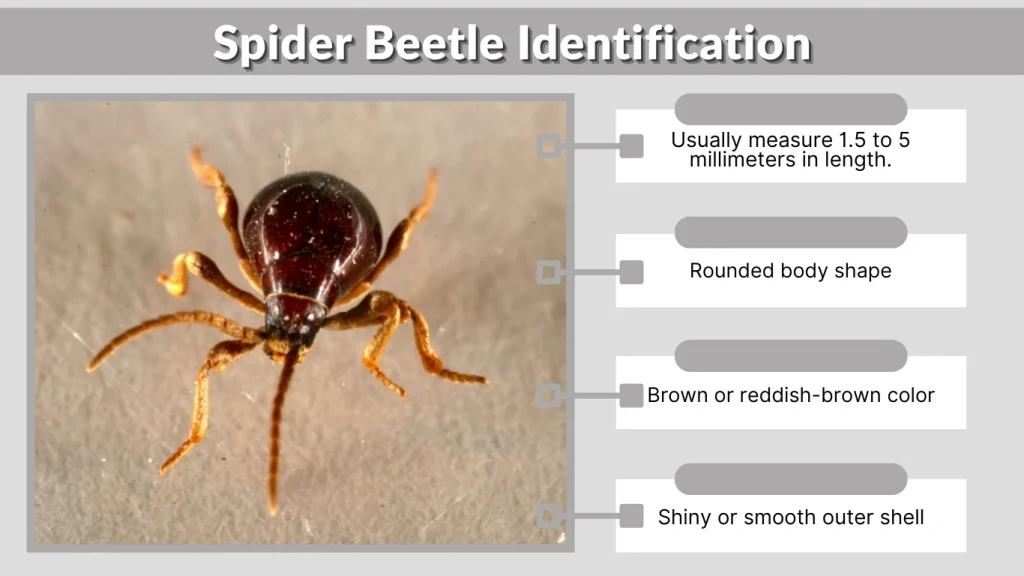
Adult spider beetles are small insects that usually measure 1.5 to 5 millimeters in length.
They have several distinctive features:
- Rounded body shape
- Long thin legs
- Brown or reddish-brown color
- Shiny or smooth outer shell
Their round abdomen and long legs make them resemble a tiny spider when viewed from above.
Spider Beetle vs Other Pantry Pests
Spider beetles are often mistaken for other insects commonly found in homes.
Spider Beetle vs Grain Beetle
Grain beetles are more elongated in shape, while spider beetles have a round body.
Spider Beetle vs Carpet Beetle
Carpet beetles are often patterned and oval-shaped, while spider beetles are smooth and spider-like.
Spider Beetle vs Tick
Ticks have eight legs and belong to the arachnid family, while spider beetles have six legs and antennae.
Signs of Spider Beetles in Your Home
Several warning signs may indicate that spider beetles are present in your home.
Common signs include:
- Small brown beetles crawling slowly on pantry shelves
- Insects inside stored food packages
- Small holes in food packaging
- Tiny larvae inside dry food products
Because spider beetles are small and slow-moving, they can sometimes go unnoticed until the infestation becomes larger.
Spider Beetle Larvae
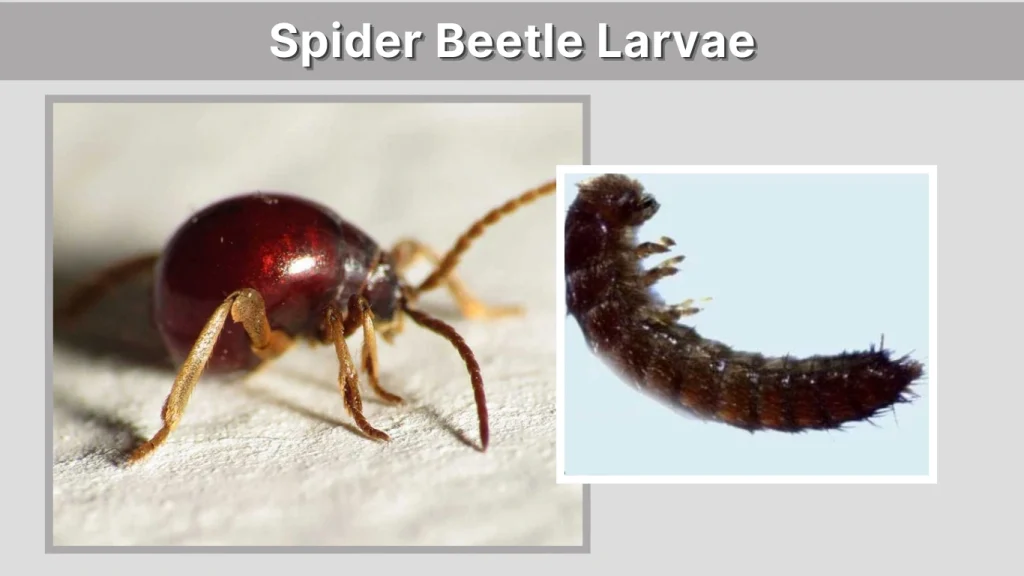
Spider beetle larvae are the immature stage of the insect and are responsible for much of the feeding and damage that occurs during an infestation. Because the larvae are very small and usually hidden inside food products, infestations can go unnoticed for some time.
What Spider Beetle Larvae Look Like
Spider beetle larvae are small, soft-bodied insects that have a cream or pale yellow color. They typically have a slightly curved body and a small brown head.
Some key characteristics of spider beetle larvae include:
- Worm-like body shape
- Tiny brown head capsule
- Fine hairs covering the body
- Curved “C-shaped” appearance
Because of their tiny size, larvae can be difficult to detect without carefully inspecting food products.
Where Larvae Develop
Spider beetle larvae develop in areas where food and organic material are available. These locations allow them to feed and grow until they are ready to transform into adult beetles.
Common places where larvae develop include:
- Inside stored grains and cereals
- Within flour and pasta packages
- In pet food containers
- Inside cracks and crevices of pantry shelves
- In bird nests or rodent nests near homes
Since larvae usually stay hidden inside food or debris, many infestations are discovered only after adult beetles appear.
Damage Caused by Larvae
During the larval stage, spider beetles feed constantly. This feeding activity can cause noticeable damage to stored food products.
Larvae may:
- Consume dry food materials
- Break down grains and cereals
- Leave behind powder-like debris
- Contaminate food with waste and shed skins
Over time, these activities reduce the quality of stored food and make it unsuitable for consumption.
Spider Beetle Life Cycle
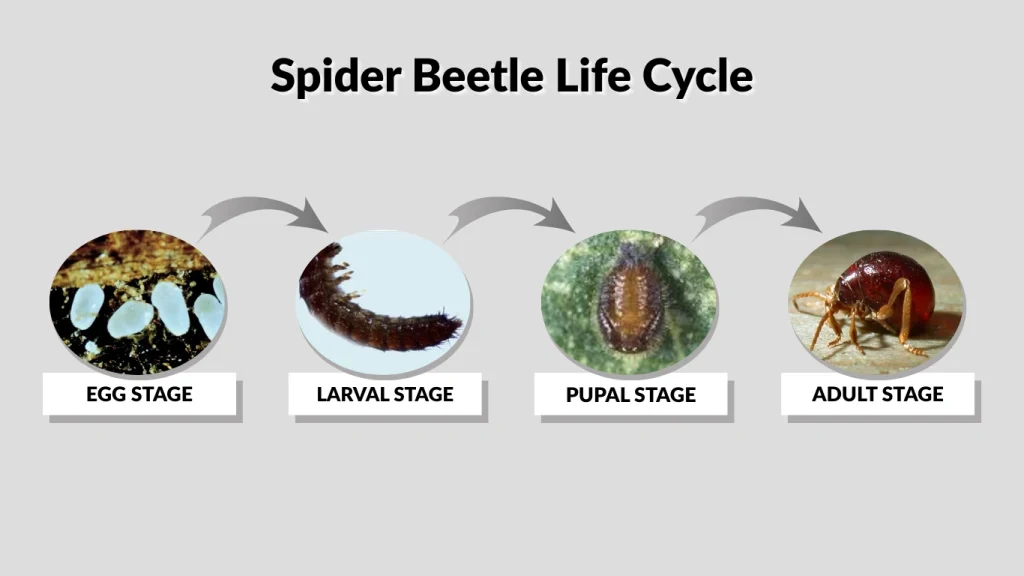
Understanding the spider beetle life cycle can help homeowners control infestations more effectively. Like most beetles, spider beetles go through four stages of development.
The full life cycle usually takes 45 to 150 days, depending on environmental conditions such as temperature, humidity, and food availability.
Egg Stage
The life cycle begins when adult female spider beetles lay eggs near a food source. Eggs are extremely small and often deposited inside food products or in cracks near food storage areas.
Because the eggs are so tiny, they are rarely seen by homeowners.
Within several days, the eggs hatch and release larvae.
Larvae Stage
The larvae stage is the main feeding phase of the spider beetle’s life cycle.
During this period, larvae consume large amounts of food while growing and developing. This stage can last several weeks, depending on the environment.
Warm temperatures and abundant food allow larvae to develop more quickly.
Pupa Stage
After the larvae reach full size, they enter the pupa stage. During this stage, the insect stops feeding and begins transforming into an adult beetle.
The pupa stage typically occurs inside food materials or hidden areas such as cracks, crevices, or debris.
Within a short period, the adult beetle emerges.
Adult Spider Beetle
Adult spider beetles are fully developed insects capable of reproducing and spreading throughout the pantry.
Adult beetles can live for several months and may lay multiple batches of eggs during their lifetime. This ability allows infestations to grow rapidly if they are not controlled.
Spider Beetle Infestation
A spider beetle infestation can develop slowly at first but may spread quickly once the insects begin reproducing. Early detection is important to prevent contamination of large amounts of stored food.
Signs of a Spider Beetle Infestation
There are several warning signs that may indicate spider beetles are present in your home.
Common signs include:
- Small brown beetles crawling in pantry cabinets
- Tiny insects found inside food packages
- Larvae present in stored grains or cereals
- Powdery debris inside food containers
- Damage to food packaging
If you notice these signs, it is important to inspect nearby food items immediately.
How Infestations Start
Most spider beetle infestations begin when contaminated food products are brought into the home. Eggs or larvae may already be present inside packaged food items purchased from stores.
Infestations can also start when beetles enter homes through small openings or cracks.
Other possible sources include:
- Bird nests near homes
- Rodent nests in walls or attics
- Stored organic materials in basements or storage areas
How Spider Beetles Spread
Spider beetles usually spread by crawling between food containers and pantry shelves.
Once they find a reliable food source, they can move to nearby areas and infest additional items.
How to Get Rid of Spider Beetles
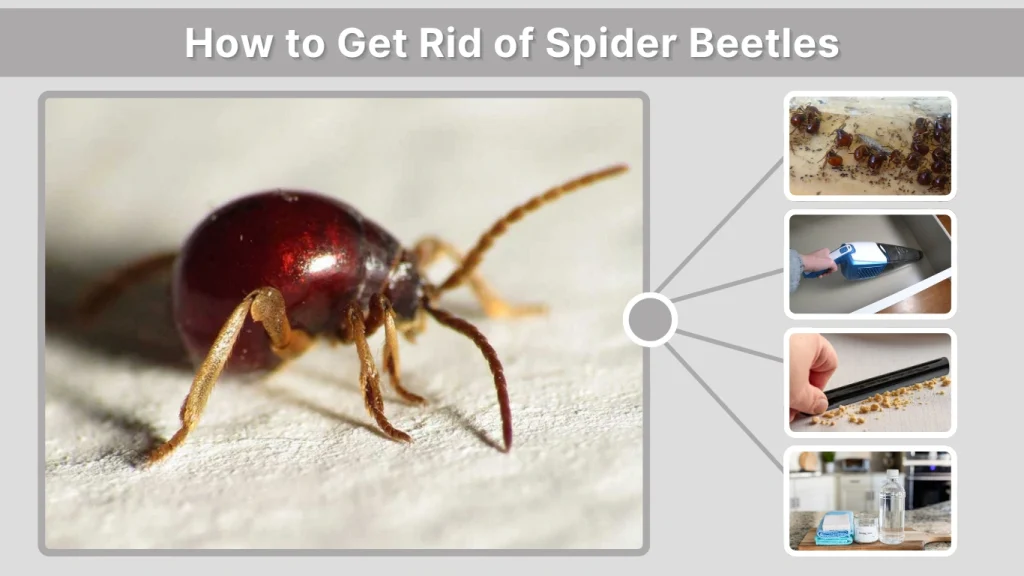
Removing spider beetles requires eliminating food sources and thoroughly cleaning the affected areas.
Remove Infested Food Products
The first step in controlling spider beetles is identifying and removing contaminated food products.
All infested items should be sealed in plastic bags and thrown away immediately to prevent the insects from spreading.
Clean Pantry and Storage Areas
After removing contaminated food, clean the entire pantry thoroughly.
Recommended cleaning steps include:
- Vacuum shelves and corners
- Remove food crumbs and debris
- Wash shelves with warm soapy water
- Clean cracks and cabinet edges
Vacuuming is especially important because beetles and eggs may hide in small spaces.
Seal Cracks and Entry Points
Spider beetles can enter homes through small openings. Sealing cracks around cabinets, walls, and windows can help prevent reinfestation.
Use Natural Control Methods
Some natural pest control options may help reduce spider beetle populations.
These include:
- Applying diatomaceous earth around storage areas
- Using natural insect repellents
- Keeping storage areas dry and clean
Chemical Control Options
In severe infestations, insecticides may be required. However, chemical treatments should be used carefully around food storage areas.
Professional pest control services may be necessary if the infestation becomes difficult to manage.
How to Prevent Spider Beetles
Preventing spider beetles is much easier than eliminating a large infestation.
Store Food in Airtight Containers
Transfer dry foods such as grains, flour, and cereal into airtight containers to prevent insects from entering.
Inspect Groceries Before Storage
Always check food packaging for signs of insects or damage before storing items in the pantry.
Keep Pantry Clean and Dry
Regular cleaning removes crumbs and food particles that may attract pests.
Remove Bird or Rodent Nests Near the Home
Bird and rodent nests can provide breeding sites for spider beetles. Removing these nests can help reduce the risk of infestations.
FAQs
Do spider beetles bite humans?
No, spider beetles do not bite humans. They are harmless pests that feed on stored food products and organic materials.
Are spider beetles harmful?
Spider beetles are not dangerous, but they can contaminate food and cause pantry infestations.
Why do spider beetles look like spiders?
Spider beetles have long legs and a round body, which makes them resemble small spiders when they move.
How long do spider beetles live?
Adult spider beetles can live for several months, depending on environmental conditions and food availability.