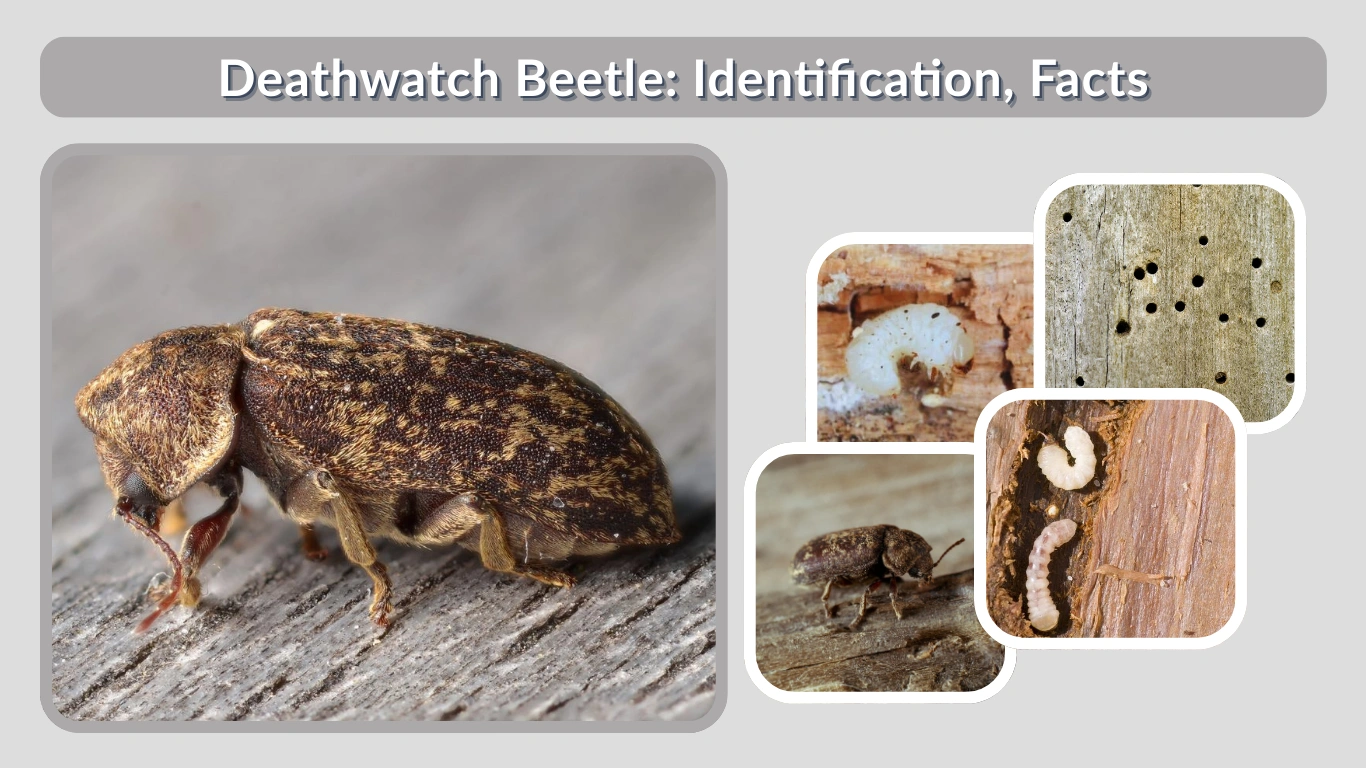
The deathwatch beetle is a wood-boring insect known for damaging timber in old buildings, furniture, and wooden structures. These beetles are especially associated with damp or decaying wood, where their larvae feed and develop for several years. The name “deathwatch beetle” comes from the ticking sound the adults make, which historically was linked to superstitions about impending death. Understanding deathwatch beetle identification, larvae behavior, and important facts can help homeowners recognize and manage potential infestations.
What Is a Deathwatch Beetle?
Deathwatch beetles belong to a group of wood-boring insects that live and develop inside timber. The most commonly known species is Xestobium rufovillosum, which is widely found in Europe and other regions.
These beetles are particularly associated with old wooden structures, such as historic buildings, churches, and antique furniture. While adult beetles are rarely seen, their larvae can live inside wood for many years, slowly feeding on timber and causing structural damage.
Overview of Deathwatch Beetles
Deathwatch beetles are part of the Anobiidae family, a group known for infesting wood. Although they are small insects, they can cause significant damage to wooden materials over time.
Key characteristics include:
- Wood-boring behavior
- Preference for damp or fungus-affected wood
- Long larval development inside timber
- Ability to weaken structural wood
Because their larvae remain hidden inside wood, infestations often go unnoticed until damage becomes severe.
Why It Is Called the Deathwatch Beetle
The unusual name of the deathwatch beetle comes from the ticking or tapping sound the adult insects produce. Male beetles create this noise by tapping their heads or bodies against wood to attract mates.
Historically, this sound was often heard in quiet houses at night, especially in old buildings with wooden beams. People once believed the ticking sound was an omen of death, particularly when someone in the house was ill. As a result, the insect became known as the “deathwatch beetle.”
Today, scientists understand that the sound is simply part of the beetle’s mating communication.
Deathwatch Beetle Identification
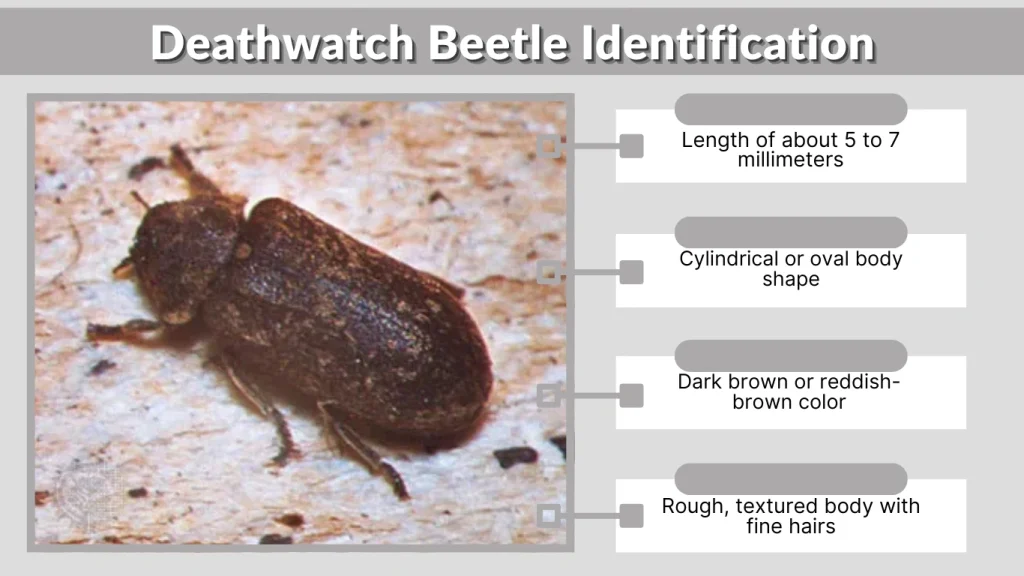
Correct deathwatch beetle identification is important for detecting infestations and preventing serious wood damage.
Physical Characteristics of Adult Beetles
Adult deathwatch beetles are relatively small but have distinctive features that make them identifiable.
Typical characteristics include:
- Length of about 5 to 7 millimeters
- Cylindrical or oval body shape
- Dark brown or reddish-brown color
- Rough, textured body with fine hairs
- Hard wing covers protecting the abdomen
Although adults have wings, they rarely fly long distances and usually stay close to the wood where they developed.
Signs of Deathwatch Beetle Infestation
In many cases, the beetles themselves are not seen. Instead, infestations are identified by signs of activity in wood.
Common indicators include:
- Small round exit holes in wood surfaces
- Fine wood powder or dust (called frass) around holes
- Weak or crumbling wooden structures
- Occasional ticking sounds coming from timber
These signs often appear in structural beams, wooden floors, furniture, or roof timbers.
How to Identify Deathwatch Beetles in Your Home
To detect a possible infestation, homeowners should inspect wooden structures carefully. Areas most vulnerable to deathwatch beetles include:
- Damp wooden beams
- Old wooden floors
- Antique furniture
- Roof timbers in older buildings
Because these beetles prefer wood affected by fungal decay, infestations are more common in places where moisture problems exist.
Regular inspections can help identify infestations early before severe damage occurs.
Deathwatch Beetle Larvae
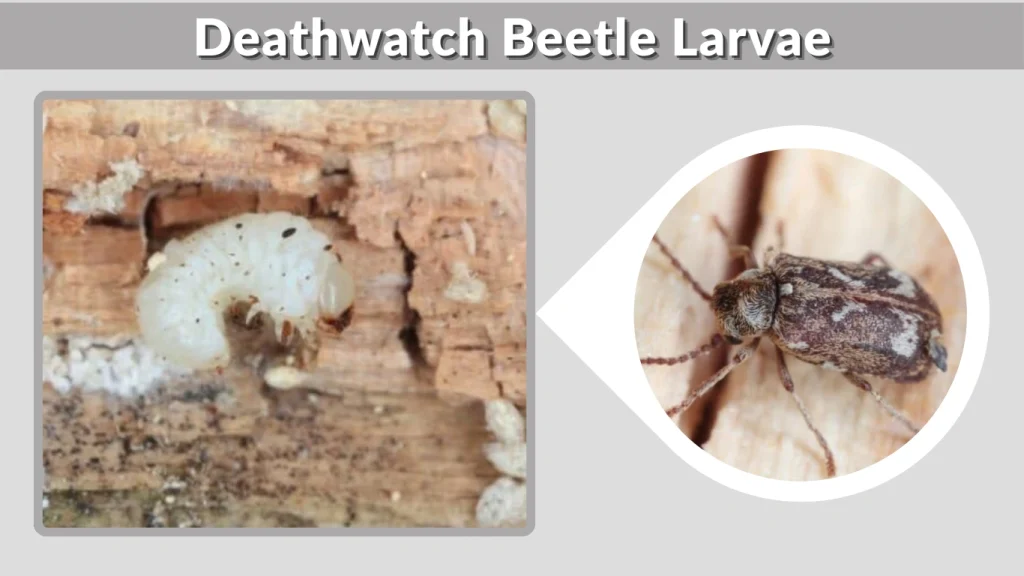
The deathwatch beetle larvae are responsible for most of the damage associated with these insects. While adult beetles live only a short time, the larvae spend several years feeding inside wood.
Appearance of Deathwatch Beetle Larvae
Deathwatch beetle larvae look very different from adult beetles. They resemble small grubs and are rarely seen outside the wood they inhabit.
Typical features include:
- Cream-colored or pale white body
- Curved, C-shaped form
- Small head with strong chewing jaws
- Soft segmented body
The larvae use their powerful mandibles to chew through wood fibers as they feed.
Habitat of the Larvae
Larvae live deep inside wooden structures, where they are protected from predators and environmental conditions.
They are commonly found in:
- Damp structural timber
- Wooden beams in old buildings
- Antique furniture
- Wood affected by fungal decay
Moisture plays a key role in their survival because fungi soften the wood, making it easier for larvae to feed.
Damage Caused by Larvae
The larval stage is the most destructive phase of the deathwatch beetle’s life cycle. As the larvae tunnel through wood, they create complex networks of passages.
This feeding behavior can lead to:
- Weakening of structural timber
- Hollowing of wooden beams
- Damage to furniture and wooden artifacts
- Long-term deterioration of wood
Because the larvae remain hidden inside the wood, the damage may continue for years before it becomes visible.
Life Cycle of the Deathwatch Beetle
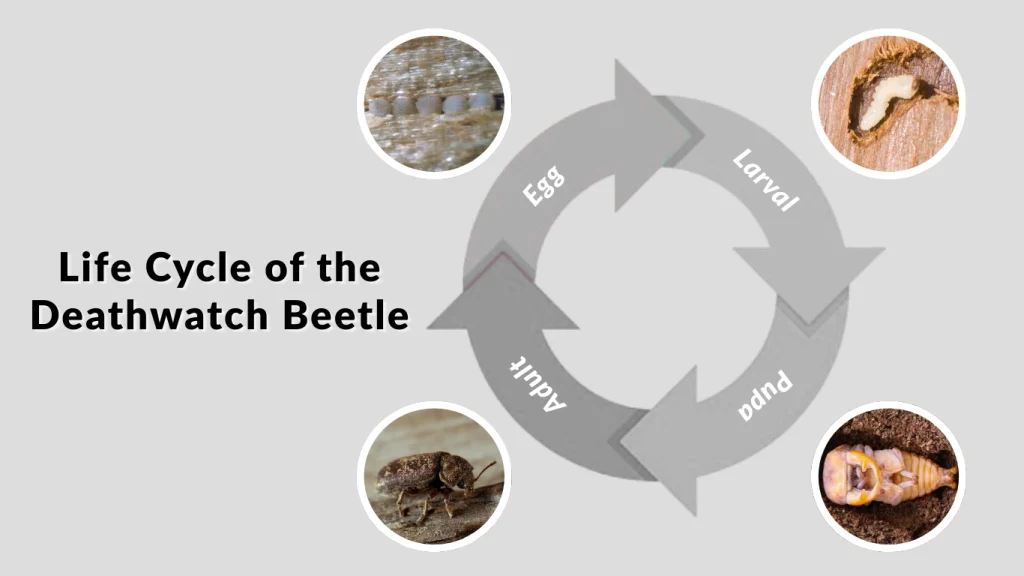
The deathwatch beetle life cycle consists of four main stages: egg, larva, pupa, and adult. Among these stages, the larval phase lasts the longest and causes the most damage to wooden structures.
Egg Stage
Female deathwatch beetles lay their eggs in cracks, crevices, or pores of wooden surfaces. These areas provide protection and easy access to wood for the larvae once they hatch.
Key facts about the egg stage include:
- Eggs are extremely small and difficult to see
- They are usually laid in damp or fungus-infected wood
- Eggs hatch within 2–5 weeks, depending on environmental conditions
Once the eggs hatch, the larvae immediately begin feeding on the wood.
Larval Stage
The larval stage is the longest phase of the deathwatch beetle’s life cycle and can last 3 to 10 years in some cases.
During this time, the larvae:
- Bore tunnels through wood
- Feed on wood fibers
- Grow gradually inside the timber
Because the larvae remain hidden inside wood for years, infestations can develop unnoticed until serious structural damage occurs.
Pupal Stage
When the larva reaches full size, it forms a small chamber inside the wood where it transforms into a pupa.
During this stage:
- The insect undergoes major physical changes
- Wings and adult body structures develop
- The transformation may take several weeks
After the pupal stage is complete, the adult beetle emerges from the wood.
Adult Beetle Stage
Adult deathwatch beetles typically emerge from wood during spring or early summer.
At this stage:
- Adults leave the wood through small exit holes
- Their main purpose is to reproduce
- Adult beetles usually live only a few weeks
After mating, females lay eggs in nearby wood, continuing the cycle.
Deathwatch Beetle Facts
There are several interesting deathwatch beetle facts that explain why these insects are both fascinating and problematic.
Interesting Facts About Deathwatch Beetles
Some notable facts include:
- Deathwatch beetles are known for producing a ticking sound by tapping their heads against wood.
- The larvae can live inside wood for many years before emerging as adults.
- They are often associated with old historic buildings and churches.
- Their activity is most common in damp or decaying wood.
These insects are rarely seen because they spend most of their lives hidden inside timber.
Where Deathwatch Beetles Are Commonly Found
Deathwatch beetles are commonly found in regions with moderate climates, especially where older wooden structures exist.
They are frequently found in:
- Europe
- North America
- Historic buildings and castles
- Antique wooden furniture
Buildings with poor ventilation and high moisture levels are more vulnerable to infestation.
Why They Prefer Old Wood
Deathwatch beetles tend to prefer older wood affected by fungal decay. Fungi soften the wood fibers, making it easier for larvae to tunnel and feed.
Factors that attract deathwatch beetles include:
- High moisture levels in timber
- Presence of wood-decay fungi
- Poor ventilation in buildings
- Aging wooden structures
Because of these conditions, infestations are especially common in old houses and historic buildings.
Damage Caused by Deathwatch Beetles
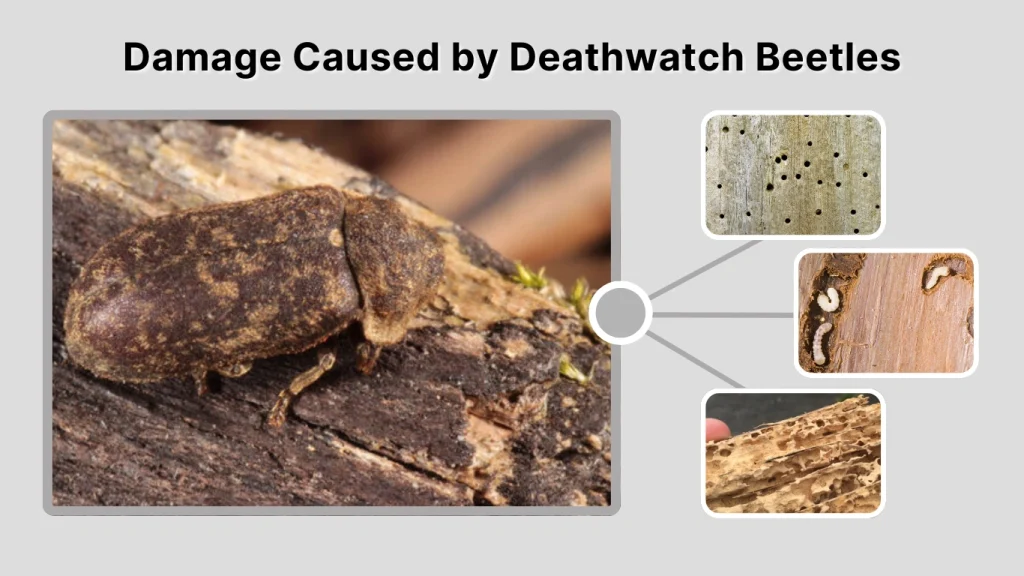
Although the adult beetles themselves cause little damage, their larvae can seriously affect wooden structures over time.
Structural Damage to Buildings
In buildings, deathwatch beetle larvae can weaken support beams, floorboards, and roof timbers.
Potential structural problems include:
- Reduced strength of wooden beams
- Crumbling timber structures
- Risk of structural instability
In severe infestations, important structural components of buildings may require replacement.
Damage to Furniture and Wooden Objects
Deathwatch beetles can also infest antique furniture, wooden sculptures, and decorative wood items.
Signs of furniture damage may include:
- Small round holes in the surface
- Powdery wood dust around holes
- Weak or hollow wooden sections
Because the damage occurs inside the wood, it may not be noticed until the object becomes fragile.
Economic Impact
Repairing damage caused by deathwatch beetles can be costly. Restoration work in historic buildings often requires specialized conservation techniques.
Costs may include:
- Structural repairs
- Pest control treatments
- Restoration of antique furniture
Early detection can help reduce these expenses.
How to Prevent Deathwatch Beetle Infestation
Preventing deathwatch beetle infestations focuses mainly on controlling moisture and protecting wooden structures.
Controlling Moisture in Wood
Because these beetles prefer damp wood, reducing moisture is one of the most effective prevention methods.
Helpful steps include:
- Improving building ventilation
- Fixing roof leaks and plumbing issues
- Keeping wooden structures dry
- Reducing humidity levels indoors
Dry timber is far less attractive to deathwatch beetles.
Wood Treatment Methods
Treating wood with protective products can help prevent infestation.
Common treatment methods include:
- Applying chemical wood preservatives
- Using insecticidal wood treatments
- Treating timber during construction or renovation
These treatments protect wood from insect attack.
Inspection and Maintenance
Regular inspections are important, especially in older buildings.
Recommended practices include:
- Checking wooden beams and floors periodically
- Looking for exit holes and wood dust
- Addressing moisture problems quickly
Early detection makes infestations easier to control.
Conclusion
The deathwatch beetle is a wood-boring insect known for its ability to damage timber in buildings and furniture. Although the adult beetles live only a short time, their larvae can remain hidden inside wood for several years while feeding and tunneling through timber.
Understanding deathwatch beetle identification, larvae behavior, and key facts about their life cycle can help homeowners detect infestations early. By controlling moisture, inspecting wooden structures, and applying protective treatments, it is possible to reduce the risk of damage and protect wooden buildings and furniture from these destructive insects.