
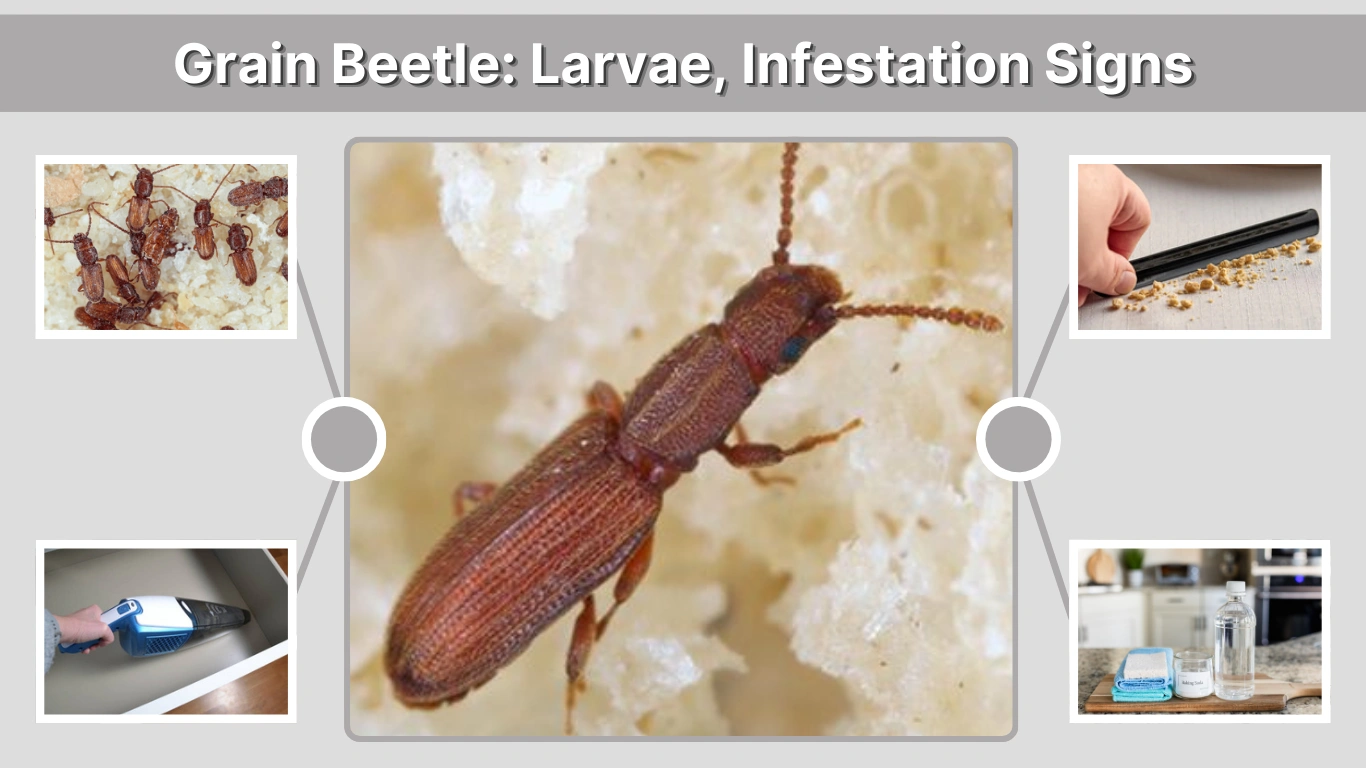
Grain beetles are tiny pantry pests that commonly infest stored grains and dry food products. These insects often appear in kitchens, pantries, and food storage areas where items like rice, flour, pasta, and cereals are kept. Although grain beetles do not bite humans, they can contaminate food and spread quickly if left untreated. Understanding grain beetle identification, their larvae, life cycle, and infestation signs can help you eliminate them effectively and protect your stored food.
What is a Grain Beetle?
A grain beetle is a small insect that feeds on stored grain products and other dry food items. These pests are commonly found in homes, food warehouses, grocery stores, and grain storage facilities. Because of their tiny size, they can easily enter packaged foods and multiply quickly in warm environments.
Grain beetles are considered one of the most common pantry pests worldwide. Once they infest a food product, they can spread to nearby containers and cause widespread contamination in kitchens and storage areas.
Grain Beetle Definition
Grain beetles belong to a group of small insects that infest stored food products such as grains, flour, cereals, and dried foods. These pests typically measure between 2 to 3 millimeters long and are brown or reddish-brown in color.
Despite their small size, grain beetles can cause significant damage by feeding on stored food and laying eggs inside food products.
Common Types of Grain Beetles
Several species of beetles are commonly referred to as grain beetles. The most frequent ones include:
Sawtoothed Grain Beetle
This species is named after the saw-like projections on the sides of its thorax. It is one of the most common pantry pests and often infests cereal, flour, and dried fruits.
Merchant Grain Beetle
Very similar to the sawtoothed grain beetle, this insect can fly and spread quickly through food storage areas.
Red Flour Beetle
A common pest found in flour mills, kitchens, and grain warehouses. It thrives in flour, pasta, and processed grain products.
Lesser Grain Borer
This beetle is more destructive because it can bore directly into whole grain kernels and develop inside them.
Where Grain Beetles Are Commonly Found
Grain beetles can appear anywhere food is stored. In homes, they are most commonly found in:
- Kitchen pantries
- Food storage cabinets
- Bags of rice or flour
- Cereal boxes
- Pet food containers
Outside the home, grain beetles are frequently found in grain storage facilities, warehouses, grocery stores, and food processing plants.
Grain Beetles in the House
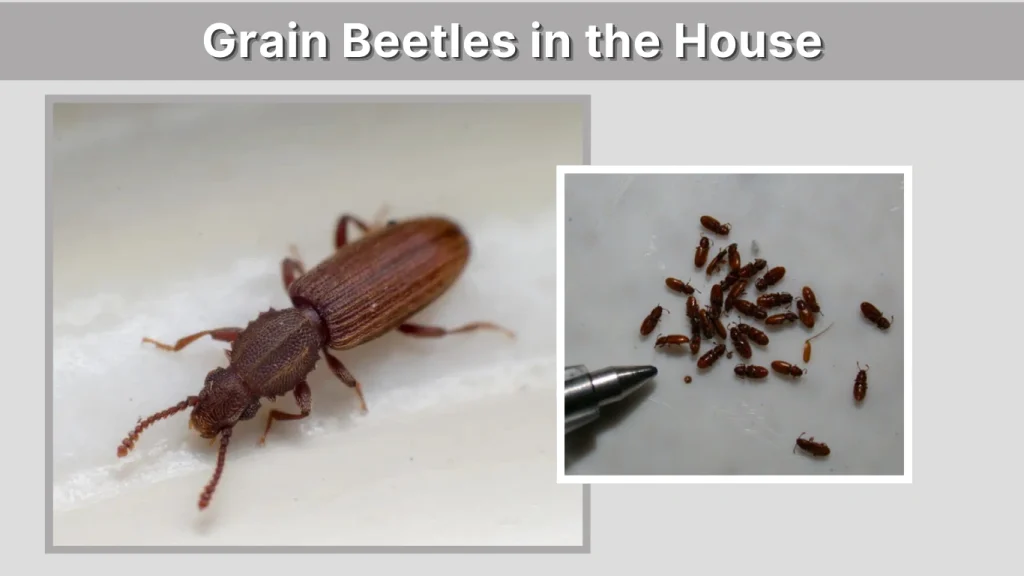
Finding grain beetles in your home can be frustrating, especially when they begin spreading across pantry shelves and food containers. Most household infestations start when contaminated food products are brought home from the grocery store.
Why Grain Beetles Appear in Homes
Grain beetles usually enter homes through infested packaged foods. Many grain products become contaminated during processing, packaging, or storage before they reach the store.
Once inside the home, warm temperatures and readily available food allow these pests to reproduce quickly.
Common reasons grain beetles appear in homes include:
- Buying already infested grain products
- Storing food in open or poorly sealed containers
- Leaving food items in the pantry for long periods
- Warm kitchen temperatures that support breeding
Foods Most Commonly Infested
Grain beetles are attracted to many dry food products. Some of the most commonly infested items include:
- Rice
- Flour
- Pasta
- Breakfast cereals
- Cornmeal
- Oats
- Pet food
- Dried fruits
- Nuts and seeds
Because these foods are stored for long periods, they provide an ideal environment for beetles to reproduce.
Are Grain Beetles Harmful?
Grain beetles are not dangerous to humans, and they do not bite or sting. However, they can contaminate food by leaving behind waste, shed skins, and eggs.
Eating food that contains grain beetles is generally not harmful, but most people prefer to discard infested products because of contamination and unpleasant taste.
In large infestations, these pests can also cause significant food waste and economic loss.
Grain Beetle Larvae
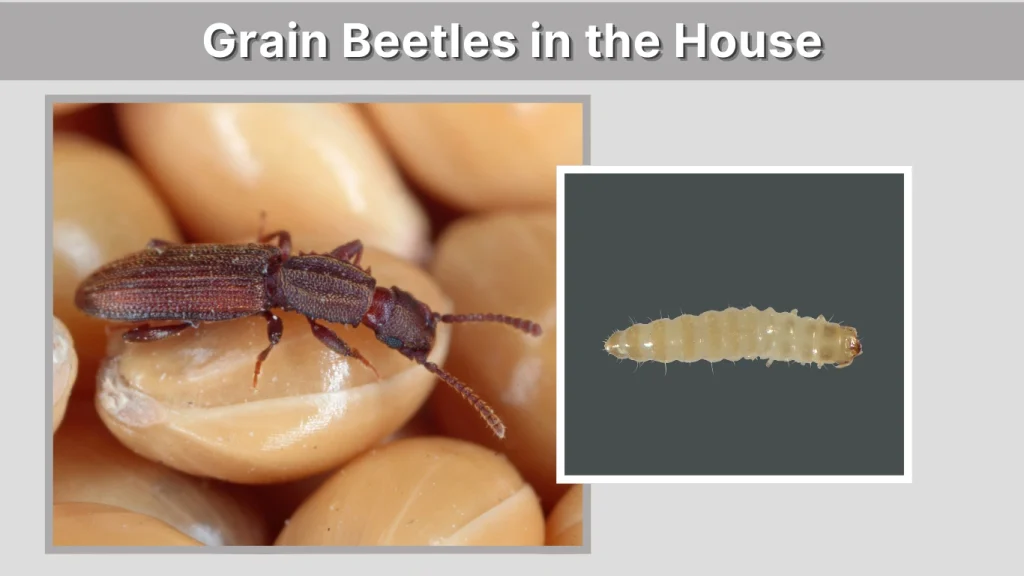
Grain beetle larvae are the immature stage of the insect and are responsible for much of the damage to stored food.
What Grain Beetle Larvae Look Like
Grain beetle larvae are small, worm-like insects that are usually cream-colored or pale yellow with a tiny brown head. They are extremely small and can be difficult to notice without close inspection.
Larvae often hide inside food products, which allows them to develop without being easily detected.
Where Larvae Develop
Larvae typically develop in places where food is abundant. Common locations include:
- Inside grain kernels
- Within flour or cereal packages
- In cracks and corners of pantry shelves
- Inside pet food containers
Because larvae remain hidden inside food, infestations often go unnoticed until adult beetles appear.
How Larvae Damage Food
Grain beetle larvae feed directly on stored food products. During this stage they:
- Consume grain particles
- Break down food into powder
- Leave behind waste material
- Contaminate food with shed skins
This feeding process reduces food quality and can make products unsuitable for consumption.
Grain Beetle Life Cycle
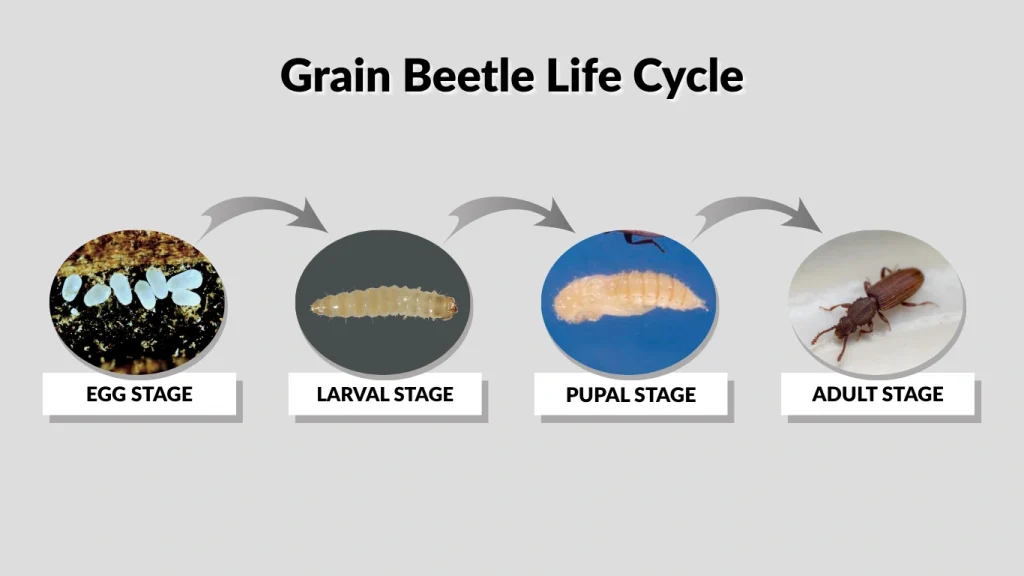
Understanding the grain beetle life cycle is important for controlling infestations. These insects reproduce quickly, especially in warm environments where food is easily available. A complete life cycle typically takes 30 to 90 days, depending on temperature, humidity, and food supply.
Egg Stage
The life cycle begins when female grain beetles lay eggs directly inside food products. A single female can lay dozens of eggs at a time, often placing them in cracks within grains, flour, or cereal packages.
The eggs are extremely small and difficult to see with the naked eye. Within a few days, the eggs hatch into larvae that immediately begin feeding on nearby food sources.
Larvae Stage
The larvae stage is the most destructive part of the grain beetle life cycle. During this phase, the larvae feed constantly and grow rapidly.
Larvae consume grains, flour, and other stored food products. As they eat, they leave behind powdery debris and waste material that contaminates the food.
This stage usually lasts two to three weeks, depending on environmental conditions.
Pupa Stage
After the larvae finish feeding and reach full size, they enter the pupa stage. During this stage, the insect stops feeding and begins transforming into an adult beetle.
The pupa stage typically occurs inside food materials or in hidden areas of the pantry. Within several days, the fully developed adult beetle emerges.
Adult Grain Beetle
Adult grain beetles are small, flat insects that can easily crawl into food containers and packaging. Once they emerge, they begin searching for food and mates.
Adult beetles can live for several months and reproduce multiple times, which allows infestations to grow quickly if they are not controlled.
Grain Beetle Infestation
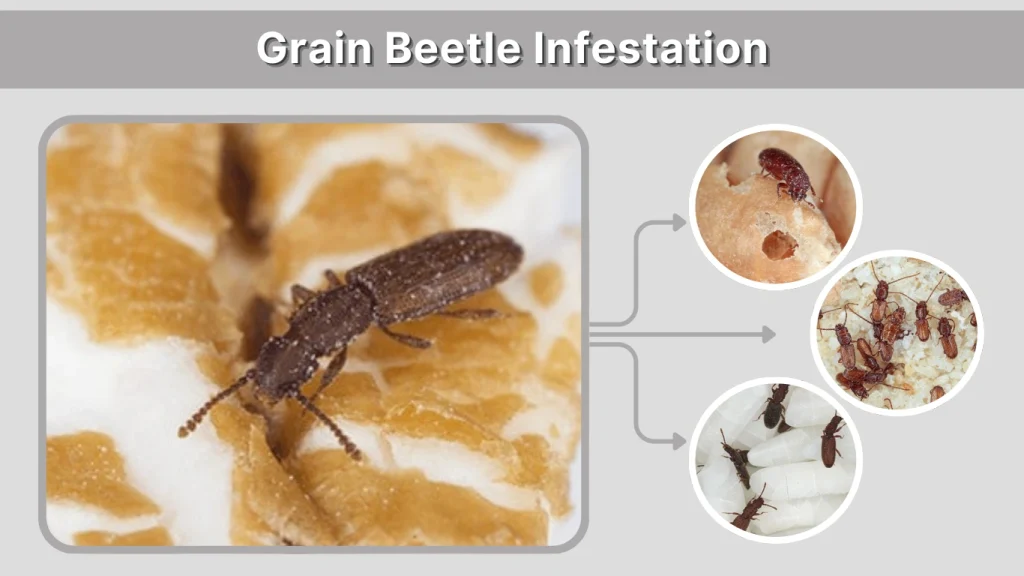
A grain beetle infestation can develop quickly if contaminated food products are left untreated. These pests often spread from one container to another, infesting multiple items in a pantry.
Signs of Grain Beetle Infestation
There are several warning signs that indicate grain beetles may be present in your home.
Common signs include:
- Small brown beetles crawling inside food packages
- Tiny insects moving on pantry shelves
- Powdery residue inside food containers
- Small holes in grain kernels
- Presence of larvae inside dry foods
If you notice any of these signs, it is important to inspect all nearby food products.
How Infestations Start
Most grain beetle infestations begin when infested food products are purchased from a store. Eggs or larvae may already be present inside packaged grains, flour, or cereals.
Once the product is stored in a pantry, the insects continue developing and eventually spread to other nearby foods.
Poor pantry hygiene can also contribute to infestations, especially when food spills or crumbs are left in cabinets.
How Fast Grain Beetles Multiply
Grain beetles reproduce rapidly under favorable conditions. Warm temperatures and abundant food sources allow populations to grow quickly.
In a short time, a few beetles can turn into hundreds of insects, which can contaminate large amounts of stored food.
How to Get Rid of Grain Beetles
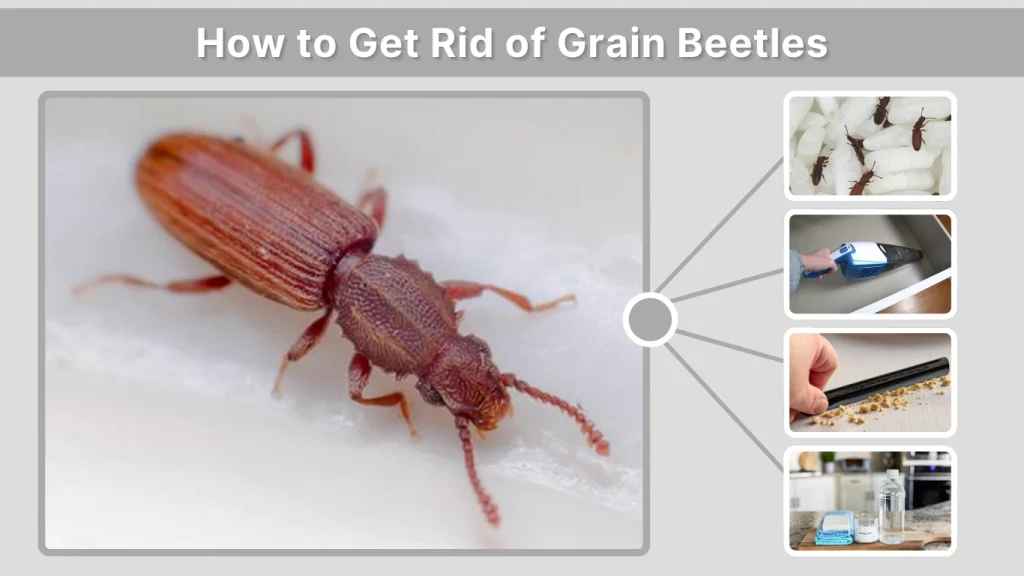
Eliminating grain beetles requires removing contaminated food and thoroughly cleaning the pantry. Acting quickly can prevent the infestation from spreading.
Identify and Remove Infested Foods
The first step is to inspect all grain-based products in the pantry. Any food that shows signs of beetles, larvae, or contamination should be sealed and discarded immediately.
Place infested food in a sealed bag before throwing it away to prevent the insects from spreading.
Deep Clean the Pantry
After removing contaminated items, thoroughly clean the pantry.
Steps include:
- Vacuum pantry shelves and corners
- Remove crumbs and food debris
- Wash shelves with warm soapy water or vinegar solution
- Clean cracks, corners, and cabinet edges
Vacuuming is particularly important because beetles and eggs may hide in tiny spaces.
Use Freezing or Heat Treatment
If you suspect certain food items might contain beetle eggs, you can kill them by exposing the food to extreme temperatures.
Common methods include:
- Freezing grains for at least 72 hours
- Heating grains in the oven at low temperatures
These treatments kill eggs and larvae before they can develop.
Natural Remedies
Some natural solutions can help deter grain beetles.
Popular methods include:
- Placing bay leaves inside pantry shelves
- Using diatomaceous earth around storage areas
- Applying certain essential oils that repel insects
These remedies may help reduce the chances of reinfestation.
Chemical Control Options
In severe infestations, insecticides may be required. However, chemical treatments should be used carefully, especially in areas where food is stored.
Professional pest control services may be necessary if the infestation continues despite cleaning and food removal.
How to Prevent Grain Beetles
Preventing grain beetles is easier than eliminating a large infestation. Proper food storage and regular pantry maintenance can greatly reduce the risk.
Store Food in Airtight Containers
Transfer grains, flour, cereal, and other dry foods into airtight glass or plastic containers. This prevents beetles from entering or spreading between foods.
Inspect Groceries Before Storage
Check packaged foods carefully before storing them in the pantry. If you notice small insects or damaged packaging, discard the item immediately.
Maintain Pantry Cleanliness
Keep pantry shelves clean and free of crumbs. Regular cleaning helps remove food sources that attract pests.
Use First-In, First-Out Storage
Avoid storing dry foods for long periods. Use older products first and rotate pantry items regularly.
FAQs
Can grain beetles fly?
Some species of grain beetles can fly, while others cannot. Flying species may spread more easily between food storage areas.
Can grain beetles bite humans?
No, grain beetles do not bite humans. They are pantry pests that feed only on stored food products.
Do grain beetles spread diseases?
Grain beetles are not known to spread diseases. However, they can contaminate food and make it unsuitable for consumption.
How do grain beetles enter sealed packages?
Grain beetles often enter food products before packaging during processing or storage. Eggs or larvae may already be present when the product is purchased.
