
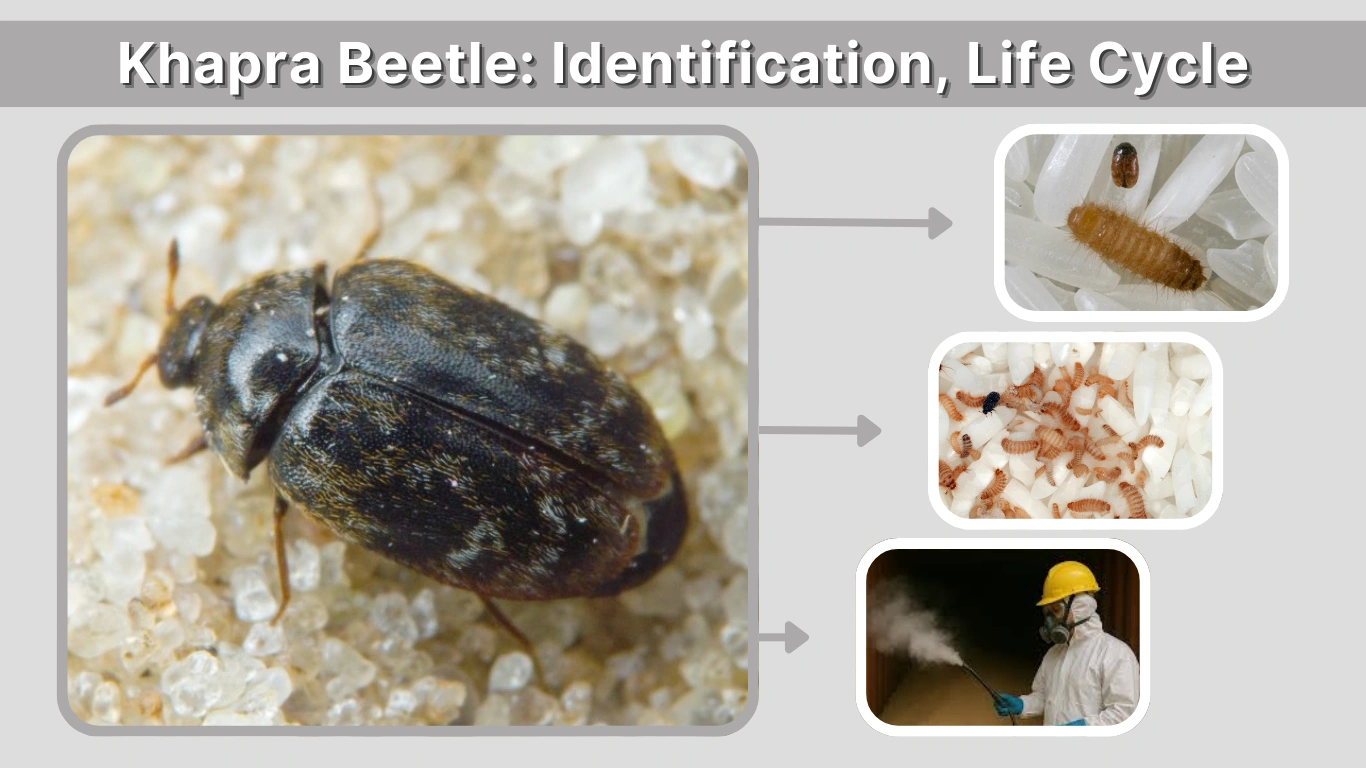
Stored grain pests can cause serious damage to food supplies and agricultural storage systems. One of the most destructive among them is the khapra beetle. Known for its ability to survive harsh conditions and rapidly infest stored products, this pest is considered a major threat to grain storage worldwide. Understanding khapra beetle identification, larvae, life cycle, and treatment methods is essential for preventing infestations and protecting stored grains from contamination and loss.
What is a Khapra Beetle?
The khapra beetle (Trogoderma granarium) is a highly destructive pest that attacks stored grains and food products. It belongs to the Dermestidae family, which includes several species known for feeding on dried plant and animal materials.
Originally native to South Asia, the khapra beetle has spread to many parts of the world through international trade and grain transport. Due to its severe impact on stored food supplies, many countries consider it a quarantine pest, meaning strict regulations are in place to prevent its spread.
Khapra beetles commonly infest:
- Wheat
- Rice
- Barley
- Maize
- Sorghum
- Pulses
- Oilseeds
- Processed grain products
Unlike many other grain pests, the larval stage causes the most damage, feeding aggressively on stored grains and contaminating them with shed skins and hairs.
Khapra Beetle Identification
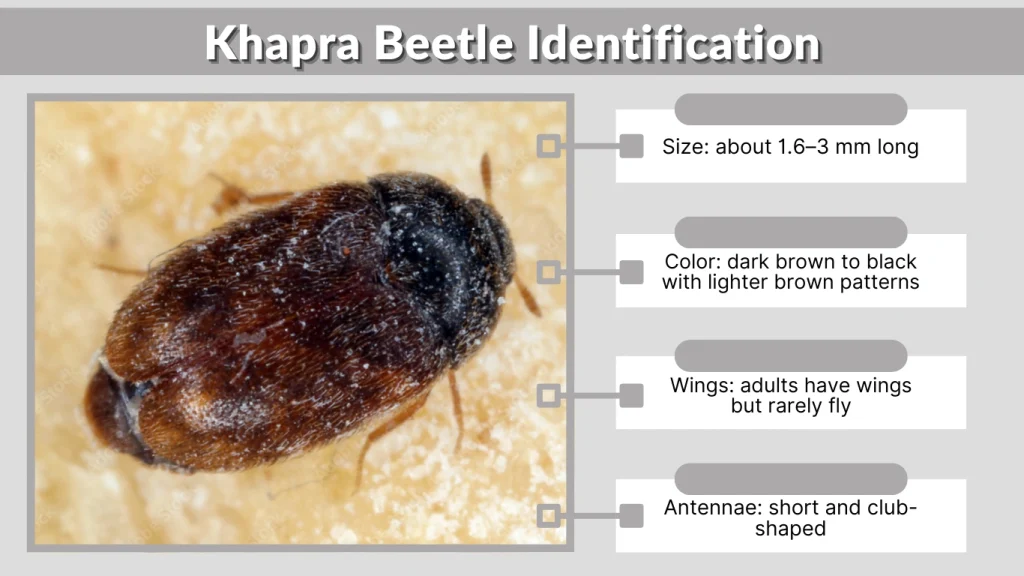
Proper khapra beetle identification is crucial for early detection and control. Both adult beetles and larvae have distinctive features that help differentiate them from other stored grain pests.
Physical Characteristics of Adult Khapra Beetles
Adult khapra beetles are small insects with the following characteristics:
- Size: about 1.6–3 mm long
- Shape: oval-shaped body
- Color: dark brown to black with lighter brown patterns
- Wings: adults have wings but rarely fly
- Antennae: short and club-shaped
Adult beetles are relatively short-lived and do not cause as much damage as larvae. Their main role is reproduction.
Khapra Beetle Larvae Identification
The khapra beetle larvae are responsible for most of the damage in stored grains.
Key characteristics include:
- Length: up to 5 mm when fully grown
- Color: yellowish-brown to reddish-brown
- Body: covered with dense hairs
- Tail: distinctive tufts of long hairs at the end of the body
These hairs can contaminate food products and even cause allergic reactions in some individuals.
Larvae are highly resistant and can survive long periods without food, making them extremely difficult to control.
Signs of Khapra Beetle Infestation
Detecting an infestation early can help prevent major grain losses. Some common signs include:
- Presence of hairy larvae in stored grains
- Shed larval skins in grain storage areas
- Fine powder or dust from damaged grains
- Clusters of larvae hiding in cracks, crevices, and packaging materials
- Contaminated grain with hairs and insect remains
Warehouses and grain storage facilities are particularly vulnerable if proper sanitation and inspection are not maintained.
Khapra Beetle Life Cycle
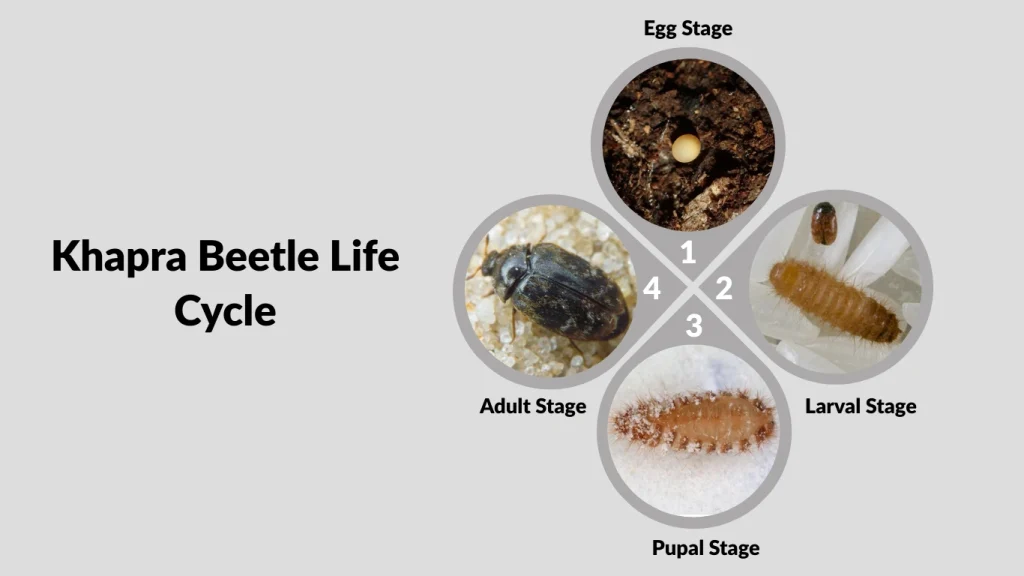
Understanding the khapra beetle life cycle helps in developing effective control strategies. The beetle undergoes complete metamorphosis, which includes four stages:
- Egg
- Larva
- Pupa
- Adult
Environmental conditions such as temperature and humidity significantly affect the duration of each stage.
Egg Stage
Female khapra beetles lay eggs directly on stored grains or in hidden areas within storage facilities.
Important characteristics of this stage include:
- Eggs are small, white, and cylindrical
- A female may lay 50–90 eggs during her lifetime
- Eggs usually hatch within 3–7 days under favorable conditions
After hatching, the larvae immediately begin feeding on nearby food sources.
Larval Stage
The larval stage is the longest and most destructive stage of the khapra beetle life cycle.
During this stage:
- Larvae actively feed on stored grains and food products
- They produce large amounts of shed skins and hairs
- These contaminants reduce grain quality and market value
Under favorable conditions, the larval stage may last 4–6 weeks. However, when food is scarce or environmental conditions are unfavorable, larvae can enter a dormant state known as diapause, allowing them to survive for months or even years.
This ability to remain dormant makes khapra beetles extremely difficult to eliminate once they establish an infestation.
Pupal Stage
When larvae complete their growth, they transform into the pupal stage.
Key features of the pupal stage:
- Occurs within shed larval skins or protected spaces
- Usually lasts 4–6 days
- The insect does not feed during this stage
After pupation, the adult beetle emerges and begins the next generation.
Adult Stage
Adult khapra beetles have a relatively short lifespan.
Characteristics of the adult stage include:
- Adults live for about 1–3 weeks
- They focus mainly on reproduction
- Adults may not feed extensively compared to larvae
Females begin laying eggs soon after mating, continuing the infestation cycle.
Complete Life Cycle Duration
The entire khapra beetle life cycle can be completed in about 4–8 weeks under favorable environmental conditions.
However, several factors influence development speed, including:
- Temperature
- Humidity
- Food availability
Warm and dry environments are ideal for khapra beetle development, which is why infestations often occur in grain storage warehouses and silos.
Damage Caused by Khapra Beetles
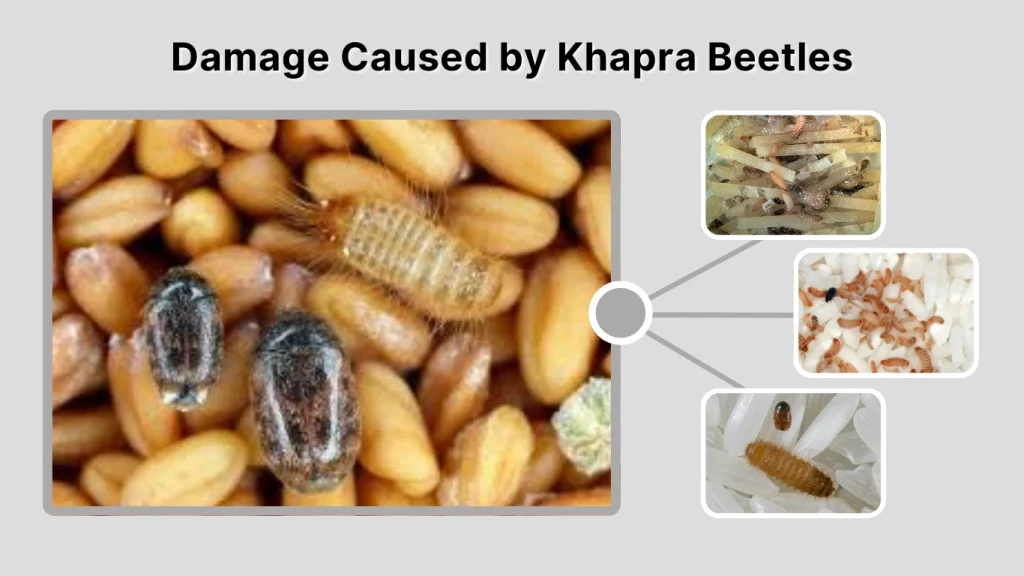
The khapra beetle is considered one of the most destructive pests of stored grains because it can cause severe economic losses and contaminate food supplies. The damage is mainly caused by the larvae, which feed aggressively on grains and grain products.
Some of the major types of damage include:
Grain Loss and Weight Reduction
Khapra beetle larvae feed on the germ portion of grains, which reduces the nutritional value and weight of the stored product. Heavy infestations can lead to significant grain losses in storage facilities.
Grain Contamination
Larvae leave behind shed skins, hairs, and fecal matter, which contaminate the grain. This contamination reduces the quality of the product and may make it unsuitable for human consumption.
Reduced Market Value
Infested grains often lose their commercial value because buyers reject contaminated products. In international trade, the presence of khapra beetles may lead to shipment rejection and quarantine restrictions.
Damage to Stored Products
In addition to whole grains, khapra beetles can infest several stored food products, including:
- Flour
- Cereal products
- Animal feed
- Dried fruits
- Oilseeds
Severe infestations can spread quickly throughout storage facilities if proper pest control measures are not taken.
Khapra Beetle Treatment and Control Methods
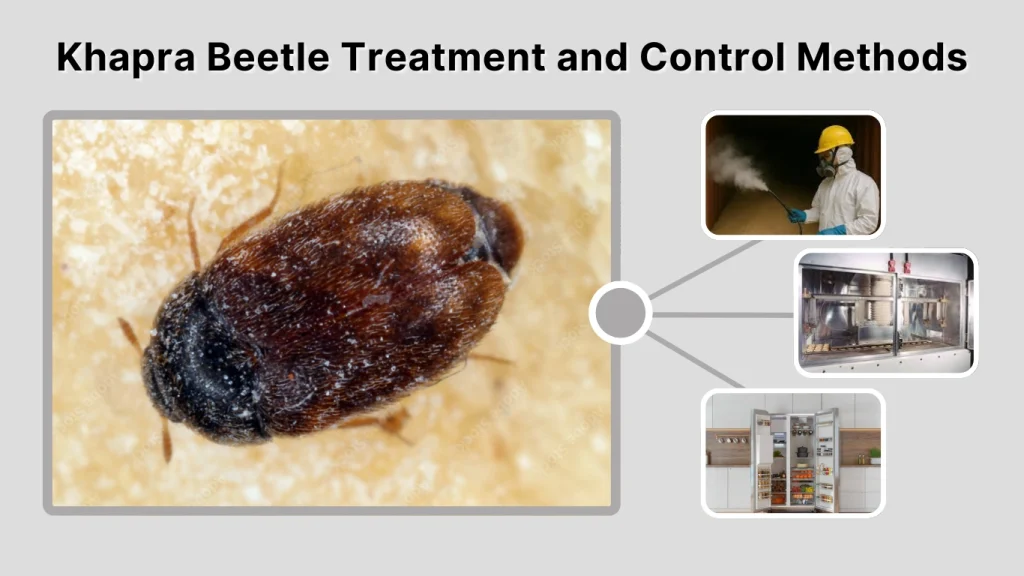
Controlling khapra beetles can be challenging because the larvae are highly resistant and can survive for long periods without food. Effective control usually requires a combination of chemical and non-chemical methods.
Chemical Control Methods
Chemical control is commonly used in large storage facilities and warehouses.
Fumigation
Fumigation is one of the most effective treatments for khapra beetle infestations. It involves using fumigant gases to kill insects in stored grains.
Common fumigants include:
- Phosphine fumigation
- Methyl bromide (restricted in many countries)
Fumigation should only be performed by trained professionals to ensure safety and effectiveness.
Insecticides
Certain approved insecticides can also be applied to storage structures to control khapra beetles. These chemicals help eliminate insects hiding in cracks, walls, and storage containers.
Non-Chemical Control Methods
Non-chemical methods are often used alongside chemical treatments to reduce infestation risks.
Heat Treatment
Khapra beetles cannot survive high temperatures. Exposing infested grains or storage areas to temperatures above 50°C (122°F) for several hours can kill all life stages of the pest.
Cold Treatment
Freezing grains at very low temperatures can also kill larvae and eggs. This method is often used in smaller storage environments.
Sanitation and Cleaning
Proper sanitation is critical for controlling khapra beetles. Storage areas should be regularly cleaned to remove spilled grain, dust, and insect debris that may attract pests.
Integrated Pest Management (IPM)
Many experts recommend Integrated Pest Management (IPM) as the most effective long-term solution for khapra beetle control.
IPM strategies include:
- Regular inspection of stored grains
- Monitoring insect populations using traps
- Maintaining proper storage conditions
- Combining chemical and non-chemical treatments
This approach helps reduce pest populations while minimizing chemical use.
How to Prevent Khapra Beetle Infestation
Prevention is the most effective way to protect stored grains from khapra beetle infestations.
Proper Grain Storage
Grains should be stored in clean, dry, and well-sealed containers or silos. Moisture levels should be carefully controlled to reduce the risk of pest development.
Warehouse Hygiene
Storage facilities should maintain strict hygiene practices, including:
- Regular cleaning of floors and walls
- Removing leftover grains and debris
- Sealing cracks and crevices where insects may hide
Regular Inspection
Routine inspection of grain storage areas helps detect infestations early. Early detection allows for quick control measures before the pest spreads.
Khapra Beetle vs Similar Grain Pests
Several stored grain pests look similar to khapra beetles, which can make identification difficult.
Khapra Beetle vs Rice Weevil
The rice weevil has a long snout and actively feeds inside grains. In contrast, khapra beetle larvae feed externally on grain surfaces.
Khapra Beetle vs Lesser Grain Borer
The lesser grain borer is cylindrical and bores into grains, while khapra beetle larvae are hairy and remain outside the grain kernels.
Correct identification is important for selecting the most effective pest control method.
FAQs
Why is the khapra beetle considered a dangerous pest?
Khapra beetles are dangerous because they can rapidly infest stored grains, cause significant food losses, and contaminate products with hairs and shed skins.
How do you identify khapra beetle larvae?
Khapra beetle larvae are small, hairy insects with yellowish-brown bodies and distinctive tail tufts of long hairs.
What is the fastest way to control khapra beetles?
Fumigation with approved fumigants is one of the fastest and most effective methods for controlling severe infestations in grain storage facilities.
How long is the khapra beetle life cycle?
Under favorable conditions, the khapra beetle life cycle typically takes 4–8 weeks, although larvae can remain dormant for extended periods.
What grains are most affected by khapra beetles?
Khapra beetles commonly infest wheat, rice, barley, maize, sorghum, and other stored grain products.
