
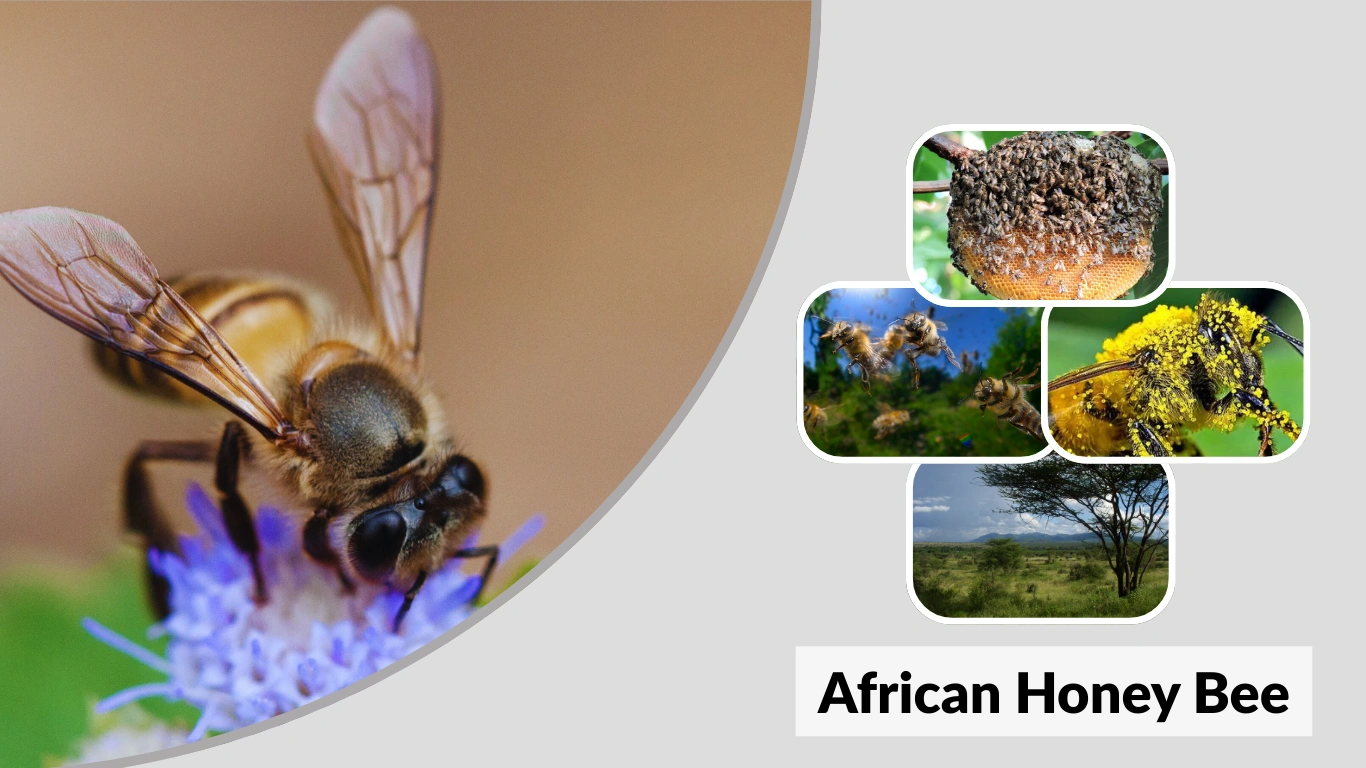
African honey bees—often called Africanized or “killer bees”—are among the most misunderstood insect species in the world. Known for their heightened defensiveness, rapid colony expansion, and strong survival instincts, they differ significantly from European and American honey bees. Yet they remain essential pollinators across Africa and the regions they’ve spread to. This guide explores their traits, behavior, habitat, environmental impact, and how they compare to other major honey bee species.
What Are African Honey Bees?
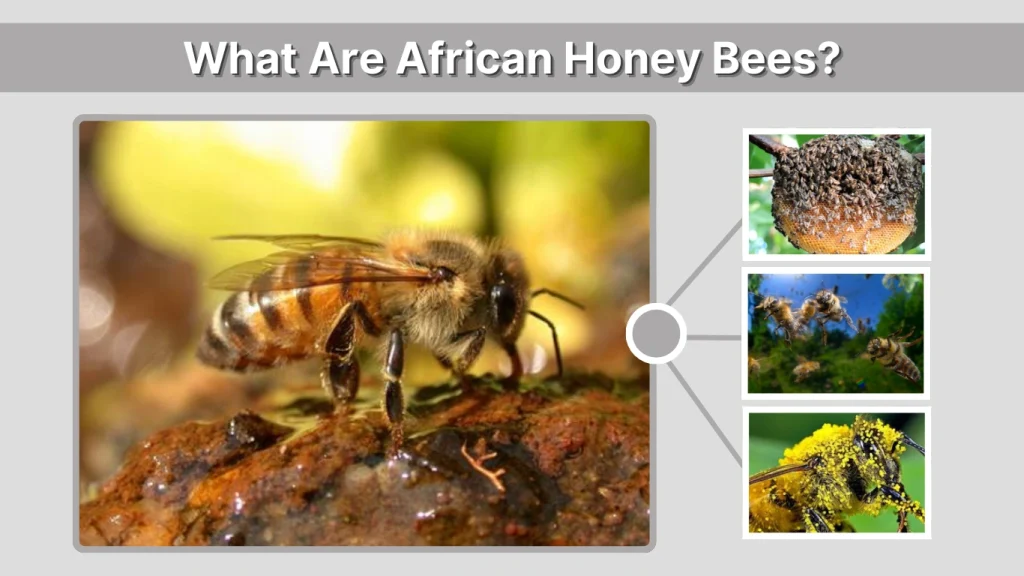
African honey bees are a subspecies of the Western honey bee, originally native to eastern and southern Africa. They are scientifically known as Apis mellifera scutellata. In the 1950s, these bees were introduced to Brazil in an attempt to breed a more productive, heat-tolerant honey bee for tropical climates. Some escaped during a field experiment, mated with European honey bees, and spread rapidly throughout South America, Central America, and into the southern United States.
Key Points
- Known for strong defensive behavior
- Thrive in hot climates
- Spread rapidly through swarming
- Play a major role in African agriculture and natural pollination
- Foundation of Africanized honey bees found in the Americas
Their distribution today includes much of sub-Saharan Africa, Brazil, Mexico, southern U.S. states like Texas and Arizona, and parts of the Caribbean.
African Honey Bee Classification
African honey bees belong to the Apidae family, which includes all honey bees, bumblebees, and stingless bees. Within the Apis mellifera species, several African subspecies exist, each adapted to specific climates and landscapes.
Classification Overview
- Family: Apidae
- Genus: Apis
- Species: mellifera
- Primary Subspecies:
- Apis mellifera scutellata (East African lowland honey bee)
- Apis mellifera capensis (Cape honey bee)
- Southern African regional variants
- Apis mellifera scutellata (East African lowland honey bee)
These subspecies form the genetic base for Africanized bees, which combine African resilience with some European honey bee traits.
African Honey Bee Identification
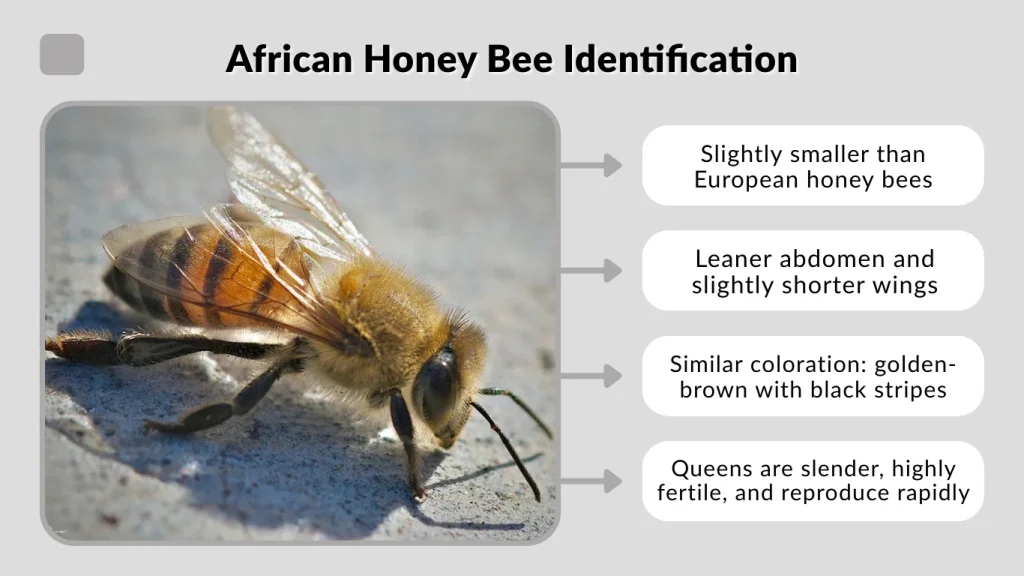
African honey bees look nearly identical to European honey bees, making visual identification difficult. Both species share similar body shapes, golden coloration, and wing structure. However, African bees tend to be slightly smaller, faster, and more agile in flight.
Physical Traits
- Slightly smaller than European honey bees
- Leaner abdomen and slightly shorter wings
- Similar coloration: golden-brown with black stripes
- Queens are slender, highly fertile, and reproduce rapidly
Because they are so similar, experts usually rely on morphometric analysis or DNA testing to confirm identification.
Comparison With Other Honey Bees
African honey bees often get compared with other common species and subspecies. Here are some frequent distinctions:
- African vs Regular Honey Bee: African bees swarm more and defend aggressively.
- African vs American Honey Bee: American colonies are calmer and produce more honey.
- African vs European Honey Bee: European bees are larger, gentler, and more stable.
- African vs Italian Honey Bee: Italians are highly productive and docile, preferred for commercial beekeeping.
These behavioral differences explain why African bees thrive in wild environments but are less commonly managed for large-scale beekeeping.
Behavior of African Honey Bees

African honey bees are best known for their heightened defensive behavior. They react more quickly to threats, pursue intruders longer distances, and mobilize more workers during colony defense.
Defensive Behavior (“Killer Bee” Reputation)
- Attack in large numbers when disturbed
- Can chase threats for up to a quarter mile
- Respond to small vibrations, movement, and loud sounds
- Developed these traits due to intense predators in Africa
Their “killer bee” nickname is often exaggerated. They do not seek conflict but react intensely when they believe the colony is threatened.
Absconding & Swarming Behavior
African honey bees swarm more frequently than European bees, sometimes several times a year. They also show a strong tendency to abscond—abandoning the hive entirely—if food becomes scarce or the environment changes.
Reasons for frequent swarming:
- Rapid colony growth
- Adaptation to unpredictable climates
- Survival strategy against predators
- Efficient reproductive cycles
These traits make them excellent survivors but challenging for managed beekeeping operations.
Habitat & Distribution

African honey bees thrive in warm climates and adapt quickly to new environments. In their native range, they inhabit savannas, forests, grasslands, and semi-arid regions. Their ability to nest in a wide variety of cavities—including tree hollows, ground spaces, old logs, and man-made structures—helps them spread rapidly.
Where African Bees Are Found
- Africa: East African lowlands, southern Africa, central Africa
- United States: Texas, Arizona, New Mexico, Nevada, Louisiana, Florida
- Central & South America: Widespread across Brazil, Mexico, Peru, Colombia, and beyond
Their expansion in the U.S. continues, especially in warmer southern regions where winters are mild enough for them to survive.
Nesting Patterns
African honey bee nests tend to be smaller, more compact, and easier to relocate. Their colonies often reproduce quickly, meaning they outcompete more stable species like European bees. This flexibility makes them successful in harsh climates where food availability changes throughout the year.
Diet: What African Honey Bees Eat
African honey bees share the same basic diet as European and American honey bees. They feed primarily on nectar and pollen, which provide carbohydrates and proteins essential for brood development and colony growth.
Key Food Sources
- Nectar from flowering plants
- Pollen from shrubs, trees, and wildflowers
- African blue basil and other heat-tolerant plants
- Occasionally honeydew from sap-feeding insects
Their foraging strategies allow them to thrive in regions with intense sun, heat, and seasonal drought.
African Honey Bee Honey
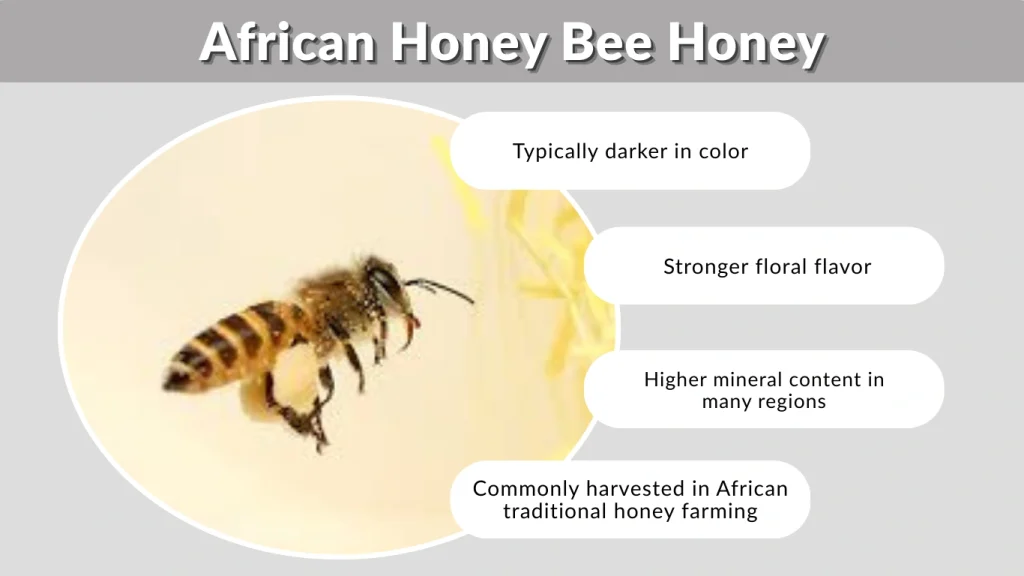
African honey bees do produce honey, but not always in large surplus amounts. Their colonies place more energy into survival and reproduction, swarming often instead of building large long-term reserves.
Characteristics of African Bee Honey
- Typically darker in color
- Stronger floral flavor
- Higher mineral content in many regions
- Commonly harvested in African traditional honey farming
African killer bee honey is simply honey produced by Africanized bees—it is safe to eat and widely consumed in parts of the Americas.
Do African Bees Make Honey?
Yes. Despite myths suggesting otherwise, African and Africanized bees make honey just like any other Apis mellifera subspecies. However, their smaller colony size and frequent absconding lead to lower commercial yields.
Environmental and Ecological Impact
African honey bees have both positive and negative effects on the ecosystems they inhabit.
Positive Contributions
- Strong pollinators: Excellent for natural ecosystems and agriculture
- Heat resilience: Thrive where European bees struggle
- Genetic diversity: Contribute to hybrid vigor in certain populations
- Coevolution: Well-known interactions with animals such as the African honey badger
Negative Effects
- Invasive behavior: Outcompete native bees in the Americas
- Aggressive colony defense: Poses risks near urban areas
- Displacement of European honey bees: Reduces commercial honey production
- Potential hybridization issues: Can overwhelm local strains
These mixed impacts are why African honey bees are sometimes labeled an “invasive species,” particularly outside Africa.
Why Are They Called Killer Bees?
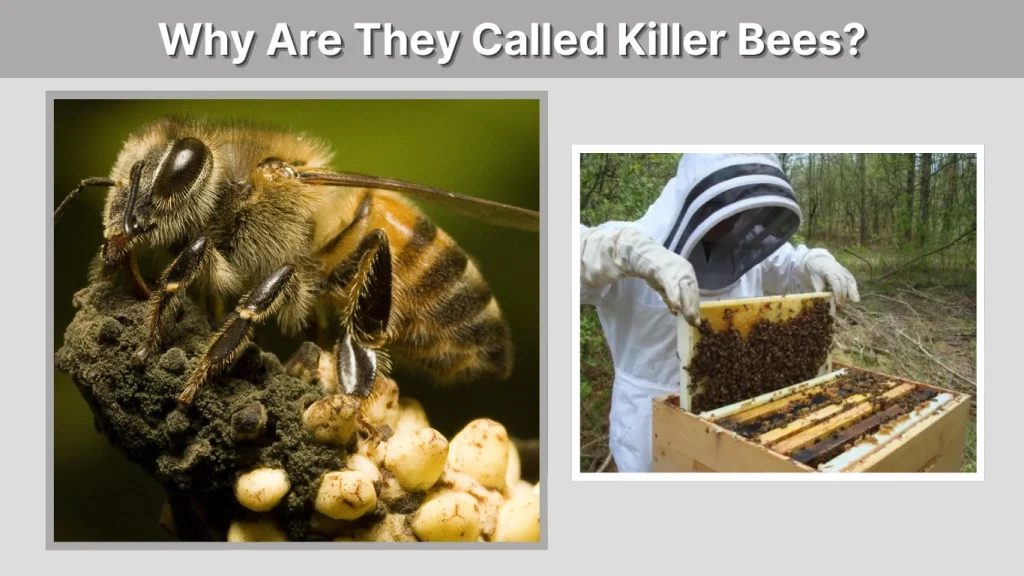
The term “killer bee” emerged in the 1970s when Africanized bees in Brazil attacked in larger numbers than expected. Their aggressive response is an evolutionary adaptation to African predators like honey badgers, birds, and humans harvesting wild honey.
Key Reasons for the Name
- Mobilize more bees during defense
- Pursue threats longer
- Respond to smaller disturbances
- Defend a larger radius around the nest
While the term makes headlines, fatal encounters are rare. Most problems happen when nests are accidentally disturbed by people or animals.
African Honey Bee Attacks
African honey bee attacks tend to occur when the colony perceives a threat. Vibrations, lawn equipment, loud noises, or direct contact with a hive can trigger defensive action.
Warning Signs
- Bees buzzing loudly in a concentrated area
- Guard bees head-butting or bumping intruders
- Increased agitation around nesting cavities
What To Do If Attacked
- Run in a straight line
- Protect the face and eyes
- Do not fight the bees or swat
- Seek shelter indoors or in a car
- Remove stingers quickly and get medical care if sensitive
Do African Honey Bees Die After They Sting?
Yes. Like other honey bees, African bees die shortly after stinging because their barbed stinger remains lodged in the victim’s skin.
Africanized Bees in the United States
Africanized honey bees were first detected in Texas in 1990. Since then, they have spread across the southern states, especially in warm regions where European bees struggle in extreme heat.
Key Facts
- Estimated 3,000,000+ Africanized colonies in the U.S.
- Most common in Texas, Arizona, New Mexico, Southern California, and Florida
- Rare in colder northern states
- Managed through local pest control and beekeeper education
Their hybrid vigor and adaptability allow them to occupy vast ecological niches.
African Bees vs Honey Bees: Key Differences Table

| Feature | African Honey Bee | European Honey Bee |
| Size | Slightly smaller | Larger |
| Aggression | Highly defensive | Mild |
| Swarming | Frequent | Less frequent |
| Honey production | Lower surplus | Higher surplus |
| Nesting | Moves often, absconds | Stable colonies |
| Climate | Hot, dry regions | Temperate climates |
Cape Honey Bee vs African Honey Bee
The Cape honey bee (Apis mellifera capensis) is significantly different from Apis mellifera scutellata. Known for its unusual reproductive abilities, Cape bees can clone themselves and take over other colonies.
Major Differences
- Cape bees can reproduce without mating (thelytoky)
- Cape workers can become pseudo-queens
- Cape bees sometimes invade and collapse African bee colonies
- Found mostly in South Africa’s Cape region
This unique biology has caused challenges for beekeepers managing mixed populations.
FAQs
What is the scientific name of the African honey bee?
The scientific name is Apis mellifera scutellata, one of many subspecies within the Western honey bee family. It is native to eastern and southern Africa.
Why are African honey bees called killer bees?
They are called “killer bees” due to their strong defensive behavior. When they perceive a threat, they attack in greater numbers than European bees and chase intruders farther. The name, however, exaggerates typical behavior.
Do African bees make honey?
Yes. African and Africanized bees produce honey like all honey bees, although they store less surplus due to frequent swarming.
Are African honey bees dangerous?
They can be dangerous if their nest is disturbed. Their aggressive defense makes them more risky in urban areas, but fatal interactions remain rare.
What do African honey bees look like?
They look similar to European honey bees—golden-brown with black striping—but are slightly smaller. Expert identification often requires morphometrics or DNA testing.
