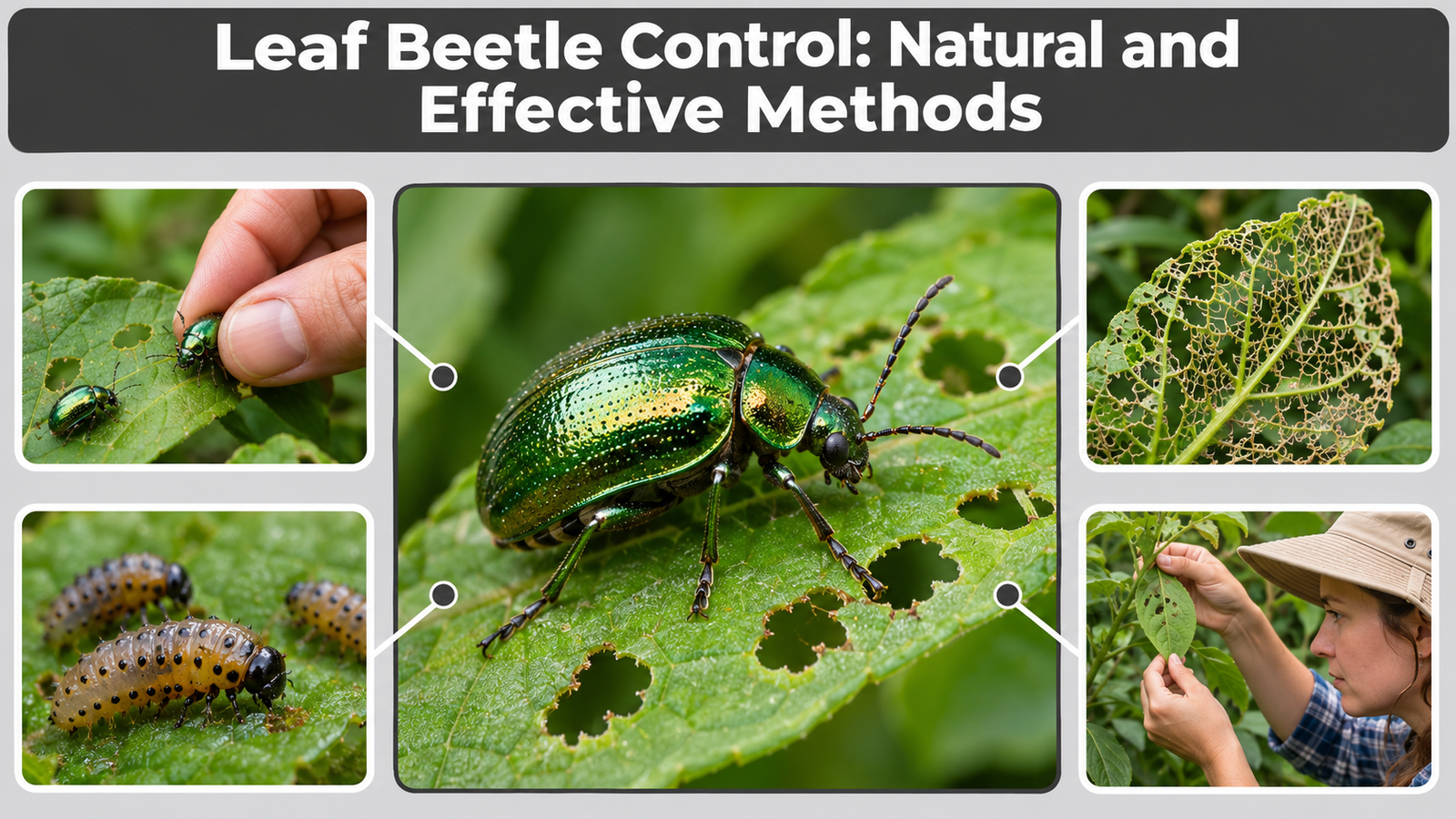
Leaf beetles can cause serious damage to garden plants, vegetables, ornamental shrubs, and trees. These small insects feed on leaves, creating holes, skeletonized foliage, and sometimes extensive defoliation. Common species include lily leaf beetles, bean leaf beetles, viburnum leaf beetles, and elm leaf beetles. Fortunately, several natural, organic, and chemical control methods can help manage infestations. The best approach depends on the beetle species, host plant, and severity of damage. This guide explains how to identify leaf beetles, control different species, and prevent future infestations.
What Are Leaf Beetles and How Do You Identify Them?
Leaf beetles are insects belonging primarily to the family Chrysomelidae. They occur in gardens, forests, agricultural fields, and landscapes worldwide. Although many species are harmless or cause only minor damage, certain leaf beetles can severely affect ornamental plants and crops.
Both adults and larvae may feed on foliage, although the most damaging stage varies by species.
Common Signs of Leaf Beetle Damage
Look for the following symptoms:
- Irregular Holes: Beetles chew small or large openings in leaves.
- Skeletonized Leaves: Larvae remove soft leaf tissue, leaving veins visible.
- Brown Leaf Edges: Damaged leaves may dry out and develop brown patches.
- Premature Leaf Drop: Severe infestations can cause early defoliation.
- Visible Beetles: Adults may gather on leaves, stems, or flowers.
- Larvae Under Leaves: Young beetles often feed on leaf undersides.
Correct identification is essential because leaf beetle species differ in their feeding habits and suitable treatments.
How to Get Rid of Leaf Beetles Naturally
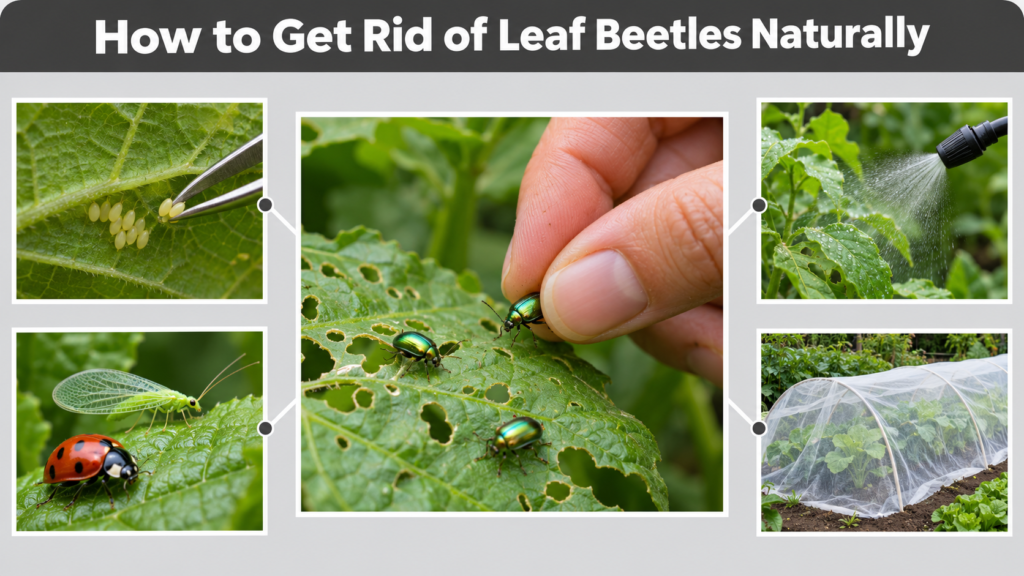
Natural leaf beetle control involves removing insects, protecting vulnerable plants, and encouraging beneficial organisms. These approaches are particularly useful in home gardens where infestations are manageable.
For effective results, begin treatment when beetles first appear rather than waiting until substantial damage develops.
1. Remove Leaf Beetles by Hand
Handpicking is one of the simplest methods for controlling leaf beetles on small plants.
Inspect leaves early in the morning and remove visible adults, larvae, and egg clusters. Drop collected insects into a container of soapy water to prevent them from returning.
Repeat inspections regularly because new beetles may arrive from nearby plants.
2. Use Neem-Based Products
Neem-derived products can help manage certain leaf beetle species, particularly vulnerable young larvae.
Products containing azadirachtin interfere with insect feeding and development. Neem oil formulations may also provide contact control against some pests.
However, effectiveness varies between species. Always select a product labeled for the affected plant and pest, and avoid spraying flowers visited by pollinators.
3. Apply Insecticidal Soap
Insecticidal soap may help control exposed leaf beetle larvae when sprayed directly onto them.
Thoroughly cover infested areas, particularly the undersides of leaves. Because soaps have little residual activity, repeated applications may be necessary.
Test a small section of sensitive foliage first and follow the product’s directions to avoid leaf damage.
4. Remove Infested Leaves and Eggs
Removing heavily infested foliage can reduce pest populations before additional insects develop.
Check leaf undersides for egg clusters and newly hatched larvae. For species that lay eggs in twigs, remove affected branches during the appropriate dormant season.
Avoid excessive pruning because removing too much healthy foliage can weaken plants.
5. Encourage Natural Predators
Beneficial insects contribute to biological leaf beetle control.
Lady beetles, lacewings, predatory bugs, and certain parasitoid wasps may attack particular leaf beetle species.
Planting diverse flowering plants and reducing unnecessary insecticide applications can help conserve these natural enemies.
6. Protect Vulnerable Plants
Physical barriers can prevent certain leaf beetles from reaching plants.
Floating row covers are useful for some vegetable crops when installed before beetles arrive. Secure the edges and remove covers when insect pollination is required.
For larger shrubs and trees, regular monitoring and good plant care are generally more practical.
How to Control Different Types of Leaf Beetles
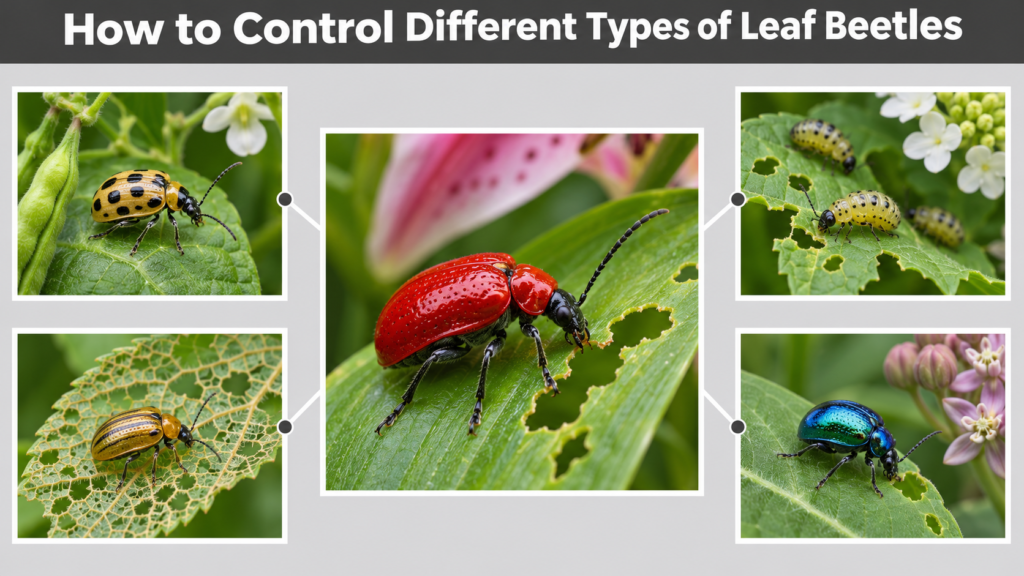
Different leaf beetles attack different host plants. Therefore, a treatment that works well against lily leaf beetles may be ineffective or unnecessary for beetles feeding on mature trees.
Understanding the target species makes control more successful and reduces unnecessary pesticide use.
Lily Leaf Beetle Control
Lily leaf beetles (Lilioceris lilii) are bright red insects that damage true lilies and fritillaries.
Check plants for adults, reddish eggs, and larvae covered in dark waste material. Remove these by hand whenever possible.
For heavier infestations, labeled azadirachtin or spinosad products may help, especially against younger larvae. Specialized parasitoid wasps also provide biological control in some regions.
Bean Leaf Beetle Control
Bean leaf beetles (Cerotoma trifurcata) attack beans and soybeans, chewing rounded holes in leaves and sometimes damaging pods.
Inspect young plants regularly and monitor feeding damage throughout the growing season.
In commercial soybeans, treatment decisions depend on crop stage and defoliation levels. In small gardens, hand removal and crop monitoring are useful first steps.
Viburnum Leaf Beetle Control
Viburnum leaf beetles (Pyrrhalta viburni) can severely defoliate susceptible viburnum shrubs.
One of the most effective preventive methods is pruning twigs containing overwintering eggs during late fall or winter.
Horticultural oil applied before bud break may reduce egg survival. If larvae appear, labeled insecticidal soap, neem-based products, or spinosad may help when applied early.
Elm Leaf Beetle Control
Elm leaf beetles (Xanthogaleruca luteola) damage elm trees by feeding on foliage and leaving a skeletonized appearance.
Healthy, established elms often tolerate moderate feeding without treatment.
Maintain tree health through appropriate watering and monitoring. When infestations become damaging, targeted treatments may include horticultural oils, azadirachtin, or professional bark-banding methods.
Eucalyptus Leaf Beetle Control
Several leaf-feeding beetles attack eucalyptus trees, including eucalyptus tortoise beetles.
These insects can cause extensive foliage damage during severe outbreaks.
Provide appropriate irrigation, avoid unnecessary fertilization, and protect beneficial insects. Mature trees often recover without chemical intervention, so pesticides should generally be reserved for serious infestations.
Willow and Cottonwood Leaf Beetle Control
Willow and cottonwood trees may be attacked by imported willow leaf beetles and related species.
Adults and larvae feed on foliage, sometimes leaving leaves partially skeletonized.
Maintain tree health and monitor young trees closely. Small infestations may be reduced through hand removal or appropriately labeled contact treatments. Large trees usually require professional assessment before treatment.
Cereal Leaf Beetle Control
Cereal leaf beetles (Oulema melanopus) attack wheat, oats, barley, and related grasses.
Their larvae scrape leaf surfaces, reducing the photosynthetic area of crop plants.
Monitor crops during active growth, particularly near flag-leaf emergence. Biological control by parasitoid wasps can be important. Apply insecticides only when local economic treatment thresholds are reached.
Milkweed Leaf Beetle Control
Milkweed-feeding beetles occur in butterfly gardens and natural habitats.
Small populations generally do not require control because milkweed supports numerous beneficial insects, including monarch butterflies.
If beetles cause serious damage, remove them manually. Avoid broad-spectrum and systemic insecticides that could harm monarch caterpillars and other wildlife.
Organic vs. Chemical Leaf Beetle Control
Organic methods are often sufficient for small gardens, particularly when infestations are detected early. However, severe damage in commercial crops or valuable ornamental plantings may justify chemical treatment.
The appropriate product depends on the beetle species, plant type, location, and growth stage.
Organic Leaf Beetle Control
Common lower-impact options include:
- Handpicking adults and larvae.
- Removing eggs and infested plant material.
- Using properly labeled insecticidal soaps.
- Applying neem-derived products where effective.
- Conserving predators and parasitoid wasps.
Natural products are not automatically harmless. Some can damage plants or kill beneficial insects if applied incorrectly.
Chemical Leaf Beetle Control
Certain insecticides containing spinosad, pyrethrins, or other registered active ingredients may control susceptible leaf beetles.
For severe infestations of large trees, professional applicators may consider targeted systemic treatments or other specialized approaches.
Never assume that a pesticide approved for one plant or beetle species is suitable for another. Follow local regulations, application instructions, pollinator precautions, and harvest restrictions for edible crops.
How to Prevent Leaf Beetle Infestations
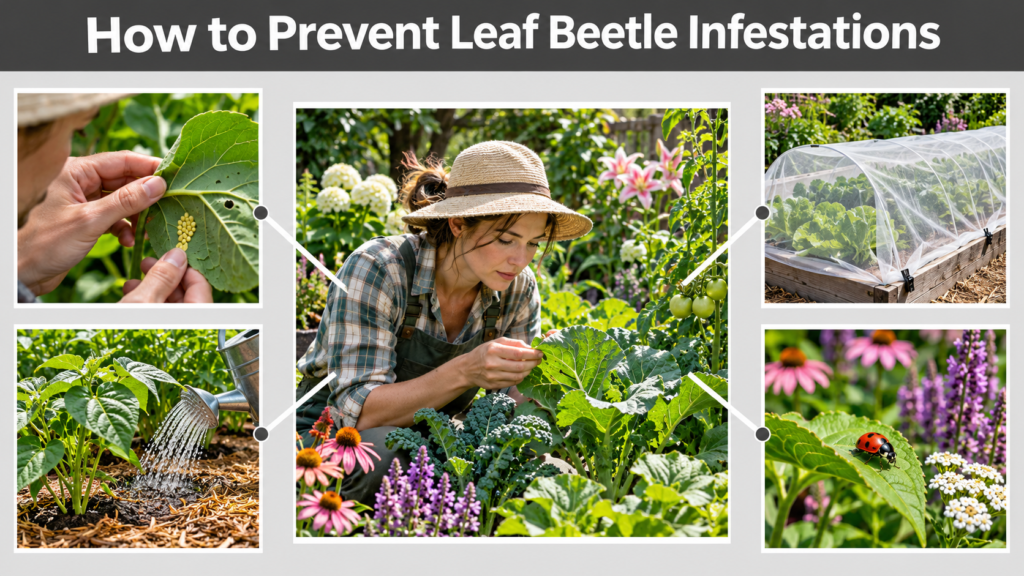
Preventing leaf beetle problems is usually easier than managing an established infestation. Regular plant inspections and good growing conditions can reduce damage while limiting the need for insecticides.
Prevention should focus on the beetle species most likely to attack the plants in your garden.
Inspect Plants Regularly
Examine plants throughout the growing season, especially new foliage and leaf undersides.
Watch for eggs, feeding holes, larvae, and adult beetles. Early detection allows removal before populations become difficult to manage.
Maintain Healthy Plants
Provide suitable watering, sunlight, drainage, and nutrients.
Healthy plants generally tolerate minor leaf damage better than stressed plants. Avoid excessive nitrogen fertilization, which can encourage tender growth attractive to certain pests.
Choose Resistant Plants
Some plant varieties are less susceptible to particular leaf beetles.
For example, certain viburnum varieties experience less damage than highly preferred species. Selecting suitable plants can reduce recurring infestations.
Support Beneficial Insects
Maintain plant diversity and avoid unnecessary broad-spectrum pesticide applications.
Protecting natural predators and parasitoids can help keep leaf beetle populations manageable over time.
FAQs
1. What Is the Best Natural Way to Control Leaf Beetles?
Handpicking adults, larvae, and eggs is often the best starting method for small infestations. Inspect plants regularly and remove beetles before they reproduce. Neem-derived products, insecticidal soap, and natural enemies may provide additional control, depending on the species and affected plant.
2. Does Neem Oil Kill Leaf Beetles?
Neem oil and azadirachtin-based products can control certain leaf beetles, particularly young larvae. However, their effectiveness varies among species and formulations. Follow the product label carefully, ensure the affected plant is listed, and avoid applications that could expose bees or other beneficial insects.
3. Can Leaf Beetles Kill Plants?
Severe leaf beetle infestations can weaken plants through repeated defoliation. Young plants and heavily attacked shrubs are particularly vulnerable. Mature, healthy trees often tolerate moderate damage, although repeated severe feeding can reduce growth and increase susceptibility to environmental stress.
4. What Is the Best Time to Control Leaf Beetles?
The best treatment period usually occurs when eggs are hatching or larvae are small. Early intervention can prevent extensive feeding damage. However, species-specific timing matters because some beetles overwinter as adults, while others survive winter as eggs inside plant twigs.
5. Can Bacillus thuringiensis Control Leaf Beetles?
Some specialized Bacillus thuringiensis formulations target particular beetle species, but ordinary caterpillar-targeting Bt products are not reliable general treatments for leaf beetles. Check the bacterial strain, labeled target pests, and crop restrictions before use. Accurate beetle identification is essential for selecting an effective biological treatment.