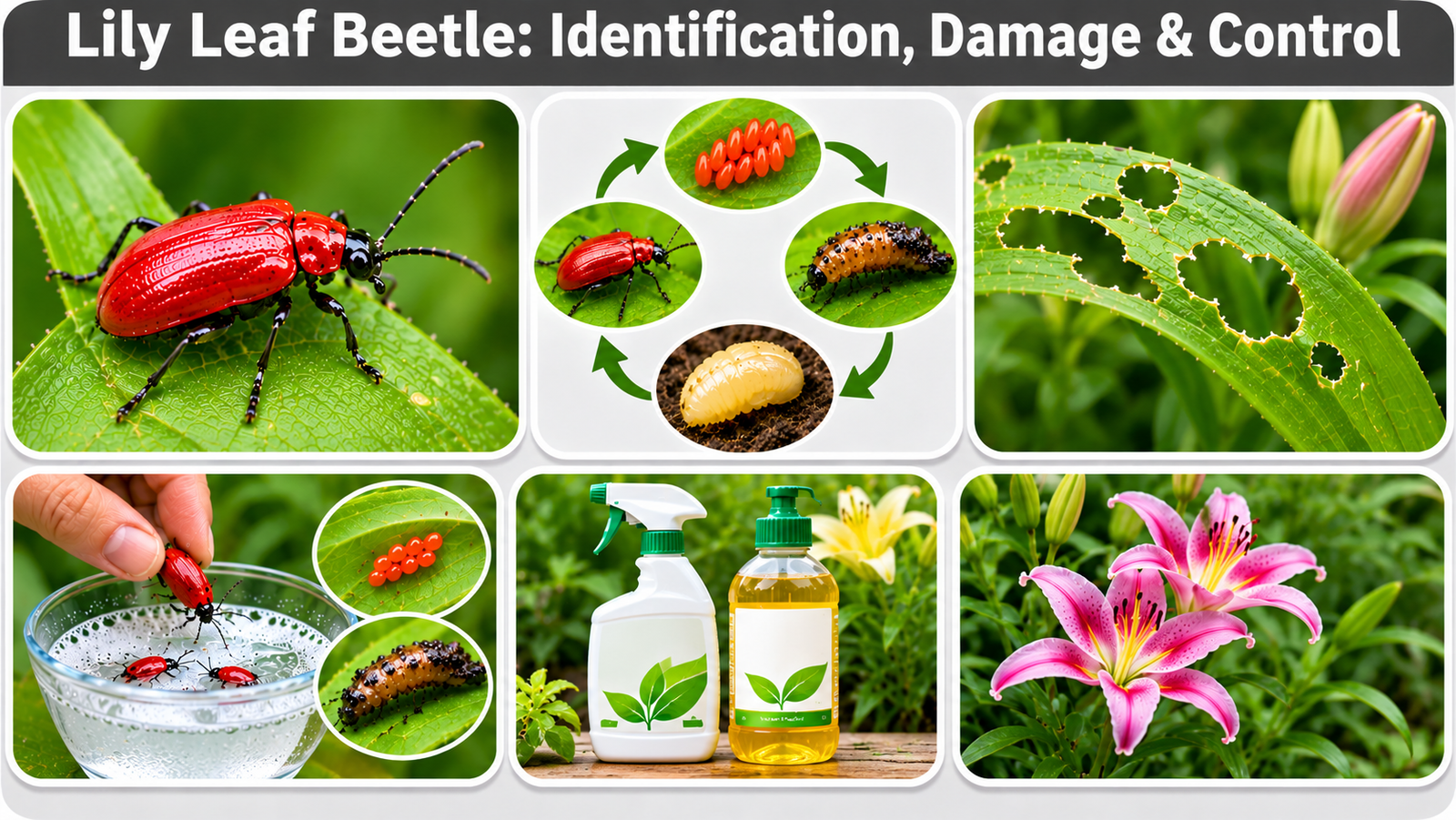
The lily leaf beetle is a destructive garden pest known for its bright red body and ability to damage beautiful lily plants. Both adult beetles and larvae feed on leaves, stems, and flower buds, sometimes leaving plants almost completely defoliated. These insects are especially troublesome for gardeners growing Asiatic lilies, Oriental lilies, and other true lilies. Fortunately, early detection and appropriate treatment can reduce their damage. This guide explains lily leaf beetle identification, eggs, larvae, life cycle, natural control methods, and effective ways to protect your lilies from future infestations.
What Is a Lily Leaf Beetle?
The lily leaf beetle (Lilioceris lilii), also called the red lily leaf beetle or scarlet lily beetle, belongs to the family Chrysomelidae. Originally native to Eurasia, this species has spread into parts of North America, where it has become a serious pest of ornamental lilies.
These beetles mainly attack true lilies (Lilium) and fritillaries (Fritillaria). Both adults and larvae consume plant tissue, but the larvae typically cause the greatest damage. Heavy feeding can weaken bulbs and reduce flowering during the following growing season.
Lily Leaf Beetle Identification: What Do They Look Like?
Lily leaf beetles are among the easiest garden beetles to recognize because of their bright scarlet-red coloration. However, accurate identification requires examining their body shape, black markings, and feeding behavior. Gardeners should also inspect plants for eggs and larvae, which look completely different from adult beetles.
Adult Lily Leaf Beetle Identification
Adult lily leaf beetles typically measure 6–9 millimeters long. Their bodies are elongated, with shiny red wing covers and a black underside.
Common identifying features include:
- Body color: Bright scarlet-red or reddish-orange.
- Head: Black, contrasting with the red thorax.
- Legs: Six slender black legs.
- Antennae: Long, segmented, and black.
- Wing covers: Smooth, shiny, and bright red.
- Behavior: Adults may squeak when disturbed and drop from plants when threatened.
Lily Leaf Beetle Eggs and Larvae
Lily leaf beetle eggs are tiny, elongated, and reddish-orange. Females deposit them in small groups or rows on the undersides of lily leaves.
After hatching, larvae develop soft, swollen bodies that are usually orange, yellowish, or reddish-brown. Their most unusual feature is a protective covering of their own excrement, which makes them resemble dark, slimy lumps on leaves.
These larvae feed aggressively and can quickly damage young lily plants.
Lily Leaf Beetle Life Cycle
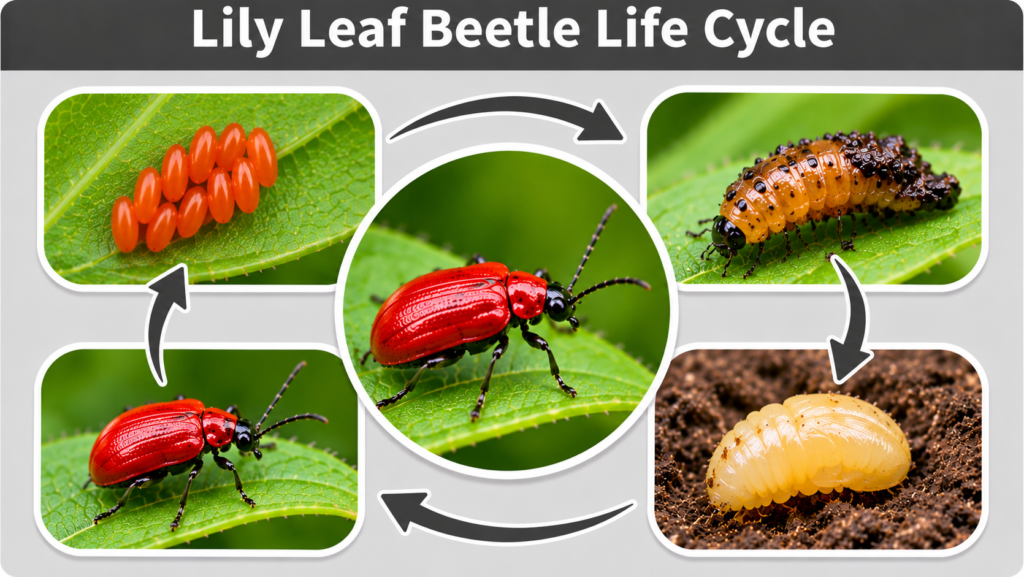
The lily leaf beetle undergoes complete metamorphosis, developing through egg, larva, pupa, and adult stages. It generally produces one generation annually, although adult beetles can survive for more than one season.
Understanding its life cycle helps gardeners determine when to inspect plants and which control methods will be most effective.
Egg Stage
Overwintered females begin depositing eggs during spring after feeding and mating. The eggs are usually laid on leaf undersides in small clusters.
Depending on temperature and environmental conditions, eggs typically hatch within approximately 4–10 days.
Larval Stage
Newly hatched larvae begin feeding on lily foliage. They pass through several developmental stages while consuming increasing amounts of plant tissue.
After approximately two to three weeks, mature larvae leave the plant and enter the soil.
Pupal and Adult Stages
Larvae pupate underground before emerging as adult beetles during summer. Newly emerged adults continue feeding on lily plants.
As temperatures decrease, adults seek sheltered overwintering sites in soil, leaf litter, and other protected locations. They become active again the following spring.
Lily Leaf Beetle Damage: Signs and Symptoms
Lily leaf beetle damage can range from scattered holes in leaves to complete defoliation. Both adults and larvae feed on foliage, but larvae are particularly destructive because they consume large amounts of plant tissue during development.
Severe infestations may weaken lilies, destroy flower buds, and reduce bulb size. Plants that lose most of their leaves early in the growing season may produce fewer flowers the following year.
Common Signs of Lily Leaf Beetle Damage
Look for these symptoms:
- Irregular holes appearing in lily leaves.
- Brown or dried patches on damaged foliage.
- Chewed leaf edges and exposed stems.
- Destroyed flower buds and damaged petals.
- Dark, slimy larvae clustered on leaf undersides.
- Small orange-red eggs attached to leaves.
- Severe defoliation during heavy infestations.
Which Lily Plants Are Most Affected?
Lily leaf beetles primarily attack true lilies and fritillaries. Commonly affected plants include Asiatic lilies, Oriental lilies, tiger lilies, trumpet lilies, and certain native lilies.
Asiatic lilies are particularly susceptible to infestation. Some Oriental hybrids and other cultivars show greater tolerance, although no commonly grown true lily should be considered completely immune.
Daylilies (Hemerocallis), calla lilies, and canna lilies are not typical hosts for this beetle.
How to Get Rid of Lily Leaf Beetles Naturally
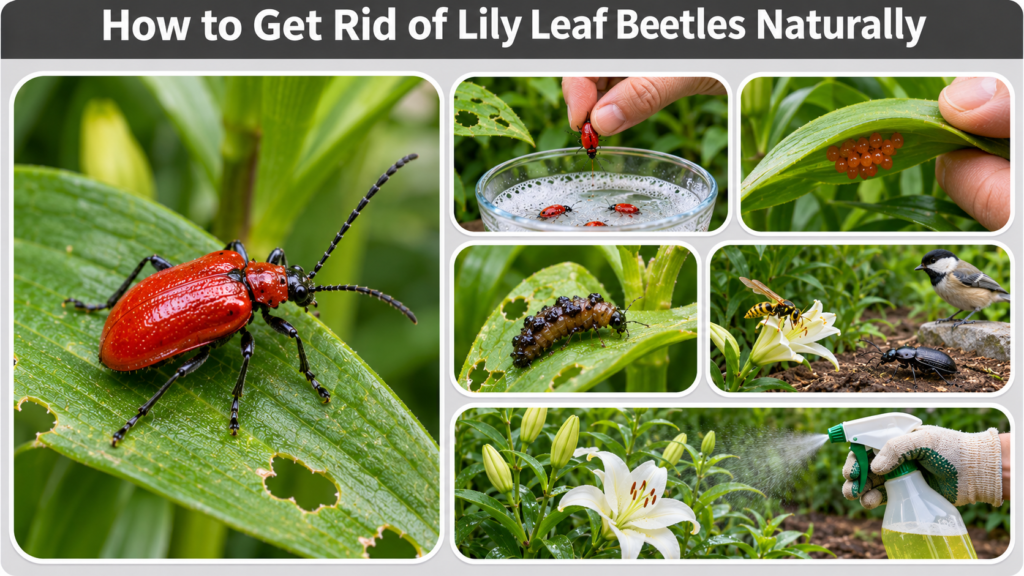
Natural lily leaf beetle control focuses on removing insects, destroying eggs, and reducing larval populations before serious damage occurs. These methods are particularly effective in small gardens where individual lily plants can be inspected regularly.
Begin monitoring as soon as new shoots appear in spring. Combining physical removal with regular inspection often provides better protection than relying on a single treatment.
1. Remove Adult Beetles by Hand
Inspect lily plants during spring and remove any visible red beetles. Drop collected insects into a container of soapy water.
Be careful when approaching adults because they often fall from plants when disturbed. Holding a container underneath the beetle can make collection easier.
2. Destroy Lily Leaf Beetle Eggs
Examine the undersides of lily leaves for small clusters of reddish-orange eggs.
Remove affected leaves when appropriate or gently crush the eggs. Repeated inspections help prevent newly hatched larvae from establishing large feeding populations.
3. Remove Larvae From Plants
Look for dark, slimy larvae on leaves and developing flower buds.
Wear gloves when removing larvae because their waste-covered bodies can be unpleasant to handle. Destroy collected larvae and continue checking plants throughout spring.
4. Encourage Natural Predators
Birds, ground beetles, and certain other predators may consume lily leaf beetles.
Specialized parasitic wasps, including Tetrastichus setifer, have also been introduced for biological control in parts of North America. Avoid unnecessary broad-spectrum pesticide applications that could harm beneficial insects.
5. Use Neem-Based Insecticides
Products containing azadirachtin, a compound derived from neem, can help suppress young lily leaf beetle larvae.
Applications are generally most effective shortly after eggs hatch. Follow the product label carefully, including directions concerning application frequency and plant safety.
Lily Leaf Beetle Insecticide and Treatment Options
When hand removal and natural management methods are insufficient, suitable insecticides may help control lily leaf beetles. Treatment should focus on young larvae before significant damage occurs.
The effectiveness of different products depends on the active ingredient, insect development stage, and application coverage.
Insecticidal Soap
Some insecticidal soap products can help manage young lily leaf beetle larvae when applied directly.
Thorough coverage is essential because these products generally work through contact. Always test and apply according to the manufacturer’s instructions to avoid damaging sensitive plants.
Chemical Insecticides
Certain registered insecticides containing pyrethrins or other approved active ingredients can control lily leaf beetles.
However, broad-spectrum insecticides may harm pollinators and beneficial predators. Avoid spraying open flowers or plants visited by bees, and verify that the product is approved for ornamental lilies in your location.
How to Prevent Lily Leaf Beetle Infestations
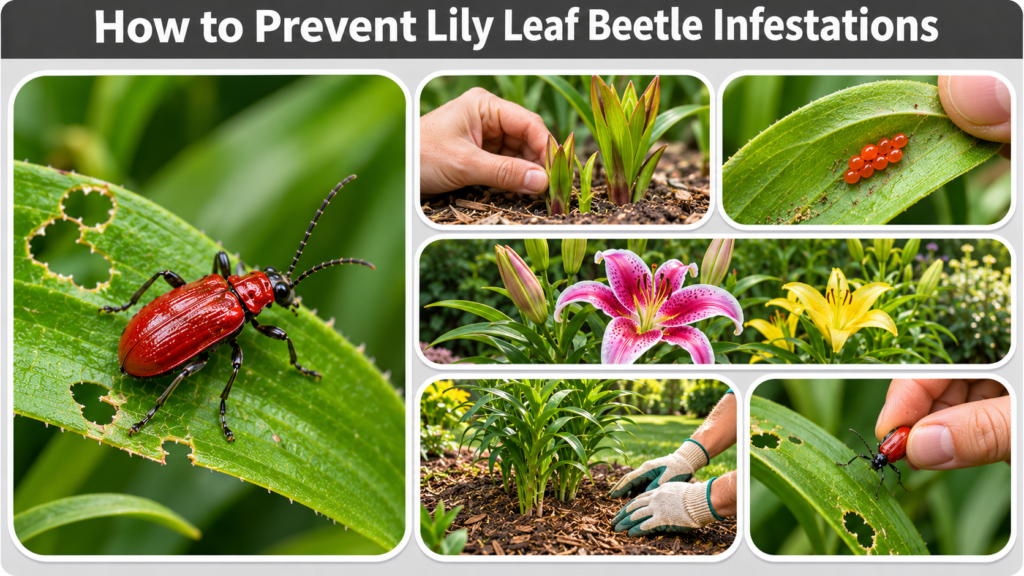
Preventing future infestations requires consistent monitoring and appropriate garden maintenance. Because adult lily leaf beetles can fly considerable distances, completely eliminating them from an outdoor garden may not be possible.
However, early detection and good growing conditions can significantly reduce plant damage.
Inspect Lilies During Early Spring
Begin checking plants as soon as new growth emerges. Focus on shoots, leaves, and areas where adult beetles may hide.
Remove beetles before they reproduce, and continue examining leaf undersides for egg clusters throughout the breeding period.
Choose Less Susceptible Lily Varieties
Some lily cultivars have demonstrated greater resistance to lily leaf beetle damage.
Examples include ‘Madame Butterfly’, ‘Uchida’, and ‘Black Beauty’. These varieties may suffer less damage than highly susceptible Asiatic lilies, although their resistance is not absolute.
Maintain Healthy Garden Conditions
Provide lilies with appropriate sunlight, well-draining soil, and consistent moisture during active growth.
Remove diseased plant material and avoid unnecessary soil disturbance where beneficial parasitoids are established. Healthy bulbs can better tolerate occasional feeding damage.
FAQs
1. What kills lily leaf beetles?
Handpicking adults, removing eggs, and destroying larvae can effectively reduce small infestations. Registered neem-based insecticides, insecticidal soaps, and certain conventional insecticides may also provide control. Treatment is most effective when larvae are young and before extensive leaf damage occurs.
2. Does neem oil kill red lily leaf beetles?
Neem-derived insecticides, especially products containing azadirachtin, can help control young lily leaf beetle larvae. They are generally less reliable against mature adults. Apply only according to product instructions, and monitor plants regularly because additional treatments may be necessary.
3. Do lily leaf beetles bite humans?
Lily leaf beetles are not known for biting or attacking humans. They primarily feed on lily foliage, flowers, and developing buds. Their bright red appearance may seem alarming, but their main threat is to ornamental plants rather than people or pets.
4. What eats lily leaf beetles?
Some birds, predatory ground beetles, and other garden predators may consume lily leaf beetles. Specialized parasitoid wasps also attack their larvae. These natural enemies can help reduce beetle populations, although they may not provide complete control in every garden.
5. Will soapy water kill lily leaf beetles?
Dropping collected lily leaf beetles into a container of soapy water is a practical way to destroy them. However, spraying homemade dish-soap mixtures directly onto lilies is not recommended because they may damage foliage. Use properly labeled insecticidal soap products instead.