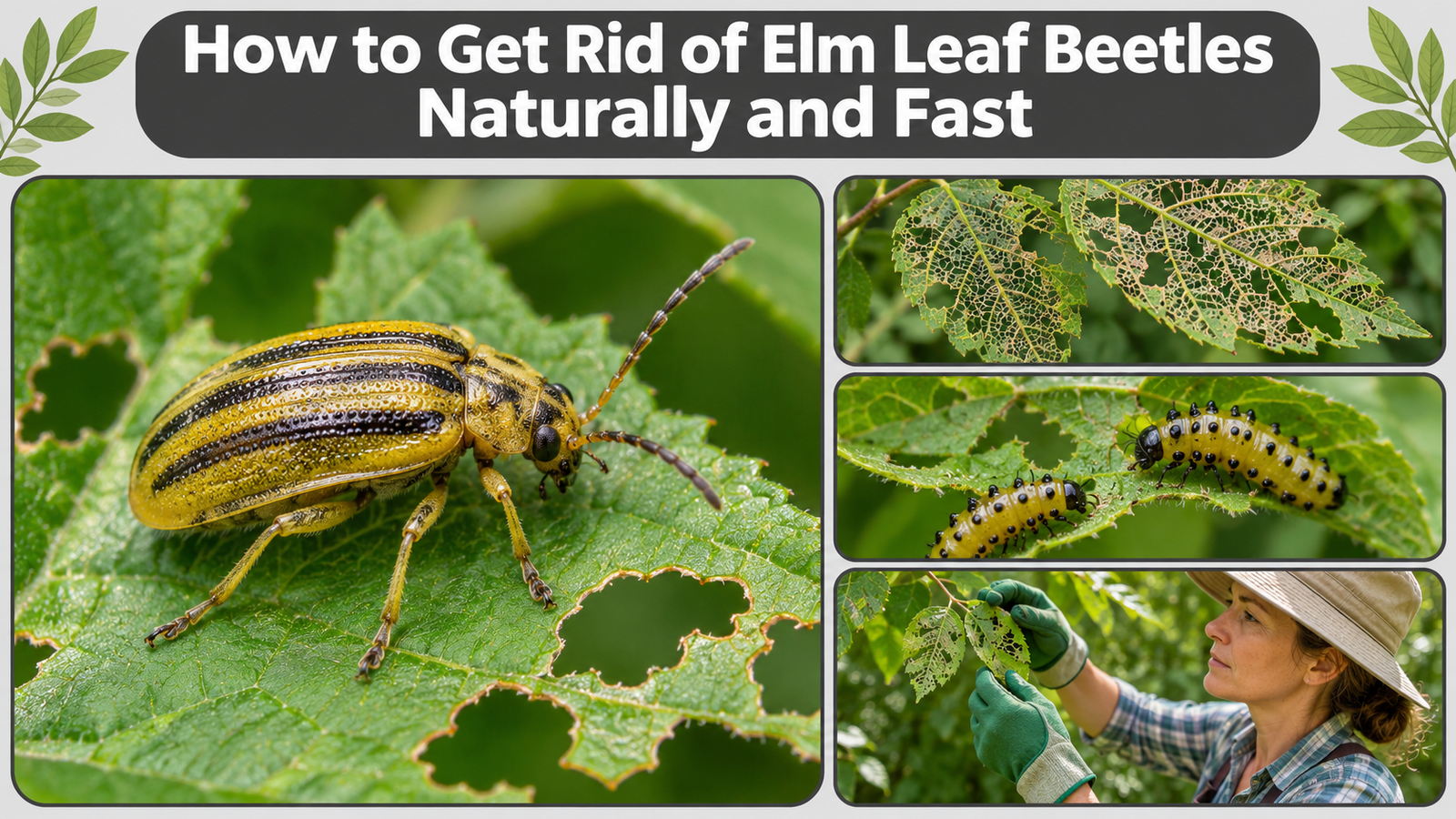
Elm leaf beetles can cause significant damage to elm trees by feeding on their leaves, leaving behind holes, brown patches, and skeletonized foliage. Severe infestations may weaken trees, cause premature leaf drop, and create an unpleasant appearance. Adult beetles can also enter houses during colder months while searching for shelter. Fortunately, several natural, organic, and professional control methods can help reduce their populations. Early detection and proper treatment are essential for preventing repeated damage. This guide explains how to get rid of elm leaf beetles, eliminate larvae, protect trees, and keep beetles out of your home.
How to Identify Elm Leaf Beetles and Their Damage
Elm leaf beetles (Xanthogaleruca luteola) are small, leaf-feeding insects that primarily attack elm trees. Both adults and larvae damage foliage, although the feeding patterns differ. Adult beetles chew holes through leaves, while larvae remove soft leaf tissue and create a skeletonized appearance. Identifying these signs early helps determine whether treatment is necessary before considerable defoliation occurs.
What Do Elm Leaf Beetles Look Like?
Elm leaf beetles have several recognizable characteristics:
- Adult Color: Yellowish-green to olive-colored bodies with dark stripes along the wing covers.
- Body Size: Adults typically measure approximately 6–7 millimeters long.
- Black Markings: Several dark spots appear behind the head.
- Larvae: Young larvae are dark, becoming yellowish with black markings as they develop.
- Eggs: Females lay clusters of small, yellow, elongated eggs beneath elm leaves.
- Pupae: Mature larvae develop into yellowish pupae, often around the base of elm trees.
Signs of an Elm Leaf Beetle Infestation
The most noticeable symptom is damaged foliage. Larvae feed on the undersides of leaves, leaving a thin upper layer and visible veins. Affected leaves may become brown, dry, and curled.
Adult beetles create irregular holes throughout the leaf surface. During severe infestations, large sections of the canopy can turn brown, and leaves may fall prematurely. However, these symptoms can resemble other elm pests or diseases, so identifying the insects is important.
How to Get Rid of Elm Leaf Beetles Naturally
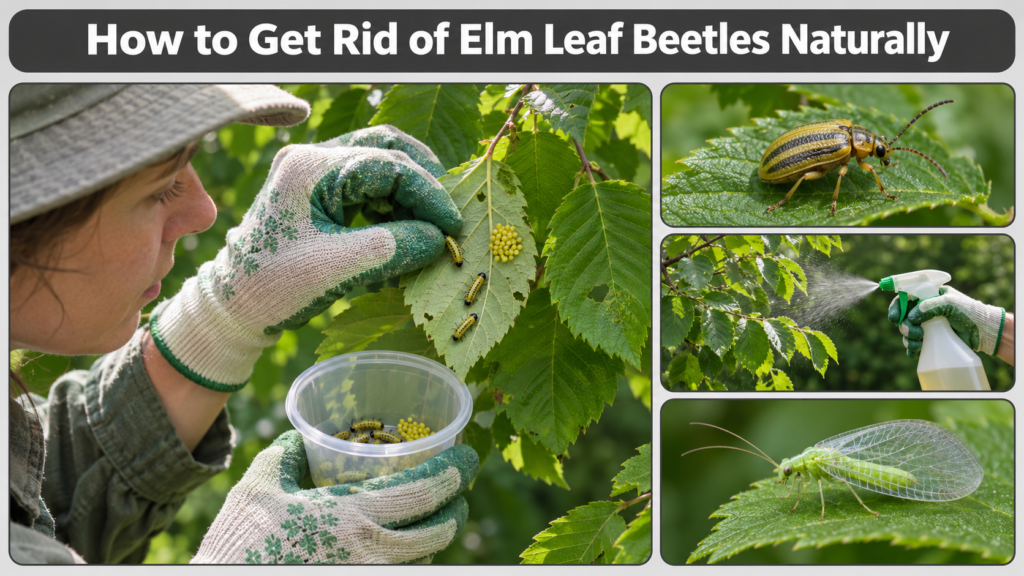
Natural elm leaf beetle control focuses on reducing populations while protecting beneficial insects and maintaining healthy trees. These methods work best on young trees, smaller infestations, and accessible branches.
For large, mature trees, natural treatments may be difficult to apply throughout the canopy. Regular monitoring helps determine whether additional control measures are necessary.
1. Remove Elm Leaf Beetles by Hand
Hand removal is practical when beetles are concentrated on small elm trees or reachable branches.
Inspect leaf undersides for larvae and yellow egg clusters. Remove accessible eggs and larvae, placing them into a container of soapy water.
Check the tree regularly because surviving adults may continue laying eggs. This approach is most effective before widespread feeding damage develops.
2. Use Neem Oil for Elm Leaf Beetles
Neem-based products can help manage certain stages of elm leaf beetles.
Products containing azadirachtin interfere with insect feeding and development, while some neem oil formulations provide contact control.
Apply only products labeled for elm trees and the target pest. Thorough leaf coverage is important, especially underneath foliage where larvae feed. Avoid applications during high temperatures or when pollinators are active.
3. Apply Horticultural Oil
Horticultural oils can provide another lower-impact treatment for exposed elm leaf beetles.
These products act through direct contact, making thorough coverage essential. They are generally more practical on smaller trees where the leaves can be reached safely.
Always follow the manufacturer’s instructions concerning application temperature, concentration, and plant sensitivity.
4. Encourage Beneficial Insects
Several natural enemies attack elm leaf beetles, including predatory insects and parasitoids.
Lacewing larvae, predatory bugs, certain flies, and tiny parasitic wasps may help reduce beetle numbers.
Avoid unnecessary broad-spectrum insecticides because they can kill beneficial organisms. Maintaining diverse vegetation around your garden may help support natural enemies.
5. Keep Elm Trees Healthy
Healthy elm trees generally tolerate moderate leaf damage better than stressed trees.
Provide appropriate watering during dry weather, protect the roots from damage, and avoid excessive fertilization.
Remove dead or hazardous branches when necessary, but avoid unnecessary removal of healthy foliage. Proper tree maintenance improves recovery after beetle feeding.
How to Get Rid of Elm Leaf Beetle Larvae
Controlling larvae is particularly important because this stage causes much of the skeletonized leaf damage. Newly hatched larvae feed on the undersides of elm leaves and can become numerous when egg clusters hatch.
Treatments are generally most effective when larvae are small and actively feeding. Waiting until leaves have already turned brown reduces the benefit of treatment.
Target Young Larvae Early
Begin inspecting elm leaves during spring as new foliage develops.
Look for yellow eggs and newly hatched dark larvae. On small trees, remove infested leaves or treat accessible foliage using an appropriate labeled product.
Early treatment can reduce the number of larvae reaching maturity and producing another generation.
Use Spinosad When Necessary
Spinosad is an insecticide derived from microorganisms that can control elm leaf beetle larvae.
It may provide more reliable results than some contact-only products, but it can harm bees and beneficial insects.
Use a formulation labeled for elm trees and follow all application directions. Avoid spraying flowering plants or allowing spray drift onto nearby flowers.
Consider Professional Bark Banding
Bark banding targets mature larvae as they crawl down elm trunks to find places to pupate.
This technique involves applying a properly registered insecticide to a designated section of tree bark, where descending larvae encounter the treatment.
It does not immediately eliminate insects feeding higher in the canopy and may be less effective when surrounding trees remain infested. Professional application is often advisable because suitable products and methods are regulated.
How to Get Rid of Elm Leaf Beetles in Your House

Adult elm leaf beetles sometimes enter houses during late summer and autumn while searching for protected overwintering locations. They may hide around windows, attics, wall openings, and other sheltered areas.
Although their presence can be frustrating, elm leaf beetles do not reproduce indoors or damage furniture and building materials. Removing individual beetles and preventing entry are generally more effective than widespread indoor pesticide applications.
Remove Elm Leaf Beetles Indoors
Follow these practical steps:
- Vacuum Visible Beetles: Collect insects from windows, floors, walls, and other accessible areas.
- Empty the Vacuum: Dispose of collected insects promptly.
- Sweep Up Beetles: Use a broom and dustpan for small numbers.
- Check Window Frames: Inspect windowsills and nearby gaps where beetles frequently appear.
- Avoid Indoor Foggers: Whole-room insecticide foggers are unnecessary for ordinary elm leaf beetle invasions.
Repeated vacuuming may be needed when overwintering beetles become active during warm days.
Prevent Elm Leaf Beetles From Entering
Inspect exterior walls, windows, doors, siding, and foundation openings.
Seal cracks using appropriate caulk and repair damaged window or door screens. Install weatherstripping where gaps allow insects to enter.
Complete these preventive measures before beetles begin searching for winter shelter. Sealing access points can substantially reduce future indoor problems.
Chemical Control Methods for Elm Leaf Beetles
Chemical control may be appropriate when repeated infestations cause substantial defoliation or threaten valuable elm trees. However, mature trees often tolerate moderate feeding, and unnecessary applications may harm beneficial insects.
The most effective treatment depends on the beetles’ developmental stage, tree size, and whether damage is severe enough to justify intervention.
Foliar Insecticide Treatments
Foliar treatments are applied directly to leaves where beetles and larvae feed.
Depending on local registration and product labeling, possible treatments include azadirachtin, spinosad, or certain conventional insecticides.
Applications should target active infestations, particularly younger larvae. Spraying after extensive damage has already occurred will not restore damaged leaves.
Systemic Elm Leaf Beetle Treatment
Systemic insecticides are absorbed by trees and transported into plant tissues.
Certain professional treatments may help protect elm foliage from feeding insects. However, their effectiveness depends on correct timing, tree condition, and product selection.
Systemic insecticides can create risks for non-target organisms, including pollinators. Consult a qualified arborist and follow applicable local regulations before considering this approach.
How to Prevent Elm Leaf Beetles From Returning

Long-term prevention requires monitoring beetle activity and maintaining healthy elm trees. Because adults survive winter in protected locations, infestations may return the following growing season.
A combination of early inspection, tree care, and targeted control usually provides better results than repeatedly applying insecticides without monitoring.
Inspect Elm Trees Every Spring
Begin checking foliage as leaves develop.
Look for adult beetles, yellow egg clusters, and newly hatched larvae. Examine multiple branches because infestations may be concentrated in particular sections of the canopy.
Record recurring damage so you can identify seasonal patterns and respond earlier.
Protect Trees During Summer
Provide appropriate irrigation during prolonged dry periods.
Avoid compacting soil around tree roots and protect the trunk from mechanical injuries. Strong trees recover more effectively from moderate defoliation.
Where elm leaf beetles regularly cause serious damage, a qualified arborist can assess whether targeted seasonal treatment is justified.
Reduce Overwintering Shelters
Keep unnecessary debris and woodpiles away from building entrances.
Repair damaged exterior surfaces and seal gaps before autumn. These measures can discourage adult beetles from entering homes.
Remember that beetles can fly from neighboring trees, so completely eliminating outdoor populations is rarely realistic.
FAQs
1. What Is the Fastest Way to Get Rid of Elm Leaf Beetles?
The fastest practical method depends on the infestation. Remove accessible adults and larvae from small trees, and consider a labeled treatment when active feeding is severe. For large trees, professional assessment may be necessary. Indoors, vacuuming provides immediate removal without widespread pesticide use.
2. Does Neem Oil Kill Elm Leaf Beetles?
Neem-derived insecticides can help control elm leaf beetles, particularly when applied to vulnerable feeding stages. However, effectiveness depends on the formulation and coverage. Always use a product registered for the intended application and follow instructions to minimize leaf damage and risks to beneficial insects.
3. Do Elm Leaf Beetles Bite Humans?
Elm leaf beetles are not considered biting or stinging pests of humans. Their primary food source is elm foliage. Although adults may enter houses for winter shelter, they do not infest household materials or reproduce indoors. Their presence is primarily a nuisance.
4. Can Elm Leaf Beetles Kill an Elm Tree?
Repeated severe defoliation can weaken elm trees and contribute to long-term decline, particularly when trees experience drought or other stresses. However, healthy mature trees often tolerate moderate feeding. Tree care and monitoring are important before deciding whether insecticide treatment is necessary.
5. How Do You Permanently Get Rid of Elm Leaf Beetles?
Permanent elimination is difficult because adult beetles can fly into an area from nearby trees. Effective long-term management combines regular inspections, healthy tree maintenance, conservation of beneficial insects, and selective treatment when needed. Sealing building openings also helps prevent recurring indoor infestations.