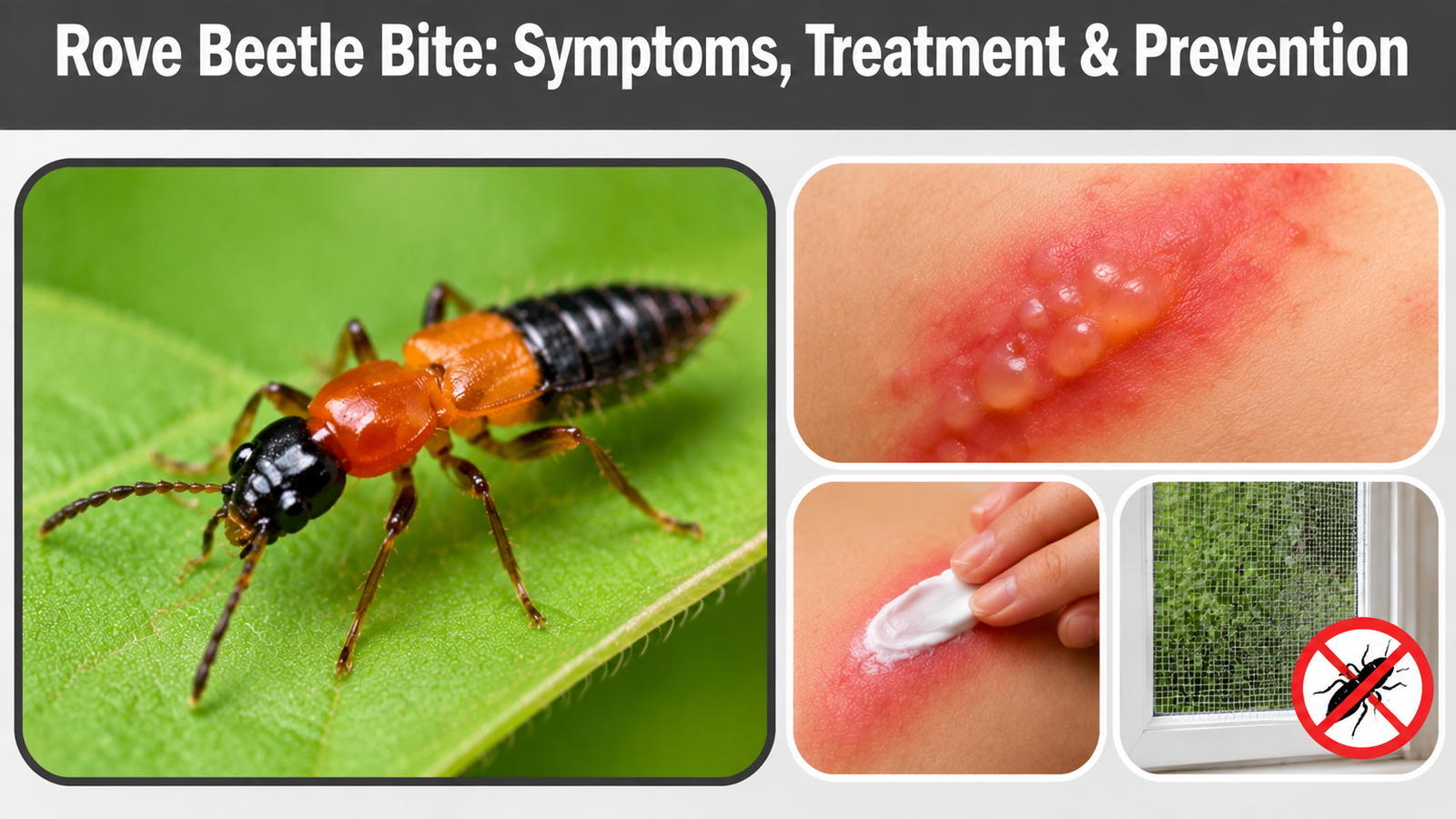
A rove beetle bite can cause concern, especially when redness, burning, or painful blisters appear on the skin. However, many skin reactions blamed on rove beetle bites are not caused by biting at all. Certain rove beetles release an irritating chemical called pederin when crushed against the skin, causing a condition known as Paederus dermatitis. Other species can physically bite when threatened. Understanding the difference is important for choosing appropriate treatment. This guide explains rove beetle bite symptoms, home treatment, healing time, and effective prevention methods.
Do Rove Beetles Bite Humans?
Rove beetles belong to the family Staphylinidae, one of the largest beetle families. Most species are not dangerous to humans and generally avoid direct contact. However, some can bite defensively, while certain species cause skin irritation through chemical exposure. Understanding which beetle is involved helps explain the symptoms and appropriate first aid.
Can Paederus Rove Beetles Bite?
Paederus rove beetles do not normally bite or sting humans. Instead, they contain a potent chemical called pederin within their body fluids.
When a beetle is accidentally crushed or rubbed against the skin, the chemical can cause irritation and blistering.
This reaction is called Paederus dermatitis or rove beetle dermatitis.
It can develop even when the person does not notice the beetle touching their skin.
Black and Hairy Rove Beetle Bites
Some rove beetles, including the hairy rove beetle (Creophilus maxillosus), have powerful mandibles capable of delivering a painful bite when threatened.
These beetles are generally not aggressive toward humans. Biting usually occurs when they are trapped, squeezed, or handled.
A physical bite from a hairy rove beetle is different from pederin-related dermatitis and does not necessarily produce the same blistering reaction.
Rove Beetle Bite Symptoms
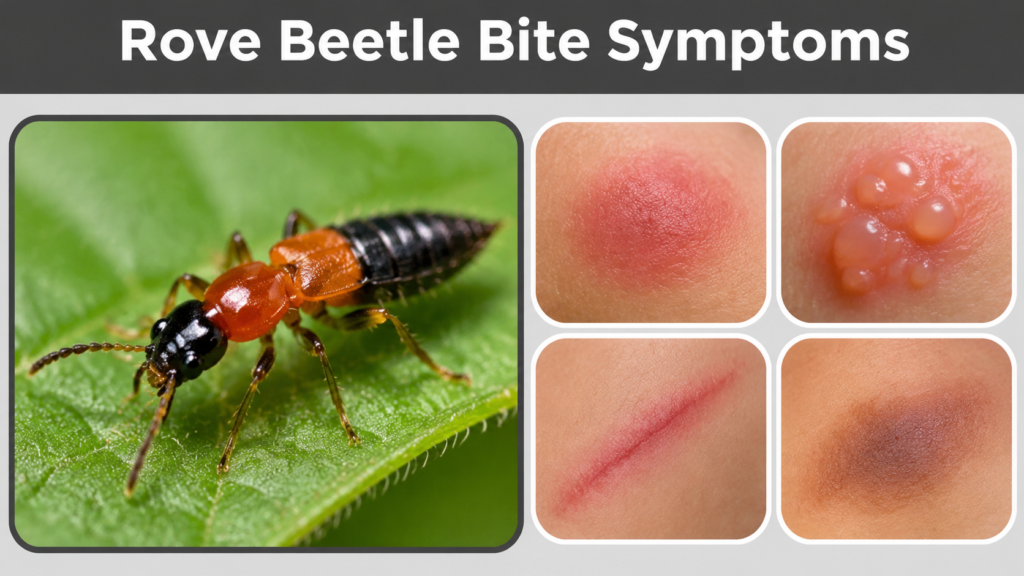
Symptoms depend on whether a person experiences a physical bite or chemical contact with a toxin-producing beetle. A defensive bite may cause immediate localized pain, whereas Paederus dermatitis usually develops several hours after exposure. Recognizing these differences can help distinguish a simple insect injury from more significant skin irritation.
Common Rove Beetle Skin Reaction Symptoms
Contact with pederin-containing beetle fluids may cause:
- Redness: Inflamed red patches develop on the affected skin.
- Burning sensation: The area may feel hot, painful, or irritated.
- Blisters: Small or large fluid-filled blisters can develop.
- Itching: Irritated skin may become itchy as the reaction progresses.
- Linear rash: Red streaks may appear where the toxin was spread across the skin.
- Skin discoloration: Dark marks may remain temporarily after healing.
Symptoms commonly begin within 12–48 hours after exposure, although timing varies.
What Does a Rove Beetle Bite Look Like?
Paederus dermatitis often produces a red, streak-shaped rash with small blisters.
The affected area may resemble a burn rather than a typical insect bite. Sometimes, matching lesions appear where two skin surfaces touch.
A physical bite from a larger rove beetle may instead produce localized tenderness or a small mark.
Skin appearance alone cannot reliably confirm the cause.
Rove Beetle Bite Treatment: What to Do
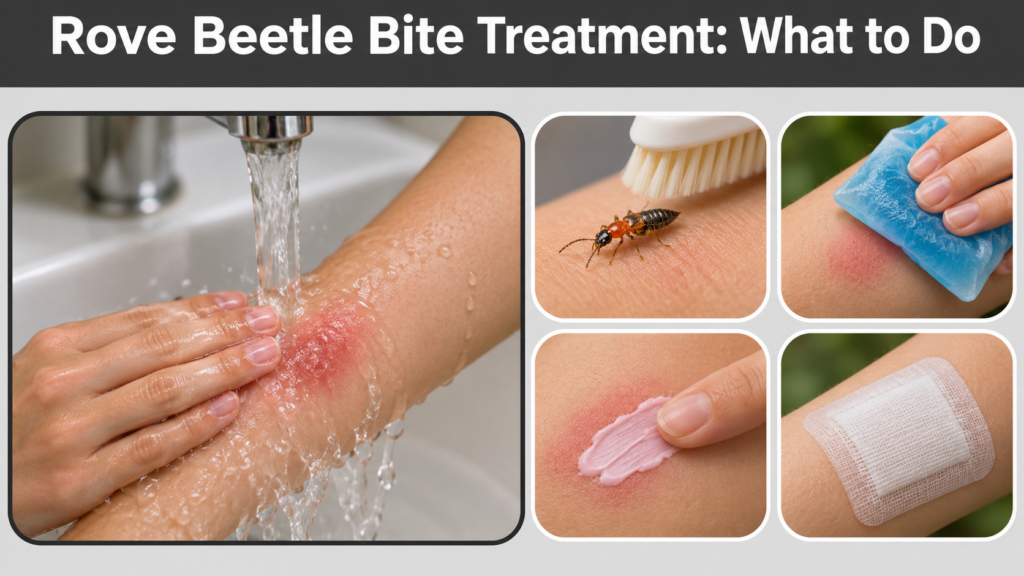
Prompt treatment is important when a toxin-producing rove beetle contacts the skin. The first priority is removing any chemical residue before it causes further irritation. Mild reactions can often be managed with basic skin care, while severe blistering, eye exposure, or signs of infection require medical attention.
Immediate First Aid
Follow these steps after suspected rove beetle contact:
- Remove the beetle carefully: Brush or blow it away without crushing it.
- Wash the skin: Clean the affected area thoroughly with soap and running water.
- Wash your hands: Prevent transferring any remaining toxin to your eyes or other body parts.
- Apply a cold compress: Use a cool, damp cloth to reduce discomfort.
- Avoid scratching: Scratching or breaking blisters may increase the risk of infection.
- Monitor symptoms: Watch for worsening pain, swelling, blistering, or spreading redness.
Rove Beetle Bite Medication
Treatment depends on the severity of the reaction.
Calamine lotion may help soothe irritated skin. A healthcare professional may recommend a topical corticosteroid to reduce inflammation.
Oral antihistamines may help with itching, although they do not neutralize pederin.
Antibiotics are not routinely required and should only be used when a healthcare professional identifies a secondary bacterial infection.
Do not apply steroid creams to open wounds or near the eyes without medical guidance.
Rove Beetle Bite Treatment at Home
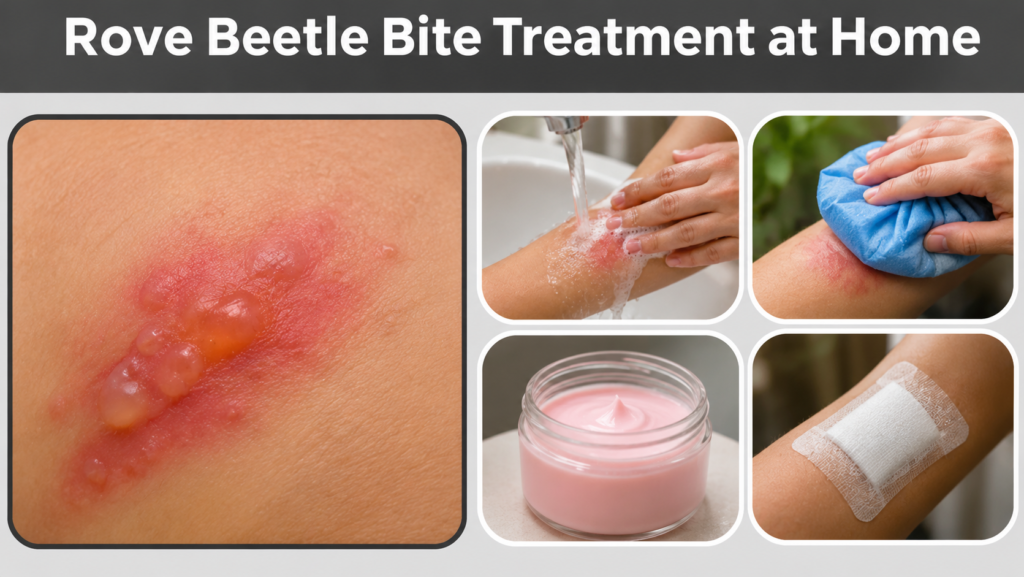
Mild rove beetle skin reactions may improve with gentle home care. The goal is to reduce discomfort, protect irritated skin, and avoid additional chemical exposure. However, home remedies cannot instantly reverse the damage caused by pederin. Severe reactions should be assessed by a healthcare professional rather than treated solely at home.
Safe Home Treatment Options
Several simple measures may help:
- Cool compresses: Apply a clean, cool, damp cloth for 10–15 minutes at a time.
- Gentle cleansing: Keep the affected skin clean using mild soap and water.
- Calamine lotion: Use on suitable intact skin to relieve mild irritation.
- Loose clothing: Avoid friction against painful or blistered areas.
- Blister protection: Keep blisters intact and protect them with a clean, nonstick dressing when necessary.
Avoid applying toothpaste, bleach, concentrated alcohol, or other harsh substances to the affected area.
When Should You See a Doctor?
Seek medical care if symptoms include extensive blistering, worsening pain, spreading redness, pus, or fever.
If toxin enters an eye, rinse immediately with clean running water and obtain urgent medical evaluation.
Medical assessment is also important when the rash affects sensitive areas such as the face or genitals, or if the diagnosis is uncertain.
How Long Does a Rove Beetle Bite Take to Heal?
The healing period varies according to the type and severity of the skin reaction. A minor physical bite may settle relatively quickly, while Paederus dermatitis can take considerably longer. The amount of toxin contacting the skin, promptness of washing, and development of secondary infection can all influence recovery.
Rove Beetle Dermatitis Healing Time
Mild cases may begin improving within several days.
More pronounced reactions often take approximately one to three weeks to heal. Some severe cases may require longer.
Even after the skin has recovered, temporary dark discoloration can remain for weeks or longer.
Avoid picking scabs or breaking blisters because doing so may delay recovery.
Can a Rove Beetle Bite Leave Scars?
Most mild reactions heal without permanent scarring.
However, severe inflammation, deeper skin damage, or secondary infection can increase the chance of lasting marks.
Post-inflammatory hyperpigmentation is more common than permanent scarring. Protecting healing skin from excessive sunlight may help reduce additional discoloration.
How to Prevent Rove Beetle Bites and Skin Reactions
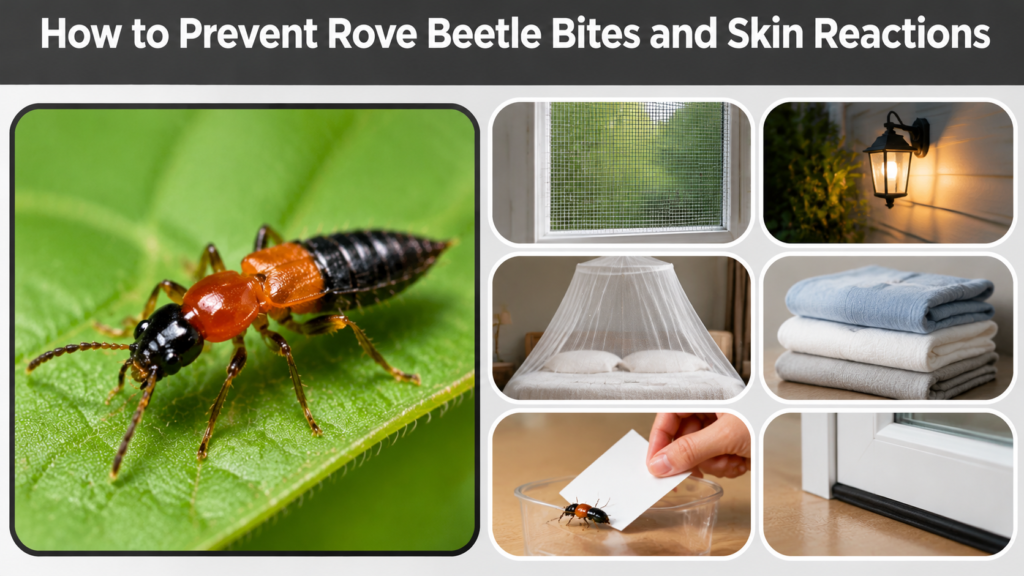
Prevention is particularly important in warm, humid locations where rove beetles are common. Some species are attracted to artificial lights and may enter homes through open windows or doors. Simple household precautions and careful insect handling can greatly reduce the risk of accidental contact with toxin-producing species.
Rove Beetle Prevention Tips
- Install window screens: Prevent beetles from entering living spaces.
- Reduce unnecessary lighting: Avoid leaving bright outdoor lights on near open windows.
- Use mosquito nets: Protect sleeping areas from insects.
- Avoid crushing beetles: Gently remove them from clothing or exposed skin.
- Check bedding and clothing: Inspect items before using them in beetle-prone areas.
- Seal entry points: Close gaps around doors, windows, and other openings.
Are Rove Beetles Dangerous?
Most rove beetles are harmless or beneficial insects that feed on other small organisms.
However, toxin-producing Paederus species can cause painful contact dermatitis, and some larger rove beetles can bite defensively.
The greatest risk comes from accidentally crushing a toxin-producing beetle against the skin, especially near sensitive areas.
FAQs
1. Do all rove beetles bite humans?
No, not all rove beetles bite humans. Most species avoid people and are not aggressive. Some larger species, such as the hairy rove beetle, can bite defensively when handled. Certain Paederus species instead cause skin irritation when their toxin-containing body fluids contact the skin.
2. Is a rove beetle bite poisonous?
A physical bite from a rove beetle is not the same as exposure to pederin. Certain Paederus beetles contain this potent skin-irritating toxin, which can cause redness, burning, and blisters when released onto the skin. The reaction is chemical contact dermatitis rather than venom injected through a bite.
3. Can rove beetle bites spread from person to person?
Paederus dermatitis is not contagious. However, pederin remaining on unwashed skin or contaminated objects can be transferred to another area through direct contact. Washing exposed skin and hands promptly helps prevent additional exposure. New lesions appearing later do not necessarily mean the reaction is spreading.
4. What is the fastest way to treat a rove beetle bite?
The most important immediate action after contact with a suspected Paederus beetle is to wash the skin thoroughly with soap and water. Cool compresses can relieve discomfort. Depending on severity, a healthcare professional may recommend anti-inflammatory treatment. There is no reliable instant cure for established blistering dermatitis.
5. Are rove beetles found in the United States?
Yes, many rove beetle species live throughout the United States. Most are harmless and beneficial predators. Some species can bite when threatened, while certain Paederus beetles can cause contact dermatitis. The risk depends on the species involved and whether its irritating body fluids contact the skin.