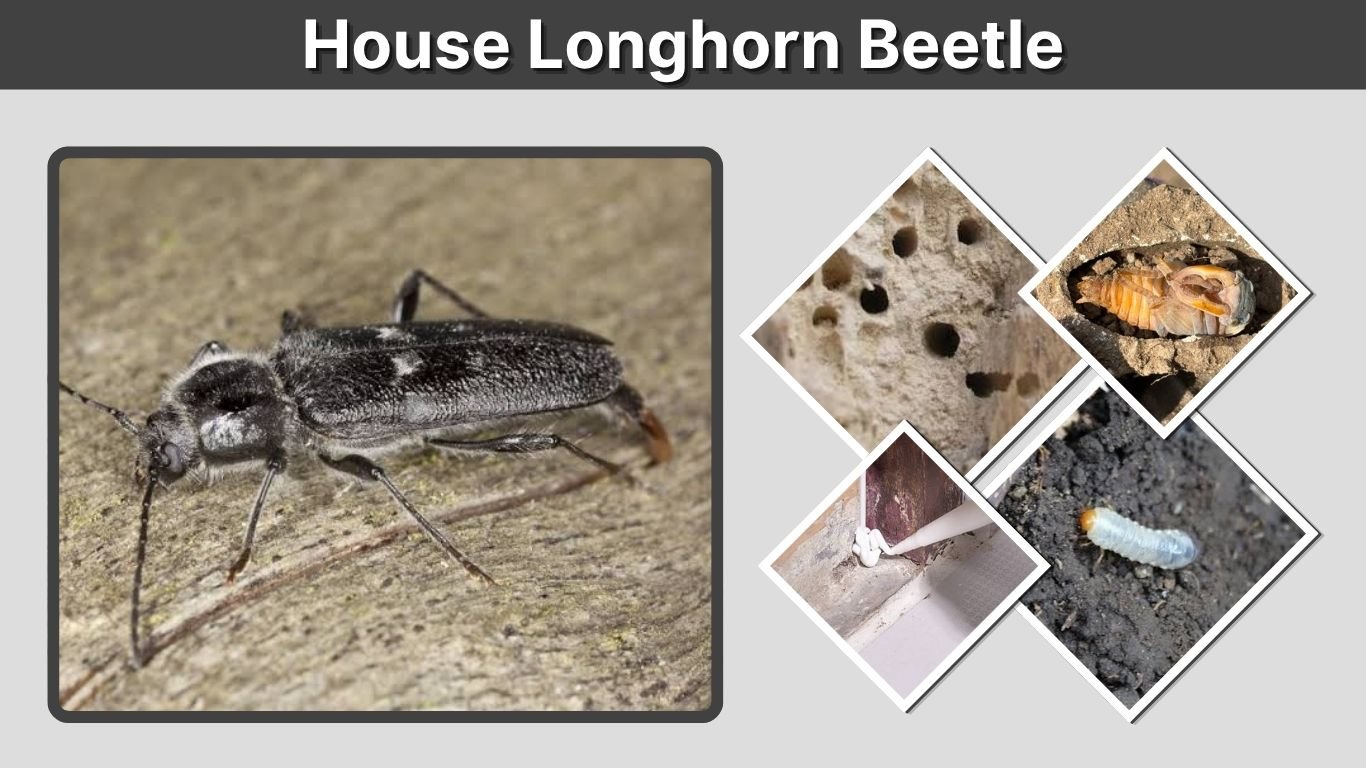
The house longhorn beetle (Hylotrupes bajulus), also known as the old house borer, is a wood-boring beetle that can damage wooden structures in homes. Recognized by its dark body, long antennae, and distinctive markings, this insect primarily attacks softwood timber such as pine and spruce. Although adult beetles are generally harmless to people, their larvae can remain hidden inside wood for years, gradually weakening structural components. Understanding their appearance, life cycle, warning signs, and treatment options can help homeowners identify and manage infestations.
What Is a House Longhorn Beetle?
The house longhorn beetle is a wood-boring insect belonging to the family Cerambycidae. Its scientific name is Hylotrupes bajulus, and it is widely known for damaging structural softwood. Despite its alternative name, old house borer, it can infest both newly constructed and older buildings. The larvae cause most of the damage by tunneling through timber and feeding on its internal tissues.
Scientific Classification
- Scientific name: Hylotrupes bajulus
- Common names: House longhorn beetle, old house borer
- Family: Cerambycidae
- Order: Coleoptera
- Class: Insecta
- Genus: Hylotrupes
- Primary food source: Seasoned coniferous softwood
Is a House Longhorn Beetle Dangerous?
House longhorn beetles are not considered dangerous to humans. They do not sting or inject venom, although an adult may pinch with its jaws if handled.
Their main danger comes from structural damage. Larvae can tunnel through wooden beams, roof timbers, and floor joists, potentially weakening affected structures over time.
House Longhorn Beetle Identification and Appearance
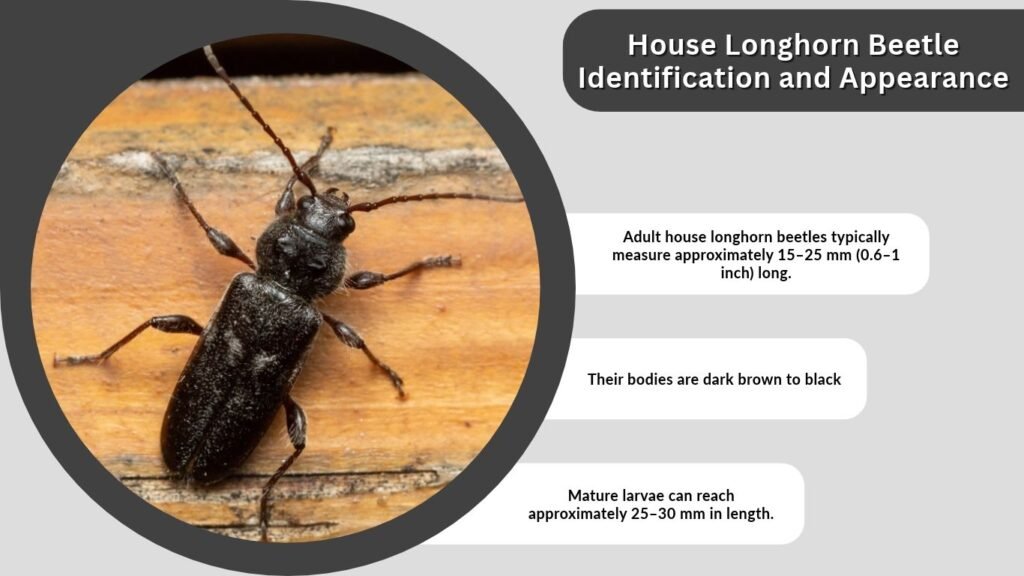
Identifying a house longhorn beetle requires examining its body shape, antennae, coloration, and distinctive markings. Adults generally have elongated, slightly flattened bodies with dark brown or black coloring. Their antennae are noticeably shorter than those of many other longhorn beetle species. The larvae look completely different from adults and remain concealed inside wood during development.
House Longhorn Beetle Size and Appearance
Adult house longhorn beetles typically measure approximately 15–25 mm (0.6–1 inch) long. Their bodies are dark brown to black, sometimes with pale gray patches on the wing covers.
Two shiny, raised black bumps behind the head are particularly useful identification features. Their antennae usually measure about one-third of their body length.
What Do House Longhorn Beetle Larvae Look Like?
House longhorn beetle larvae are creamy-white, elongated grubs with dark chewing mouthparts. Mature larvae can reach approximately 25–30 mm in length.
They remain inside softwood, creating tunnels as they feed. Under magnification, three small dark eyespots on each side of the head help distinguish them from several other wood-boring larvae.
Why Is There a Longhorn Beetle in My House?
Finding a longhorn beetle indoors does not automatically indicate a wood infestation. Many harmless longhorn beetle species enter homes through open windows, doors, or transported firewood. However, finding a confirmed house longhorn beetle emerging from structural timber may suggest that larvae have been developing inside the wood for several years.
Where Do House Longhorn Beetles Hide?
House longhorn beetles are most commonly associated with exposed or concealed softwood materials.
Potential locations include roof timbers, attic rafters, wooden beams, floor joists, and unfinished structural lumber. Adult beetles may appear near windows after emerging from wood because they are attracted to light.
The larvae remain hidden inside the timber, making infestations difficult to detect during their early development.
Do House Longhorn Beetles Prefer Old Houses?
Despite their name, these beetles frequently infest relatively new buildings. They prefer the nutrient-rich sapwood of younger coniferous timber.
Older wooden structures can also become infested, especially when suitable timber and environmental conditions are present. The age of a building alone does not determine whether it is vulnerable.
Signs of House Longhorn Beetle Damage
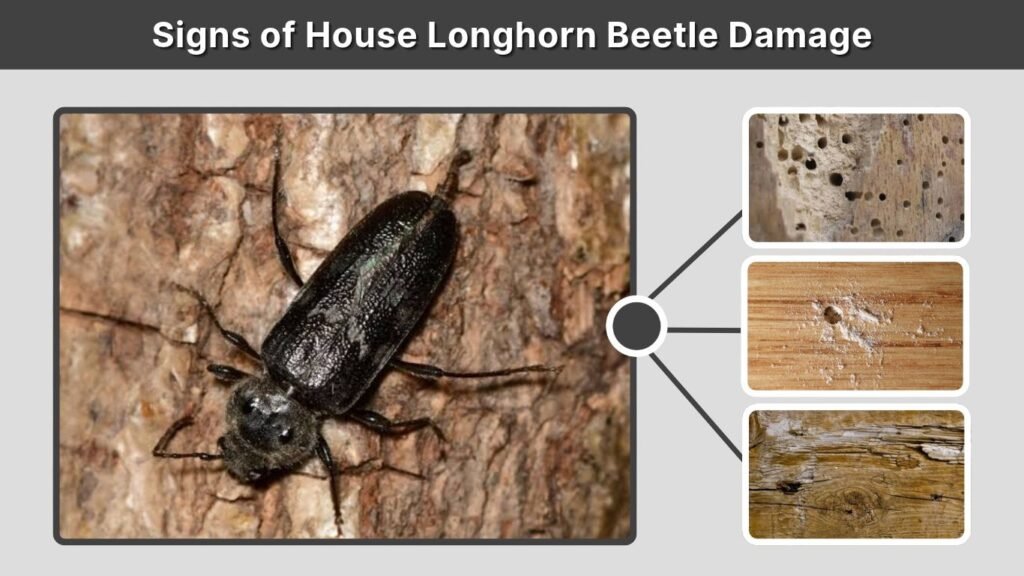
House longhorn beetle larvae can cause significant damage by feeding within structural softwood. Their tunnels may remain hidden beneath the timber’s outer surface, allowing deterioration to continue unnoticed. Identifying warning signs early is important, but old exit holes or sawdust alone cannot establish whether beetles are still active.
Common Signs of Infestation
- Oval exit holes: Adult beetles leave irregular oval openings, usually around 6–10 mm across.
- Wood dust: Fine powder or frass may accumulate near affected timber.
- Chewing sounds: Larger larvae sometimes produce faint rasping or scraping noises inside wood.
- Damaged timber: Severely affected wood may contain numerous interconnected tunnels.
- Adult beetles: Adults emerging from structural wood can indicate recent development inside the timber.
- Weak surfaces: Heavily damaged timber may become fragile or break beneath its outer layer.
Can House Longhorn Beetles Damage Roof Timbers?
Yes. House longhorn beetle larvae primarily feed within coniferous softwood, including pine, spruce, and fir.
Extensive tunneling can reduce the strength of roof beams, joists, and other structural components. However, the seriousness of the damage depends on the infestation’s duration, the number of larvae, and the condition of the timber.
House Longhorn Beetle Life Cycle
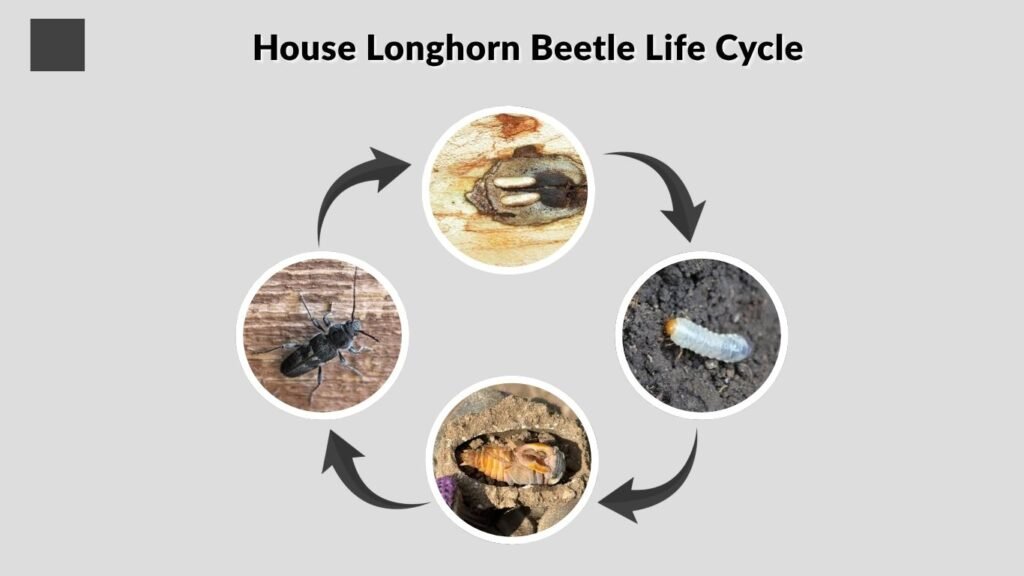
The house longhorn beetle undergoes complete metamorphosis through four developmental stages: egg, larva, pupa, and adult. Unlike many household insects, its life cycle can extend across several years. Most of this time is spent as a larva inside wood, while adult beetles survive for a comparatively short period.
Egg and Larval Stages
Female beetles lay eggs inside cracks, joints, and crevices of suitable softwood. After hatching, tiny larvae enter the timber and begin feeding.
Larval development commonly lasts several years, often around three to six years, but temperature, moisture, and wood quality can make development shorter or much longer.
Pupal and Adult Stages
Once fully grown, the larva prepares a chamber near the wood surface and transforms into a pupa.
After completing development, the adult beetle emerges through an oval hole. Adults generally appear during warmer months, particularly in summer, and search for mates to reproduce.
How to Get Rid of House Longhorn Beetles
Effective house longhorn beetle treatment begins with correctly identifying the species and determining whether the infestation is active. Because larvae remain protected inside timber, ordinary household insect sprays are generally ineffective. Treatment depends on the extent of damage, timber accessibility, and likelihood of reinfestation.
House Longhorn Beetle Treatment Methods
- Inspect affected wood: Have suspected timber examined for larvae, fresh activity, and structural damage.
- Remove damaged timber: Replace isolated infested sections when removal is practical.
- Control moisture: Improve ventilation and repair sources of dampness that favor larval development.
- Professional wood treatment: Licensed specialists may use appropriate wood preservatives or insecticides where necessary.
- Specialist fumigation: Extensive, inaccessible infestations may require professional evaluation of more intensive treatment options.
When Should You Call a Professional?
Consult a qualified pest management professional if you repeatedly find beetles emerging from timber, notice fresh wood dust, or hear unexplained chewing noises.
If structural beams or roof supports appear weakened, a building surveyor or structural engineer should also assess the damage before repairs are planned.
How to Prevent House Longhorn Beetle Infestations
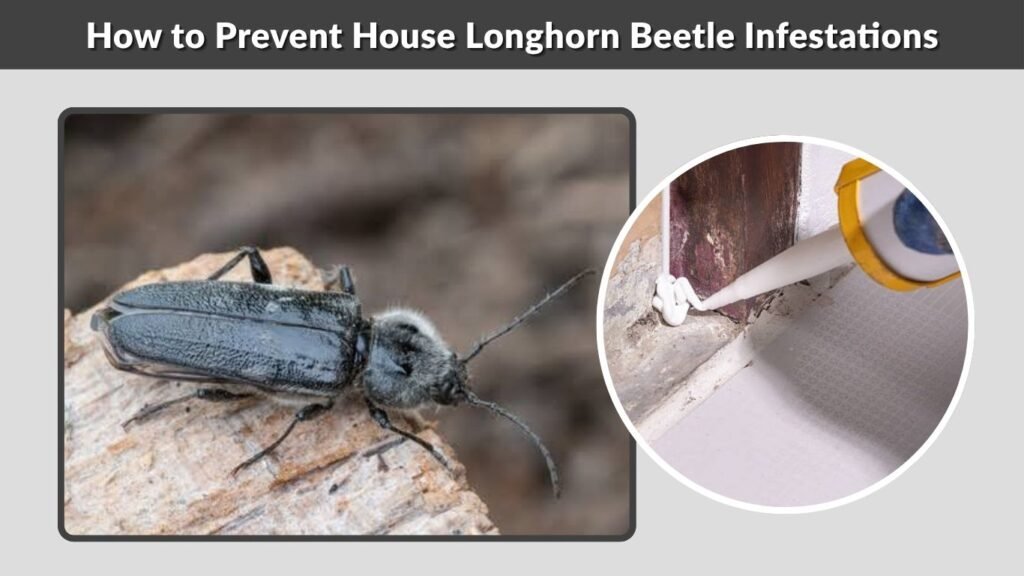
Preventing house longhorn beetles involves reducing favorable breeding conditions and checking wood before it enters a building. Properly treated timber, good ventilation, and regular inspections can lower the risk of infestation. Preventive measures are especially important in areas where the species is established.
House Longhorn Beetle Prevention Tips
- Inspect new timber: Check structural lumber for exit holes or signs of wood-boring insects.
- Use treated wood: Choose appropriately preserved timber for vulnerable building components.
- Reduce dampness: Repair leaks and improve ventilation around wooden structures.
- Inspect roof spaces: Examine accessible rafters, beams, and joists periodically.
- Avoid untreated reclaimed timber: Inspect salvaged wood carefully before installation.
- Seal exposed cracks: Suitable protective finishes can reduce opportunities for egg-laying.
Are House Longhorn Beetles Common in the UK?
House longhorn beetles occur in parts of southern England, particularly areas of Surrey and neighboring counties.
English building regulations contain specific guidance for protecting roof timbers in designated higher-risk areas. Homeowners undertaking construction in those locations should follow applicable timber-treatment requirements.
FAQs
1. Do House Longhorn Beetles Bite Humans?
House longhorn beetles are not aggressive toward humans. Although adults possess chewing mouthparts and may pinch when handled, they do not sting or inject venom. Their main concern is the structural damage caused by larvae feeding inside softwood timber.
2. How Long Do House Longhorn Beetles Live?
Their complete life cycle can last several years. Larvae commonly develop inside timber for around three to six years, although conditions can extend development considerably. Adult beetles live for a much shorter period, primarily to mate and reproduce.
3. What Does House Longhorn Beetle Damage Look Like?
Typical damage includes oval exit holes, fine wood dust, internal tunnels, and weakened softwood. Heavily infested timber may appear intact externally while containing extensive galleries beneath the surface. Professional inspection can determine the severity and whether the infestation remains active.
4. How Do You Get Rid of Longhorn Beetles in Your House?
First, identify the beetle and confirm whether wood infestation is present. Limited infestations may require timber replacement, while more extensive problems can need professional treatment. Improving ventilation and controlling moisture can also reduce the likelihood of continued infestation.
5. Can a House Longhorn Beetle Fly?
Yes. Adult house longhorn beetles can fly, particularly during warm weather. They may move between suitable wood sources or appear near windows after emerging from timber. Their ability to fly also allows them to locate potential breeding locations.