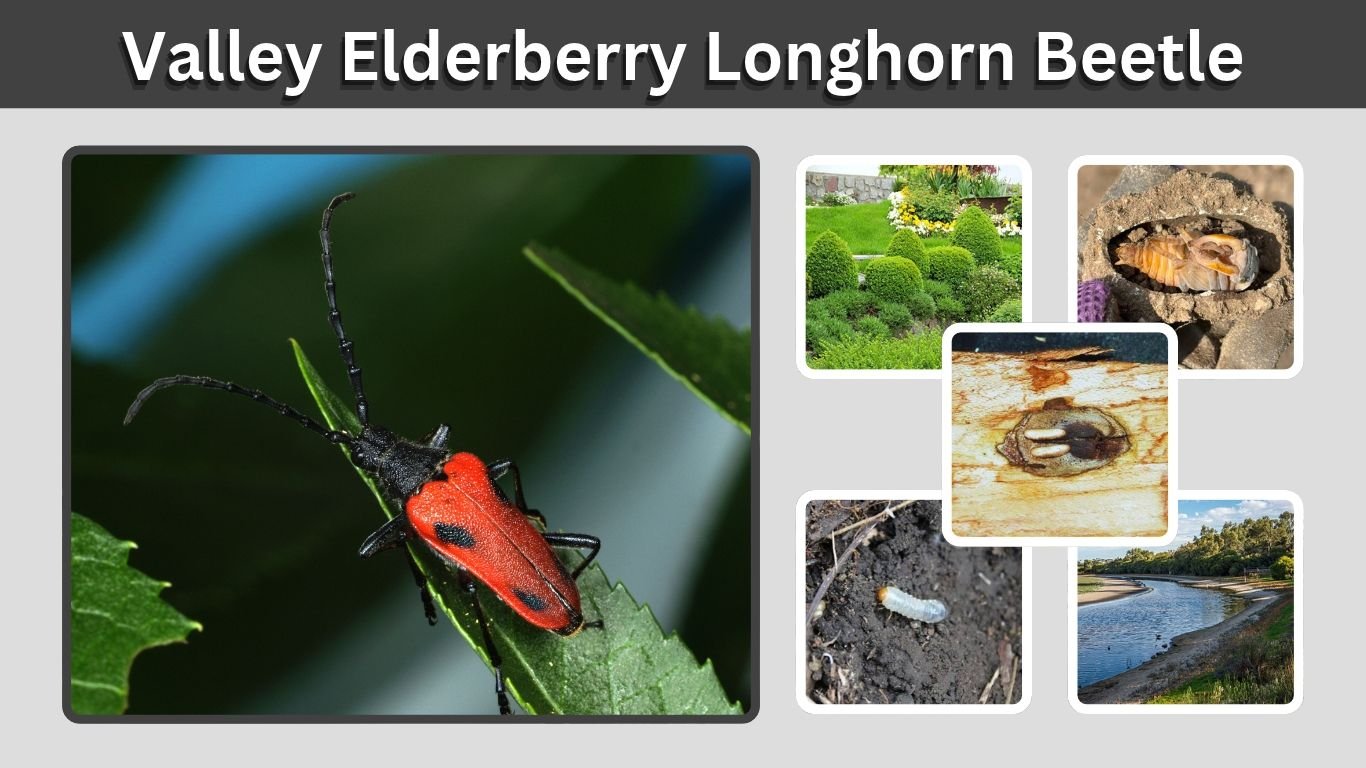
The valley elderberry longhorn beetle (Desmocerus californicus dimorphus) is a rare, colorful beetle native to California’s Central Valley. Recognized by its long antennae and distinctive red-orange and dark metallic wing covers, this insect depends entirely on elderberry plants for survival. It inhabits riparian forests, riverbanks, and foothill woodlands where suitable host shrubs grow. Listed as threatened under the U.S. Endangered Species Act, the beetle faces habitat loss and environmental pressures. Understanding its identification, habitat, life cycle, and conservation needs helps explain why protecting this unusual insect is important.
What Is the Valley Elderberry Longhorn Beetle?
The valley elderberry longhorn beetle is a wood-boring insect belonging to the family Cerambycidae. It is a subspecies of Desmocerus californicus and occurs naturally in California’s Central Valley. Unlike many longhorn beetles that use multiple tree species, this beetle depends on elderberry shrubs for feeding, reproduction, and larval development. Its specialized relationship with elderberry makes it particularly vulnerable to habitat destruction.
Scientific Classification
The valley elderberry longhorn beetle belongs to the following taxonomic groups:
- Scientific name: Desmocerus californicus dimorphus
- Common name: Valley elderberry longhorn beetle
- Family: Cerambycidae
- Order: Coleoptera
- Class: Insecta
- Genus: Desmocerus
- Conservation status: Threatened under the U.S. Endangered Species Act
Why Is It Called an Elderberry Longhorn Beetle?
The name comes from its dependence on elderberry shrubs and its prominent antennae. Longhorn beetles typically have long, segmented antennae that may approach or exceed their body length. The word elderberry refers to the host plant that supports the insect throughout its development.
Elderberry Longhorn Beetle Identification and Appearance
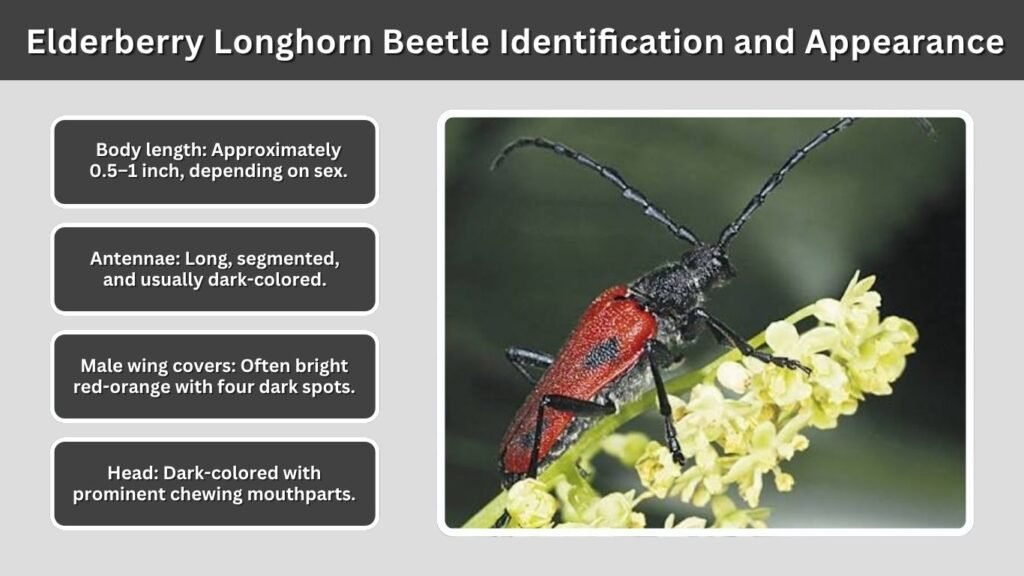
The valley elderberry longhorn beetle is a medium-sized insect with an elongated body and striking coloration. Adults generally measure approximately 2 centimeters (0.8 inches) long. Their bodies feature combinations of red-orange, dark green, and black markings. Males and females have noticeably different wing-cover patterns, making their appearance useful for distinguishing between sexes.
Distinctive Physical Features
Several characteristics help identify this rare beetle:
- Body length: Approximately 0.5–1 inch, depending on sex.
- Antennae: Long, segmented, and usually dark-colored.
- Male wing covers: Often bright red-orange with four dark spots.
- Female wing covers: Generally dark metallic green with reddish-orange edges.
- Head: Dark-colored with prominent chewing mouthparts.
- Legs: Slender, dark, and adapted for moving across vegetation.
Male vs. Female Elderberry Longhorn Beetle
Male beetles typically have longer, thicker antennae and bright red-orange wing covers with darker markings. Females are generally larger and often display darker metallic wing covers edged with red.
These differences are especially helpful when identifying adults. However, their small size and short seasonal activity period can make direct observation difficult.
Valley Elderberry Longhorn Beetle Habitat and Range
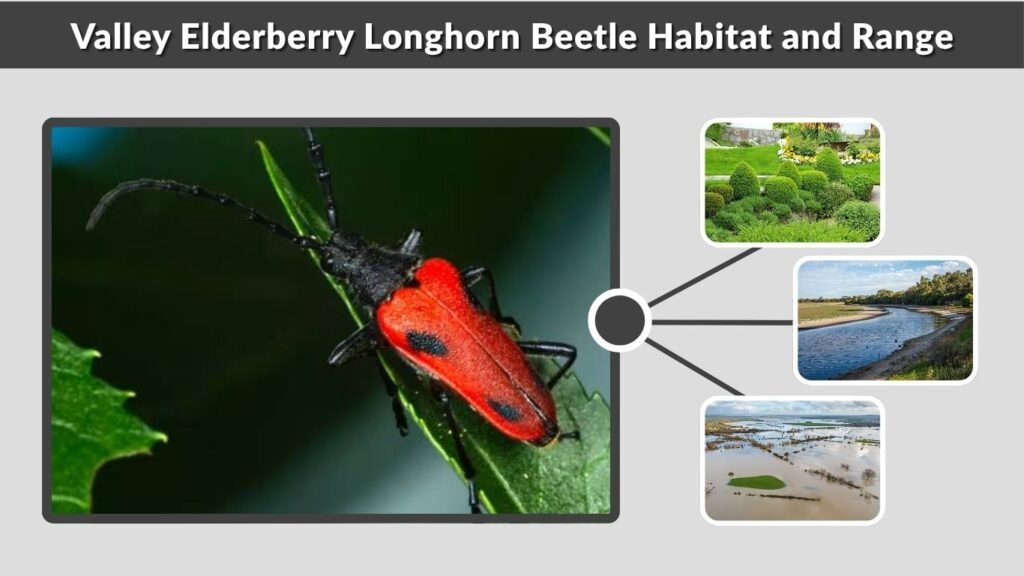
This beetle is native to California’s Central Valley, where it inhabits riparian woodlands and nearby foothill habitats. Its distribution is strongly connected to the presence of elderberry shrubs. Although elderberry plants occur across a wider geographical area, the valley elderberry longhorn beetle has a much more restricted natural range.
Where Do Valley Elderberry Longhorn Beetles Live?
The beetle occurs from approximately Shasta County in northern California south through parts of Madera County. Important areas include the Sacramento Valley, San Joaquin Valley, and associated river systems.
It has been recorded around the Sacramento, American, Merced, and other Central Valley rivers. Most populations occur in lowland environments and nearby foothills where suitable elderberry plants grow.
Preferred Habitat Conditions
Valley elderberry longhorn beetles prefer environments containing mature elderberry shrubs, particularly along riverbanks, floodplains, and woodland edges.
Riparian vegetation provides suitable conditions for elderberry growth and offers shelter for developing beetles. Because larvae spend much of their lives inside elderberry stems, the survival of established shrubs is essential to maintaining local populations.
Valley Elderberry Longhorn Beetle Diet and Host Plants
The valley elderberry longhorn beetle depends on elderberry plants throughout its life. Its feeding behavior changes between the larval and adult stages. Developing larvae consume the soft interior tissue of stems, while adults feed on plant foliage, flowers, and nectar. This specialized diet makes the availability of healthy elderberry shrubs particularly important.
What Do Elderberry Longhorn Beetle Larvae Eat?
The larvae feed on the soft pith inside elderberry stems. After hatching, they bore through the plant’s outer tissues and create tunnels as they develop.
They remain concealed within the shrub for an extended period, receiving both food and protection from the surrounding plant material. Their development may continue for one to two years before adults emerge.
What Do Adult Elderberry Longhorn Beetles Eat?
Adult beetles feed on elderberry leaves, flowers, and nectar. They generally become active during spring when elderberry shrubs begin flowering.
Although adults visit flowers, their importance as pollinators has not been established as a specialized relationship. Their strongest ecological association is their complete dependence on elderberry as a host plant.
Valley Elderberry Longhorn Beetle Life Cycle
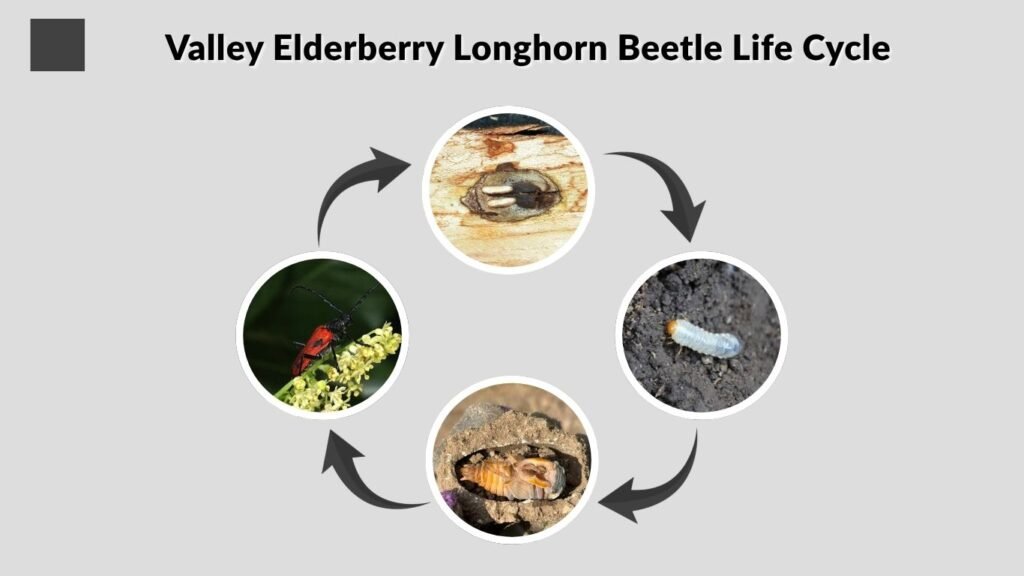
The valley elderberry longhorn beetle undergoes complete metamorphosis, developing through four stages: egg, larva, pupa, and adult. Most of its life is spent concealed inside elderberry stems. Development generally takes one to two years, while the adult stage lasts only a few days to several weeks.
1. Egg Stage
Female beetles deposit eggs on suitable elderberry plants, including bark crevices, leaves, and junctions between stems and leaf stalks. The eggs are small and initially pale-colored before becoming darker.
After hatching, young larvae begin boring into the host plant.
2. Larval Stage
The larvae enter elderberry stems and feed on their soft inner pith. They gradually grow while creating tunnels within the plant.
This is the longest developmental stage, often lasting one to two years. The larvae remain protected inside the stems throughout much of their growth.
3. Pupal Stage
When fully developed, the larva prepares a chamber inside the elderberry stem. It creates an opening toward the outside and temporarily seals it with wood material.
Inside the chamber, the insect transforms into a pupa and undergoes the changes necessary to become an adult.
4. Adult Stage
Adult beetles emerge from March through June, often around the time elderberry shrubs flower. They leave distinctive exit holes in the stems.
After emerging, adults feed, search for mates, and reproduce. Their lifespan is relatively short, making the spring breeding season important for maintaining the population.
Why Is the Elderberry Longhorn Beetle Threatened?
The valley elderberry longhorn beetle was federally listed as threatened on August 8, 1980. Its limited geographical distribution and dependence on elderberry plants make it vulnerable to environmental changes. Extensive clearing of riparian forests for agriculture, urban development, and infrastructure has reduced and fragmented suitable habitat throughout California’s Central Valley.
Major Threats to the Species
Several environmental factors threaten the survival of this beetle:
- Habitat destruction: Agricultural expansion and urban development remove suitable elderberry habitat.
- Riverbank modification: Levee construction and maintenance can damage elderberry shrubs.
- Habitat fragmentation: Isolated populations may have fewer opportunities to reproduce and disperse.
- Invasive species: Non-native plants and Argentine ants can negatively affect beetle populations.
- Pesticide exposure: Chemical applications around host shrubs may harm developing or adult beetles.
- Climate-related pressures: Drought, flooding, and other environmental changes may reduce habitat quality.
Has the Elderberry Longhorn Beetle Been Delisted?
No. The valley elderberry longhorn beetle remains federally classified as threatened.
The U.S. Fish and Wildlife Service previously considered removing it from the endangered and threatened species list. However, the proposed delisting was withdrawn in September 2014, and the species continued receiving federal protection.
Elderberry Longhorn Beetle Conservation and Protection
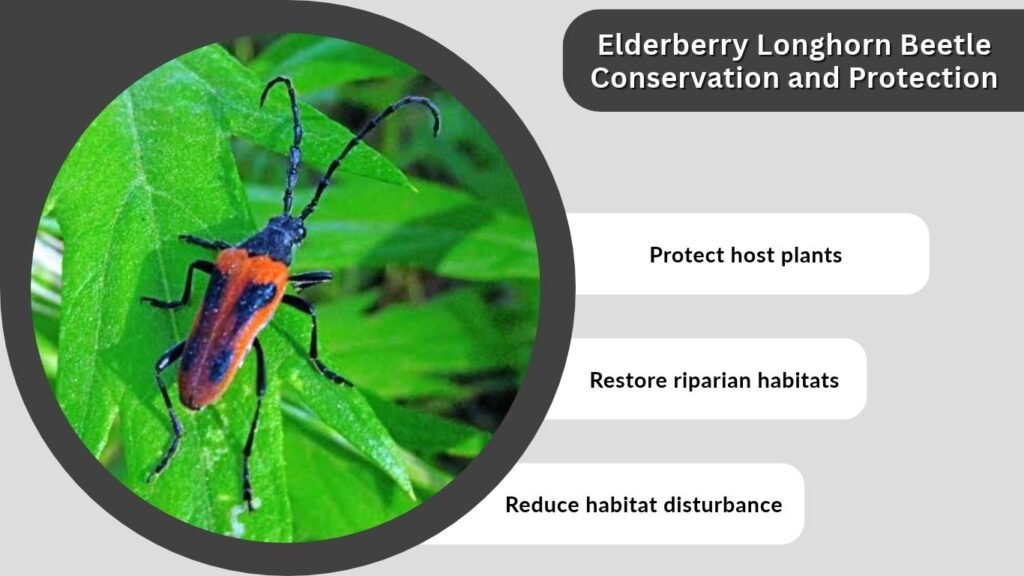
Conservation efforts focus on protecting elderberry plants and restoring suitable habitats across California’s Central Valley. Because larvae develop inside living stems, removing or damaging elderberry shrubs can directly affect beetle survival. Federal guidelines address habitat assessments, vegetation management, monitoring, and measures to reduce development-related impacts.
How Can We Protect Elderberry Longhorn Beetles?
Important conservation approaches include:
- Protect host plants: Preserve mature elderberry shrubs within the beetle’s natural range.
- Restore riparian habitats: Reestablish native vegetation along rivers and floodplains.
- Reduce habitat disturbance: Avoid unnecessary cutting or removal of suitable elderberry stems.
- Monitor populations: Survey elderberry shrubs for evidence of beetle activity.
- Control invasive species: Manage non-native plants and other threats to suitable habitat.
- Follow conservation guidelines: Consult wildlife agencies before modifying potentially occupied habitat.
How Do Scientists Identify Elderberry Beetle Exit Holes?
Adult valley elderberry longhorn beetles leave distinctive oval-shaped openings when emerging from elderberry stems. These exit holes are important clues because adults are rarely encountered during routine surveys.
Researchers examine elderberry shrubs for exit holes and other evidence of beetle activity. However, an exit hole alone may not confirm current occupancy, so professional surveys consider additional habitat characteristics and historical observations.
FAQs
1. Is the Valley Elderberry Longhorn Beetle Endangered?
The valley elderberry longhorn beetle is federally classified as threatened rather than endangered. It has received protection under the U.S. Endangered Species Act since August 8, 1980. Habitat loss and fragmentation remain major conservation concerns.
2. Are Elderberry Longhorn Beetles Poisonous?
Valley elderberry longhorn beetles are not known to be poisonous or venomous to humans. They possess chewing mouthparts but are not aggressive toward people. They should be observed without unnecessary handling, especially because the subspecies is federally protected.
3. How Long Do Valley Elderberry Longhorn Beetles Live?
Their complete life cycle generally lasts one to two years. Most of this time is spent developing larvae inside elderberry stems. Adults typically survive from several days to a few weeks, depending on environmental conditions.
4. Why Are Valley Elderberry Longhorn Beetles Important?
These beetles are part of California’s native riparian ecosystems. Their specialized relationship with elderberry plants illustrates the importance of preserving native vegetation. Protecting their habitat also benefits other wildlife that depend on healthy riverbank environments.
5. What Is the Host Plant of the Valley Elderberry Longhorn Beetle?
The beetle depends on elderberry plants belonging to the genus Sambucus, particularly native blue elderberry. Females lay eggs on these plants, larvae develop inside their stems, and adults feed on their leaves, flowers, and nectar.