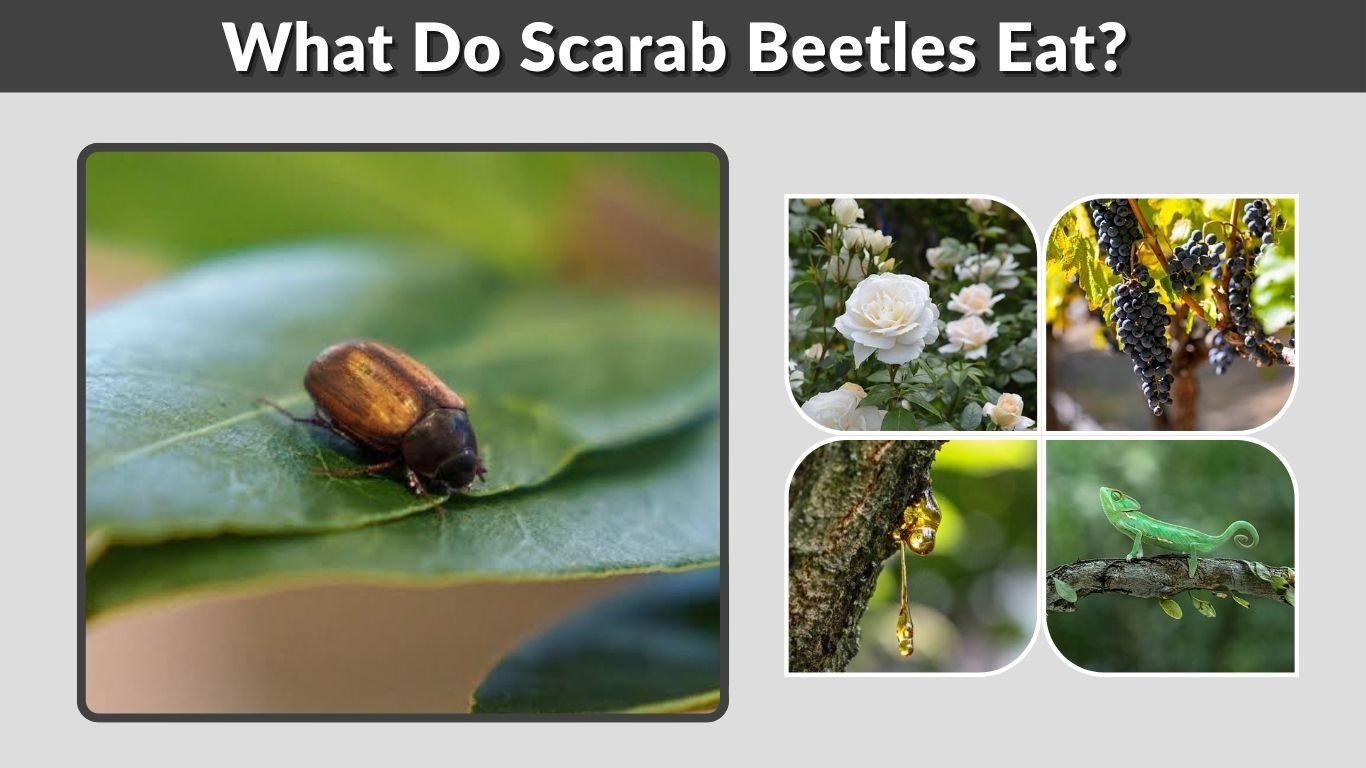
What do scarab beetles eat? Their diet depends on the species and life stage. Some feed on animal dung, while others eat leaves, flowers, fruit, tree sap, fungi, or decaying wood. Scarab larvae may consume roots or decomposing material underground. Movies have also popularized the idea of flesh-eating scarabs that attack humans, but that portrayal is fictional. A few real scarabs scavenge carrion, which is very different from hunting people. This guide explains scarab beetle diets, feeding behavior, larvae, and their role in nature.
What Do Scarab Beetles Eat?
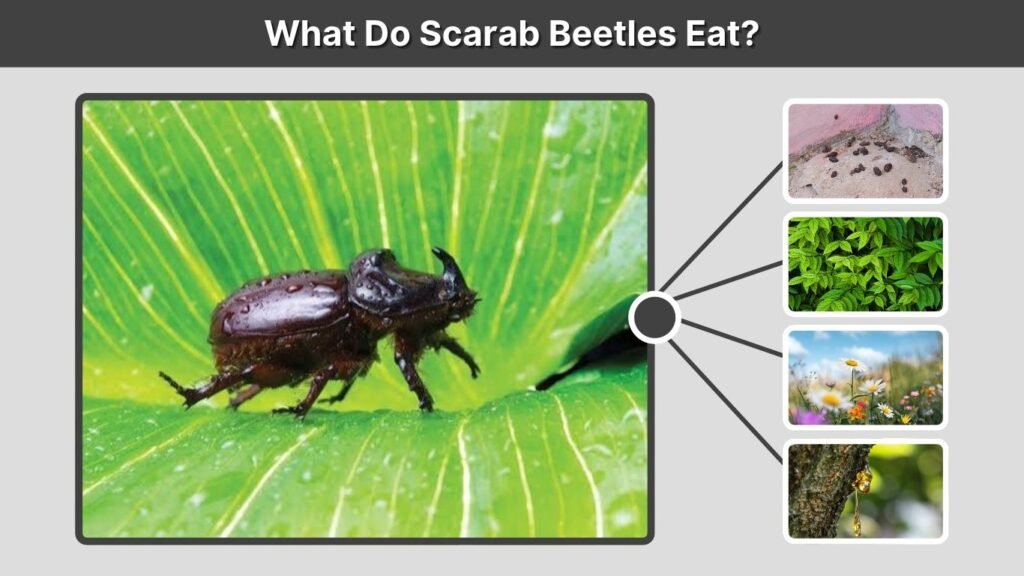
Scarab beetles belong to the Scarabaeidae family, which includes dung beetles, June beetles, rhinoceros beetles, and many colorful flower beetles. Their feeding habits differ considerably. While some species specialize in decomposing animal waste, others consume living plants or decaying vegetation. These diverse diets allow scarabs to occupy many habitats worldwide.
Common Foods Scarab Beetles Eat
- Animal dung: Many dung beetles consume nutrients found in mammal droppings.
- Plant leaves: Japanese beetles and other plant-feeding scarabs consume foliage.
- Flowers and pollen: Flower chafers feed on pollen and floral tissues.
- Fruits: Certain species eat ripe, overripe, or fermenting fruit.
- Tree sap: Some rhinoceros beetles consume sap from damaged trees.
- Decaying wood: Larvae of several scarab species develop inside rotting wood.
- Fungi: Some scarabs feed on mushrooms and decomposing fungal material.
- Carrion: Certain scavenging species consume decomposing animal remains.
Why Do Scarab Beetles Eat Different Foods?
Scarab beetles have evolved different feeding adaptations that allow them to use available resources.
Dung beetles often have mouthparts suited to extracting nutrients from soft organic material. Plant-feeding scarabs possess chewing mouthparts capable of damaging leaves and flowers.
Their feeding preferences also change as they develop from larvae into adults.
Do Scarab Beetles Eat Flesh?
Some scarab beetles consume carrion, meaning the remains of dead animals. However, most scarabs do not feed on flesh. Their diets generally consist of dung, vegetation, fungi, fruit, or decomposing organic material.
The idea that scarabs aggressively attack living animals comes primarily from fictional entertainment rather than actual insect behavior.
Do Scarab Beetles Eat Human Flesh?
Scarab beetles do not hunt humans or attack people in large groups to consume their flesh.
Certain carrion-feeding scarabs may scavenge decomposing remains, but this behavior is completely different from feeding on living humans.
Some other beetle families, including Dermestidae, contain species whose larvae consume dried animal tissues. These are not scarab beetles.
Are Flesh-Eating Scarab Beetles in The Mummy Real?
The 1999 movie The Mummy depicts scarab beetles crawling beneath human skin and rapidly consuming flesh.
These scenes are fictional.
Real scarabs do not behave this way, and they cannot strip a living person to the bone within seconds.
Their portrayal in the movie was designed to create horror rather than accurately represent insect biology.
Do All Scarab Beetles Eat Dung?
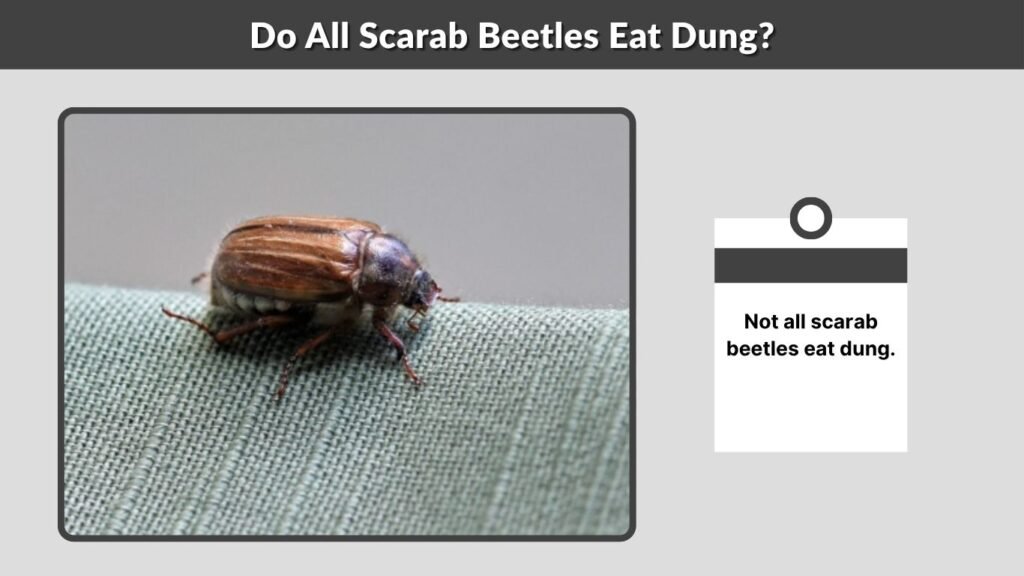
Not all scarab beetles eat dung. Although dung beetles are among the most recognizable members of the family, many other scarabs feed on plants, fruits, flowers, roots, or decaying materials.
Diet depends on species, habitat, and developmental stage.
What Do Egyptian Scarab Beetles Eat?
Ancient Egyptian scarab symbolism was inspired largely by dung beetles, particularly species that roll dung into balls.
These insects feed on animal waste and use it to provision their offspring.
Egyptians associated dung-ball rolling with the movement of the sun, making scarabs symbols of renewal and regeneration.
What Do Dung Beetles Eat?
Most dung beetles consume mammal droppings, extracting nutrients from partially digested organic matter.
Some species roll dung balls away from the original pile, while others bury dung directly underneath it.
This feeding behavior helps recycle nutrients and reduces the accumulation of animal waste.
What Do Baby Scarab Beetles Eat?
Baby scarab beetles are called larvae or grubs. They usually have soft, pale bodies, brown heads, and curved shapes. Unlike adults, which often feed above ground, many scarab larvae develop underground or inside decomposing materials.
What Do Scarab Beetle Larvae Eat?
The diet of scarab larvae depends on the species.
Japanese beetle and June beetle grubs primarily consume living plant roots. Heavy infestations can damage lawns and other vegetation.
Dung beetle larvae develop inside dung masses prepared by adult beetles. Some rhinoceros beetles and flower chafer larvae consume decomposing wood or organic debris.
What Do Different Scarab Beetle Species Eat?
The scarab family contains numerous species with different feeding behaviors. Some are beneficial decomposers, while others become agricultural pests. Understanding species-specific diets helps explain why certain scarabs appear in gardens, forests, farms, or areas containing animal waste.
Scarab Beetle Species and Their Foods
- Rainbow Scarab (Phanaeus vindex): Primarily feeds on animal dung.
- Japanese Beetle (Popillia japonica): Adults feed on leaves and flowers; larvae consume grass roots.
- Green June Beetle (Cotinis nitida): Adults eat ripe and fermenting fruits; larvae feed on decomposing organic matter.
- European Rhinoceros Beetle (Oryctes nasicornis): Larvae consume decomposing wood and plant material.
- Goliath Beetle (Goliathus species): Adults feed on tree sap and fruit.
- Rose Chafer (Cetonia aurata): Adults consume pollen, nectar, and floral tissues.
What Do Green and Rainbow Scarab Beetles Eat?
Metallic-green scarabs do not all share the same diet.
Rainbow Scarabs mainly consume animal dung, while Green June Beetles feed on ripe or damaged fruits.
Therefore, identifying the species is important before determining what a green scarab beetle eats.
What Plants Do Scarab Beetles Eat?
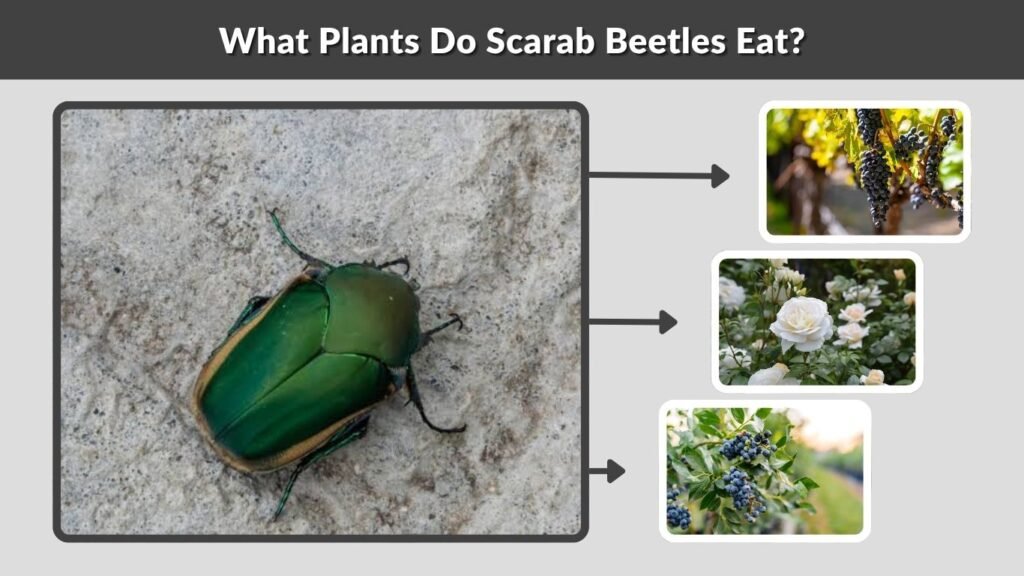
Plant-feeding scarab beetles can consume leaves, flowers, fruits, and roots. Some species are important agricultural pests, particularly when their larvae damage crops or turfgrass. However, many scarabs do not cause noticeable plant damage.
Plants Commonly Eaten by Scarab Beetles
- Grape: Japanese beetles frequently consume grape leaves.
- Roses: Certain scarabs feed on rose leaves, petals, and flowers.
- Fruit trees: Some species damage leaves or feed on ripe fruits.
- Grass: Scarab grubs may consume lawn grass roots.
- Vegetables: Some plant-feeding species damage vegetable foliage.
- Ornamental plants: Flower chafers and other scarabs may visit or feed on flowers.
Can Scarab Beetles Damage Gardens?
Yes. Plant-feeding scarabs can damage gardens when populations become abundant.
Adult Japanese beetles often leave skeletonized leaves, while root-feeding grubs can cause yellowing grass and weakened roots.
However, many scarabs are harmless or beneficial, so control measures should depend on accurate identification.
How Often Do Scarab Beetles Eat?
Scarab beetle feeding frequency varies with species, temperature, activity level, and food availability. Some adults feed regularly during active periods, while others spend considerable time searching for mates or suitable breeding locations.
When Do Scarab Beetles Feed?
Some scarabs feed during daylight, particularly flower-visiting species.
Others, including many June beetles, are most active at night.
Dung beetles may feed whenever suitable dung is available, while larvae consume food within their underground habitats.
There is no single feeding schedule that applies to every scarab species.
What Eats Scarab Beetles?
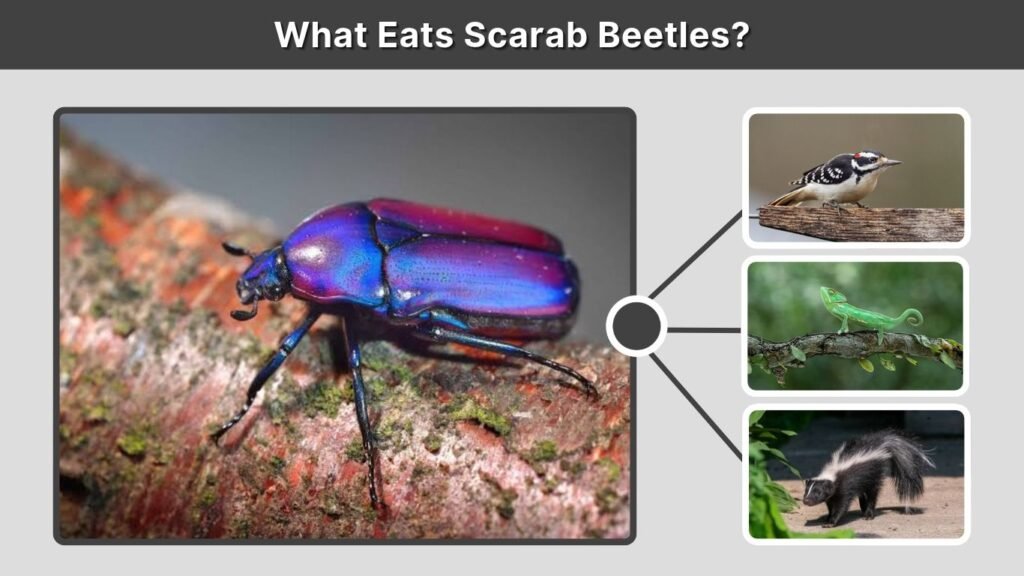
Scarab beetles are important food sources for numerous animals. Their eggs, larvae, and adults may be eaten by predators living in forests, gardens, grasslands, and agricultural environments. These natural enemies help regulate scarab populations.
Common Predators of Scarab Beetles
- Birds: Crows, starlings, and other insect-eating birds consume adults and grubs.
- Mammals: Skunks, raccoons, and moles may dig for scarab larvae.
- Reptiles: Lizards and other insect-eating reptiles consume adult beetles.
- Amphibians: Frogs and toads occasionally capture scarabs.
- Predatory insects: Certain ground beetles prey on scarab eggs or larvae.
- Parasitoid wasps: Some species attack scarab grubs.
Why Are Scarab Beetles Important?
Scarab beetles perform several important ecological functions. Dung-feeding species remove animal waste and return nutrients to the soil, while wood-feeding larvae help break down decomposing plant material.
Flower-visiting scarabs may also contribute to pollination. However, root-feeding species can damage agricultural crops and lawns.
Their environmental importance depends on the individual species and its feeding behavior.
FAQs
1. Do Scarab Beetles Eat Human Flesh?
Scarab beetles do not attack living humans to consume their flesh. Although some scarabs scavenge decomposing animal remains, the aggressive flesh-eating insects portrayed in movies are fictional. Real scarabs are not considered dangerous predators of humans.
2. What Do Egyptian Scarab Beetles Eat?
The scarab beetles associated with ancient Egyptian symbolism were primarily dung beetles. They consumed animal droppings and often buried dung to provide food for their developing larvae. This behavior contributed to their symbolic association with renewal and rebirth.
3. Do All Scarab Beetles Eat Dung?
No. Scarab beetles have diverse diets. Some consume animal dung, while others feed on leaves, fruits, flowers, tree sap, fungi, or decomposing wood. Their feeding preferences depend on species and whether they are larvae or adults.
4. What Do Rainbow Scarab Beetles Eat?
Rainbow Scarab beetles primarily consume animal dung. Adults collect and bury dung, creating underground food supplies for their developing larvae. These beetles are beneficial because they recycle nutrients, improve soil conditions, and help remove animal waste.
5. Can Scarab Beetles Eat Meat?
Some scarab species feed on decomposing animal remains, but most do not consume meat. Their diets mainly consist of dung or plant-based materials. They do not hunt humans, and their feeding habits differ greatly from fictional flesh-eating beetles.