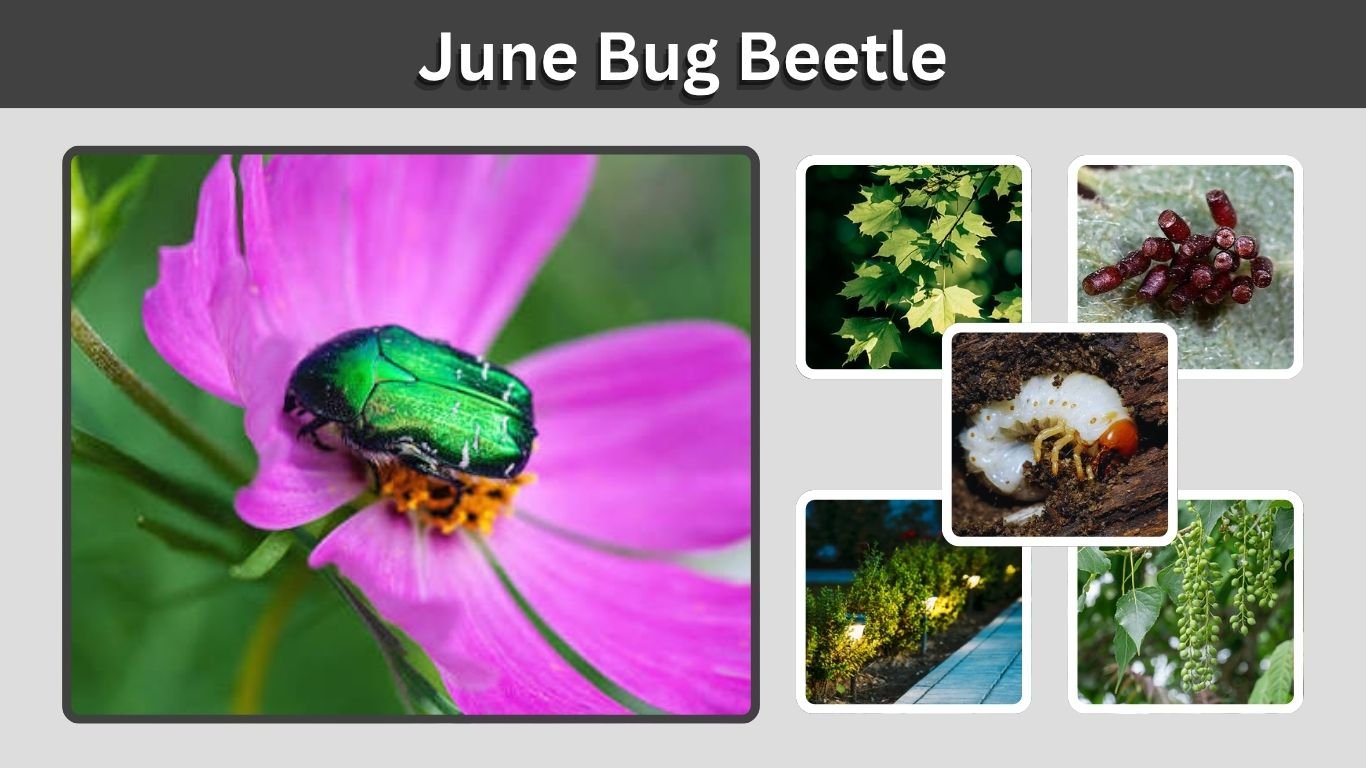
June bug beetles are common scarab beetles that appear around gardens, lawns, and outdoor lights during late spring and summer. These insects are known for their reddish-brown bodies, noisy flight, and underground larvae called white grubs. Although adult June bugs are generally harmless to humans, their larvae can damage grass roots and garden plants. June bugs are also frequently confused with Japanese beetles, green June beetles, and other similar insects. This guide explains June bug beetle identification, feeding habits, life cycle, differences from related beetles, and effective control methods.
What Is a June Bug Beetle?
A June bug beetle is a scarab beetle commonly associated with the genus Phyllophaga. These insects are also called May beetles or June beetles because adults typically emerge during late spring and early summer. They belong to the family Scarabaeidae, which includes Japanese beetles, dung beetles, and numerous other species.
June Bug Beetle Identification
June bug beetles have robust, oval-shaped bodies covered by hard wing cases. Their coloration varies depending on the species.
Common identification features include:
- Body color: Reddish brown, chestnut, tan, or nearly black.
- Body size: Usually 12–25 millimeters long.
- Body shape: Broad, oval, and slightly convex.
- Antennae: Short antennae ending in movable, leaflike plates.
- Wings: Hardened wing covers protecting functional flying wings.
- Legs: Six sturdy legs adapted for climbing and digging.
Adults are frequently attracted to artificial lighting during warm evenings.
Are June Bugs Scarab Beetles?
Yes. June bugs belong to the scarab beetle family, Scarabaeidae.
However, not every scarab beetle is a June bug. The family also contains dung beetles, rhinoceros beetles, Japanese beetles, and many chafers.
The term June bug usually refers to Phyllophaga species, although some other scarab beetles share similar common names.
June Bug vs. Japanese Beetle: Key Differences
June bugs and Japanese beetles are often confused because both belong to the scarab beetle family and develop underground as white grubs. However, they differ in body coloration, size, daily activity, and feeding patterns. Recognizing these differences helps gardeners identify which beetle is damaging their plants.
June Bug Beetle vs. Japanese Beetle Comparison
| Feature | June Bug Beetle | Japanese Beetle |
| Scientific name | Phyllophaga spp. | Popillia japonica |
| Adult size | 12–25 mm | 8–13 mm |
| Color | Brown, reddish, or black | Metallic green and copper |
| Activity | Mostly nighttime | Primarily daytime |
| Main adult food | Tree and shrub leaves | Leaves, flowers, and fruits |
| Larval habitat | Underground soil | Underground soil |
| Typical life cycle | Often 2–3 years | Usually 1 year |
June Bug Larvae vs. Japanese Beetle Larvae
Both species produce creamy-white, C-shaped grubs with brown heads and three pairs of legs.
June bug larvae generally have two parallel rows of spines on the underside of their rear ends. Japanese beetle larvae have a distinctive V-shaped arrangement.
This feature is particularly helpful because their body shapes and colors are otherwise very similar.
May Beetle vs. June Bug: Are They the Same?
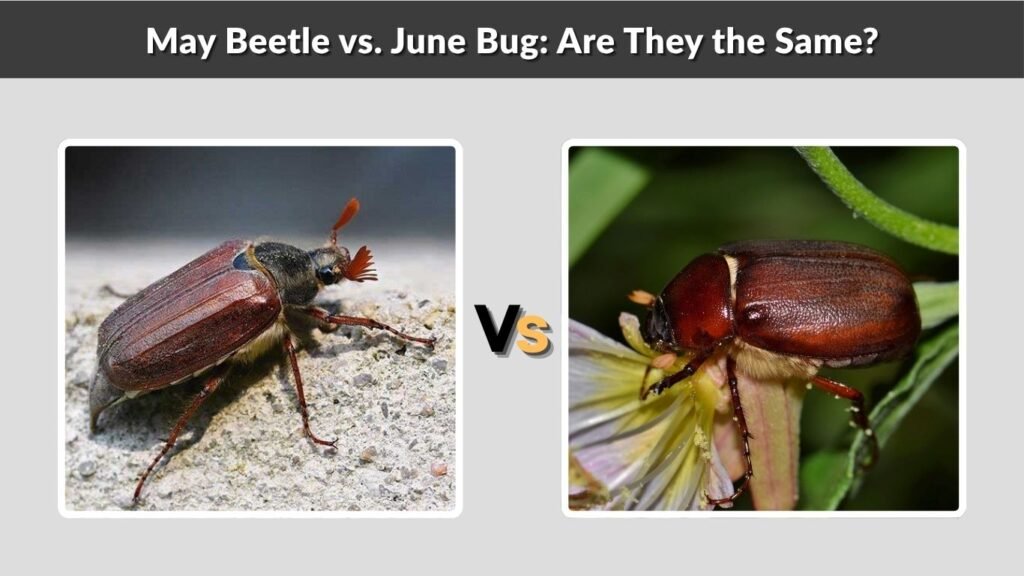
May beetles and June bugs are generally different common names for beetles in the genus Phyllophaga. The naming depends largely on regional traditions and when the adults become active.
Why Are They Called May and June Beetles?
Some species emerge during May, while others are most noticeable in June.
Weather conditions also influence their emergence. Warmer spring temperatures may encourage earlier activity, whereas cooler conditions can delay it.
Despite their different names, May beetles and June bugs share similar body structures, feeding habits, and underground developmental stages.
Other Beetles That Look Like June Bugs
Several scarab beetles resemble June bugs because they have rounded bodies, strong legs, and similar flight patterns. Some are metallic green, while others are brown or striped. Understanding these differences helps prevent confusing related insects with true June bugs.
Green June Beetle vs. June Bug
The green June beetle (Cotinis nitida) is a relatively large scarab beetle with a metallic green body and yellowish or bronze margins.
Unlike typical brown June bugs, green June beetles are often active during daylight.
Their larvae primarily consume decomposing organic matter, although their tunneling can disturb lawns. Adult green June beetles may feed on ripe fruit.
Figeater Beetle vs. June Bug
The figeater beetle (Cotinis mutabilis) is another large green scarab commonly found in parts of the southwestern United States and Mexico.
It has a metallic green body and feeds on soft, ripe, or damaged fruits.
Figeater beetles are active during daylight, making their behavior different from many nocturnal Phyllophaga June bugs.
Chafer Beetle vs. June Bug
Chafer beetles include various scarab species that may resemble June bugs.
Some chafers have tan or brown bodies, while others display different patterns and textures.
Their larvae also develop underground, sometimes feeding on grass roots. Accurate identification may require examining antennae, body markings, or larval characteristics.
June Bug Beetle Life Cycle
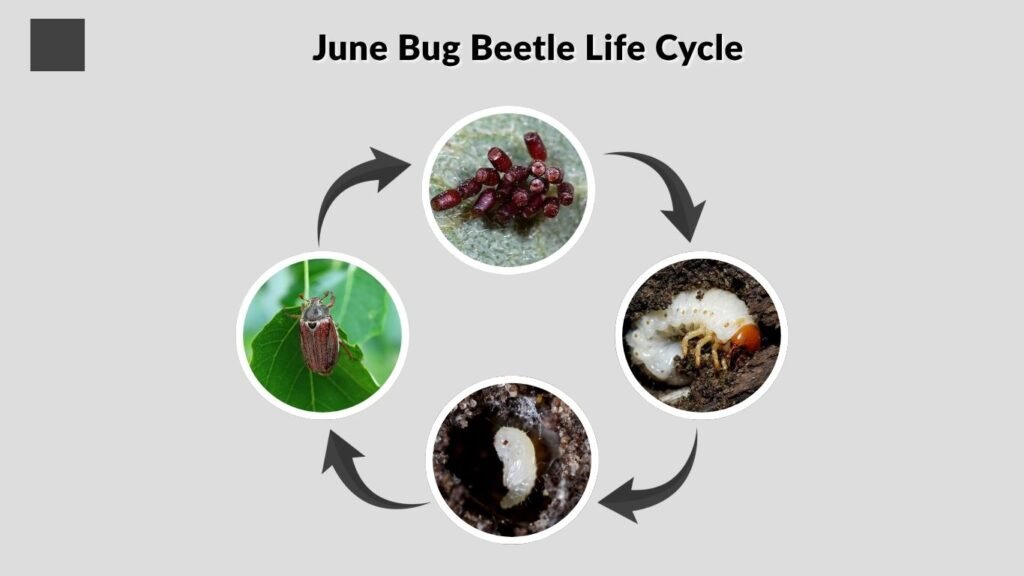
June bug beetles undergo complete metamorphosis, passing through four developmental stages: egg, larva, pupa, and adult. Their life cycle can last several years, depending on species and environmental conditions. Most of their development occurs underground, where larvae feed and grow before emerging as adults.
Egg Stage
Female June beetles lay their eggs beneath the soil surface during warmer months.
The eggs are generally small, rounded, and pale-colored. Under favorable conditions, they hatch within a few weeks.
Newly hatched larvae begin feeding on organic matter and eventually plant roots.
Larval Stage
June bug beetle larvae are commonly called white grubs.
They have creamy-white, curved bodies, yellowish-brown heads, and six short legs.
The larvae feed mainly on roots of grasses and other plants. Their underground development commonly lasts two to three years, although the duration varies among species.
Pupal and Adult Stages
After completing larval development, June beetles form pupae in underground soil chambers.
Inside these chambers, their bodies transform into adult beetles.
Adults eventually emerge during suitable seasonal conditions, usually in late spring or summer. They feed, mate, and produce another generation.
What Do June Bug Beetles Eat?
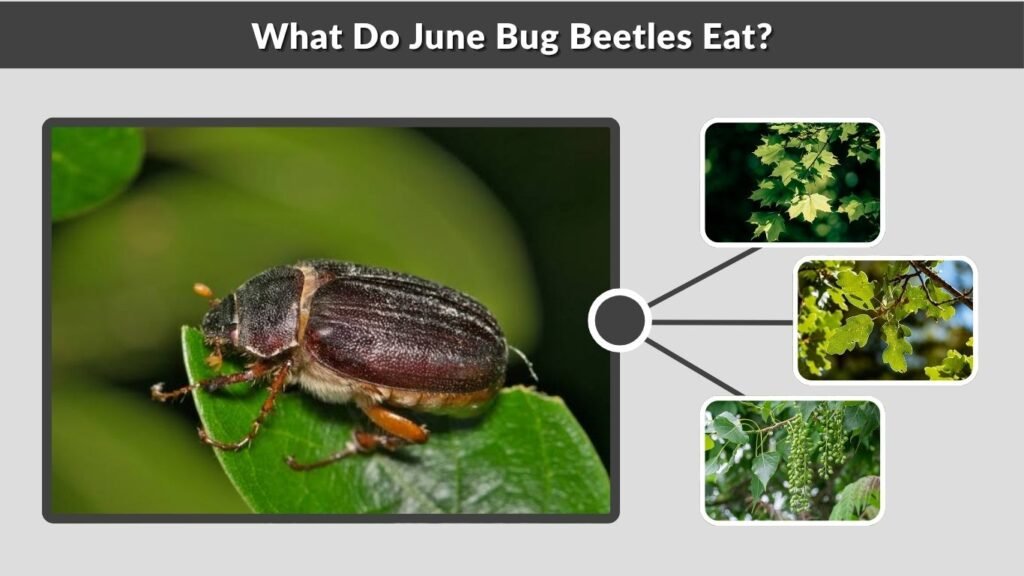
June bug beetles have different feeding habits as adults and larvae. Adults primarily consume foliage from trees and shrubs, while larvae feed beneath the soil surface. The greatest economic damage usually occurs when large grub populations attack plant roots.
Adult June Bug Beetle Diet
Adult June beetles commonly feed on leaves of deciduous trees and shrubs.
Their food sources may include:
- Oak leaves
- Maple leaves
- Willow foliage
- Cottonwood leaves
- Other broadleaf trees and shrubs
Adult feeding typically creates irregular holes in leaves. Most established trees tolerate moderate feeding without serious problems.
June Bug Beetle Larvae Diet
June bug larvae feed on grass roots, young plant roots, and some soil organic matter.
Heavy feeding can weaken turfgrass, causing yellow or brown patches.
Severely damaged grass may become loose because its root system has been destroyed. Young plants can also suffer when large numbers of grubs feed around their roots.
Are June Bug Beetles Harmful?
June bug beetles are generally harmless to humans, but their larvae can become agricultural or lawn pests. Adult feeding usually produces minor foliage damage, while underground grubs can significantly weaken grass and other vegetation when populations are high.
Do June Bug Beetles Bite?
June bugs do not sting and are not venomous.
Although they possess chewing mouthparts, they are not aggressive toward humans and rarely cause injury.
Their spiny legs may feel uncomfortable when they crawl across bare skin, but they are not considered dangerous household insects.
Signs of June Bug Grub Damage
Common signs of an underground grub infestation include:
- Yellowing or browning grass
- Irregular dead patches across lawns
- Loose turf that lifts easily
- Reduced plant growth
- Birds or mammals digging for grubs
- White, C-shaped larvae beneath damaged grass
These symptoms can have several causes, so soil inspection is necessary before choosing treatment.
How to Get Rid of June Bug Beetles
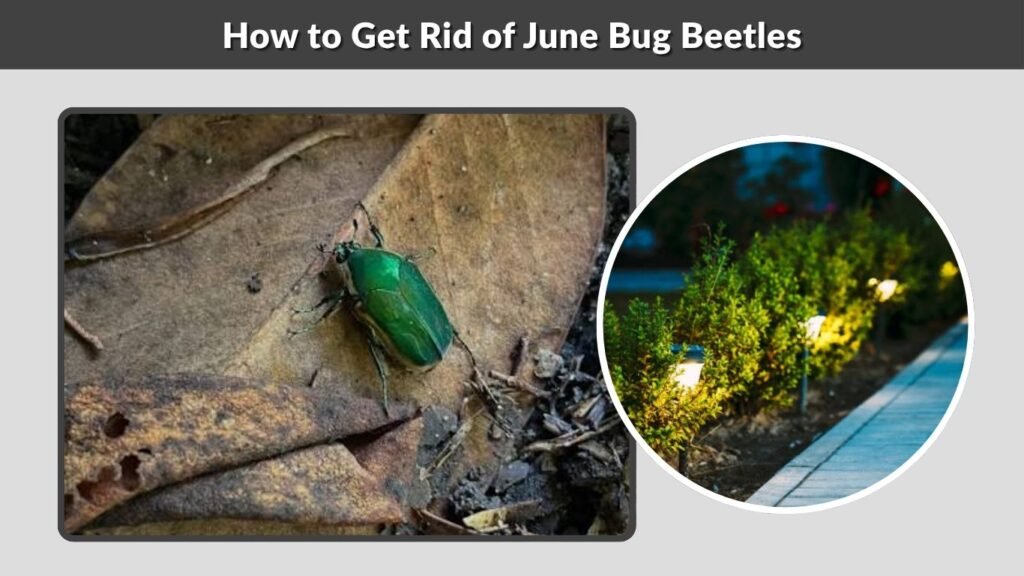
June bug beetle control depends on whether adults or larvae are causing problems. Occasional flying adults rarely require treatment, while damaging grub populations may need targeted management. Identifying the species and checking infestation severity can prevent unnecessary pesticide use.
June Bug Beetle Control Methods
Several practical methods can help manage June bugs:
- Reduce outdoor lighting: Switch off unnecessary lights during peak beetle activity.
- Handpick adults: Remove beetles from vulnerable plants when practical.
- Maintain healthy grass: Proper mowing and watering help lawns tolerate moderate root damage.
- Inspect soil: Examine damaged turf to confirm the presence of grubs.
- Consider beneficial nematodes: Appropriate species may suppress susceptible white grubs under suitable conditions.
- Use targeted treatments: Apply registered grub-control products only when justified by confirmed damage.
Do June Bug Beetle Traps Work?
Light traps may capture some flying June beetles, but they are not a reliable solution for controlling underground larvae.
Japanese beetle pheromone traps are designed for Japanese beetles rather than Phyllophaga June bugs. They may also attract additional Japanese beetles into gardens.
For June bugs, reducing unnecessary outdoor lighting and managing confirmed grub infestations is generally more practical.
FAQs
1. Are June Bugs and Japanese Beetles the Same?
No. June bugs commonly belong to the genus Phyllophaga, while Japanese beetles belong to Popillia japonica. Both are scarab beetles, but they differ in appearance, activity patterns, and life cycles. Japanese beetles have distinctive metallic green and copper coloration.
2. Are June Bugs Blind?
No. June bugs have functional compound eyes and can detect light and movement. Their tendency to collide with windows, walls, and porch lights is related to their flight behavior and responses to artificial lighting rather than blindness.
3. Why Do June Bugs Fly Around Porch Lights?
Many June bug species are attracted to artificial lighting during nighttime activity. Bright porch lights and illuminated windows can interfere with their natural orientation. As a result, flying beetles may repeatedly circle lights or collide with nearby objects.
4. Are June Bugs the Same as Dung Beetles?
No. June bugs and dung beetles belong to the same scarab beetle family, but they have different feeding habits. June bug larvae primarily consume plant roots, while many dung beetles feed on animal dung and use it for reproduction.
5. How Long Do June Bug Beetles Live?
The complete life cycle of many Phyllophaga June beetles lasts approximately two to three years. Most of that time is spent underground as larvae. Adult beetles generally survive for a much shorter period, typically several weeks, depending on the species.